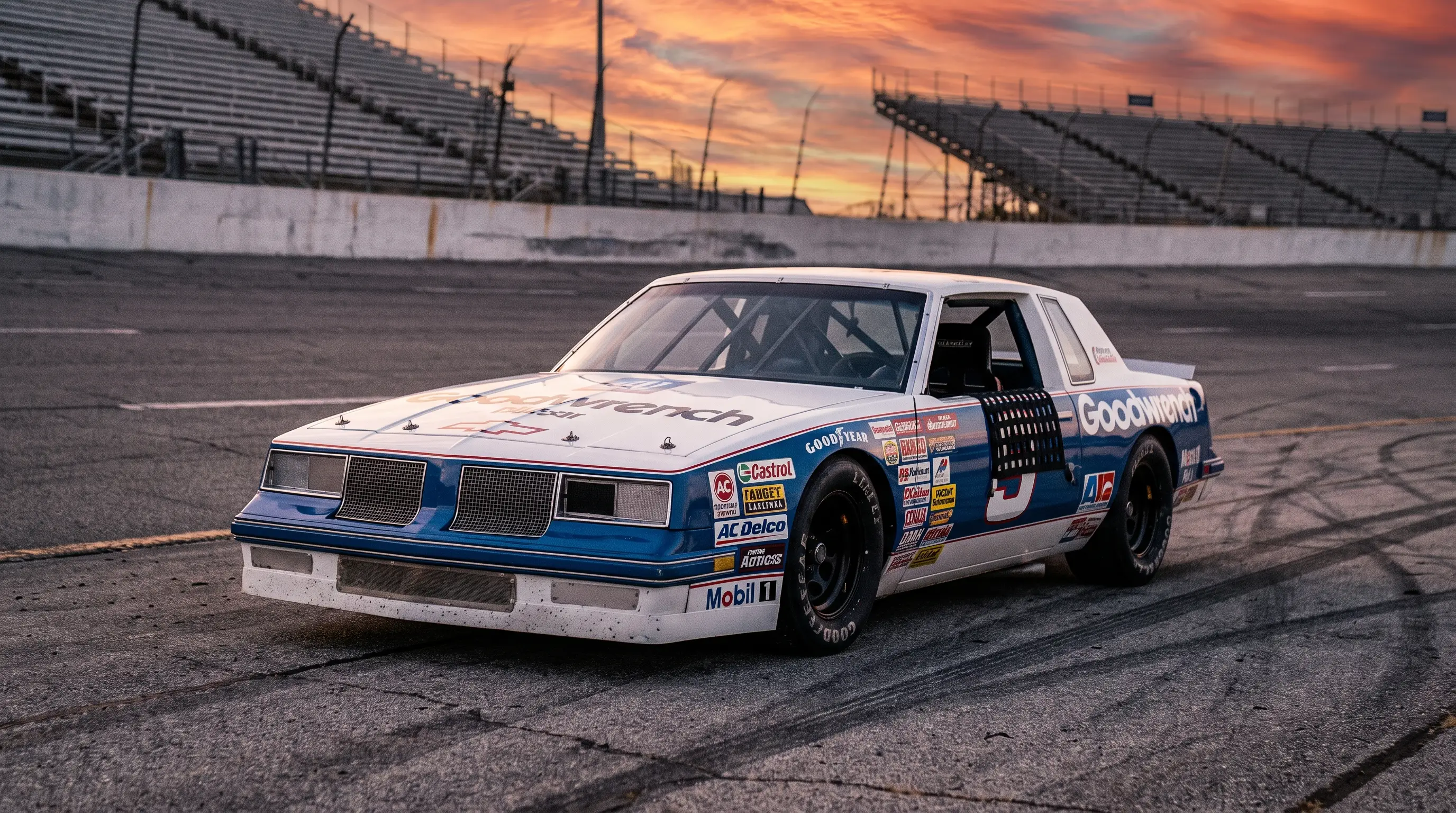
Pit road at a late-1970s Winston Cup race looked like a showroom war. Chevrolet had the Laguna S-3, its smooth urethane nose built for the draft. Ford had the Torino and LTD II, chasing the same clean air. And Oldsmobile brought the Cutlass Supreme, a car that had spent years as the best-selling model in America and now had to prove it could hold its nose down at superspeedway pace. That fight over air, not horsepower, is where the Cutlass NASCAR story really starts.
By the mid-1970s, stock car racing had turned into an aerodynamics arms race. The cars still looked like showroom models from a distance, but every manufacturer was chasing the same problem: a boxy, upright front clip generates lift and drag at speed, and both cost you the draft and, eventually, the race. Oldsmobile's answer was a new sloped, urethane front end for the Cutlass Supreme, introduced for 1976 and offered on the street specifically with the 4-4-2 option for 1977, a factory response built to satisfy NASCAR's homologation rules.
The aero wars GM couldn't ignore
NASCAR's homologation rule was simple in theory and brutal in practice: if you wanted to race a body style, you had to sell a real version of it to the public. Chevrolet had already leaned into the fight with the Laguna S-3's urethane nose, and Oldsmobile wasn't going to let the Cutlass show up to superspeedways looking like a delivery van. The result was a sloped, aerodynamic front clip built into the regular 4-4-2 option on the Cutlass Supreme, sold to ordinary civilian buyers so the race teams could legally run the same nose on Sunday.
None of this happened in a vacuum. The Cutlass Supreme, the same platform underpinning the wagons and family sedans parked in driveways across the country, was also GM's frontline weapon in a horsepower-and-drag fight that had almost nothing to do with the family car buyer. It's a strange split identity, and it's part of what makes the Cutlass such a rich car to write about: mild-mannered errand runner by day, aero-homologation special by racing regulation.
What the Aero Cutlass actually changed
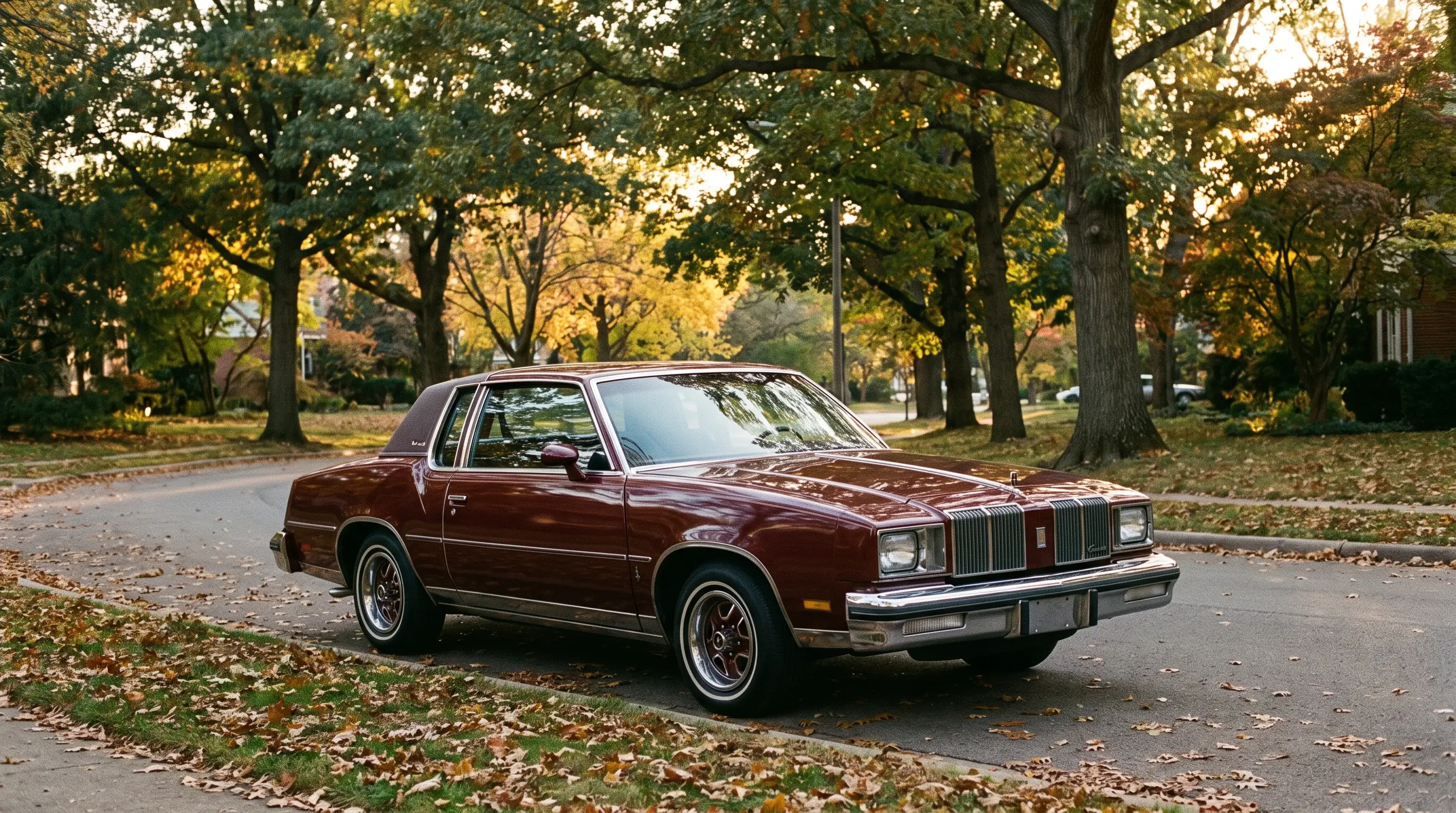
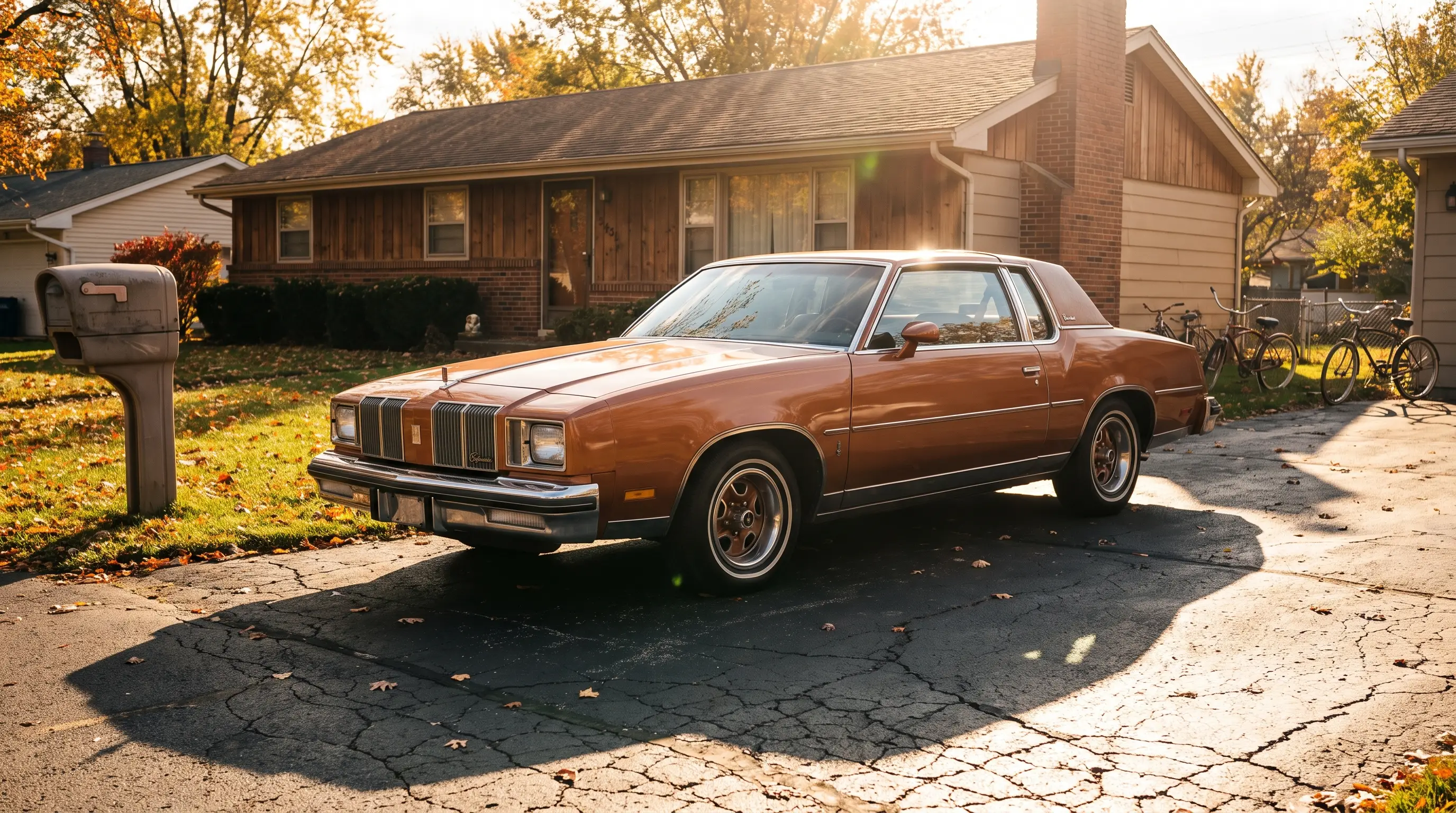
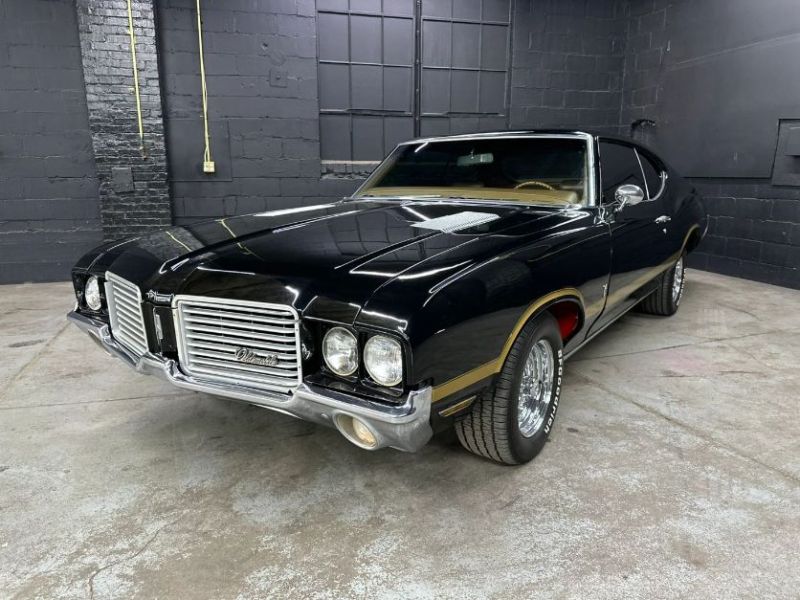
The changes weren't about the engine bay. NASCAR's rules of the era kept engine displacement and configuration tightly controlled across manufacturers, so the real battleground was the sheet metal ahead of the windshield. The nose was sloped and smoothed, the grille tucked in behind a more raked front clip, and the whole front three-quarter view of the car softened into something a wind tunnel could love. On the street version, buyers got a genuinely different-looking Cutlass Supreme, offered alongside the standard upright nose, that most people at the time had no idea existed for a regulatory reason rather than a styling one.
On the track, the difference showed up in top speed and, more importantly, in how the car behaved drafting nose to tail with a Laguna or a Torino. A car that generates less lift and less drag stays planted, and a car that stays planted is a car a driver can trust at the front of a pack running inches apart. That trust is worth more than raw horsepower once you're past 170 miles an hour.
442 badging and what it meant on a race car
The sloped-nose aero package rode on the Cutlass Supreme's own 4-4-2 option, tying the racing effort back to the division's own muscle car history rather than treating it as a pure marketing exercise bolted onto an unrelated race car. The connection mattered to Oldsmobile's marketing and to the fans who followed both the street car and the circuit, and it paid off on track. Cale Yarborough drove an Oldsmobile Cutlass to his third consecutive Winston Cup championship in 1978, and Richard Petty won the 1979 Daytona 500 in a Cutlass Supreme in NASCAR's most famous finish, as leaders Cale Yarborough and Donnie Allison crashed on the final lap fighting for position. Buddy Baker followed in 1980, winning the Daytona 500 in an Oldsmobile Cutlass nicknamed the "Gray Ghost" at what was then the fastest average speed in Daytona 500 history.
That's the throughline worth understanding if you're coming at this from the G-body chapter of Cutlass history: the same platform, the same basic architecture, adapted for wildly different purposes depending on whether it was headed to a dealer lot or a superspeedway.
| Detail | Aero Cutlass |
|---|---|
| Basis | Colonnade/G-body Cutlass Supreme |
| Primary change | Sloped, urethane front clip for aerodynamics, introduced 1976 and tied to the 1977 4-4-2 option |
| Purpose | NASCAR homologation for the late-1970s aero wars |
| Rivals | Chevrolet Laguna S-3, Ford Torino/LTD II |
| Notable results | Yarborough's 1978 championship, Petty's 1979 Daytona 500 win, Baker's 1980 Daytona 500 win |
"Nobody at the diner that Sunday cared about the homologation paperwork. They cared that the Cutlass was hanging with the Laguna and the Torino in the draft, and for the first time in a while, it looked like it belonged there."
— Patrick Walsh
Reading the car through a fan's eyes
Part of what made the aero-war years compelling to watch, even for people who couldn't tell you a spoiler angle from a roof rake, was that the cars on track still resembled something parked at a dealership down the street. A kid who'd never sat in a race car could look at the Cutlass on television and recognize the same basic shape his family drove, just stretched and slicked and pushed to a speed the family sedan would never see. That connection between showroom and speedway was part of NASCAR's appeal for an entire generation, and the Cutlass, more than most of its rivals, carried that everyday familiarity onto the biggest ovals in the sport.
It also meant the aero program had real stakes beyond trophies. Every fraction of a second gained in the draft reflected back onto how Oldsmobile marketed the street Cutlass Supreme that same year, an implicit promise that the brand's engineers were sweating details most buyers would never notice but somehow still felt.
Why this footnote still matters to Cutlass history
It would be easy to file the sloped-nose 4-4-2 away as a trivia answer, a subtle variant most Cutlass buyers never noticed sitting next to the standard car on the lot. But it's a useful reminder of how seriously GM took the Cutlass nameplate during the late 1970s, treating a family car platform as worth an aerodynamics program and a homologation run because the racing stakes demanded it. The same underlying Cutlass Supreme that carried a family to church on Sunday was, on a different Sunday, carrying a stock car through the draft at Daytona and Talladega.
If you want to go deeper on how that shared architecture actually worked underneath both cars, a related deep-dive breaks down the G-body platform itself, the chassis, the engines, and the family of cars built on the same bones as the Cutlass.
Sources and notes
- Barn Finds: NASCAR Nose, 1976 Oldsmobile 442
- Jayski: Cale Yarborough's 1978 Southern 500-winning Oldsmobile Cutlass
- Wikipedia: Richard Petty
- Mac's Motor City Garage: Buddy Baker Wins the 1980 Daytona 500
- NASCAR Hall of Fame: Buddy Baker's Gray Ghost Cutlass
- Classic.com: 1977 Oldsmobile Cutlass NASCAR Race Car