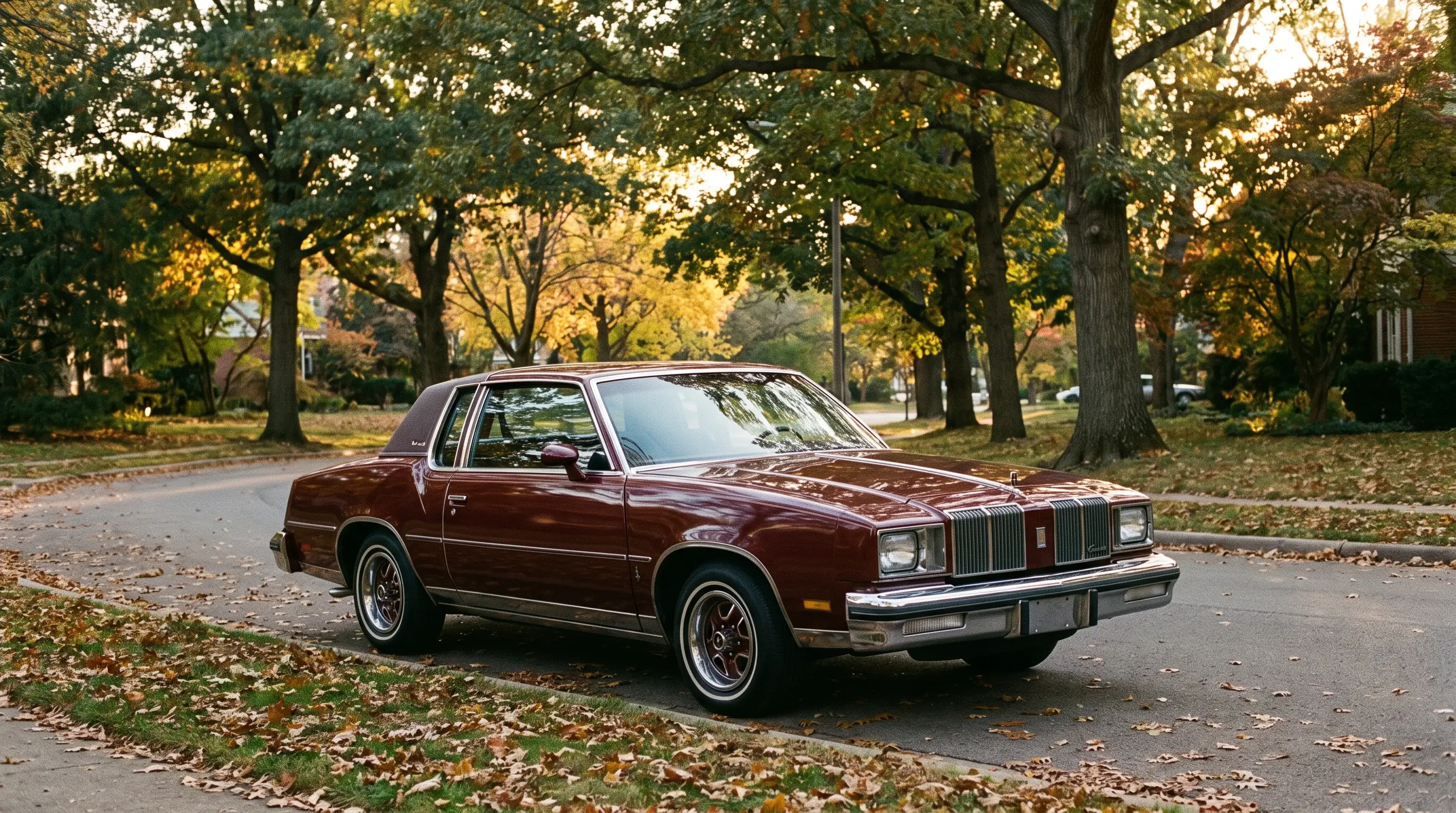
Every shop in our neighborhood has an opinion about the Oldsmobile 307, and most of those opinions come from a Cutlass. The small-block came into the lineup in 1980, right after Oldsmobile got burned in the corporate engine mess of the late seventies, and it stuck around in Cutlass Supreme coupes and wagons for most of the decade. Say "307" to a G-body guy and he doesn't think of specs first. He thinks of a specific car, a specific driveway, a specific uncle who kept one running past 200,000 miles on nothing but oil changes and stubbornness.
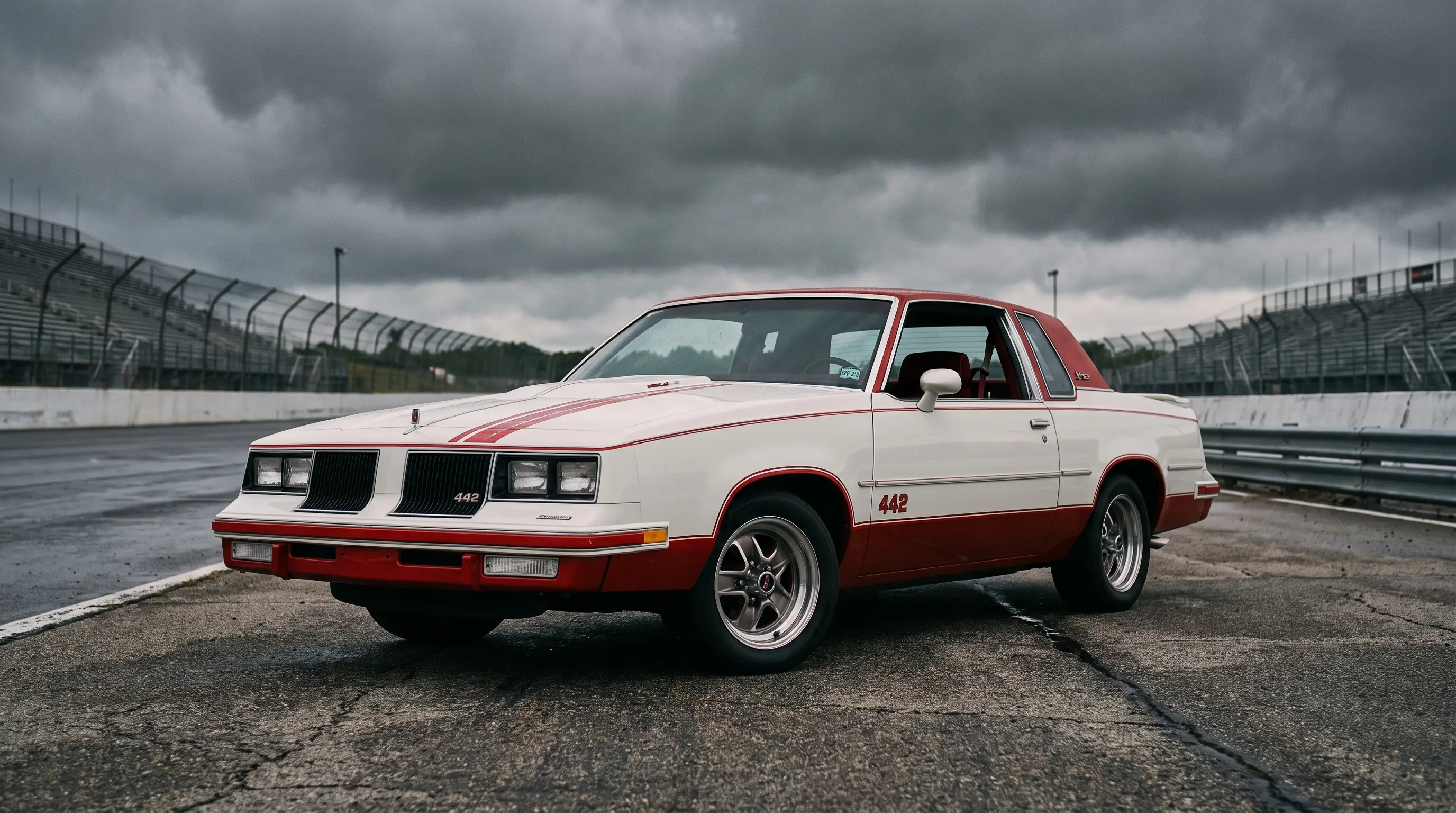
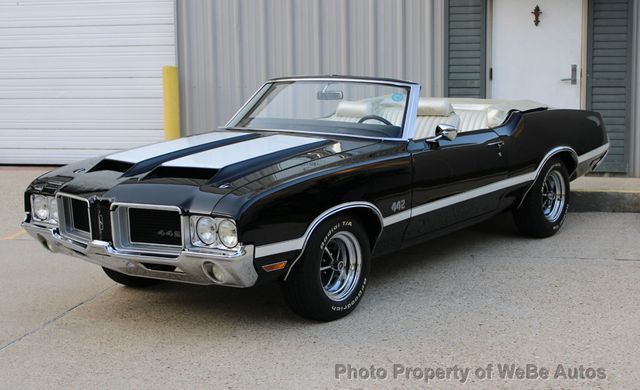
We grew up around cars like this. Not the muscle-era 442s that get the magazine covers, but the ordinary, everyday Cutlass Supremes that our fathers and grandfathers actually bought, drove to work, and eventually handed down. The 307 was never fast. It was reliable, it was simple, and in our world that counted for more than a quarter-mile time.
Why Oldsmobile built its own small-block again
To understand the 307, you have to understand what came before it. In the mid-1970s, GM had started dropping Chevrolet-built 350s into Oldsmobiles, badged as Rocket engines, without telling buyers the block under the hood wasn't actually an Olds casting. Owners noticed, lawsuits followed, and by the end of the decade Oldsmobile wanted an engine it could point to and say, honestly, this one is ours.
The 307 cubic inch V8 (5.0 liters) arrived for the 1980 model year as that answer. It replaced the outgoing 260 and 350 Olds engines across the division's lineup, and it became the standard V8 in the Cutlass Supreme through most of the 1980s. It wasn't built to win a horsepower war. It was built to be an honest, division-specific engine that Oldsmobile could stand behind after a bruising few years of bad press.
What the 307 actually delivered
Output moved around from year to year depending on carburetion, emissions calibration, and which body it sat in, but figures in the neighborhood of 140 to 150 horsepower were typical for most of the run in standard Cutlass Supreme applications, with the later high-output version used in the 442 package reaching 180 horsepower. That is modest next to a 442 from a decade earlier, and everybody in the hobby knows it. Nobody buys a 307 Cutlass to win a stoplight drag.
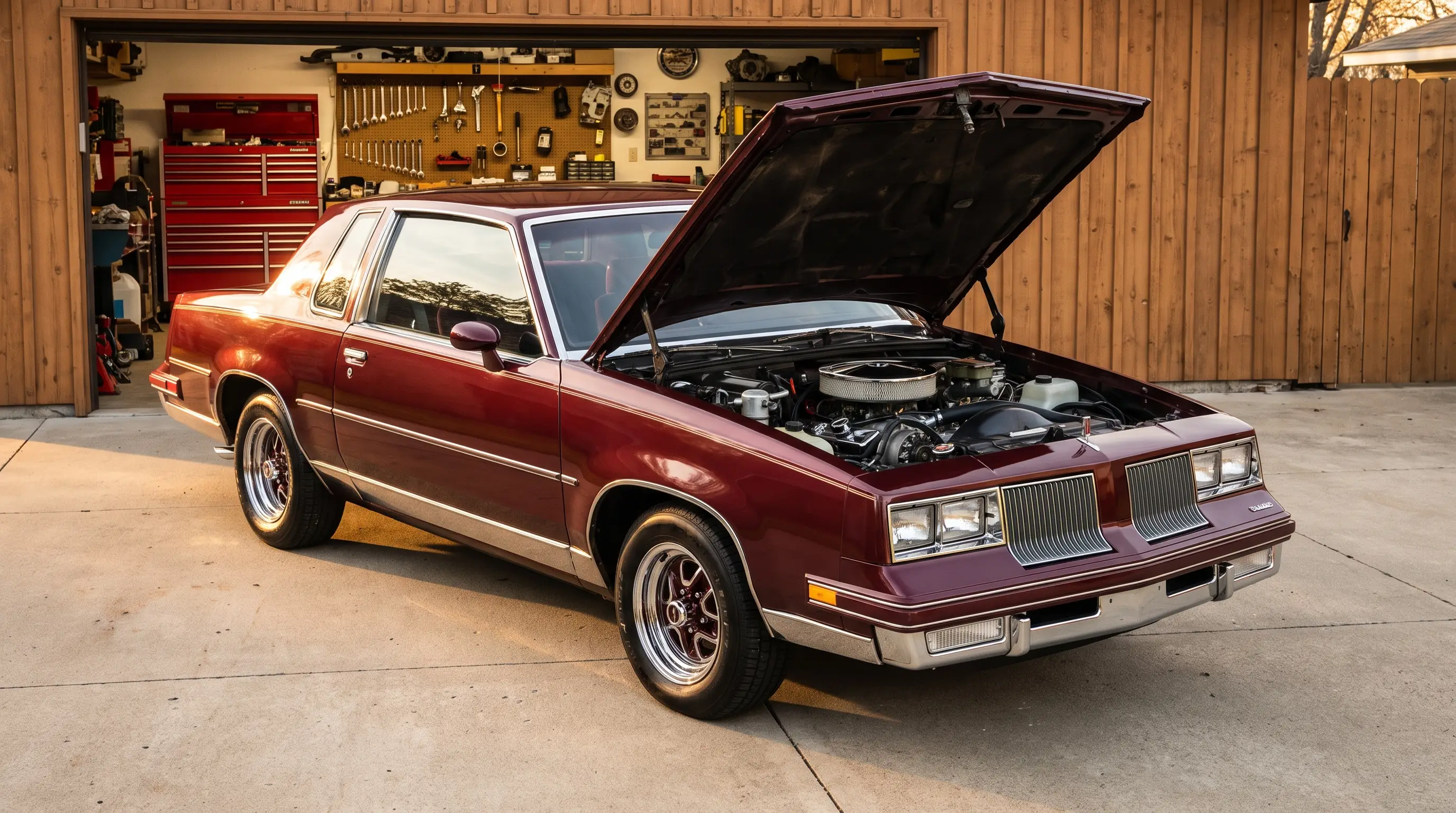
What people in our community valued instead was the way the engine behaved over the long haul. Cast iron block, cast iron heads, a two-barrel or four-barrel Rochester carburetor depending on year and trim, and a bottom end that tolerated neglect better than it had any right to. Torque came on low and stayed usable in city driving, which mattered more to a family running errands or a low-rider club cruising a boulevard than a dyno sheet ever would.
Where the 307 shows up in Cutlass history
The 307 wasn't exclusive to the Cutlass Supreme. It found its way into Delta 88s, Ninety-Eights, the Custom Cruiser wagon, and even the Cadillac Brougham, which used the Oldsmobile 307 as its standard V8 from 1987 through 1990 after Cadillac's own diesel and HT4100 troubles pushed GM to lean on the reliable Olds V8 late in the decade. But it's the Cutlass Supreme association that stuck in the community's memory, because that's the car that was everywhere: driveways, church parking lots, dealer lots, and eventually the used market where our generation found them cheap and started building on top of what was already a solid foundation.
Those cars are part of the same story we tell about the cult-classic Cutlass, the G-body Supreme that became a canvas for an entire custom culture. The 307 was the heartbeat under the hood of most of those builds, quietly doing its job while the rest of the car got the attention.
| Spec | Detail |
|---|---|
| Displacement | 307 cu in (5.0L) |
| Configuration | Cast iron block and heads, OHV V8 |
| Production run | 1980-1990 |
| Typical output | Roughly 140-150 hp standard, up to 180 hp in high-output form |
| Fuel delivery | Rochester 2-barrel or 4-barrel carburetor |
| Primary Cutlass home | Cutlass Supreme coupe, sedan, and wagon |
Living with a 307 today
Ask around any G-body gathering and you'll hear the same advice repeated. Keep the timing chain and gaskets fresh, watch the manifold bolts for the leaks these engines are known for, and don't expect a stock 307 to feel quick. What you get instead is an engine that starts every time, idles smooth, and gives a builder a dependable base whether the plan is a mild restoration or a full custom rebuild with a bigger cam and a four-barrel swap.
That dependability is exactly why so many of these cars survived long enough to become collectible. A high-strung performance engine from the same era might have blown up or been junked decades ago. A 307 just kept running, in somebody's family, until the car was worth restoring instead of scrapping.
"We don't romanticize the 307 because it was fast. We romanticize it because it was ours, it was honest, and it never quit on us when we needed it most."
— Hector Morales
The legacy that outlasted the horsepower numbers
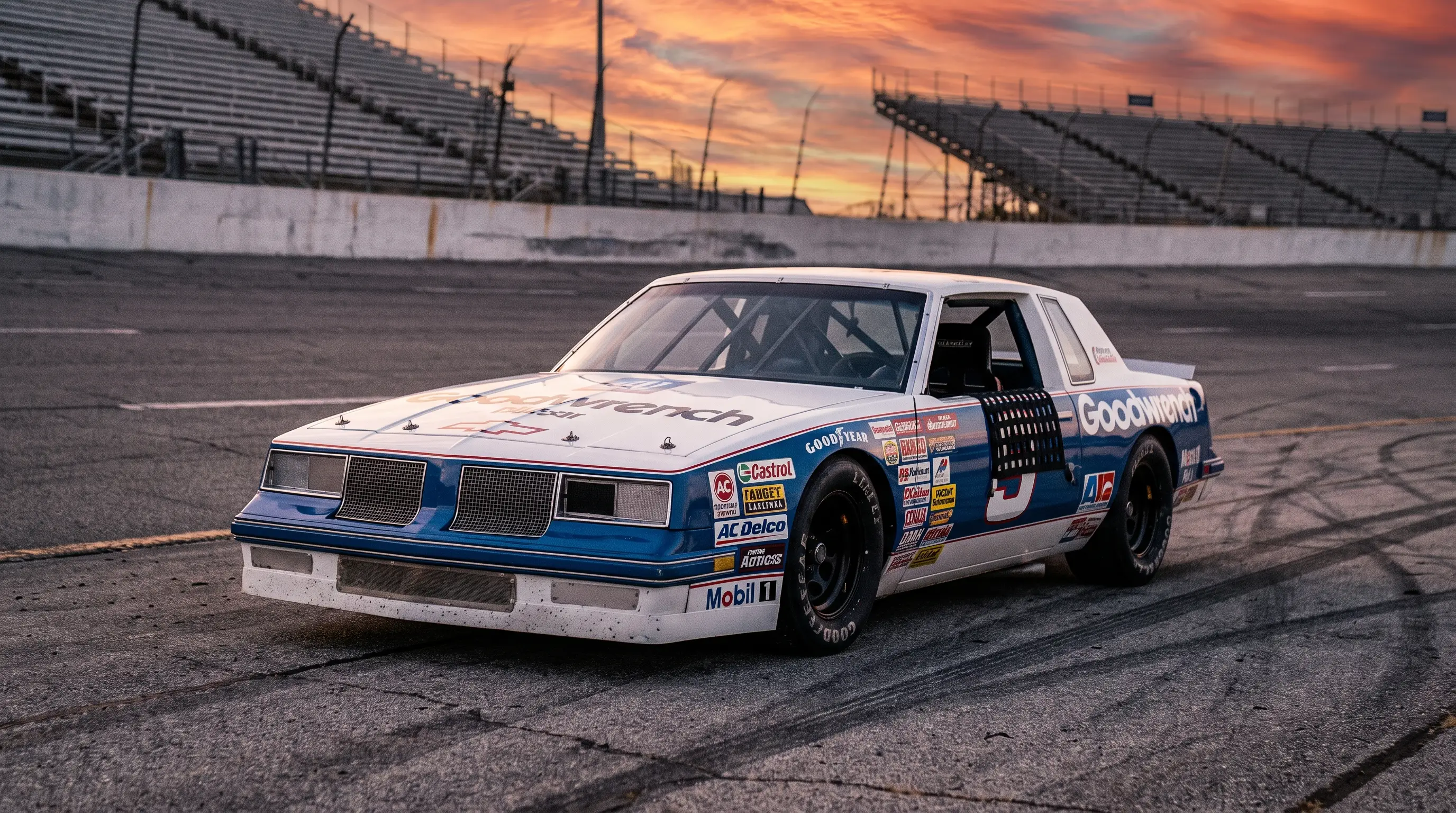
The Oldsmobile 307 will never headline a muscle car documentary. What it did instead was quietly power an entire generation of Cutlass Supremes through the 1980s, cars that later became the foundation of a custom culture that had nothing to do with factory horsepower ratings and everything to do with pride, patience, and craft. For anyone tracing how the Cutlass earned its place in that world, the NASCAR side of the story makes for a companion piece worth reading, showing the same platform pushed in a completely different direction.
If you're looking to bring one of these home, a well-kept 307-powered Cutlass Supreme is still one of the more approachable ways into the hobby. Browse the current listings of classic Oldsmobile Cutlass for sale and you'll find these cars are still out there, still running, still waiting for the next family or the next builder to carry the story forward.