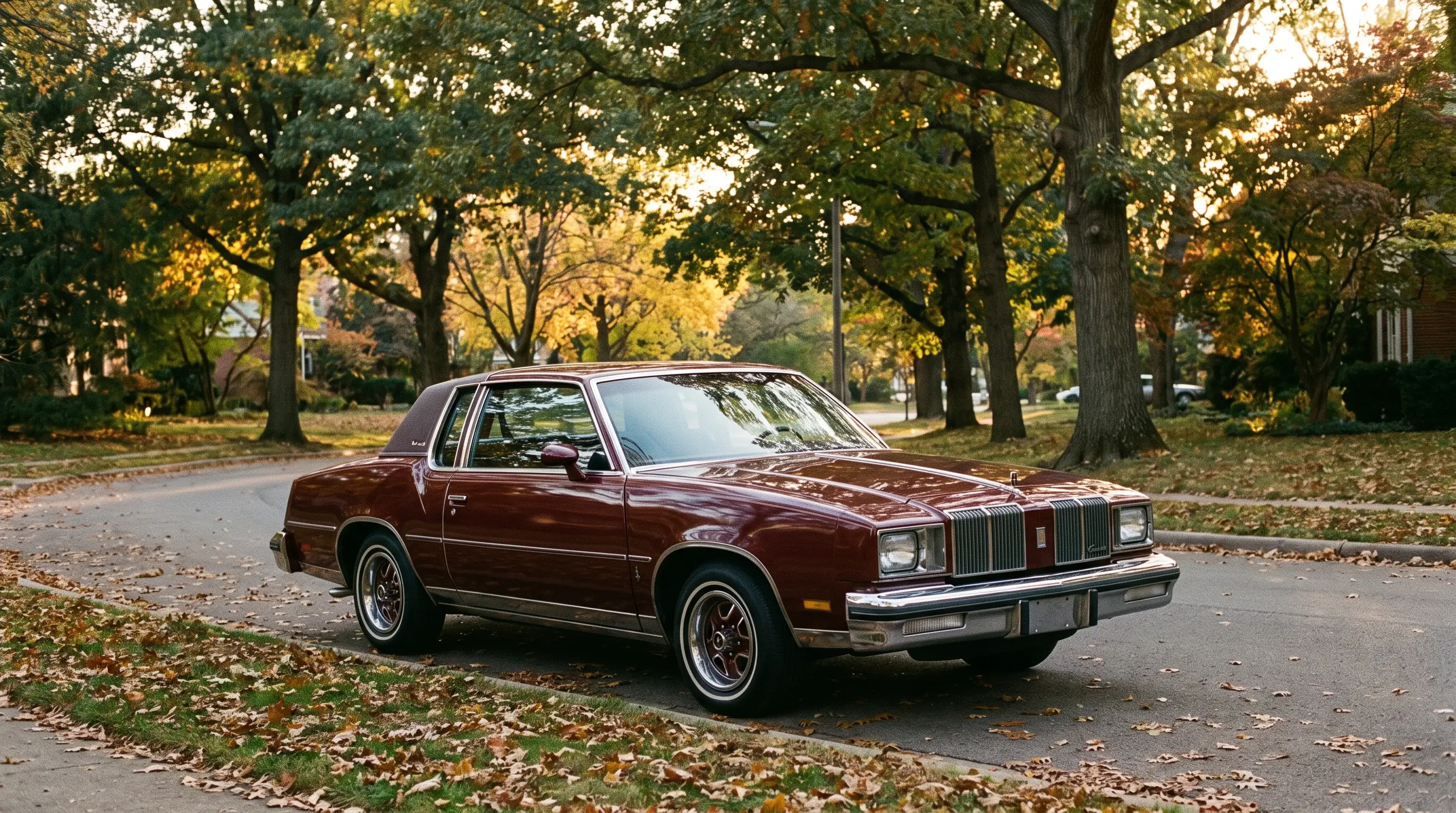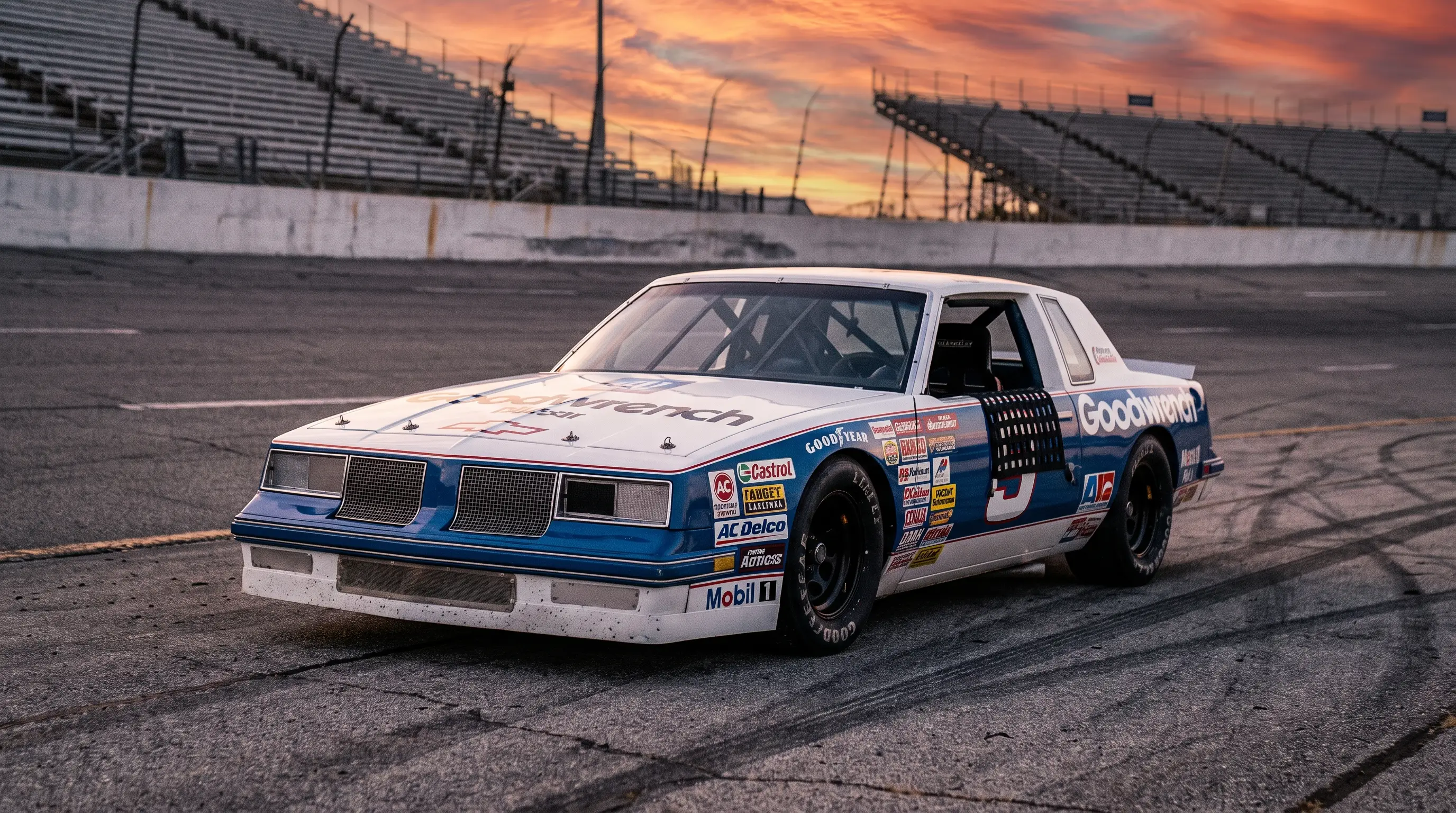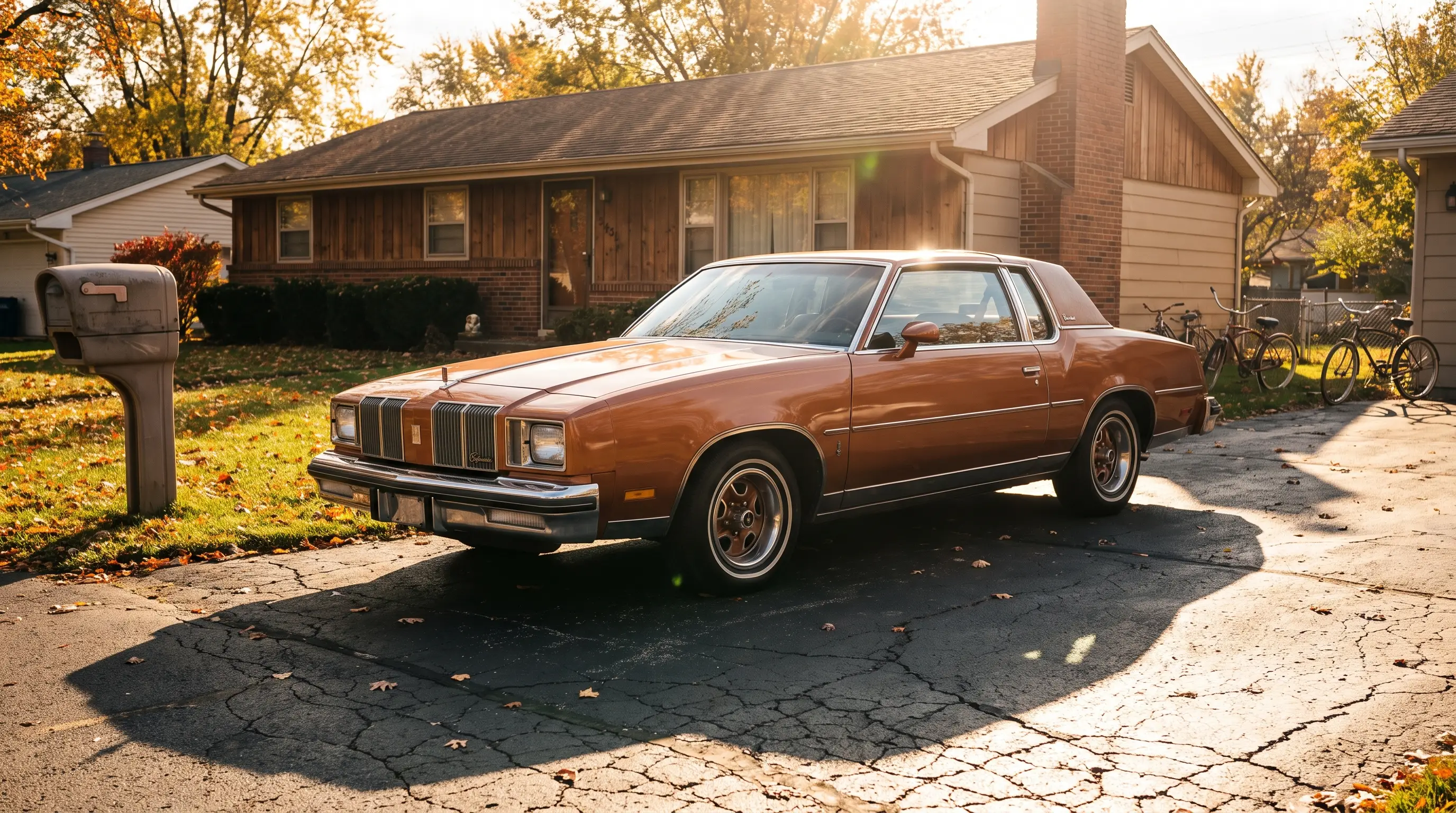
Stand a 1983 Cutlass Supreme next to a Monte Carlo SS and a Buick Regal from the same year, and the family resemblance is obvious the moment you look underneath. Same basic frame, same rear-wheel-drive layout, same fundamental engineering decisions made by GM in the late 1970s. That shared foundation is the G-body platform, and understanding it explains more about why the Cutlass drives, ages, and gets restored the way it does than almost any other single fact in its history.
The G-body wasn't glamorous. It wasn't developed to chase a headline or a magazine cover. It was GM's answer to a genuine problem: how do you keep building comfortable, V8-friendly, rear-drive intermediates through an era of tightening fuel economy rules and shrinking dimensions, without losing the buyers who wanted a real trunk and a real back seat.
Downsizing GM's intermediate cars for 1978
The G-body arrived for the 1978 model year as a shrunken, lighter successor to GM's earlier A-body intermediates. Wheelbases came down, weight came down, and the body-on-frame construction that had defined American mid-size cars for a generation carried forward largely intact. That last detail matters more than it sounds. Body-on-frame construction is simpler to repair, more forgiving of collision damage, and easier for a home mechanic or small shop to work on decades later, all of which helped these cars survive into the collector era in numbers that a more delicate unibody design might not have.
GM split the badge across four divisions from the start. Chevrolet got the Monte Carlo and the El Camino, Pontiac got the Grand Prix, Buick got the Regal and Century, and Oldsmobile got the Cutlass Supreme along with the Cutlass Salon and the Cutlass Cruiser wagon. Four divisions, four distinct personalities, one shared architecture underneath the sheet metal.
Where the platform split apart
Here's where it gets confusing for anyone reading old brochures cold. In 1981, GM moved most of its four-door intermediate sedans onto a new front-wheel-drive A-body platform, the one that eventually produced cars like the Chevrolet Celebrity and Buick Century sedan. In fact, these rear-wheel-drive intermediates were still badged internally as A-body cars through the 1981 model year. When the new front-wheel-drive A-body sedans arrived for 1982, GM renamed the surviving rear-drive coupes and wagons to G-body specifically to keep the two unrelated platforms from being confused under the same letter. The two-door coupes stayed on the rear-drive G-body for the rest of the decade, and the Cutlass Cruiser wagon rode along on the same rear-drive chassis through 1983 before it, too, moved onto the front-drive Cutlass Ciera platform for 1984. That's the reason a Cutlass Supreme coupe and a contemporary Cutlass Ciera sedan can share almost nothing structurally despite the overlapping Cutlass name, a naming quirk that trips up plenty of new collectors.
The G-body coupes then carried on largely unchanged in basic architecture through the mid-1980s, receiving updated front and rear styling, new engine options, and trim shuffles year to year while the frame and suspension layout stayed fundamentally the same proven design.
Engines, engineering, and the parts a Cutlass shares
Because the G-body was a corporate platform, engine sharing across divisions was routine, and it's part of why enthusiasts researching a Cutlass Supreme end up learning about Buick and Chevrolet engineering along the way. Buick's 3.8-liter V6 turned up under G-body hoods across multiple brands, Chevrolet's small-block V8s were available in various G-body applications, and Oldsmobile's own 307 V8 did its longest and steadiest work powering Cutlass Supremes built on this same frame. Suspension geometry, brake components, and even body hardware crossed divisional lines more freely on the G-body than GM buyers of the era likely realized.
That parts-sharing reality is a practical gift to anyone restoring or maintaining the G-body Cutlass today. A worn suspension bushing or a tired brake component doesn't necessarily require a rare Oldsmobile-only part; often the same piece was used across Regal, Monte Carlo, and Grand Prix production runs, which keeps the used and reproduction parts market considerably deeper than a single-model car would enjoy.
| Detail | G-body Platform |
|---|---|
| Introduced | 1978 model year |
| Layout | Rear-wheel drive, body-on-frame |
| Divisions | Chevrolet, Pontiac, Buick, Oldsmobile |
| Cutlass models on platform | Cutlass Supreme, Cutlass Salon, Cutlass Cruiser |
| Sister cars | Monte Carlo, El Camino, Grand Prix, Regal, Century coupe |
| Coupe production ended | 1987 (Regal, Grand Prix) to 1988 (Cutlass Supreme Classic, Monte Carlo) |
"Once you understand the G-body isn't really an Oldsmobile platform or a Buick platform, it's a GM platform that four divisions dressed up differently, the whole decade of cars starts making a lot more sense."
— Patrick Walsh
Telling the four divisions apart
Despite the shared bones, GM's four G-body divisions worked hard to make sure their cars didn't feel identical from the driver's seat, and mostly they succeeded. The Monte Carlo leaned into a sportier, more overtly performance-oriented identity, especially once the SS package arrived. The Grand Prix carried Pontiac's slightly more aggressive styling language. The Regal split the difference between comfort and a quiet kind of Buick restraint. The Cutlass Supreme, meanwhile, aimed squarely at buyers who wanted upscale comfort without Cadillac pricing, and it succeeded well enough to become one of the best-selling nameplates in the entire American market during parts of this run.
That sales success is worth sitting with for a moment. A shared corporate platform doesn't automatically produce a beloved, individually branded car. It takes distinct styling, distinct marketing, and a genuine sense of identity for each division's version to stand on its own, and the Cutlass Supreme managed that even while sharing a frame with three other brands' bestsellers.
Why the platform still matters to collectors
The G-body's longevity in the collector market isn't an accident. Simple, repairable, body-on-frame construction, a deep well of shared parts across four brands, and V8 power available throughout most of the run add up to a platform that's genuinely easier to keep on the road than many of its contemporaries. That's a big part of why Cutlass Supremes from this era remain some of the more approachable classic Oldsmobiles for a new collector to take on.
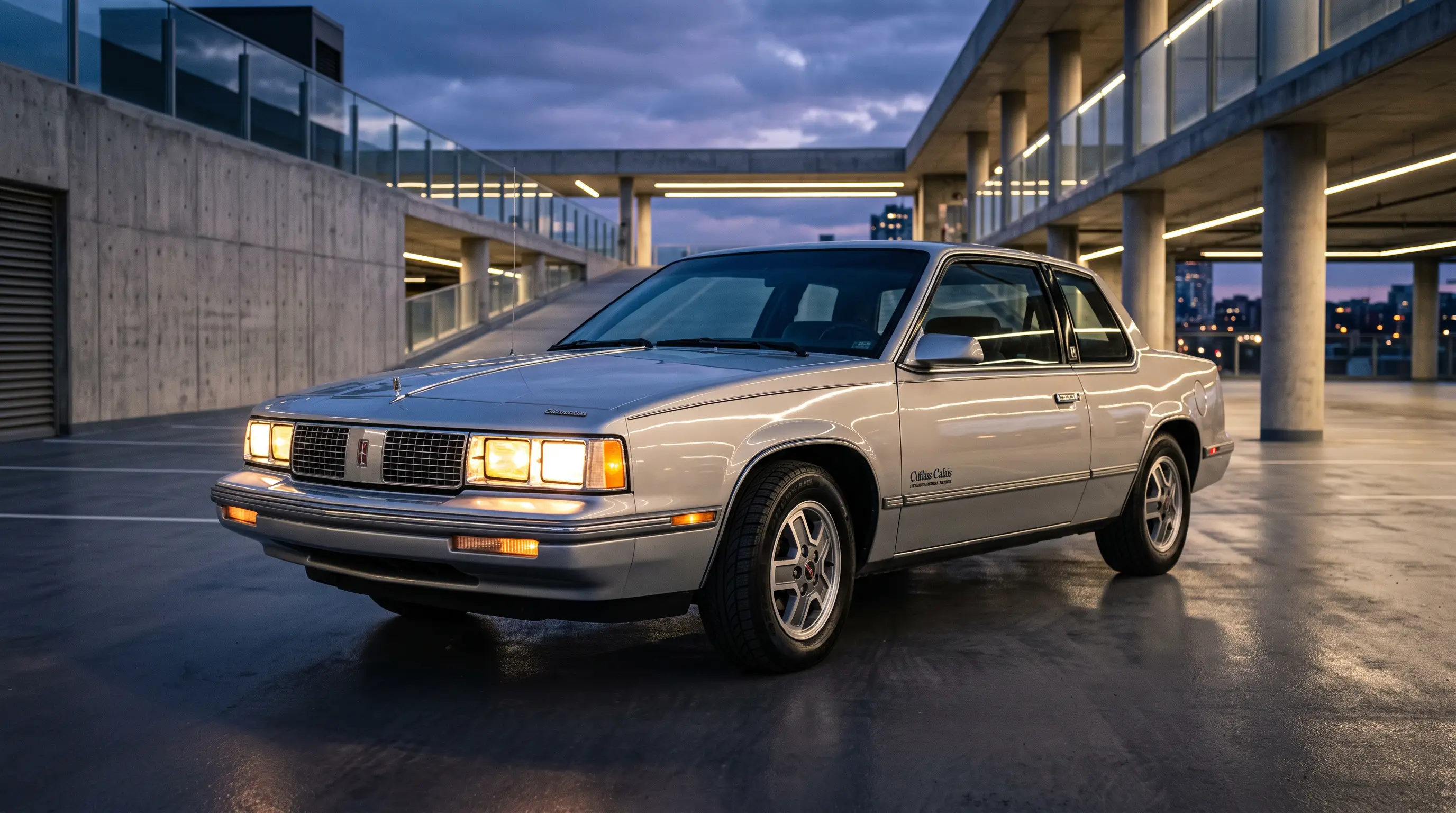
The Cutlass Supreme wasn't the only interesting branch to grow off GM's family tree during these years, either. For a look at how Oldsmobile applied a very different platform under a very similar name, the next story in this set covers the Cutlass Calais, a car that shared almost nothing mechanically with the G-body cars discussed here despite carrying the same nameplate.
If the G-body Cutlass Supreme is the one you're after, current stock of classic Oldsmobile Cutlass for sale regularly includes coupes, wagons, and sedans built on this exact platform, a good starting point for anyone ready to put the history above into practice.