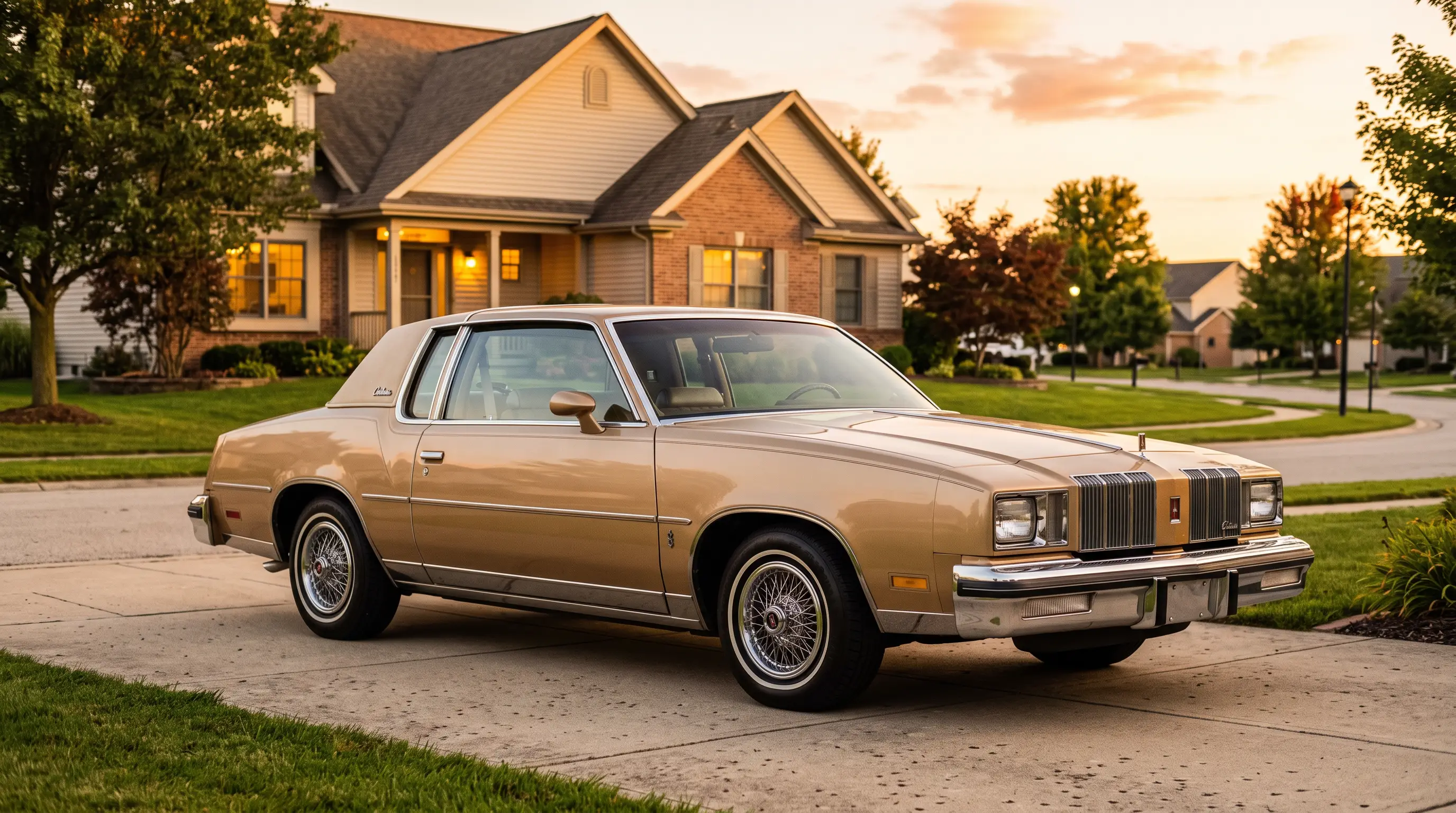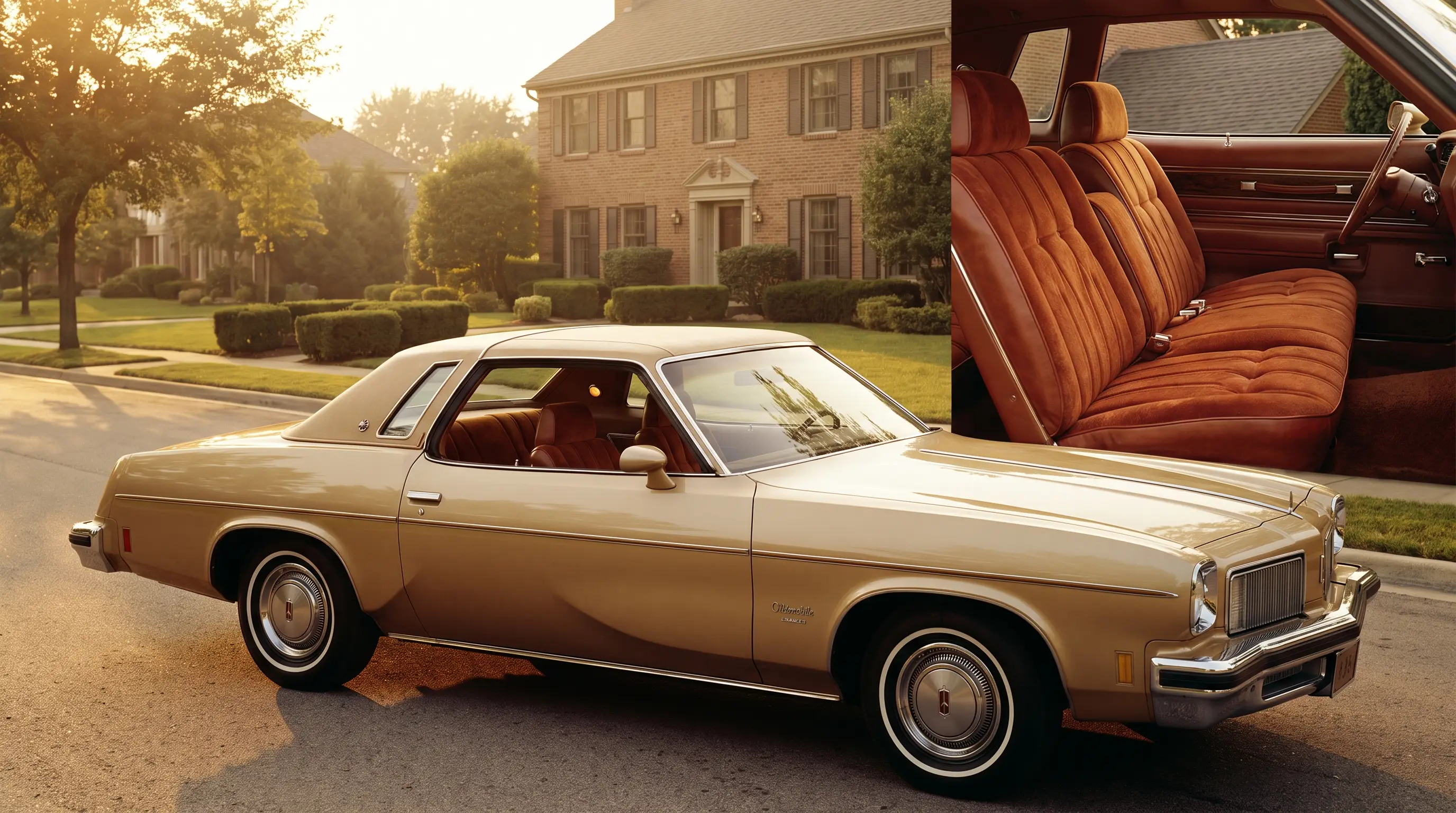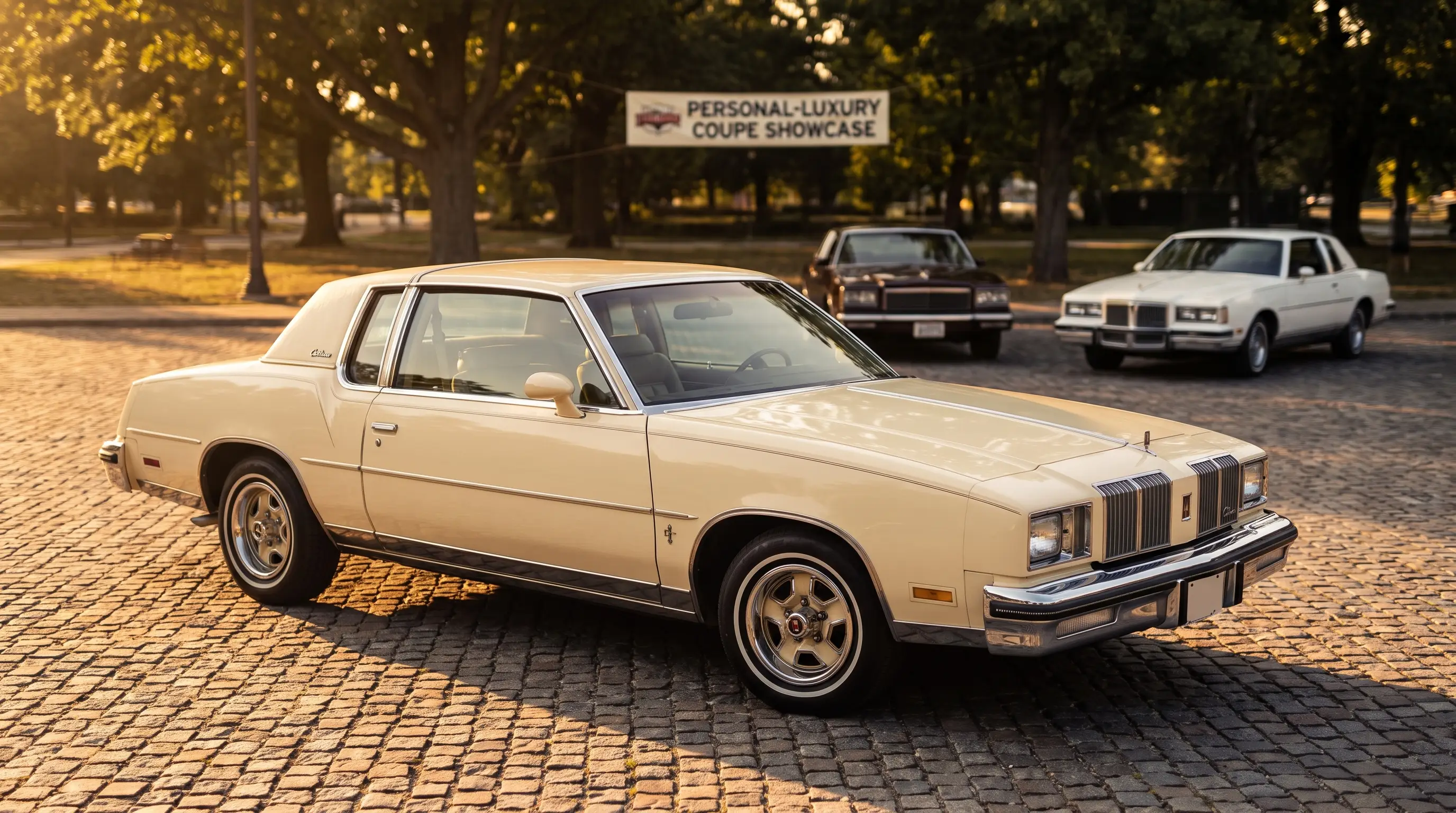
Ask someone who grew up in an American suburb in 1983 to name the car parked in the most driveways on their street, and a startling number of them will land on the same answer without hesitating: a Cutlass Supreme. Not a Malibu, not a Regal, not even the Grand Prix down the block. The Cutlass Supreme, in one trim or another, was simply everywhere, and the 1980s were the decade that cemented it as close to a default American car as anything not wearing a Ford or Chevy bowtie badge.
A downsized car that didn't feel like a compromise
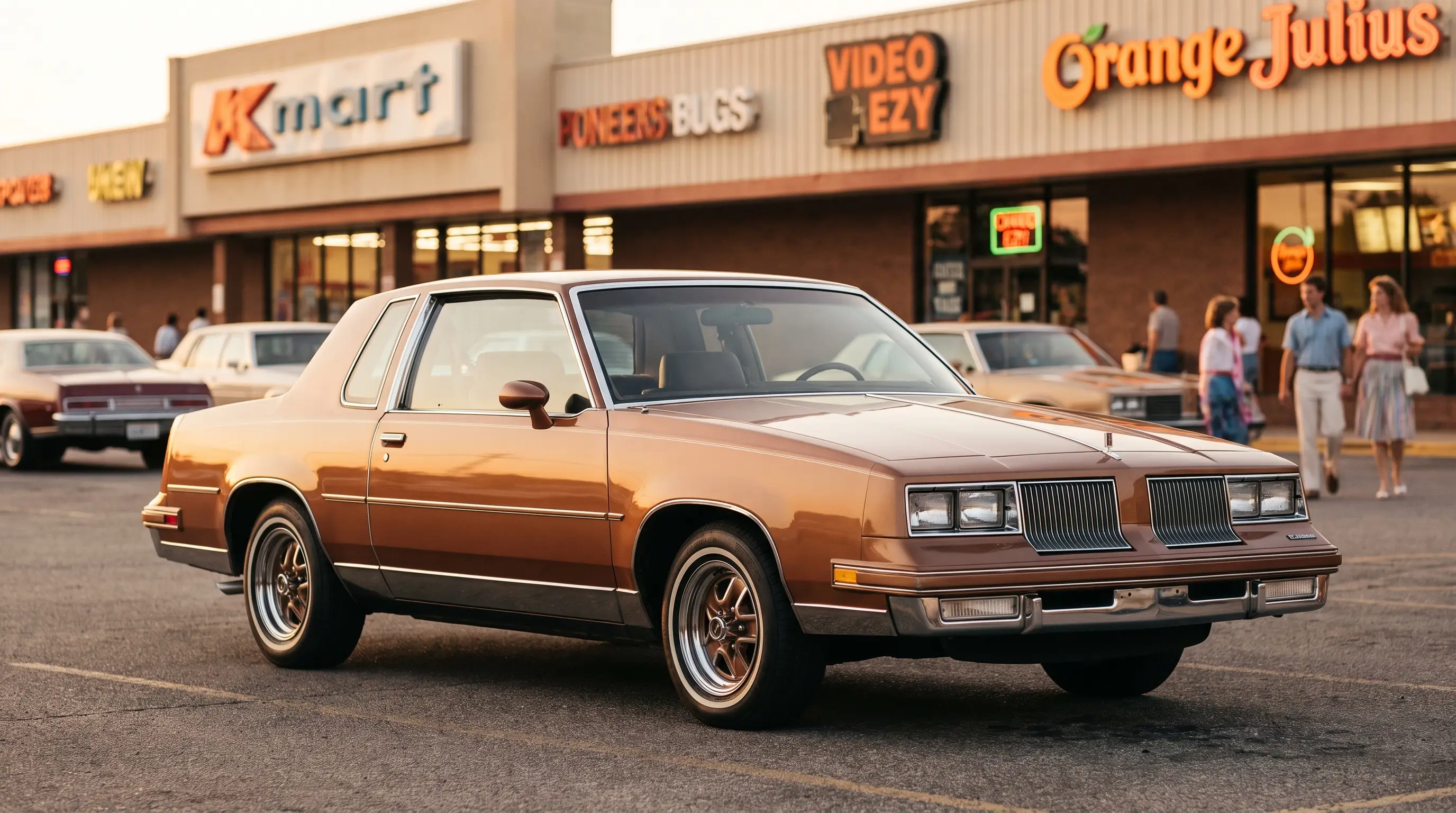
The Cutlass Supreme that carried Oldsmobile through the 1980s wasn't the same physical car that had built the nameplate's reputation in the mid-1970s. General Motors downsized its mid-size platform for the 1978 model year, trimming length and weight off what had been a genuinely large coupe. Buyers who expected the shrinkage to feel like a downgrade were, by most contemporary accounts, pleasantly surprised. The new G-body Cutlass Supreme kept the formal notchback roofline that had made the nameplate recognizable, tightened up the proportions, and actually improved visibility and maneuverability in the process. It read as a refinement, not a diet forced on the customer.
Best-selling car in the country, more than once
What followed that downsizing was a run of sales dominance that's easy to understate in hindsight. The Cutlass line, with the Supreme coupe as its most popular single body style, first took the title of best-selling car nameplate in the United States in 1976 and held it for most years running through the early 1980s, a run interrupted only in a couple of contested years when the exact ranking depended on how the various Cutlass body styles were counted against single-nameplate rivals like the Chevrolet Citation. That is not a niche-market bragging right. That is a mid-size, mid-priced Oldsmobile coupe outselling everything else on the road, including cars from divisions with far bigger marketing budgets and far broader dealer networks.
Part of the explanation is timing. The downsized Cutlass Supreme landed right as the two oil shocks of the 1970s had permanently reset what American buyers considered a reasonable size for a family's main car. A full-size sedan suddenly looked wasteful in a way it hadn't a decade earlier, and a trimmer, still-comfortable coupe like the Cutlass Supreme looked like the sensible middle ground between a compact and the land yacht a buyer's parents might have owned. Oldsmobile didn't design the car around that shift so much as get lucky with timing, but the sales figures didn't care why the car was right, only that it was.
Holding the line while the platform aged
By the mid-1980s the G-body platform underneath the Cutlass Supreme was no longer new, and GM's newer front-wheel-drive cars were already arriving elsewhere in the lineup. Oldsmobile's answer was not to panic and replace the winning formula overnight. Instead the Cutlass Supreme picked up trim-level refinement, the Brougham and later Calais variants each courting a slightly different buyer, while engine and options packages were massaged rather than overhauled. It was a strategy that only works when the underlying product is already right, and for most of the decade, the sales figures said it was.
Engine choices through the decade ranged from a Buick-sourced 3.8-liter (231 cubic inch) V6 making around 110 horsepower up through Oldsmobile's own 307 and 350 cubic inch V8s, with Chevrolet-sourced 267 and 305 V8s and, for a stretch, a much-maligned Oldsmobile 350 diesel also cycling in and out of the order sheet depending on the model year and whatever fuel economy rules were in effect. None of it was exciting on paper. What mattered to the buyer standing in the showroom was that the car started reliably, rode smoothly, and looked, from the driveway, like a step up from whatever they'd owned before. That's a low bar to describe and a hard one to actually clear consistently for ten straight years, which is what the Cutlass Supreme managed to do.
"The car didn't need to be new every year. It needed to be the car your neighbor already trusted, one more time."
— Nora Beckett
A decade of small changes that added up
Look at a 1980 Cutlass Supreme next to a 1987 and the differences are mostly in the details: a revised grille here, updated taillamp lenses there, new wheel designs, and a steady march of interior refinements that kept the cabin feeling current without ever asking the buyer to relearn the car. Bumper designs shifted with federal regulations, badges got restyled, and the options list quietly grew to include things like additional power accessories and updated wheel and trim packages by the middle of the decade. None of it was revolutionary. All of it mattered to the buyer trading in a three- or four-year-old Cutlass Supreme who wanted the new one to feel like a clear step forward.
The overlap year that confused everybody
The decade's strangest chapter came right at its close. For the 1988 model year, Oldsmobile introduced an all-new, front-wheel-drive Cutlass Supreme built on GM's W-body platform, while the aging rear-wheel-drive G-body coupe kept selling alongside it for a brief overlap. Showroom floors, for one unusual stretch, carried two completely different cars sharing one nameplate, a decision that made sense on a spreadsheet and very little sense to a customer standing between them trying to figure out which one was the real Cutlass Supreme. The old body style's continued sales through that overlap say something on their own: buyers weren't finished with the car GM was trying to retire.
Why the decade mattered more than any single model year
No single 1980s Cutlass Supreme model year stands out the way a specific muscle-car year might. What stands out is the consistency. Roughly a decade of a mid-size American coupe holding a sales position that few nameplates before or since have matched, built on a platform that was, by the end, genuinely old, and sold almost entirely on the strength of trust rather than novelty. That's a harder trick to pull off than one great model year, and it's the reason the 1980s Cutlass Supreme still shows up so reliably at car shows today, not as a rarity, but as the car that was simply there.
For the trim level that anchored much of that decade's showroom lineup, see the Cutlass Supreme in full. And for a look at how this car's success fit into the wider personal-luxury coupe boom of the period, a companion piece covers the segment the Cutlass Supreme helped define.
Sources and notes
- Oldsmobile Cutlass, Wikipedia
- Oldsmobile Cutlass Supreme, Wikipedia
- USA 1980: Oldsmobile Cutlass Reigns Supreme, or Chevy Citation?, Best Selling Cars Blog
- Why The Hell Did Americans Buy So Many Oldsmobile Cutlasses, Jalopnik
- Oldsmobile Cutlass Guide, Outright Oldsmobile
- Oldsmobile Reaches Peak Cutlass: the 1977 Cutlass Supreme, Mac's Motor City Garage