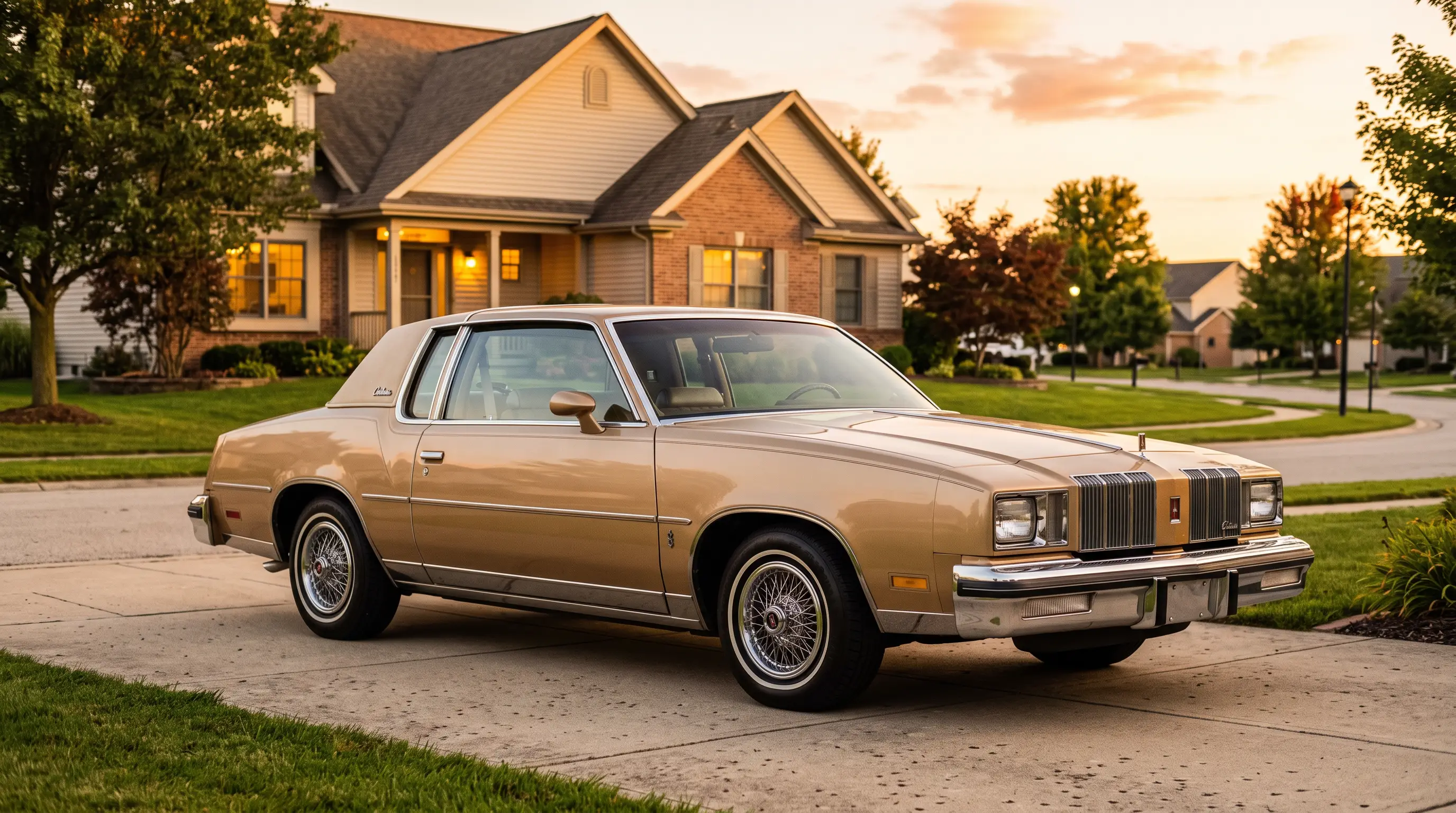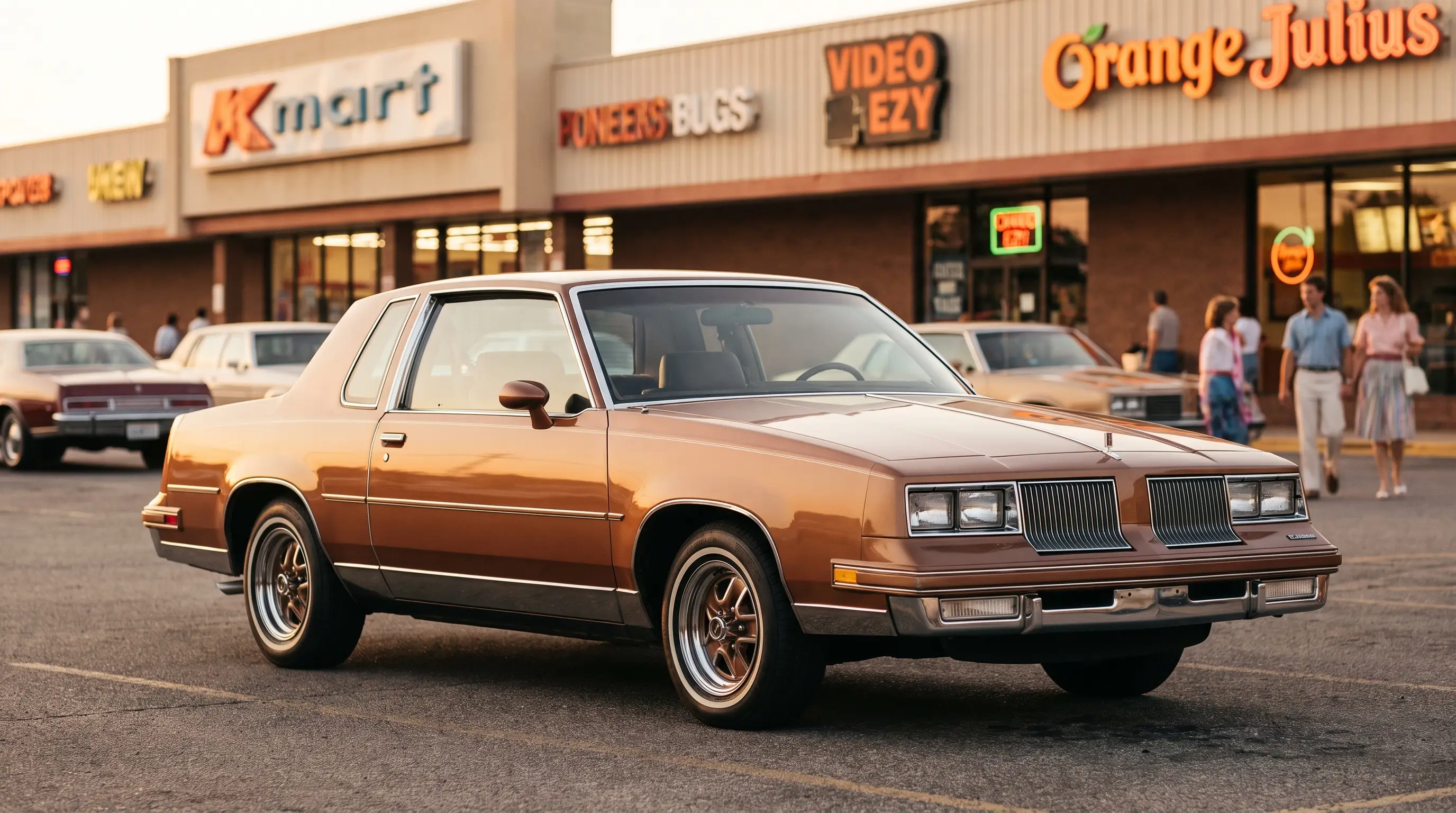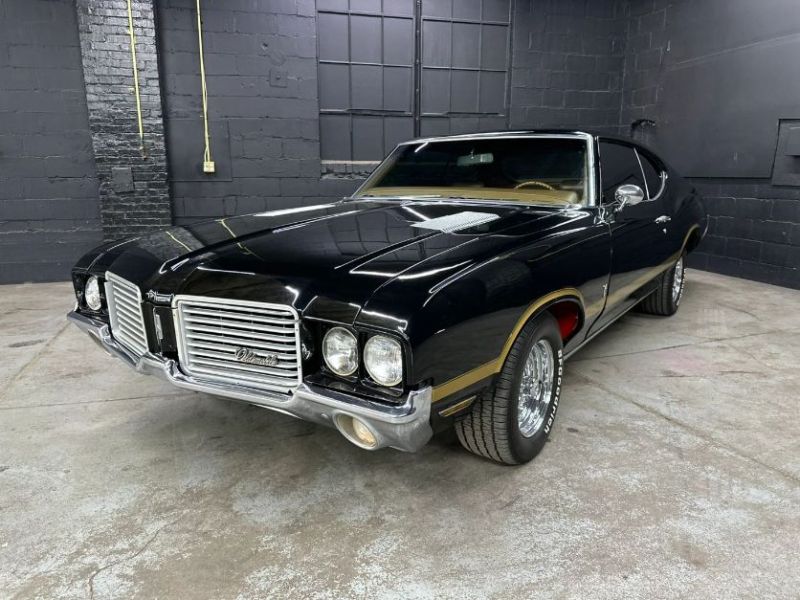
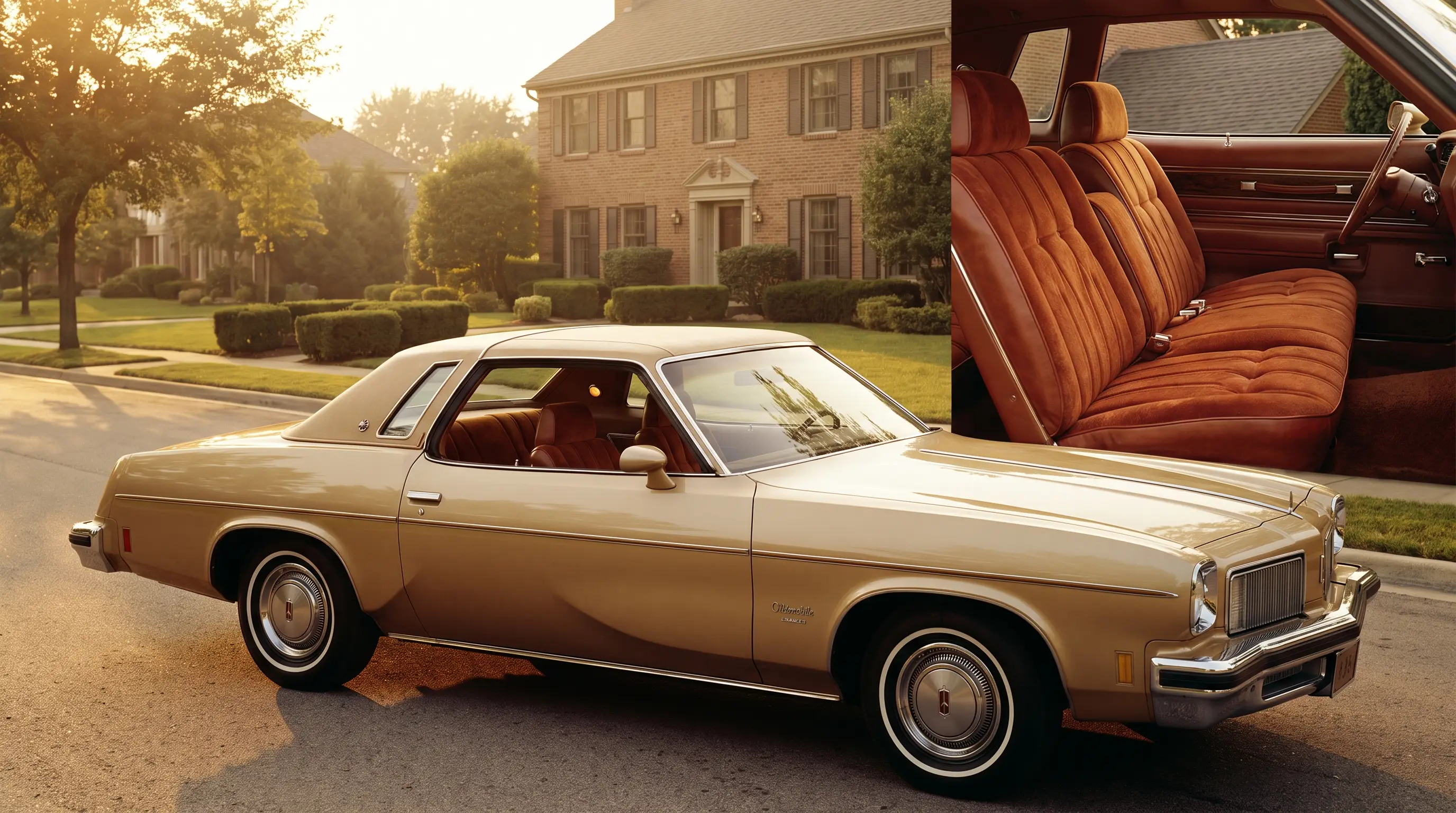
The garage doors at a monthly Olds meet always open the same way: last in, first noticed. When a red 1981 Cutlass Supreme Brougham eases into the row of Cutlasses, the crowd doesn't gather around the paint. They gather around the seats, the ones done in tufted velour the color of a hotel lobby, and somebody always says the same thing. That was the one my grandmother had. The Cutlass Supreme Brougham earned that sentence more than almost any other American car of its era, because it was built, deliberately, to be the car a grandmother would choose and be proud of.
Brougham wasn't an Oldsmobile invention. General Motors sprinkled the name across divisions in the 1970s the way a caterer sprinkles parsley, on the Caprice Classic Brougham, the Electra 225 Limited (close cousin, different dressing), the Ninety-Eight Regency. But nowhere did the formula land more squarely on its target market than on the Cutlass Supreme, the coupe that was already, on its own merits, becoming the best-selling nameplate in America. Brougham took that popular coupe and dressed it for church.
What actually separated a Brougham from a base Cutlass Supreme
The differences were never mechanical. A Brougham-trimmed Cutlass Supreme rode the same chassis, wore the same sheet metal, and in most years could be had with the same engine choices as the plainer S or base coupe. What buyers were paying for sat mostly on the inside of the door skins. Brougham meant a notchback bench or 55/45 split seat in loose-pillow velour, sold under period fabric names like La Mancha crushed velour paired with Dover knit cloth inserts on the mid-1970s cars, woodgrain-look trim across the dash and door panels, and a level of sound deadening that made the car noticeably quieter at idle than a Cutlass S with the same drivetrain.
Outside, the tells were smaller but unmistakable to anyone who grew up around these cars: wire wheel covers, a padded vinyl landau roof section over the rear window, and small opera lamps set into the C-pillar, a detail that did nothing for visibility and everything for the sense that this particular Cutlass had been to finishing school. Chrome trim ran a little heavier, the grille got its own identity within the lineup, and the Brougham script badge sat where anyone walking past the car would see it.
The Cutlass Supreme's own success made Brougham possible
None of this trim-level theater would have mattered if the underlying car hadn't already won. By the back half of the 1970s the Cutlass Supreme, and the broader Cutlass line it anchored, had become the single best-selling car nameplate in the country, a title it first claimed in 1976 and held for most years running into the early 1980s, one that had belonged to full-size Chevrolets and Fords for most of the postwar era. That success gave Oldsmobile's product planners room to get greedy in the best sense, stacking trim levels the way a restaurant stacks a dessert menu once it knows the entrees are selling. Base coupe, Cutlass Supreme, Cutlass Supreme Brougham, and later the sportier Calais trim, all riding the same platform, all aimed at slightly different wallets.
Read the Cutlass Supreme story and the pattern becomes clear: this was never one car so much as a family of them wearing the same badge, and Brougham sat at the top of that family for most of its run.
Who actually bought the Brougham
Dealers of the period will tell you, if you catch them at a swap meet with time to talk, that the Brougham buyer skewed older and more repeat-customer than the Cutlass Supreme buyer at large. These were often people trading in a previous Cutlass, or a Ninety-Eight, or a Buick, who wanted the same general size of car with a little more hush and a little more cushion than they'd had before. It was not a car bought on a test drive after seeing a magazine ad. It was a car bought because the neighbor had one and liked it.
That repeat-customer pattern shows up in period brochure language too, which leaned less on speed or styling and more on words like "quiet," "tufted," and "plush," phrasing aimed squarely at a buyer who had already owned a comfortable car and wanted the next one to be more comfortable still, not different. Salesmen understood this instinctively even when the marketing department never wrote it down: you didn't sell a Brougham on the test drive, you sold it on the seat, and you let the customer sit in it for a minute longer than felt strictly necessary.
"People ask what made the Brougham special and I tell them: nothing you could put a wrench on. Everything you could sit on."
— Nora Beckett
Where the Brougham sits in the collector market today
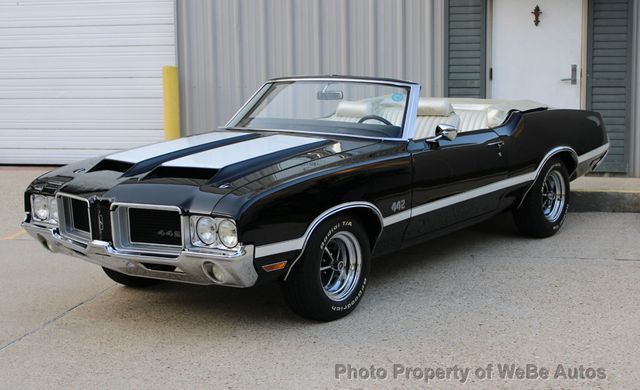
Condition and originality matter more with a Brougham than with almost any other Cutlass Supreme variant, because the interior is the entire point of the car. A Brougham with cracked, sun-baked velour and a peeling landau top has lost the thing it was built to sell. A well-kept example, seats intact, woodgrain unbubbled, opera lamps present and not swapped for aftermarket junk, reads as a small time capsule of a very specific idea about what comfort meant in 1980. Values still trail the sportier 442 and Hurst/Olds cars by a wide margin, which is exactly why a clean Brougham remains one of the more approachable ways into Cutlass ownership.
The math for a buyer today is almost the reverse of what it was in period. In 1980, a Brougham cost more than a base Cutlass Supreme for the extra material and trim. Now, because so many restoration dollars in this hobby chase performance variants, a well-preserved Brougham can often be bought for less than a comparable base coupe in similar condition, simply because fewer people are competing for it. That imbalance won't last forever as more of the plainer cars get restored or scrapped, but for now it makes the Brougham one of the more rational entry points into G-body ownership.
| Trait | Base Cutlass Supreme | Cutlass Supreme Brougham |
|---|---|---|
| Seat trim | Cloth or vinyl bench | Tufted velour, notchback or split bench |
| Roof treatment | Painted or plain vinyl | Padded landau vinyl with opera lamps |
| Wheel covers | Standard hubcaps | Wire wheel covers |
| Dash trim | Simple woodgrain appliqué | Fuller woodgrain-look trim, extra brightwork |
The Brougham's story doesn't end with the 1981 model year. It carries directly into the car's most dominant decade, covered in the next story in this set, when the same formula of comfort-first trim over a proven platform helped make the Cutlass Supreme the car so many American driveways had at least once. For the fuller arc of how the Cutlass name got here in the first place, our Cutlass retrospective lays out the decades before Brougham ever existed as a word on a fender.