
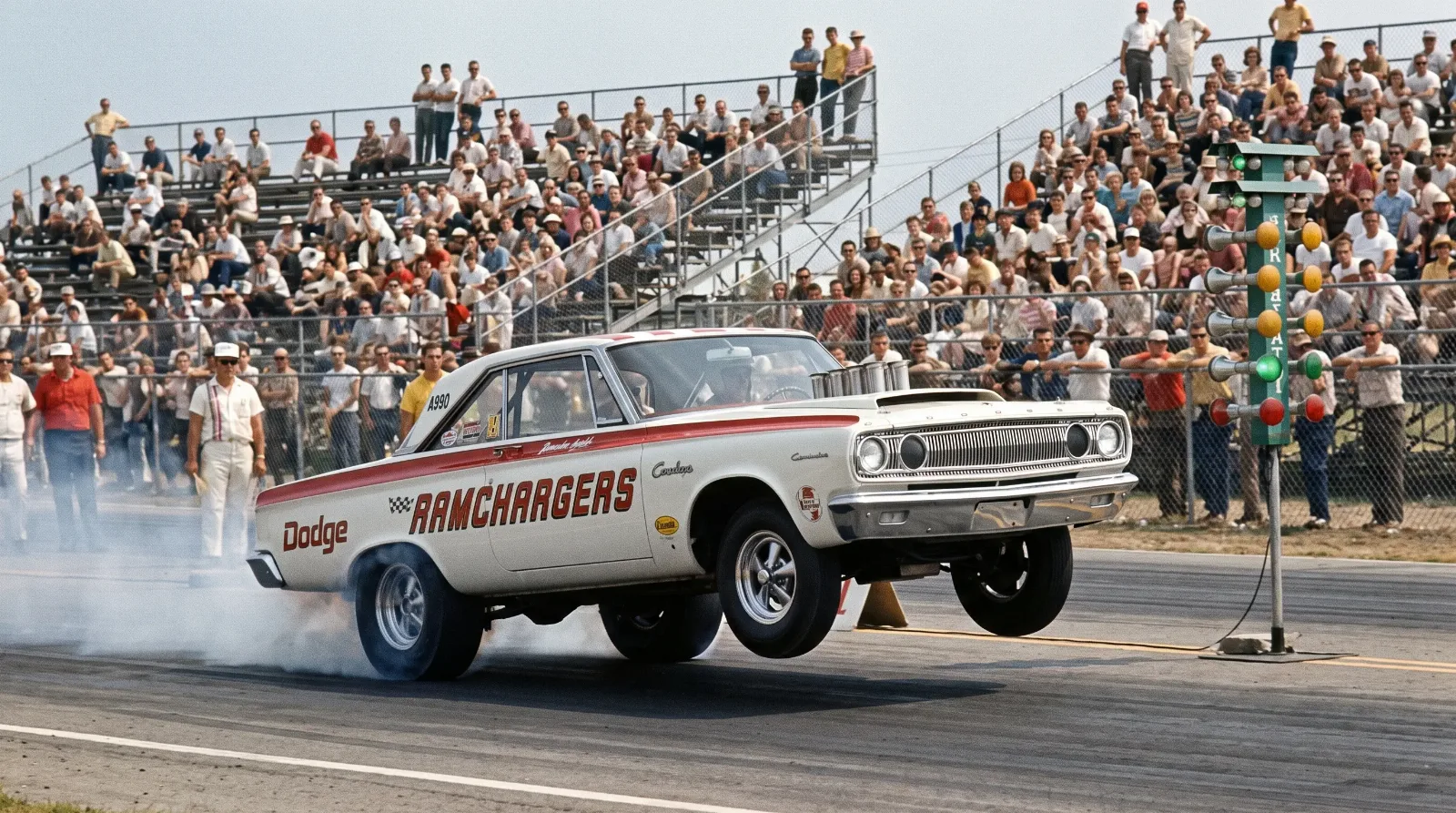
The starter stood between two idling cars at a strip somewhere in the Carolinas, and the crowd on the fence had stopped talking. On one side sat a factory backed Plymouth with a name painted on the door that everybody in the stands already knew. That was the draw. People did not drive three hours on a Sunday to watch cars. They came to watch the men who drove them. In the muscle car years the factory team driver was a genuine folk hero, and a handful of them became household names in a sport most of America had never heard of a decade earlier.
Car Features
6 min read
Drag Strip Heroes: The Factory Team Drivers
Meet the factory drag racing drivers who became folk heroes: Ronnie Sox, Dick Landy, Dyno Don Nicholson and Grumpy Jenkins, and why fans loved them.
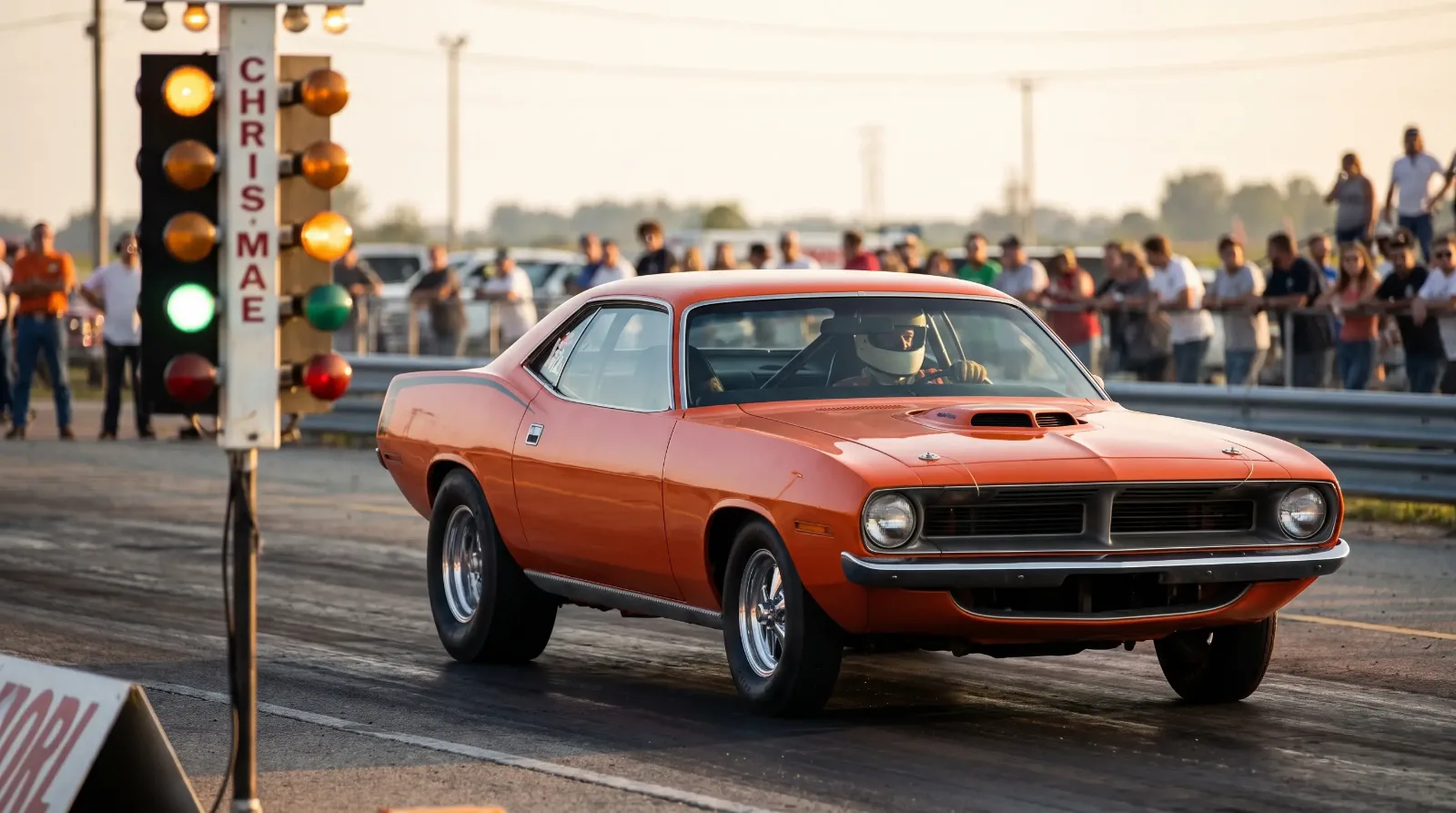
These drivers were not hired hands who showed up and turned a key. Most of them built, tuned, and understood their cars as deeply as any engineer on the payroll. That combination, part racer and part mechanic, is what made them stars. It also made them the public face of a corporate war that played out a quarter mile at a time.
Why the factories needed heroes
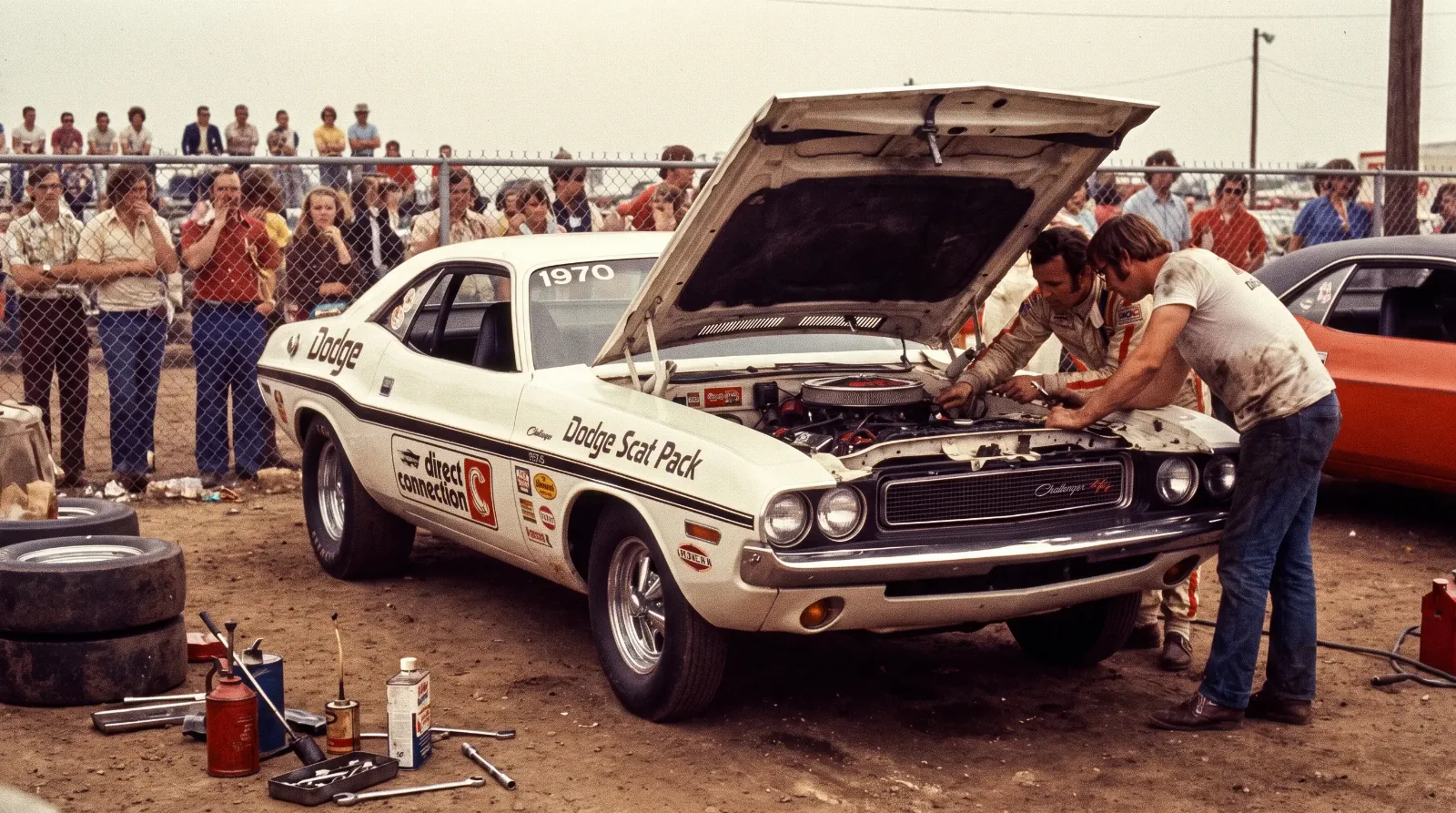
By the middle of the 1960s the manufacturers had figured out that winning on Sunday moved metal on Monday. But a company cannot be a hero. A person can. So Detroit signed drivers, handed them cars and parts, and let their names do the marketing. A win by a factory car was really a win by the man in the seat, and the buying public understood it exactly that way.
The competition was ferocious and occasionally shady, and the rulebook could not always keep up. The whole messy business of policing what these teams actually ran gets its own treatment, and you can read the full story on how the tech shed tried to keep everyone honest. For now, know that the men below raced at the sharp edge of what the rules allowed, and sometimes past it.
The drivers who became legends
Four names come up in almost every conversation about this era, and each carried a different brand's flag.
Ronnie Sox drove for the Sox and Martin team on the Plymouth side, partnered with Buddy Martin. He earned the nickname Mr. Four-Speed for a gift that bordered on unfair. His shifts with a manual gearbox were so fast and so clean that competitors swore he was cheating. He was not. He was just that good with a clutch and a stick, and it made him a terror in Super Stock and later in Pro Stock, where he won the inaugural NHRA Pro Stock championship in 1970 and the Sox and Martin team dominated the class in its first seasons.
Dick Landy, known to fans as Dandy Dick, carried the Dodge banner. Beyond his own driving he ran performance clinics across the country, teaching ordinary owners how to get more out of their cars. That made him a bridge between the factory program and the guy in the grandstand, which is a big part of why he was so beloved.
Don Nicholson, forever Dyno Don, got his nickname from his obsession with dyno tuning. He started on the Chevrolet side and was a force early in the decade, then moved to Mercury and helped pioneer the flip top Funny Car with the 1966 Comet, whose one-piece lift-up body set the template that Funny Cars still use. Nicholson understood that horsepower found on the dyno on Friday won races on Sunday, and he chased it harder than almost anyone.
Bill Jenkins, the man they called Grumpy, flew the Chevrolet flag and was as much engineer as driver. His cars wore the name Grumpy's Toy, and his engineering work helped shape the early Pro Stock class. He drove his Camaro to victory at the 1970 Winternationals, the first NHRA Pro Stock national event, running the class's first nine-second pass to beat the Sox and Martin car. Jenkins was proof that the smartest guy in the pits could also be the one who won, and his influence on how these engines were built outlived his driving career.
| Driver | Nickname | Primary brand | Known for |
|---|---|---|---|
| Ronnie Sox | Mr. Four-Speed | Plymouth / Mopar | Blistering manual shifts, Sox & Martin team |
| Dick Landy | Dandy Dick | Dodge | Racing plus nationwide performance clinics |
| Don Nicholson | Dyno Don | Chevrolet, later Mercury | Dyno tuning, early Funny Car pioneer |
| Bill Jenkins | Grumpy | Chevrolet | Engineer-driver, early Pro Stock architect |
What set these men apart
Talk to people who watched them and the same theme comes up. These drivers were complete. They could feel a car through the seat, diagnose it in the pits, and then go out and drive it at ten tenths. Sox could bang gears in a way nobody could teach. Jenkins could find power in an engine that others had given up on. Nicholson treated the dyno like a lie detector. Landy could win on Sunday and then explain to a room full of amateurs on Monday how they might do the same.
"The fans didn't fall in love with the sheet metal. They fell in love with the guy behind the wheel. You can build a fast car in any era, but you can't manufacture a Ronnie Sox or a Grumpy Jenkins. Those men were the show."
Patrick Walsh
The legacy they left on the strip
When the factory money dried up in the early 1970s, these drivers did not disappear. Many kept racing on their own dime, and their names stayed on the sides of cars for years. More important, they set the template for what a professional drag racer looked like. The idea that a driver should also be a builder and a tuner, that credibility comes from understanding the machine and not just steering it, traces straight back to this generation.
Their era is the beating heart of the whole muscle car racing story, and if you want the broader competitive picture around them you can dig into the details of how the sport was organized and fought over. But the people are what stick with you. Long after the elapsed times are forgotten, fans still say the names. Sox. Landy. Dyno Don. Grumpy. That is what a hero sounds like.
Related Reading
Have a
Classic Car
for Sale?
Reach thousands of serious classic car collectors across the US.
Sell It Here →
Are You a Classic Car Dealer?
List your full inventory and connect with targeted classic car buyers.
Join as a Dealer →
About the author
Patrick Walsh
Automotive journalist covering classic car shows, events, and the enthusiast community across North America.




Comments
Be the first to comment on this article.