
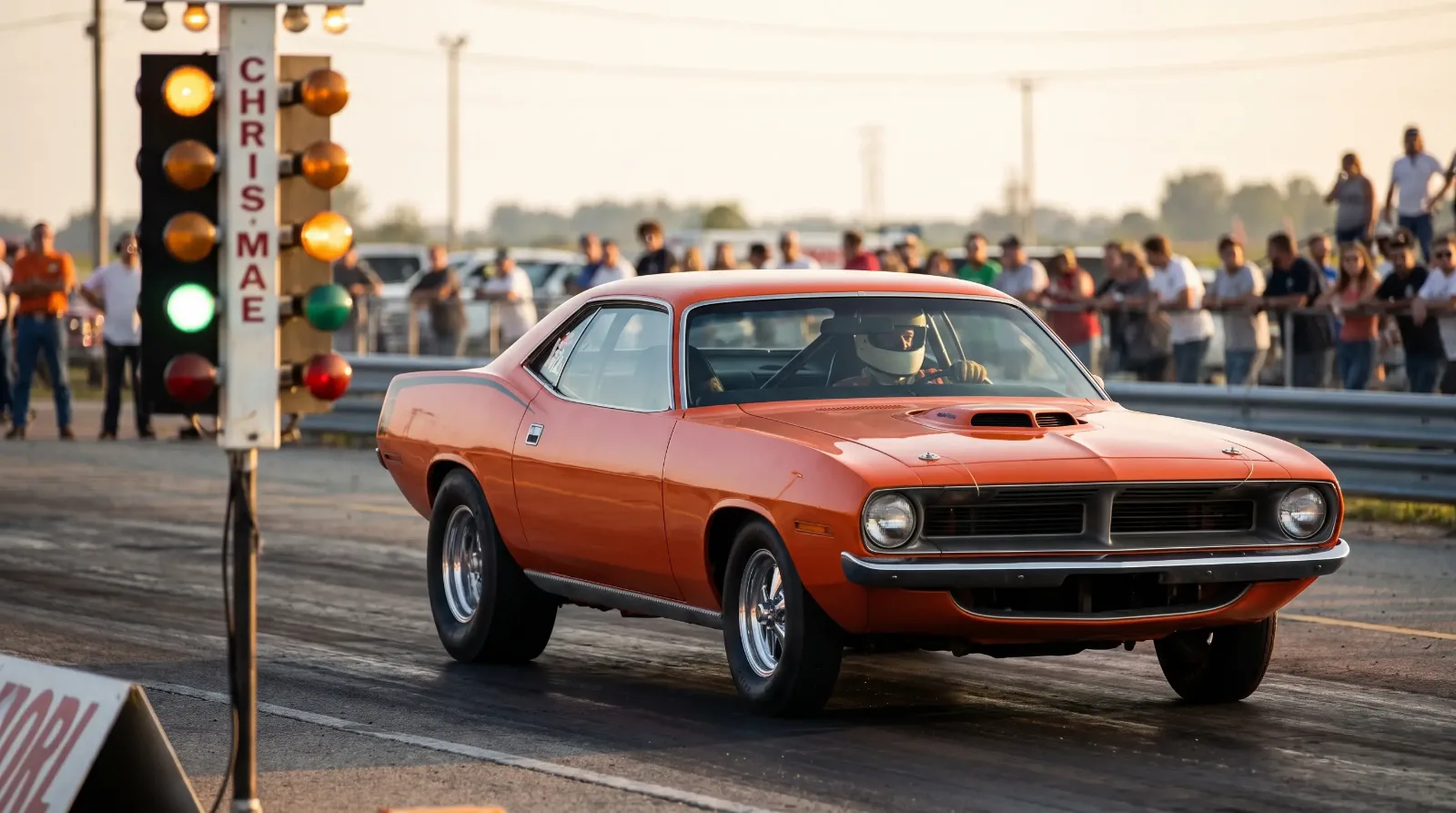
The quarter mile is a stopwatch. It does not care about your paint, your badge, or the story you tell at cars and coffee. It measures one thing. How fast you cover 1,320 feet from a standstill. That number is why the muscle car era happened the way it did. Every manufacturer chased the same clock, and the clock kept getting harder to beat.
Car Features
6 min read
The Quarter-Mile Arms Race
How Detroit's quarter-mile arms race drove displacement, compression and horsepower. Stock ET numbers, torque vs hp, and what the era left behind.
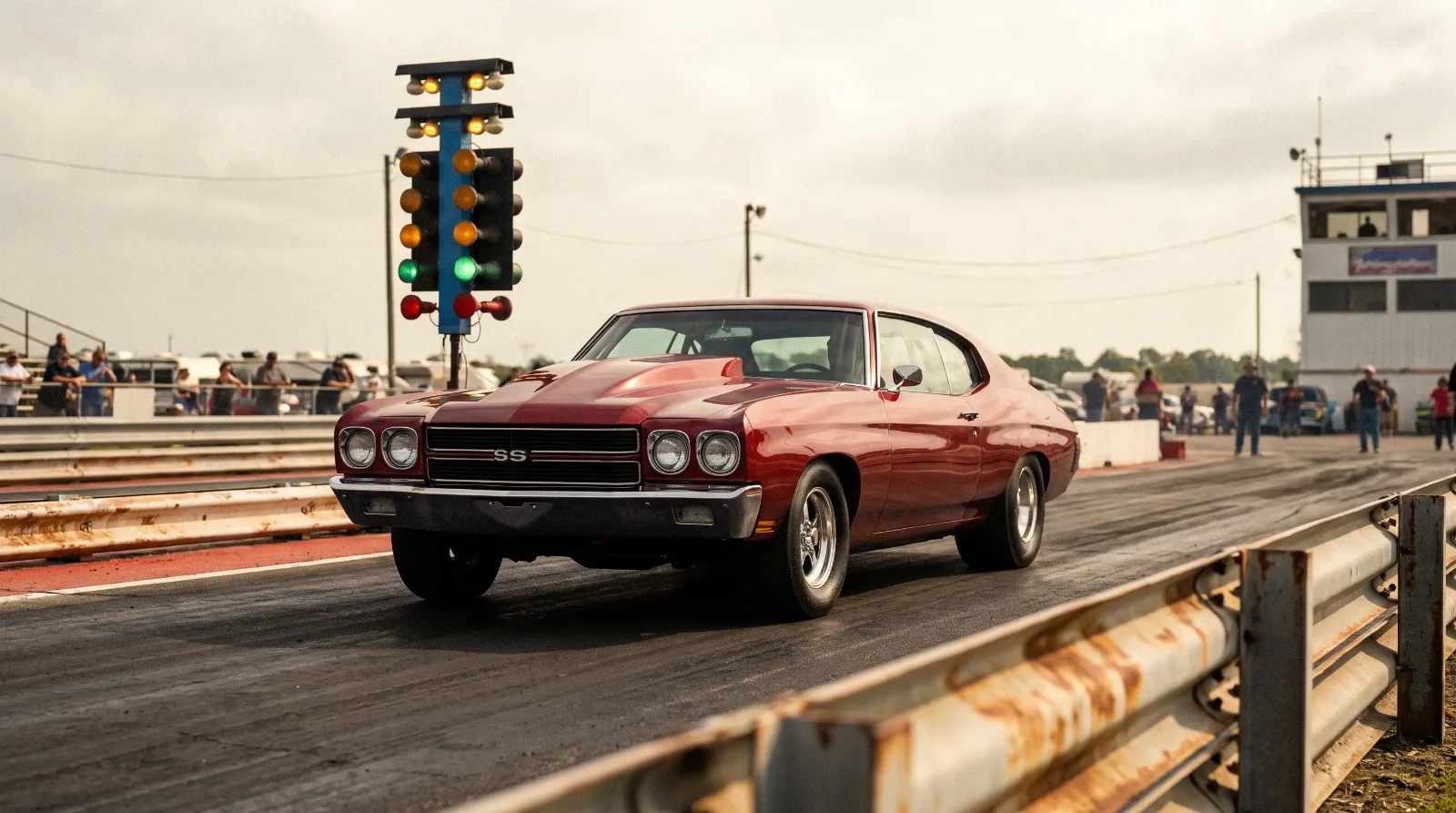
I build engines for a living, so I look at that era the way I look at a dyno sheet. Not the marketing. The result. And the result was a straight up arms race, cubic inch by cubic inch, that turned family car divisions into drag racing programs.
What the quarter mile actually rewards
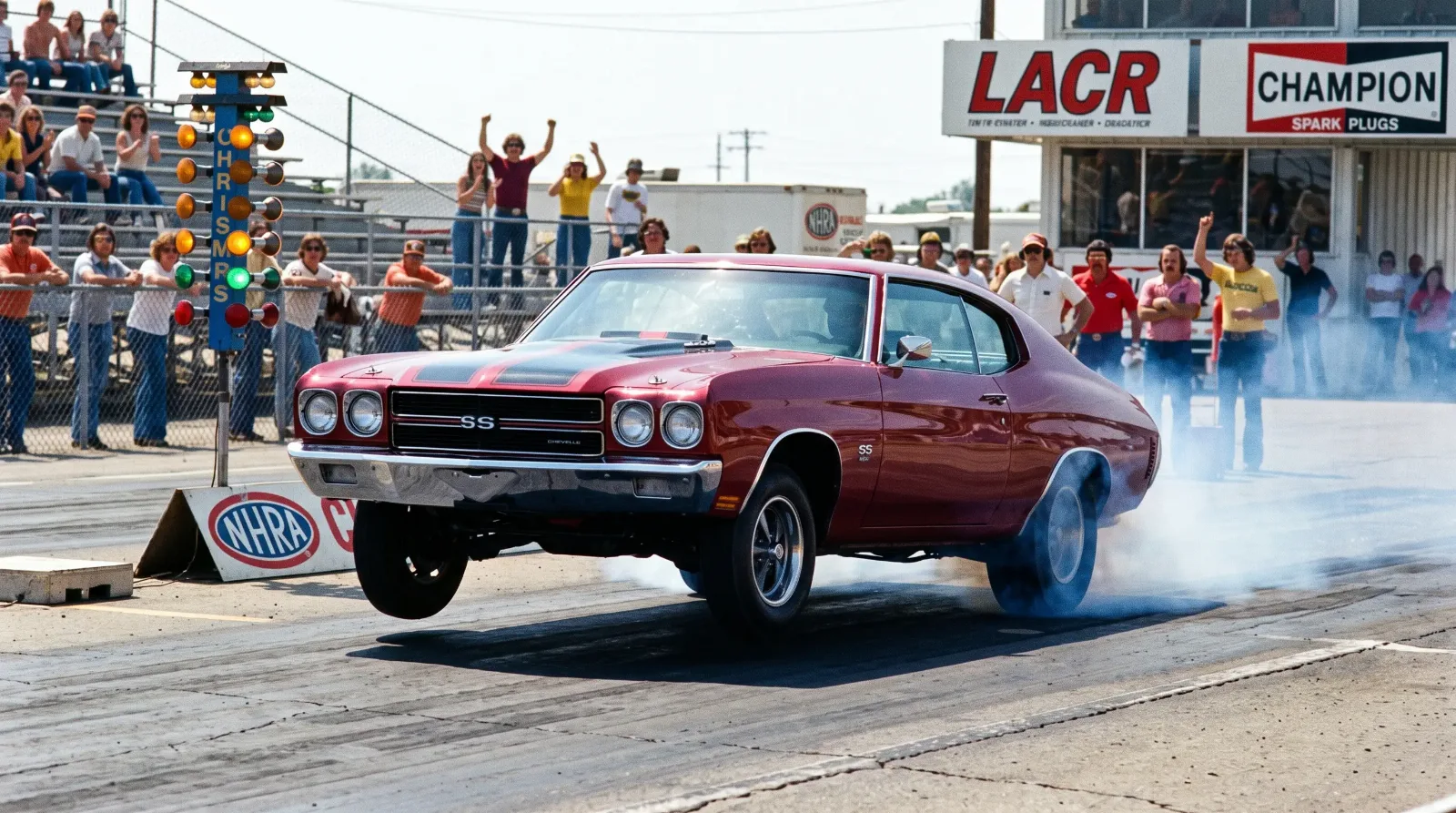
Quarter mile performance is not one number. It is two. Elapsed time is how long the pass takes. Trap speed is how fast you are going at the finish. They tell you different things. A quick elapsed time means the car left hard and hooked up early. A high trap speed means the engine is making real power at the top end. You want both, and the cars that had both are the ones that mattered.
Weight is the enemy. Traction is the currency. You can have 450 horsepower on the sheet and lose to 375 if the other car puts its power down and yours spins the tires to the sixty foot mark. That is the part the spec sheets never showed buyers. The full arms race, and the drivers who mastered it, get the deeper treatment, and you can read the full story on the men who turned these numbers into wins.
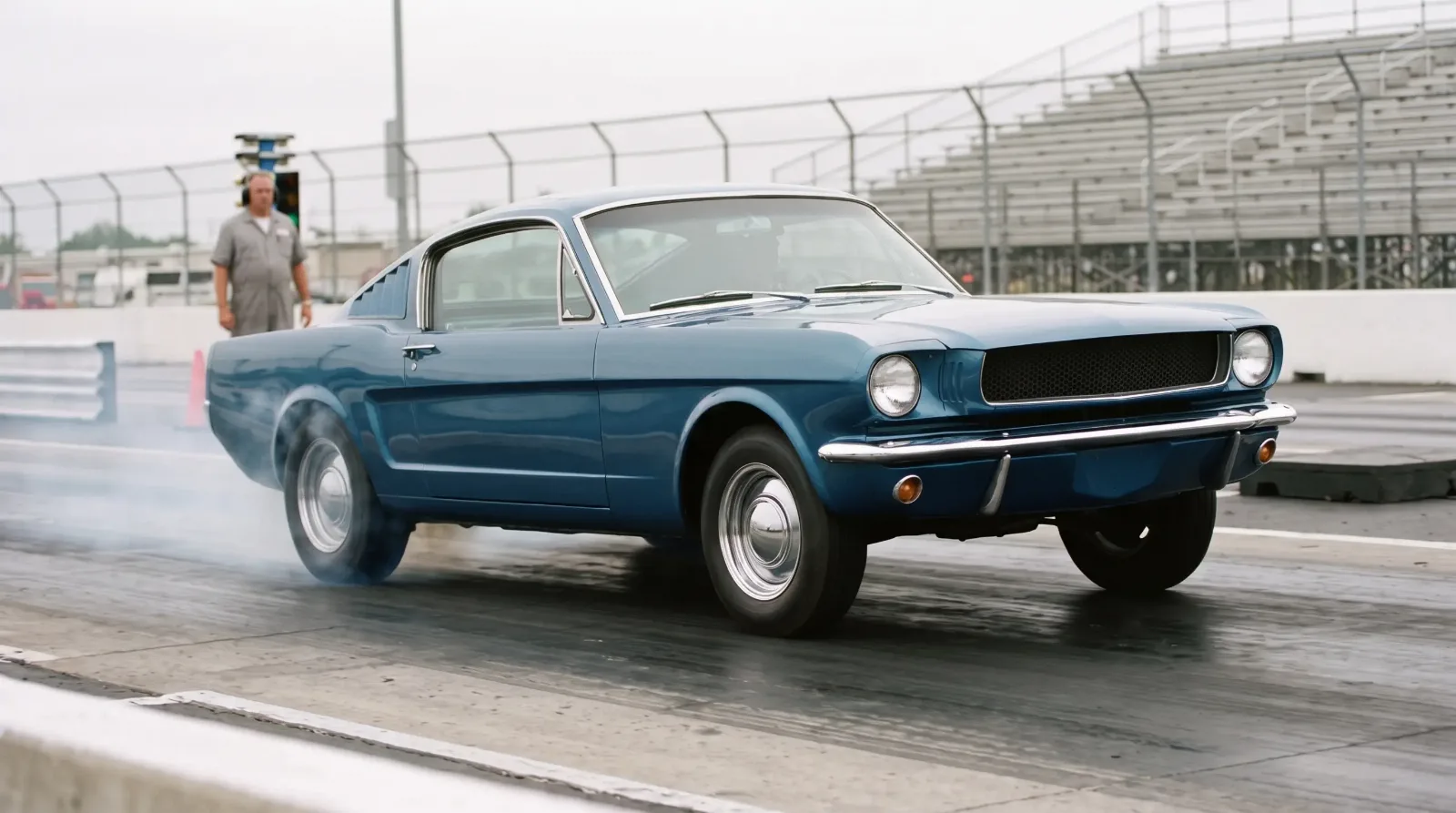
There is a third number that matters more than either of the famous two, and almost nobody quotes it. The sixty foot time. That is how long the car takes to cover the first sixty feet off the line. Get that right and the rest of the pass usually follows. Get it wrong, spin the tires or bog the launch, and no amount of top end power buys the time back. Every one of these factory cars lived or died in that first sixty feet, on street tires that were never designed for a hard launch. That is why the racers who ran them switched to slicks the moment the rules let them.
How the factories chased the clock
The formula was not complicated. More cubic inches. More compression. Bigger carburetion. The 1960s watched displacement climb from the mid 300s into the 440 and 454 range, and the top engines wore two four barrel carburetors or a single monster Holley. Chrysler brought the 426 Hemi. Chevrolet answered with the 454 LS6. Ford ran the 428 Cobra Jet and the 429. Every one of those was a swing at the same target.
Compression was the quiet weapon. Most of these top engines ran compression ratios north of 10.5 to 1, some closer to 11, on the leaded premium fuel of the day. That is where a lot of the advertised power came from. It is also why so many of these motors got detuned or blew up in the 1970s when the fuel changed. The number on the brochure assumed a pump gas that stopped existing.
The numbers that defined the era
Here is where I get careful, because stock quarter mile times are the most abused figures in this hobby. Magazine test numbers varied wildly depending on the tires, the driver, the track, and how much the press car had been massaged before it showed up. Treat every one of these as approximate, tested figures, not gospel.
| Car | Engine | Advertised hp | Approx. stock 1/4 mile |
|---|---|---|---|
| 1970 Chevelle SS454 LS6 | 454 V8 | 450 | ~13.1-13.8 sec |
| 1970 Plymouth Hemi Road Runner | 426 Hemi | 425 | ~13.5-14.0 sec |
| 1969 Ford Mustang 428 Cobra Jet | 428 V8 | 335 | ~13.9-14.3 sec |
| 1970 Buick GSX Stage 1 | 455 V8 | 360 | ~13.4-14.0 sec |
Notice the Buick line. On paper the Stage 1 455 shows less power than the LS6, yet it ran right with it in the traps. That is torque doing the work. Advertised horsepower is a peak figure. What launches a heavy car is torque down low, and Buick had a mountain of it. This is exactly the kind of thing a dyno tells you and a brochure hides.
The gearing told the same story. A steep rear axle ratio, something in the 3.90 or 4.10 range, traded top speed for brutal acceleration off the line. Order the same car with a mild highway gear and it lost a big chunk of a second in the quarter, even though the engine never changed. Buyers who checked the wrong box on the order form were slower at the strip and had no idea why. The factory hot rodders knew, which is why the real street brawlers left the showroom with a numerically high gear and a limited slip differential.
"Advertised horsepower sold cars. Torque won at the strip. If you only read the peak number on the brochure, you missed the whole story of why some of these cars left the line like they were shot out of something."
Dan Reeves
What the arms race left behind
The arms race ended fast. Emissions rules, insurance surcharges, and a fuel crisis gutted the whole thing by the mid 1970s. Compression dropped. Cam timing got lazy. The advertised numbers fell off a cliff, and net rating replaced gross rating, which made the drop look even worse on paper than it was. For a decade the quarter mile times went backward.
What survived is the hardware and the knowledge. The cars from the peak years, roughly 1969 through 1971, still set the benchmark, and the whole competitive backdrop is laid out in the drag racing history explainer if you want the sanctioning side of it. The engines themselves are still the foundation for how people make power in these platforms today, just with better fuel and better parts.
If you want to own a piece of that clock chasing era, the market is deep and the prices reward documentation. You can find current muscle car listings and see what the real cars bring. My advice stays the same as it is in the dyno room. Chase the honest number, not the loud one.
Related Reading
Have a
Classic Car
for Sale?
Reach thousands of serious classic car collectors across the US.
Sell It Here →
Are You a Classic Car Dealer?
List your full inventory and connect with targeted classic car buyers.
Join as a Dealer →

About the author
Dan Reeves
Performance engine builder from North Carolina's motorsports corridor, focused on swaps, forced induction and making real, repeatable power.
Comments
Be the first to comment on this article.