
Every muscle car that ever mattered was answering a question that got settled at a stoplight or a starting line. Not on a spec sheet. On the street, late at night, or on a strip on a Sunday with money changing hands. That is the part people miss when they talk about these cars as furniture. They were built to run, and the ones that ran hardest set the template everybody else copied.
Car Features
8 min read
Muscle Car Racing: Strip, Street & Sanctioning
Drag racing history and the muscle car: from Woodward Avenue street runs to NHRA, AHRA and IHRA sanctioning, factory lightweights, Super Stock and Pro Stock.
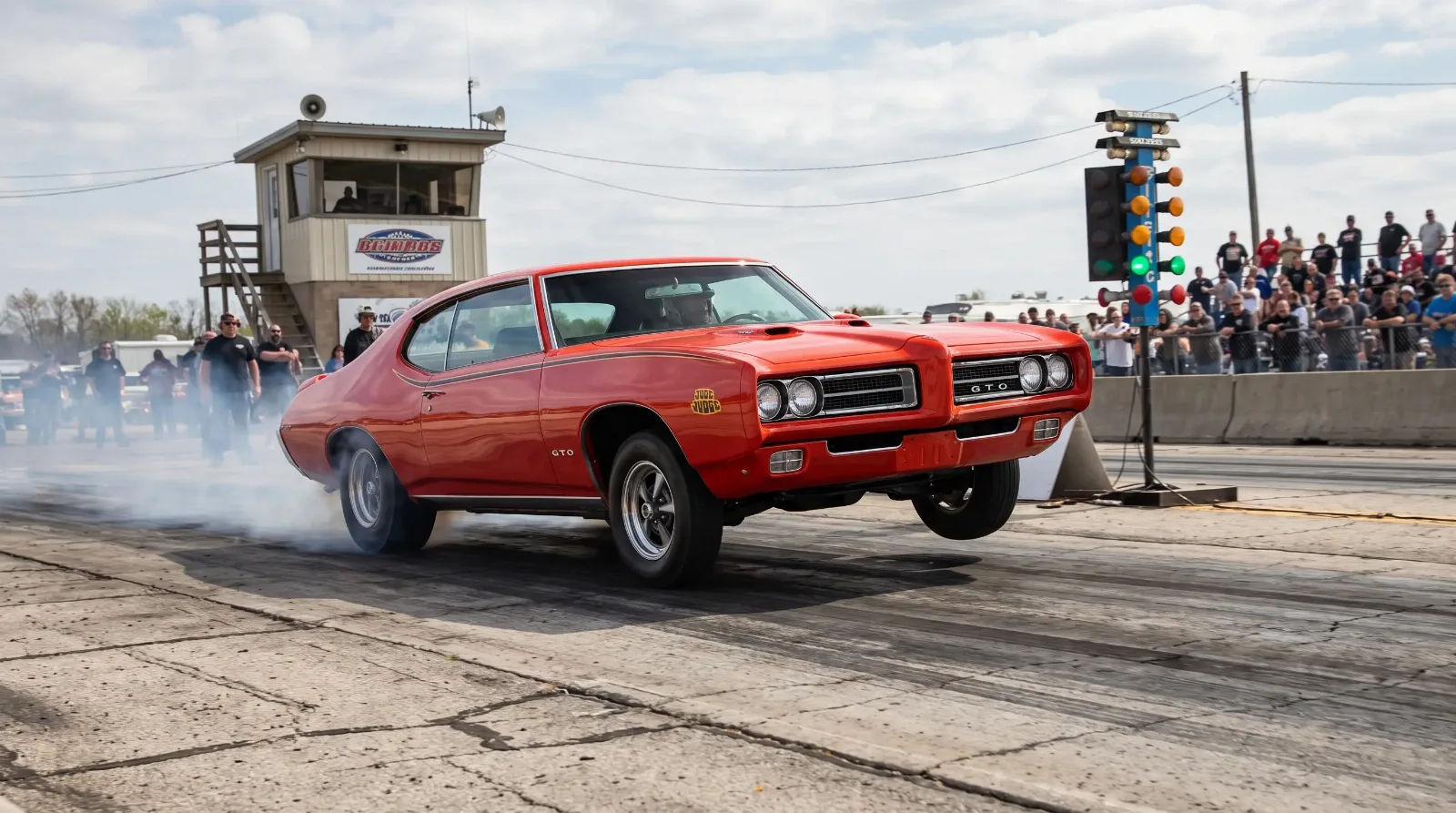
Drag racing history and the muscle car grew up together, each one feeding the other. The factories built faster cars because guys were racing them, and guys raced them harder because the factories kept building faster ones. If you want the wider frame around all this, start with the classic muscle car story. What follows is about where the racing actually happened, who made the rules, and how a quarter mile of asphalt shaped an entire industry.
Where it started, out on the street
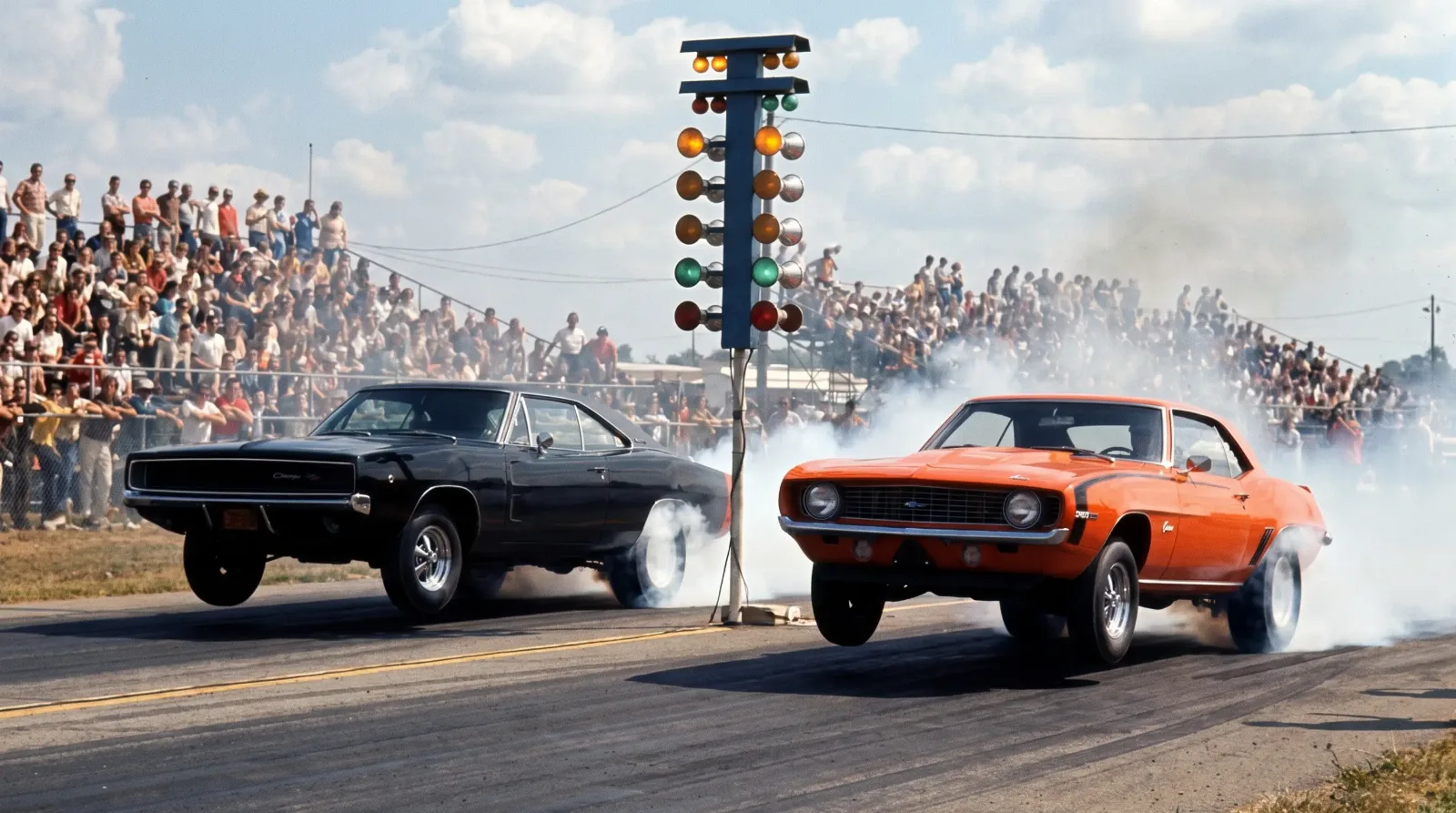
Before it was organized it was illegal. The real birthplace of muscle car racing was the boulevard, and the most famous stretch of it was Woodward Avenue in Detroit, where the engineers who built these cars would test them against each other after hours. That is not a legend. Guys from Ford and Chrysler and GM ran their own machinery on public roads, and word of who beat who traveled back into the design studios by Monday morning.
Street racing was raw and it was dangerous and it settled arguments no dyno could. But it had a problem. No timing, no fairness, no safety, and a lot of trouble with the law. The whole point of organized drag racing was to take that energy off the street and put it somewhere with a clock and a rulebook.
The strip and how the quarter mile got organized
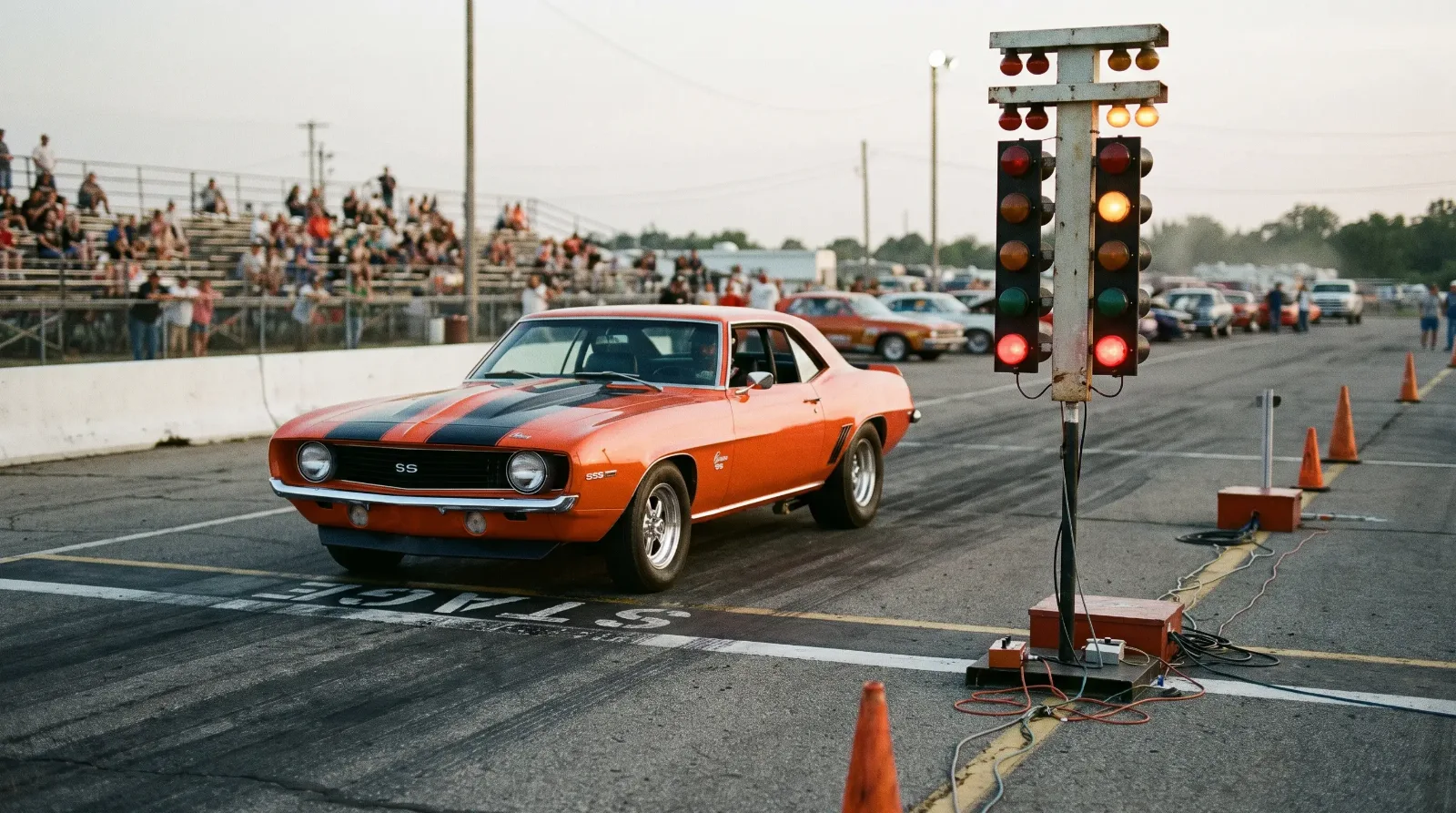
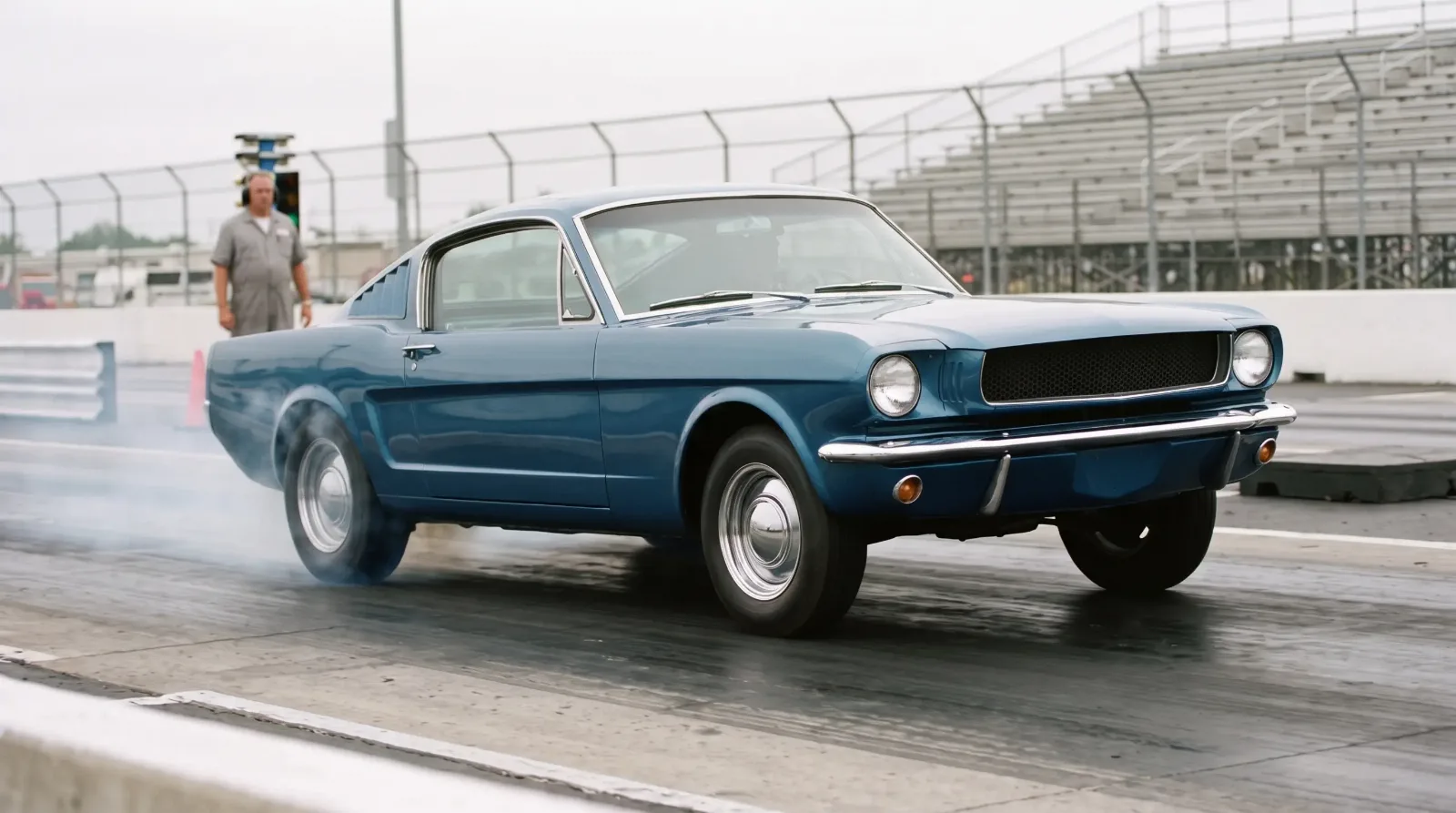
The quarter mile, thirteen hundred and twenty feet, became the standard measure of a car. Two cars, a Christmas tree of lights, and an elapsed time that did not care about your brochure. That honesty is why the strip mattered. You could talk all day about horsepower, but the ET slip printed the truth.
What I respect about strip racing is that it rewards a proper build over a fat wallet. Getting a heavy factory car down the strip quick takes real work. Weight out, gearing right, suspension set up so the thing hooks instead of spinning the tires into smoke. A well-sorted car driven clean beats a faster car set up wrong every single time. That is a builder's lesson, and it held true from the first organized meets straight through to today.
The bodies that made the rules
Organized racing needs somebody keeping order, and three main sanctioning bodies ran the show. Each one had its own classes, its own rulebook, and its own idea of what counted as fair. If you did not know which one you were racing under, you did not know what your car was legal to run.
| Sanctioning body | Founded | Founder | Known for |
|---|---|---|---|
| NHRA (National Hot Rod Association) | 1951 | Wally Parks | The dominant body; Stock, Super Stock, later Pro Stock |
| AHRA (American Hot Rod Association) | 1956 | Jim Tice | Looser rules, ran classes NHRA would not |
| IHRA (International Hot Rod Association) | 1970 | Larry Carrier | Rival national circuit, heads-up racing focus |
NHRA was the big one, and Wally Parks built it partly to give street racers a legal, safer place to go. The looser bodies mattered too, because they would run combinations NHRA had banned, which kept the innovation flowing. The rulebook was not just paperwork. It decided which engines, which weights, and which tricks were allowed, and clever builders spent their lives reading it for angles.
Factory lightweights and the arms race on the strip
This is where it gets interesting for anybody who loves a purpose-built car. Once the factories figured out that winning classes sold cars, they started building specials aimed straight at the strip. Not comfortable street cars. Weapons.
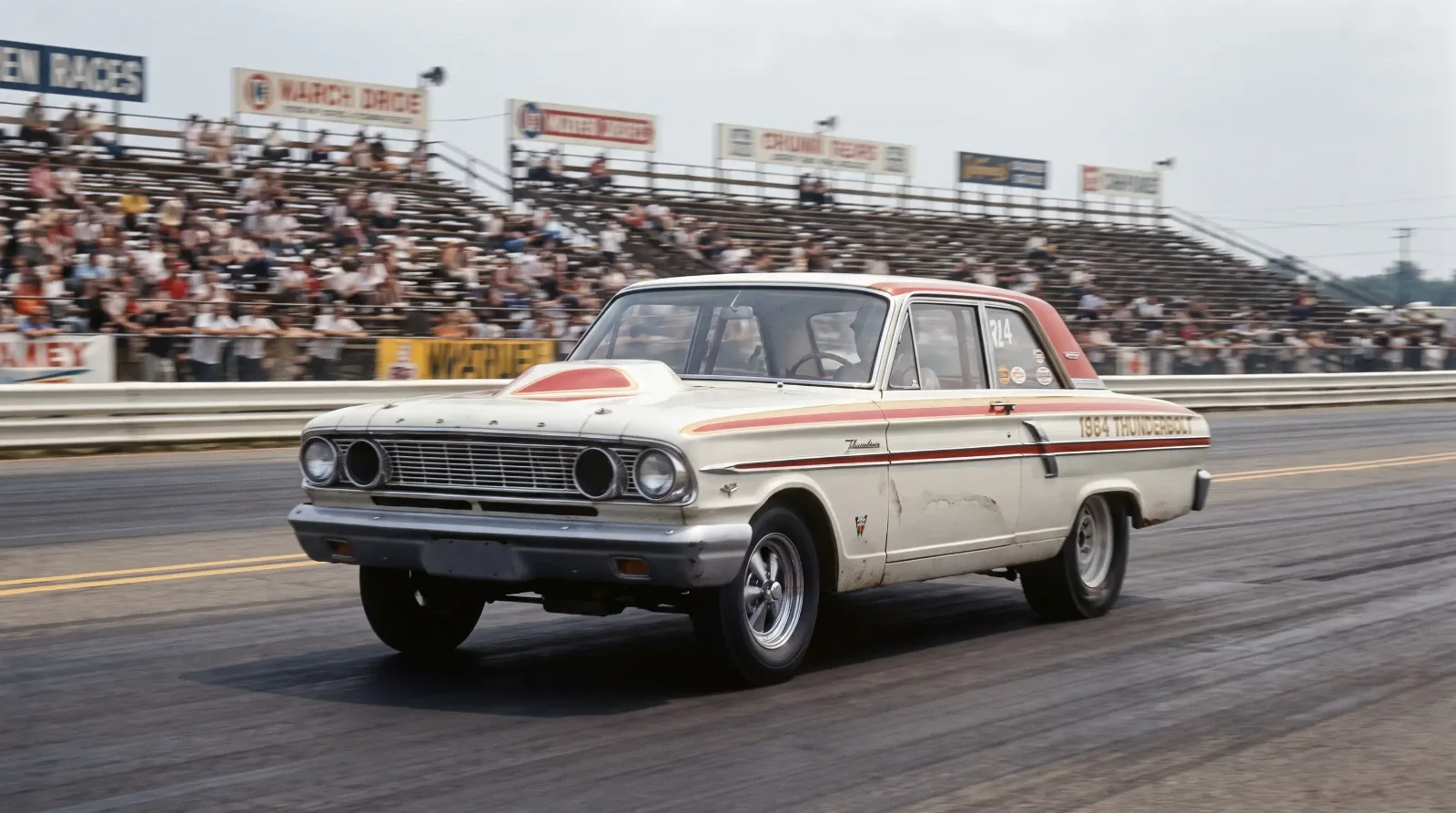
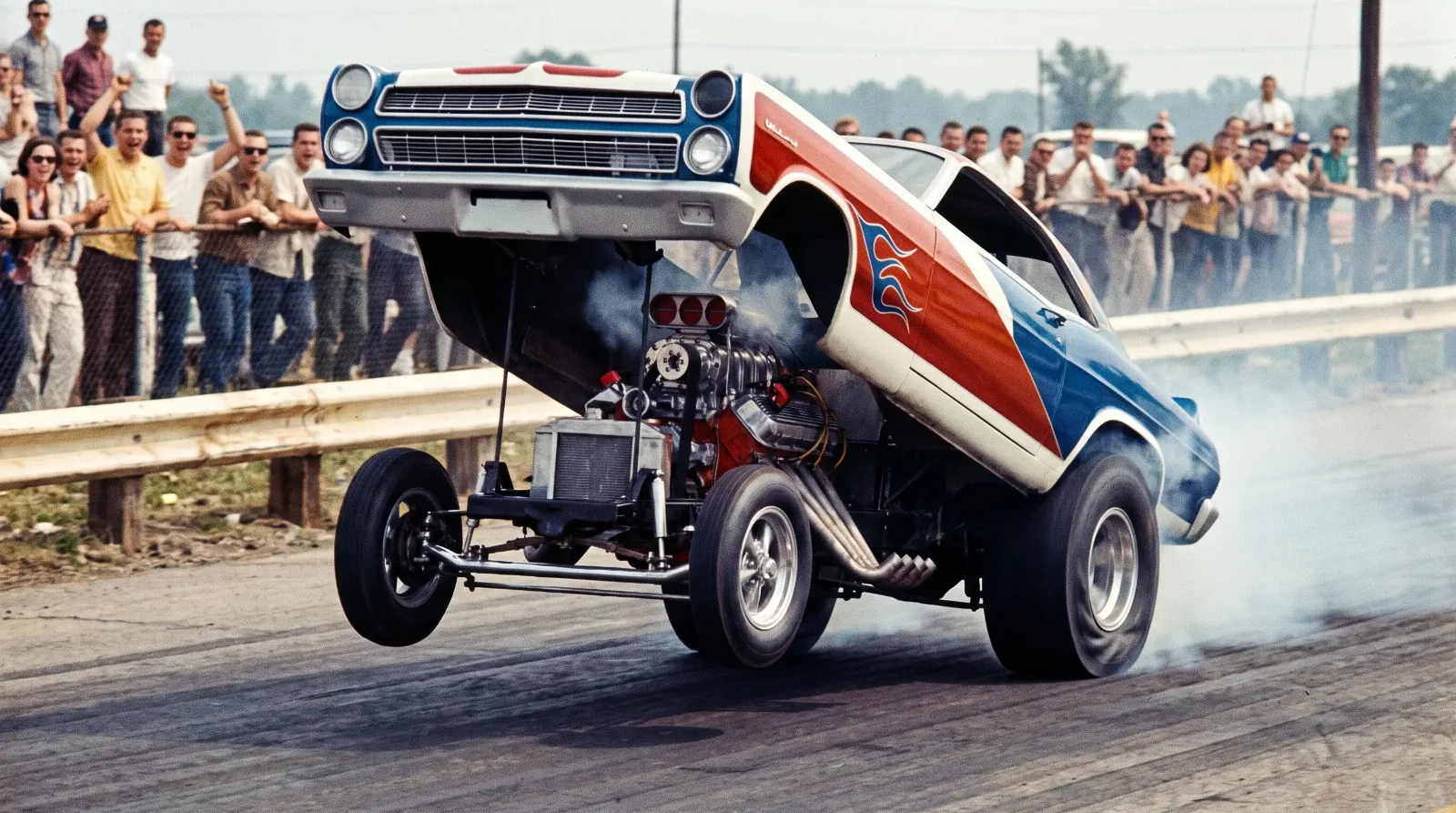
Ford built the Thunderbolt for 1964, a mid-size Fairlane stuffed with a race 427, fiberglass and aluminum panels, and just about everything unnecessary thrown in the trash to save weight. Only around a hundred were built, and they were never really meant for the grocery run. Chrysler went further and stranger, moving the wheelbase forward on its cars in 1965 to shift weight rearward for traction, which looked bizarre and worked, and those altered-wheelbase cars became the seed of the entire Funny Car category. Chevrolet had its own path through special dealer-ordered cars, the COPO route that put big race engines into cars the factory would not officially admit to building.
These were homologation specials in spirit, built in small numbers so the model would be legal to race. That is why the surviving examples are worth what they are. They were the tip of the spear, and there were never many of them.
Super Stock, Pro Stock, and the classes that mattered
The class structure is what made the strip a real competition instead of a free-for-all. Cars got grouped by weight-to-power ratio so a small-block could race a small-block and a big heavy car was not thrown against a stripped-out special. Stock and Super Stock were the classes closest to what a buyer could actually order, which is exactly why the factories cared so much about them. A win in Super Stock was a win the showroom could sell.
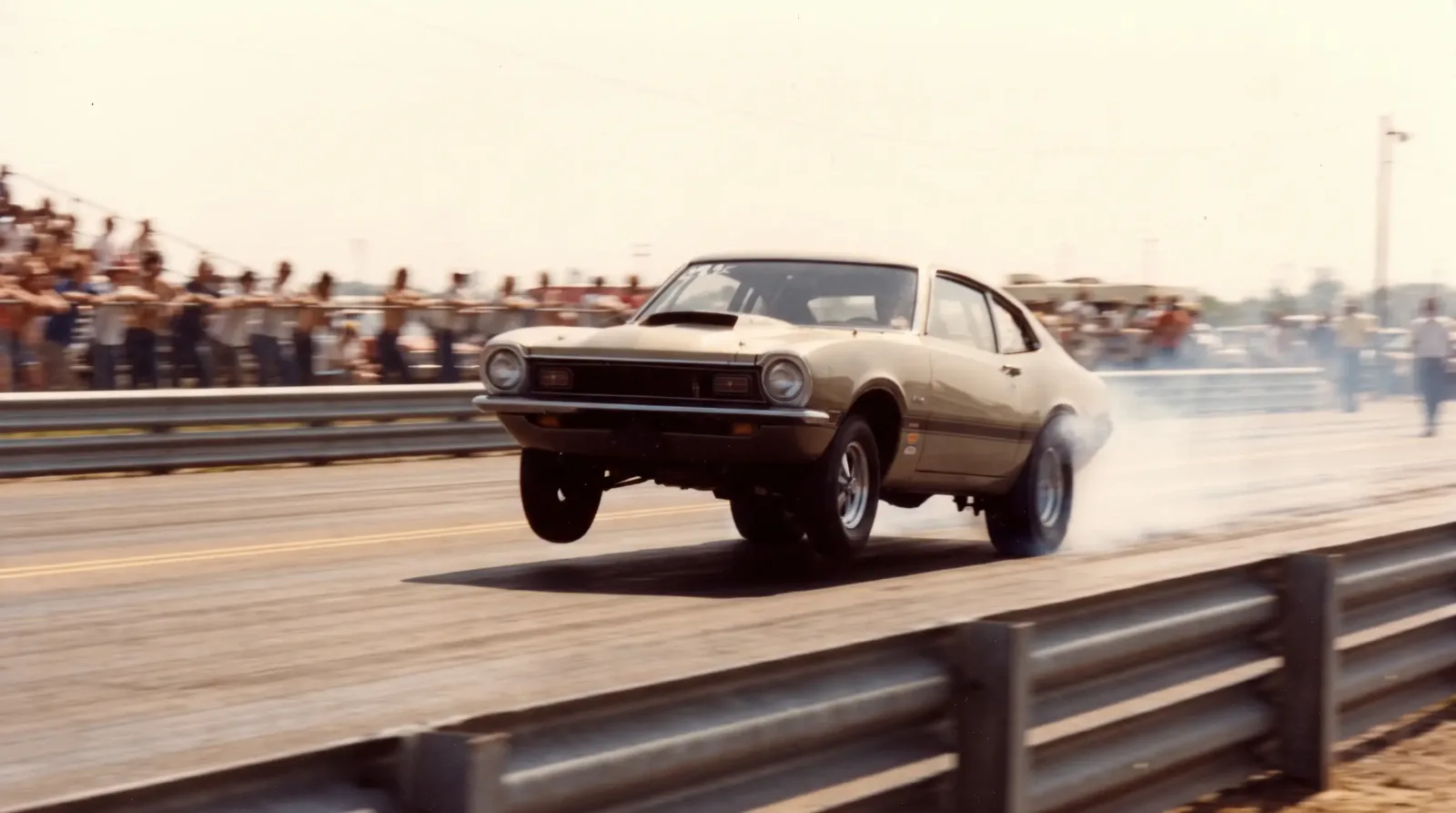
Then in 1970 the NHRA introduced Pro Stock, and everything sharpened. Pro Stock let the factory hot rods run heads-up, first car to the stripe wins, with fewer of the handicaps that governed the stock classes. It became the premier door-slammer category, the place where the brand rivalries got settled in front of the biggest crowds. The engineering that went into a competitive Pro Stock car pushed the whole hobby forward.
There is one more class worth knowing about, because it changed who could race. Bracket racing let a slower street car compete on a level footing by handicapping cars against their own predicted time. You dial in the number you think you can run, and the driver who runs closest to his own dial-in without going quicker wins. That format took drag racing out of the hands of the factory teams and gave it back to the working guy with a home-built car, which is a big part of why the sport never died when the factory money dried up. It rewarded consistency and a well-sorted machine over a fat budget, and that is the kind of racing that keeps a strip full on a Saturday night to this day.
Win on Sunday, sell on Monday
None of this was charity. The factories poured money into racing for one cold reason, and it was written on every showroom floor. Win on Sunday, sell on Monday. A class trophy or a national record was the best advertising money could buy, because a young buyer who watched a Plymouth or a Ford crush the field on the weekend walked into a dealership wanting exactly that badge on his own car.
So the racing was a marketing machine as much as a sport, and that is not a criticism. It is why the cars got so good so fast. The competition forced real engineering, and the engineering trickled down to the street cars ordinary people drove. The culture that grew up around all of it, the shows, the movies, the whole mythology, is a story of its own if you want to read the full story.
What survives
The best of the era's racing heritage still runs, and that is the part that gets me. Genuine factory lightweights and documented class cars trade among the people who understand what they are, and every summer somewhere there is a strip full of old iron doing exactly what it was built to do. A real race car has a soul that a trailer queen never will, because you can see the intent in every panel that was thinned out and every bracket that was added to make it quicker.
If the racing side is what pulls you in, that is a good instinct, because it is where these cars proved themselves. When you are ready to look for one with real history behind it, you can browse current muscle car listings and start separating the honest builds from the pretenders. The clock never lied on the strip, and it still does not lie about which of these cars was built with purpose.
"A dyno number is an opinion. An ET slip is a fact. That's why the strip built these cars into legends and the brochure never could, because out there, execution is the only thing that wins."
Jim Vasquez
Related Reading
Article
The Classic American Muscle Car Story
Article
Muscle Car Engines & the Horsepower Wars
Article
Muscle Car Culture, Media & Legacy
Article
Drag Racing and the Birth of Factory Muscle
Article
The Super Stock Wars Explained
Article
Woodward Avenue: The Original Street Racing Scene
Article
NASCAR Homologation and the Aero Wars
Article
Factory Lightweight and Experimental Drag Cars
Article
NHRA vs AHRA: The Sanctioning Story
Article
Street Racing Culture and the Law
Article
The Factory Racing Programs of the 1960s
Article
Match Racing and the Roots of the Funny Car
Article
Pro Stock and the Rise of Heads-Up Racing
Article
Homologation Specials: Why 500 Had to Be Built
Article
Bracket Racing and Grassroots Muscle Today
Article
The Quarter-Mile Arms Race
Article
Drag Strip Heroes: The Factory Team Drivers
Article
Tech Inspection and the Great Cheating Scandals
Article
How Drag Racing Works: The Christmas Tree Explained
Article
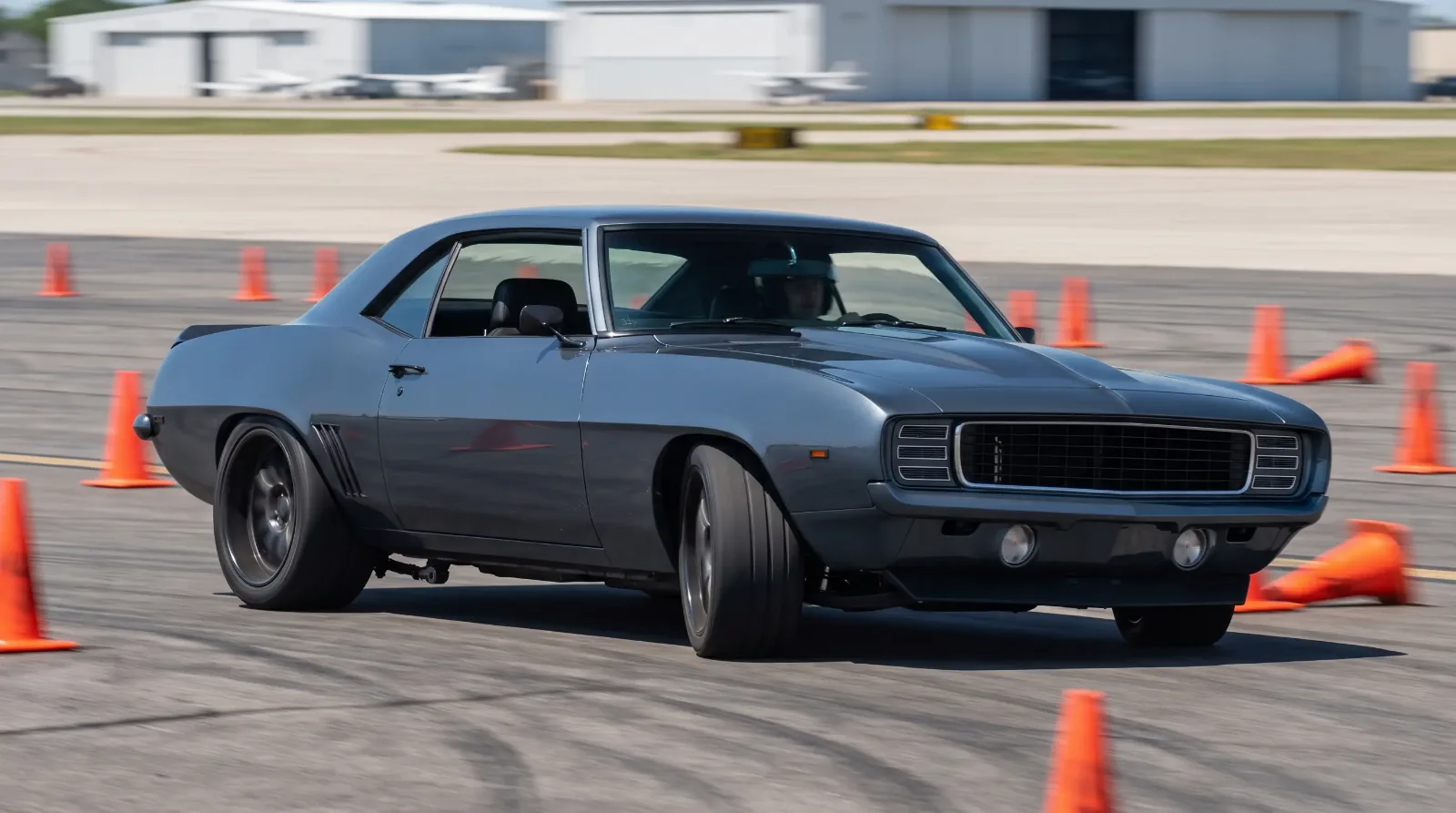
Autocross and Pro-Touring Muscle Today
Article
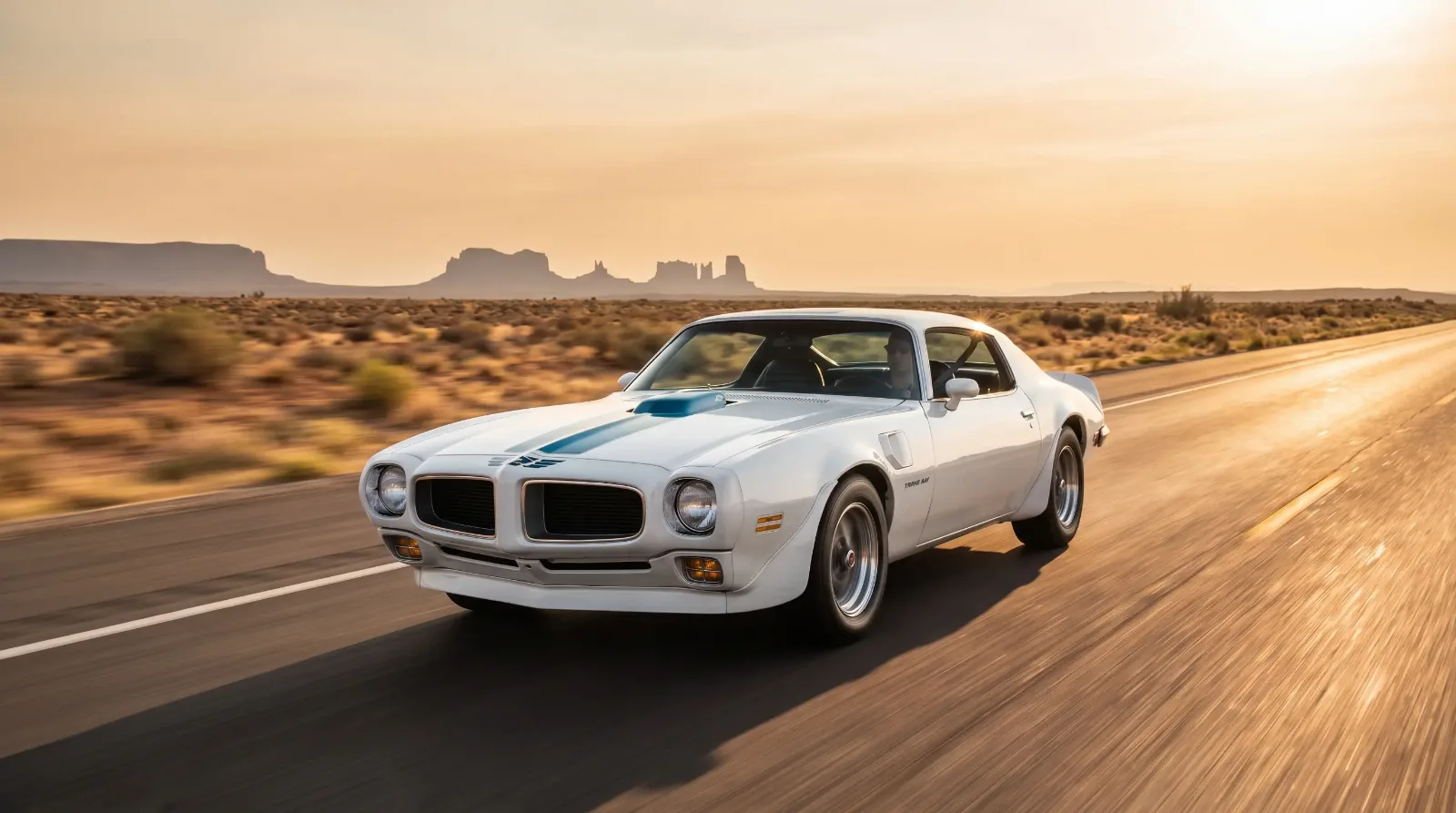
The Cannonball and Outlaw Road Racing Lore
Have a
Classic Car
for Sale?
Reach thousands of serious classic car collectors across the US.
Sell It Here →
Are You a Classic Car Dealer?
List your full inventory and connect with targeted classic car buyers.
Join as a Dealer →
About the author
Jim Vasquez
Southern California hot rod and custom car builder with roots in the traditional kustom kulture scene.
Comments
Be the first to comment on this article.