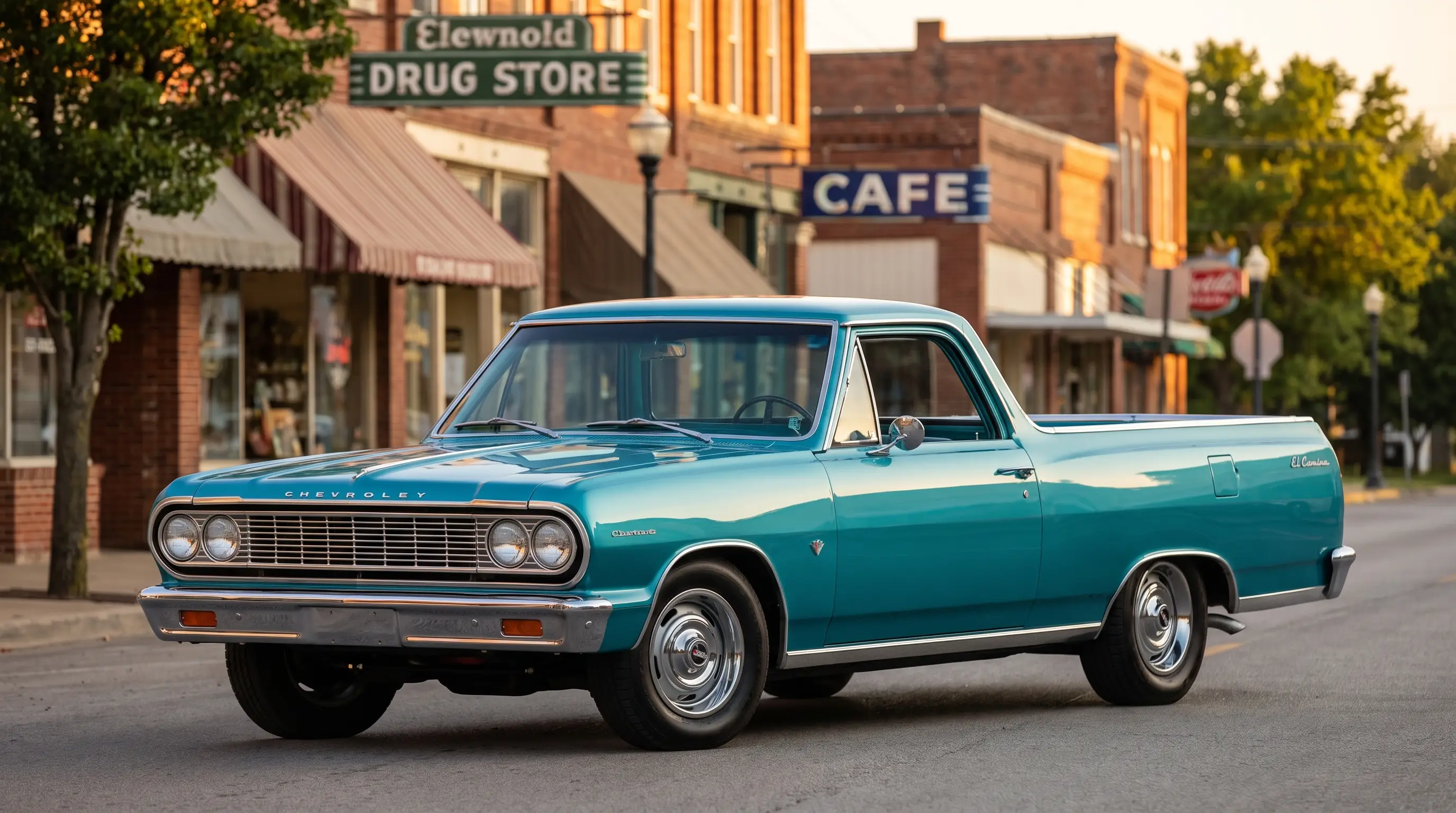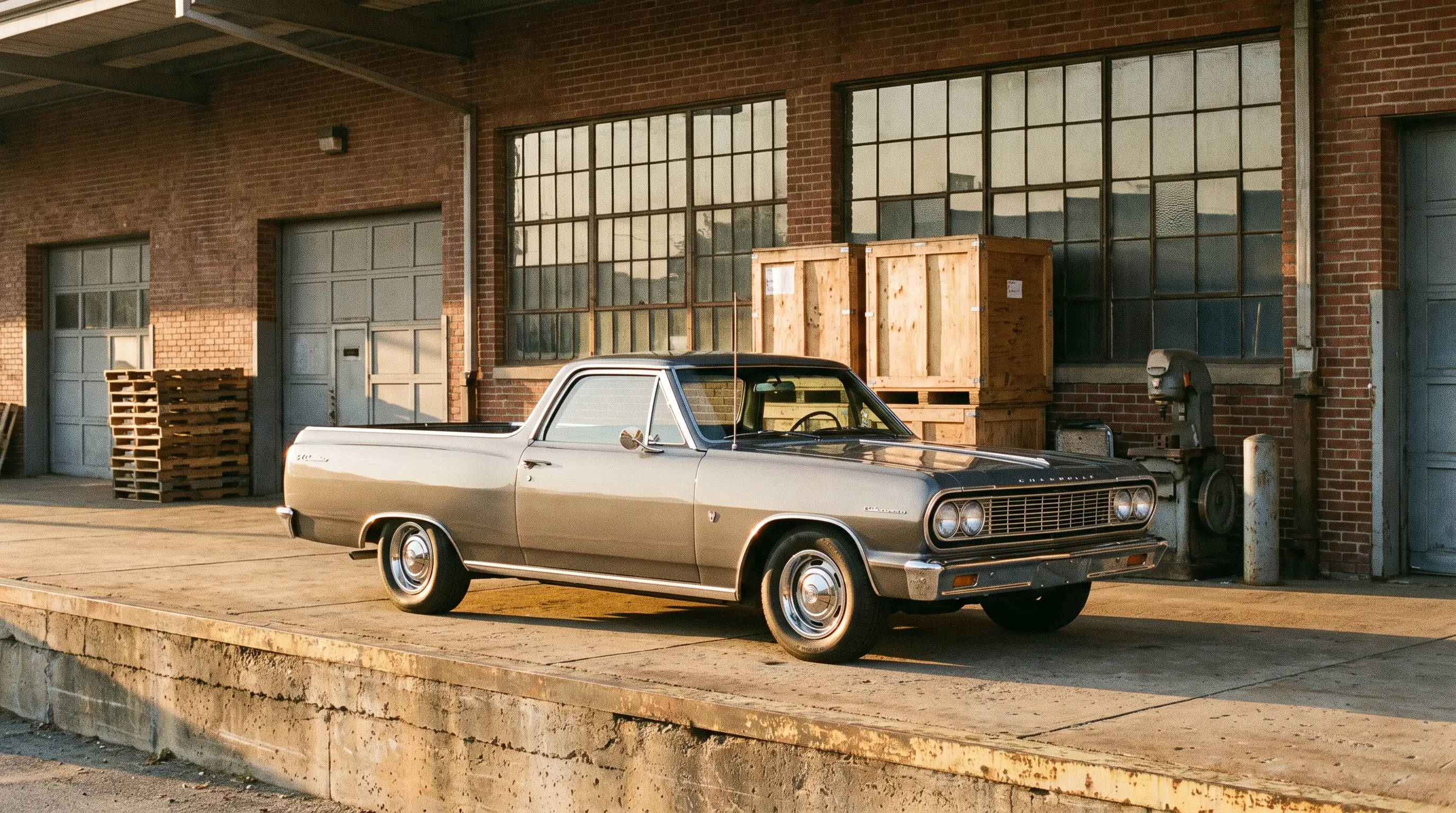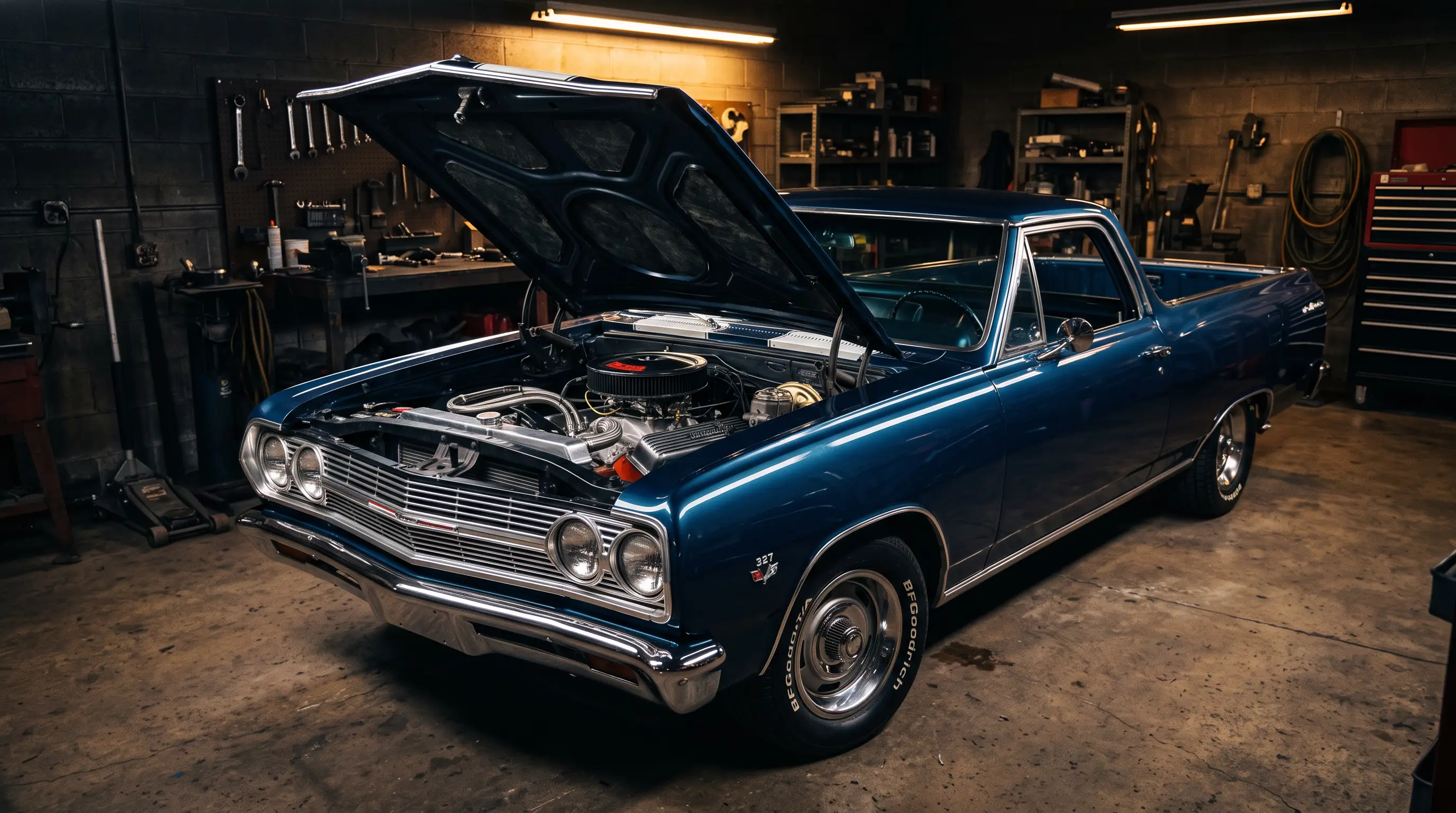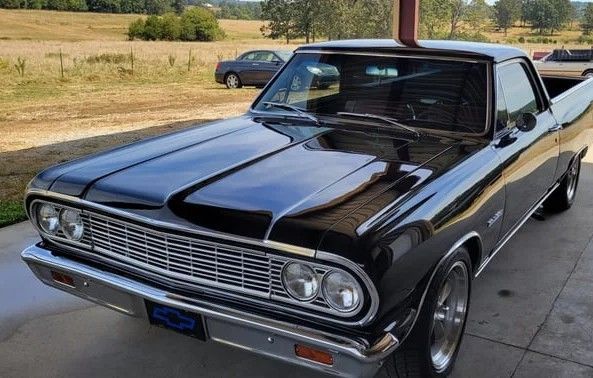
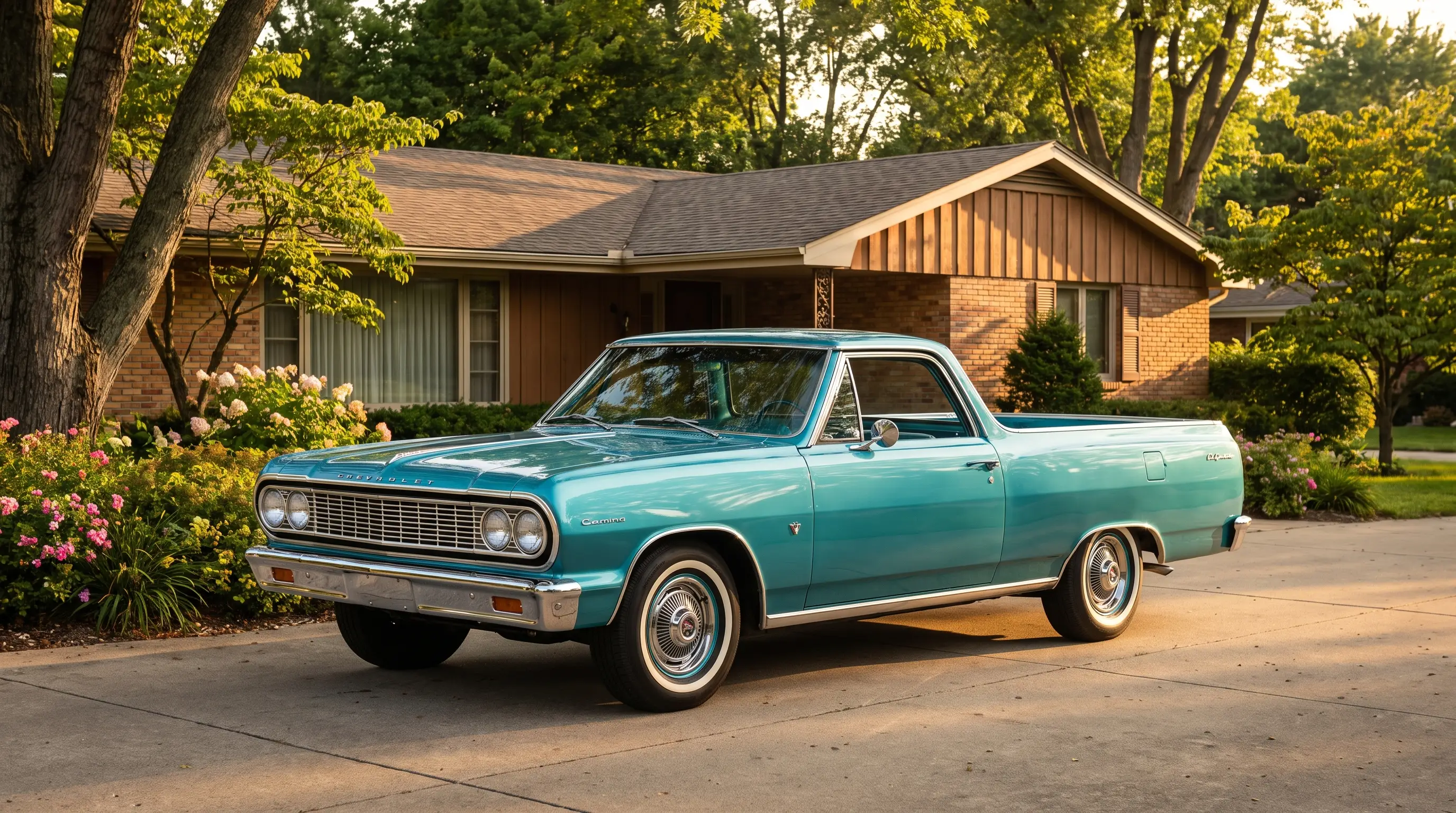
Some products succeed not because they are the biggest or the most powerful, but because they finally hit the exact size a buyer actually wanted. The el camino 1964 right sized cartruck story is one of proportion rather than performance, the moment Chevrolet stopped guessing at what a car truck hybrid should be and simply built one scaled to match the customer standing in front of the salesman.
Too big, then just right
The original 1959 and 1960 El Camino carried the dimensions of a full size Chevrolet, a long, wide, heavy platform that made sense for an Impala sedan but felt oversized once a cargo bed replaced the trunk. Buyers who wanted light hauling capability, a load of fencing supplies, a few bags of feed, a weekend's worth of camping gear, did not need a vehicle built on the same scale as Chevrolet's flagship passenger car. That mismatch between the platform's size and the buyer's actual needs was part of what made the first El Camino a modest seller rather than a runaway success.
When Chevrolet rebuilt the El Camino on the new Chevelle platform for 1964, the dimensions finally matched the use case. The Chevelle was shorter, narrower, and lighter than the full size car, proportions that mapped much more sensibly onto a vehicle meant for personal hauling rather than family transportation on a grand scale. The result felt intentional in a way the original never quite managed, a car sized for exactly what most buyers wanted it to do.
What right sized actually meant in practice
Being right sized was not just a matter of exterior dimensions. The Chevelle based El Camino's lighter unit body construction improved fuel economy and handling compared to its full size predecessor, while the bed itself, though modest by dedicated pickup standards, comfortably handled the loads most owners actually carried. Chevrolet had, in effect, stopped trying to make the El Camino do everything a full size truck could do and instead built it to do what most El Camino buyers actually needed, which turned out to be a much smaller and more specific list of tasks.
This recalibration mattered because the buyers most interested in a car truck hybrid were rarely commercial haulers moving heavy freight every day. They were homeowners, small property owners, and buyers who wanted the occasional utility of a bed without giving up the comfort and manners of a passenger car for daily driving. The Chevelle platform's size served that buyer far better than the full size car ever had.
How this compared to the competition
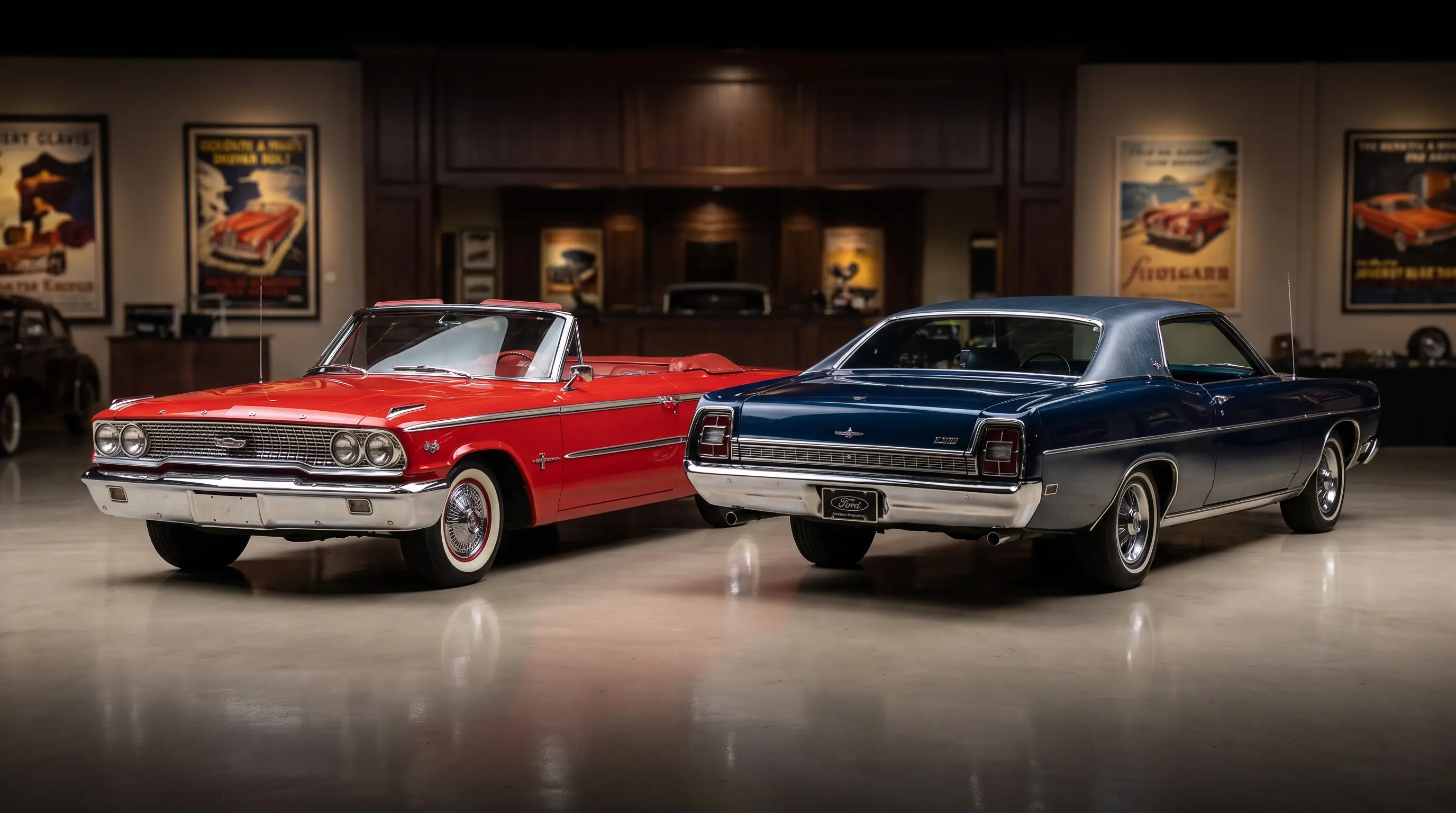
Ford had reached a similar conclusion with the Ranchero slightly earlier, moving that model to a smaller Falcon based platform before eventually settling on the Fairlane chassis around the same period the Chevelle based El Camino arrived. Both manufacturers, working somewhat independently, landed on the same basic insight, that a car truck hybrid worked better at mid size scale than at full size scale. This convergence was not coincidence, it reflected what both companies were hearing from the same pool of potential buyers.
It is worth noting that right sizing a vehicle is a harder problem than it sounds, since a manufacturer has to resist the temptation to simply reuse an existing larger platform because the tooling already exists. Chevrolet's willingness to build the El Camino around an entirely new mid size architecture, rather than continuing to force the concept onto the familiar full size chassis, reflects a level of product discipline that not every corporate decision of the era demonstrated. It would have been easier, in the short term, to keep building the El Camino on the platform already in production. Chevrolet chose the harder, better path instead.
Tom Ramirez has compared production specifications across both nameplates from this period, and the numbers tell a consistent story, bed length, curb weight, and overall footprint for the Chevelle based El Camino sat much closer to its direct Ranchero competition than the original full size version ever had. That closing of the gap is a strong indicator that Chevrolet had corrected a genuine sizing mistake rather than simply making a stylistic change. The dealer floor conversations of the era reportedly shifted noticeably once the new size arrived, with salesmen no longer needing to explain away the car's bulk to a hesitant buyer, since the vehicle in front of them finally matched what the customer had pictured when they walked onto the lot. Readers who want the fuller account of the 1964 relaunch should see read the background covering the whole model year in context.
"You can tell when a manufacturer has actually listened to its customers, because the next version fits their hands better. The 1964 El Camino fits. The 1959 one, in hindsight, was built for a buyer who did not quite exist."
- Tom Ramirez
Comparing the two generations by the numbers
A side by side look at rough dimensional differences between the original and the Chevelle based version makes the shift in strategy easy to see, even without getting into exact figures that varied by trim and options.
| Dimension | 1959 to 1960 full size El Camino | 1964 Chevelle based El Camino |
|---|---|---|
| Overall footprint | Full size Chevrolet scale | Mid size Chevelle scale |
| Curb weight | Notably heavier | Lighter, unit body construction |
| Primary buyer intent | General family and hauling use | Personal light hauling, daily comfort |
| Direct rival positioning | Loosely matched to Ranchero | Closely matched to downsized Ranchero |
What stands out in this comparison is not any single number but the direction of travel. Every dimension moved toward matching what the typical buyer actually needed, rather than what happened to be available on the existing full size assembly line. That is the definition of right sizing a product, not building the largest or most capable version possible, but building the version that fits the actual demand.
A sizing decision with lasting influence
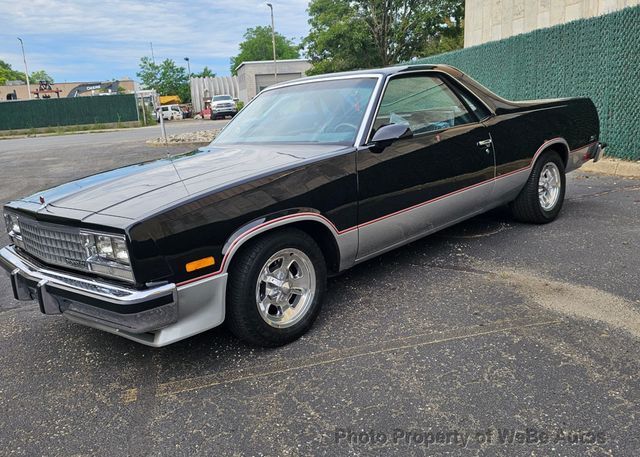
The right sizing established in 1964 held for the rest of the El Camino's production life. Even as the model grew and shrank slightly across generations, following the Chevelle's own dimensional changes through the muscle car years and then the G-body downsizing of the late 1970s, it never again ballooned back toward full size proportions. Chevrolet had learned its lesson permanently, the car truck hybrid worked at mid size, and there was no commercial reason to revisit the full size approach that had limited the original.
Readers curious about how this sizing decision compared to what came shortly after can look at worth a look too, covering the following model year's changes, or explore what is currently available by browsing shop classic El Camino listings from this exact generation, the version that finally got the proportions right.