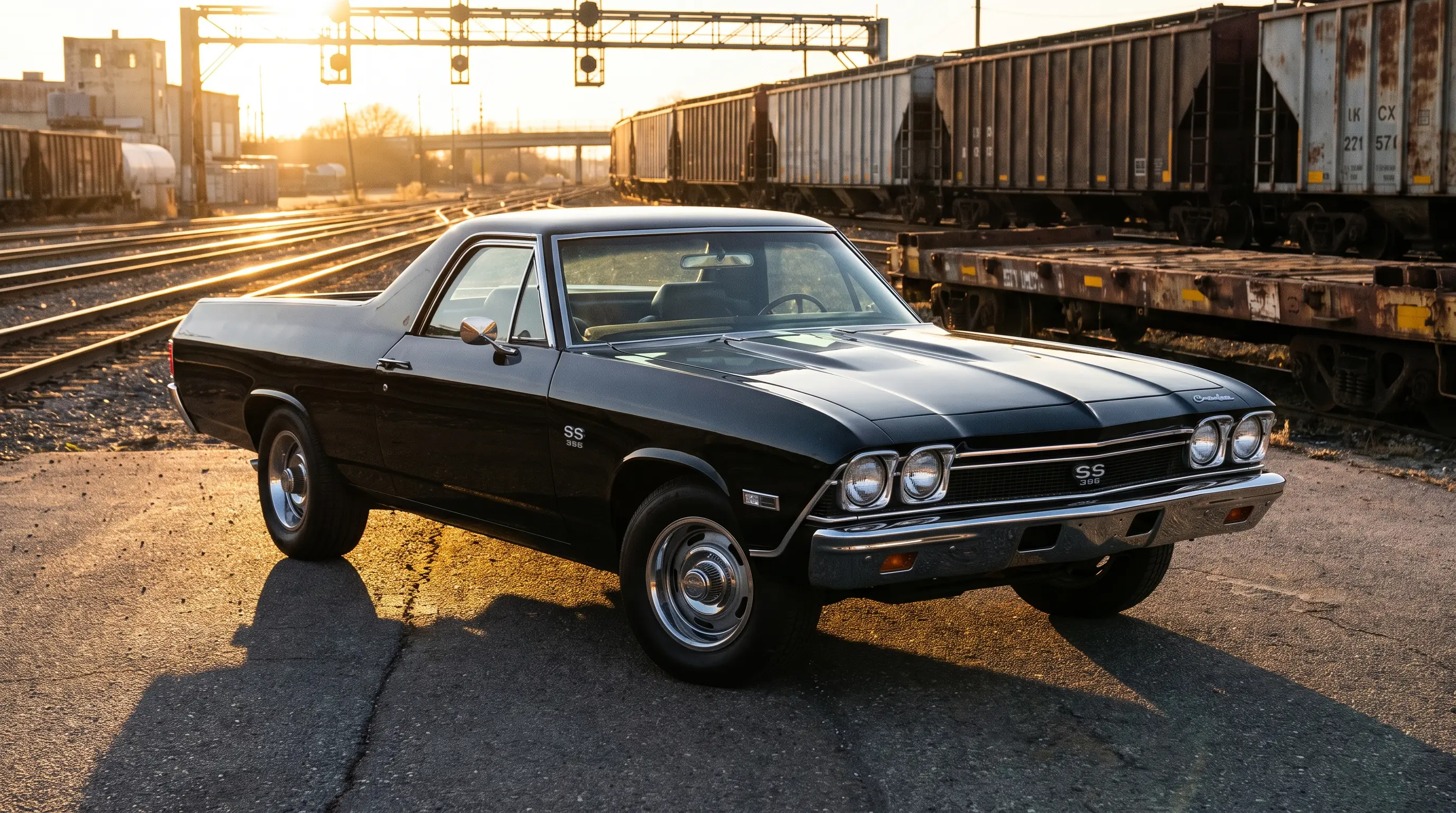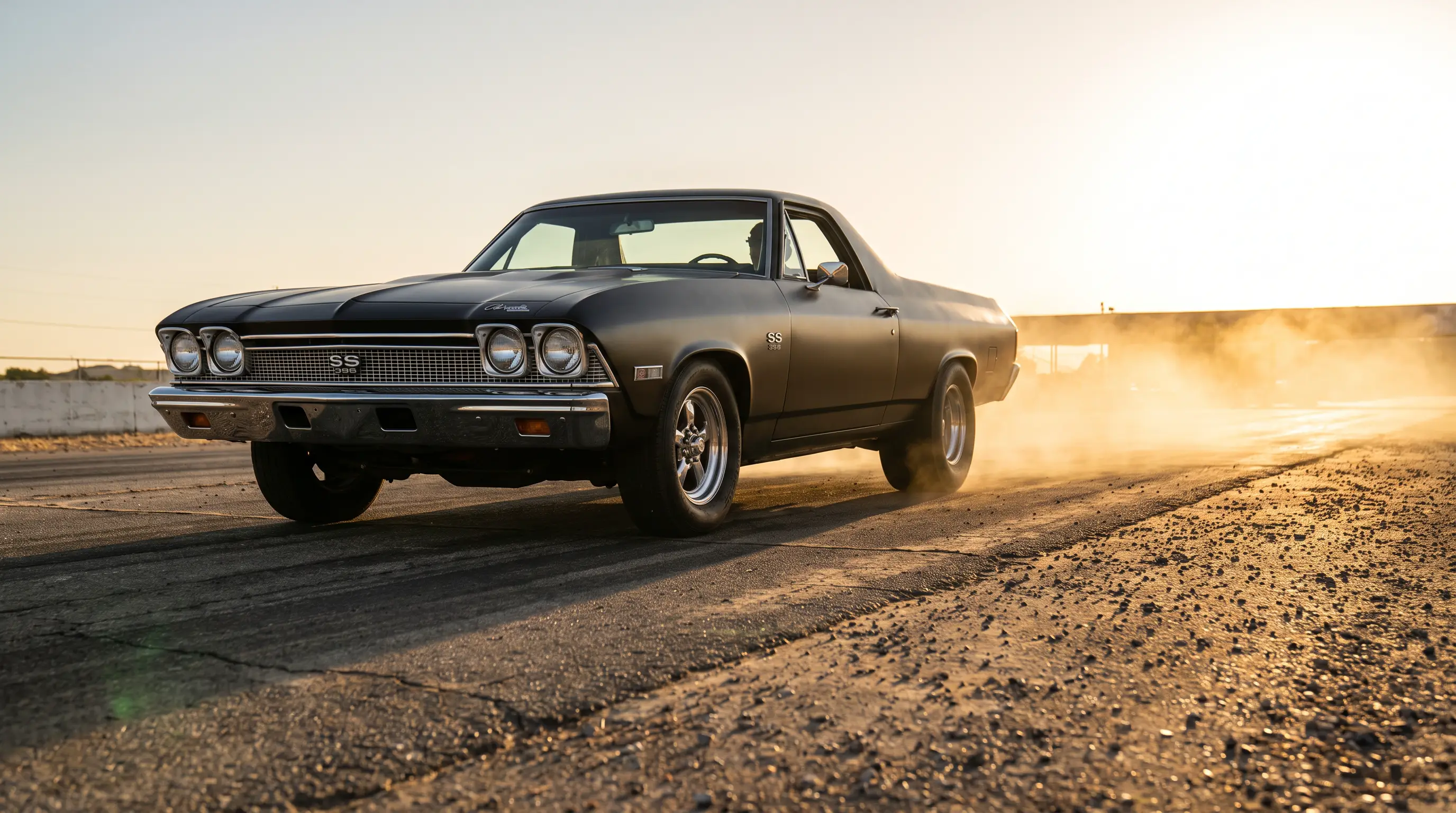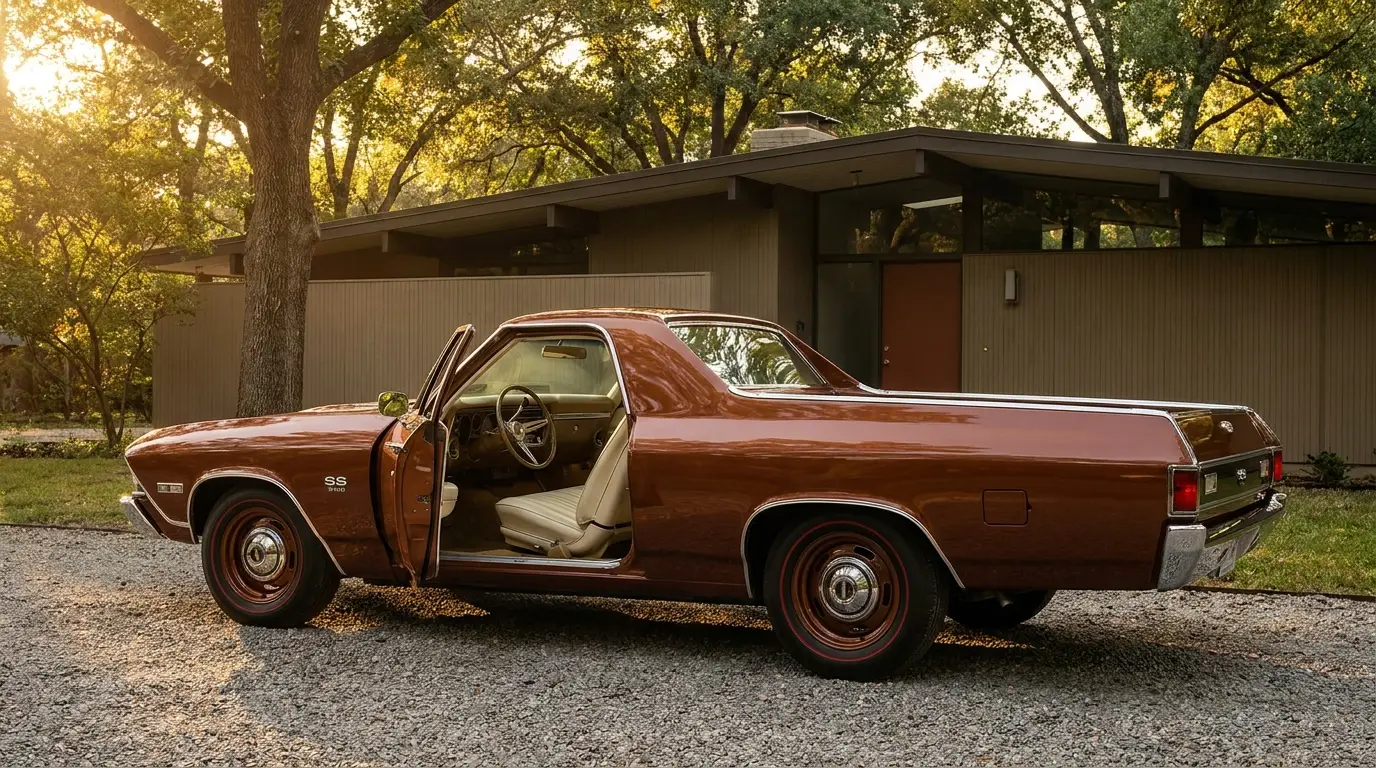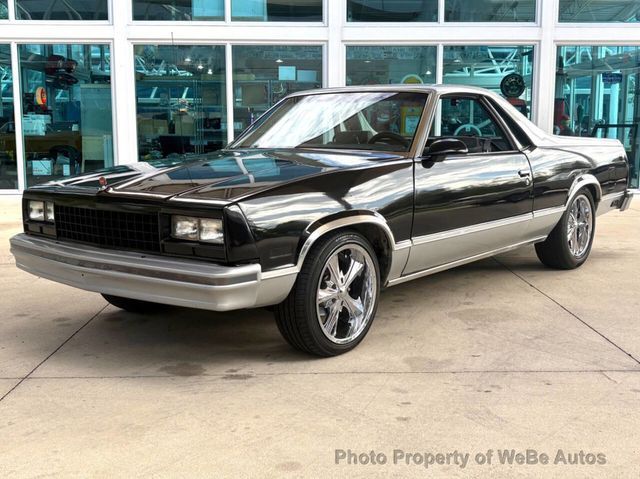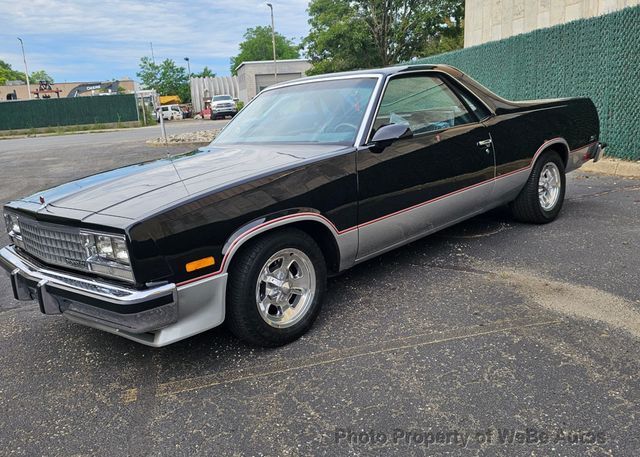
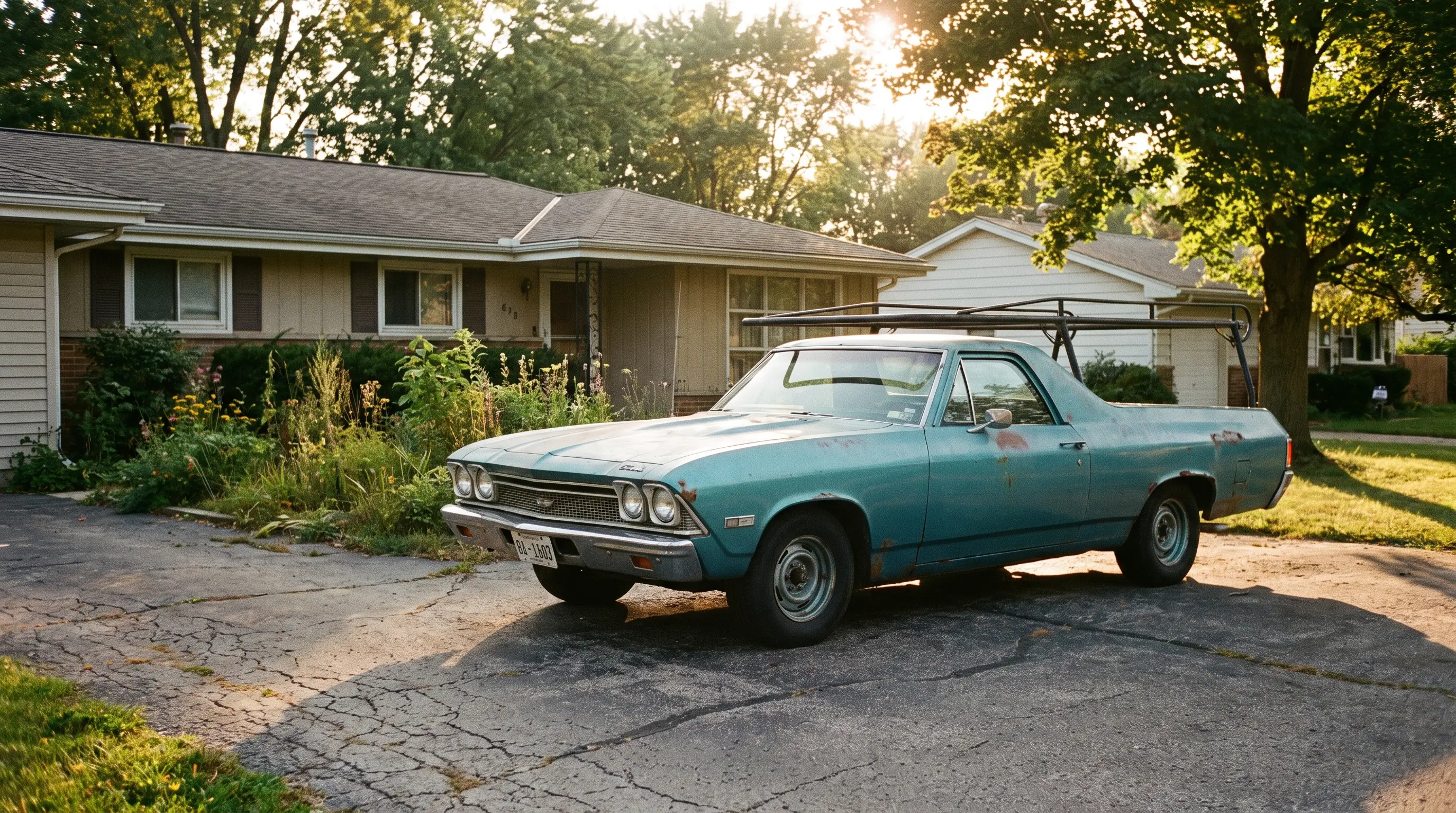
The SS396 gets the magazine covers, but it was never the car most people actually drove home from the dealership. The typical 1968 El Camino left the lot with a six-cylinder or a small-block V8 under the hood, a bench seat or basic buckets, and a job to do that had nothing to do with quarter-mile times. That car, the ordinary one, is the el camino 1968 daily driver charm this piece is actually about, and as a factory historian I think it deserves as much respect as the big-block story it usually stands in the shadow of.
The cars that actually made up 1968 production
Total El Camino production for 1968 ran to roughly 41,800 units, and the SS396 package accounted for only a small fraction of that number, around 5,190 cars. That leaves roughly 36,000 cars built without the SS396 package, the overwhelming majority of the model year, most of them rolling off the line with a 230 or 250 cubic inch six-cylinder, or a 307 cubic inch V8 as the standard engine, with a 327 cubic inch V8 available as a step-up option. A precise factory breakdown of exactly how many of those non-SS cars were six-cylinder versus small-block V8 is not published in readily available production records, so the split described here is directional rather than an exact count. These were not underpowered cars for their intended use. They were sensibly equipped ones, built for buyers who wanted a bed for hauling and a car-like ride for the commute, not a stoplight contest.
It is worth being direct about what the factory record shows here. The base and small-block El Camino was the actual product Chevrolet sold in volume. The SS396 was the halo, the option that generated attention and, eventually, magazine coverage decades later. But the daily driver version is the one that paid the bills for the model line, and it is the one most original owners actually lived with.
What made the ordinary 1968 car pleasant to own
The 1968 restyle that gave the El Camino its longer, lower A-body proportions applied just as much to the six-cylinder work truck as it did to the SS396. A buyer who wanted a practical vehicle got the same clean lines, the same improved ride from the 116-inch wheelbase, and the same Chevelle-sourced interior amenities as the performance-minded buyer next to him on the lot. Bucket seats, a console, and better trim options that had once been reserved for flashier cars were available on ordinary El Caminos too, which is part of why these cars crossed over from strictly commercial use into private ownership so readily.
The load bed itself remained genuinely useful, sized for real cargo rather than a token gesture at utility, while the cab retained car-like comfort that a contemporary full-size pickup did not offer. That combination, a comfortable car-like cabin paired with real hauling capacity, is exactly what made the El Camino concept work in the first place, and the 1968 restyle sharpened that appeal rather than diluting it in pursuit of performance credibility.
Why the daily driver story matters to today's owners
Anyone who wants to know the full context behind the 1968 restyle and how the model's identity took shape can find the whole picture laid out in detail. But for someone actually considering ownership today, the daily driver angle deserves more attention than it usually gets. A well-kept small-block 1968 El Camino is an honest, usable piece of history that does not demand the documentation scrutiny, insurance premiums, or purchase price that a verified SS396 car carries. It is a classic you can drive regularly without treating every mile as a risk to a six-figure investment.
That accessibility is not a consolation prize. It is the whole point for a large segment of the collector market, people who want the styling, the history, and the utility of a genuine 1968 El Camino without needing to police every option code before they enjoy it. The base and small-block cars deliver exactly that, and they do it at a price point that keeps the model accessible to buyers who would otherwise be priced out of the hobby entirely.
Parts availability and ease of ownership
A practical point in the daily driver's favor is that six-cylinder and small-block drivetrains from this era are well supported by the aftermarket, since so many other Chevrolet and GM products of the period shared similar engine families. Maintenance and repair on these cars tends to be straightforward and reasonably affordable compared to sourcing correct, numbers-matching big-block components for a documented SS396 restoration. For an owner who wants to drive the car rather than preserve it as an investment, that difference matters a great deal.
| Configuration | 1968 El Camino detail |
|---|---|
| Base six-cylinder | 230 or 250 cu in inline six |
| Standard V8 | 307 cu in |
| Optional V8 | 327 cu in |
| Share of total production | Large majority of roughly 41,800 units built |
| Ownership profile | Lower cost, wider parts support, everyday usability |
"Nobody restores a barn find because they dream of owning a base six-cylinder El Camino, but plenty of people end up loving the one they actually bought that way. It does everything the car was designed to do, and it does it without asking you to second-guess every option code."
- Tom Ramirez
Keeping the daily driver honest
None of this is an argument against documentation. A base or small-block 1968 El Camino still benefits from a build sheet or cowl tag confirming its original configuration, if only so an owner knows exactly what they have rather than guessing. The difference is that the stakes are lower. A misidentified small-block car is a minor correction to a family history. A misidentified SS396 car is a financial dispute waiting to happen. That distinction alone is reason enough for a buyer drawn to the daily driver version of this car to feel comfortable buying with confidence rather than suspicion.
There is also a generational pattern worth noting among owners of these ordinary cars. Many base and small-block 1968 El Caminos stayed in one family for decades, passed down as a practical second vehicle rather than sold off once the novelty wore thin. That kind of continuous, low-drama ownership history often means better original documentation survives with these cars than with SS396 examples that changed hands repeatedly through the muscle car speculation of later decades. A car that never left the family rarely lost its paperwork along the way, and that quiet advantage is one more reason the daily driver version deserves a second look from anyone assuming the big-block cars are automatically the better documented ones.
Sources and notes
- Your definitive 1968-72 Chevelle SS buyer's guide - Hagerty Media
- El Camino Production Totals
- 1968 El Camino Parts and Restoration Information - SS396.com
- 1968-72 Chevrolet El Camino: 3rd Gen Guide and Specs - Motogallery
- Curbside Classic: 1968 Chevrolet El Camino SS 396
The 1968 El Camino earned its reputation on the strength of the SS396, but it earned its place in ordinary American driveways on the strength of the six-cylinder and small-block versions that made up most of what Chevrolet actually built that year. If that sounds like the right kind of classic for regular use rather than a garage queen, you can shop classic El Camino listings and see how many honest, driveable examples are still out there waiting for an owner who wants exactly that.