
Every era has an opening act, and for the muscle car version of the Chevrolet El Camino, that role belongs to 1968. Before this year the car was a competent, car-based pickup with a mild performance option or two. After it, the El Camino was a legitimate participant in the intermediate muscle car market, wearing the same SS badge as the Chevelle it shared a platform with. As a researcher who treats these cars as artifacts rather than nostalgia pieces, I find the 1968 model rewarding precisely because the transition is so well documented and so cleanly dated. This is the el camino 1968 muscle era opening act, and the record supports the label.
Car Features
7 min read
The Opening Act of El Camino Muscle
1968 is where the El Camino's muscle car identity actually begins, with the platform, badge, and big-block option that every later year in the run gets measured against.
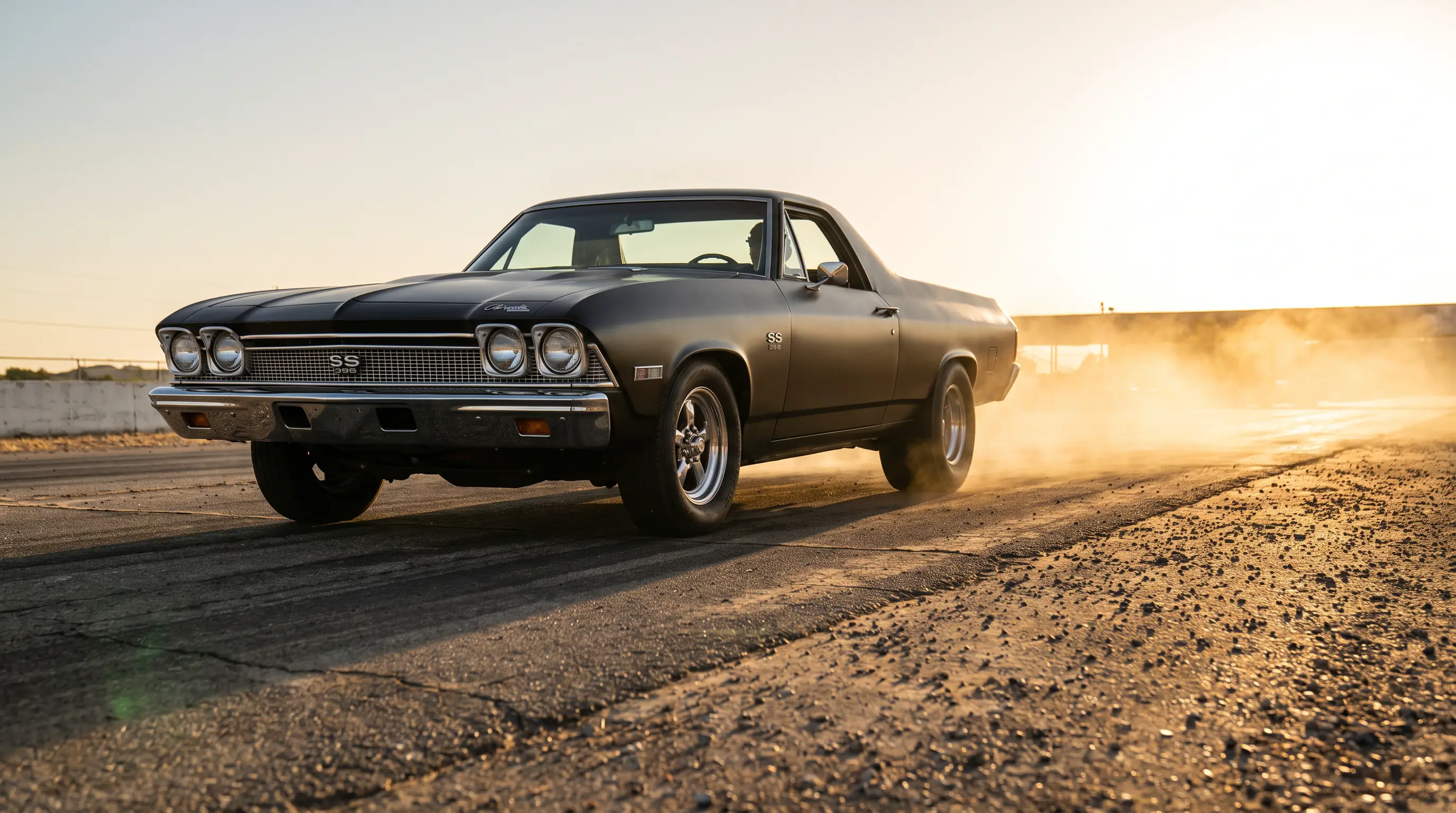
What changed structurally, and why it enabled the muscle identity
General Motors split its A-body platform into two wheelbases for 1968. The two-door coupes rode on a 112-inch wheelbase while the four-door sedans, wagons, and the El Camino used a longer 116-inch chassis. That distinction is not a footnote. It is the physical reason the El Camino has different proportions than the Chevelle SS coupe it is so often compared against, and it is why any serious dating of a 1968 car should start with the frame and body dimensions rather than the badge alone.
The restyle that came with the new platform gave the El Camino a longer hood, a coke-bottle profile through the doors and rear quarters, and a front clip shared with the Chevelle line. Structurally the car became a more credible performance platform, and Chevrolet's decision to offer the SS396 package on it that year was the direct consequence of having a body worth putting a big-block into. The engineering came first. The badge followed.
The SS396 arrives on the El Camino
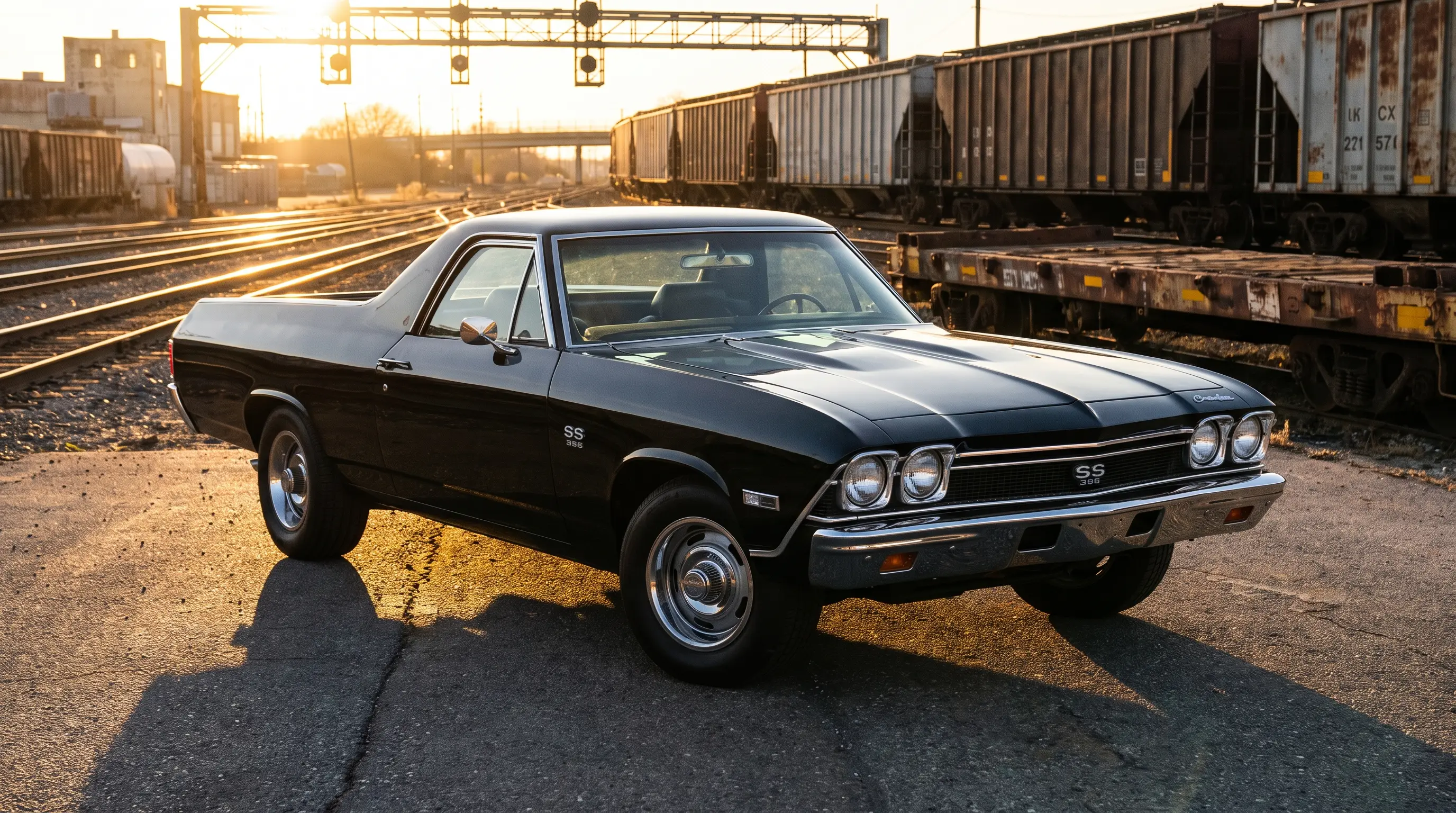
1968 was the first year the SS396 package was offered on the El Camino, and it brought the 396 cubic inch big-block in three states of tune: RPO L35 at 325 horsepower, RPO L34 at 350 horsepower, and RPO L78 at 375 horsepower. The L78 rating was never officially advertised in Chevrolet's 1968 factory literature, a quiet reflection of GM's internal horsepower-to-weight guidance that discouraged advertising ratings above a certain threshold for the car's weight class; only the L35 and L34 figures appeared in published materials.
What a researcher notices here is how deliberately Chevrolet aligned the El Camino's badge and drivetrain options with the Chevelle SS rather than inventing a separate identity for the truck-bodied version. A buyer could order the same big-block, the same SS trim cues, and the same performance intent in either body style. That parity is the clearest evidence that Chevrolet intended the 1968 El Camino to be read as a muscle car first and a hauler second, at least for the buyers who checked that particular option box.
Reading 1968 against the years that followed
Calling 1968 an opening act implies there is a full arc to compare it against, and there is. The muscle era El Camino ran from 1968 through 1972, with the 454 cubic inch big-block arriving for 1970 and gradually stepping down in output through the early 1970s as emissions regulations and insurance pressure reshaped the entire performance car category. Set against that arc, 1968 is notable for being the moment of arrival rather than the peak of output. The 396 was the headline engine, not the largest one the model would eventually carry, and the styling had not yet picked up the more aggressive cues that later years in the generation would add.
For anyone wanting the fuller context of how that restyle came together and what it meant for the model's identity going forward, read the background on the 1968 model year in full. The opening act framing holds up because the elements that defined the entire 1968 through 1972 run, the shared A-body platform, the SS badge, the big-block option, all appear here first, in their earliest and in some ways most restrained form.
Documentation and why the opening act deserves scrutiny
Because 1968 sits at the start of a run rather than in the middle of an established pattern, documentation from this specific year carries particular weight. A build sheet, cowl tag, or Protect-O-Plate confirming an SS396 configuration on a 1968 car is confirming something that was still new to the model that year, not a well-worn combination buyers had years of precedent to fake convincingly. That does not mean fakes do not exist. It means the population of correctly documented 1968 SS396 cars is a genuinely useful reference point for understanding what the factory actually built in this first year of the muscle era, before running changes and later model years complicated the picture.
Total 1968 El Camino production ran to roughly 41,800 units, with the SS396 package accounting for a comparatively small fraction, around 5,190 cars. That scarcity, present from the very first year of the muscle era rather than developing later, is part of why researchers and collectors treat 1968 cars with the specific SS package as meaningfully different objects from the six-cylinder and small-block cars that made up the bulk of that year's output.
| Attribute | 1968 El Camino, opening year detail |
|---|---|
| Platform | GM A-body, 116-inch wheelbase |
| First year of | SS396 package availability on El Camino |
| Big-block outputs cited | 325 / 350 / 375 hp (396 cu in) |
| Muscle era span | 1968-1972 |
| Approximate total production | 41,800 units |
"Treat 1968 as a baseline, not a footnote. Every later year in the muscle era gets compared back to what Chevrolet established here, the platform, the badge, and the first big-block option. Understand this year correctly and the rest of the run makes a lot more sense."
- Sarah Whitfield
What the opening act means for buyers today
Approaching a 1968 El Camino as the first chapter of a five-year story changes how you evaluate one. It is less useful to ask whether a given car looks impressive next to a 1970 SS454 and more useful to ask whether it accurately represents what Chevrolet built in this specific, transitional year. The wheelbase, the shared front clip with the Chevelle, and the correct 396 engine code for the year are the details that matter, more than raw output compared to later, larger engines the model would eventually carry.
For a researcher, that framing is also a caution against treating the entire 1968 through 1972 generation as a single undifferentiated block. Each year has its own running changes, its own production figures, and its own place in the arc. 1968 opened the era. It did not define every year that followed it, and a careful buyer or historian keeps that distinction in mind rather than assuming any SS396 story applies equally across five model years.
If the opening act of El Camino muscle has you looking to see what survives, you can find a classic El Camino currently on the market and compare what is actually being offered against the documented facts of this specific model year.
Sources and notes
- Your definitive 1968-72 Chevelle SS buyer's guide - Hagerty Media
- 1968 El Camino Parts and Restoration Information - SS396.com
- El Camino Production Totals
- Differences between 396 L34 and L35 - Team Chevelle forum
- 1968-72 Chevrolet El Camino: 3rd Gen Guide and Specs - Motogallery
- Incredibly Rare L78-Powered 1968 El Camino SS396 Found in Garage - GM Authority
Related Reading
Have a
Chevrolet El Camino
for Sale?
Reach thousands of serious classic car collectors across the US.
Sell It Here →
Selling a classic? Here's how: compare the places to sell classic cars
Are You a Classic Car Dealer?
List your full inventory and connect with targeted classic car buyers.
Join as a Dealer →

About the author
Sarah Whitfield
Third-generation classic car collector specializing in pre-war American and European coachbuilt automobiles. Researcher and concours enthusiast.
Related Listings - Chevrolet El Camino
Comments
Be the first to comment on this article.