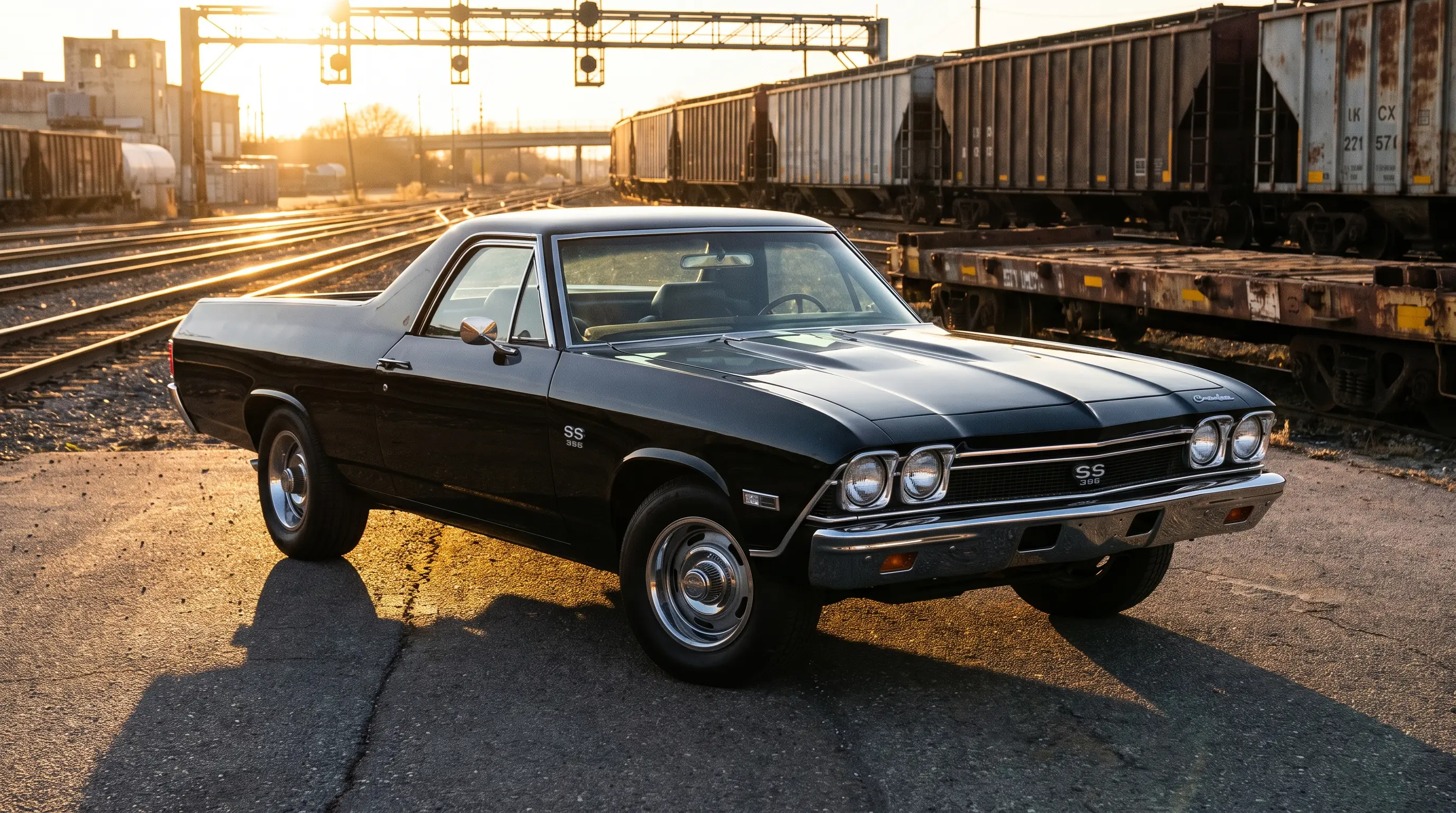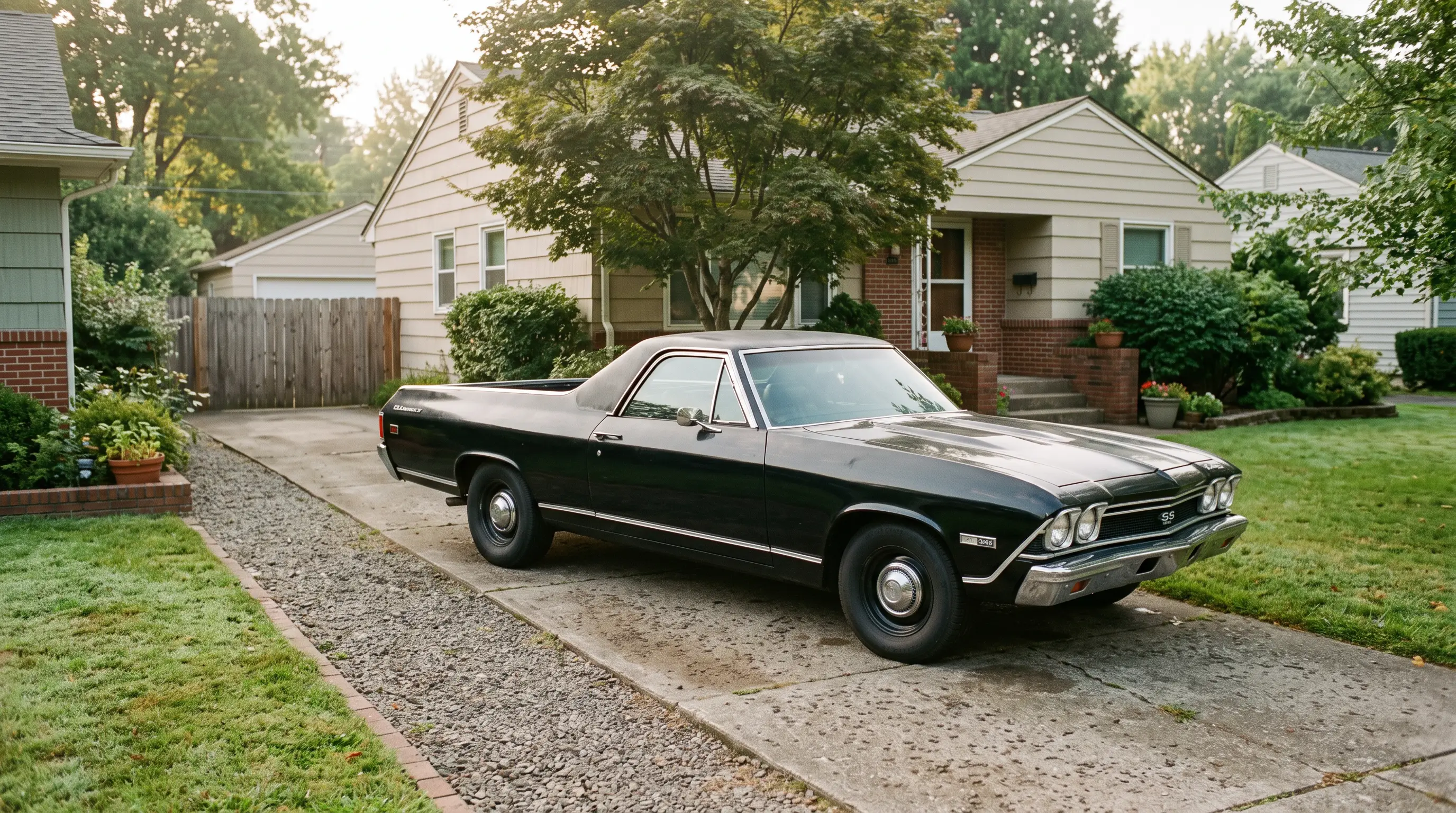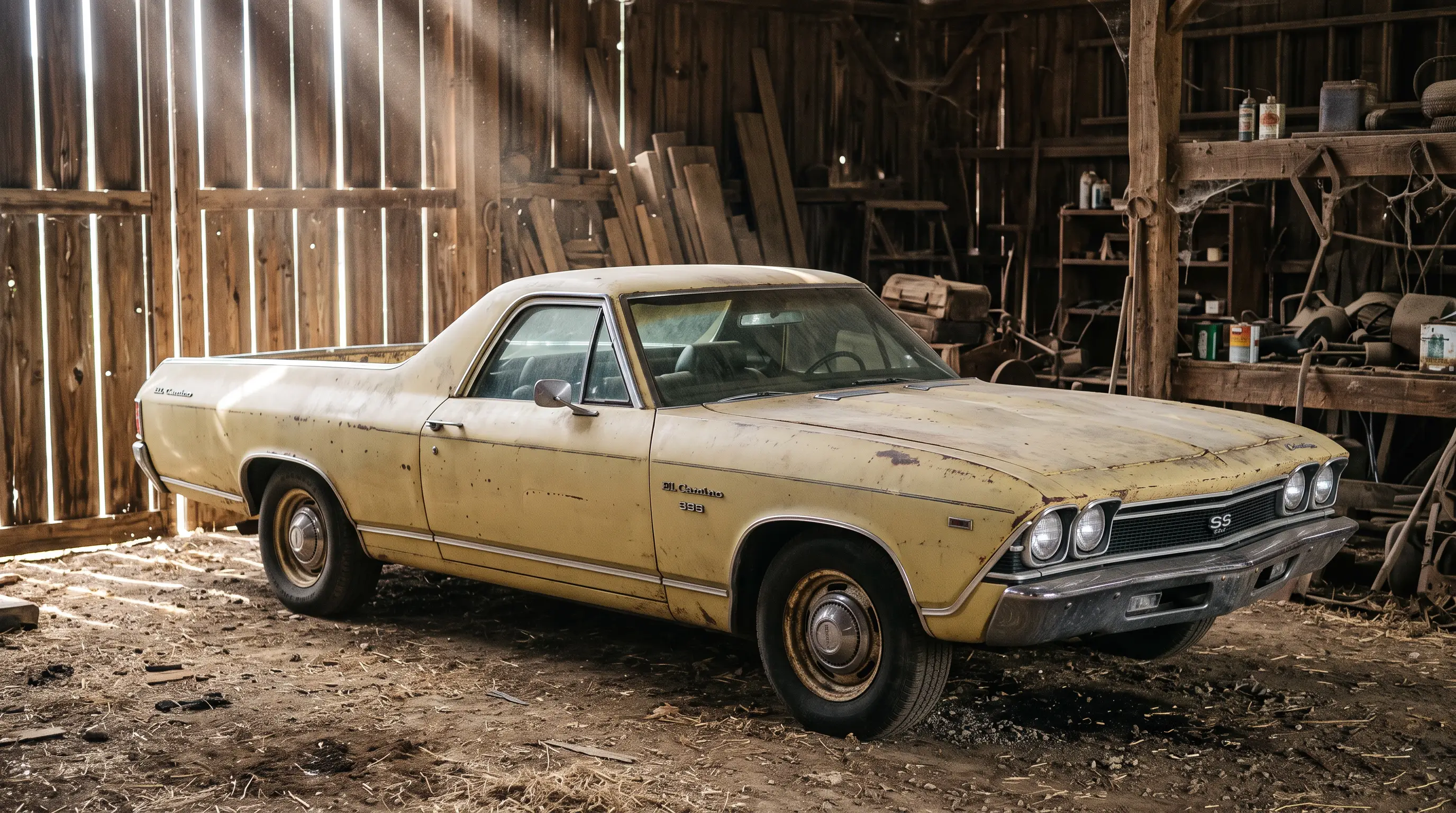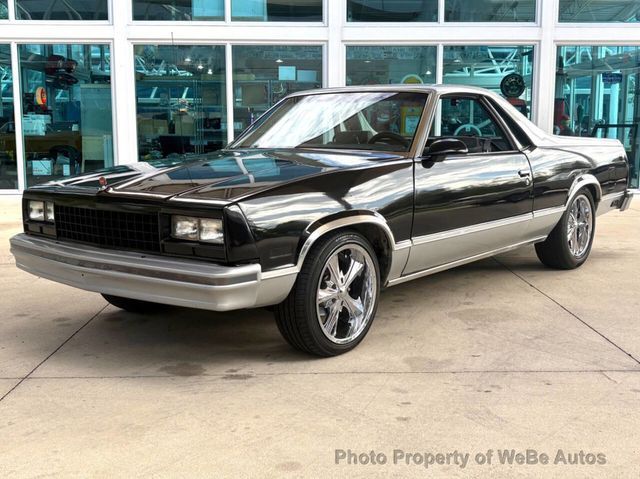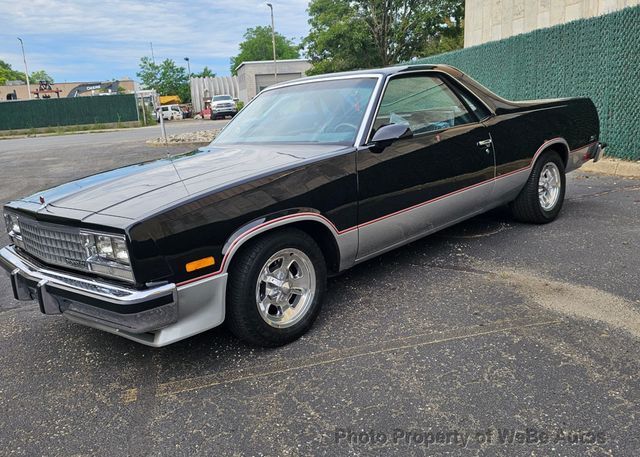
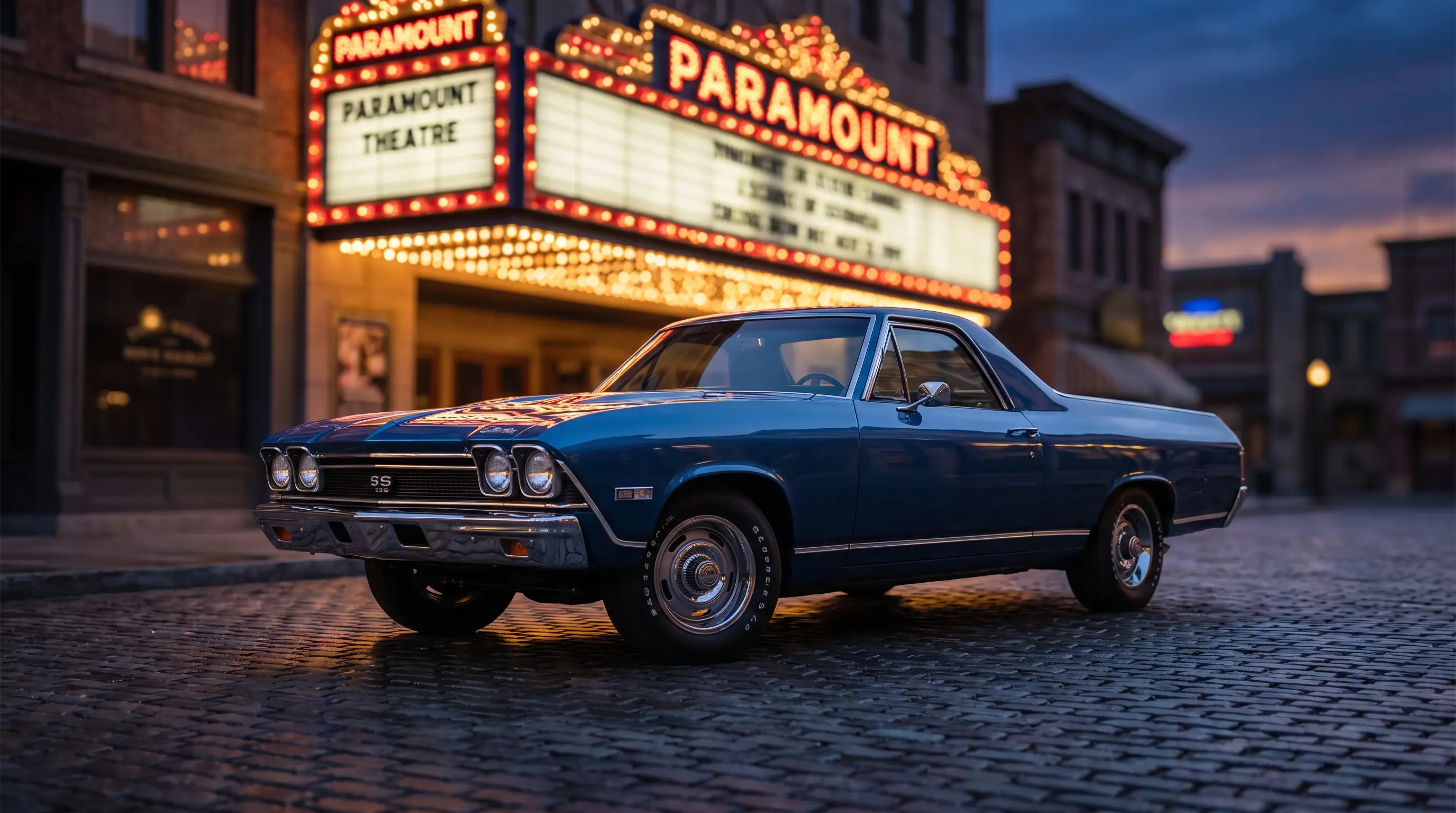
A car does not need a starring role to leave a mark on pop culture, and the 1968 El Camino proves it. This is the model year that gave the coupe utility its cleanest, most muscular silhouette, the one that set decorators and prop masters reaching for it whenever a scene needed a vehicle that looked working-class and dangerous at the same time. The El Camino never got the marquee treatment a GTO or a Mustang received, but its second-life presence on screen, at car shows, and in music culture built something more durable than a single famous role.
A coupe utility with no true screen precedent
When the 1968 redesign arrived, there was genuinely no other American vehicle quite like it occupying screen space, since domestic coupe utilities were a small enough category that casting directors and set decorators treated any example as a useful, slightly unusual prop rather than a recognizable star vehicle in its own right. That novelty gave the El Camino a small but real edge over ordinary sedans when a production wanted a vehicle that read as distinctive without being flashy, a niche the car occupied comfortably for years without ever becoming the centerpiece of a marketing campaign the way the Mustang or Charger did.
Background presence built lasting recognition
Television and film production designers of the late 1960s and into the 1970s regularly reached for the El Camino when a scene called for a vehicle that read as blue-collar without looking dull. Its half-truck, half-muscle-car identity made it a convenient visual shorthand, whether the story called for a small business owner, a rural setting, or a character meant to seem handy and self-reliant. The 1968 restyle, with its longer hood and cleaner lines shared with the Chevelle, made it a more attractive background choice than the boxier first-generation cars had been, and set designers took notice.
Music and custom culture kept the name alive
Away from film sets, the El Camino built its own cultural footprint through lowrider and custom car culture, where the model's flat bed and long lines made it a favorite canvas for paint and hydraulics work starting in the 1970s and continuing for decades. That adoption gave the El Camino a second cultural life entirely separate from its factory muscle car identity, one rooted in community car shows and regional pride rather than studio backlots. The 1968 model, being one of the last full-size-adjacent years before the platform shrank slightly in subsequent redesigns, holds particular appeal among builders who prize its proportions.
Regional car show circuits across the country still feature the 1968 El Camino prominently, and builders working in custom paint and hydraulics traditions often specifically seek out this model year over later, smaller G-body examples, citing the longer hood and more substantial presence as better suited to elaborate paint schemes and lowered stances. That preference has helped keep 1968 examples circulating in active build culture rather than sitting untouched in storage, which paradoxically means fewer purely original survivors exist from this particular model year compared to less celebrated years, since so many good examples ended up as build platforms rather than preserved originals.
| Cultural Arena | Role the El Camino Played |
|---|---|
| Film and television backgrounds | Visual shorthand for blue-collar, self-reliant characters |
| Custom and lowrider culture | Favored canvas for paint and hydraulics builds |
| Car show circuit | Recognized SS 396 badge draws crowds among Chevelle fans |
Why the GTO got the movie deal and the El Camino got the following
It is worth being honest about the difference here. The GTO and the Mustang landed genuine leading roles in period films precisely because studios wanted glamour, and a coupe utility never fit that brief no matter how quick it was in a straight line. What the El Camino got instead was a slower, community-built kind of fame, one earned car show by car show and custom build by custom build rather than handed down by a single studio decision. That kind of recognition tends to last longer, because it is not tied to the popularity of one film or one era of television.
"Nobody remembers the movie the El Camino was parked in front of. Everybody remembers the guy at the show who spent three years getting the paint exactly right on his."
- Patrick Walsh
The 1968 model's specific place in that story
Within the broader El Camino cultural footprint, the 1968 model holds a specific position as the car that introduced the SS 396 badge to a redesigned, better-proportioned body, and that combination is exactly what custom builders and background-vehicle casting alike responded to. It looked more purposeful than the cars that came before it, and that purposefulness translated directly into cultural staying power that outlasted any single screen appearance. You can read the whole picture of how that 1968 redesign came together if you want the full context behind why this particular model year became a favorite well beyond the muscle car crowd.
What today's builders and collectors say about the appeal
Talk to a builder currently working on a 1968 El Camino project and the explanation for why they chose this particular year rarely stays purely technical for long. Most describe a combination of proportions, badge history, and a sense that the car earns attention on its own terms rather than riding purely on nostalgia for any single film or television reference. That kind of organic, present-tense appeal is a healthier foundation for lasting cultural relevance than dependence on any one piece of media, and it is precisely the foundation the 1968 model has built for itself over the decades.
Why the cultural footprint keeps growing rather than fading
Most cars that get remembered mainly for background film roles eventually fade from cultural relevance once the shows or movies themselves stop airing regularly. The El Camino has avoided that fate because its cultural presence was never really tied to any one production in the first place. Custom culture, car show attendance, and word-of-mouth recognition among enthusiasts all reinforce each other independently of whatever television reruns happen to be circulating in a given decade. A younger generation of builders discovering the 1968 model through social media and online car communities are adding to that momentum rather than relying on nostalgia for any specific screen appearance, which suggests the car's cultural relevance has more staying power than a typical background prop ever earns.
Fifty-plus years later, that cultural footprint has aged into something closer to folklore than marketing. Owners at car shows still get asked about the badge, the bed, and the history, and most of them enjoy explaining it far more than they would enjoy reciting a list of movie credits. If that history has you curious about owning a piece of it, you can find a classic El Camino currently listed and see how that legacy translates into today's market.