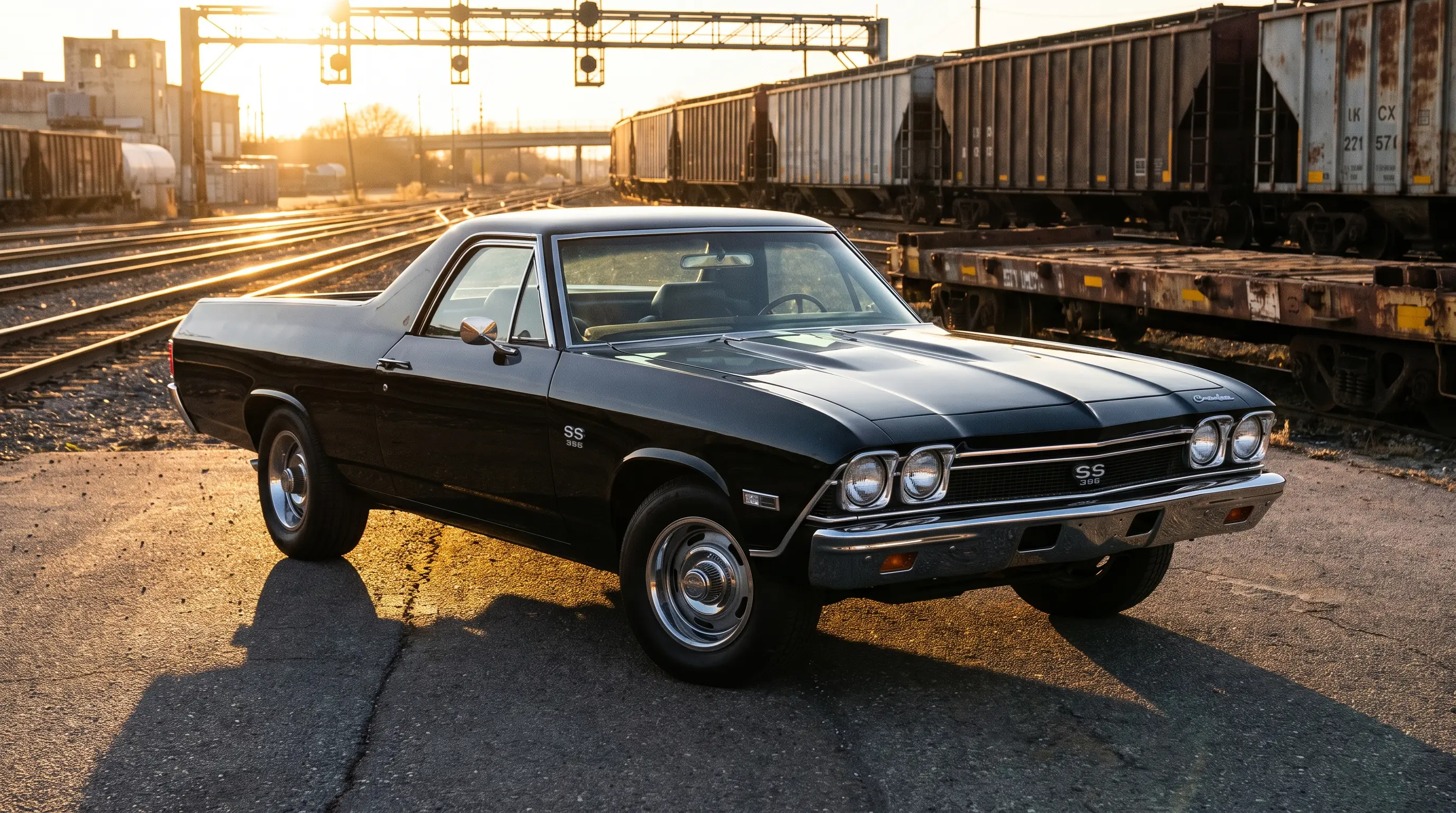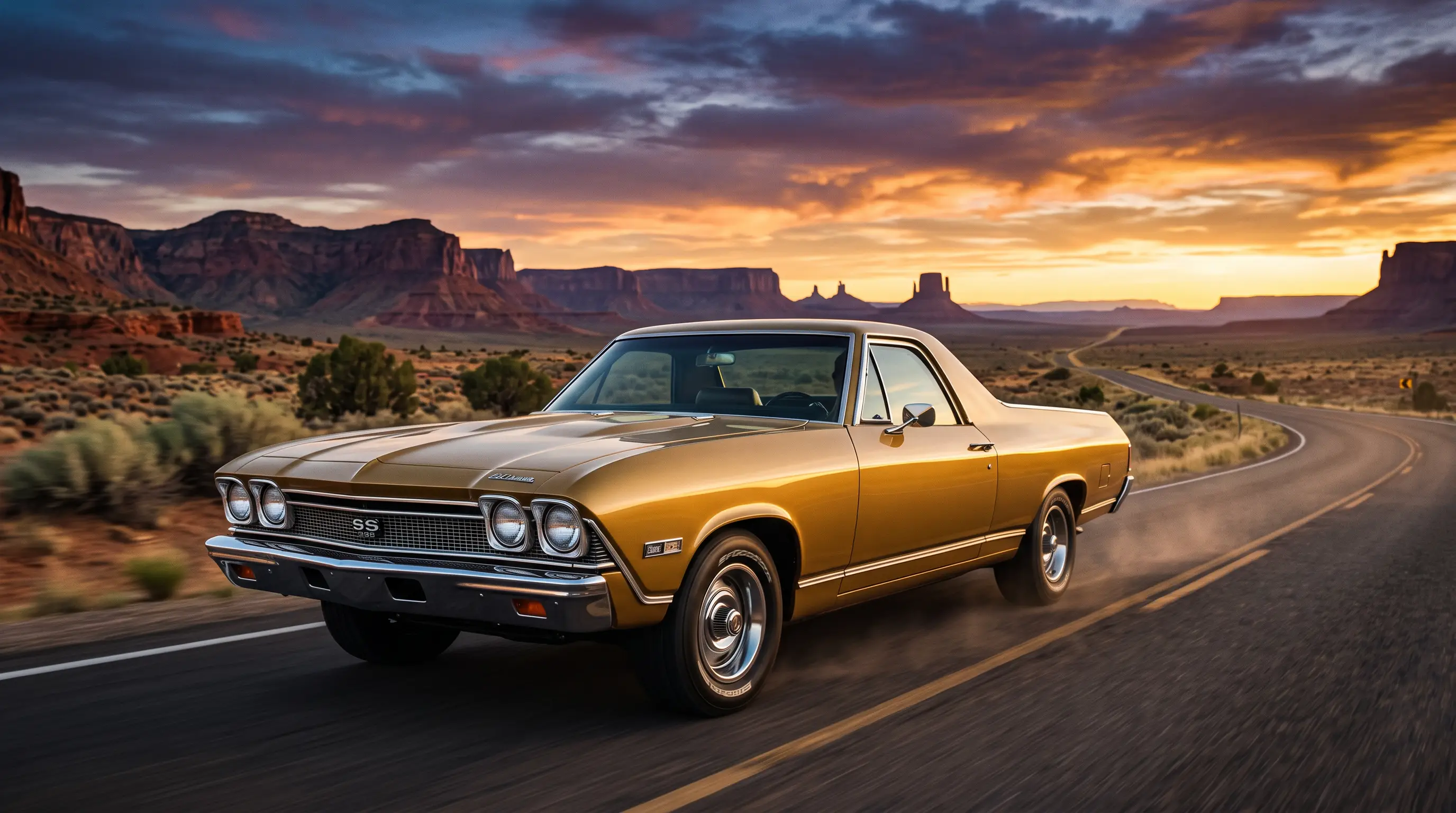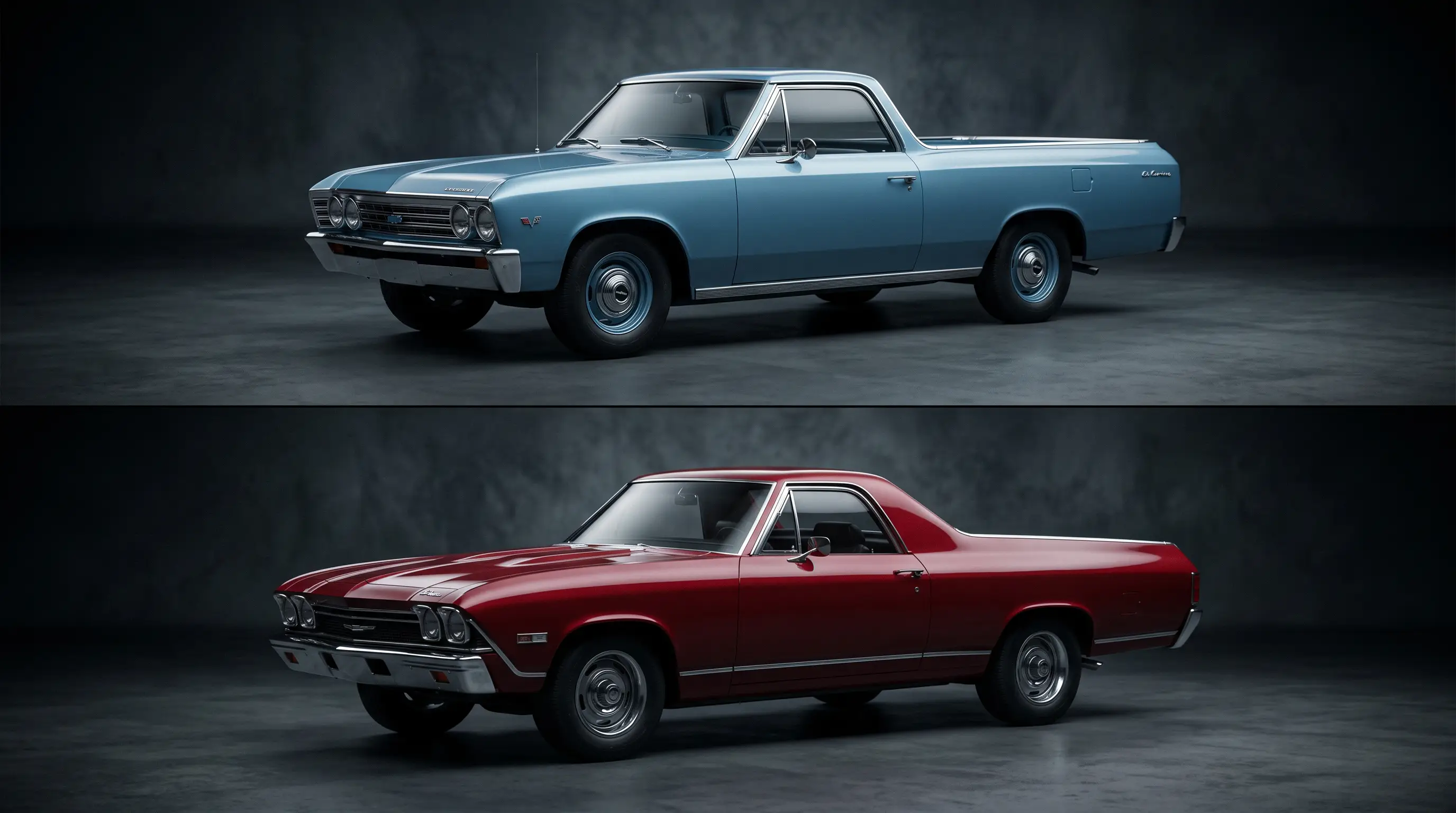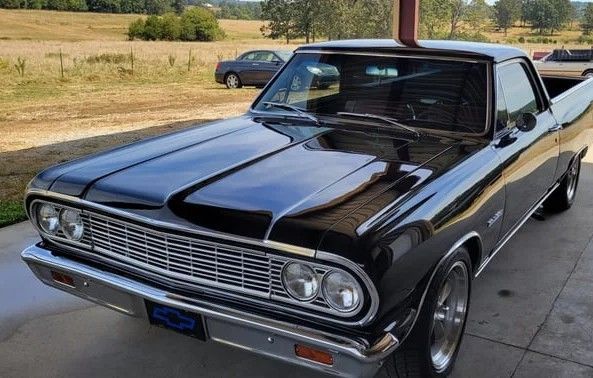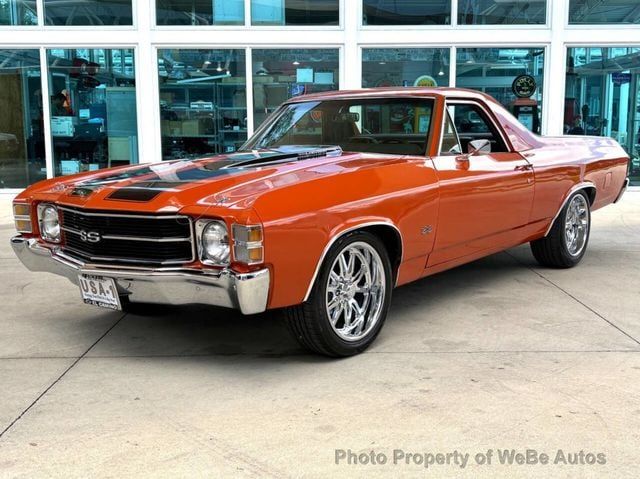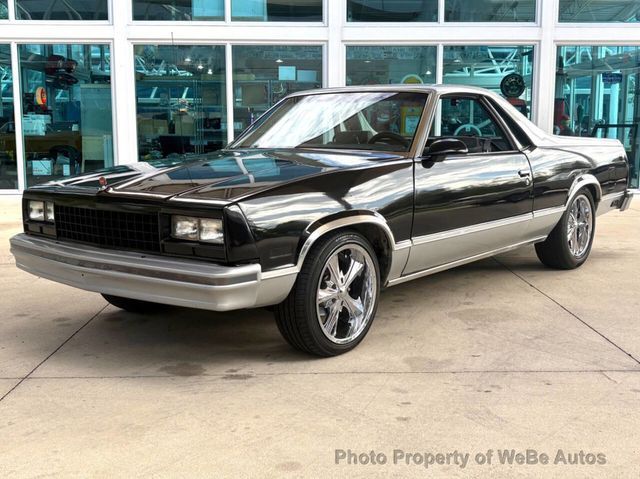
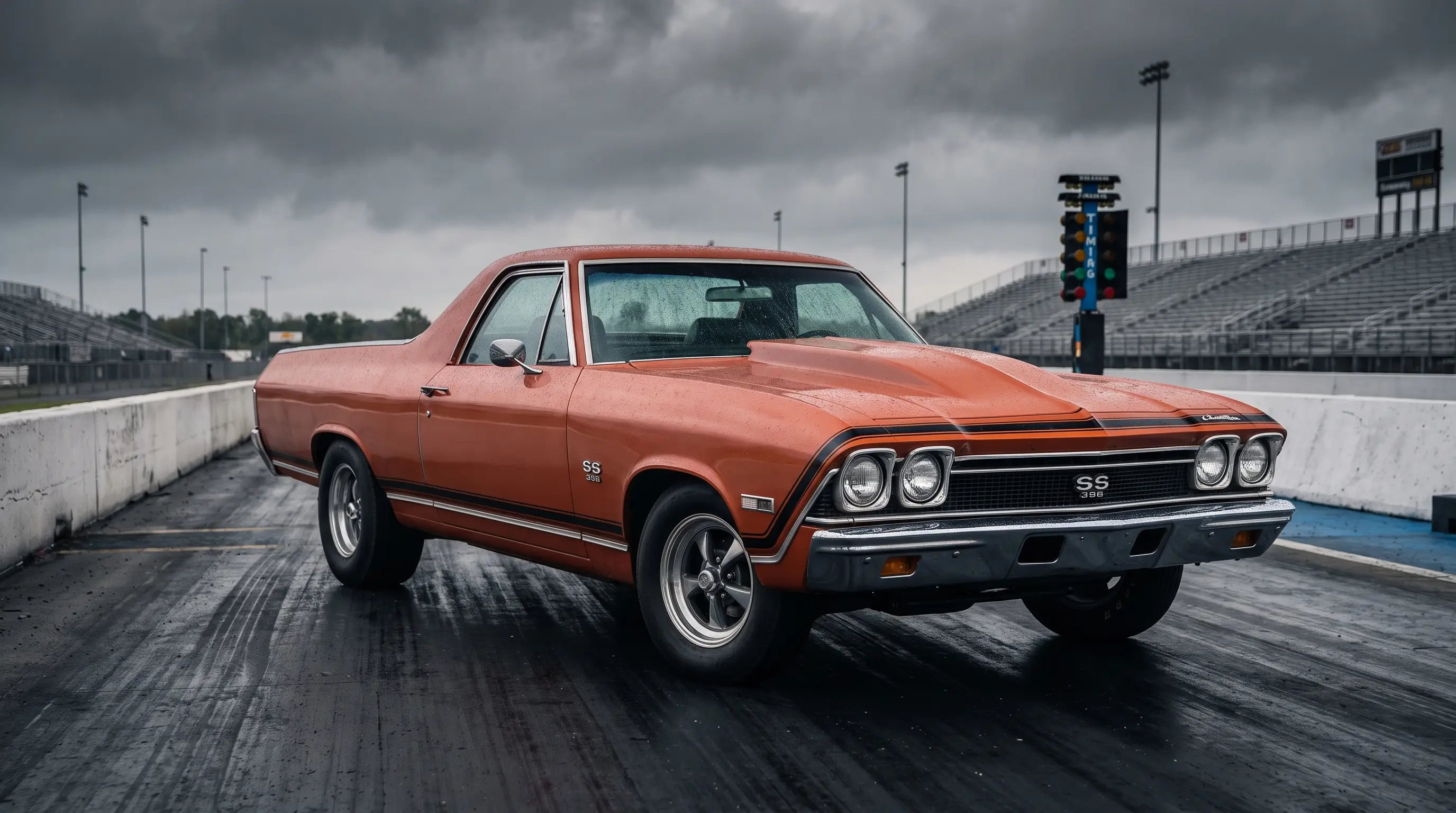
Here is the number that matters: 1968 is the year the El Camino SS 396 became a car you could actually order, not a rumor you heard about from a dealer with connections. Before that, big-block muscle in a Chevy pickup body was a workaround. In 1968 it was a build sheet. That is what the el camino 1968 ss 396 debut actually promised buyers, and it is worth separating the promise from the marketing.
The number that started it: 396 cubic inches, factory-installed
Chevrolet offered the 396 cubic inch big block in the El Camino as a regular production option for 1968, available across a spread of power ratings depending on cam, compression and induction. The base 396, RPO L35, was rated at 325 horsepower, the mid-tier L34 at 350 horsepower, and the top L78 at 375 horsepower. Three tiers, one displacement. Only the L35 and L34 ratings were actually advertised in Chevrolet's 1968 literature; the L78's 375 horsepower figure was left off factory materials because it exceeded GM's internal pounds-per-horsepower guideline for the car's weight class. That range alone tells you Chevrolet was not treating this as a token option. It was a real performance ladder.
The result on paper was straightforward. A car that previously needed dealer intervention or a private engine swap to get big-block power now had it on the order form, checked off next to paint color and interior trim like any other option.
What "SS" meant on this specific car in 1968
The Super Sport badge on the El Camino for 1968 was not a separate model line the way it would eventually become. It was an option package layered onto the existing car, bringing the 396 engine, upgraded suspension components, and SS-specific trim and badging. That distinction matters because it explains why survivor SS 396 El Caminos from this exact year are harder to document than later years when the paperwork trail improved. Buyers checked a box on an order sheet, and dealers did not always record which specific engine tier landed under the hood.
The blunt reality is that documentation gaps from 1968 make some cars harder to verify today than their 1970 successors. A build sheet or an original invoice closes that gap. Without one, a claimed L78 375 horsepower car and a claimed L35 325 horsepower car can look identical from the outside.
Why buyers actually cared, beyond the horsepower figure
A big-block El Camino solved a real problem for a specific kind of buyer in 1968: someone who wanted genuine performance but also needed a vehicle that could carry a load without apology. The SS 396 package did not ask a buyer to choose between a muscle car and a truck. It gave them both in one purchase, and that combination is the actual promise behind the debut, more than any single dyno number.
The trade-off was real too. A heavier engine up front changed the car's handling balance compared to a small-block El Camino, and buyers who ordered the 396 without also checking the upgraded suspension box got a car that could out-accelerate its chassis. That is not a knock on the car. It is just the honest math of dropping a big-block into a platform that started life as a mid-size hauler.
| 396 Engine Tier | Approximate Rating | Typical Buyer Intent |
|---|---|---|
| Base 396 (L35) | 325 hp | Everyday performance, easier to insure |
| Mid-tier 396 (L34) | 350 hp | Balance of power and drivability |
| Top 396 (L78) | 375 hp (unadvertised) | Serious performance buyer, stiffer suspension expected |
Reading the 1968 debut against what came after
The 1968 SS 396 El Camino gets overshadowed today by the 1970 cars with their 454 cubic inch option, and that comparison is fair on raw output. But the 1968 debut is the year the concept proved itself. Without a market for the 396 package that year, there is no reason for Chevrolet to have kept expanding the performance ladder through 1970, 1971 and 1972. The later, bigger engines are a direct consequence of buyers responding to what showed up on the order sheet in 1968.
If you want the fuller context of the model year this engine arrived in, including the redesigned body it was bolted into, where this started covers the rest of the 1968 changes in one place.
"Three power levels, one displacement, and a body that could still carry a load. That is not a gimmick option. That is a company betting the buyer actually wanted both things at once, and being right about it."
- Dan Reeves
The verdict on the debut year
Judged purely on horsepower, 1968 loses to 1970. Judged on significance, 1968 wins outright, because it is the year Chevrolet committed a factory big-block option to this body style instead of leaving it to dealers and private builders. That single decision set the trajectory for every SS El Camino that followed through 1972. Buyers today shopping this era should treat the 1968 SS 396 not as a lesser stepping stone to the 454 cars, but as the year the whole idea got proven.
Anyone assembling a collection around this generation should look closely at documented, correctly optioned 1968 cars before assuming the later years are automatically the better buy. If you want to compare examples directly, you can find classic El Camino for sale listings from this era and weigh a documented 1968 SS 396 against the more common 1970 alternative on its own terms rather than by horsepower figure alone.
The visual cues that separate a real SS 396 from a clone
Badging alone will not settle an argument about a 1968 SS 396, since trim pieces get swapped and reproduction badges exist for every era of this car. The SS package brought specific hood treatment, blacked-out grille elements, and identifying stripes that differed from a standard El Camino, and those trim differences are a starting point, not a conclusion. What actually settles the question is paperwork. A build sheet found under a seat, a broadcast copy of the original invoice, or a cowl tag decoded against Chevrolet's production records will confirm the engine and options far more reliably than any exterior trim piece can.
This is where the blunt math comes back in. A 1968 SS 396 without supporting documentation is worth what the market will pay for an unverified example, which is meaningfully less than a documented car regardless of how correct the trim looks. Buyers who skip this step and pay a premium based on badges alone are gambling on a claim they cannot actually confirm.
Production reality behind the option
The SS 396 package was never the majority of El Camino production in 1968. Total El Camino production for the year ran to roughly 41,800 units, with the SS 396 package accounting for about 5,190 of those, a small slice of the whole run. Most buyers still ordered small-block cars for lower cost and easier insurance, which is exactly why a correctly documented big-block example carries a real premium today. Scarcity plus verified paperwork is the combination that actually moves a price, not one or the other alone. A rare engine option with no way to prove it was there from the factory does not command the same number as one backed by a cowl tag decode.
Sources and notes
- Your definitive 1968-72 Chevelle SS buyer's guide - Hagerty Media
- 1968 El Camino Parts and Restoration Information - SS396.com
- El Camino Production Totals
- Differences between 396 L34 and L35 - Team Chevelle forum
- 396 is really a 402 - Team Camaro Tech forum
- Incredibly Rare L78-Powered 1968 El Camino SS396 Found in Garage - GM Authority