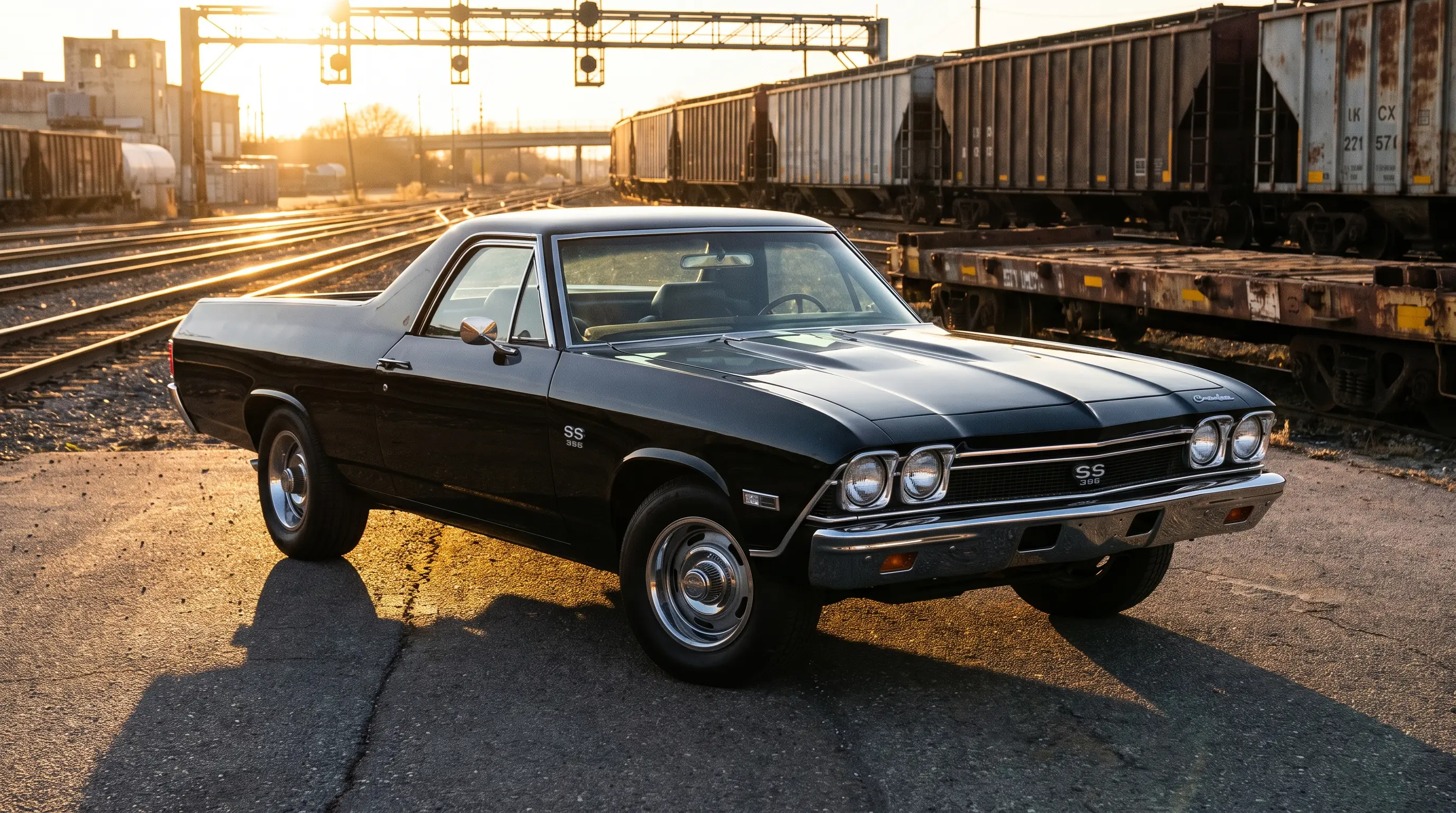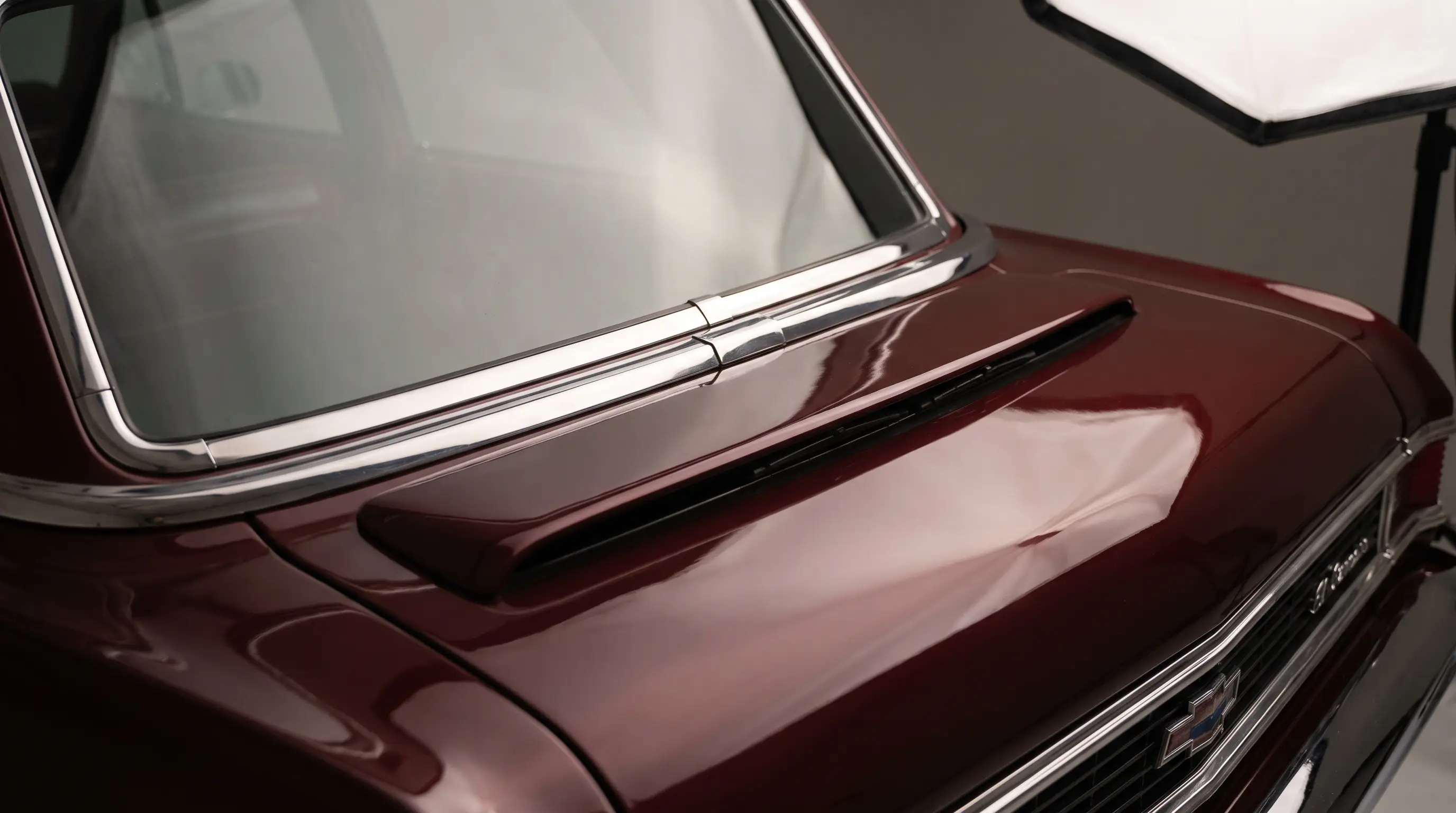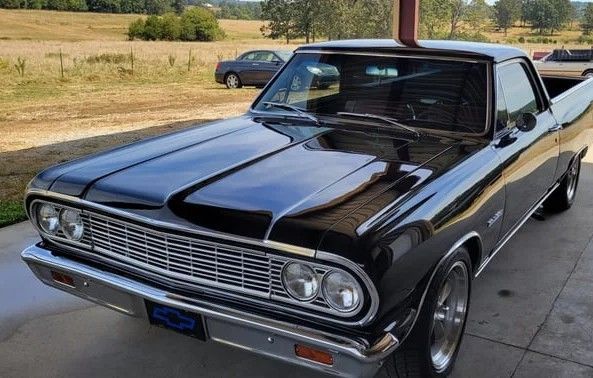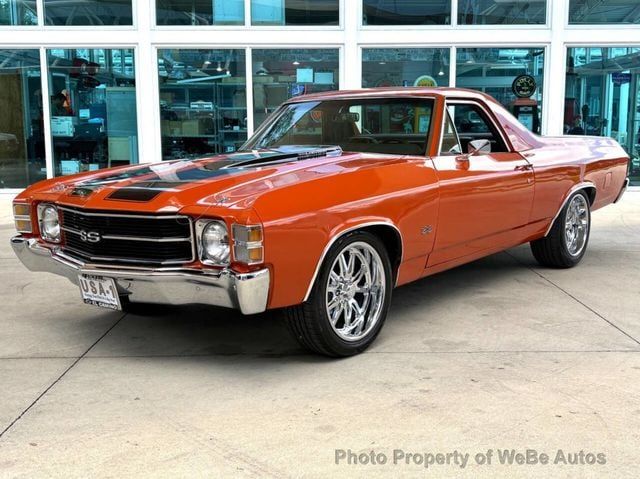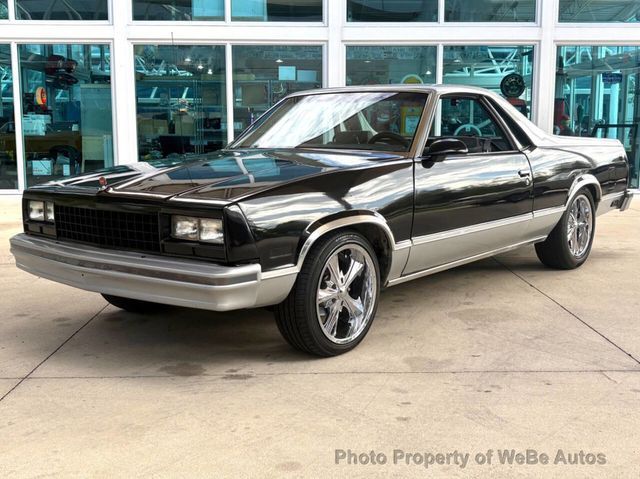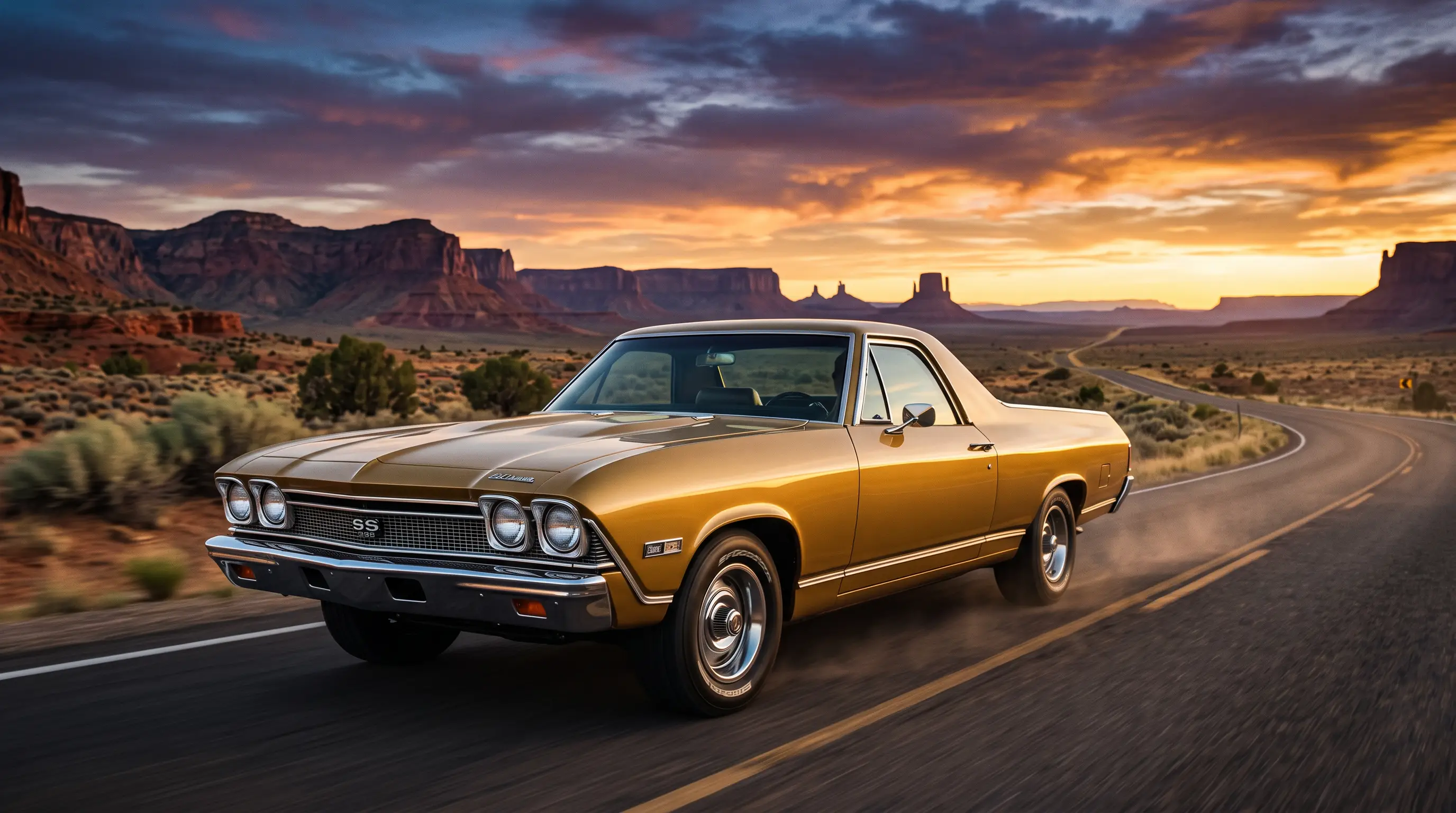
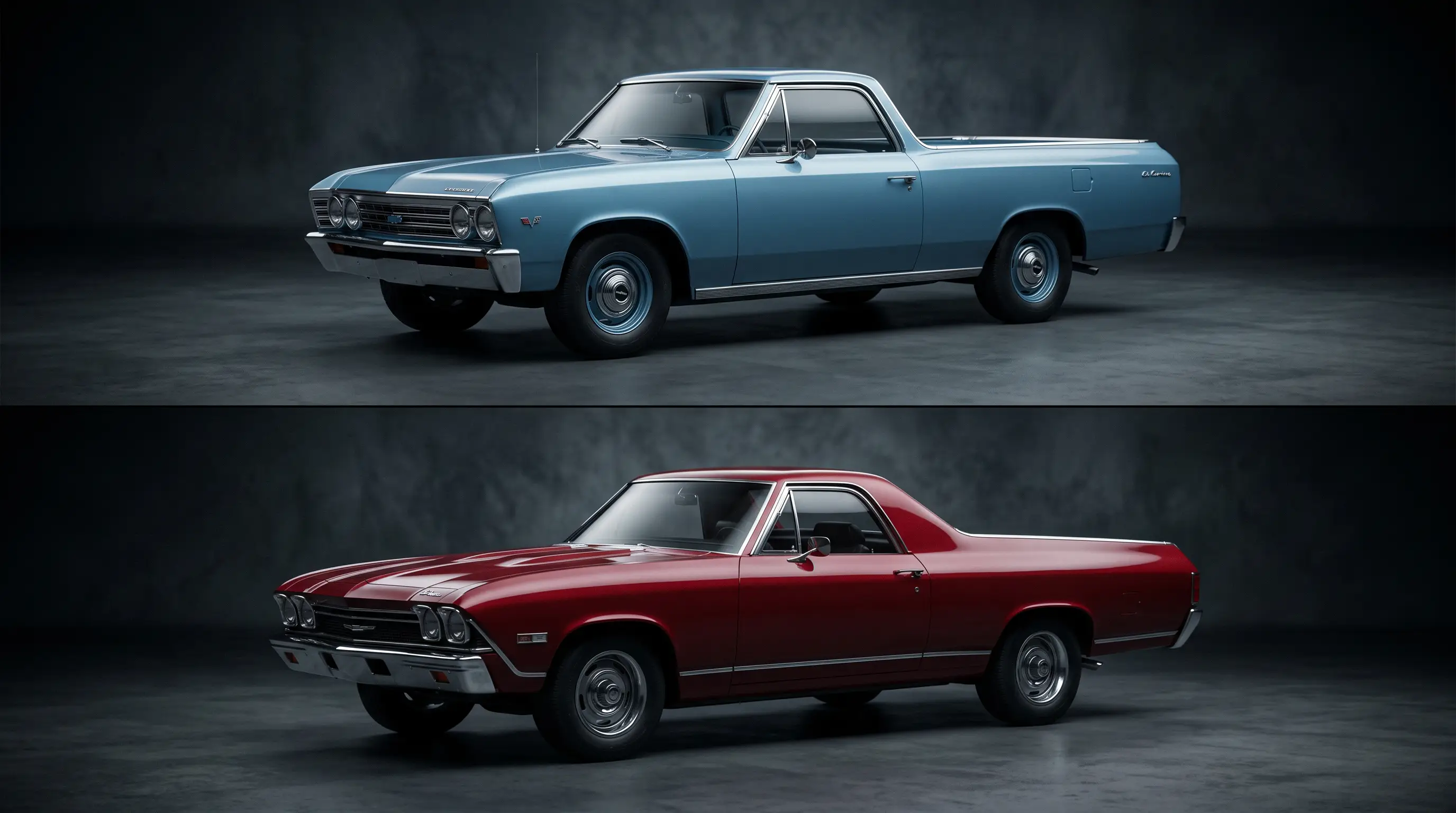
Park a 1967 and a 1968 El Camino nose to nose and the gap between them looks bigger than a single model year should allow. That is the honest way to frame el camino 1968 vs 1967 leap, because Chevrolet did not treat the 1968 car as an update. It treated it as a replacement, built on a new platform with a new body and a genuinely different set of engine options sitting under the hood.
The chassis changed, not just the sheet metal
The 1967 El Camino was the last of the first Chevelle-based generation, a body design dating back to 1964 that had received styling refreshes along the way but never a structural overhaul. The 1968 car arrived on an entirely new A-body platform, one shared across Chevrolet, Pontiac, Oldsmobile and Buick's intermediate lines that year. The wheelbase relationship changed too. In 1967, every Chevelle body style, two-door, four-door, wagon, and El Camino, shared a common 115-inch wheelbase. For 1968, the platform split in two: the two-door Chevelle coupe moved to a tighter 112-inch wheelbase, while the four-door sedan, the wagons, and the El Camino stayed on a longer 116-inch wheelbase, a split that simply did not exist on the 1967 car.
That is not a trim-level distinction. It means the frame, the floor pan and the suspension mounting points were reworked from the ground up, which is a far bigger leap than most single model-year transitions in this era ever represented.
The body dropped its boxiness for a sculpted profile
Visually, the 1967 El Camino carries the straighter beltline and more upright roofline typical of the early-to-mid 1960s Chevelle design language. The 1968 redesign brought the pinch-and-flare coke-bottle profile that became the defining look of this generation, along with a lower roofline and a semi-fastback rear window angle that the 1967 car never offered. Stand the two side by side and the 1968 car reads lower, longer through the hood, and noticeably more aggressive through the rear quarter panel.
None of that happened by accident or as a byproduct of the wheelbase change. Chevrolet's design studios had been developing the sculpted A-body look across the whole intermediate lineup, and 1968 was the year every division committed to it simultaneously.
The engine lineup opened up in a way 1967 never did
Big-block power in a 1967 El Camino generally meant either a limited factory option or dealer and owner intervention. For 1968, Chevrolet made the 396 cubic inch big block a proper regular production option on the El Camino, offered across a range of power outputs and paired with the new SS package for buyers who wanted the full performance treatment. That is a meaningful expansion of what a showroom-stock buyer could actually order without any aftermarket work.
The practical effect was that a shopper cross-comparing a leftover 1967 model and a new 1968 car at the same dealership in late 1967 was looking at genuinely different vehicles, not two versions of the same car with a new grille. One rode an older platform with a narrower factory performance ceiling. The other offered a new chassis, a new body, and a real big-block option sheet.
| Category | 1967 El Camino | 1968 El Camino |
|---|---|---|
| Platform | Carryover 1964-era Chevelle chassis | All-new A-body platform |
| El Camino wheelbase vs Chevelle coupe | All body styles shared a 115-inch wheelbase | El Camino held the longer 116-inch wheelbase with the sedan and wagon; the two-door coupe dropped to 112 inches |
| Body theme | Straighter beltline, upright roof | Coke-bottle flare, semi-fastback roof |
| Big-block availability | Limited or dealer-arranged | Factory 396 option across power tiers |
Why this particular leap still shapes how the model is collected
Collectors treat the 1968 redesign as the real starting point for the muscle-era El Camino story, and the comparison to 1967 is exactly why. A 1967 car represents the tail end of the original Chevelle-based design, competent but visually and mechanically tied to 1964. A 1968 car represents a clean break, the platform and body that would carry the model, with running updates, all the way through 1972. When people picture a classic muscle-era El Camino today, they are almost always picturing something closer to the 1968 shape than the 1967 one, and that preference traces directly back to how much changed in a single year.
For the complete account of everything that arrived alongside this redesign, the full story covers the 1968 model year changes in one place, from the new body to the expanded engine lineup.
"Most model years bring a new grille and call it a redesign. 1968 actually earned the word, on the chassis, on the body, and on the engine sheet all at once."
- Sarah Whitfield
What this means for buyers comparing the two years today
If you are deciding between a well-kept 1967 and a 1968 El Camino, the honest framing is that you are choosing between two different eras of the same nameplate, not two trim levels of the same car. The 1967 has its own following among people who prefer the earlier, more restrained styling and the simpler mechanical layout underneath it. The 1968 draws buyers looking for the sculpted look and the wider factory performance range that followed.
Either way, spending time with real examples side by side is the fastest way to understand how significant this single-year jump actually was. It is worth taking time to browse classic El Camino listings and compare a documented 1967 against a 1968 model to see the wheelbase, roofline and engine differences firsthand rather than relying on spec sheets alone.
Production numbers tell part of the story too
Sales figures moved in the 1968 car's favor, and that is not a coincidence. A genuinely new platform paired with an expanded engine lineup gave Chevrolet a stronger product to put in front of shoppers who might otherwise have cross-shopped a Ford Ranchero or simply kept driving an older truck. The 1967 model, competent as it was, was selling on the strength of a four-year-old design by the time it left production, while the 1968 car arrived with genuine news to tell a buyer standing on the showroom floor.
That sales momentum matters for collectors today too, since it affected how many examples of each year survived. A 1968 model that sold well when new had a larger population to draw from decades later, which is part of why 1968 and the years that followed it are more commonly found in restorable condition than the shorter run of 1967 cars that preceded the redesign.
Sources and notes
- Chevrolet El Camino - Wikipedia
- Chevrolet Chevelle - Wikipedia
- 1967 Chevrolet El Camino Specifications and Dimensions - Conceptcarz
- Your definitive 1968-72 Chevelle SS buyer's guide - Hagerty Media
- 1968-72 Chevrolet El Camino: 3rd Gen Guide and Specs - Motogallery
- 1964-67 Chevelle frame interchangeability - Team Chevelle forum
What the interior comparison reveals
Step inside a 1967 and a 1968 El Camino and the dashboard layout, seat design and door panel styling all reflect the same platform-level break visible outside. The 1968 cabin adopted a wider dash face and revised gauge cluster consistent with the rest of the redesigned A-body lineup, a distinctly different look from the more upright, simpler dashboard carried over from the earlier Chevelle-based design. Buyers stepping between the two years at a dealership in late 1967 would have noticed the cabin felt as new as the sheet metal outside it, reinforcing that this was never meant to read as a minor update.