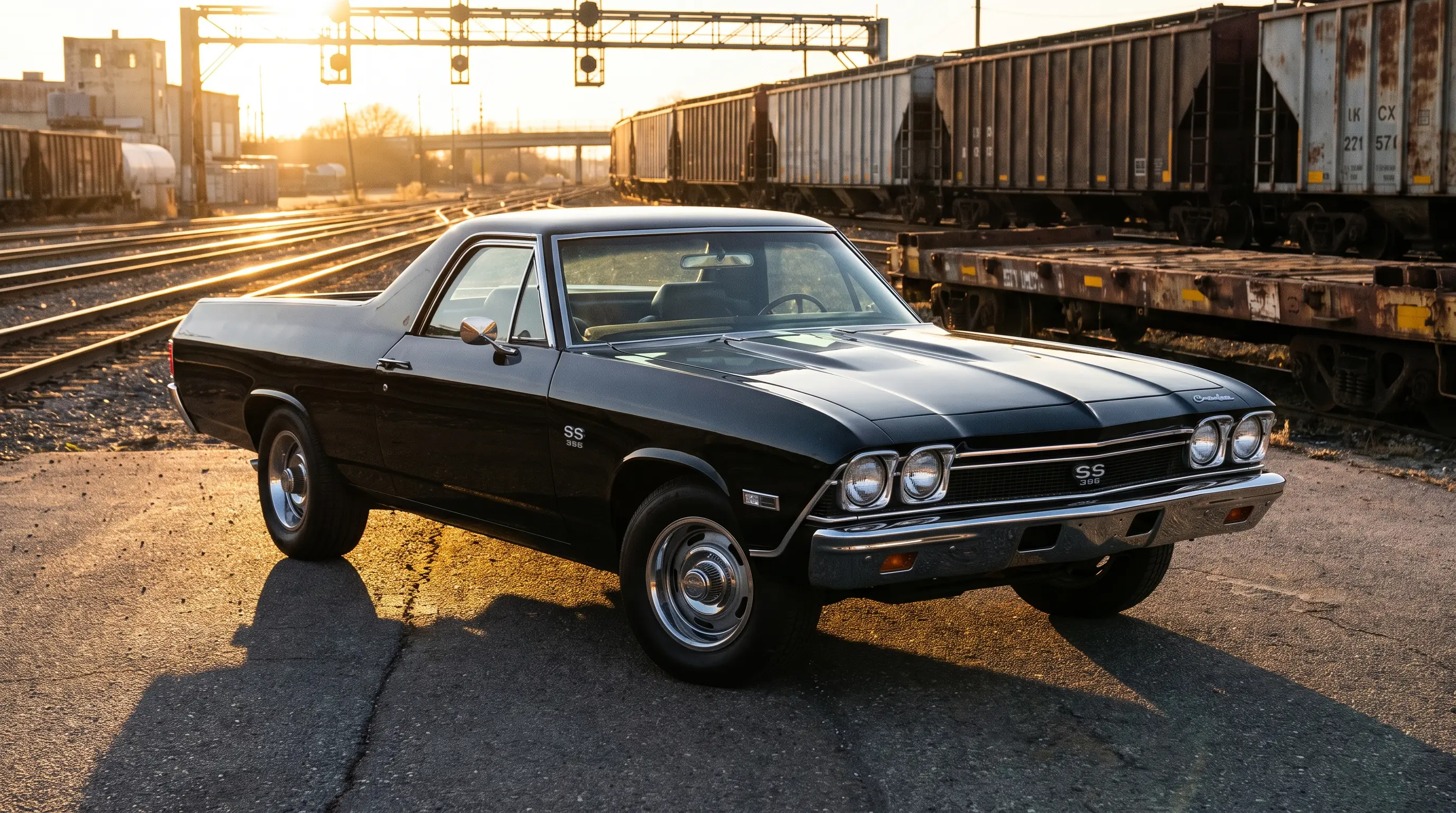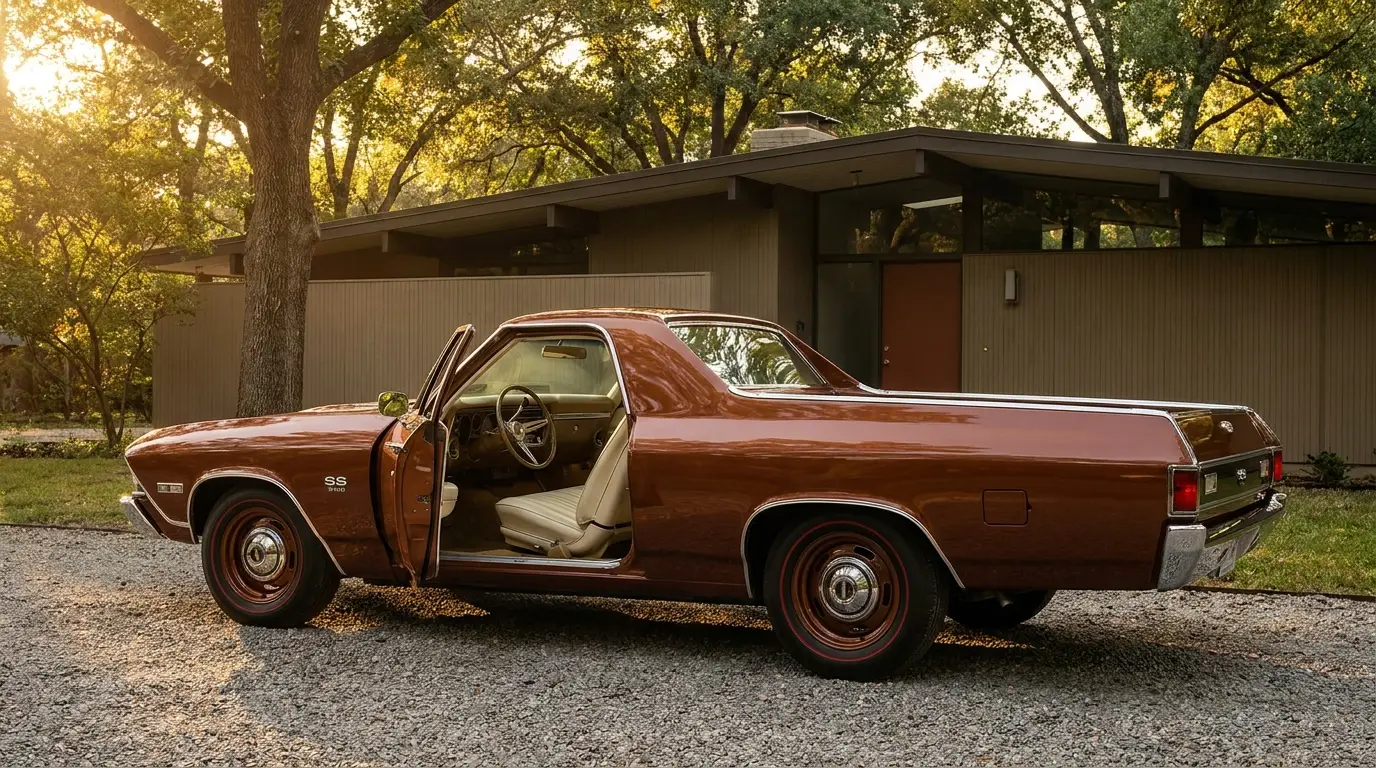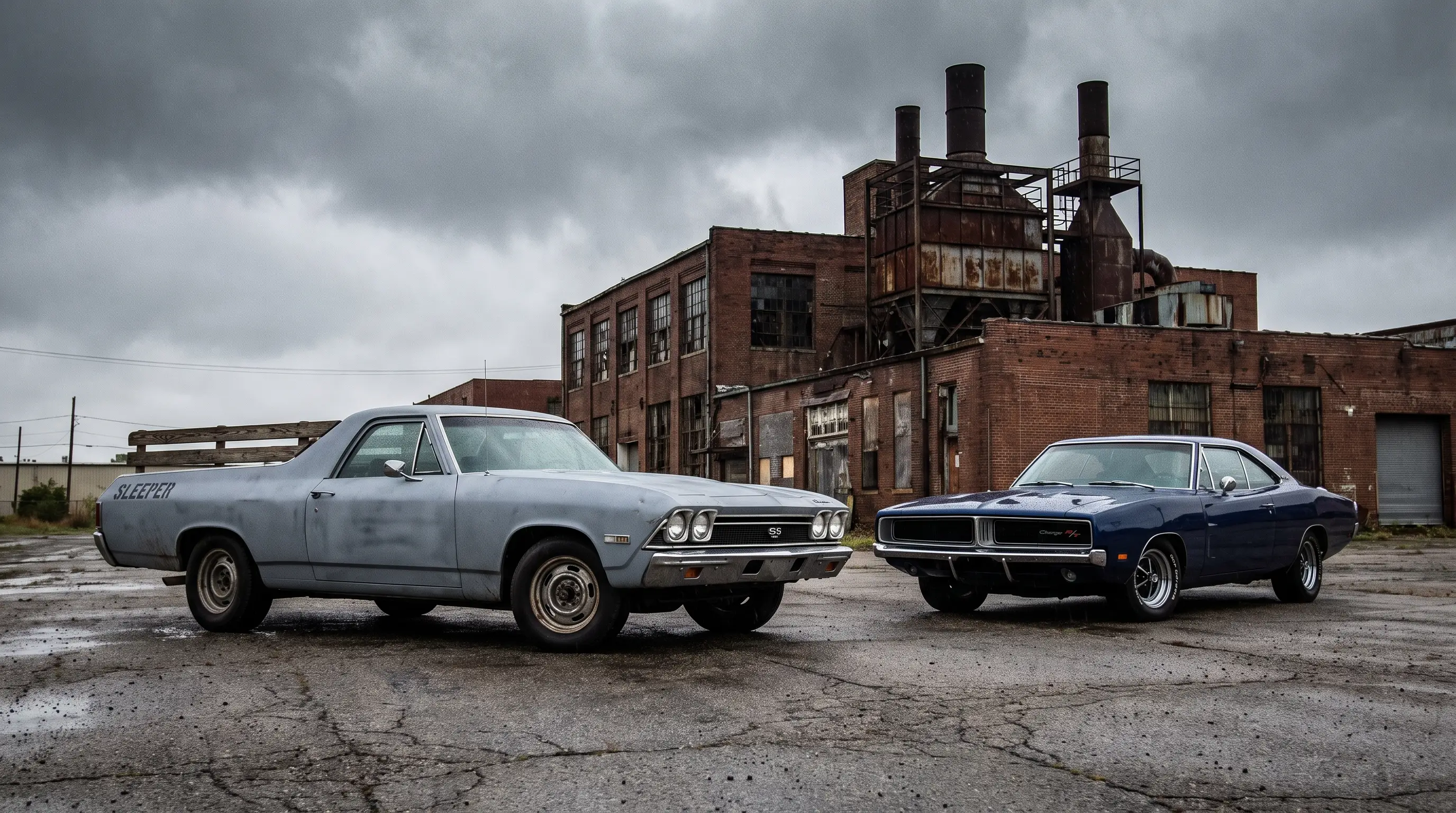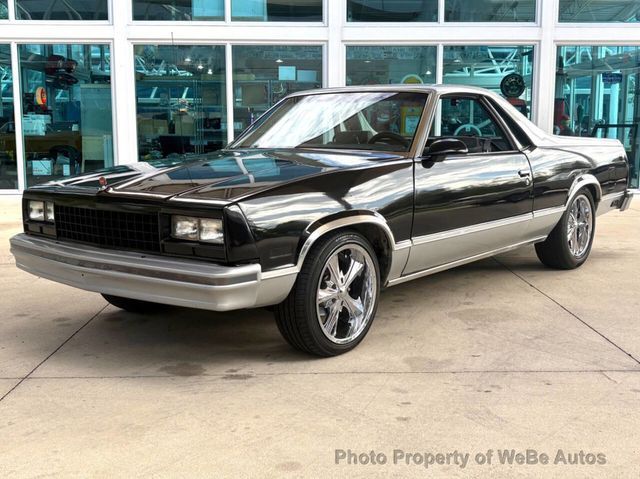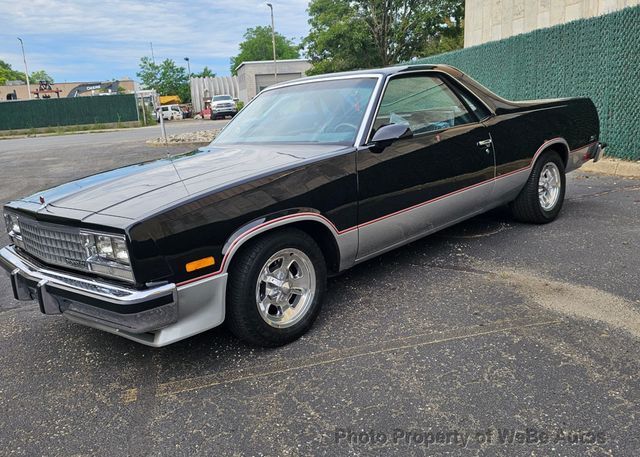
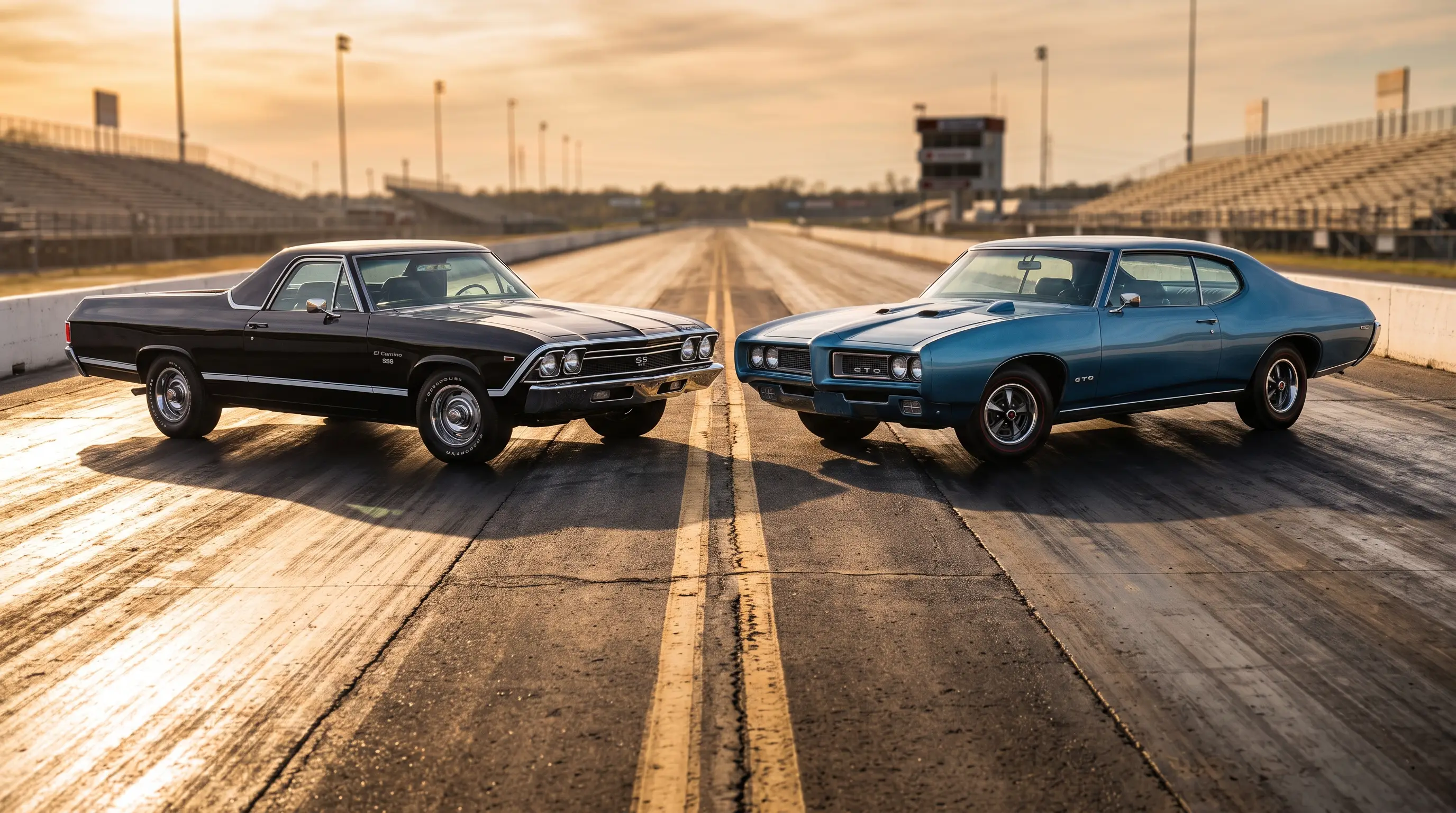
The 1968 Chevrolet El Camino rarely gets mentioned in the same breath as the Pontiac GTO, but the production paperwork says it should. Chevrolet built the 1968 El Camino on the same all-new A-body platform as the Chevelle, gave it the SS 396 package, and let it compete for the same buyer dollars as Pontiac's tri-power legend, the Ford Ranchero GT, and the Plymouth GTX. The difference is that one of these was classified as a car and the other, at least on paper, was a light truck. That single distinction shaped everything from insurance rates to how dealers marketed it, and it is the reason the El Camino's muscle credentials still get underestimated.
A new body, a familiar fight
Chevrolet redesigned the Chevelle line for 1968, dropping a longer hood, shorter rear deck, and a semi-fastback roofline over the same basic chassis that underpinned the El Camino. The coupe utility rode a slightly longer wheelbase than the two-door Chevelle hardtop, which gave it a planted stance that dealers used in print ads to suggest a working man's muscle car. Under the SS 396 badge, the El Camino could be ordered with the L34 396 cubic inch V8 rated at 350 horsepower, or the rare L78, rated at 375 horsepower. Both numbers matched what a buyer could get in a Chevelle SS 396 coupe the same year, which meant the truck bed cost nothing in a straight-line fight.
Pontiac's answer was still the GTO, now in its second-generation body with hidden headlamps and the Endura nose that took hits without cracking. The 1968 GTO carried a 400 cubic inch V8 as standard equipment, rated at 350 horsepower, with a Ram Air option that pushed output higher on paper while keeping the same rounded number for advertising purposes. Where the GTO leaned on image, image alone, the El Camino leaned on the fact that it could do the same quarter-mile trip and then haul a load of drywall home from the lumberyard on Monday.
Ford and Mopar wanted in too
Ford's Ranchero switched to the Torino platform for 1968, and the Ranchero GT could be optioned with the 390 cubic inch V8 rated around 335 horsepower. It was a genuine rival on paper, but Ford never pushed the big-block Ranchero as hard in advertising as Chevrolet pushed the SS 396 package on the El Camino. Plymouth's GTX offered the 440 Super Commando as standard power, a genuinely quick car, though it came as a two-door hardtop rather than anything with a bed. Dodge's Coronet R/T covered similar ground. None of these competitors, except the Ranchero, actually shared the El Camino's split identity as both hauler and street car, which narrows the true rival list to one: Ford's own coupe utility.
The Ranchero comparison deserves its own scrutiny because it is the only direct apples-to-apples rival in the segment. Both companies built their coupe utilities off intermediate platforms that year, both offered a genuine big-block option, and both marketed the vehicle to a similar buyer who wanted performance without giving up cargo capacity. The difference came down to displacement and depth of option list. Chevrolet's 396 cubic inch big-block, in L78 trim, out-muscled Ford's 390 on paper, and the SS 396 package bundled suspension and cosmetic upgrades that the Ranchero GT's option sheet approached but did not fully match. Ford compensated with a broader range of milder V8 choices for buyers who wanted some extra power without committing to the top package, a strategy that arguably sold more total units even if it produced fewer headline-grabbing examples.
It is also worth noting how each company's regional dealer networks handled these coupe utilities differently. Chevrolet dealers in the Sun Belt and industrial Midwest pushed the SS 396 El Camino hard to tradesmen who wanted one vehicle instead of a car and a truck, while Ford dealers tended to present the Ranchero GT as a lifestyle vehicle first and a hauler second. That subtle difference in positioning shaped how each car aged in public memory. The El Camino kept its working-class credibility precisely because Chevrolet never stopped selling it as a genuine dual-purpose machine, even while quietly matching the GTO's numbers under the hood.
| Model | Standard/Optional Big Block | Peak Horsepower | Body Style |
|---|---|---|---|
| 1968 El Camino SS 396 | 396 cid L34/L78 | 350/375 hp | Coupe utility |
| 1968 Pontiac GTO | 400 cid Ram Air optional | 350 hp base | Hardtop/coupe/convertible |
| 1968 Ford Ranchero GT | 390 cid V8, 4-barrel | 335 hp | Coupe utility |
| 1968 Plymouth GTX | 440 cid Super Commando | 375 hp | Hardtop/convertible |
Insurance and image made the real difference
The GTO's reputation as the original muscle car meant insurance underwriters had it flagged early, and premiums climbed accordingly by the late 1960s. The El Camino, still carrying a truck classification in some states and some insurers' books, occasionally slipped through at a lower rate even with the same drivetrain under the hood. That loophole did not last forever as insurers caught up to the SS 396 package specifically, but for a stretch it made the El Camino the quieter way into big-block power. Chevrolet dealers understood this and sold the car partly on that basis, alongside straightforward appeals to buyers who wanted one vehicle instead of a car and a truck sitting in the driveway.
You can read the full story of how the 1968 redesign came together, from the platform-sharing decision to the SS 396 rollout, if you want the complete production history behind these numbers.
Why the GTO won the marketing war
Pontiac had a five-year head start on muscle car mythology by 1968, and John DeLorean's team understood brand building in a way Chevrolet's more conservative management structure did not fully embrace until later. The GTO name alone carried weight that "El Camino SS 396" never could, no matter how close the horsepower figures landed. Reviewers and buyers alike treated the GTO as the benchmark, and every other manufacturer's big-block intermediate got measured against it, fairly or not. The El Camino never asked to be measured against the GTO. It asked to be measured against a work truck and a muscle car at the same time, and by that standard it won a fight nobody else was entering.
"Pontiac sold a myth and Chevrolet sold a spec sheet. Both worked, but only one of them also hauled your lumber. That's not a knock on the GTO. It's just a different kind of honest."
- Tom Ramirez
What the rivalry means for buyers today
Collectors chasing a 1968 GTO today compete against a much deeper pool of buyers who grew up idolizing the name, and prices reflect that demand. The 1968 El Camino SS 396, by contrast, still trades at a discount to its Chevelle SS 396 twin despite sharing the identical drivetrain, largely because some buyers still see the bed and think "truck" rather than "muscle car." That gap has narrowed over the past decade as documentation and matching-numbers verification have become easier, but it has not closed. For someone who wants period-correct big-block performance without competing against GTO money, the 1968 El Camino remains the quieter route to the same destination. If you want to see what is currently available, a classic El Camino for sale listing will show you where current asking prices sit relative to its more famous rivals.
Reading the rivalry through production numbers
Chevrolet built far more Chevelles than El Caminos in 1968, and within the El Camino line the SS 396 package represented a minority of total production, a pattern that mirrors how GTO buyers self-selected into the performance option at a higher overall rate. That lower production volume for the SS 396 coupe utility means fewer surviving examples exist today relative to demand, which is part of why documented cars have started closing the value gap with their Chevelle counterparts. The GTO's higher overall production numbers, spread across three body styles, actually work against scarcity-driven value in a way the El Camino's narrower production run does not. Collectors who understand this dynamic increasingly view the El Camino SS 396 as the statistically rarer car wearing the more modest reputation, which is exactly the kind of mismatch that tends to correct itself as more of the collector base does its homework.
The production numbers do not lie. A 1968 El Camino with the L78 could hold its own against a GTO from a stoplight, and the fact that history remembers one and not the other says more about advertising budgets and brand mythology than it does about what either car could actually do. Anyone comparing the two honestly, spec sheet against spec sheet, production figure against production figure, ends up with a more complicated and more interesting story than the one that usually gets told at car shows.