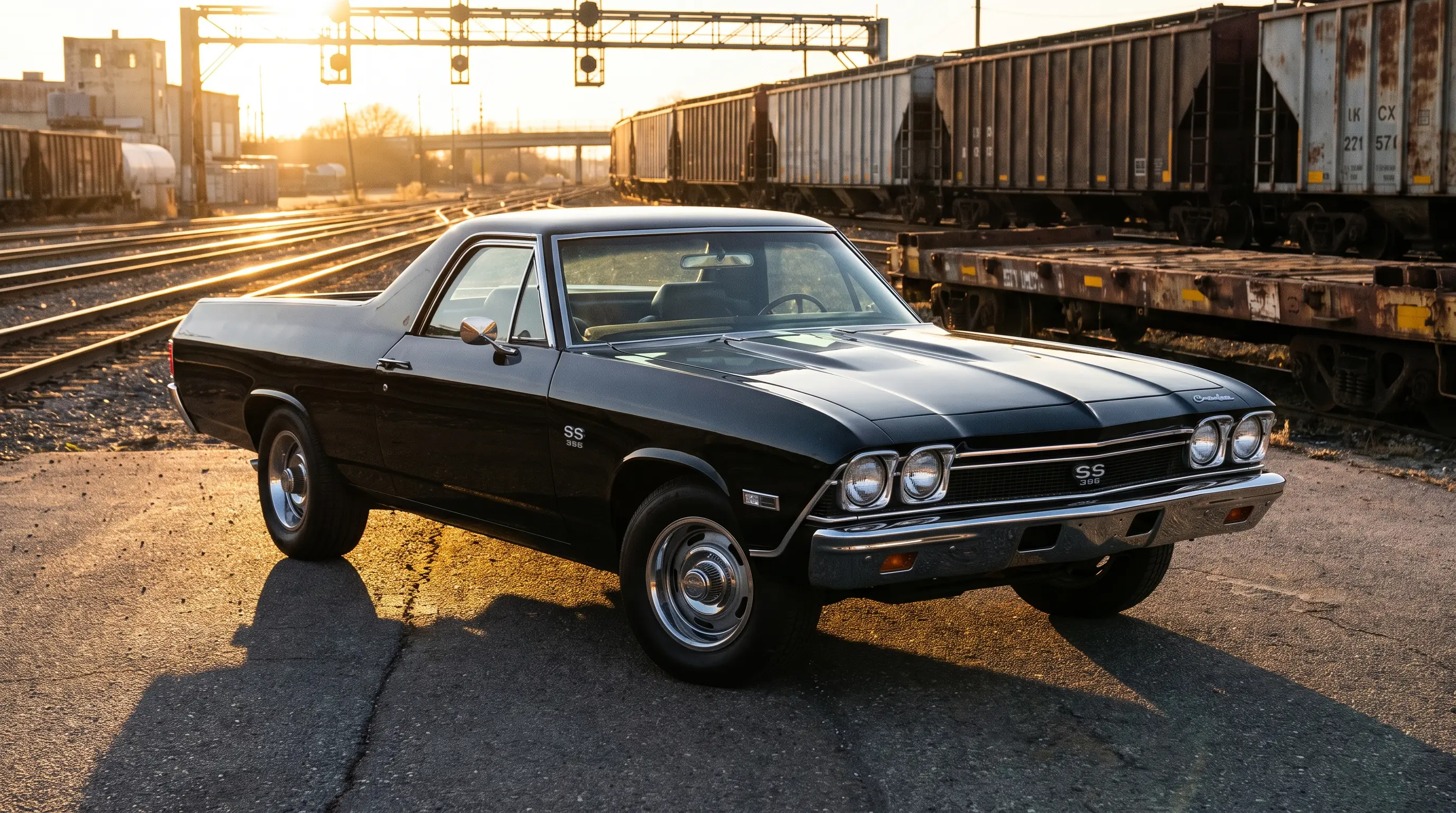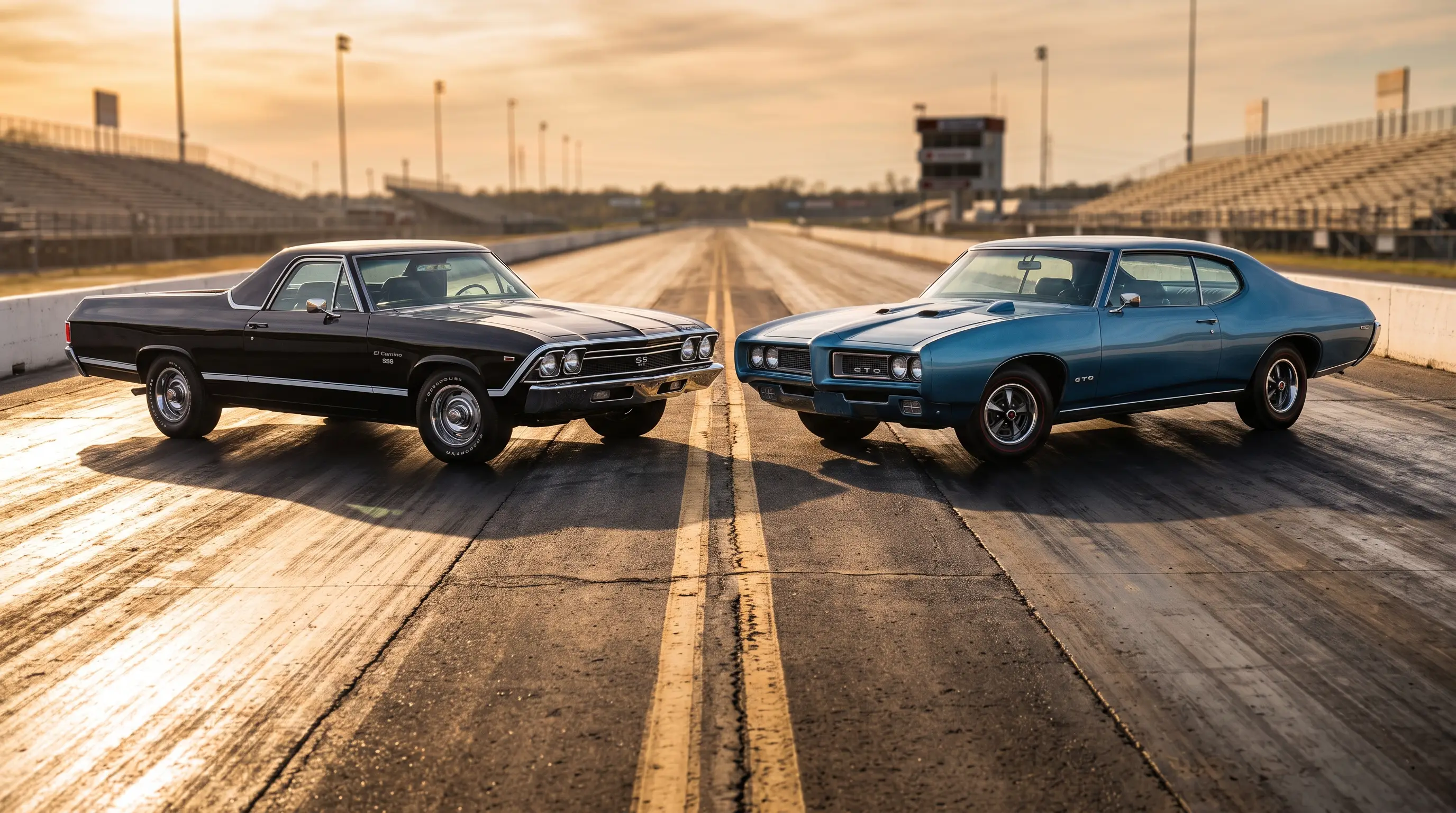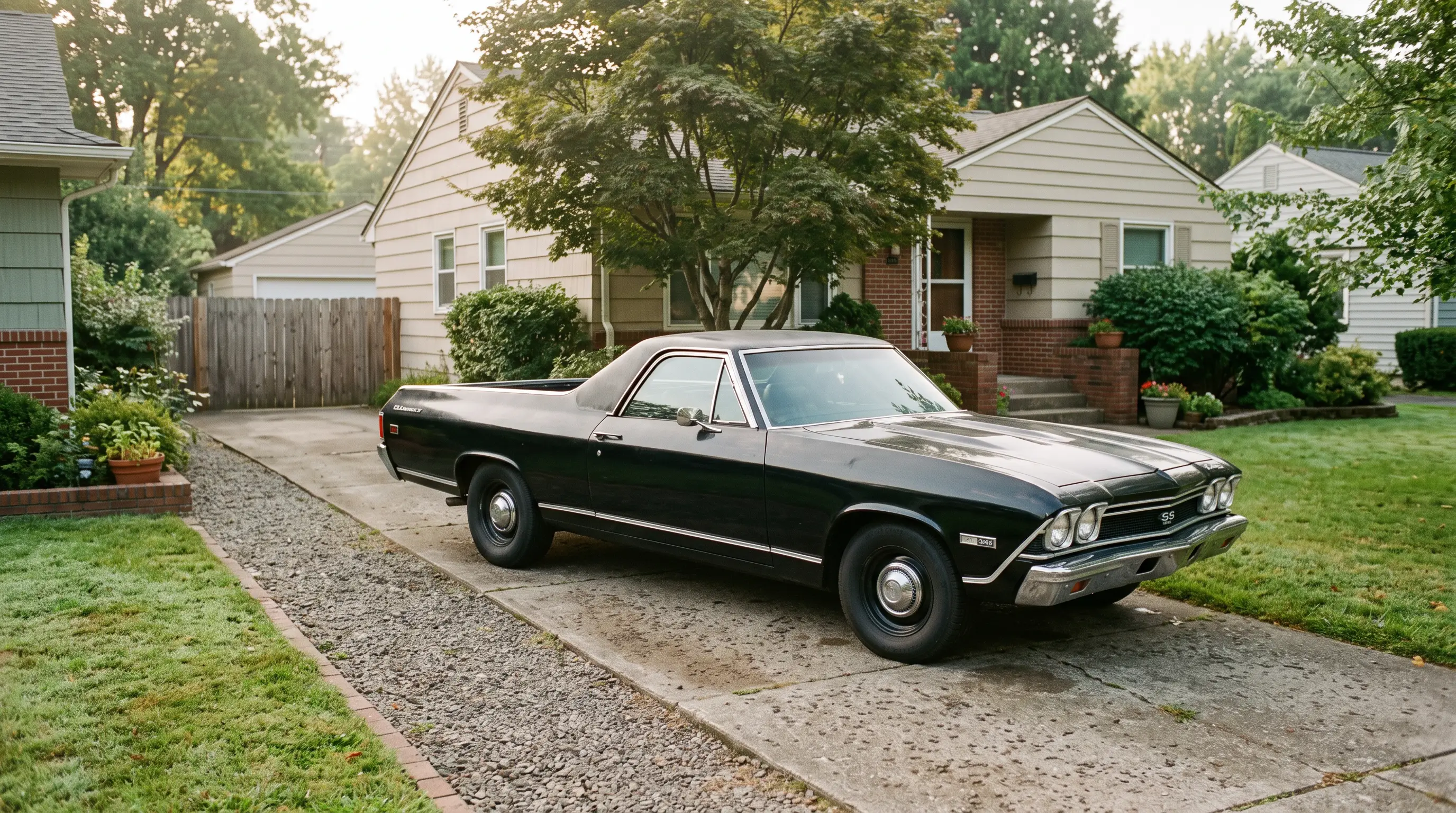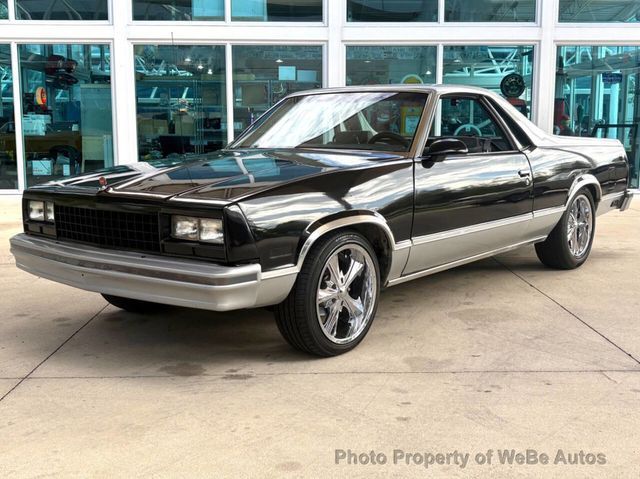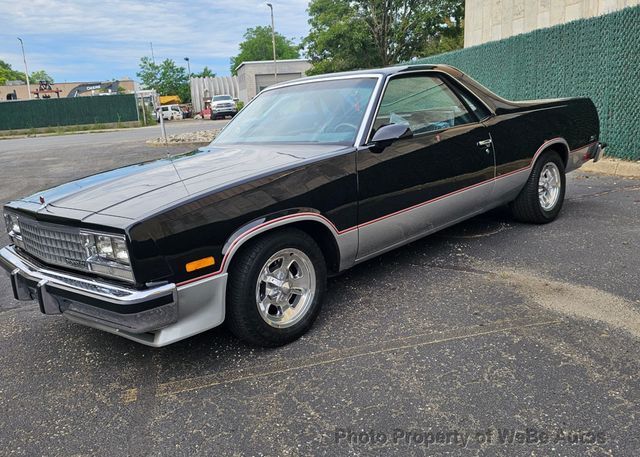
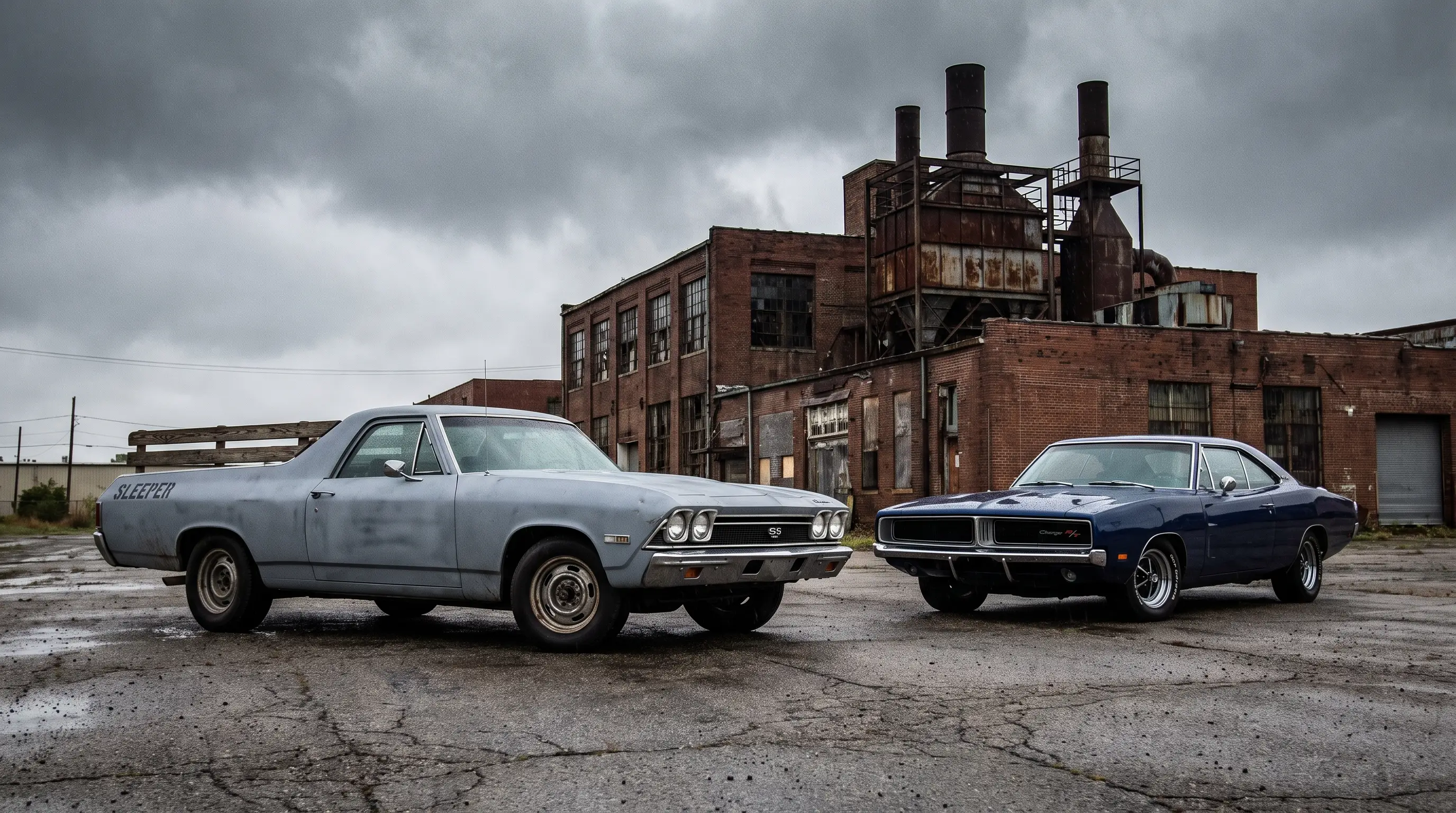
A sleeper, in period car culture, meant a vehicle that gave away nothing at a stoplight. The 1968 El Camino earned that reputation honestly, and the documentation supports the reputation better than most legends do. Fitted with the SS 396 package, the car wore a body style most onlookers still filed under "work truck," while the engine bay held the same big-block Chevrolet was putting in Chevelles and Camaros the same year. That mismatch between appearance and capability is precisely what defines a sleeper, and it is why period road testers occasionally singled the El Camino out for surprise.
What made the disguise work
Chevrolet's 1968 redesign gave the El Camino the same front clip, grille, and dashboard as the Chevelle line, but buyers and bystanders alike still processed the rear bed as evidence of a work vehicle rather than a performance one. Add whitewall tires, a base color like a muted green or beige, and the absence of hood stripes on a non-cowl-induction car, and the visual cues pointed entirely toward utility. Meanwhile, under that plain sheet metal sat the L34 396 rated at 350 horsepower or the rare L78 at 375 horsepower, the same numbers found in the more obviously aggressive Chevelle SS 396 hardtop. Documentation from factory build sheets and period Chevrolet literature confirms the drivetrain parity was intentional, not incidental.
Period road tests noticed
Automotive magazines of the late 1960s tested muscle cars constantly, and when an El Camino SS 396 crossed their path, the tone of the coverage shifted from routine to genuinely surprised. Writers who expected a soft-riding utility vehicle instead reported quarter-mile times that matched or beat contemporary Chevelle SS 396 hardtops, a fact attributable to the near-identical curb weight distribution between the two body styles despite the bed. That surprise factor became part of the car's mystique among enthusiasts who read the period press closely, even if it never generated the kind of sustained magazine attention that the GTO or Road Runner received.
Part of the reason coverage stayed thin has to do with how magazines allocated test units in 1968. Chevrolet's press fleet naturally prioritized the Camaro and the Chevelle SS 396 hardtop, cars the marketing department wanted reviewed and photographed for maximum newsstand impact. The El Camino rarely made it into that priority queue, which meant fewer total road tests existed to begin with, and the ones that did happen often arrived almost as an afterthought within a broader roundup of Chevrolet's 1968 lineup rather than a dedicated feature. That scarcity of press coverage is itself part of the sleeper story, since a car that barely got tested had even less chance of building a public reputation to match its actual capability.
Why the reputation persists among collectors
Concours judges and marque historians who study documentation closely still treat the 1968 El Camino SS 396 as an underappreciated entry in the muscle car canon, precisely because its performance credentials require a second look to appreciate. A car with a bed does not photograph the same way a two-door hardtop does in a magazine spread, and that visual bias has followed the model for more than five decades. Collectors who understand the drivetrain commonality with the Chevelle SS 396, however, have started paying closer attention to matching-numbers examples, recognizing that the underlying engineering never deserved the discount the market applied to it for so long.
This slow shift in perception mirrors what happened with several other unglamorous performance cars from the same era once dedicated researchers began publishing production data and RPO breakdowns. As soon as a reliable body of documentation exists showing exactly how many SS 396 El Caminos left the factory with each engine option, the sleeper narrative stops being folklore and becomes a verifiable production fact. That transition from anecdote to documented history is precisely what concours judging bodies and marque registries have been working toward for the 1968 model specifically, and it is slowly changing how the car gets discussed at shows.
| Trait | Visual Cue | Actual Performance Reality |
|---|---|---|
| Body style | Coupe utility, reads as "truck" | Shares Chevelle chassis and weight distribution |
| Engine option | Not advertised as aggressively as Chevelle SS | Identical 396 cid L34/L78 big-block availability |
| Base trim colors | Muted, work-vehicle palette common | Same drivetrain regardless of exterior color |
Anyone researching the model's origins should read our complete history of the 1968 redesign, which traces exactly how the SS 396 package migrated from the Chevelle parts bin into the coupe utility body without losing a single horsepower figure along the way.
Documenting a sleeper for authenticity purposes
For anyone trying to verify a 1968 El Camino SS 396's authenticity today, the sleeper reputation actually complicates the paper trail. Because the car was never marketed with the same visual intensity as a Chevelle SS or a GTO, period advertising and dealer literature specific to the El Camino's performance trim is comparatively scarce. Serious researchers rely on cowl tags, engine block casting numbers, and factory build sheets rather than assuming a plain-looking example lacks the drivetrain, since exterior presentation tells you almost nothing reliable about what sits under the hood on this particular model.
"I have pulled cowl tags on plain white 1968 El Caminos and found L78 codes underneath. You cannot eyeball this car's performance history. You have to read the documentation, every time."
- Sarah Whitfield
The reputation as a buying opportunity
The practical upshot for today's buyers is that the sleeper reputation has kept demand, and therefore prices, softer than the numbers justify. A documented 1968 El Camino SS 396 offers period-correct big-block performance at a price point that a comparably equipped Chevelle SS 396 hardtop routinely exceeds, simply because collector attention still lags behind the drivetrain reality. Anyone shopping the segment should treat that gap as an opportunity rather than a red flag, provided the documentation supports the claim. Those interested in seeing what is currently on the market can browse classic El Camino listings to compare asking prices against verified drivetrain codes before making a decision.
A reputation that rewards patience
Building a sleeper's reputation into recognized collector value takes time, and the 1968 El Camino SS 396 is still in the middle of that process rather than at the end of it. Comparable sleeper stories in other marques, cars that took decades to shed an unglamorous first impression, followed a similar path: quiet accumulation of documented examples, slow correction of undervalued asking prices, and eventual acceptance by mainstream collector publications once enough evidence piled up. The El Camino SS 396 is following that same arc, just later than some of its peers, largely because its dual identity as both a truck and a muscle car confused the collector market for longer than a straightforward sleeper sedan would have. Patient buyers who recognize this pattern early tend to benefit the most, since the reputation-building process, once it gains momentum, rarely reverses.