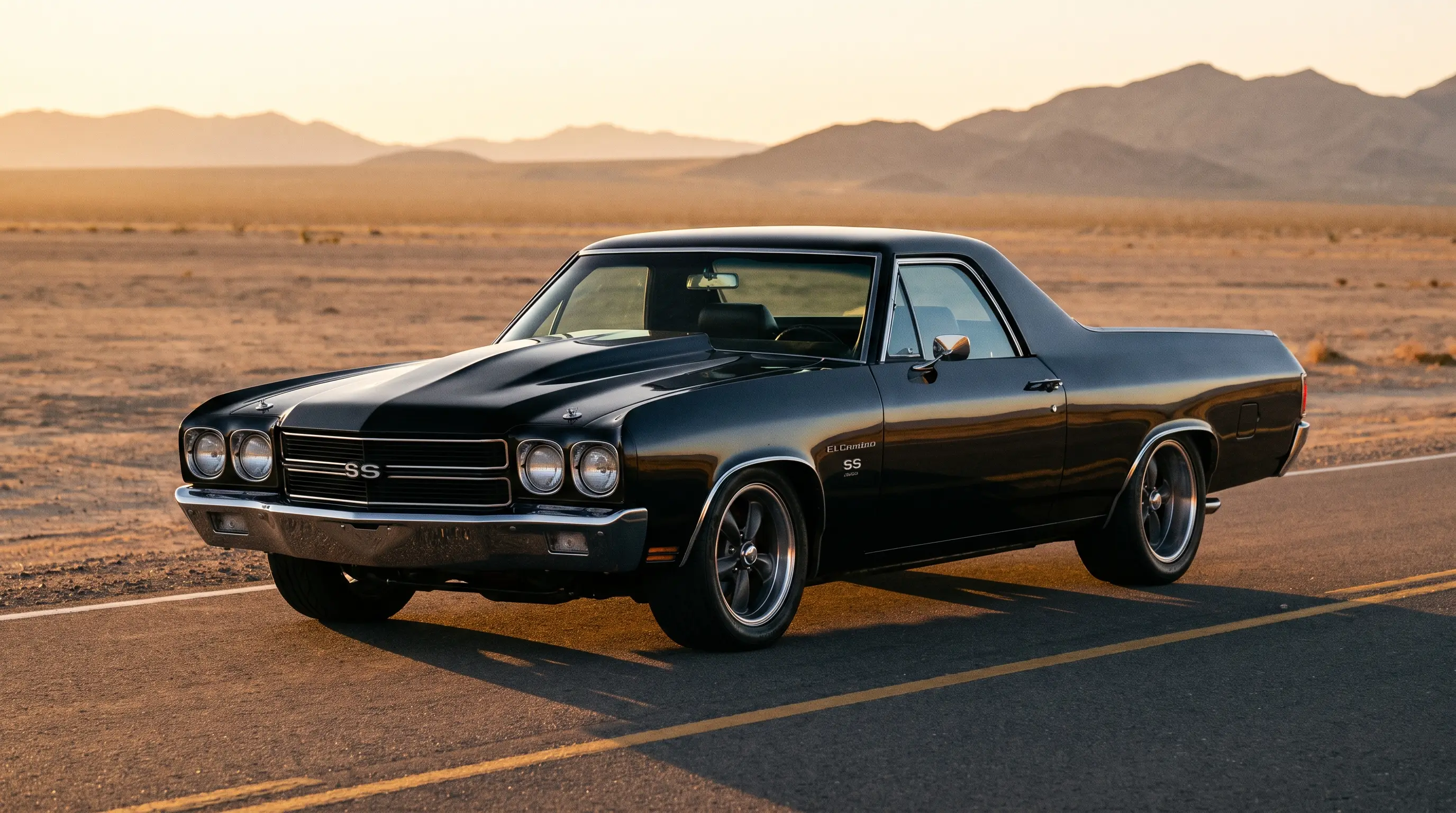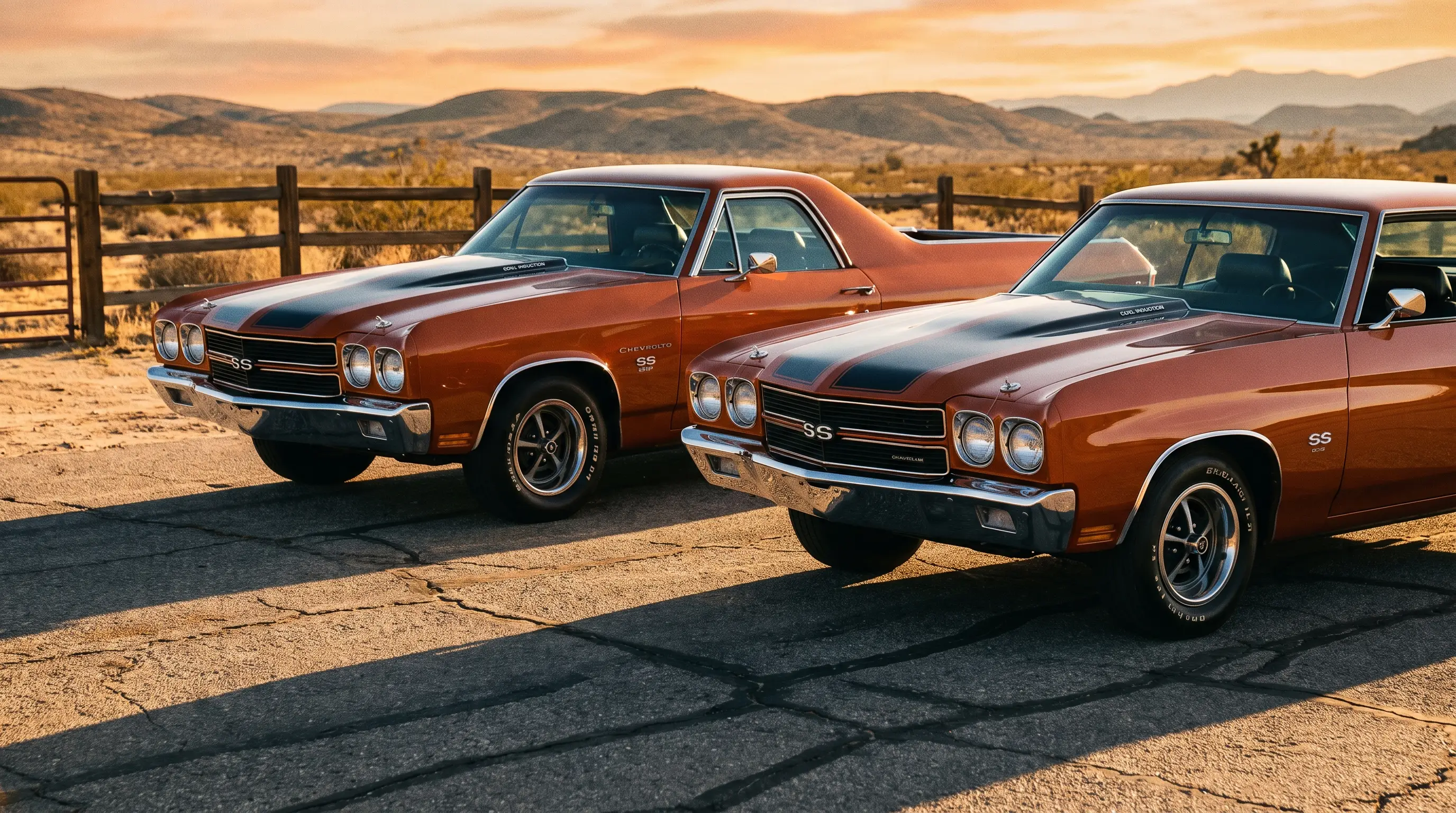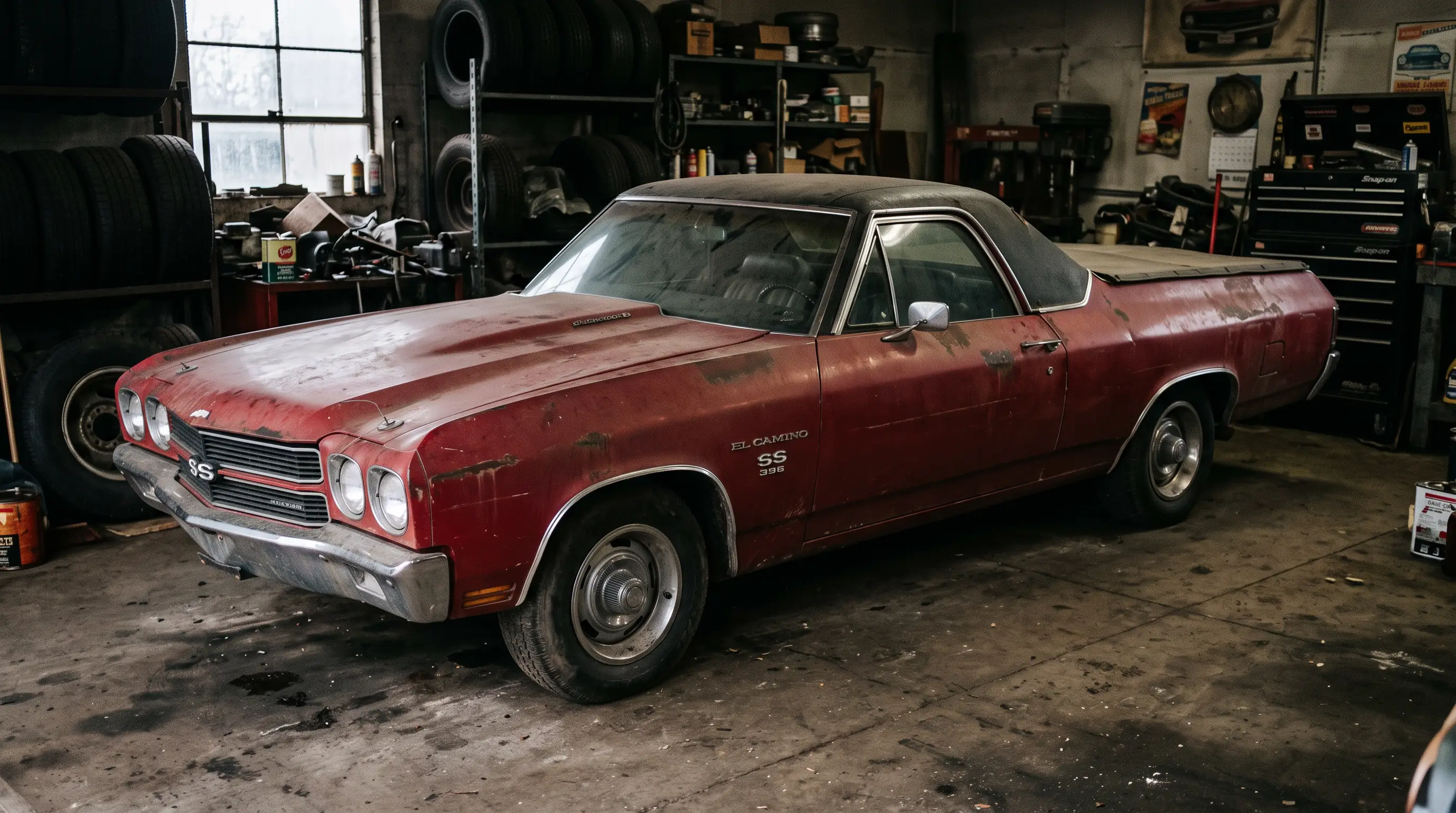
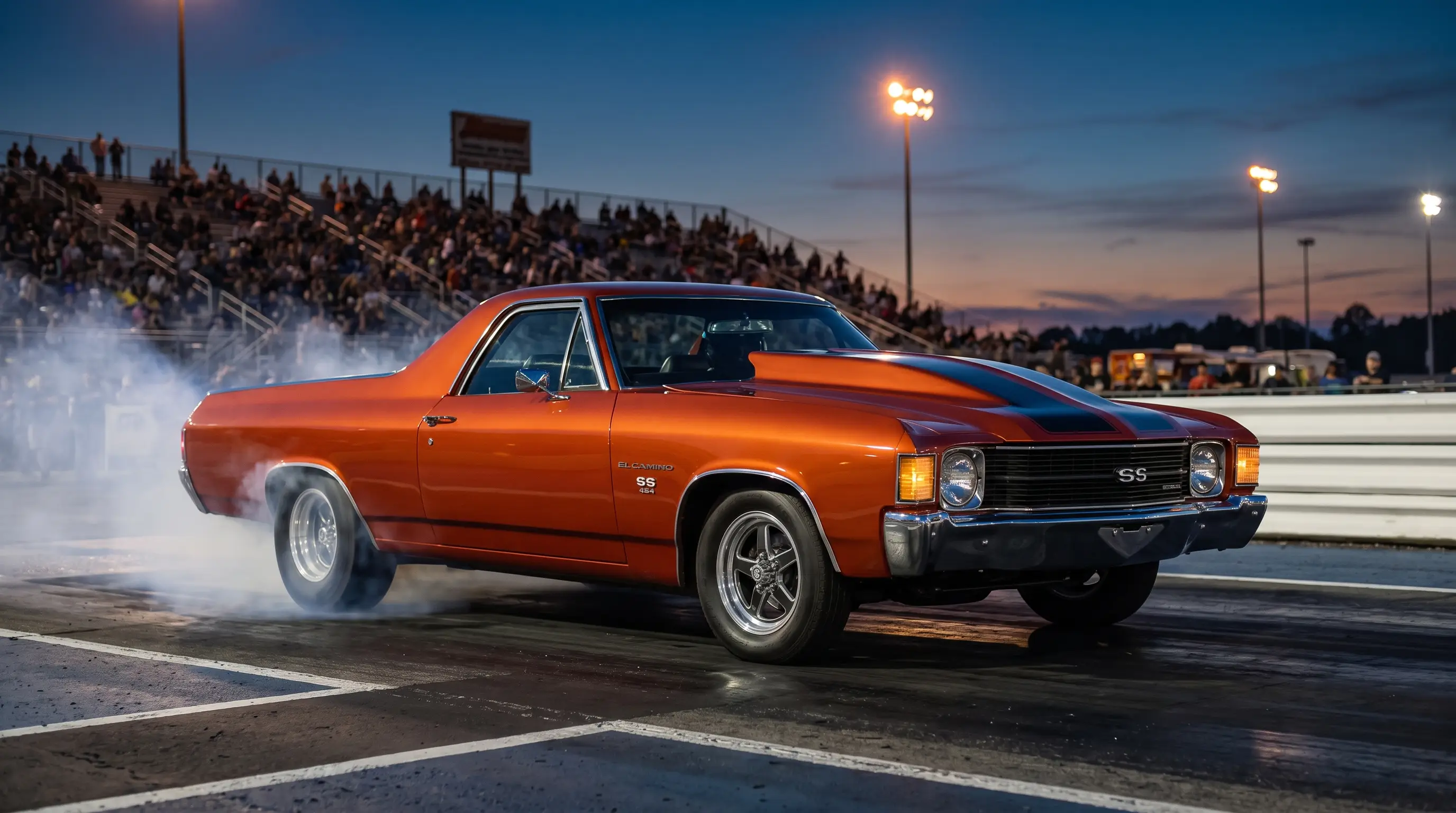
There is a guy at every classic car club meeting who tells the same story every single year, and at ours it is a fellow named Ray who swears his uncle's 1970 El Camino SS 454 embarrassed three different Chevelles at a bracket race outside Amarillo in 1974. Nobody has the timeslip. Everybody believes him anyway, because that story is basically the founding myth of every conversation about el camino 1970 drag strip legends, and half the fun of this club is arguing about which version of it is true.
The sleeper reputation, earned honestly
Here is what made the story plausible before anybody even checks the numbers. A 1970 El Camino SS with the 454 engine option carried real weight in the bed and rear structure compared to a Chevelle coupe, but it also carried real torque, and torque wins short bursts off the line better than horsepower alone. Drag strip regulars in the early 1970s learned fast that the truck-shaped car lining up next to them was not there to haul lumber. It was there to eat a stoplight-to-stoplight challenge and drive home looking innocent.
Track announcers at smaller regional strips genuinely struggled to classify these cars in some divisions, since they did not fit neatly into either the truck classes or the pure muscle car classes. That ambiguity became part of the legend. A car nobody quite knew how to bracket is a car that occasionally sneaks up on people who assumed the classification meant something about the speed underneath.
What the club actually knows for certain
Strip the campfire stories away and the documented performance is still legitimate. A properly tuned 1970 El Camino SS 454 with the base LS5 engine, rated at 360 horsepower, ran quarter mile times competitive with contemporary Chevelle SS and other Chevelle-based muscle cars of the same era, when both were built to similar specification. Period magazine testing of an LS6-equipped El Camino recorded a quarter mile in the low 13-second range, a genuinely quick number for a production vehicle in 1970. The LS6 option existed on the El Camino, but Chevrolet built only a small number of them, roughly 500 by most later estimates, so most El Camino SS 454 cars that actually raced in period were running the more common LS5. The El Camino did not need a fictional bracket race to earn its reputation. The factory paperwork already supported the story before anybody's uncle got involved.
Where the legends outrun the documentation is in the specifics. Nobody in our club has ever produced an actual timeslip from one of these supposed ambush wins. Every version of the story involves an uncle, a cousin, or a guy two towns over, and every version gets a little faster in the retelling each winter when the cars go back in storage and the stories are all anybody has left to talk about.
Why drag strips loved seeing these show up
Track regulars genuinely enjoyed watching an El Camino roll into the staging lanes, and not just for the ambush factor. There was something satisfying about watching a car that looked like it belonged at a hardware store instead put together a clean, fast run against dedicated performance iron. Announcers occasionally played it up over the PA system, framing the El Camino as the underdog entry even when the driver behind the wheel knew exactly what a 454 could do once the light went green.
That underdog framing stuck around long after the actual racing stopped mattering to most owners. Club members today still talk about the El Camino's drag strip reputation with a kind of protective pride, the same way you would defend a scrappy relative nobody outside the family properly respects.
Younger members who show up to meetings with a restored SS 454 often get handed this reputation whether they raced the car or not. It comes with the badge, passed down the same way the stories are, until eventually every well-kept 1970 El Camino SS at a show carries a little bit of that old drag strip mythology whether its own history includes a single real quarter mile pass or not.
| Engine | Reputation at the strip |
|---|---|
| 396/402 cid | Solid, competitive with same-era mid-size muscle |
| 454 LS5 (360 hp) | Strong torque advantage off the line, the most common SS 454 build |
| 454 LS6 (450 hp) | Top-tier A-body performance, roughly 500 El Caminos built, sought after today |
"Every club has a Ray. Ours tells the Amarillo story every single meeting, timeslip or no timeslip. I have stopped asking for proof. The story is the point as much as the car is."
- Wayne Coburn
The one story nobody in the club disputes
There is exactly one El Camino drag strip story in our club that everybody agrees on, mostly because there is a photograph. A member named Dutch has a faded print from a 1975 regional meet showing his father's 1970 SS 454, hood scoop and all, staged next to a Road Runner that outweighed it by nearly four hundred pounds. Nobody has the timing lights readout, but the photo exists, the car in it matches records Dutch still holds for the family, and the fact that it survived at all in a shoebox for fifty years gives it more credibility than every retelling of Ray's Amarillo legend combined.
That is really the throughline across every version of these stories, embellished or not. The cars that generated them were genuinely capable, genuinely underestimated by strangers at the lanes, and genuinely rare enough today that a faded photograph carries weight a modern owner would never expect a family snapshot to carry. Club meetings are where these fragments get preserved, argued over, and occasionally corroborated by somebody who happened to keep the one piece of paper that matters.
Where the story goes from here
What keeps these tales alive is not just nostalgia. It is the fact that the underlying cars really could deliver, which gives every exaggerated bracket-race story just enough grounding to survive another retelling. For anyone who wants our complete history of the 1970 model and how the SS package actually came together at the factory, that account lays out the documented side of the story this one only gestures at through secondhand memory.
And if a night of club stories leaves you wanting the real thing in your own driveway instead of just in conversation, you can browse classic El Camino listings and see which documented SS 454 examples are currently changing hands, timeslips or no timeslips required.
One thing worth saying plainly before you go shopping. A car's drag strip reputation, real or embellished, does not show up on a title or a bill of sale. What does show up is engine casting numbers, cowl tag codes, and whether the four-speed behind a 454 is the original unit or a later swap. If you find yourself drawn to one of these cars because you liked a story about sleepers ambushing Chevelles at some forgotten strip, do the research anyway. Confirm the drivetrain matches the documentation before you fall for the legend the same way the rest of us have. It is a lot easier to enjoy a good drag strip story about a car you actually own free and clear of doubt about what is really under the hood.