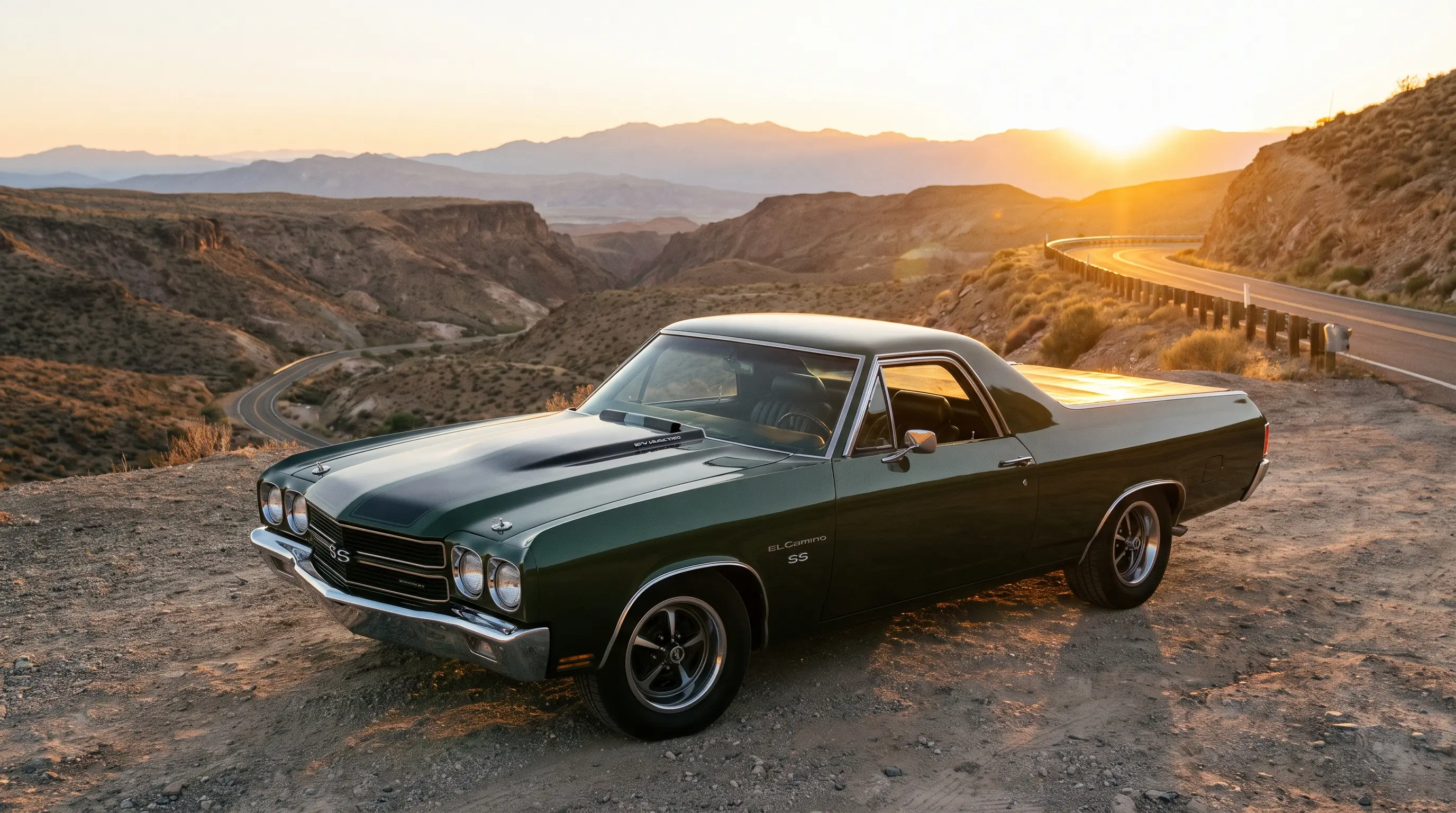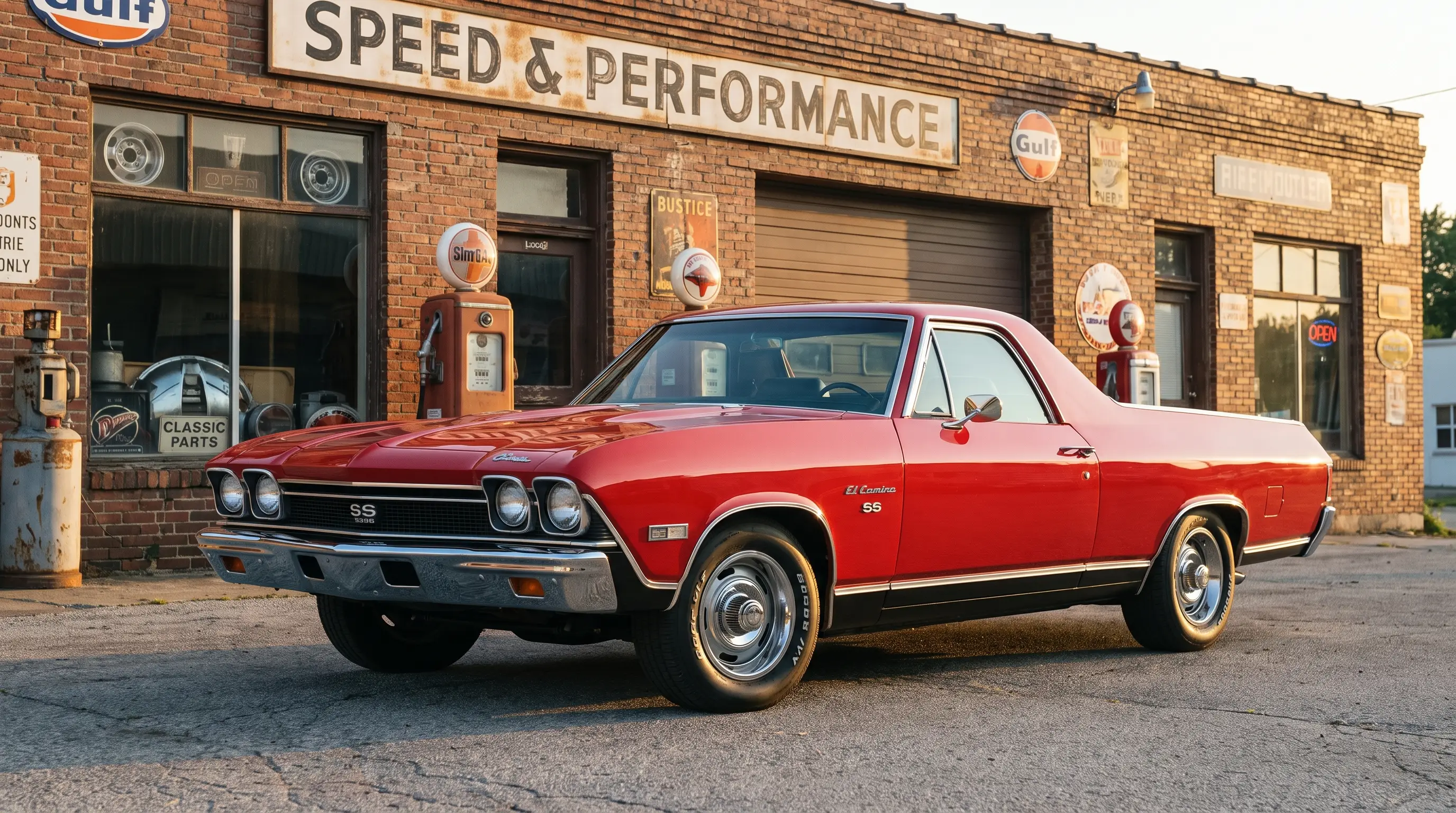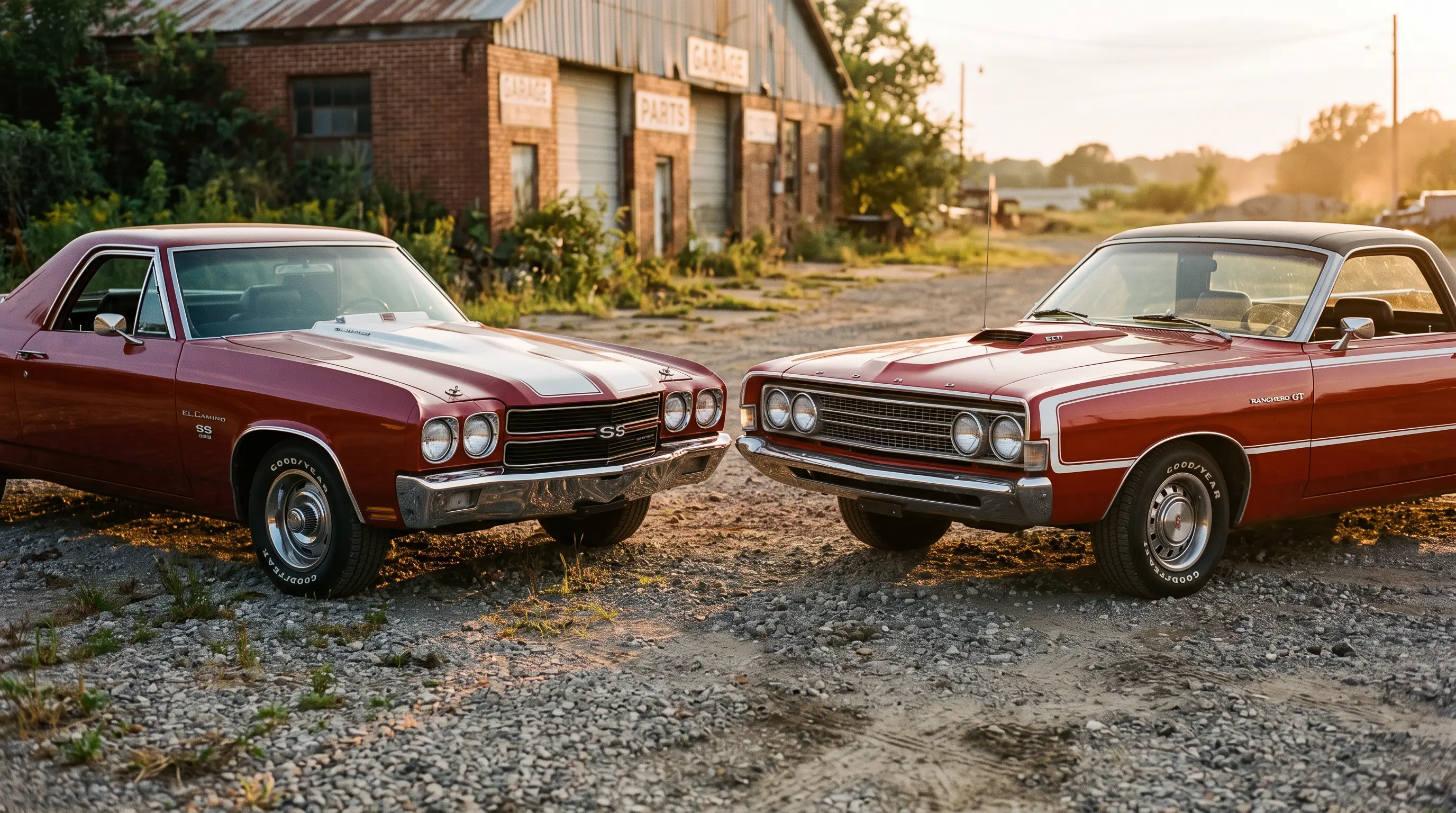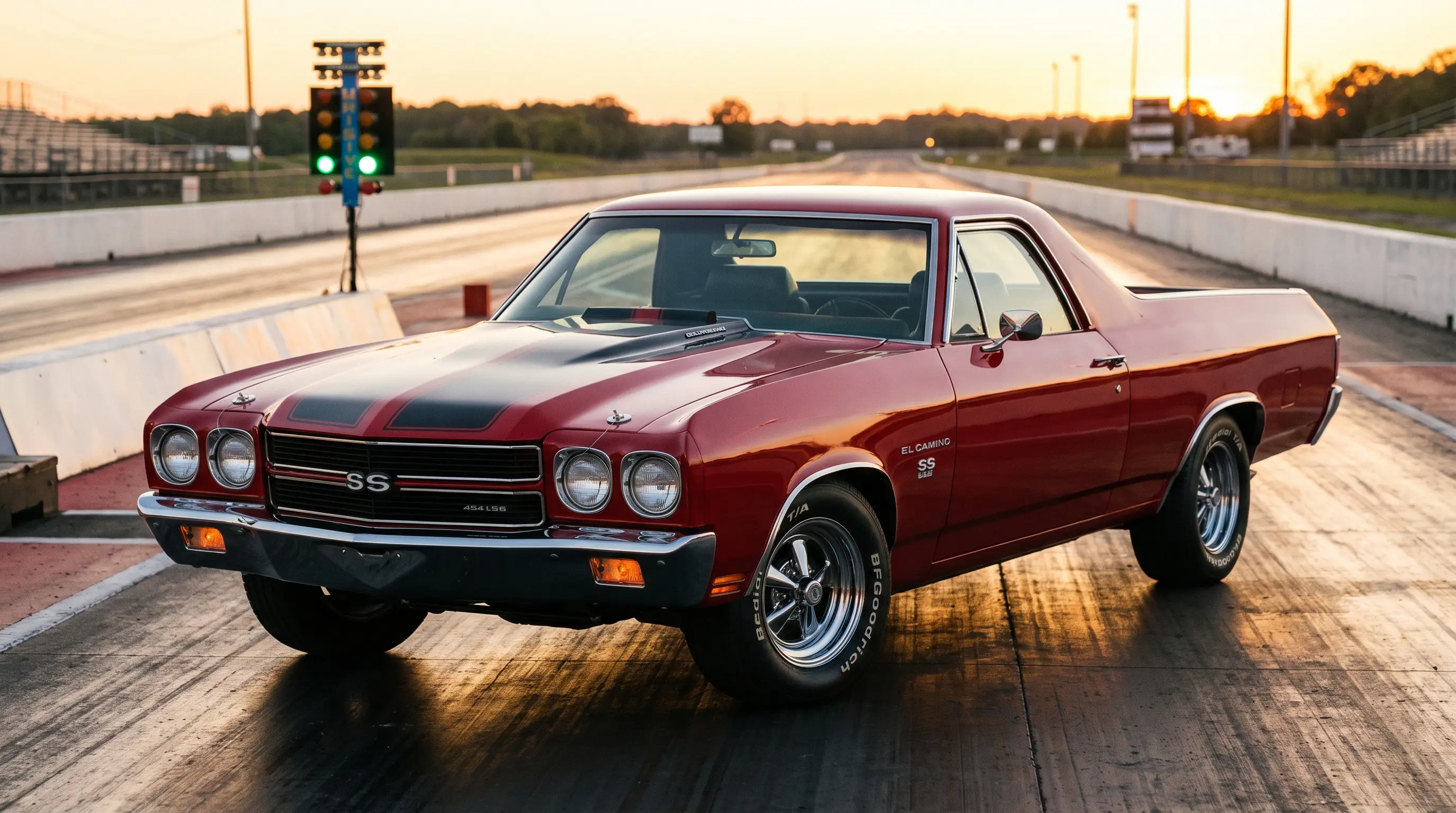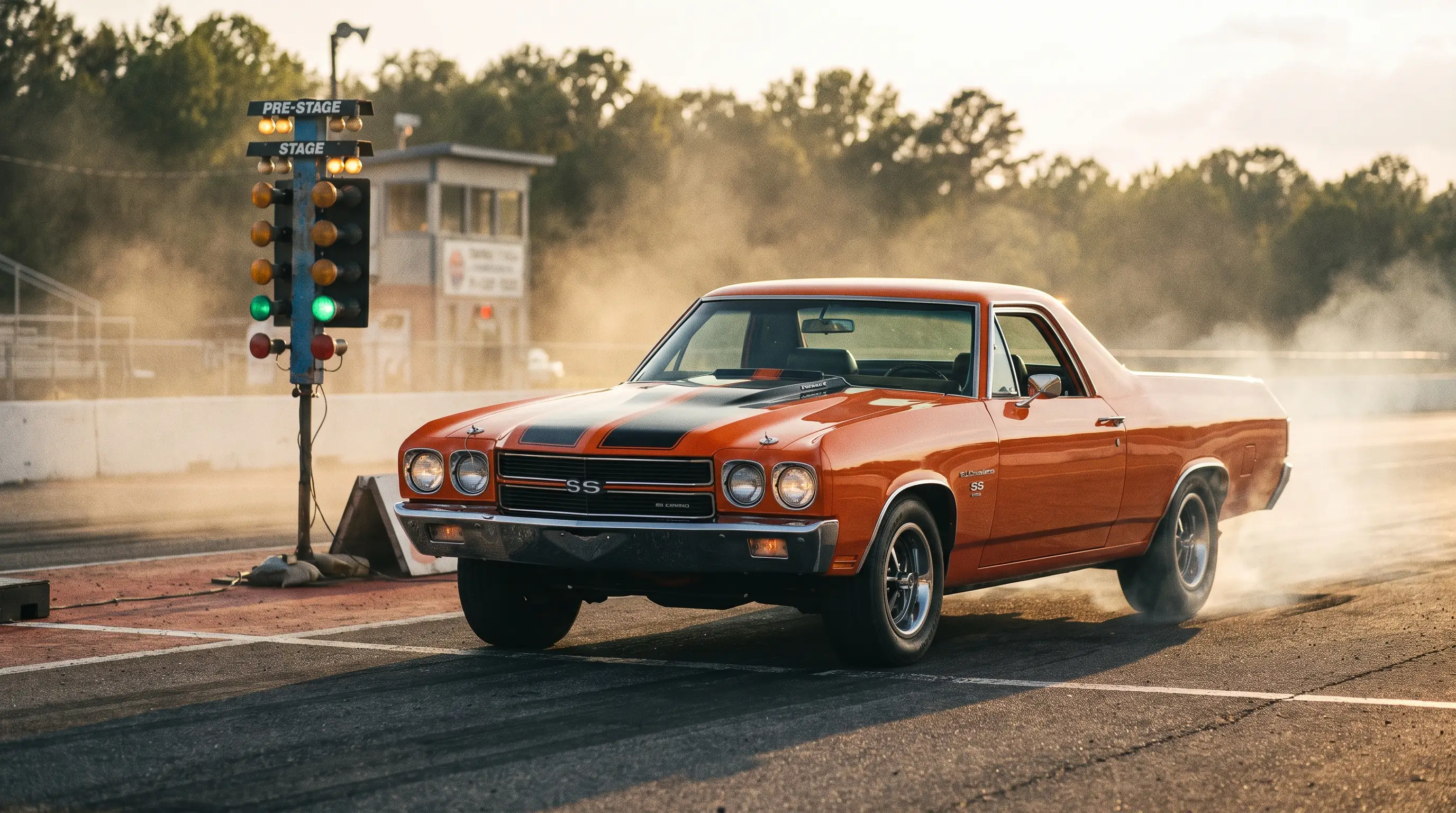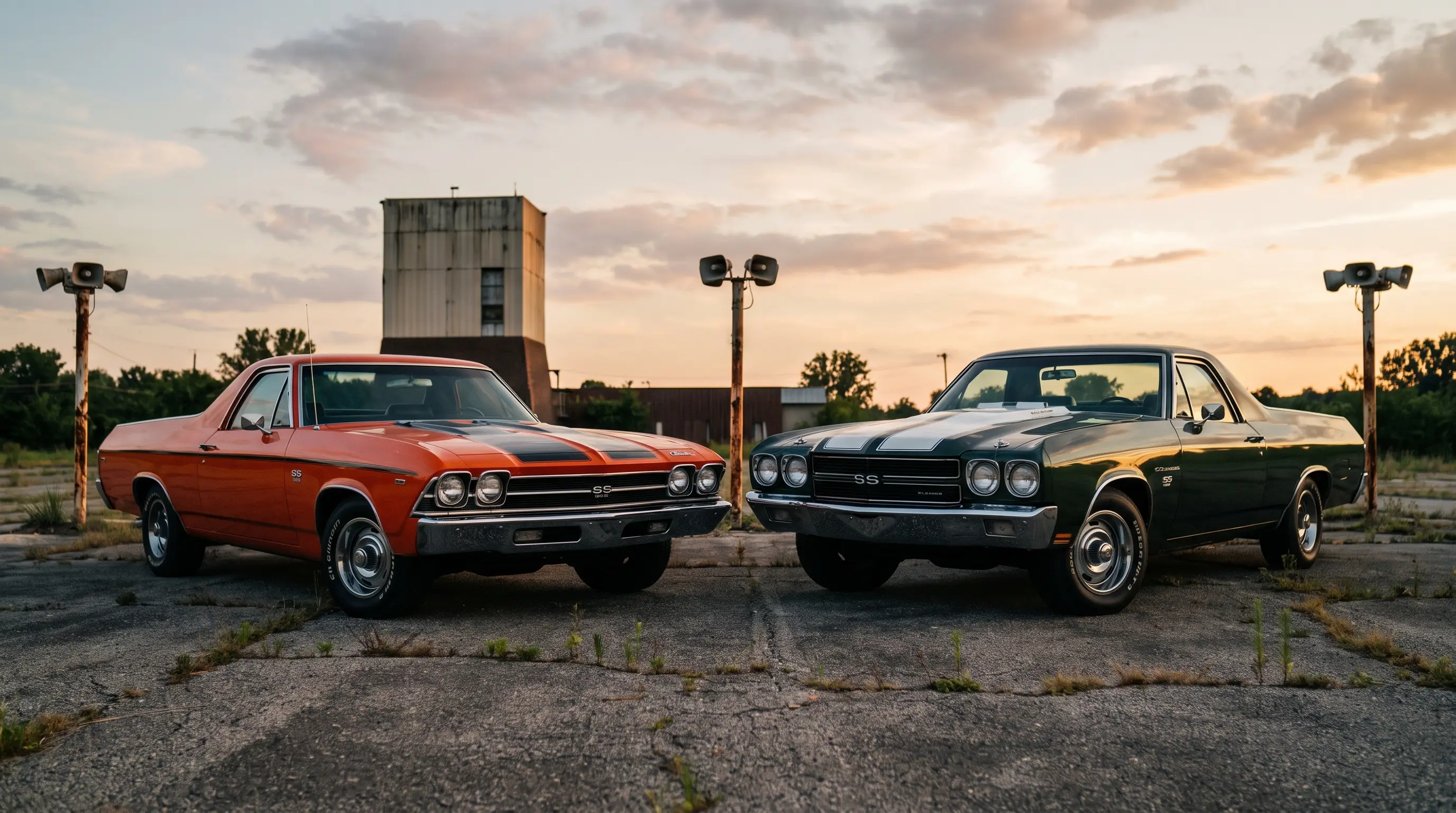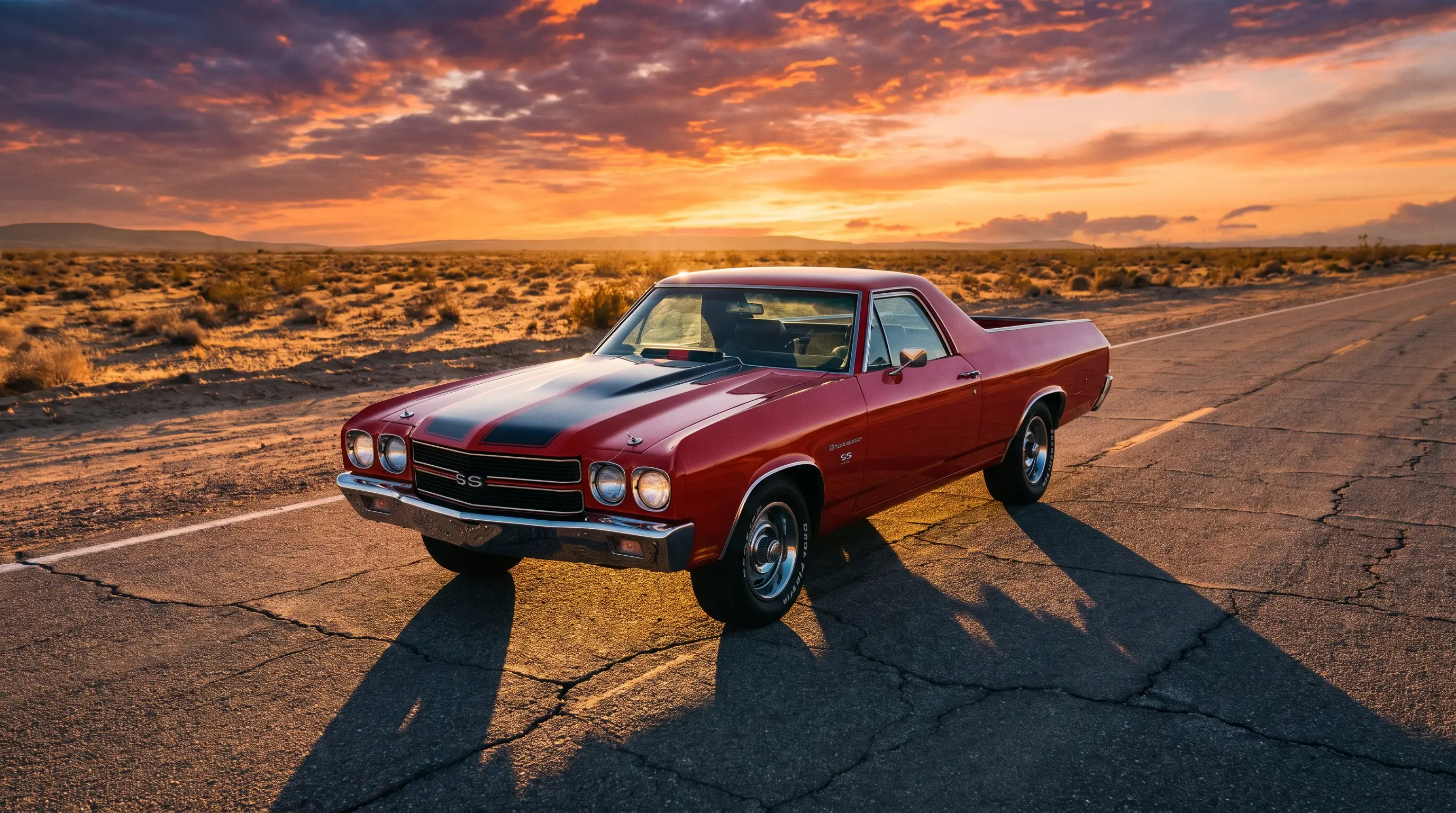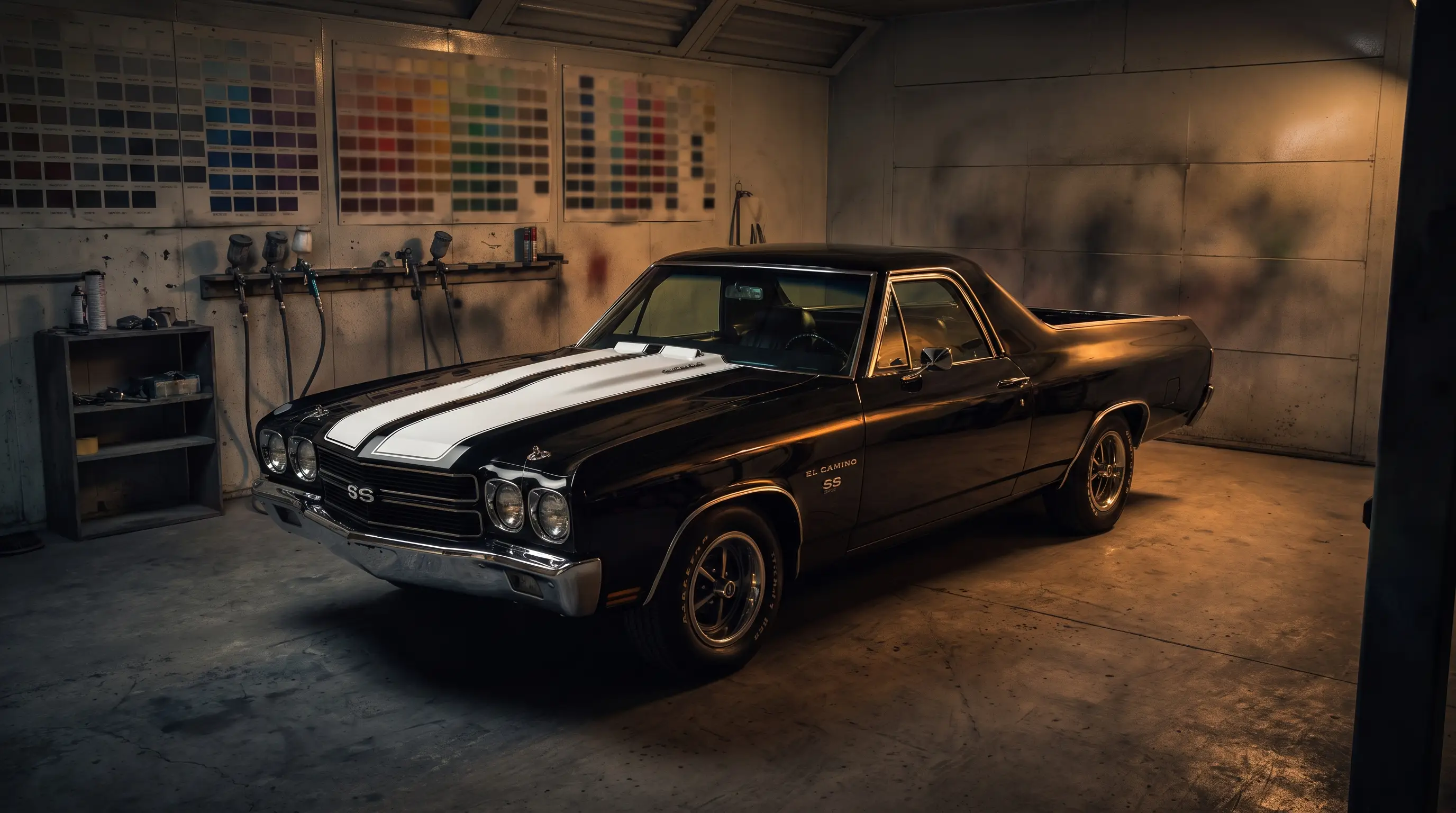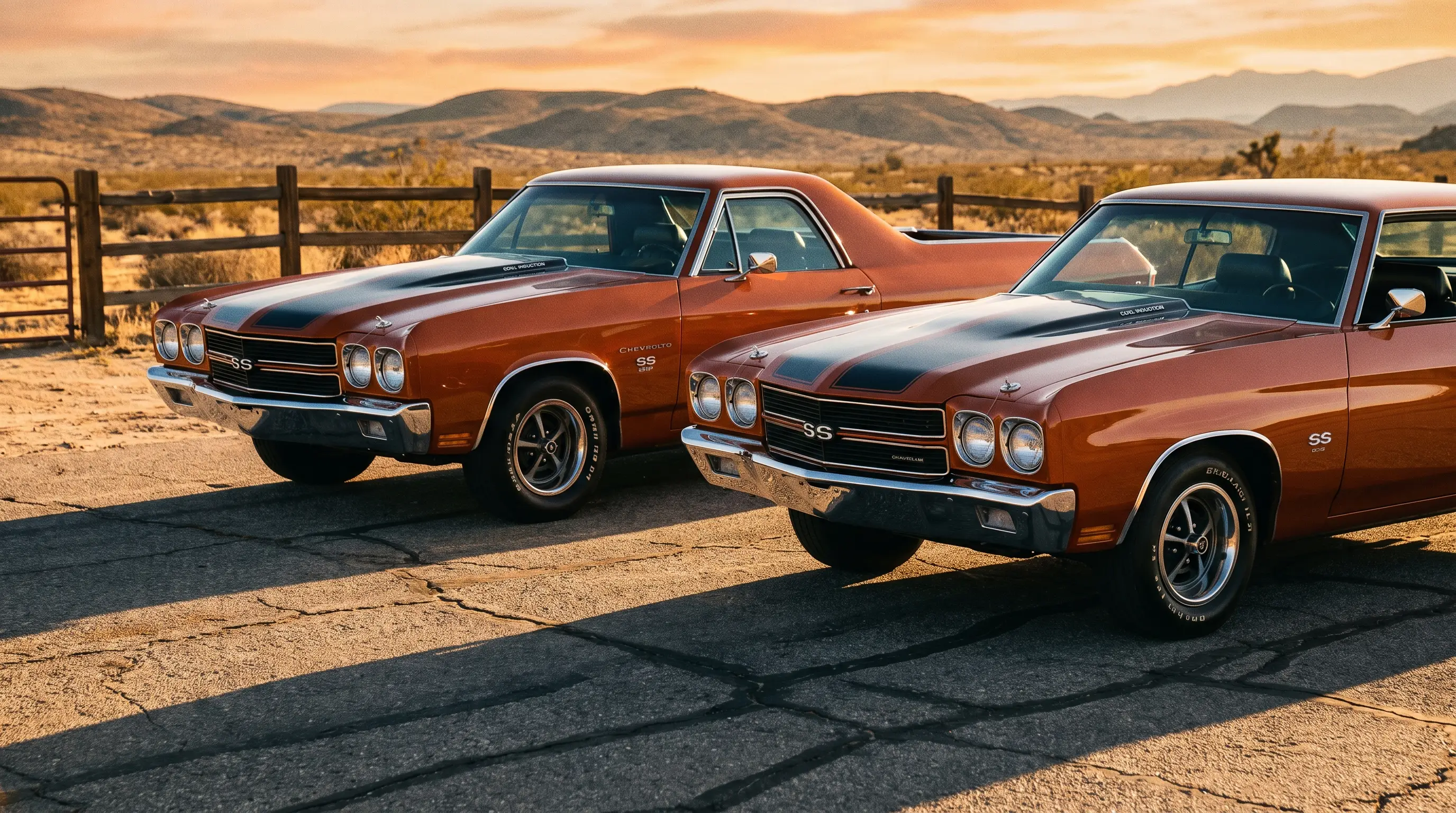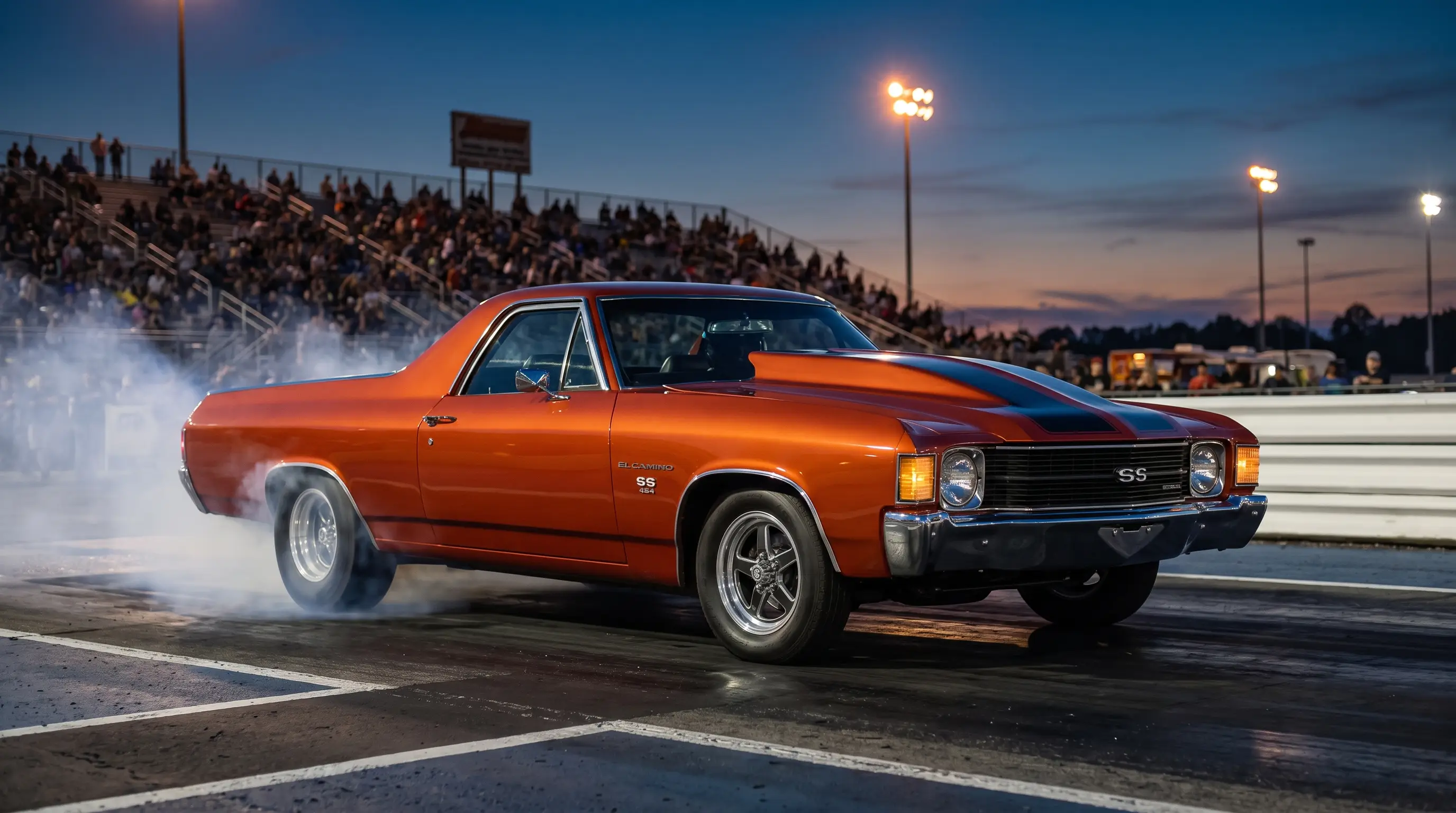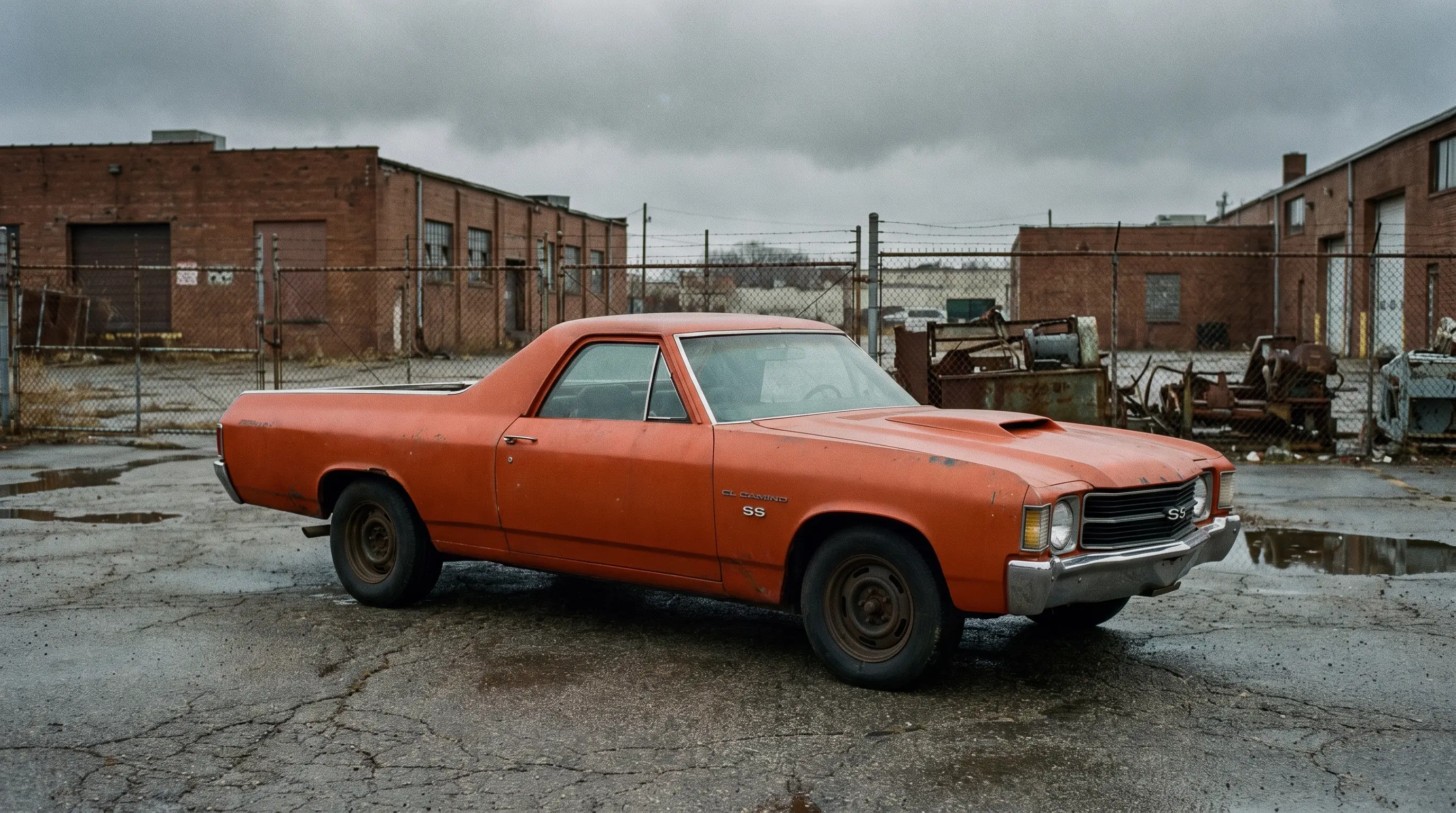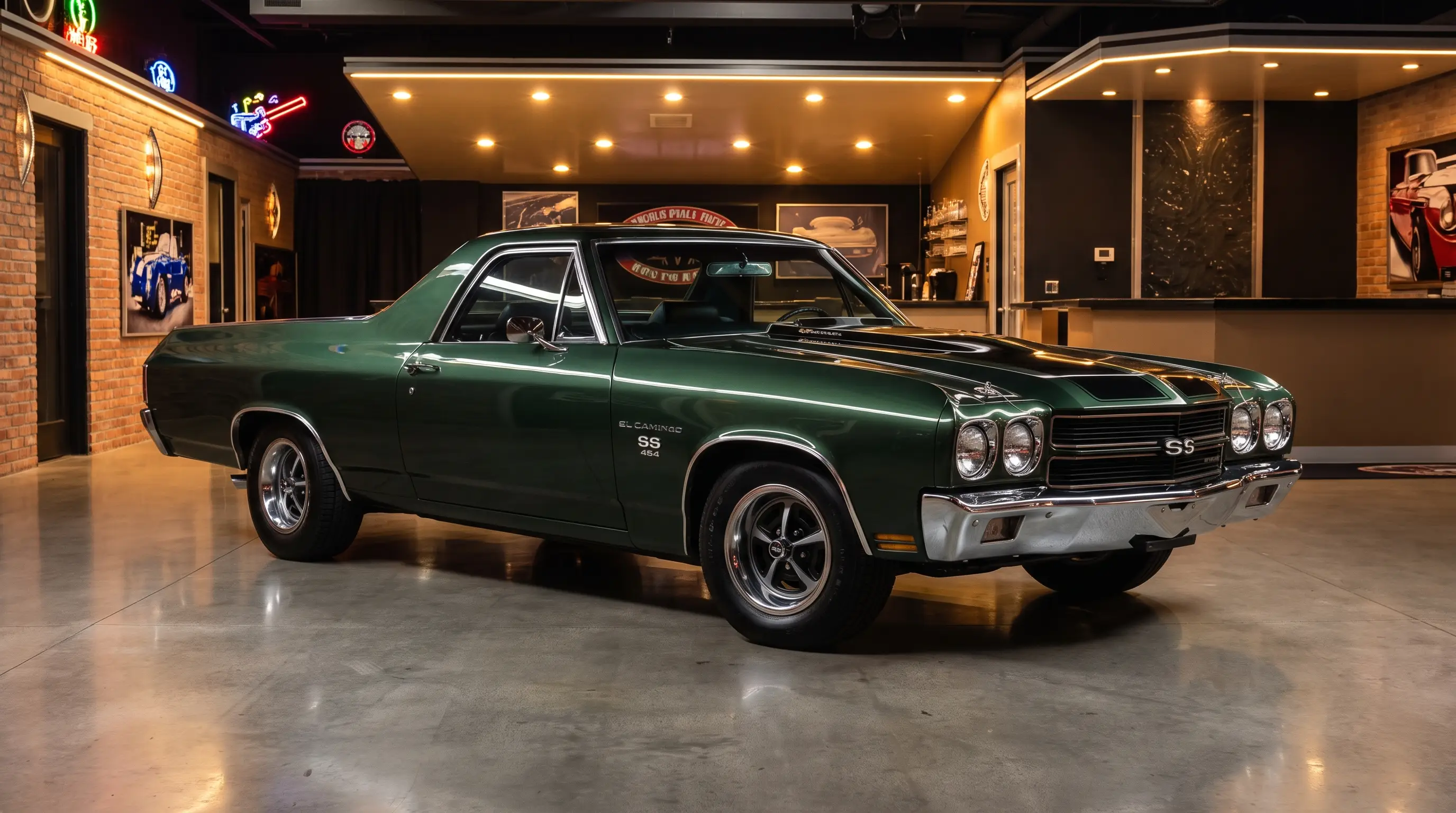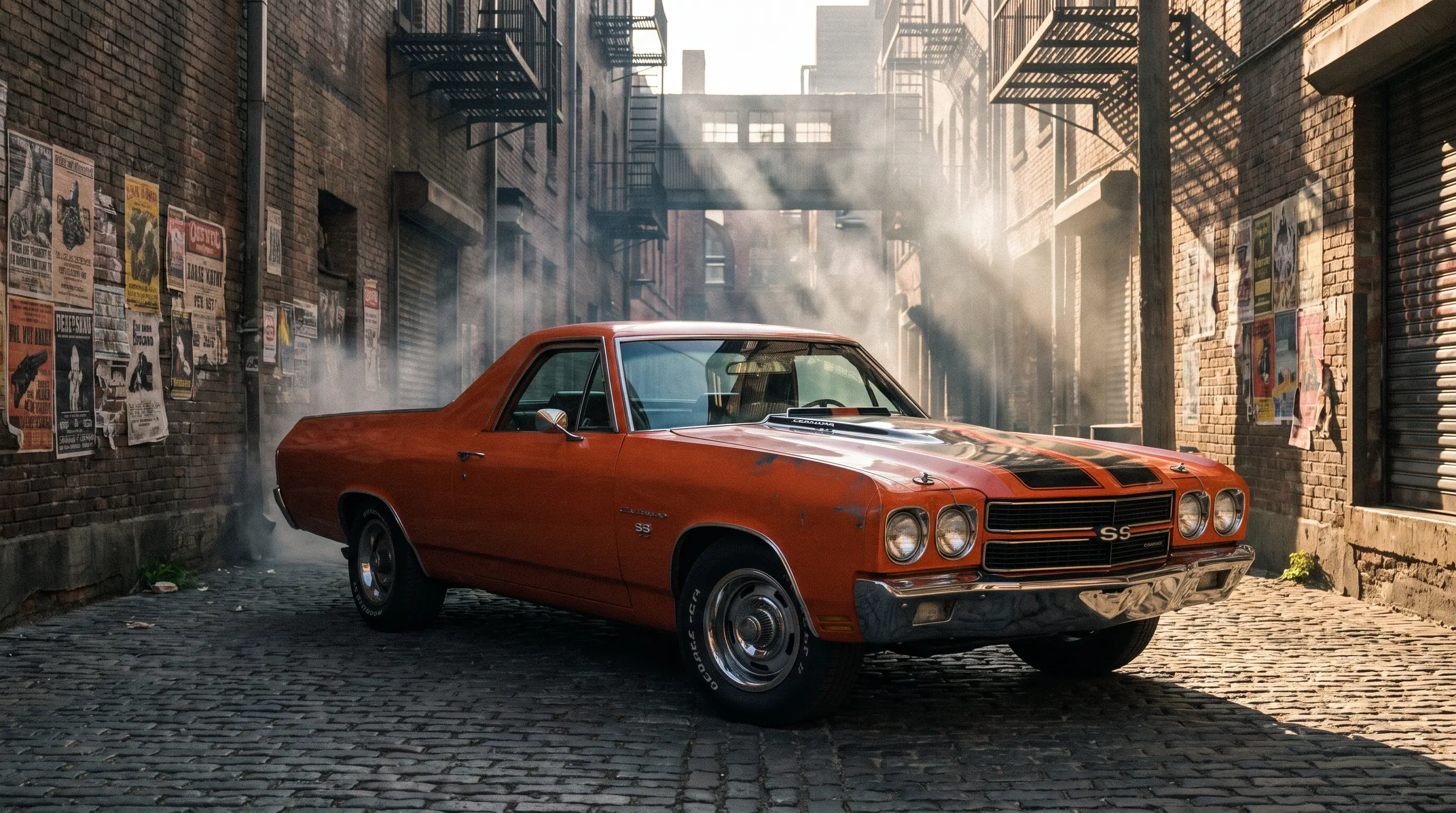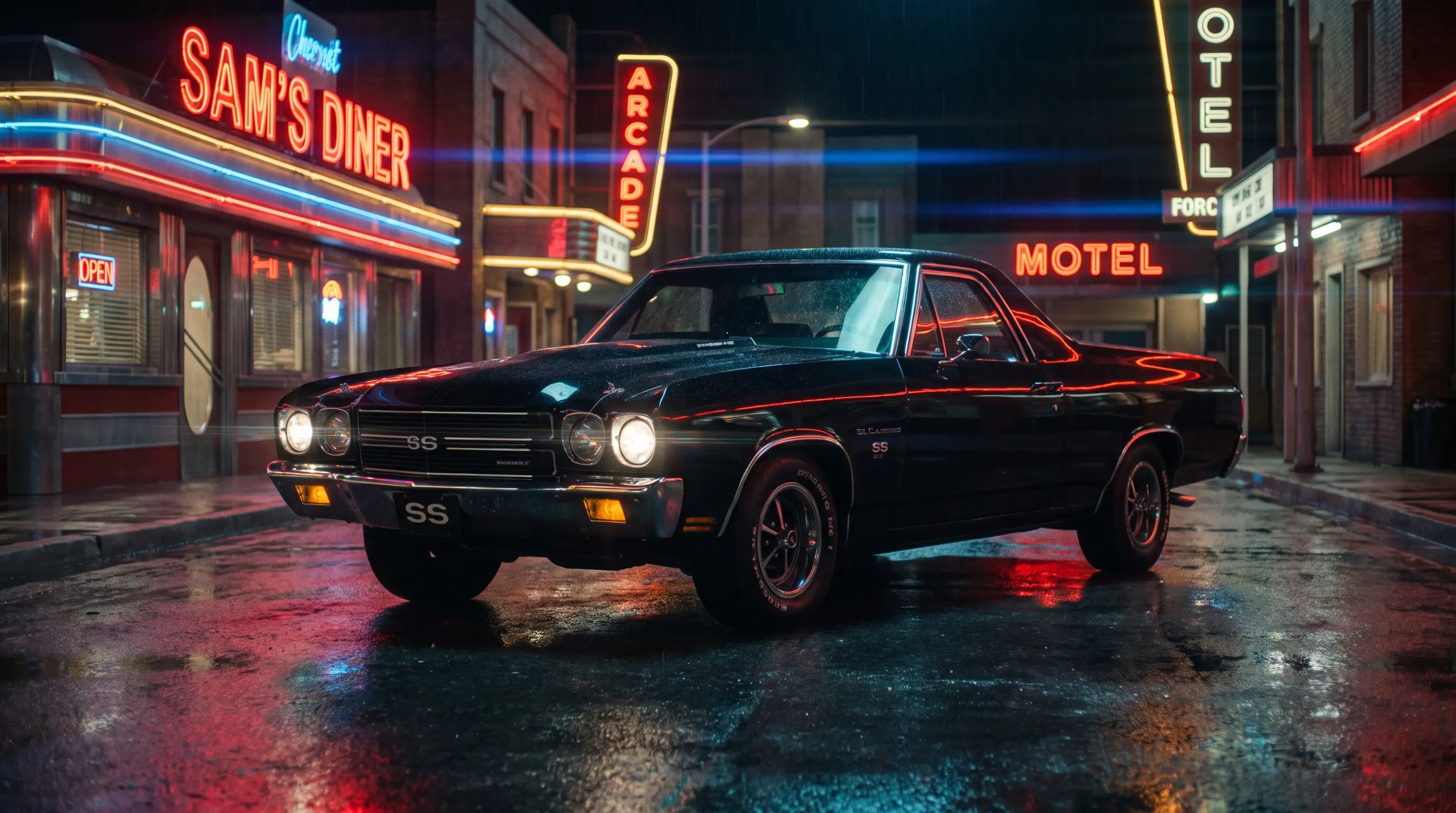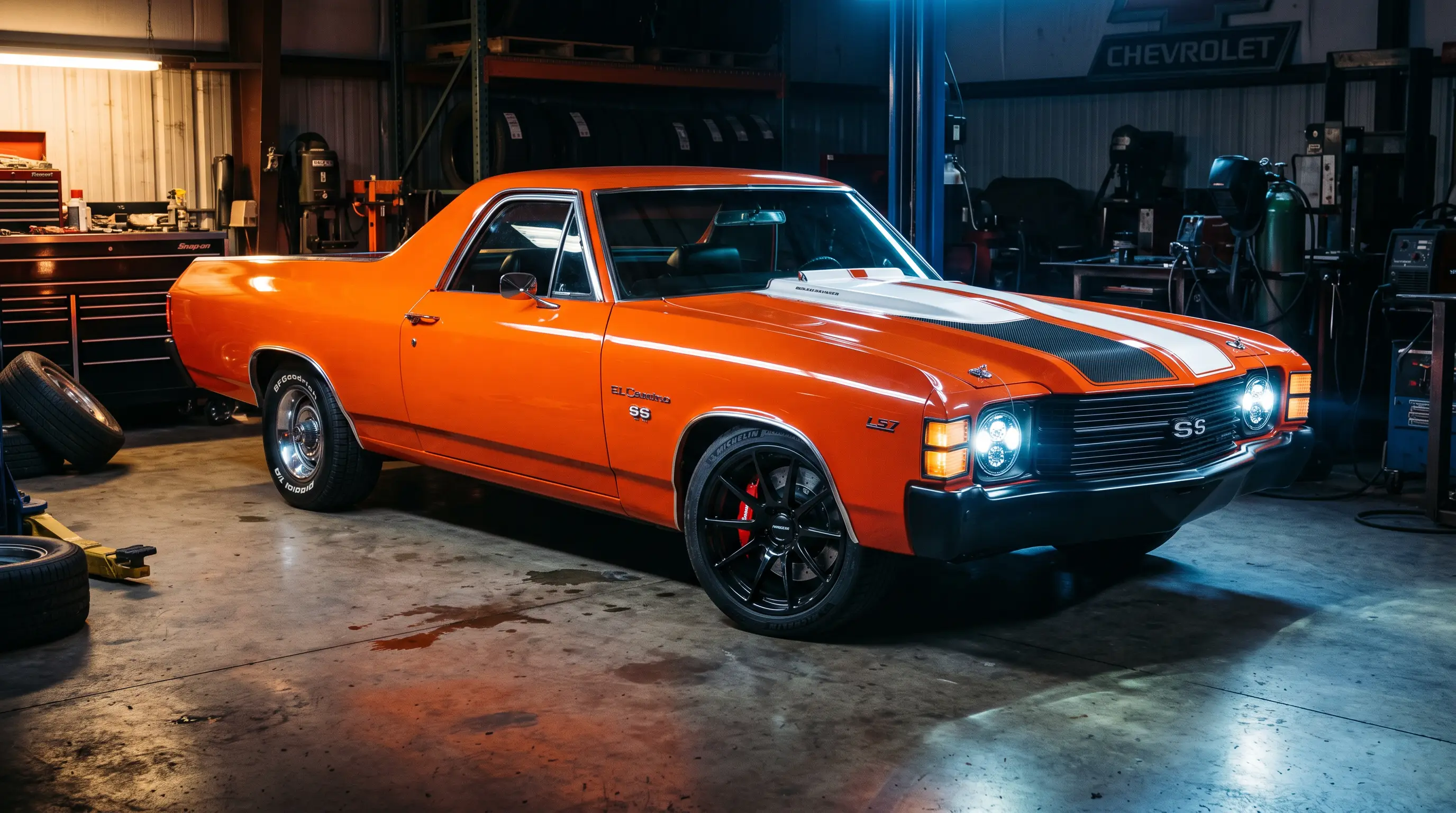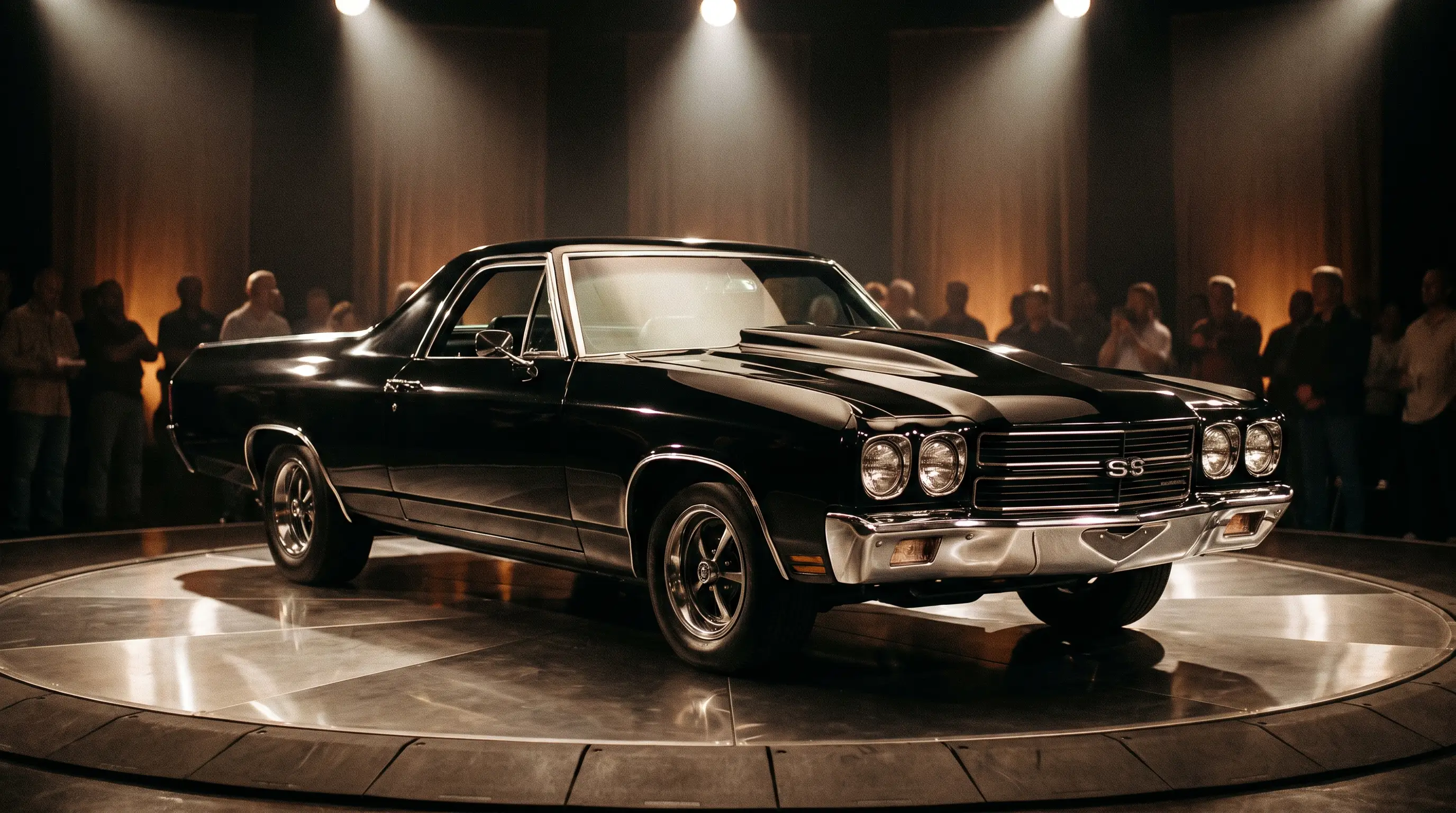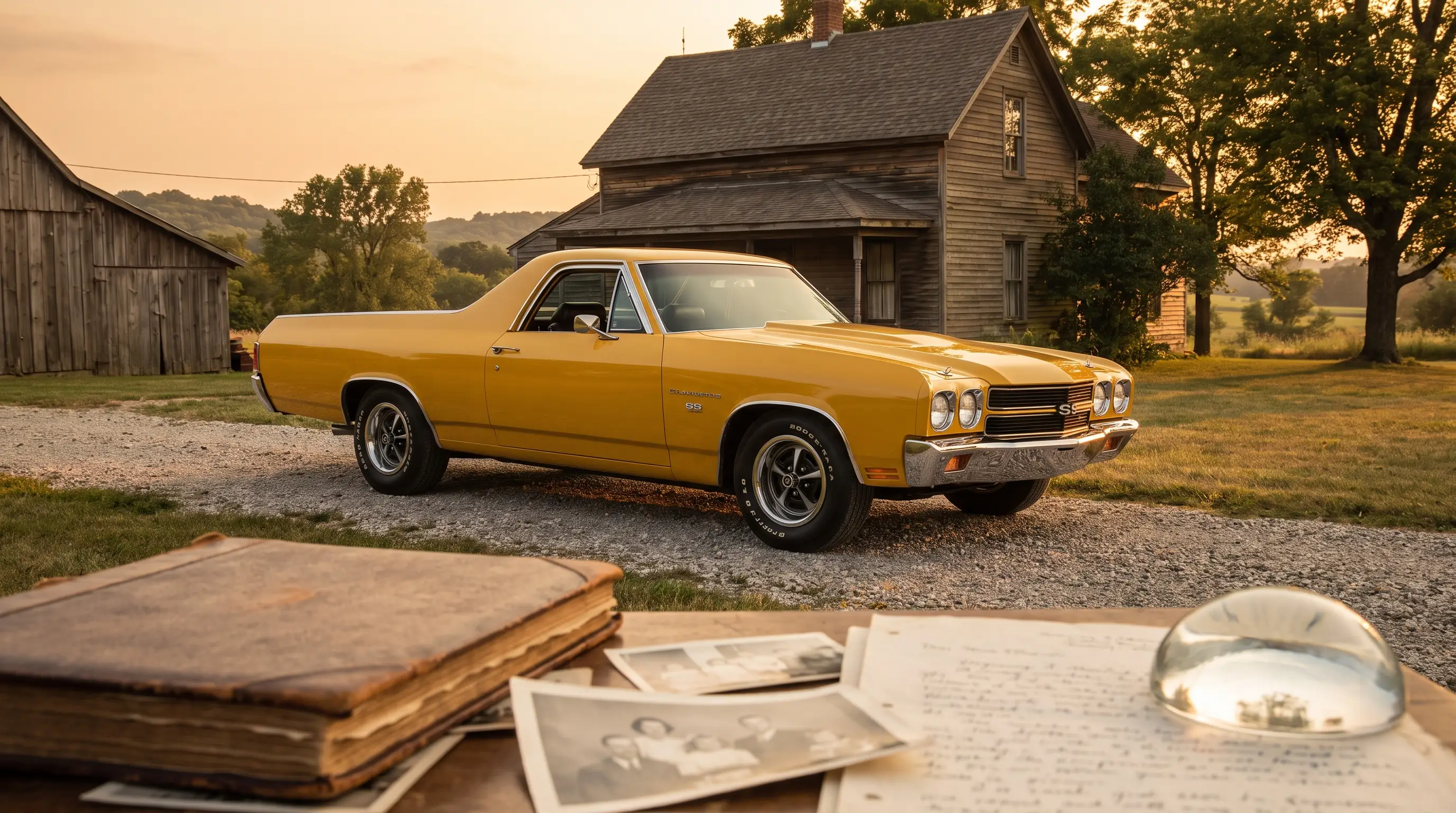
Here is the number that settles the argument: 450. That was the gross horsepower rating of the LS6 454 you could order in the 1970 el camino SS. The same engine, in the same year, powered the Chevelle SS454. Chevrolet did not detune the version they dropped into a pickup. The truck with a bed got the meanest big-block the company built that year. That single fact tells you most of what you need to know about where this car sits.
People still call it a truck. Technically it hauled cargo. Functionally, in SS454 trim, it was a Chevelle that happened to have an open box behind the cab. The suspension, the frame, the drivetrain options, the interior appointments all traced back to the intermediate A-body car line. The bed was the disguise. Underneath, in 1970, this was one of the fastest things Chevrolet would sell you.
The number that mattered
Start with the engines, because that is where the 1970 model earns its reputation. The top option was the LS6 454, rated at 450 horsepower and 500 lb-ft of torque at the flywheel, gross. Below it sat the LS5 454, rated at 360 horsepower. Both were new displacement for 1970, up from the 396 family that had carried the SS badge since 1968. The 396 itself did not vanish. It stayed on the order sheet, and by 1970 that engine actually displaced 402 cubic inches while Chevrolet kept calling it a 396 for marketing reasons.
Understand what those ratings meant in period. Gross horsepower was measured on an engine stand with no accessories, no full exhaust, no air cleaner drag. The net figure a driver actually felt was lower. But the LS6 was not a paper number. Contemporary road tests of the mechanically identical Chevelle put the quarter mile in the mid-13-second range from the factory, on bias-ply tires, with a full interior. That was supercar territory for 1970, and the El Camino carried the same hardware.
What the SS package actually bought you
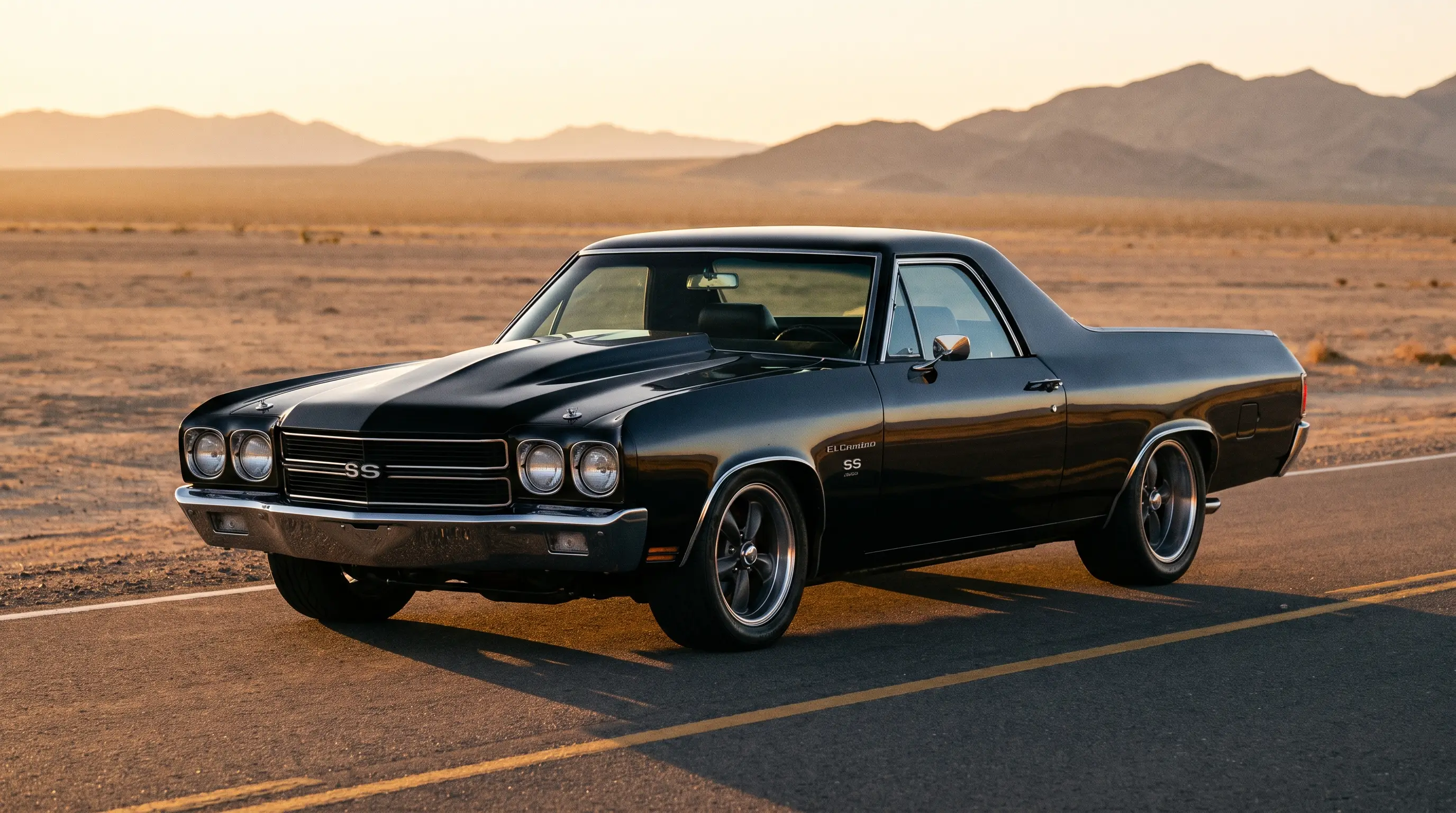
The Super Sport was an option package, not a separate model, and the distinction matters when you are looking at cars today. For 1970 the SS equipment group added the big-block engine, the heavy-duty suspension, power front disc brakes, specific wheels, black-accented grille and trim, and the SS badging front and rear. On the LS6 and LS5 cars you also got the domed cowl-induction hood as an available piece, the one with the flapper that opened under throttle.
Here is the blunt part. Because SS was a package, the badge alone proves nothing about what is under the hood five decades later. A 1970 El Camino wearing SS trim could have left the plant with the 454, or it could be a base car that someone dressed up. The value gap between a documented LS6 car and a clone is enormous, and the sheet metal looks identical. That is why documentation carries more weight on these than on almost anything else Chevrolet built that year. For the full arc of how the model line got here, our chevrolet el camino history lays out the generations in order.
| Spec | 1970 El Camino SS detail |
|---|---|
| Platform | Chevelle A-body intermediate |
| Top engine | LS6 454 V8, 450 hp gross |
| Standard SS big-block | LS5 454 V8, 360 hp gross |
| Carryover option | 396 (402 cid) V8 |
| Transmission | Muncie 4-speed manual or Turbo 400 automatic |
| Brakes | Power front discs with SS package |
| Body style | Two-door car-based utility with cargo bed |
The body that fooled people
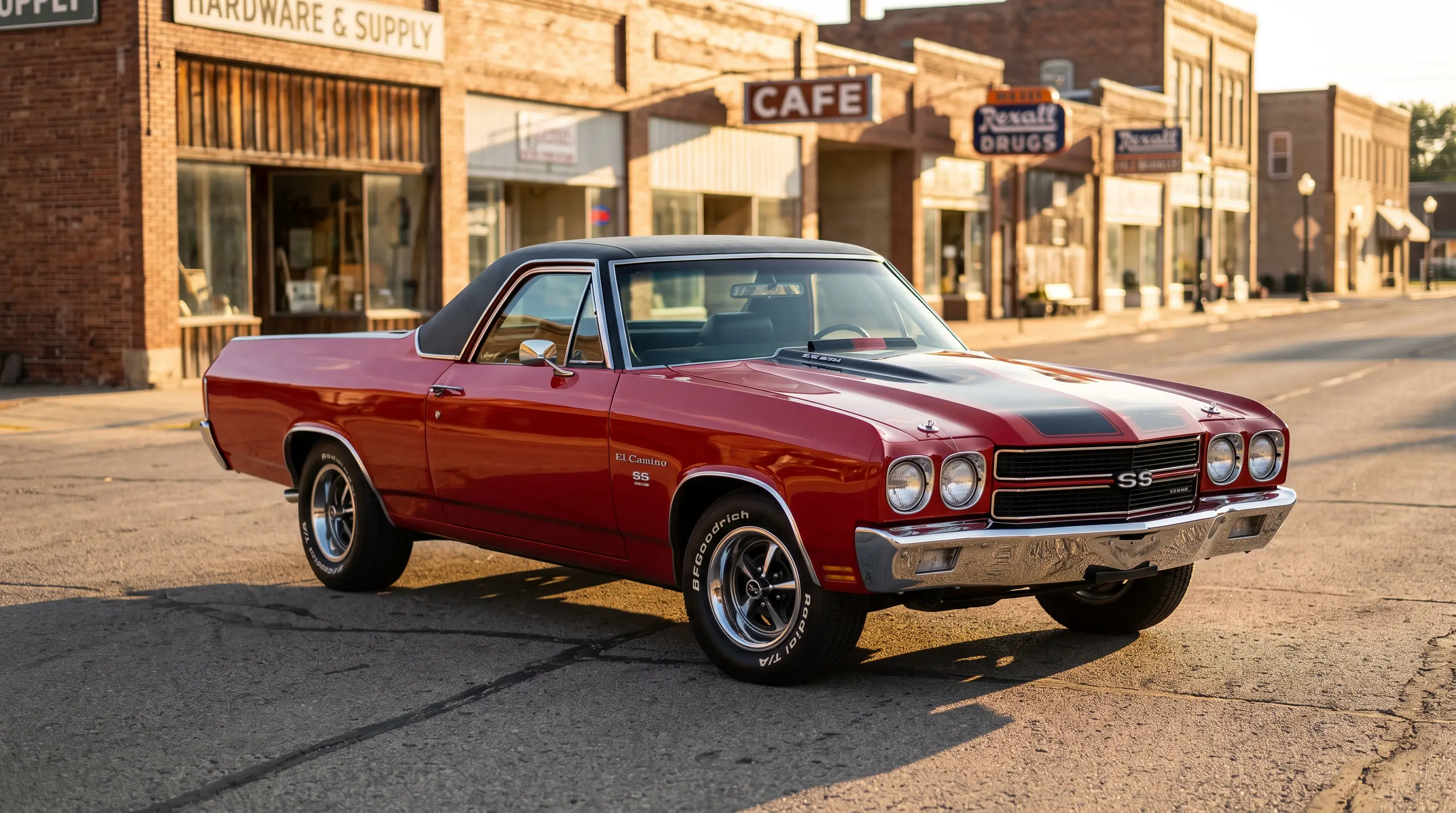
The 1970 restyle gave the whole A-body line a squarer, more aggressive face, with dual round headlamps set into a heavier front end. On the El Camino that meant the front two-thirds of the car read as pure Chevelle. Stand in front of one and you would not know a bed was behind the cab until you walked the length of it. That was deliberate. Chevrolet marketed the El Camino to buyers who wanted car comfort and car performance with the practical excuse of a load bed.
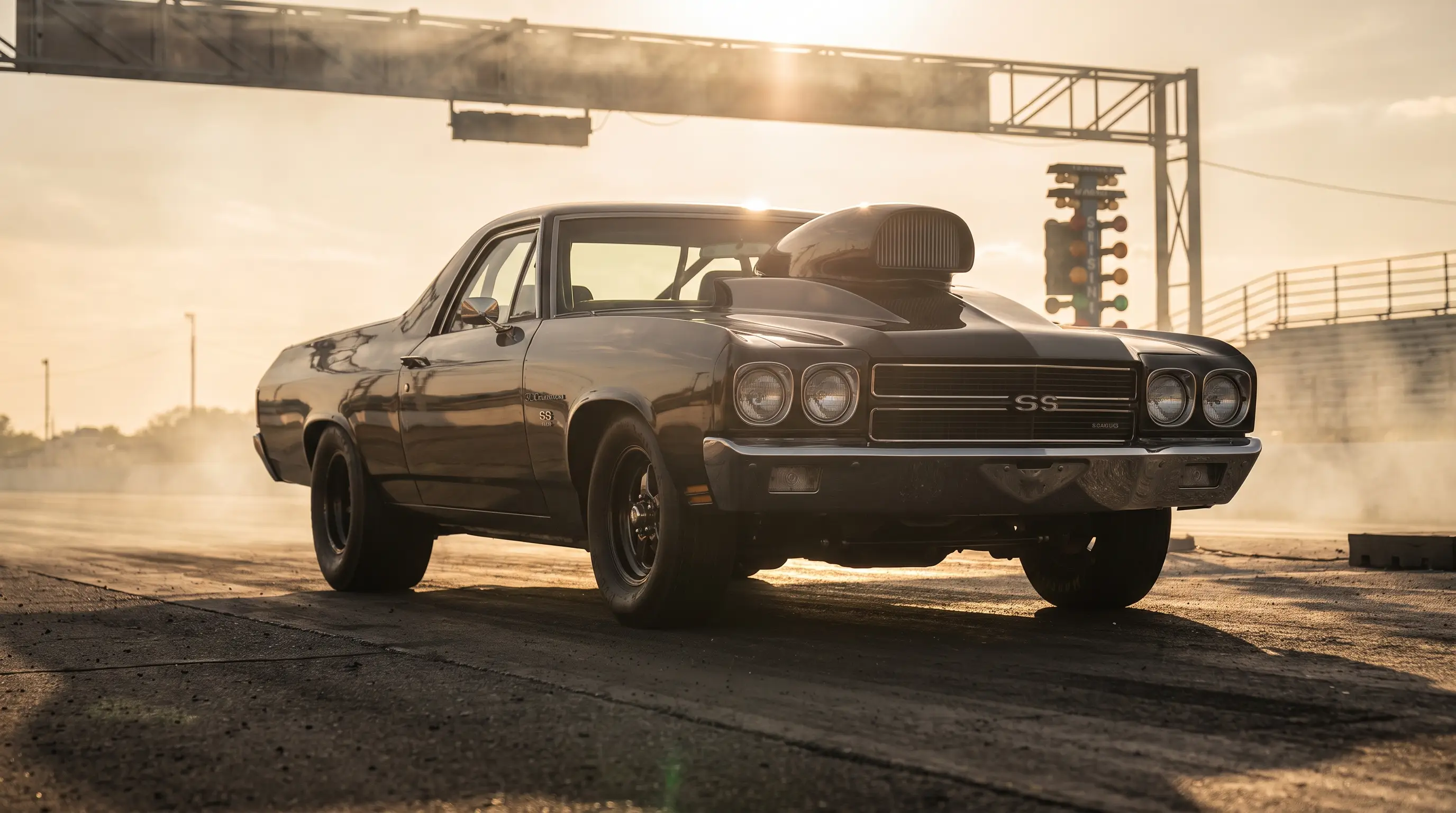
The cowl-induction hood is the visual signature people chase now. It was functional, not decoration. A vacuum-operated flap at the rear of the hood opened under hard throttle to feed cooler, higher-pressure air from the base of the windshield into the carburetor. It looked mean and it did something, which is a rarer combination than the marketing of the era usually delivered.
Interiors ranged from plain bench-seat work trim to bucket seats with a center console and full instrumentation. The gauge package on a proper SS car included a tachometer, which sounds minor until you price the difference between a stripped column-shift automatic and a four-speed bucket-seat car today. Same body. Very different money.
Colors, options, and how buyers ordered them
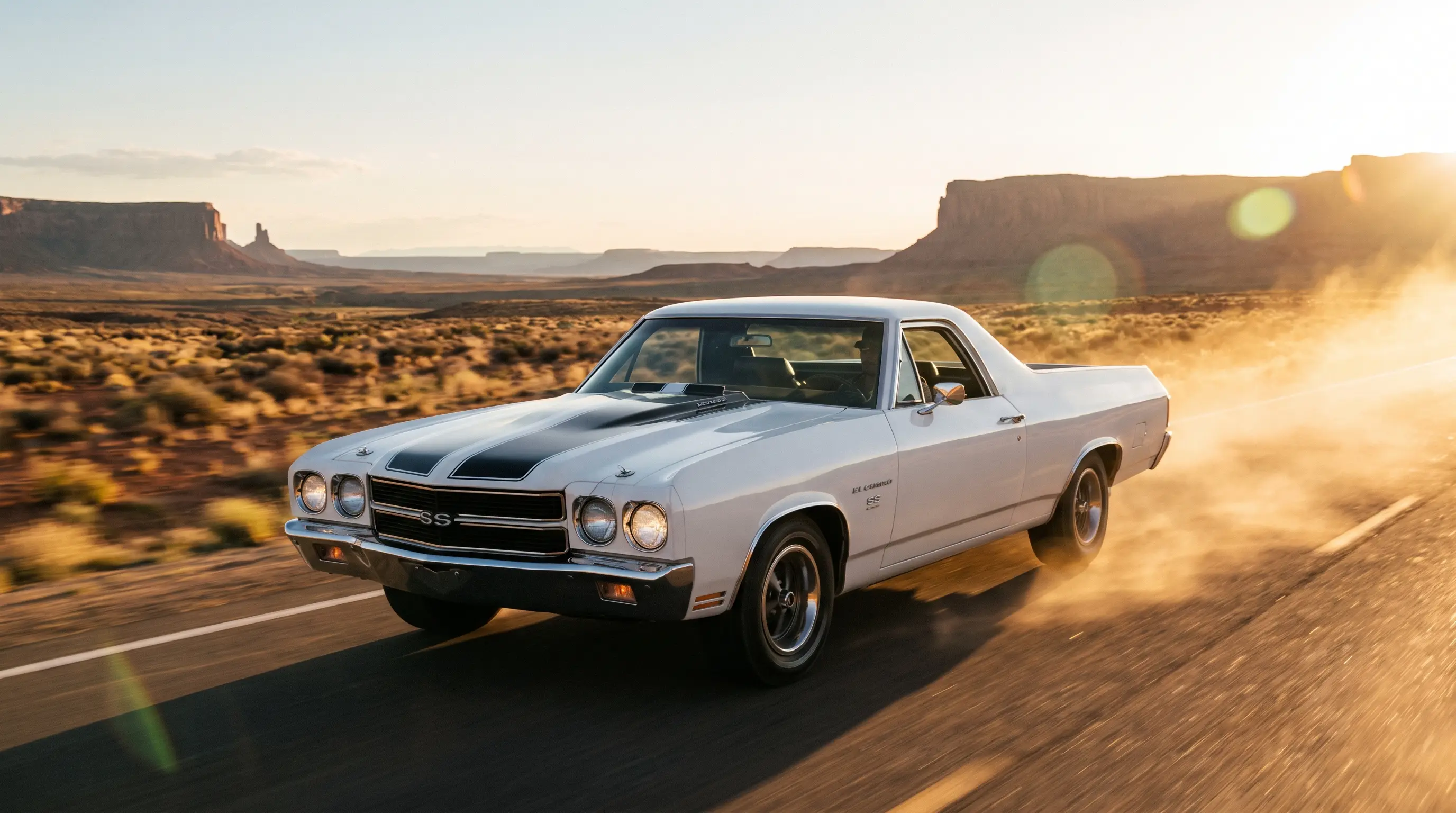
The 1970 palette leaned into the era. Cranberry Red, Fathom Blue, Citrus Green, Classic White, Tuxedo Black, Desert Sand, and a range of others filled the order sheet. Two-tone paint with a contrasting lower body was common on the work-oriented cars and rarer on the performance ones. The SS stripe treatment, when ordered, ran along the flanks and across the cowl-induction hood.
The way a buyer optioned one of these in 1970 shapes its value now. A drivetrain-focused buyer ordered the LS6, the four-speed, the 12-bolt rear with a numerically high gear, and skipped the air conditioning. A comfort buyer took the LS5 or the 396, the automatic, air, power windows, and the nicer interior. Both are legitimate. The market pays the most for the documented LS6 four-speed cars because they are the ones that back up the reputation with the number that mattered.
Air conditioning is worth a specific note. On a big-block car it was a genuine engineering compromise, and relatively few LS6 cars were built with it. When you see a factory-air LS6, treat it as an unusual combination rather than a default. If the badge-and-numbers game around 1970 has you curious about how the Super Sport identity worked across the whole run, keep exploring with our piece on keep exploring the SS story from first year to last.
How the 1970 actually drove
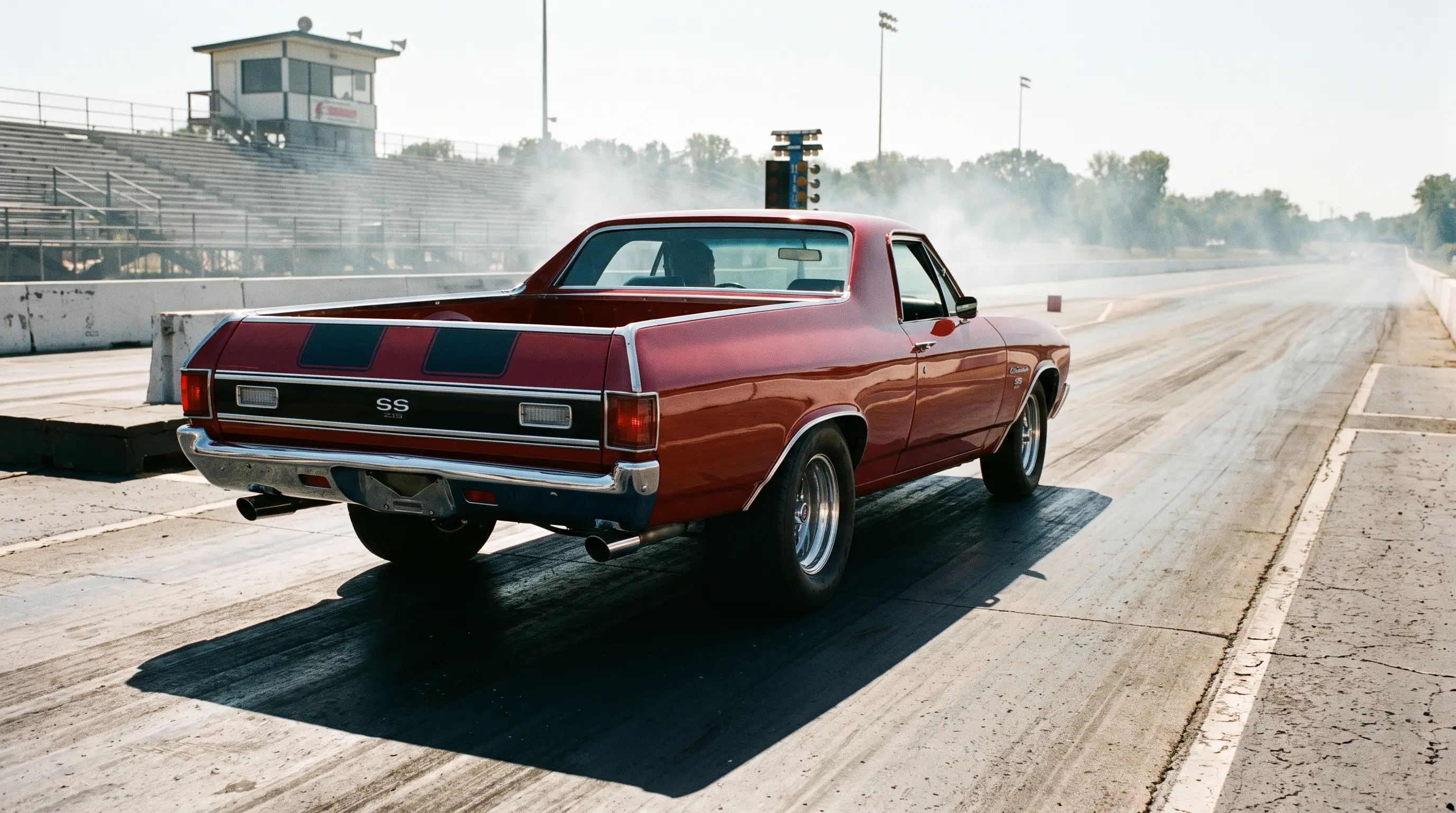
Numbers on a stand are one thing. What the car did on the road is another, and the 1970 SS454 delivered on the promise better than most muscle machines of the era. The 454 made its torque low in the rev range, which meant it pulled hard from a roll without needing to be wound out. In a vehicle with a light rear end and a cargo bed, that torque was a double-edged thing. Point it straight and it launched. Get greedy with the throttle in the wet and the back end stepped out, because there was not much weight over the rear axle to plant the tires.
That handling quirk is part of the car's character, not a flaw to apologize for. Owners learned to respect it. The heavy-duty suspension that came with the SS package firmed things up, and the power front discs gave it stopping power the earlier drum-brake cars lacked. It was never a corner-carver. It was a straight-line weapon with a bed, and it drove exactly like what it was, which is a Chevelle SS that traded a back seat for a load floor.
The four-speed cars are the ones enthusiasts prize for the driving experience, because the Muncie gearbox let you keep the big-block in its sweet spot. The Turbo 400 automatic cars are easier to live with and, honestly, nearly as quick in a straight line, since the torque did most of the work anyway. Either way, a 1970 with the 454 was a genuinely fast vehicle that happened to be useful, and that combination has never really been repeated.
Why 1970 sits at the top of the market
Here is the ranking, stated plainly. Among all El Caminos, the 1970 SS454 sits at or near the top of collector value, and the LS6 version is the peak of that peak. The reason is simple. It combines the highest factory power rating the model ever received, the most aggressive styling of the muscle era, and the shortest window of availability. Emissions and insurance pressure gutted engine ratings starting in 1971. The 1970 cars were built at the exact moment before the retreat.
Values track that story. A documented, numbers-matching 1970 LS6 in strong condition trades in the high five figures and, for the best examples with paperwork, into six figures at auction. An LS5 car sits well below that. A base V8 car dressed in SS trim sits below that again, and the honest ones are sold as what they are. The spread between a real LS6 and a tribute built from a six-cylinder work truck can be a factor of five or more. That is not hype. That is what the auction record shows.
"I get asked which El Camino to buy if you only care about the driving. The answer is short. A 1970 SS454, documented, four-speed if you can find one. Everything after it gave up power. Everything before it gave up displacement. This is the one year where the truck with a bed would out-run most of the cars in the parking lot, and the paperwork proves it."
- Dan Reeves
What survives and what to trust
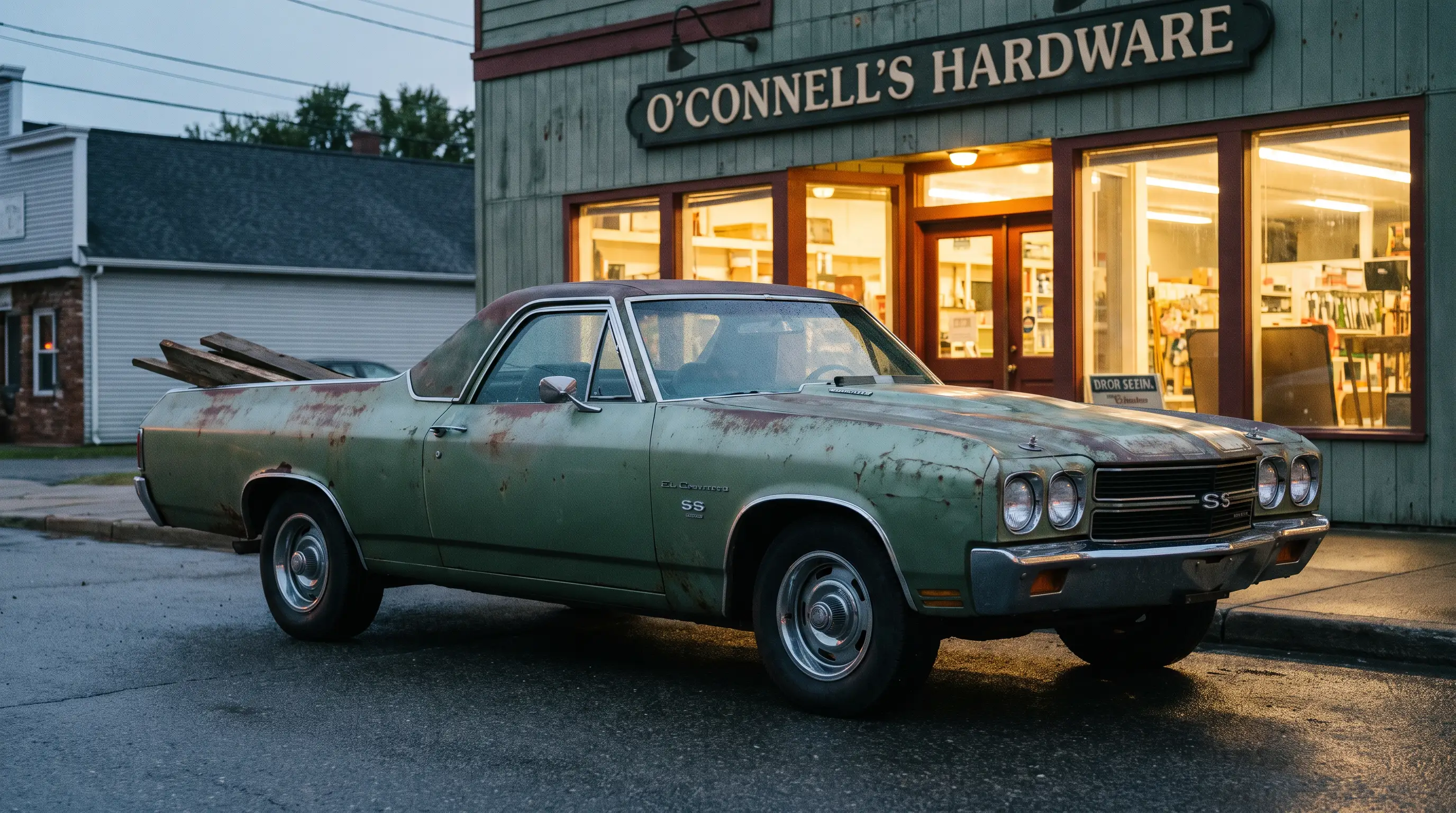
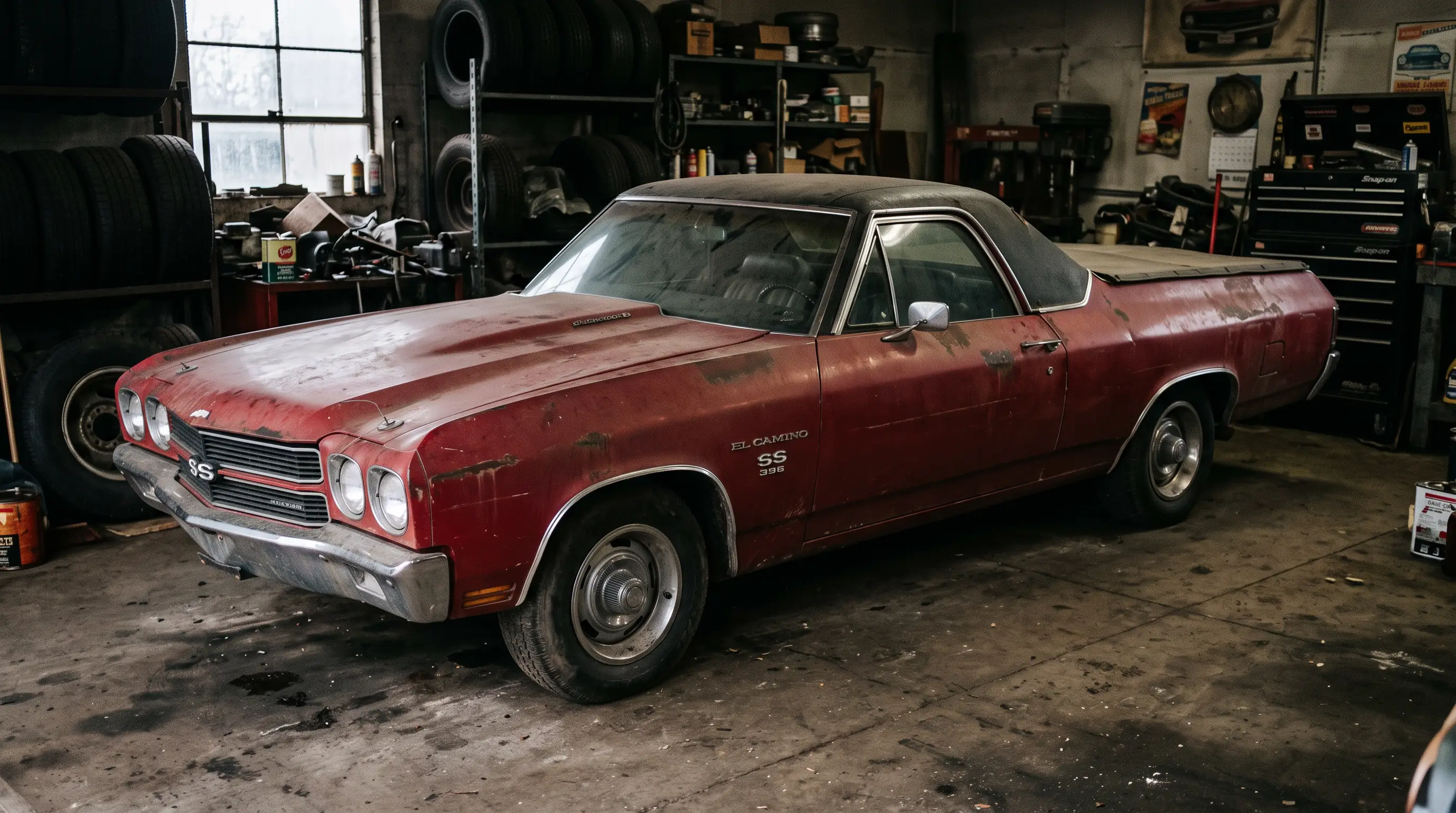
Survival rates favor the cars that were babied and hurt the ones that were used. That is the problem with a vehicle built to haul. A large share of 1970 El Caminos spent their working lives doing exactly what the bed invited, which means rust, bent sheet metal, worn drivetrains, and replaced engines. The clean survivors are disproportionately the ones bought by people who understood what the LS6 was and treated the car accordingly.
Documentation is the whole game. A build sheet found under the seat, a Protect-O-Plate, dealer paperwork, or a matching engine casting date and partial VIN stamp separate a real car from a story. On a model where the SS badge was an option anyone could bolt on, the paperwork is worth real money because it is the only thing that turns a claim into a fact.
If you want to see current examples and get a feel for the spread between the honest work cars and the documented performance cars, browse a classic El Camino for sale and read the descriptions closely. The good listings tell you the engine code, the transmission, and what documents come with the car. The vague ones tell you nothing, and on a 1970 SS, nothing is exactly what you should assume until proven otherwise.
Sources and notes
- LS6 4-Speed! 1970 Chevrolet El Camino SS 454 - Barn Finds
- 1970 Chevrolet El Camino SS LS6 - Barrett-Jackson
- 1970 El Camino SS 454-LS6 - Team Chevelle
- Numbers-Matching 1970 Chevrolet El Camino - autoevolution
- 1970 LS-5 Horsepower - Team Chevelle
The 1970 El Camino is the year the argument ends. Not because it is the prettiest, though many buyers think it is, and not because it is the most practical, because the later downsized cars used less fuel and cost less to run. It ends because of the number. Four hundred fifty horsepower, from the factory, in a vehicle with a cargo bed, in the last year before the industry pulled back. Buy the documentation and the car comes with it. Buy the badge alone and you have bought a guess.