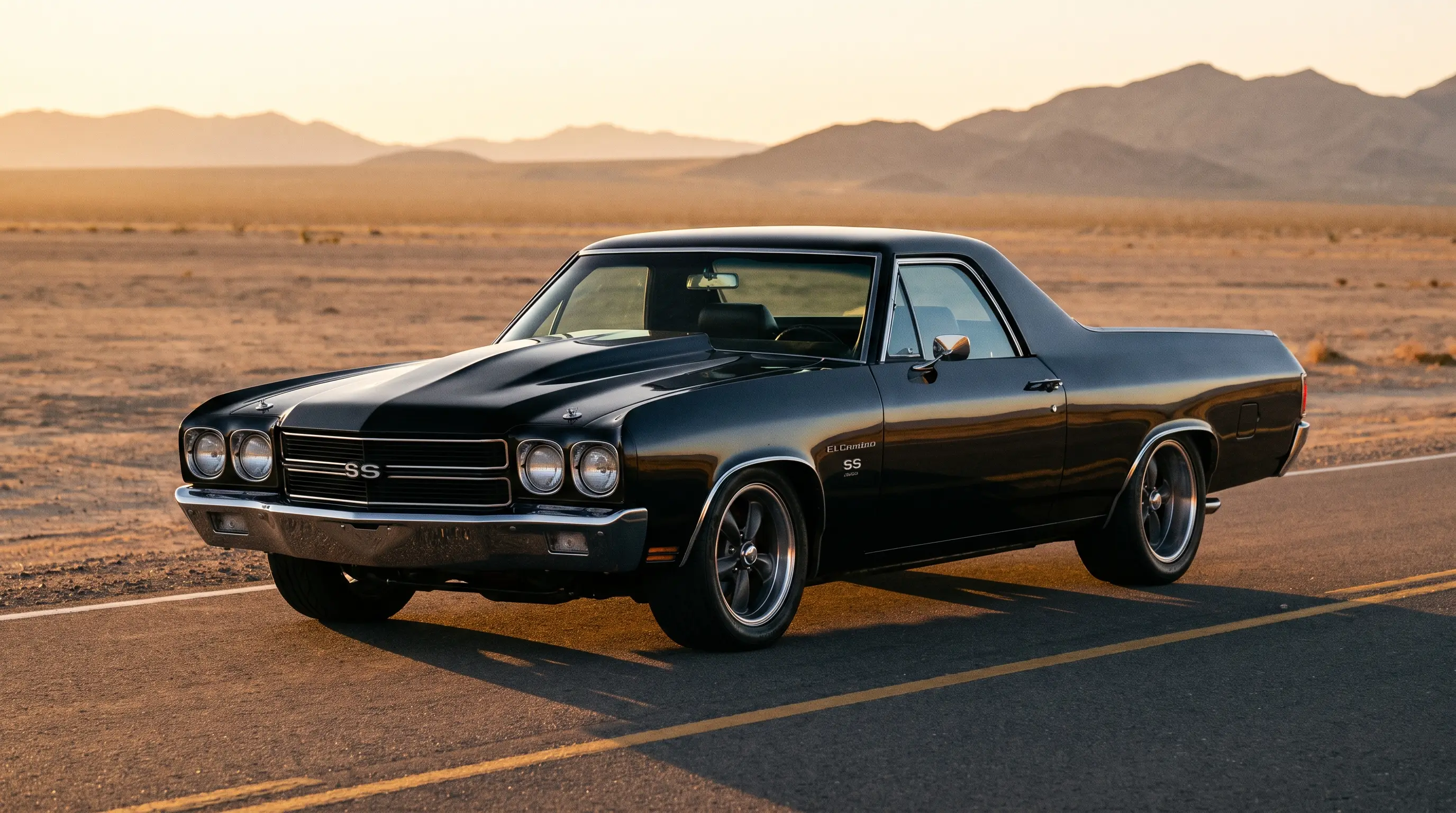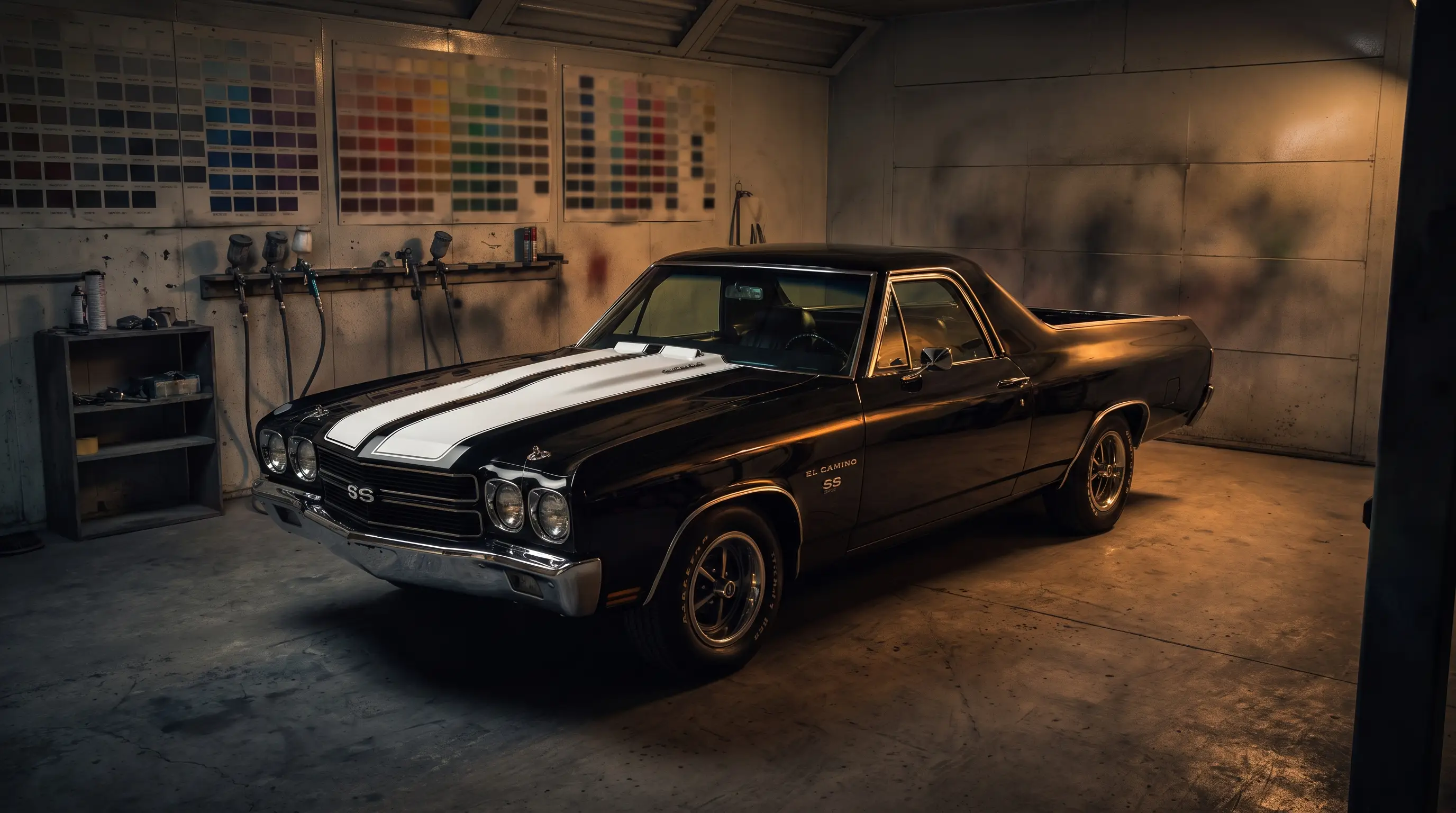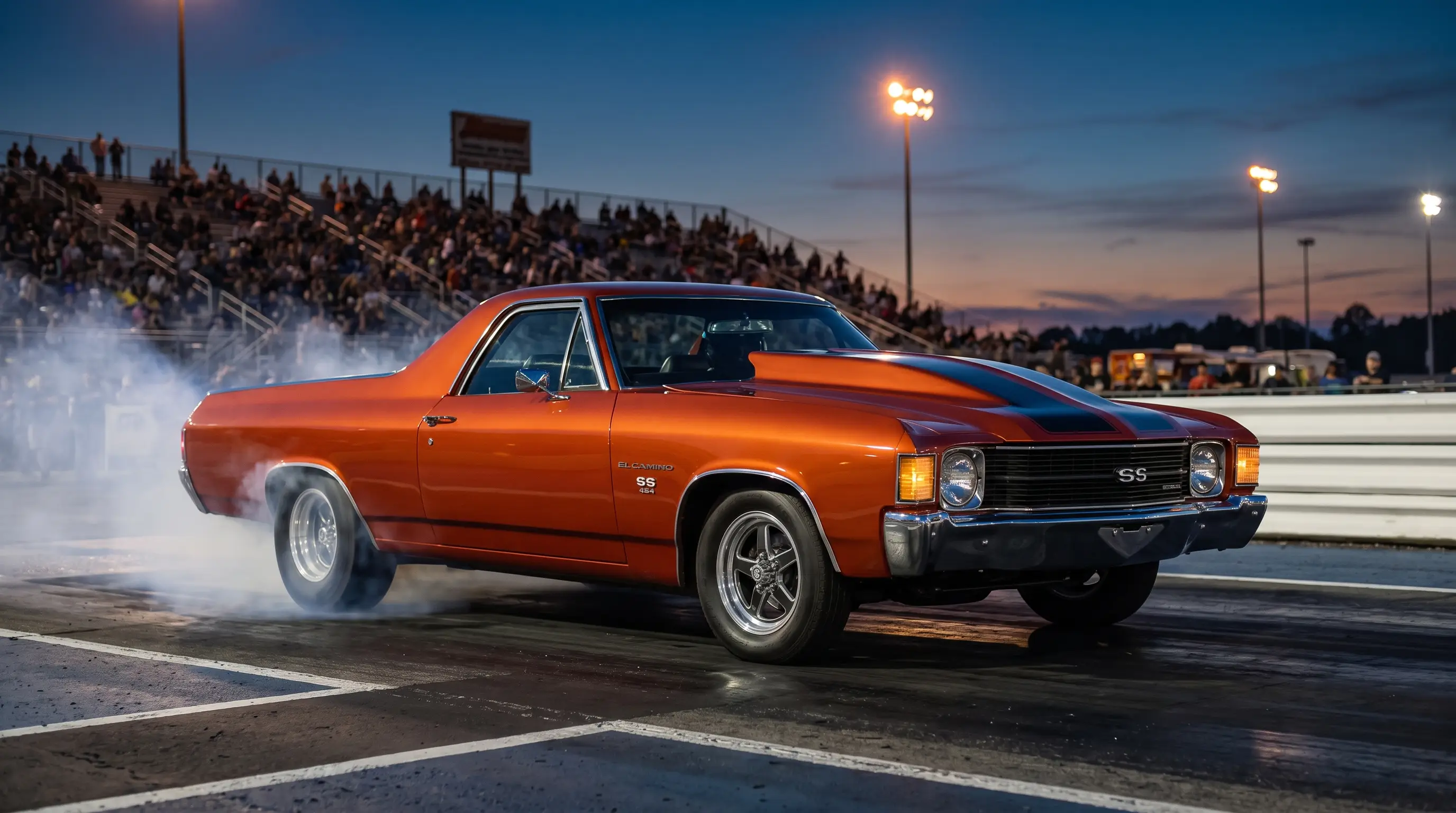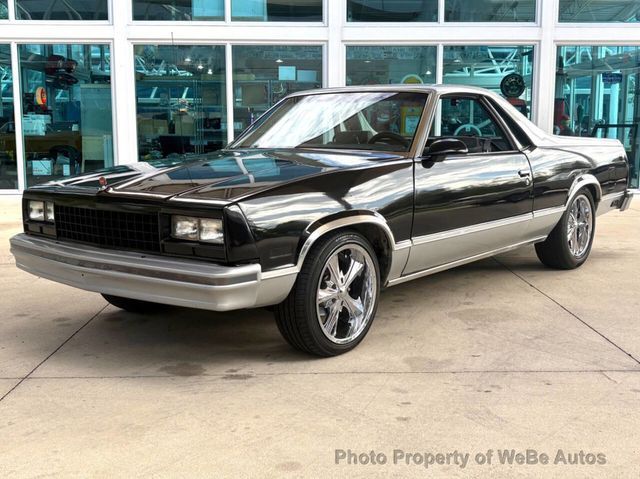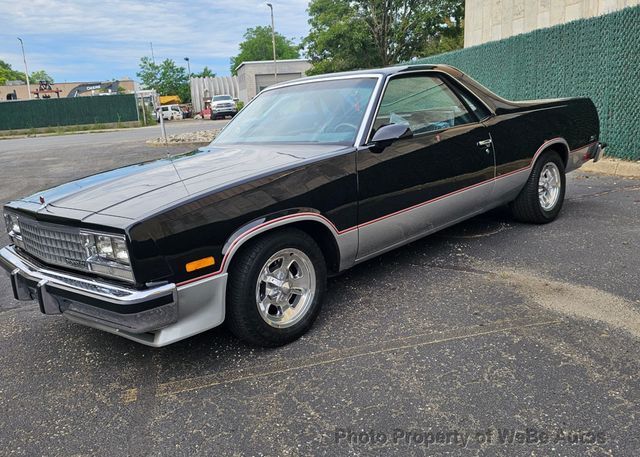
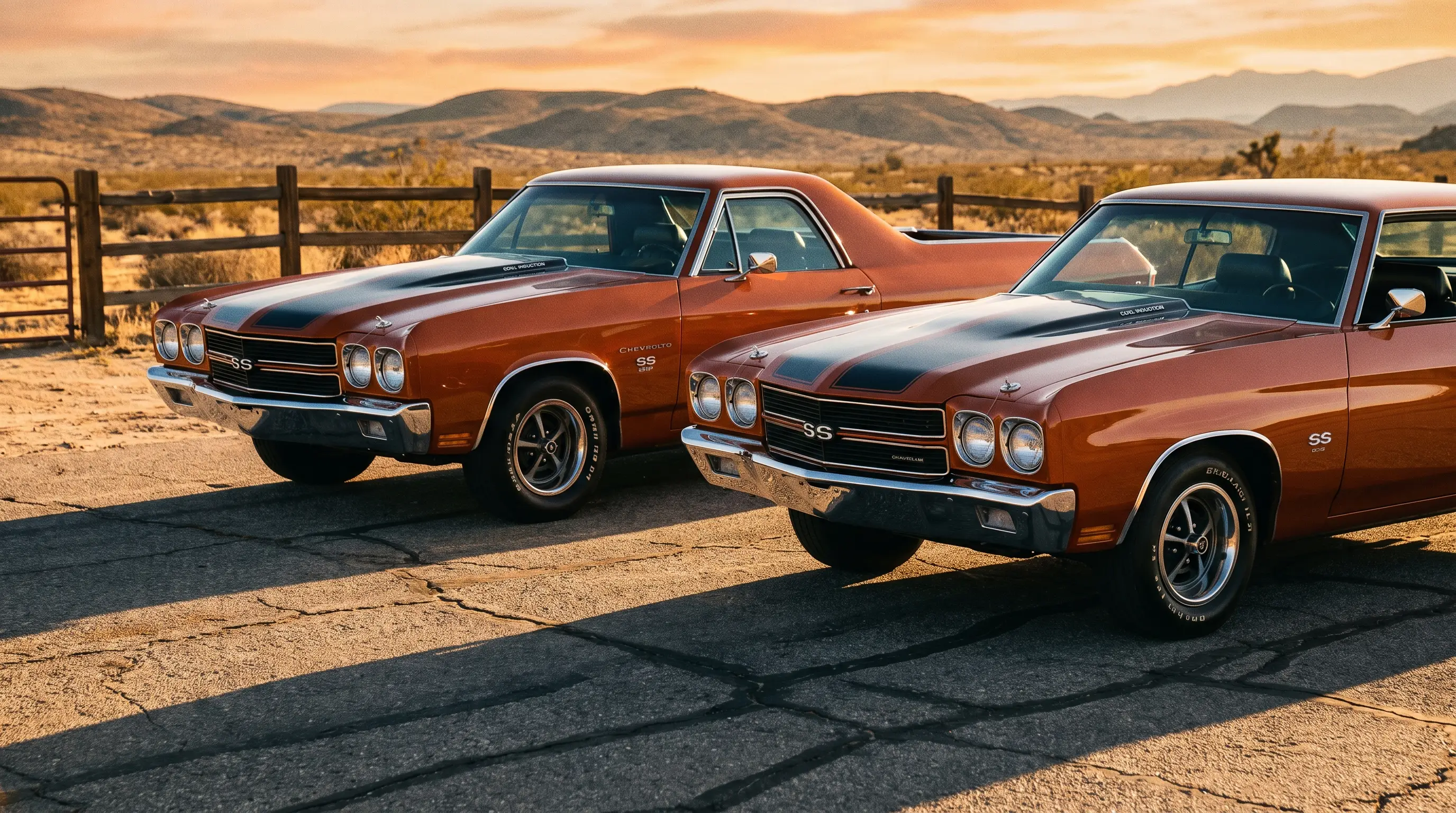
Park a 1970 El Camino SS next to a 1970 Chevelle SS and the family resemblance is obvious within seconds. Look at the invoice underneath both cars and the resemblance turns out to be even closer than most people assume. Comparing el camino 1970 vs chevelle ss sibling status means starting with a simple fact: these were not two different cars wearing similar badges. They were the same engineering platform, split into two body styles by Chevrolet's own product planners.
One chassis, two missions
Both cars rode the GM A-body platform and pulled from the same RPO Z15 Super Sport package when a buyer ordered one, though the wheelbase itself was not identical between the two. The El Camino used the longer 116-inch wheelbase shared with the four-door Chevelle and wagon body styles, while the two-door Chevelle SS coupe rode a shorter 112-inch wheelbase. The frame rails, front subframe, and suspension geometry still traced back to the same engineering documents even with that dimensional difference. The frame rails, the front subframe, the suspension geometry, all of it traced back to the same engineering documents. Chevrolet did not design a truck and a muscle car separately in 1970. It designed one platform and then decided how to finish the back half depending on which nameplate a dealer ordered.
The El Camino got a cargo bed stamped from steel where the Chevelle got a trunk and a second set of rear doors on the four-door versions, though the two-door Chevelle coupe is the more honest comparison point since it shared the El Camino's roofline and greenhouse almost exactly. Anyone who has stood next to both in a garage can see the shared DNA in the doors, the windshield angle, the dash layout. The differences started behind the B-pillar.
Same engines, same numbers, same intent
Order the SS 454 package on either car in 1970 and Chevrolet installed the same base LS5 big block, rated at 360 horsepower, with the optional LS6 available on both nameplates as a checkbox item. The horsepower ratings matched between the two body styles for a given engine. The gearing options matched. A four-speed manual behind a 454 pulled the same way whether it sat under an El Camino hood or a Chevelle hood, because it was, mechanically, the identical drivetrain bolted to the identical subframe. The LS6 was ordered far less often in the El Camino than in the Chevelle, with roughly 500 El Camino LS6 cars built against a substantially larger Chevelle LS6 count, which is why documented LS6 El Caminos draw close scrutiny from appraisers today.
This is the detail that surprises newer collectors most. They expect the truck version to be some kind of detuned or lesser cousin, built for hauling rather than racing. Chevrolet's engineering department did not see it that way. The El Camino SS was never treated as a compromise car mechanically. It carried full performance content, the same as its Chevelle sibling, with a cargo bed bolted where a trunk would otherwise go.
Where the two actually diverged
The differences that did exist were mostly about weight distribution and body rigidity. A pickup bed changes how a chassis flexes compared to a closed trunk structure, and Chevrolet's engineers made small reinforcement adjustments to account for that. Payload capacity, obviously, was another point of separation. Nobody was hauling lumber in the trunk of a Chevelle SS, but a 1970 El Camino SS could genuinely carry a load while still running the same big block under the hood.
Styling details diverged too. Stripe placement, some trim pieces, and interior options were not identical across the two nameplates even when the mechanical content was. Payload capacity itself is not a figure Chevrolet published in a directly comparable form for the Chevelle SS, since the Chevelle had no cargo bed rating to begin with, which is part of why the two nameplates cannot simply be cross-referenced spec for spec. Collectors chasing precise factory specification should treat the two nameplates as related but not interchangeable when it comes to trim-level documentation.
| Category | El Camino SS | Chevelle SS (2-door) |
|---|---|---|
| Platform | GM A-body | GM A-body |
| Wheelbase | 116 inches | 112 inches |
| Available big blocks | 396/402, 454 (LS5, LS6) | 396/402, 454 (LS5, LS6) |
| Rear configuration | Steel cargo bed | Trunk |
| Practical use case | Performance plus utility | Performance only |
How dealers actually sold the difference
Dealer floor talk in 1970 leaned on a simple pitch when a customer stood between the two cars. The Chevelle was framed as the purer performance statement, a car for someone who wanted the fastest possible commute and nothing else demanded of it. The El Camino was framed as the practical answer for a buyer who needed the same speed but also needed to move a motorcycle, a set of tools, or a load of drywall on the weekend. Neither pitch was wrong, and both cars left the lot with essentially identical mechanical guts under those different sales stories.
What made this pitch work was that Chevrolet never asked buyers to sacrifice anything to get the utility. A farmer's son who wanted to race on Saturday night and haul feed on Sunday morning did not need to choose a slower engine to justify the cargo bed. He ordered the same 454, the same four-speed, the same suspension package his buddy put in his Chevelle coupe, and simply got a different rear half attached to it. That flexibility is a big part of why the El Camino built such a loyal following among buyers who did not see themselves reflected in typical muscle car marketing.
Why the comparison still matters to buyers
Understanding this relationship changes how a buyer should think about value. A well-documented 1970 El Camino SS 454 is not a discount alternative to a Chevelle SS with the same engine. It is arguably the rarer proposition in some configurations, since fewer buyers in 1970 chose the utility body over the trunk when ordering the big block package, and rarity plus equivalent mechanical content tends to support strong collector interest rather than a lesser one.
"People assume the truck version had to be the compromise. The paperwork says otherwise. Same subframe, same big block, same four-speed. Chevrolet just changed what sat behind the doors."
- Tom Ramirez
Reading further and shopping smart
For readers who want the full story on how the 1970 El Camino SS came together as its own model year, the broader account covers the engine lineup, production numbers, and market history in more depth than a sibling comparison can. Anyone ready to move from research to shopping can look at classic El Camino for sale listings and see how documented SS 454 examples are currently priced against their Chevelle counterparts, which remains one of the more useful real-world checks on how the market actually values this shared platform.
It is worth remembering, too, that survival rates differ between the two body styles. Utility vehicles get worked harder over their lifetimes than dedicated performance coupes, and plenty of El Caminos that started life as documented SS 454 cars ended up hauling firewood and scrap metal long after their original owners moved on. That harder life means genuinely clean, unmolested SS El Caminos are scarcer today relative to their original production numbers than equivalent Chevelle SS coupes, a detail that matters enormously once a buyer starts comparing asking prices between the two nameplates rather than just comparing spec sheets on paper. A documented, low-mileage SS El Camino that avoided decades of truck duty is not just rare in absolute numbers. It survived a use case that actively worked against preservation, which is a meaningfully different story than a Chevelle coupe that spent its life parked in a garage.