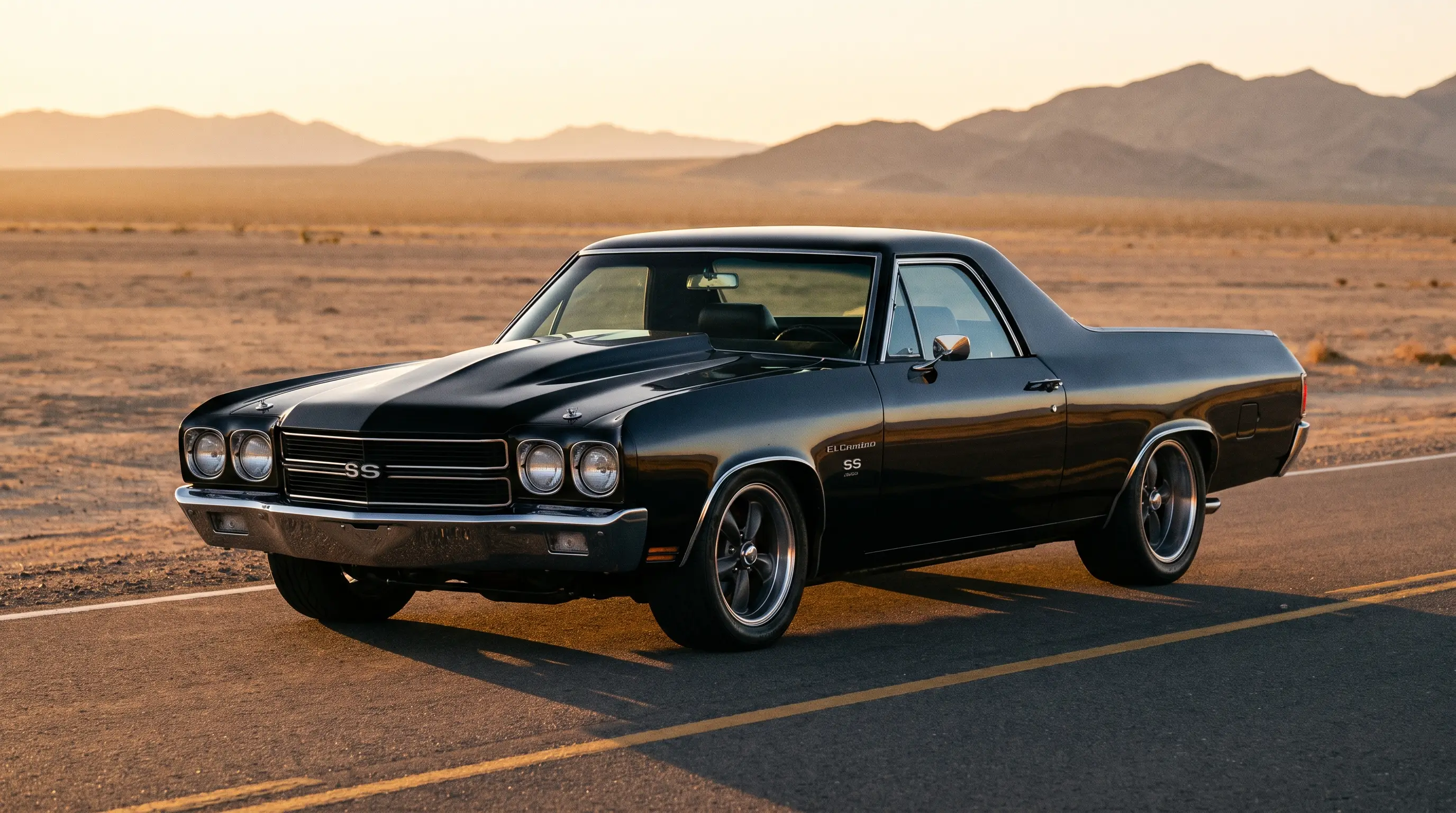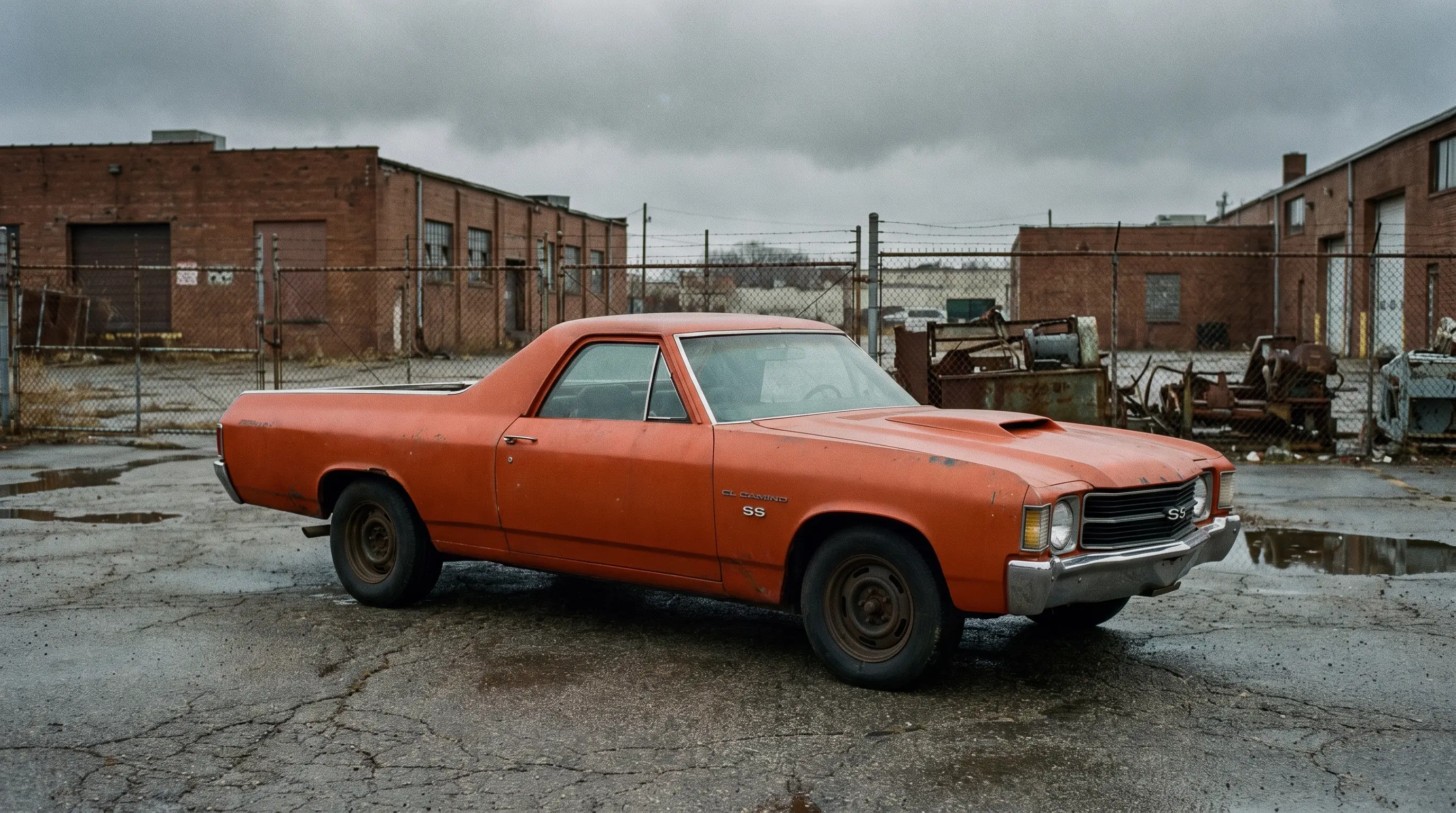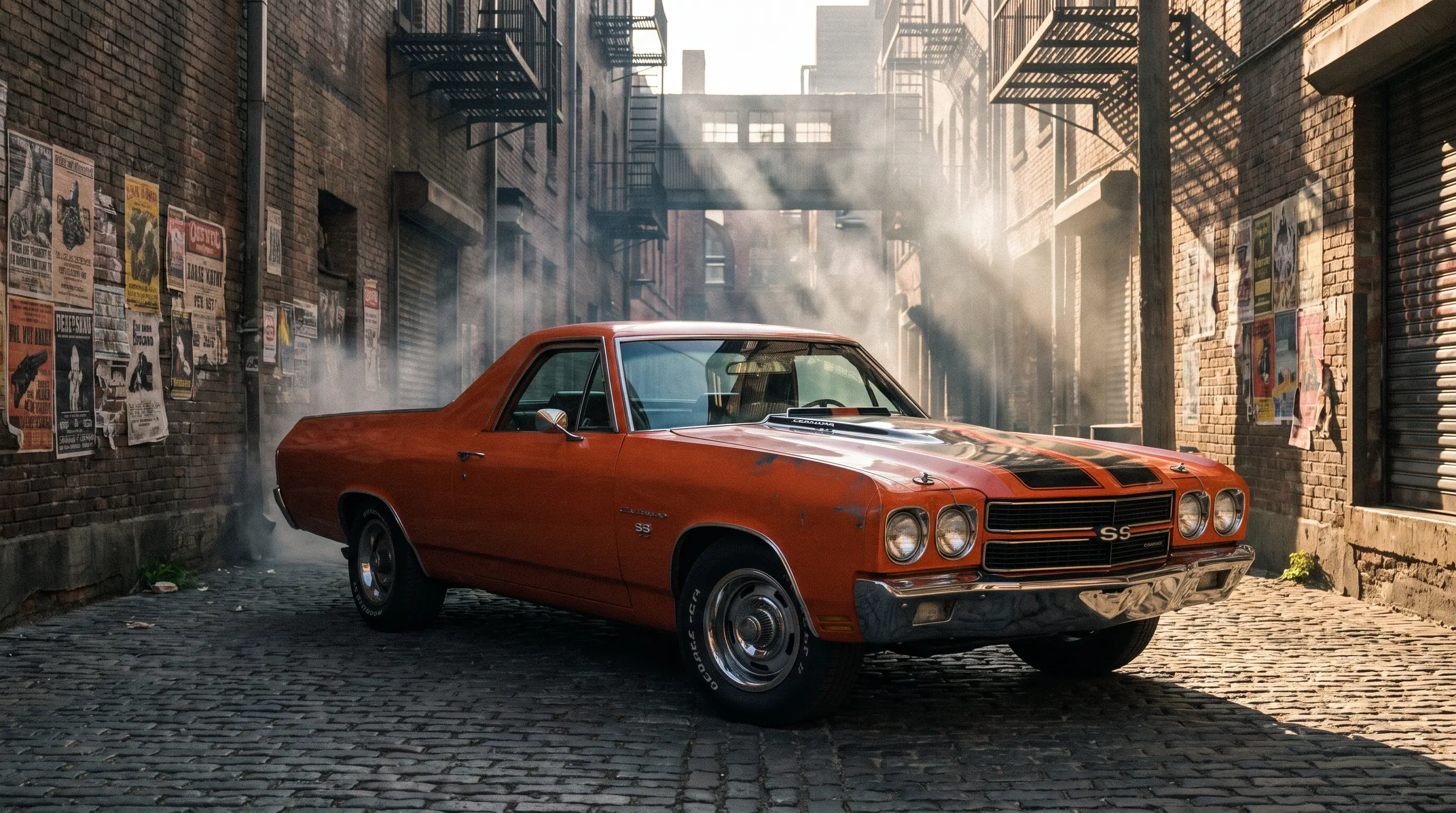
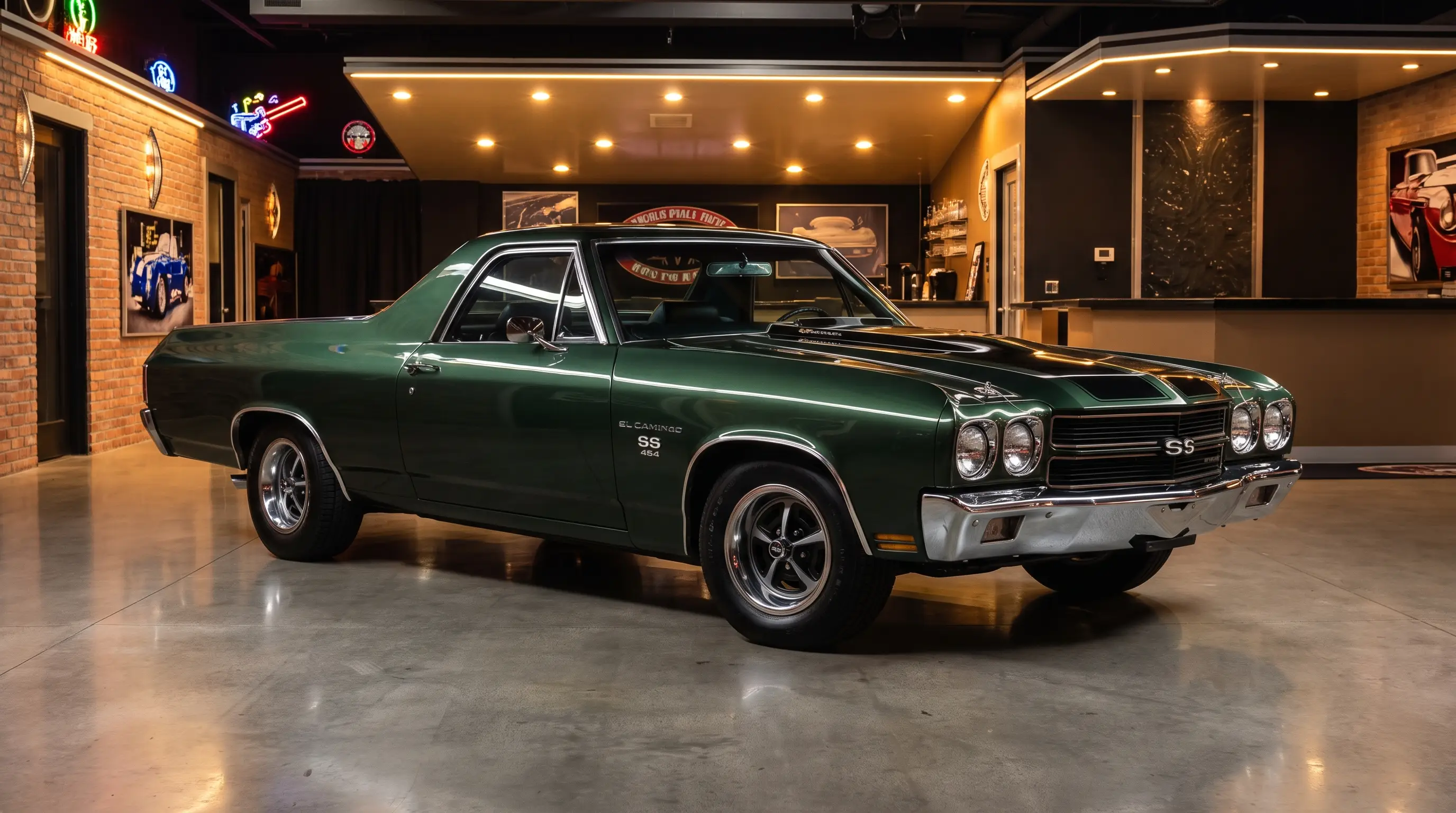
Appraisers get asked to rank things constantly, and buyers usually want a simple answer. Ask me why the 1970 El Camino SS 454 sits near the top of most serious want lists and I will give you the unglamorous version. The el camino 1970 most collectible reasons come down to documentation, scarcity, and the specific mechanical peak this single model year represents, not sentiment.
Reason one: it was the mechanical peak of the platform
The 1970 model year gave buyers access to the LS6 454, a genuinely top-tier engine option rated at 450 horsepower, that Chevrolet dropped from the El Camino and Chevelle lineup entirely for 1971 as part of the same corporate compression-ratio mandate that detuned the carryover LS5. That single regulatory fact makes 1970 the last year a buyer could order this specific combination of displacement, compression, and factory horsepower rating in an El Camino SS. Chevrolet built only a small number of LS6 El Caminos, roughly 500 by most later estimates, which is a big part of why documented examples draw such close attention today. Collectors do not chase peaks arbitrarily. They chase them because the market has already decided, over decades, that a peak year commands attention a middling year never will. That decision was made collectively and it has not reversed.
Reason two: survival rates work against supply
El Caminos got used as El Caminos, which means many original SS 454 examples spent years hauling cargo, absorbing wear that a dedicated coupe never experienced. Fewer survived in unmolested condition relative to their original production numbers than comparable Chevelle SS coupes from the same year. Basic scarcity economics apply here without needing sentiment attached. Fewer surviving documented examples against steady or growing demand pushes prices upward, full stop.
Reason three: documentation is unusually verifiable
Unlike some muscle car nameplates where badge and trim fakery is rampant and hard to catch, the El Camino SS package traces back to a specific RPO code, Z15, stamped on a cowl tag that is difficult to convincingly forge. This gives buyers and appraisers a clear verification path that reduces transaction risk compared to nameplates with murkier documentation trails. Reduced risk in a collector transaction translates directly into buyer confidence, and buyer confidence supports higher sustained prices over time.
Compare that to nameplates where the factory documentation trail was thinner or where record-keeping practices at the assembly plant were less consistent. Appraisers in those segments spend proportionally more time hedging valuations against unverifiable claims, and that uncertainty shows up as a discount in the final number. The El Camino SS mostly avoids that discount because the paper trail, when it survives, actually holds up to scrutiny.
This is not a minor technical detail. It is the difference between a market where buyers can transact with reasonable confidence and one where every purchase carries meaningful fraud exposure. Appraisers factor documentation clarity into valuations constantly, and the El Camino SS benefits from having one of the more traceable paper trails in the muscle car segment.
Reason four: dual utility broadens the buyer pool
A pure two-door muscle coupe appeals to one type of buyer. A documented SS 454 with a functional cargo bed appeals to that same buyer plus a second category entirely, people drawn to the novelty and practicality of genuine performance in a working vehicle. That broader buyer pool supports demand in a way a narrower nameplate cannot always match, particularly during periods when muscle car interest cycles downward generally but interest in unusual, characterful vehicles holds steadier.
| Factor | Why it drives value |
|---|---|
| LS6 454 availability | Discontinued after 1970, making 1970 the mechanical peak year |
| Survival rate | Lower than coupe siblings due to utility use |
| Documentation clarity | Cowl tag and RPO codes reduce fraud risk |
| Buyer pool breadth | Appeals to both muscle car and utility-vehicle collectors |
"I do not appraise nostalgia. I appraise documentation, scarcity, and liquidity. The 1970 SS 454 scores well on all three, and that is the entire reason it commands what it does."
- Marcus Feld
Reason five: liquidity in a market that actually transacts
A collectible is only worth what someone will actually pay for it, and liquidity, meaning how readily a car sells at a fair price without sitting on the market for years, matters as much as any specification sheet. Documented 1970 El Camino SS 454 examples transact regularly at major auction houses and through specialist dealers, which gives appraisers a steady stream of comparable sales to reference. That is a meaningfully different situation from a rare nameplate that might see one or two verifiable public sales per decade, where valuation becomes closer to guesswork than analysis.
Regular transaction volume also means owners are not stuck holding an asset they cannot convert back to cash without accepting a steep discount. For a collector thinking about this as an actual asset rather than purely a hobby purchase, that liquidity profile is a real, quantifiable advantage over more obscure or thinly traded muscle car nameplates.
How condition interacts with these five reasons
None of the five factors above override basic condition assessment. A documented, numbers-matching 1970 SS 454 with significant rust damage, a non-functional drivetrain, or extensive undocumented modification does not automatically command top-tier pricing just because the model year and RPO code check out. Appraisers weigh documentation and scarcity as multipliers against a baseline condition assessment, not as a replacement for one. A rough survivor with perfect paperwork might appraise well below a nicely restored car with slightly less complete documentation, depending on how far the physical condition has deteriorated.
This is where buyers most often misjudge value, assuming that a correct cowl tag alone guarantees top-dollar pricing regardless of what the rest of the car looks like underneath. Documentation establishes what a car is supposed to be. Condition establishes what it currently is. Both matter, and neither substitutes for the other in a serious appraisal.
Where the risk still sits
None of this means every 1970 El Camino SS is a safe purchase. Reproduction badges and undocumented engine swaps exist in this market same as any other, and a buyer relying on seller claims rather than cowl tag verification carries real downside risk regardless of how compelling the four reasons above sound. Recent public auction results for documented 1970 El Camino SS 454 examples have landed anywhere from the high five figures for solid driver-quality cars up into six figures for numbers-matching LS6 cars with strong provenance, and that range moves with the broader muscle car market from year to year. Value depends entirely on whether a specific car actually delivers the documented history that makes the model year collectible in the first place.
For readers who want where this started, the full account of the 1970 SS package covers the production context behind these appraisal factors in more depth. And for anyone ready to compare documented examples against asking prices directly, you can shop classic El Camino listings and weigh each car's paperwork against what the reasons above actually predict it should be worth.
One final note for buyers new to this specific segment. Ask for an independent inspection before relying on seller-supplied photographs of the cowl tag, since a tag can be photographed selectively to obscure a code that does not match the seller's claims. A short inspection fee is a small cost relative to the difference between a genuinely documented SS 454 and a car wearing its history rather than actually possessing it.