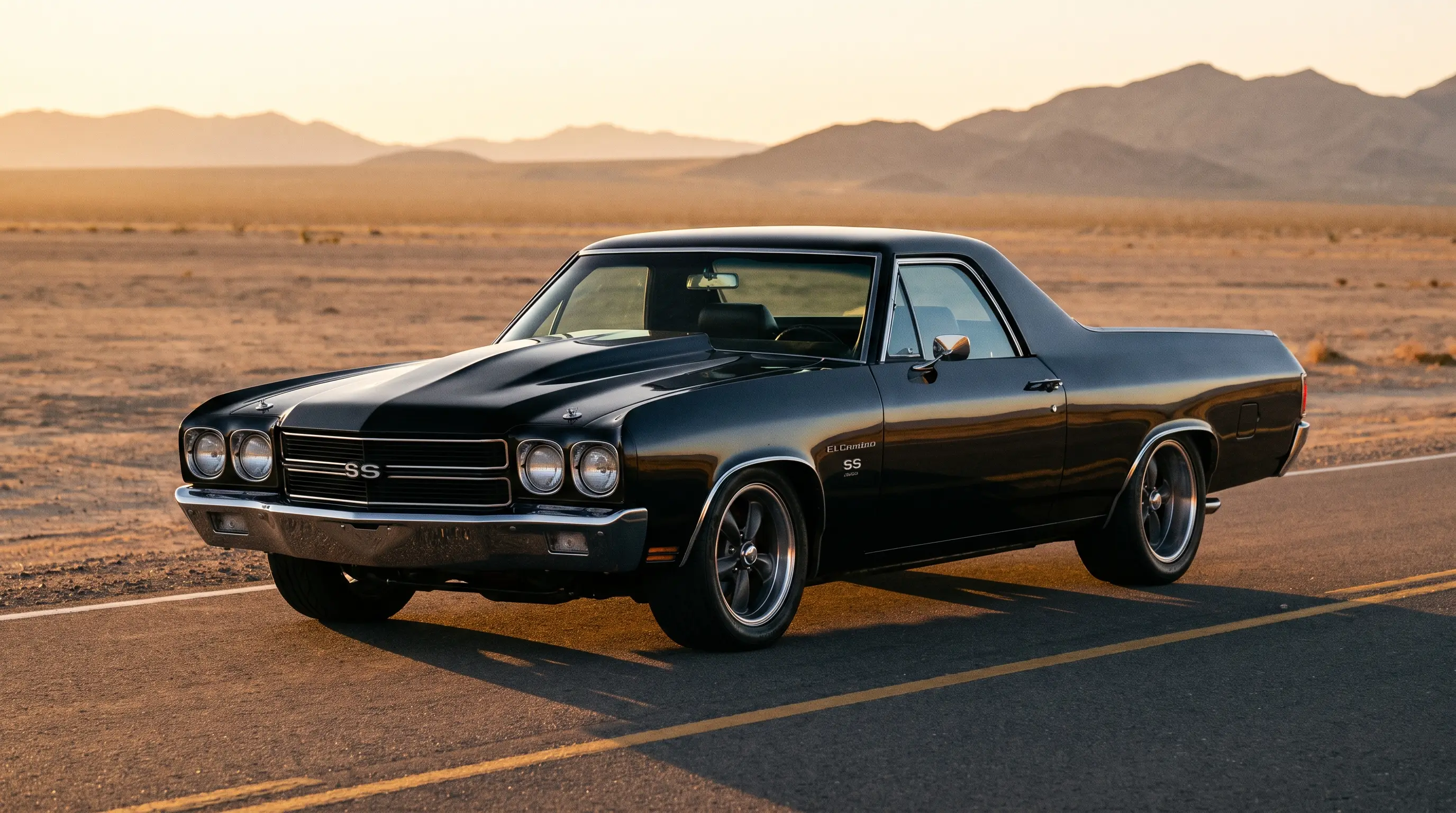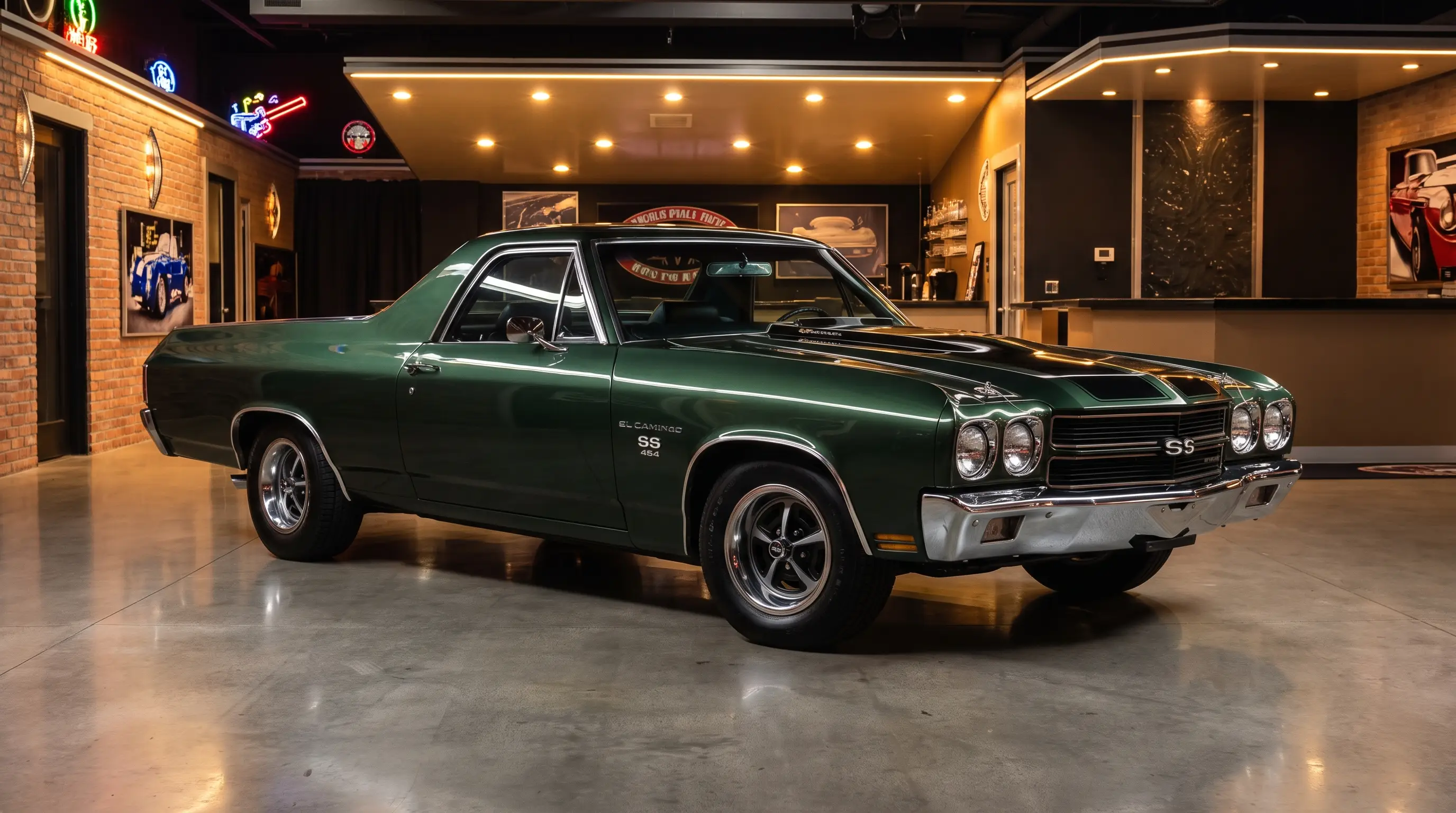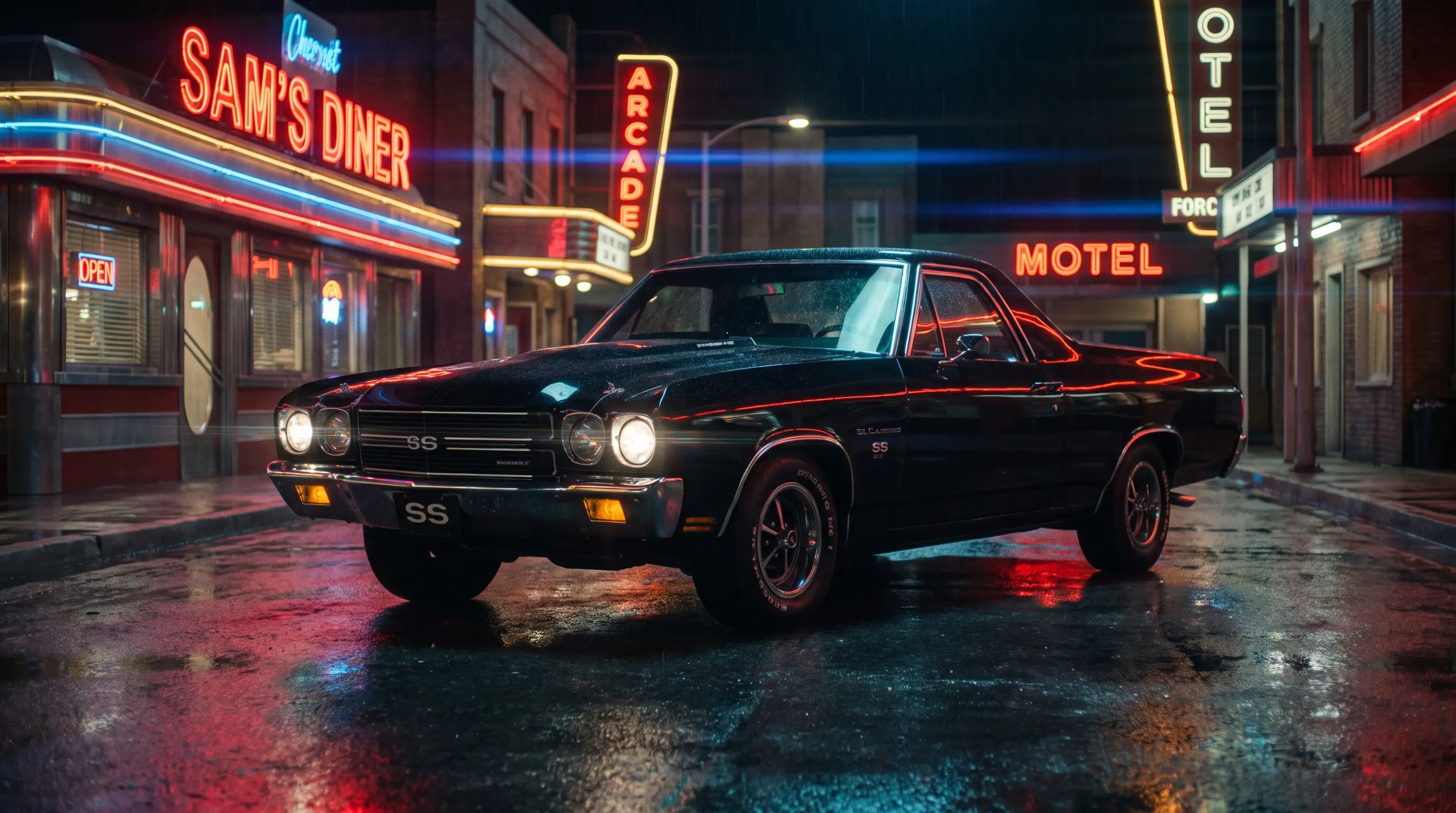
Picture a magazine writer in 1970, handed the keys to a Cranberry Red El Camino SS 454 by a Chevrolet press fleet coordinator who probably could not quite believe his own instructions. Test the truck like a muscle car. That assignment produced some of the most entertaining automotive journalism of the era, because nobody quite knew what tone to strike, and the el camino 1970 magazine road tests that resulted still read today like writers figuring out the joke and the compliment at the same time.
The tone problem every test writer faced
Every period road test of the 1970 El Camino SS had to solve the same rhetorical puzzle before a single lap timer clicked. Was this a truck review or a muscle car review? Buff books built their entire voice around a certain seriousness when covering genuine performance iron, and that seriousness sat uneasily next to a car with a cargo bed. Writers split roughly into two camps. Some leaned into the novelty, treating the whole exercise as a knowing wink to readers, cracking jokes about hauling lumber at speed. Others refused the bait entirely and reviewed the car with total sincerity, reporting quarter mile times and braking distances with the same gravity they would apply to a Chevelle SS or a Road Runner.
The sincere camp generally aged better. Their numbers held up as legitimate documentation of what these cars could actually do, while the jokier coverage, however entertaining at the time, told readers today less about the car and more about a magazine's house voice in 1970.
What the numbers actually showed
Strip away the tone and the substance of these road tests was consistent across publications. The 454-equipped El Camino SS ran quarter mile times competitive with its Chevelle SS sibling, a fact that surprised more than a few testers who expected the added weight of the truck bed and reinforced rear structure to cost noticeably more time at the strip than it actually did. Hot Rod's period test of an LS6-equipped El Camino recorded a quarter mile in the 13.4-second range at just over 108 mph, a genuinely quick figure for a production vehicle in 1970, while a later test of a lower-compression LS5-powered El Camino ran in the mid-14-second range at around 96 to 97 mph. Braking and handling notes tended to mirror standard A-body big block commentary from the era, with testers commonly flagging the nose-heavy weight distribution typical of any big block installation in this chassis, El Camino or Chevelle alike.
What differed from typical muscle car coverage was the attention paid to payload and bed capacity, information no Chevelle test ever needed to include. Some writers treated this as an afterthought footnote. Others made it central to the review, arguing the car's real appeal was precisely this dual capability rather than raw speed alone.
How dealer advertising echoed the reviews
Chevrolet's own marketing team clearly read these road tests closely, because dealer advertising through 1970 and into 1971 began borrowing language directly from the more sincere magazine coverage. Phrases emphasizing genuine performance credentials rather than novelty framing show up in period print ads, suggesting Chevrolet recognized which press angle actually helped move cars off the lot. The novelty jokes made for fun reading. The sincere performance framing made for sales.
This feedback loop between press coverage and dealer marketing is a detail easy to miss unless you read both side by side. Magazine writers were not just documenting the car. In a small but real way, through the advertising copy that echoed their language, they were shaping how the next round of buyers understood it.
| Test category | Common finding across publications |
|---|---|
| Quarter mile performance | Competitive with Chevelle SS 454 |
| Weight distribution | Nose-heavy, typical of big block A-body |
| Novelty framing | Varied widely by publication and writer |
| Payload commentary | Unique to El Camino coverage, absent from Chevelle tests |
"Read enough of these old road tests back to back and you can watch writers slowly stop treating the El Camino as a punchline and start treating it as a genuine performance car that happened to also be useful. That shift happened mid-review, sometimes mid-paragraph."
- Patrick Walsh
The photographs told their own story
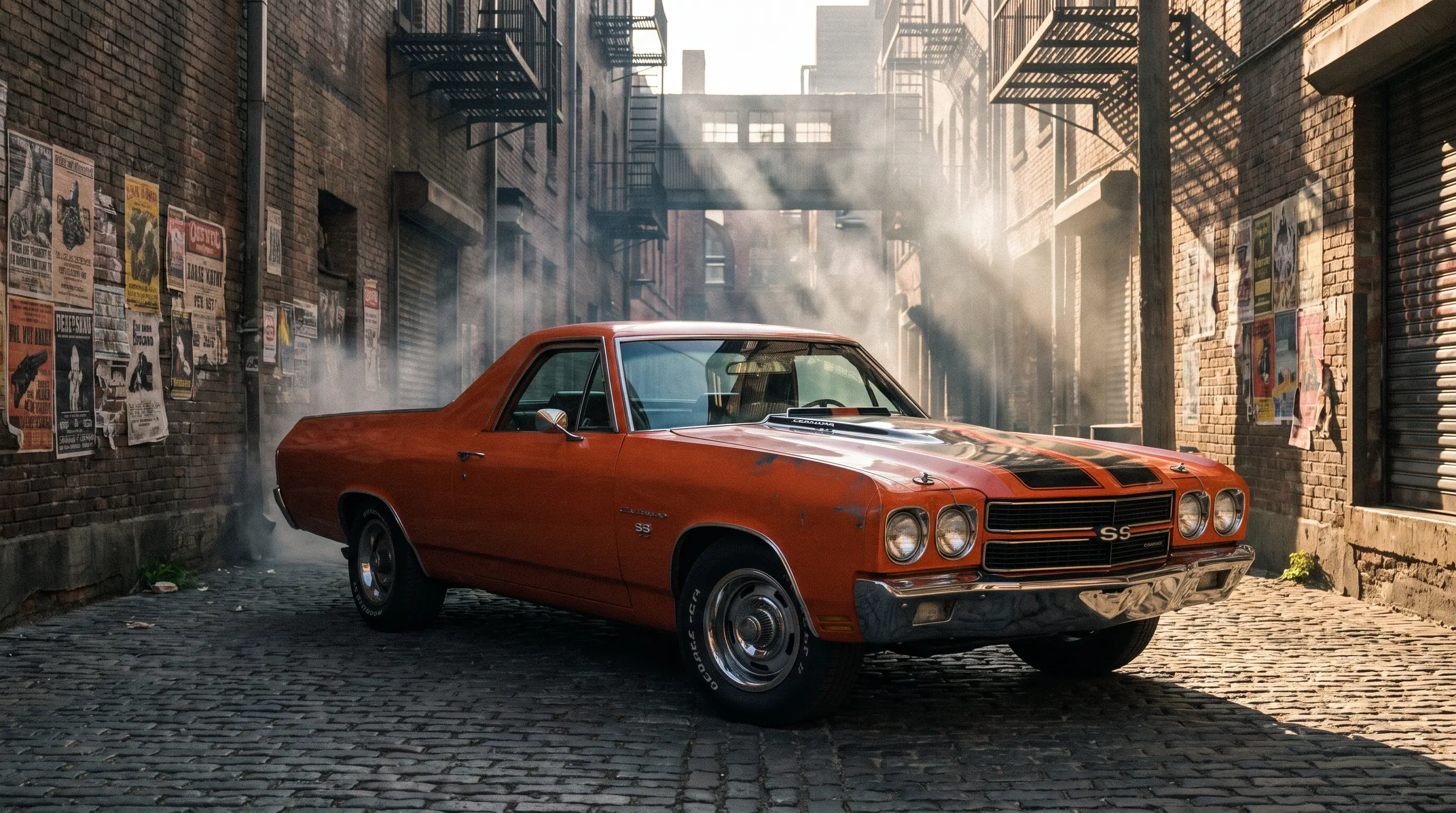
Text aside, the photography accompanying these road tests deserves its own mention. Editors routinely shot the El Camino SS against backdrops that emphasized action and motion, the same visual language used for genuine muscle cars of the period, rather than the static, catalog-style photography typically reserved for utility vehicles. That editorial choice was not accidental. Art directors understood that how a car gets photographed shapes reader perception just as much as what the text says, and the decision to shoot the El Camino SS like a performance car rather than a work truck reinforced the sincere camp's argument before a reader finished the first paragraph.
Compare those spreads to how the same magazines photographed base-model El Caminos in separate coverage, typically framed in more mundane, practical settings, and the visual distinction becomes obvious. The SS badge earned different photographic treatment, which quietly told readers the car deserved to be judged by muscle car standards even before the writer made that case explicitly in the copy.
Why these old reviews still matter to buyers now
Period road tests remain one of the more reliable primary sources for understanding how the 1970 El Camino SS actually performed when new, independent of decades of accumulated legend and club storytelling. A buyer or restorer trying to verify claimed performance figures on a specific car has a genuine benefit in cross-referencing period magazine numbers against factory specifications, since the two occasionally diverge in informative ways that reveal how real-world testing conditions differed from factory claims.
Readers who want more on the 1970 el camino beyond what magazine writers covered in their limited test drives can find the fuller factory and production context there, while our complete history traces how this single model year fits into the El Camino's entire run. And for anyone whose interest in these old road tests has turned into genuine shopping intent, classic El Caminos on the market is where documented 1970 SS 454 examples are currently listed for buyers ready to see the numbers in person rather than just on a printed page from 1970.
There is something worth sitting with here beyond the historical curiosity. These road tests captured a moment when nobody, including the people paid to have informed opinions about cars, had fully decided what an El Camino SS was supposed to be. That uncertainty produced better writing than a confident consensus would have, because every writer had to actually think through the question rather than repeat an established formula. Fifty years later, that uncertainty reads less like confusion and more like an honest snapshot of a genuinely new kind of car finding its footing in the marketplace.