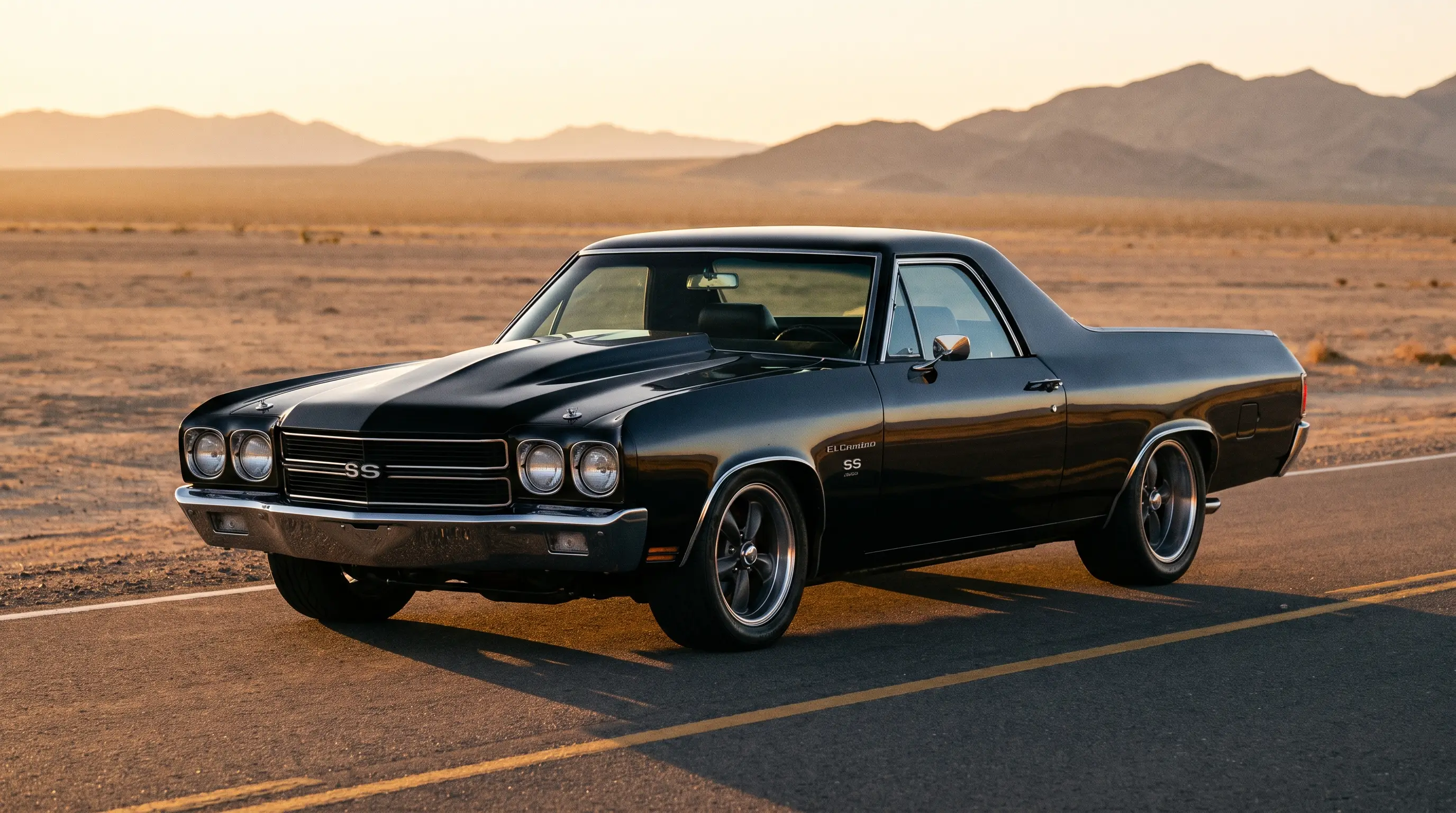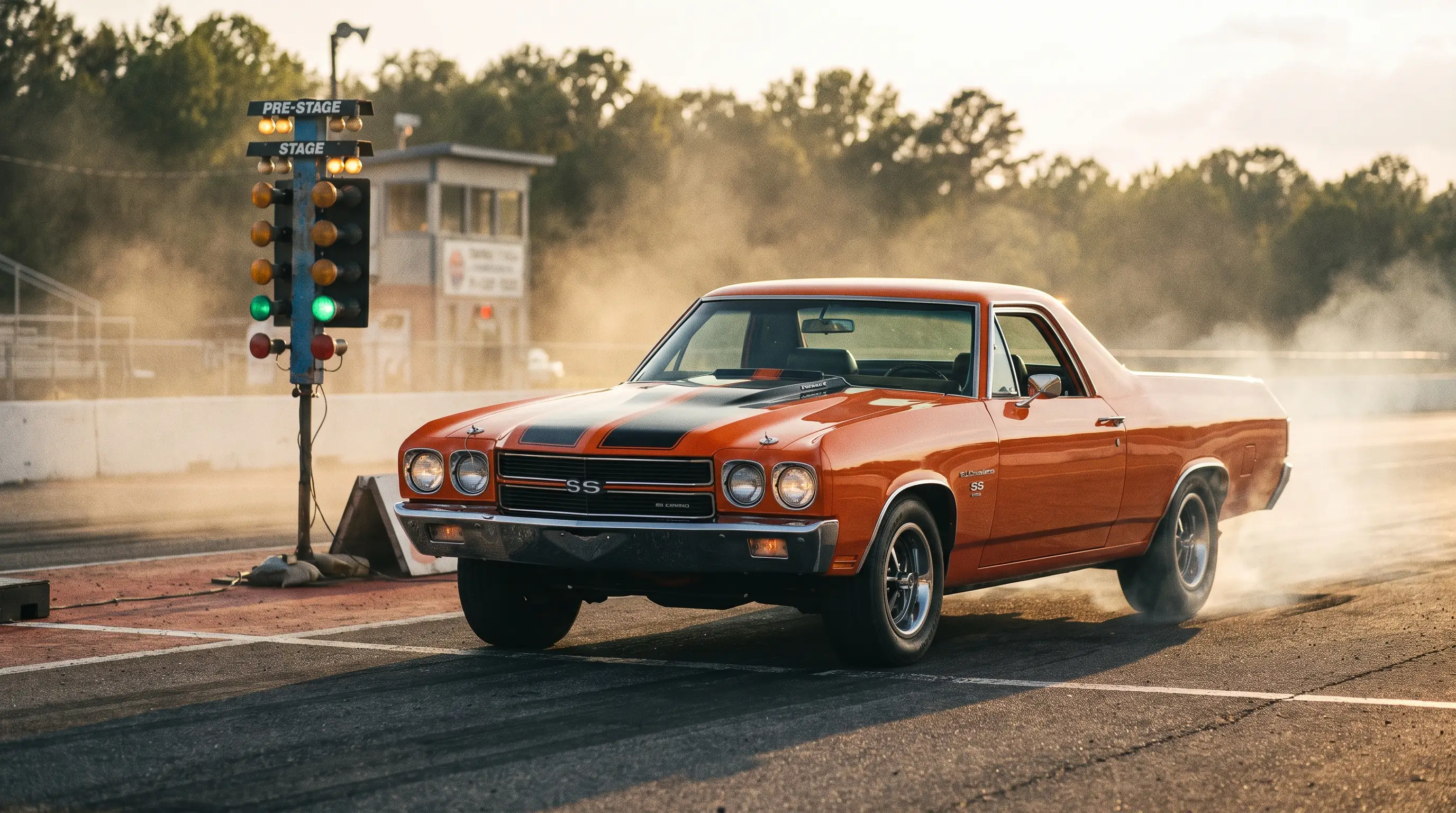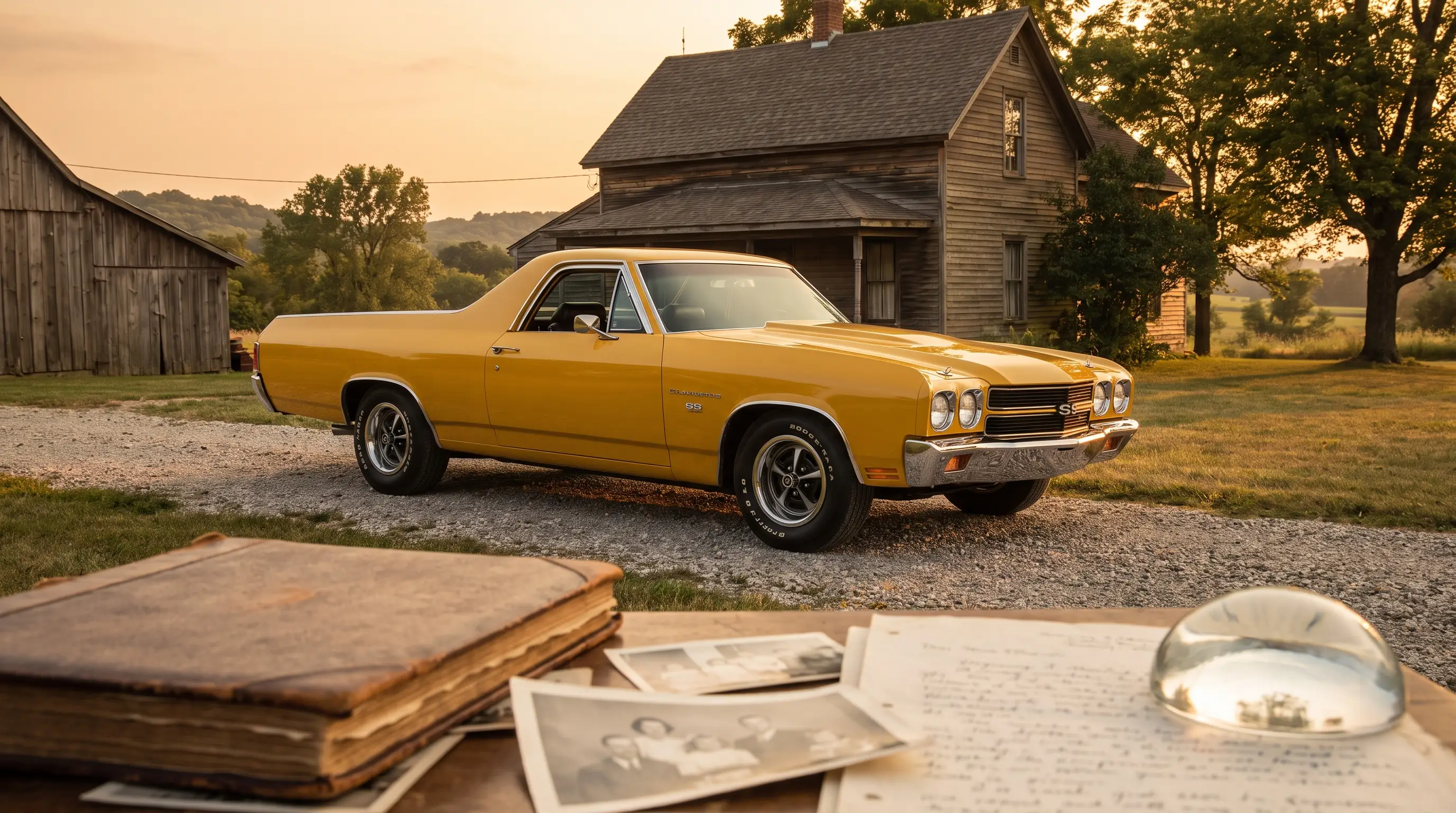
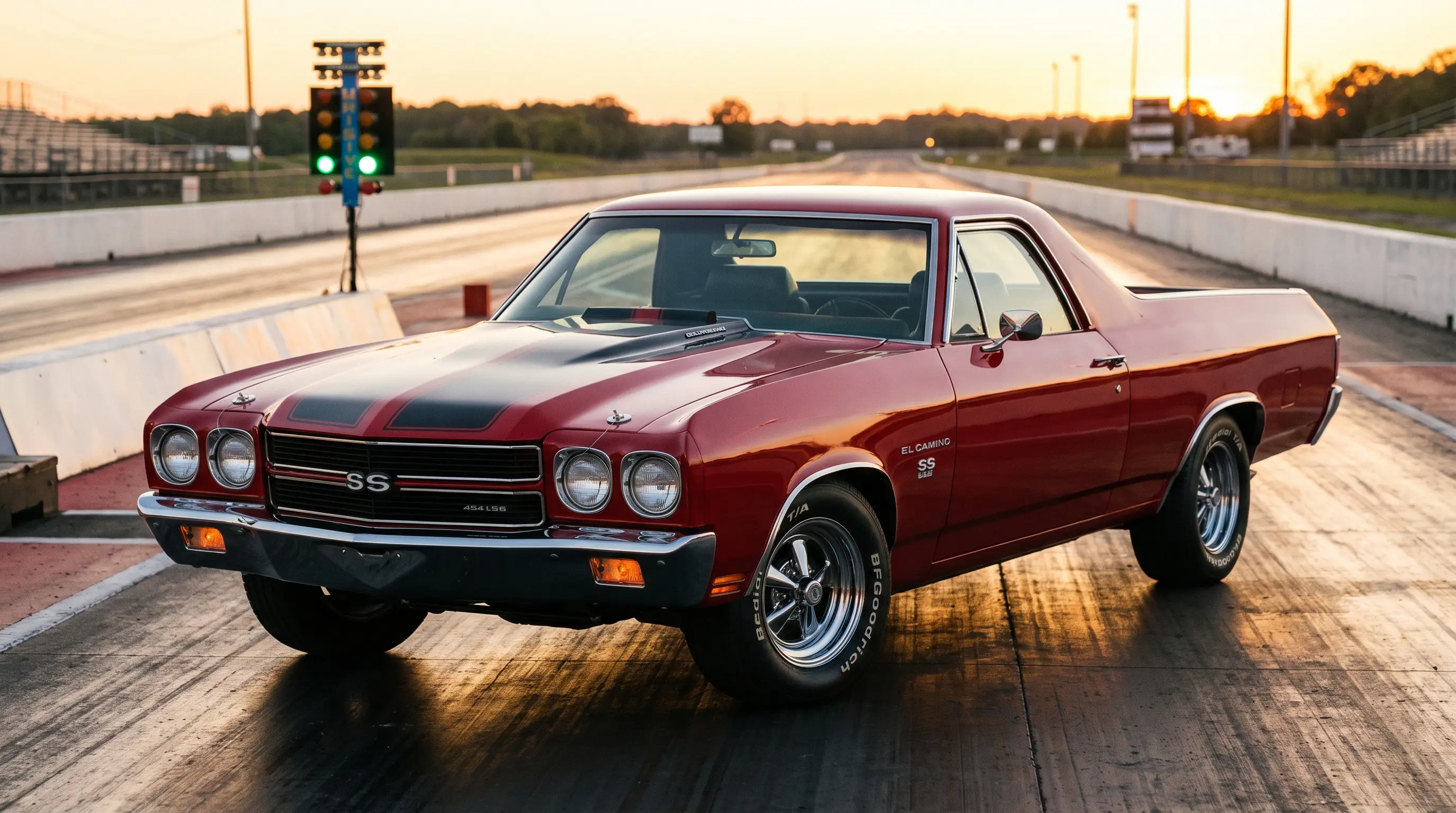
The 1970 El Camino SS 454 LS6 is the number every El Camino conversation eventually circles back to. 450 horsepower, factory rated, in a car body wearing a truck bed. That number did not need marketing copy in 1970 and it does not need any now. Chevrolet built a passenger car chassis, bolted on a cargo bed, and then dropped in the same LS6 454 that could be ordered in a Chevelle SS. The result ran with the Chevelles because it basically was one, just wearing work boots.
The number that matters: 450 horsepower
Start with the fact, not the folklore. The LS6 454 was factory rated at 450 horsepower and 500 lb-ft of torque, using a solid-lifter cam, 11.25:1 compression, an aluminum intake, and a Holley four-barrel. That output figure made it the highest factory horsepower rating GM offered in a mid-size car for 1970, El Camino included. Whether every engine actually made 450 at the crank on a given day is a separate argument that gearheads still have at car shows. The rating on the invoice is 450. Judge the car by what Chevrolet promised, then judge the driving experience separately.
Compare that to the LS5 454, the other big-block option that year, rated at 360 horsepower with a hydraulic cam and lower compression. The LS5 was the driveable big-block. The LS6 was the one you ordered if you planned to see a drag strip more often than a grocery store. For the full breakdown of how those two engines differ under the skin, a related story walks through the internals side by side.
Why a truck body ran with the muscle cars
The El Camino shared its A-body platform, wheelbase, and suspension with the 1968 to 1972 Chevelle. Underneath the cargo bed sat the same frame, the same front clip, and by 1970 the same SS 454 option. That is the entire trick. GM was not building a slow truck with a fast engine bolted in as an afterthought. It was building a Chevelle SS that happened to have a bed instead of a trunk lid, and the SS package on the El Camino carried the identical mechanical content as the SS package on the coupe.
That shared architecture is why period road tests treated the SS 454 El Camino as a legitimate muscle car rather than a novelty. Car and Driver and Hot Rod both ran the LS6 through the quarter mile in 1970, and the numbers landed in the same neighborhood as a comparably equipped Chevelle. A pickup bed does not weigh enough less, or enough more, to change the story much once that 454 is spinning the rear tires. 1970 el camino history covers how the SS package came together that year, if you want the full timeline before diving into the engine specifics.
How rare is an LS6 El Camino, really
Here is where the hype needs a number attached to it, because rarity claims without documentation are just campfire talk. LS6 production across the entire El Camino and Chevelle SS line for 1970 was a small fraction of total SS output, and GM did not break out El Camino LS6 build counts as a standalone published figure the way some enthusiasts assume. Registry researchers and period specialists put the number of 1970 LS6 El Caminos at roughly 500 to 585 units, against an estimated 4,400 to 4,500 LS6 Chevelles the same year, but Chevrolet's own production paperwork from that era is incomplete, so any figure for the El Camino specifically should be read as an informed estimate rather than a confirmed factory count. What is documented is that the LS6 option required the M22 rock crusher four-speed or the Turbo 400 automatic, a specific rear axle, and a stouter cooling package, all of which narrowed the build sheet fast. Most 1970 El Camino SS buyers walked out with the 300-horse 350 or the 360-horse LS5. The LS6 buyer was chasing a number, not a commute.
That scarcity is exactly why the survivors command real money today, and why documentation matters more here than on almost any other muscle-era El Camino. A cowl tag, broadcast sheet, or factory build sheet confirming the LS6 code turns a good story into a provable one. Buy the paperwork as much as the car.
Living with 450 horsepower in a bench-seat truck
The LS6 was not built for comfort and Chevrolet never pretended otherwise. Idle quality was lumpy, fuel mileage was an afterthought, and the solid lifters meant regular valve lash adjustments if you actually drove the thing instead of trailering it. None of that mattered to the original buyer. They wanted the number on the door decal to be true at the strip, and by most contemporary accounts it was, with mid-13-second quarter miles reported by period testers depending on gearing and tire.
That trade-off is the whole appeal decades later. An LS6 El Camino is not the easy driver in a collection. It is the one you start on a cool morning, let warm up properly, and take out when you want the full experience rather than a cruise. Buyers chasing that experience today are shopping a thin market, which is where actual inventory becomes the deciding factor over any spec sheet argument.
"Four hundred fifty horsepower is the headline. Eleven point two five to one compression on pump gas that barely existed by the mid-1970s is the footnote nobody reads, and it is the reason so few of these got driven hard for long."
- Dan Reeves
What the auction results actually show
Numbers people trust numbers, so look at what documented LS6 El Caminos have actually brought at auction rather than what a seller's listing claims. Verified, numbers-matching LS6 cars with a confirmed cowl tag and broadcast sheet consistently bring a substantial premium over otherwise similar 1970 SS 454 cars running the milder LS5, and that gap has widened rather than narrowed over the past decade as buyers with real money have gotten more disciplined about demanding paperwork before bidding. Recent results back this up: a rotisserie-restored, numbers-matching LS6 El Camino with surviving build-sheet fragments brought $121,900 at a Mecum sale, well above the roughly $65,000 to $89,000 range typically cited for the model, while a plainer, unrestored original example sold for $90,250 and recreations without factory documentation have changed hands in the $70,000 range. The spread between a plausible LS6 clone and a documented original is not a rounding error. It typically runs into tens of thousands of dollars, which is exactly why the paperwork question is not academic pedantry. It is the single biggest driver of what a specific car is actually worth.
That premium exists because the LS6 population was always small relative to the broader El Camino SS production run, and because engine swaps, both period hot-rodding and later restoration shortcuts, have muddied the water for decades. A seller calling a car an LS6 is making a claim. A cowl tag confirming the RPO code is evidence. Treat the two very differently before any money changes hands.
What the LS6 badge is actually worth
Strip away the mythology and the LS6 El Camino earns its reputation from three verifiable things: a genuinely high factory horsepower rating for its era, a shared chassis with a proven muscle car, and a low original build count that current documentation only partially confirms. That is enough on its own. It does not need inflated production myths or unverifiable quarter-mile bragging to be one of the more interesting factory performance vehicles Chevrolet built in 1970.
If the number on the fender is what pulled you in, the market for genuine, documented cars is active right now. El Caminos for sale now is the place to see what is actually available rather than what shows up in forum legend.