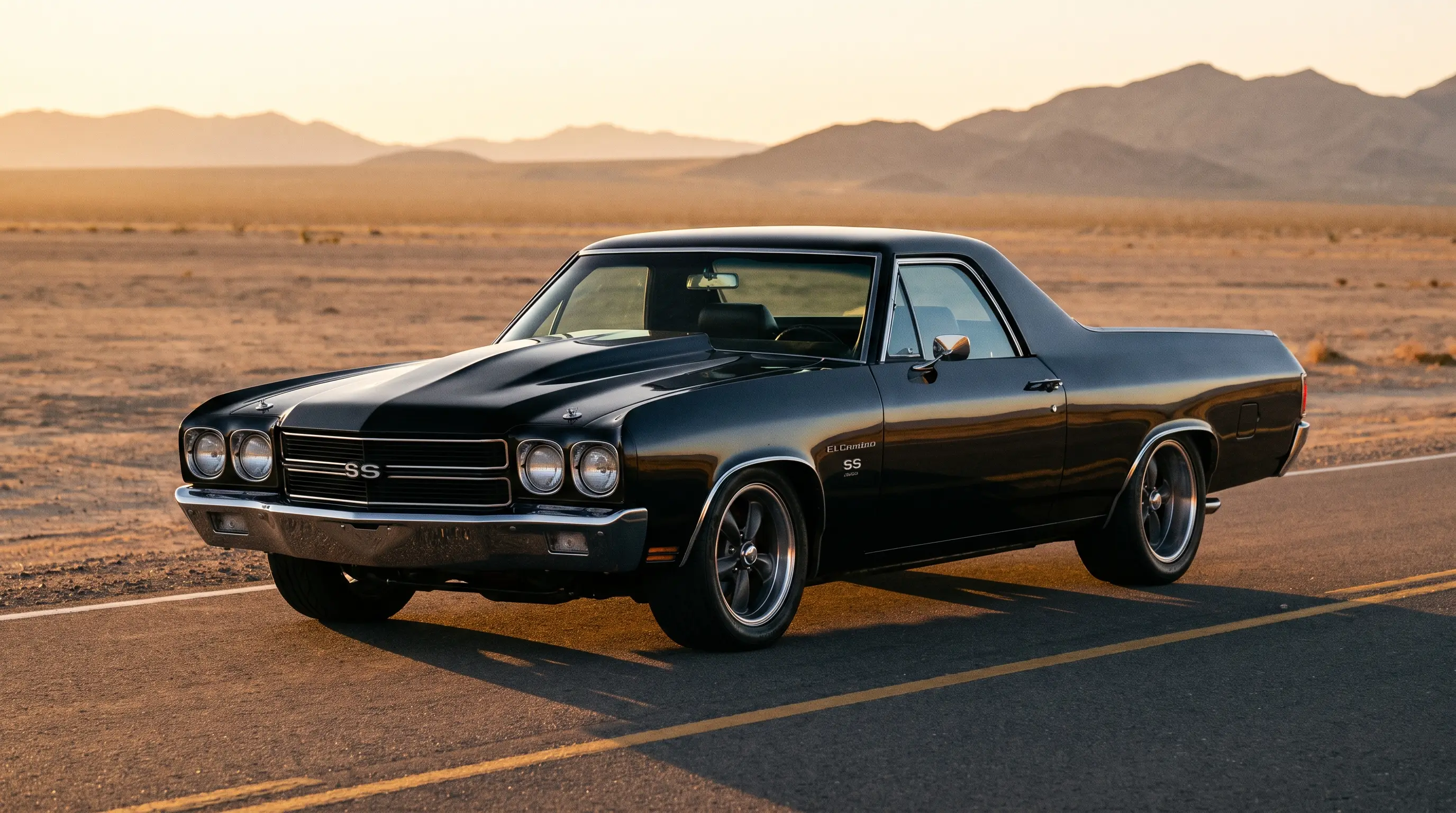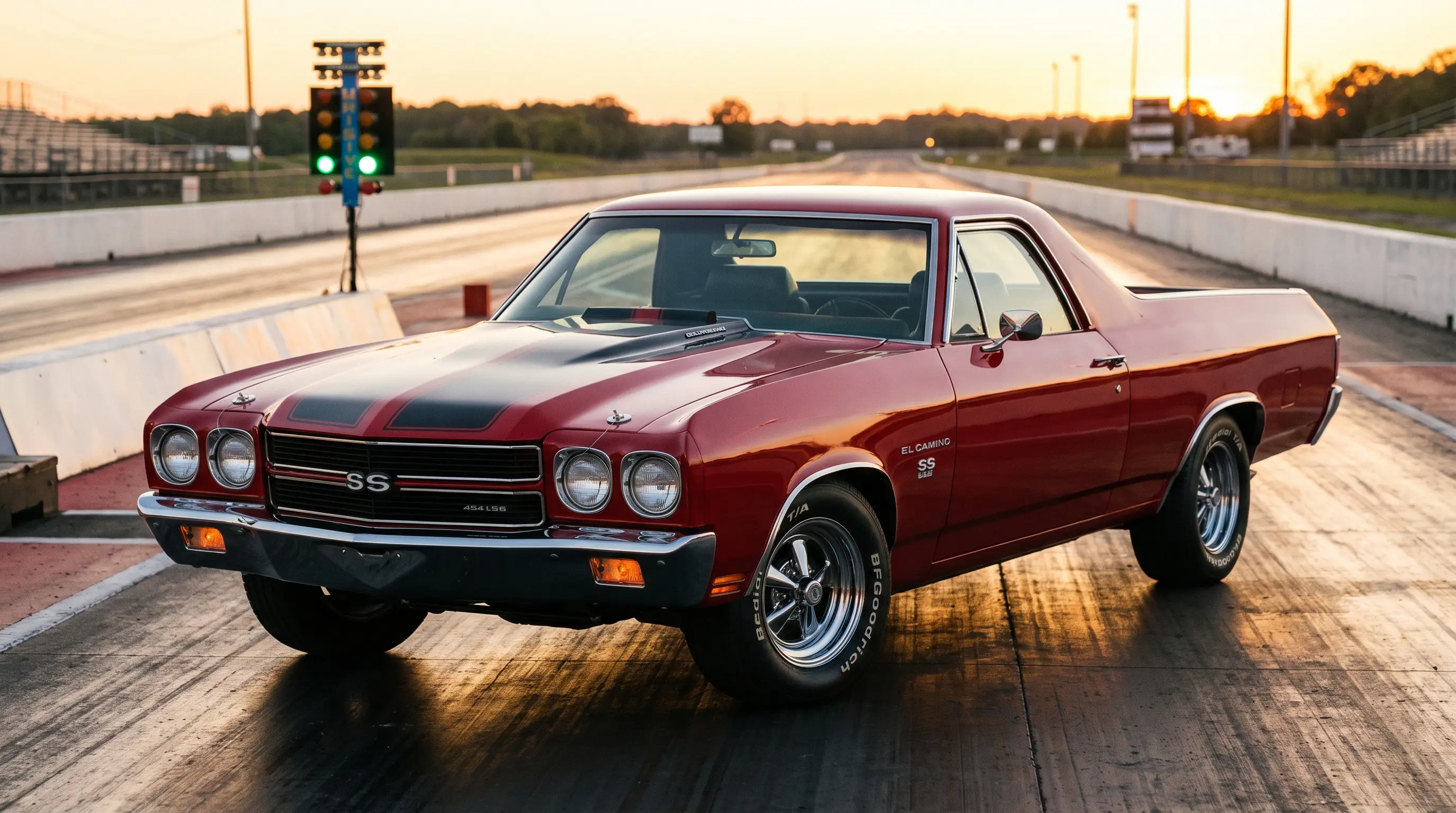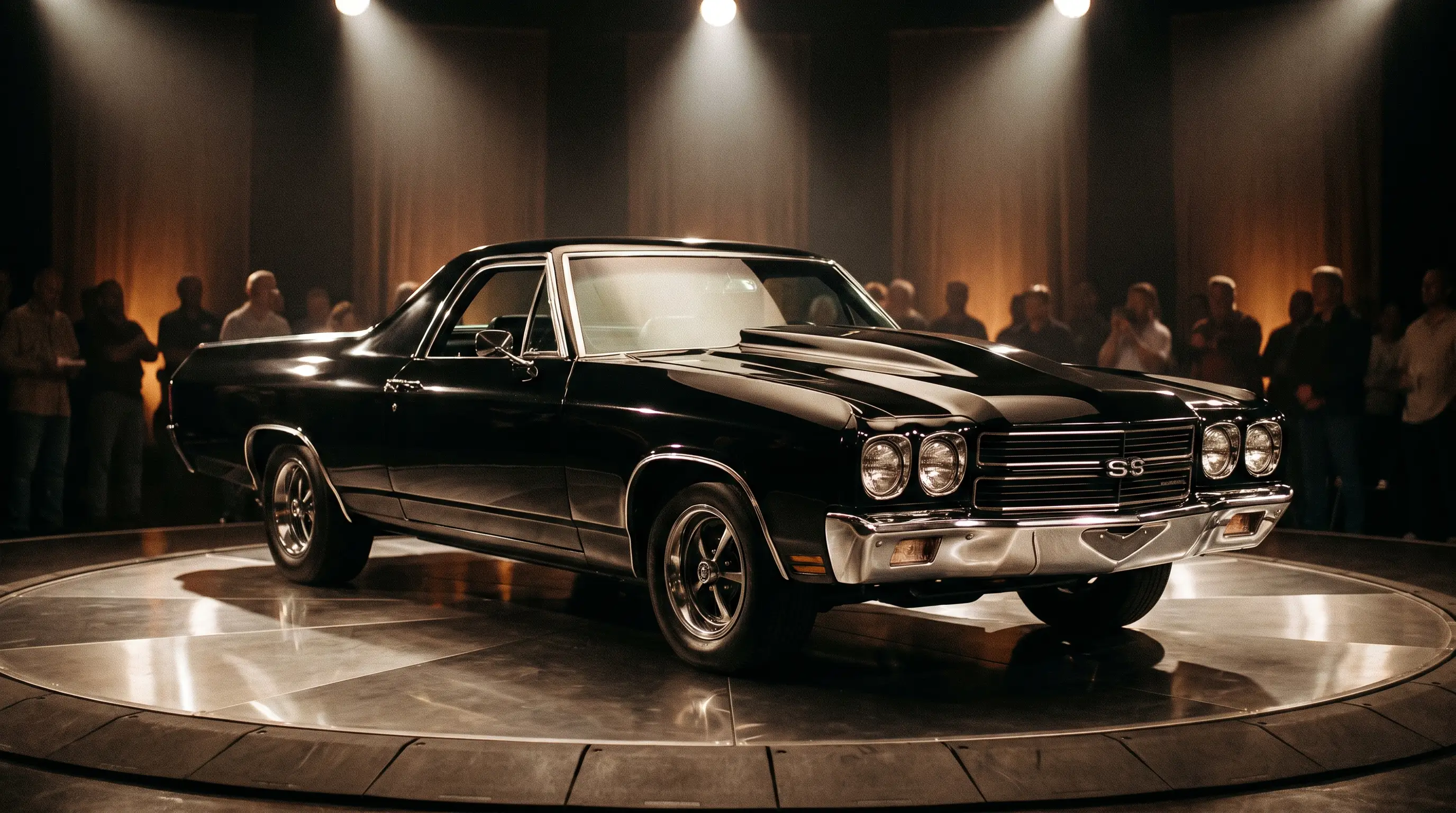
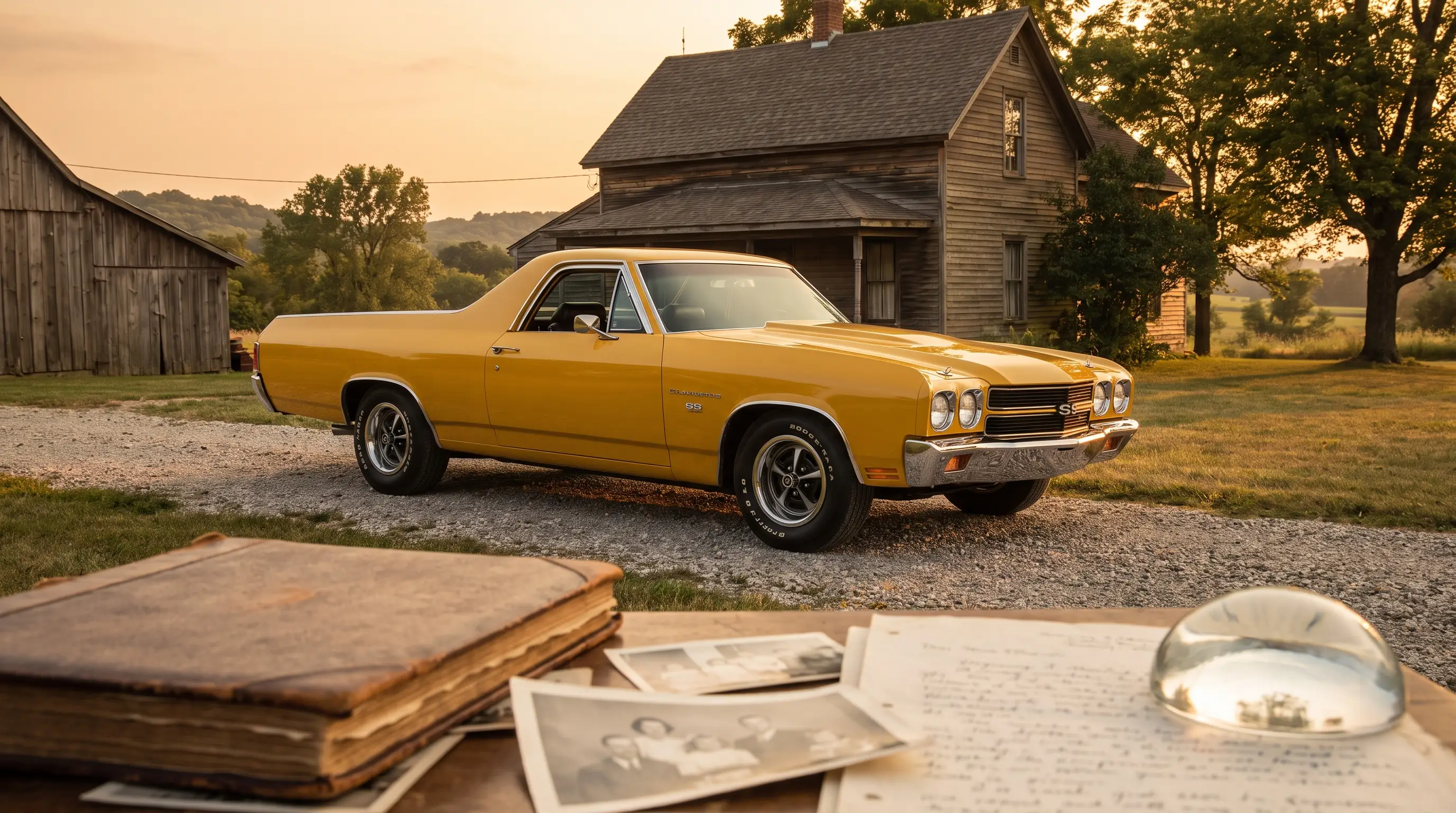
Every 1970 El Camino SS I have catalogued for a private collection came with a story attached to it, and the stories tend to matter to owners far more than the option codes ever do. As a researcher, my job is usually to confirm what a truck actually is against its paperwork. But over years of doing that work, I have collected something closer to an oral history, a set of recurring themes in how owners talk about this particular truck that reveals as much about the vehicle as any trim tag.
The truck that was never quite one thing
Almost every owner I have interviewed describes the same tension when explaining why they bought a 1970 SS rather than a Chevelle coupe from the same year. The truck bed matters to them, even when they rarely use it for anything heavier than a cooler and a folding chair. There is something about owning a vehicle that could theoretically still do a day's work, even if it never will again, that appeals to a specific kind of buyer. One owner told me her father had used a 1970 SS to haul feed on a small farm well into the 1990s, long after most of his neighbors had traded their trucks in, and that when she finally bought her own SS decades later it was less about the performance numbers and more about honoring a vehicle she had grown up watching do actual work.
That story is not unusual. Time and again, owners frame their attachment to the truck around a person rather than a specification sheet: a father, a grandfather, a first car bought used in the eighties for almost nothing because nobody wanted a big block truck during the fuel crisis years that followed. The 1970 SS occupies a strange space in family memory, remembered by some as a status symbol and by others as simply the family workhorse that happened to be quick off the line.
Documentation as an act of care
What surprises people outside this hobby is how much emotional weight owners place on paperwork. A build sheet found tucked behind a glovebox, a dealer invoice saved by a grandmother for fifty years, an old insurance card with a name and address long since gone, these things get treated with a reverence that goes well beyond their practical value in establishing originality. Owners describe finding this kind of documentation the way other people describe finding an old letter, which is precisely why the phrase fits so well for this truck. A trim tag is data. A build sheet with a dealer's handwriting on it is a relationship.
I have had owners bring documentation to me not because they needed help verifying it, but because they wanted someone who understood cars to appreciate what they had found. That instinct, wanting a piece of family history witnessed by someone who understands its context, comes up again and again in this specific corner of the hobby.
Restoration as remembrance
The restoration process itself gets described in similarly personal terms. Owners rarely talk about a body off restoration as a mechanical project first. They talk about it as an attempt to bring something back to how a specific person remembered it, a color combination a parent chose, a stripe package a sibling argued for, a radio a grandparent insisted on even though it cost extra. These details rarely show up in a standard restoration budget conversation, yet they are often what determines whether an owner considers the finished truck a success.
This matters for anyone documenting the history of the 1970 SS, because the emotional record left by owners is a legitimate part of the truck's story alongside its production numbers and factory options. where this started lays out the production side of that history in full, but the human side of it lives in glovebox paperwork and family memory just as much as it lives in any factory record.
"I have read a lot of dealer invoices in my career. The ones that stay with me are never the rarest option codes. They are the ones with a name and a date that someone kept for fifty years because it mattered to them."
- Sarah Whitfield
What this means for the next owner
Anyone considering a 1970 El Camino SS purchase should ask, gently, whether the seller has any of this kind of history attached to the truck. It rarely changes the appraised value in a strict sense, but it changes the experience of owning the vehicle considerably, and many sellers are more than willing to share what they know once asked directly. A truck with a documented family history is, in a real sense, arriving with its own story already half written.
For those ready to start writing their own chapter with one of these trucks, there is usually a range of documented and undocumented examples to compare, and you can find a classic El Camino currently listed to see the spread firsthand. Whatever the paperwork says, the truck itself has always been good at collecting stories, and fifty five years after the last 1970 model left a dealership, it is still doing exactly that.
Letters that outlived their writers
One collection I worked through included a small bundle of correspondence between a father and his son, written over several years while the son was stationed overseas, in which the 1970 SS sitting in the family garage was a recurring topic. The father wrote updates about tune ups and the occasional repair, the son wrote back with plans for what he intended to do with the truck once he came home. The truck itself was unremarkable by collector standards, a base SS396 without any rare options, but the correspondence transformed it into something that could never be replaced regardless of what any appraisal might say. When the family eventually consigned the truck decades later, they asked that the letters travel with it, and the buyer agreed without hesitation.
Stories like that one are more common in this hobby than most outsiders would expect, and they explain something important about why El Camino ownership skews toward long term keeping rather than frequent trading. A truck that arrives with a family's own words attached to it becomes difficult to think of purely as an asset, and owners who inherit that kind of history often describe feeling more like caretakers than collectors.
Why researchers pay attention to this material
From a strictly historical standpoint, this kind of personal correspondence and family record supplements factory data in ways that matter more than it might first appear. Production numbers tell you how many 1970 SS trucks Chevrolet built and roughly how many are believed to survive. They do not tell you how these vehicles were actually used, who valued them and why, or how ordinary families integrated a performance truck into daily life during a decade when gasoline prices were about to make big block engines a harder sell. Letters, invoices, and family anecdotes fill that gap, and any serious archive of the model's history is incomplete without them.