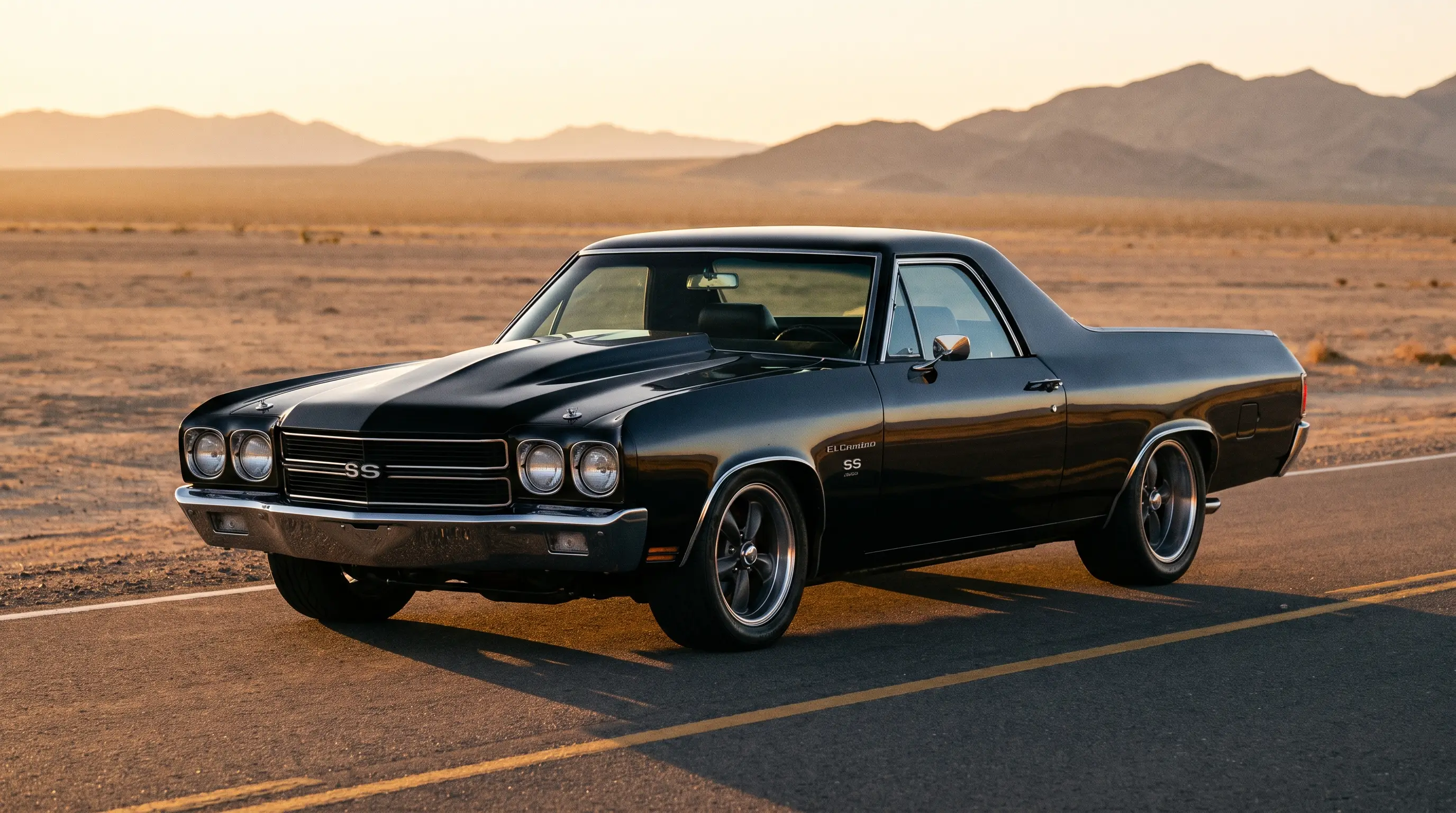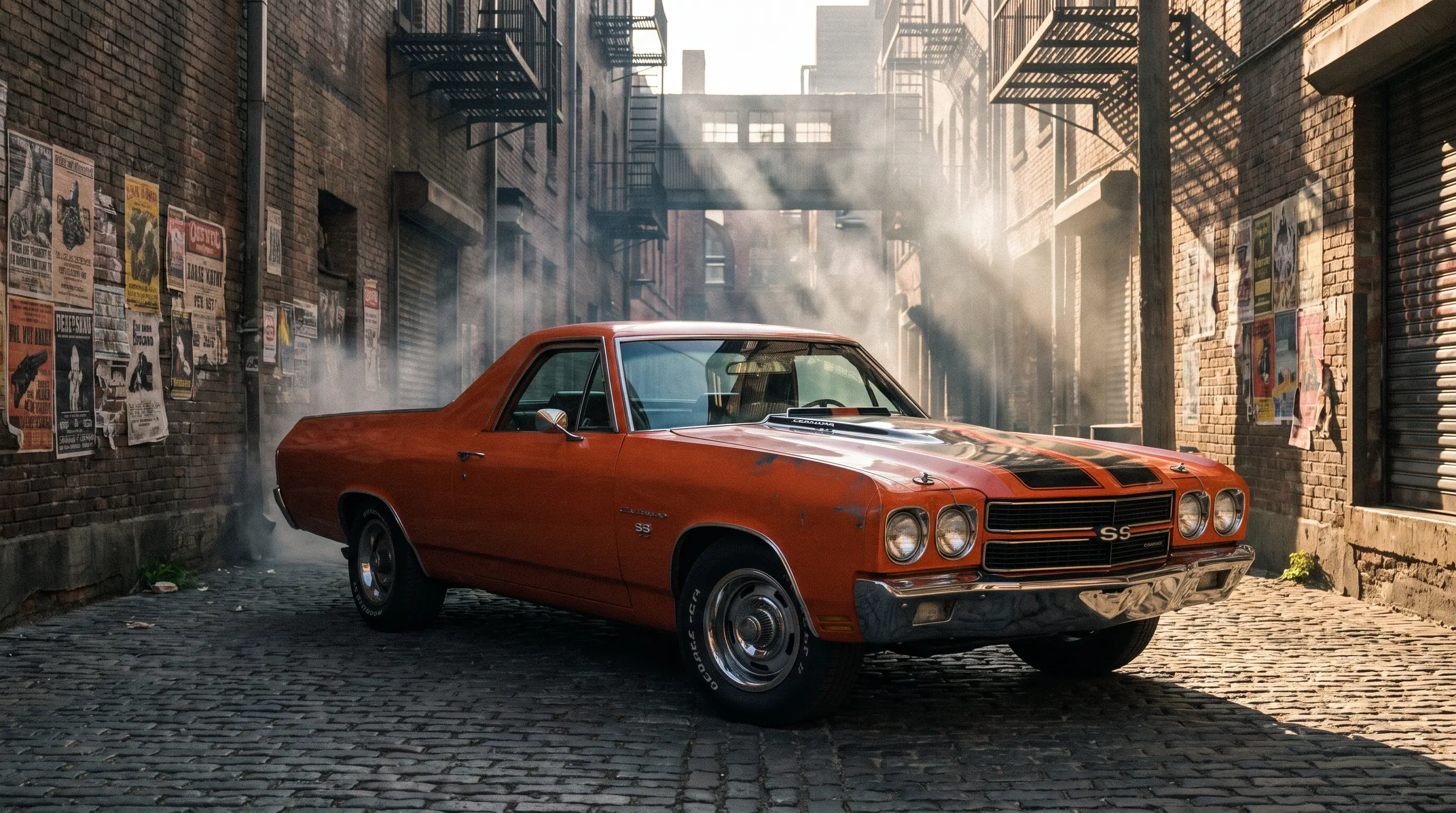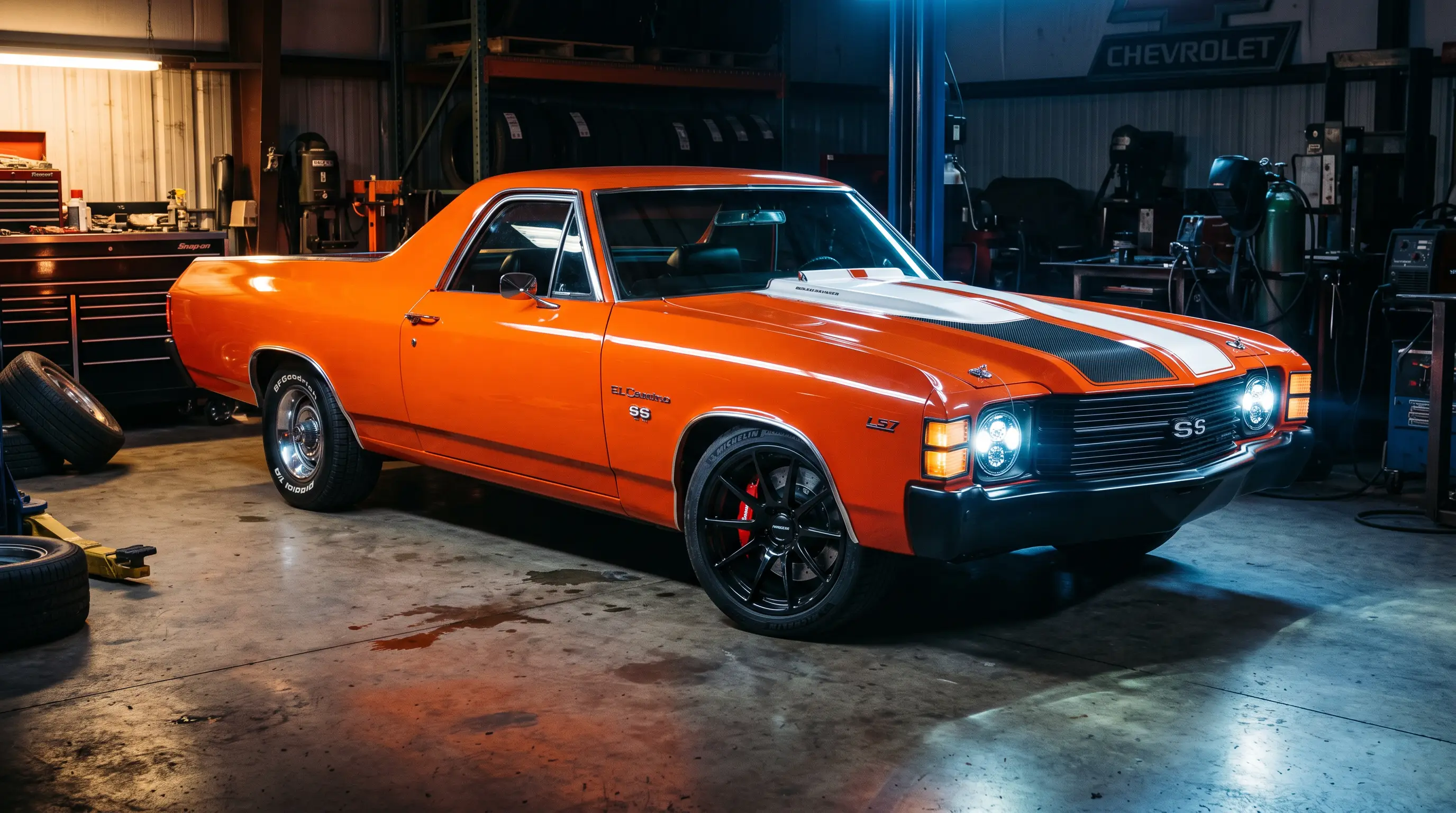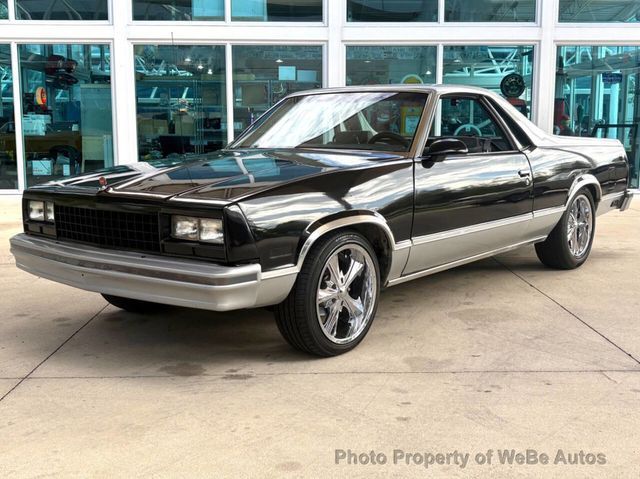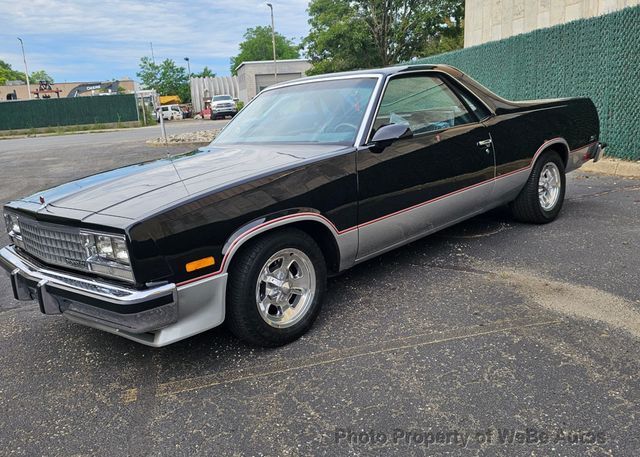
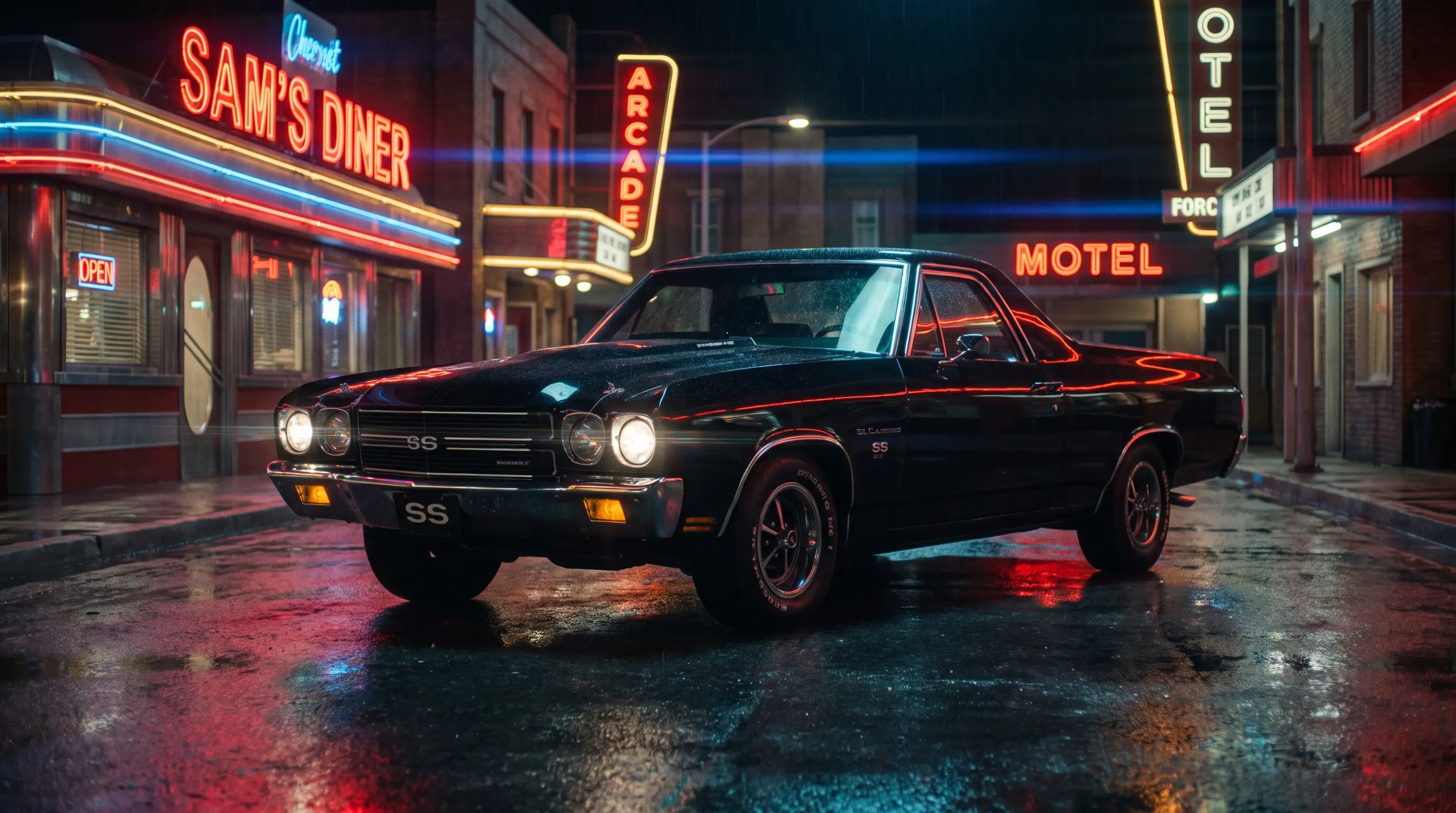
A 1970 El Camino SS does not slip quietly into a shot. Even parked at the edge of frame, engine off, it pulls the eye the way a person in a red coat pulls the eye in a black and white photograph. That is the odd trick of this particular truck. It was built to haul lumber and drag racers in equal measure, and somewhere along the way it became one of the more recognizable silhouettes in American film and television, not because it was cast as a hero but because it looked like one standing still.
A shape that photographs itself
Cinematographers talk about "the line" of a car, the way light runs down a fender and either dies or travels. The 1970 El Camino SS has a long, low line that starts at the header panel and does not stop until the tailgate. Set designers who needed a background vehicle that read as working class but not poor kept reaching for it, because a period-correct El Camino signaled a household that worked with its hands but still wanted something with muscle under the hood. That is a very specific kind of storytelling shorthand, and it is one reason the truck shows up again and again in productions set in the early seventies without ever being the star.
It helped that the car was everywhere when it was new. Chevrolet moved these off dealer lots by the tens of thousands during the SS years, so a production dressing a suburban street or a small town garage in period could put one in without anyone in the audience blinking at an anachronism. A DeLorean in a 1972 scene would break the spell. An El Camino SS would not.
Supporting roles that stick anyway
Most of the truck's screen life has been exactly that: supporting. A period drama parks one outside a diner. A crime show sets a scene in a chop shop with one under a drop light. None of these are marquee appearances, and that is precisely why they land. A car that has to carry a chase scene gets a stunt team and a script built around it. A car that just has to exist convincingly in a frame gets trusted with something quieter, which is believability, and the SS454 and SS396 body earns that trust because it never looks like a prop.
Collectors will tell you, half joking, that they have spent more hours pausing streaming shows to zoom in on a background El Camino than they have spent at some car shows. It is a strange kind of fandom, watching for a truck rather than an actor, but it is real, and it says something about how deeply this shape got wired into the decade it represents.
Music videos and the long afterlife
Where the El Camino SS gets a little more spotlight is in music video work and retro-styled commercials, genres that trade almost entirely in image rather than plot. A truck bed gives a director somewhere to put a band, a couch, a bonfire, or a load of vinyl records, and the SS grille gives the whole composition a face that reads as both muscle car and work vehicle at once. That dual identity, half sedan delivery and half street machine, is what keeps directors coming back to it decades after the last one rolled off a Chevrolet line.
Reality car shows and restoration series have leaned on the same appeal from a different angle. A rough 1970 SS pulled out of a barn makes better television than a rough sedan, because the audience already understands what the truck is supposed to look like when it is finished, and the gap between wreck and restoration reads instantly. keep exploring if you want the argument for and against modernizing one of these once the cameras stop rolling.
"You can tell when a set designer actually understands this truck. They do not just park it. They angle it so the grille catches the light, because they know that is the part of the story the camera is really telling."
- Nora Beckett
Why the appeal has not faded
Screen presence tends to be self-reinforcing. Every appearance, however small, puts the shape of the 1970 El Camino SS in front of another generation of viewers who were not alive when the truck was new, and some of those viewers become the collectors who keep the originals running fifty years later. The result is a strange feedback loop between the surviving cars and the culture that keeps filming them, each one quietly extending the life of the other.
For the fuller mechanical and production history behind the truck that keeps showing up in the background of other people's stories, our complete history covers the year in more depth. And if watching one on a screen has you wanting to see one in person, there is usually a classic El Camino for sale closer than you would expect.
What screen time has never managed to do is make the 1970 SS feel like a costume. It always reads as a real vehicle that happened to be standing in the right driveway when the cameras rolled, and that quiet authenticity, more than any stunt sequence, is the truck's real legacy on film.
The car nobody had to explain
Anyone who worked wardrobe or props on a seventies-set production in the decades since will tell you the same thing about picking vehicles. Half the job is explaining to a director why a given car does or does not belong in a scene. The El Camino SS never needed that conversation. It was common enough when new that nobody watching a period piece would question its presence outside a garage, a drive-in, or a small town gas station, and distinctive enough that it did not disappear into a sea of period sedans either. That combination, ordinary enough to be believable and striking enough to be worth the screen time, is rarer than it sounds. Most background cars fail on one side of that equation or the other.
There is also a practical reason directors of photography like the shape. The low beltline and long hood mean the truck reads well from almost any angle a camera operator might choose, low and wide from the front three quarter, sleek and purposeful from a rolling side shot. A boxier period vehicle often needs careful lighting to avoid looking like a delivery van in the background of a scene. The SS rarely has that problem, which is one more small reason it kept getting called back for duty long after the last one left a Chevrolet showroom.
Fan culture around the background car
Online communities built entirely around spotting a specific model in film and television are not new, but the El Camino corner of that hobby has a particular intensity. Enthusiasts compare notes on paint codes, stripe packages, and whether a given on screen truck is a genuine SS or a well dressed base model standing in for one. That kind of scrutiny used to be confined to car shows and swap meets. Now it plays out in comment threads under a streaming series episode, with forum regulars arguing over whether a background vehicle in a single frame is running the correct 1970 grille insert or a later year's part.
None of this changes the plot of whatever show or film the truck happens to be sitting in. But it says something about how far this one shape has traveled from its original job as a work vehicle with a performance option box checked. Fifty years on, it is still doing work, just a different kind, quietly anchoring a scene in a decade the audience half remembers and half only knows from reruns.