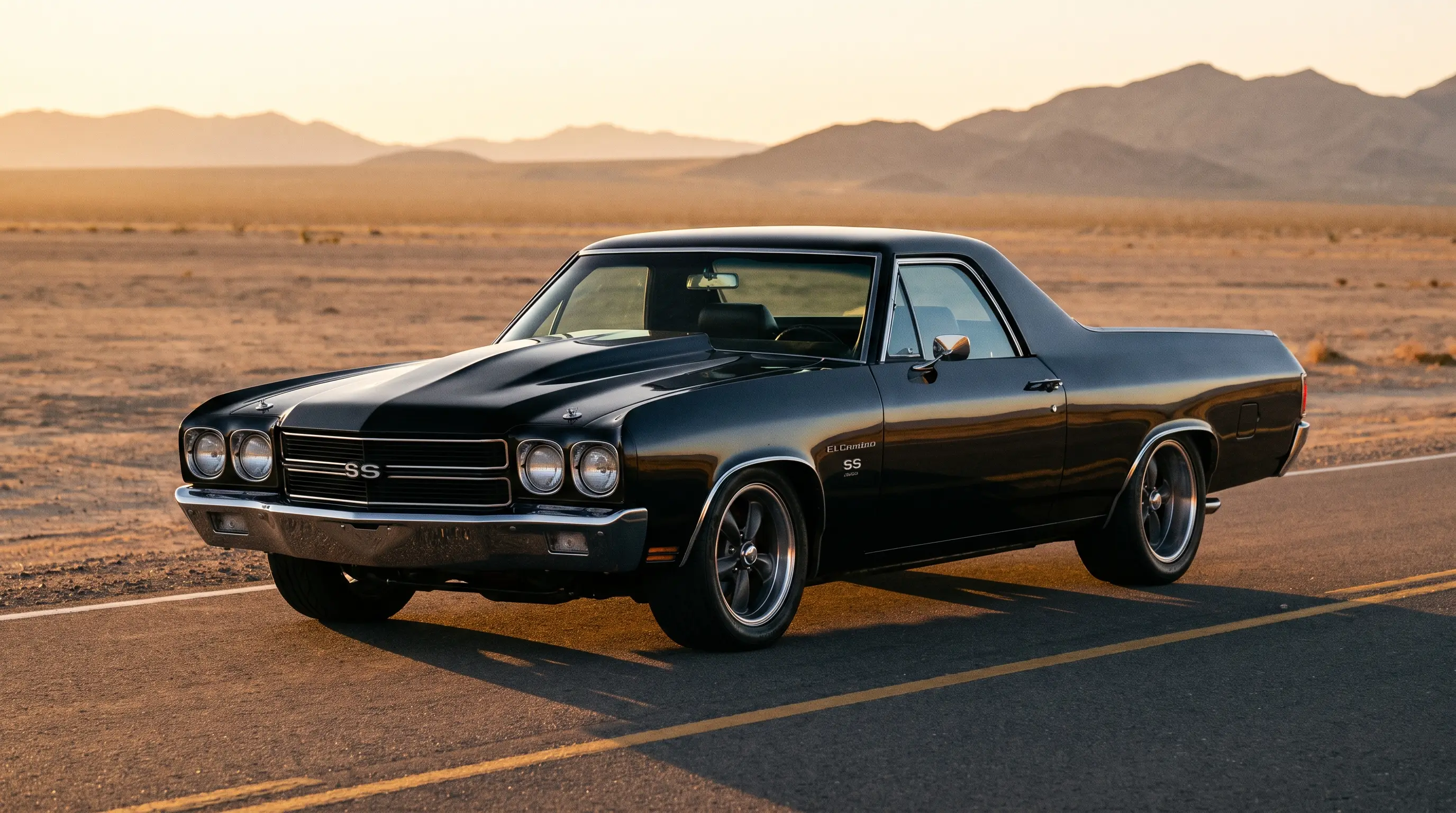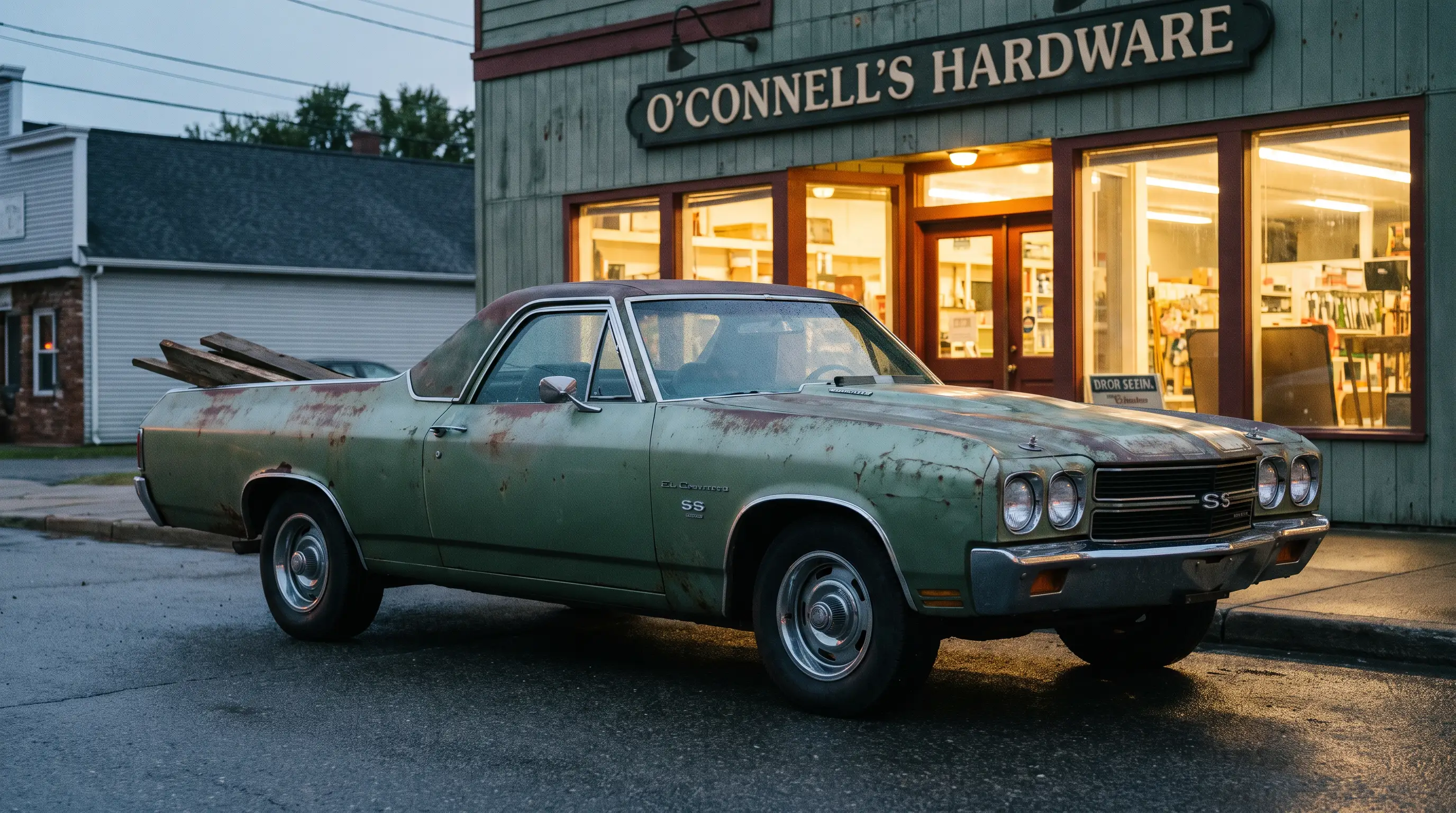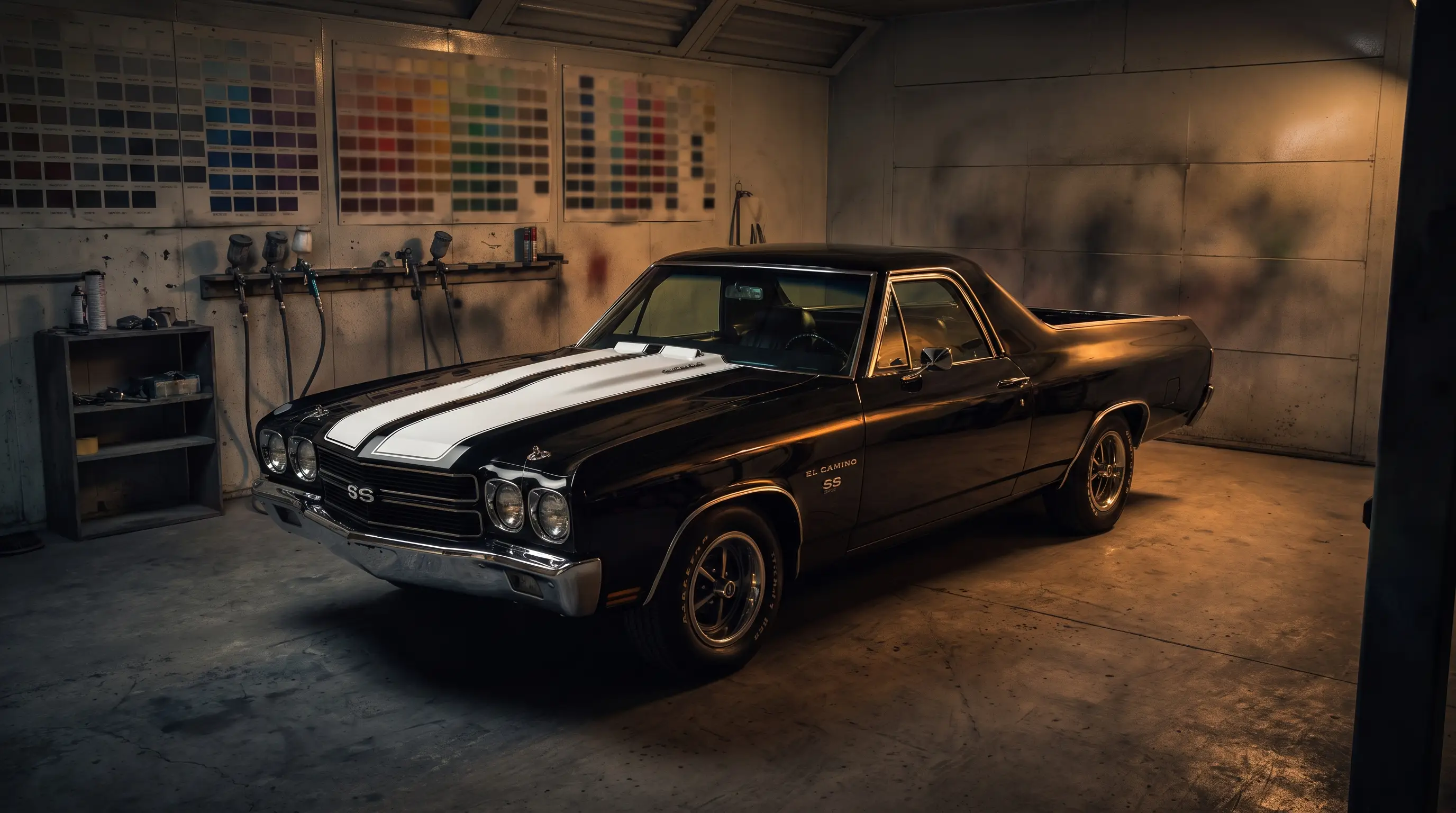
Chevrolet dealers hung a lot of badges on a lot of cars in 1970, and most of them meant nothing more than a trim level. The SS badge on a 1970 El Camino was different. Understanding the el camino 1970 super sport badge meaning requires going back to the RPO sheet, not the chrome shop, because the badge was the visible end of a build code that touched the frame, the suspension, and the engine bay before it ever touched the fender.
RPO Z15 was the actual product
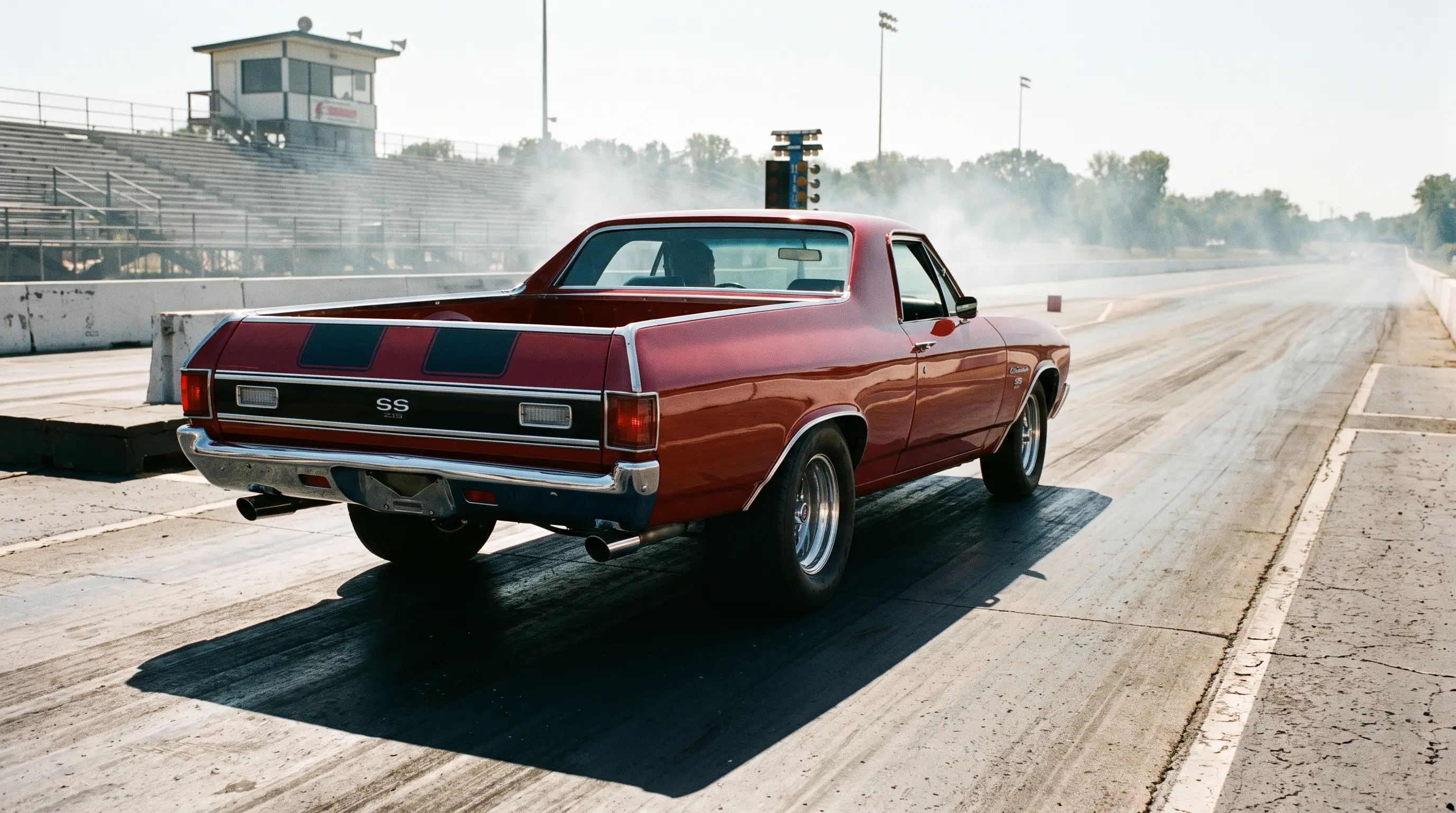
The badge itself, that stacked SS crest on the grille and the deck lid, was cosmetic. What mattered was Regular Production Option Z15, the Super Sport package that unlocked everything the badge implied. Order Z15 on a 1970 El Camino and Chevrolet built you a different truck-car hybrid than the base six-cylinder work hauler on the same showroom floor. The package brought a stiffer front stabilizer bar, specific SS wheels, dual exhaust where applicable, black-out grille treatment, and, most importantly, access to engine choices the standard El Camino buyer never saw on the order form.
Factory documentation from Chevrolet's 1970 order guide lists Z15 as requiring one of the big-block engines, either the 396 cubic inch (actually bored to 402 that year, though Chevrolet kept calling it a 396 for marketing reasons) or the 454. A buyer could not simply ask for an SS badge and a straight six underneath it. The RPO structure did not allow that combination, which is exactly why the badge carried weight on the used market decades later. If a car has genuine documentation for Z15, the drivetrain underneath has to match, or something has been altered.
What the badge promised buyers on the lot
In 1970, a shopper walking a Chevrolet lot understood the SS badge as shorthand for serious performance in a package that could still haul a load of lumber on Monday. That dual identity was the entire sales pitch. Chevrolet never positioned the El Camino SS as a muscle car pretending to be a truck. It was sold as a genuine utility vehicle that happened to come with genuine muscle car hardware if the buyer checked the right box.
Chevrolet's regional zone offices pushed the SS 454 especially hard in markets with strong drag racing cultures, including Southern California and Texas. Sales literature from the period emphasized torque figures over horsepower, which tells you who Chevrolet thought was buying these. A torque-heavy big block with a locking rear differential and a stout frame does not chase quarter mile bragging rights so much as it wins them without trying.
How the badge differed from Chevelle SS trim
Because the El Camino shared its chassis and cowl with the Chevelle, some owners assume the SS badge meant identical treatment across both nameplates. It did not, quite. The El Camino's SS package used the same core mechanical content, but Chevrolet applied slightly different trim details and, in some years, different standard equipment lists between the two. A buyer researching a car today needs the build sheet, not just the badge, to confirm exactly which options came through the factory together. Since Chevrolet's own parts and trim documentation from the era does not spell out every badge placement difference in isolation, the safest approach is cross-referencing the cowl tag against Chevrolet's original RPO codes rather than trusting reproduction badge kits, which have flooded the restoration parts market since the 1980s.
Anyone who wants the whole picture on how the 1970 SS package came together, from the styling studio decisions down to the engine plant paperwork, needs more than a fender badge to go on. A stack of chrome letters tells you what a dealer ordered from the parts bin. A cowl tag and an RPO code tell you what actually left the factory, and the two do not always agree fifty years later.
The badge across two body styles
Chevrolet built the 1970 El Camino on the same wheelbase as the two-door Chevelle, and buyers cross-shopping the pickup bed against the coupe frequently asked dealers the same question: does the badge mean the same thing on both. The mechanical answer is mostly yes. Z15 pulled from the same parts bin regardless of which body sat on the frame. The cosmetic answer is no, because Chevrolet varied stripe treatments, interior trim, and badge placement slightly between the two lines to keep each nameplate feeling distinct on the showroom floor. A buyer who only knows Chevelle SS trim from memory should not assume identical badge script, chrome finish, or mounting points on an El Camino, since parts suppliers and Chevrolet itself treated the two as related but separate production runs.
This distinction matters practically when a car changes hands today. Reproduction badge kits are often sold generically as "1970 SS badges" without specifying which body style they were designed for, and a mismatched badge is one more small tell that a restoration cut corners somewhere along the way.
| Element | Detail |
|---|---|
| Package code | RPO Z15, Super Sport |
| Required engines | 396/402 cid or 454 cid big block |
| Chassis content | Stiffer front stabilizer bar, SS-specific wheels |
| Badge locations | Grille, deck lid, front fenders |
| Sister model | 1970 Chevelle SS, same chassis platform |
Why the badge became a target for fakery
Once El Camino SS values started climbing in the 1990s and 2000s, the SS badge became one of the easiest details to add to a car that was never built that way. Reproduction badge sets have been available for decades, and a badge alone costs a fraction of what documented Z15 provenance adds to a sale price. This is precisely why serious buyers now look past the chrome and demand the cowl tag decode, the original invoice if it survives, or at minimum a consistent engine casting date that lines up with a genuine 1970 SS build.
Chevrolet's own paperwork remains the tiebreaker. A car wearing SS badges with a small block under the hood and no Z15 code on the cowl tag was never a factory Super Sport, whatever the seller claims.
"The badge told the dealer's story. The cowl tag tells the truth. I have seen too many restorations where somebody bought the shinier version of history instead of the documented one."
- Tom Ramirez
What the badge means for value today
Collectors researching the el camino 1970 super sport badge meaning today are almost always doing so because they are deciding whether a car in front of them is worth a premium. The honest answer is that the badge alone means very little without the RPO documentation behind it. A verified Z15 car with matching numbers commands real money. A car wearing reproduction badges over a six-cylinder drivetrain is a work truck with expensive stickers.
If you are shopping seriously rather than just researching history, it pays to start with cars that have paper trails, then confirm the badge matches the build rather than the reverse. Buyers who want to see what genuine 1970 SS-badged cars are actually trading for can shop classic El Camino listings and compare asking prices against documented builds before making an offer.