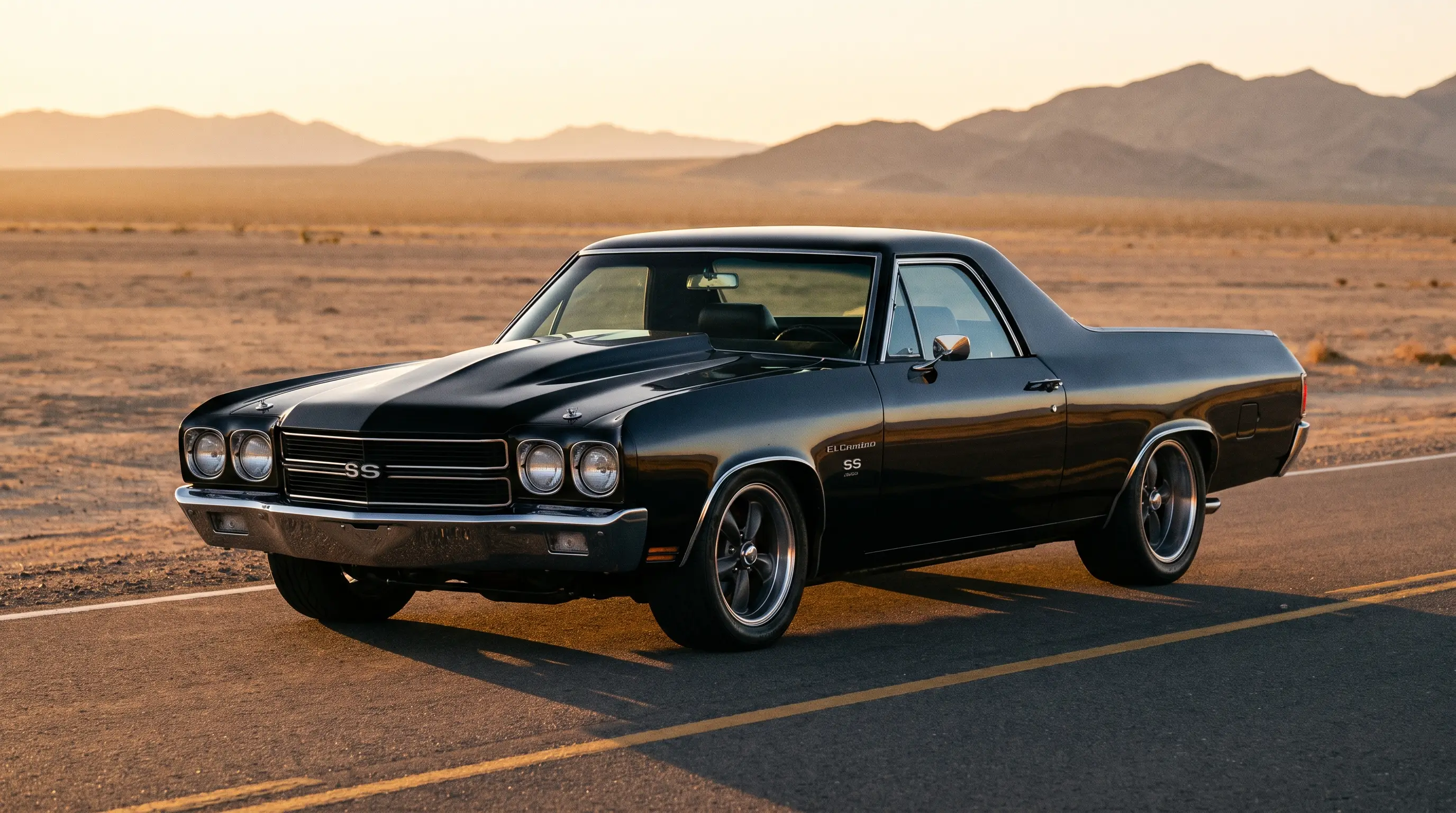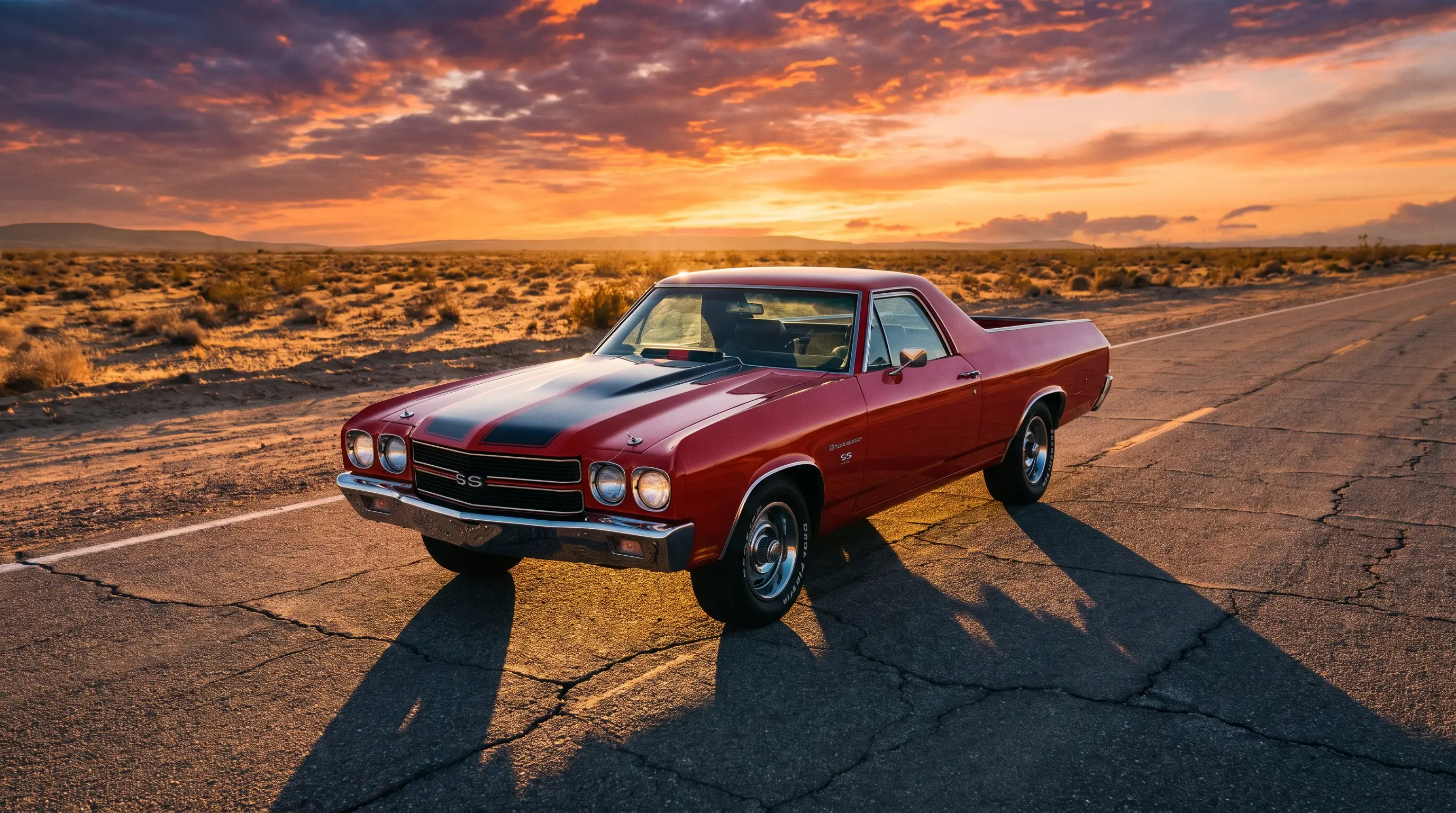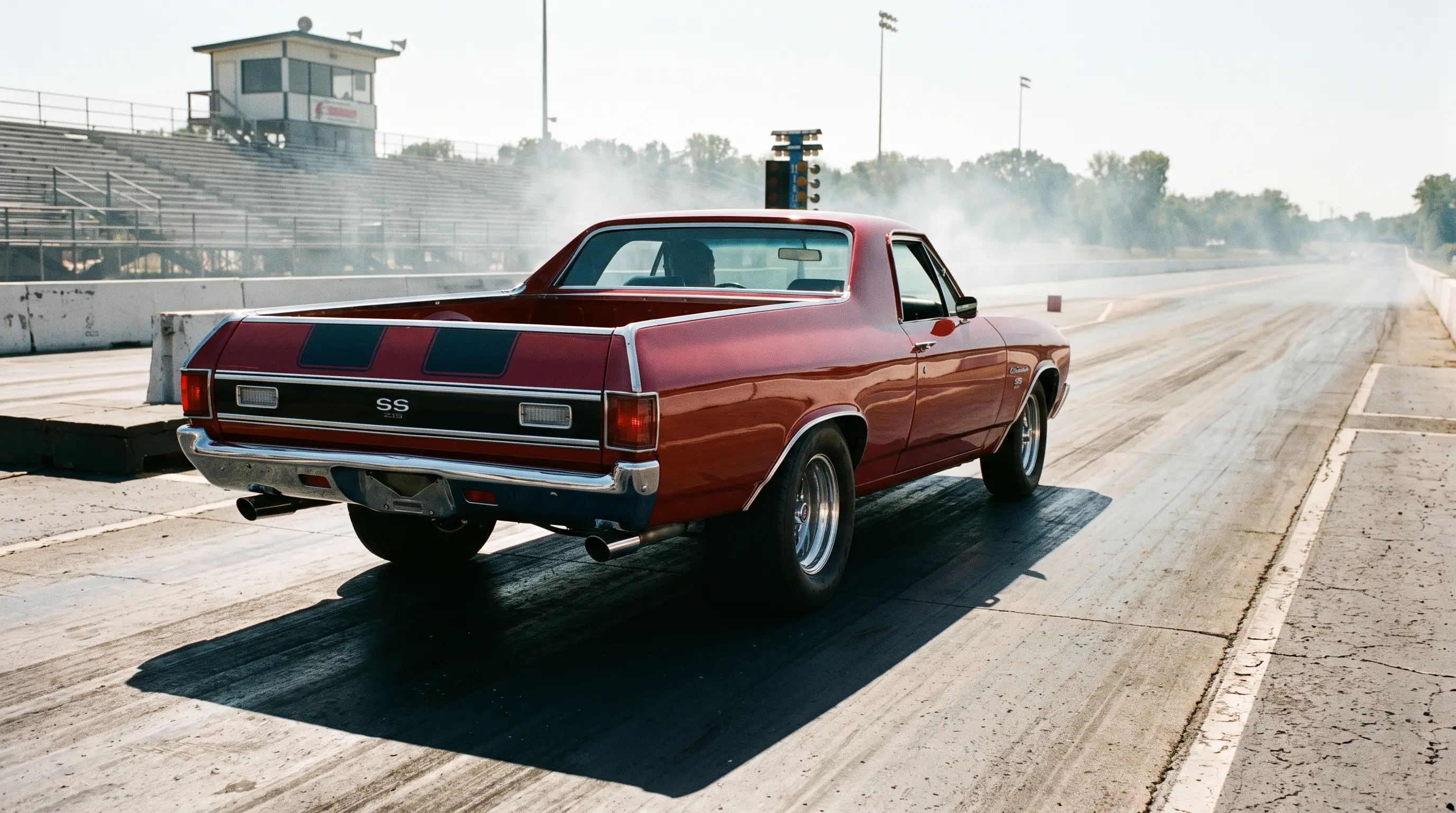
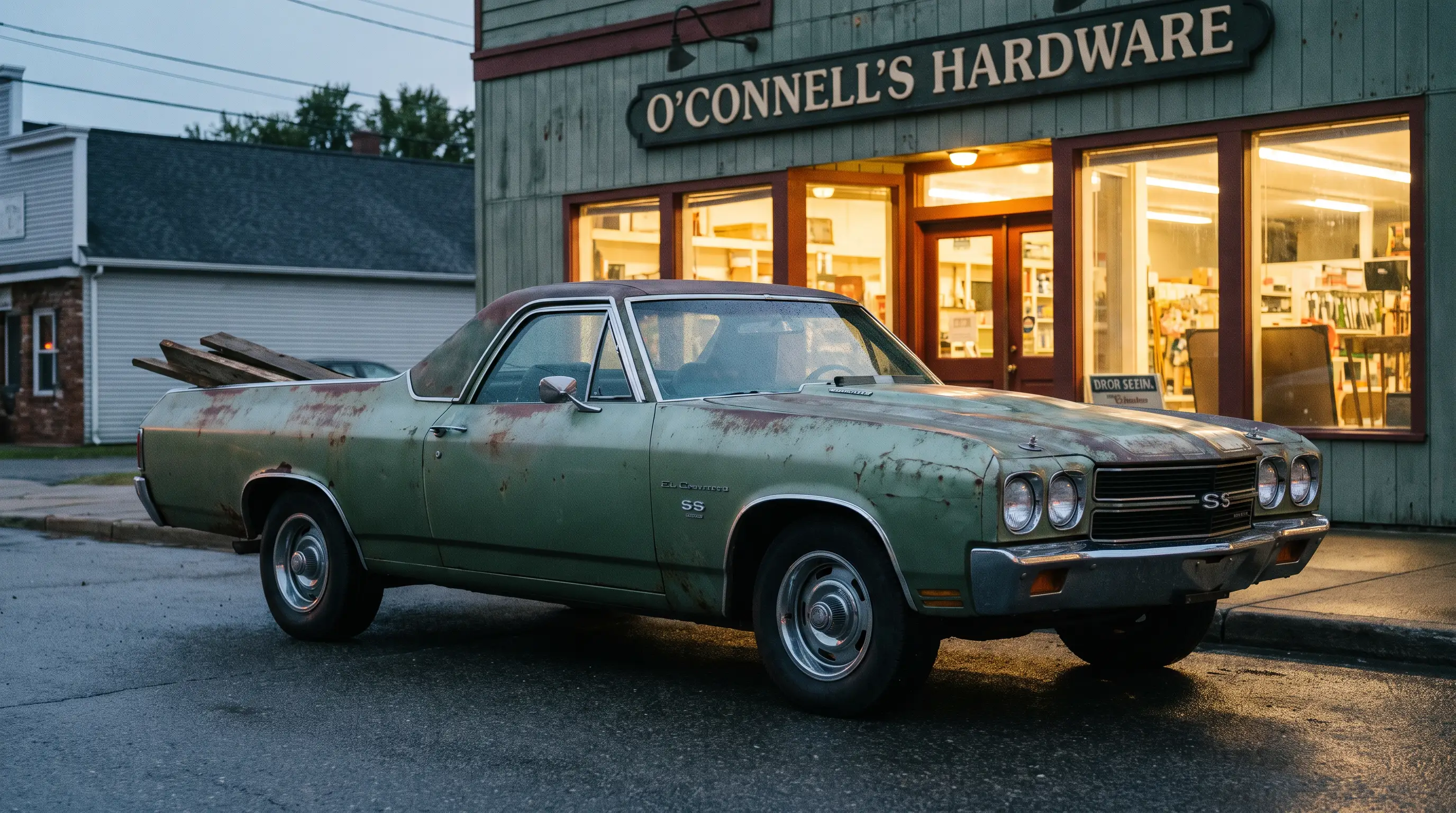
There is a guy at every regional El Camino gathering with the same story, and it is worth telling properly because it is the whole reason this car matters. His father bought a 1970 El Camino SS new, used it to haul lumber, fence posts, and a fishing boat trailer all week, and then on a Friday night pulled the same truck up to a stoplight next to somebody's Chevelle and did not lose. That is not folklore dressed up for a magazine. That is what a 1970 El Camino SS was actually built to do, and enough people lived that exact story that it became the defining identity of the model year.
Why the story keeps getting told
It is worth asking why this particular narrative, working truck by day, muscle car by night, has stuck around in club culture for over five decades while plenty of other period folklore has faded. Part of the answer is simple repetition. Enough families genuinely lived some version of that story that it became a shared reference point rather than a single family's private memory. But part of the answer is also that the story flatters the car accurately. The 1970 El Camino SS really was engineered to do both jobs well, and the anecdote survives because it describes something true about the vehicle rather than something invented to make it sound more interesting than it was.
A bed for work, a chassis for racing
The 1970 El Camino SS shared its underpinnings almost entirely with the Chevelle SS, meaning the same frame, the same available big-block options up to the 450-horsepower LS6 454, and the same suspension geometry that made the Chevelle a genuine muscle car rather than just a badge exercise. Chevrolet did not water down the mechanical package to accommodate the cargo bed. The bed sat on top of a chassis engineered to handle real power, and that decision is why the workbed could race in the first place. It was never a compromise vehicle. It was a full-strength muscle car wearing a different back half.
read the background on how that SS package came together for 1970, including the full range of engine options a buyer could put behind that shared chassis.
The stories the club actually remembers
Talk to enough long-time owners at a swap meet or a club show and the anecdotes start rhyming. A rancher who used his SS 396 to haul feed and equipment all week and ran it at a local strip on weekends. A young guy in 1970 who bought the LS6 specifically because it was cheaper than a comparable Chevelle SS and could still carry his motorcycle in the bed on the way to the track. A contractor who kept his El Camino as his only vehicle for a decade because it did everything a truck needed to do while still being genuinely quick when he wanted it to be. None of these stories individually prove anything about production numbers or specifications. Together, repeated across enough owners and enough regions, they document something a spec sheet cannot, which is how the car actually got used.
That lived history is exactly what a serious club preserves. Not just the cowl tags and broadcast sheets, though those matter too, but the actual pattern of ownership that explains why this specific model year built such a devoted following decades later.
Where the paperwork backs up the anecdotes
Here is the punchline every club veteran eventually gets to, and it is the reason this generation's folklore holds up better than most. The stories about a 1970 El Camino SS running with Chevelles are not exaggerated nostalgia, because the documentation confirms the shared chassis, the shared engine options, and the comparable performance figures published in period road tests. When an owner's family story lines up with a cowl tag confirming the LS6 option, a broadcast sheet showing the correct rear axle ratio, and a factory build sheet matching the claimed drivetrain, the anecdote stops being a nice story and becomes a documented history. That combination, community memory backed by paperwork, is what separates a real club culture from a collection of unverifiable bar stories.
The lesson for anyone buying into this hobby today is straightforward. Enjoy the stories, they are usually rooted in something true about how these cars were actually used. But ask for the paperwork before you believe the specific claims about what engine, what options, and what history any individual car actually carries.
"Every long-time member of the club has a version of the same story, a truck that hauled feed all week and ran with the Chevelles on Friday night. What makes it worth repeating is that half the time somebody still has the cowl tag to prove it."
- Wayne Coburn
How the club preserves this history
Regional and national El Camino clubs have spent decades doing the unglamorous work of turning scattered family stories into something closer to a real archive. Members compile original window stickers, cowl tags, and broadcast sheets alongside photographs and firsthand accounts from original owners or their children, cross-referencing details until a pattern of genuine, documented use emerges rather than a single unverifiable anecdote. That effort is slow and mostly thankless, but it is the reason a hobbyist today can walk into a club meeting and hear a story about a specific 1970 SS 454 that hauled equipment all week and still find someone who can produce the paperwork backing it up.
This kind of grassroots documentation matters more for the El Camino than for a lot of other muscle cars precisely because its dual identity, work vehicle and performance car, invited a wider range of original uses than a pure coupe ever saw. A club that only preserved trophy-winning show cars would miss most of what actually made this generation interesting. The clubs that get it right preserve the working history alongside the racing history, because both halves are equally real and equally worth documenting.
Why the pattern still matters to buyers today
Understanding that the 1970 El Camino SS was genuinely used both ways, as a working vehicle and as a legitimate performer, should shape how a buyer evaluates a car today. A well-worn bed with honest wear is not automatically a red flag. It might be evidence of exactly the kind of dual life this car was built for, provided the mechanical documentation still confirms the original drivetrain underneath that honest wear. The goal is not to find a car that never worked a day in its life. It is to find one that worked and raced, with the paperwork to prove both halves of that story.
Anyone chasing a genuine example of that dual-purpose history should find a classic El Camino with documentation that backs up whatever story the seller is telling.