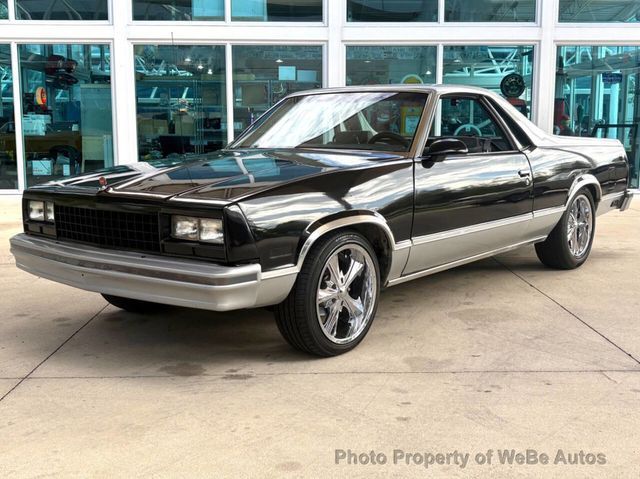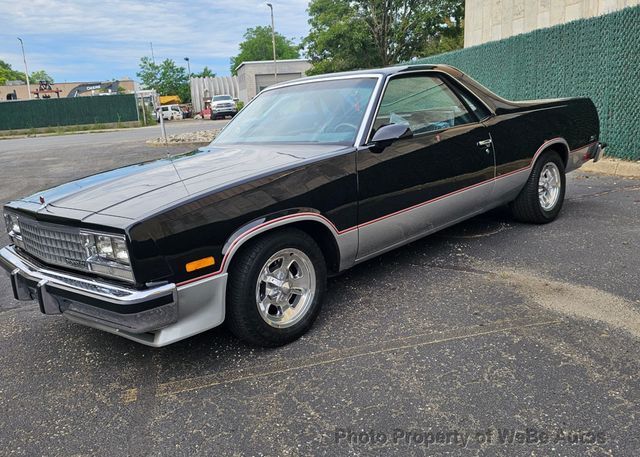
A woman in Tulsa once told me she bought her 1970 El Camino because of a color chip, not a spec sheet. She had walked into an estate sale looking for furniture and left three hours later having put a deposit on a truck she had never driven, because the paint under forty years of garage dust still read as Cranberry Red, and she remembered her father's friend owning one just like it. That is the strange power of el camino 1970 color and stripe identity. Long after engine numbers fade from memory, people remember the color.
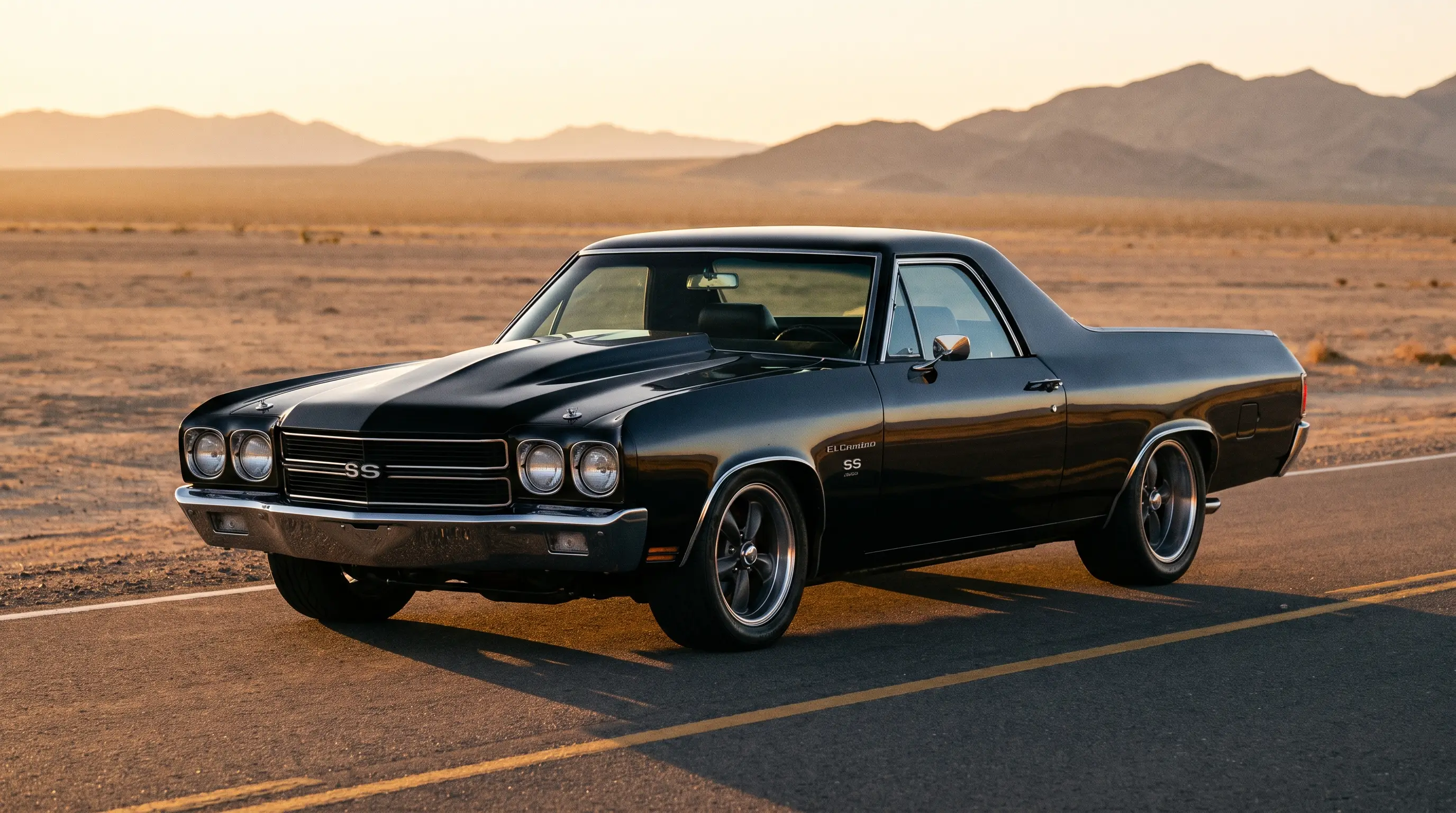
Tuxedo Black as the quiet flex
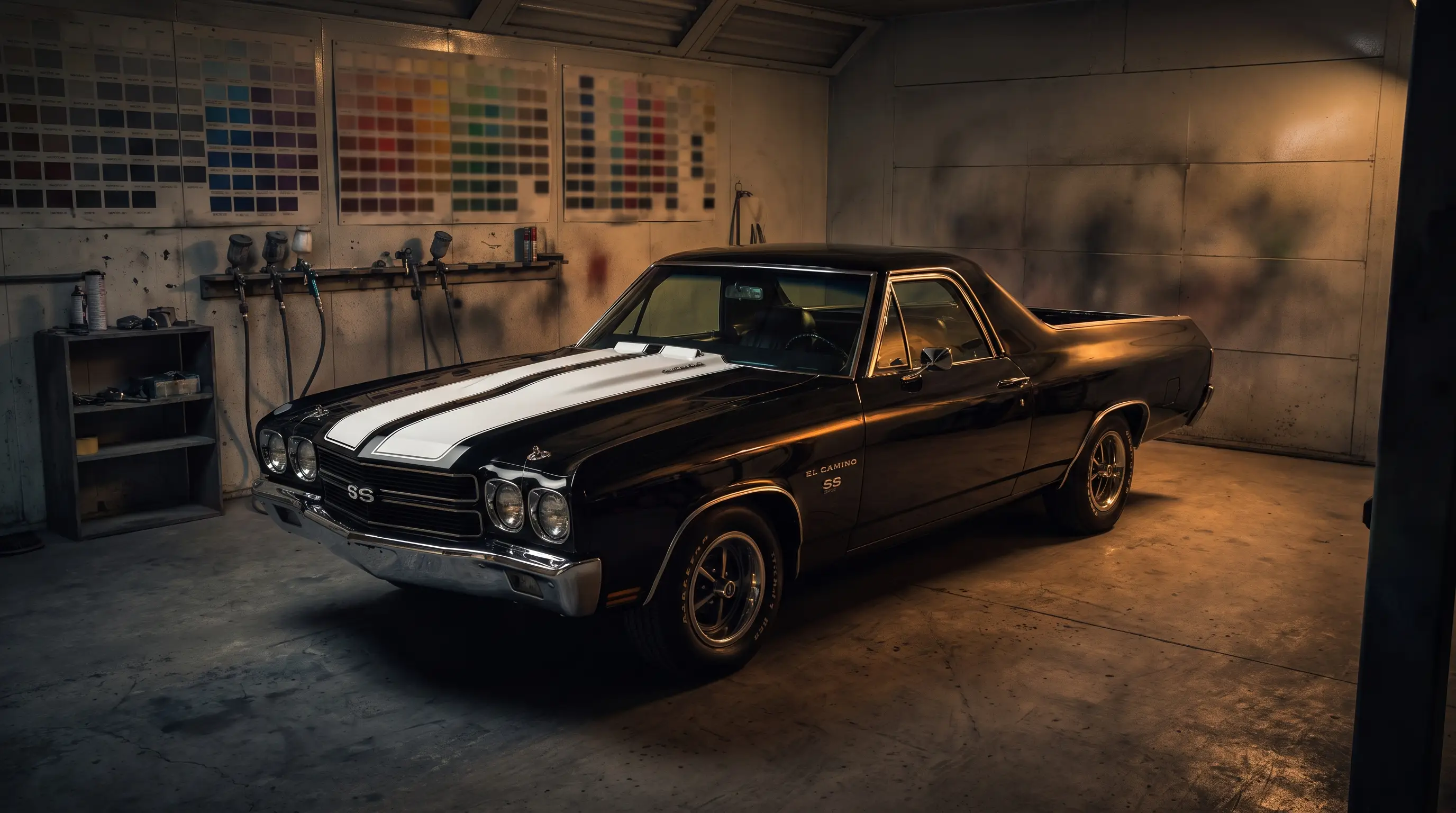
Chevrolet's 1970 color palette ran wide, but Tuxedo Black carried a different weight on an SS-badged El Camino than it did on a base model. Black paint on a big block car photographed as serious in a way that lighter colors did not, and dealers in performance-heavy markets often steered SS 454 buyers toward it deliberately. It hid the working-class truck bed underneath a finish that looked, at a glance, like it belonged on something meaner. A black El Camino SS parked next to a black Chevelle SS at a stoplight in 1970 was not making a subtle statement.
The tradeoff, of course, was maintenance. Black paint shows every swirl mark and every stone chip from bed use, which is part of why fewer clean original black examples survived the following decades than lighter, more forgiving colors. The ones that did survive tend to command real attention today, precisely because black cars aged the hardest.
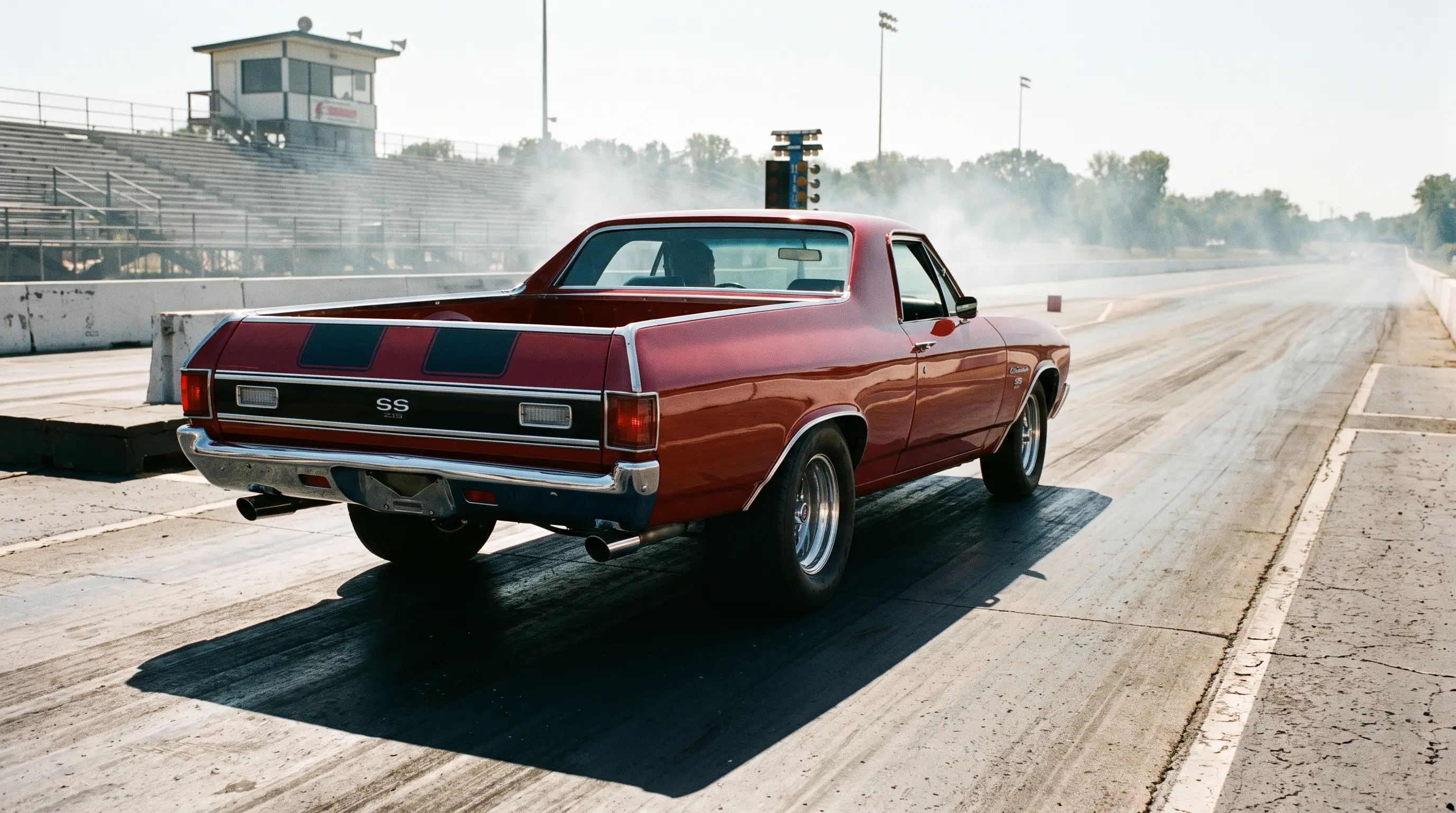
Cranberry Red and the case for boldness
Cranberry Red sat at the other end of the emotional spectrum. It was loud without being garish, warm without reading as a factory afterthought, and it photographed beautifully against the black-out grille and stripe treatment Chevrolet applied to SS models. Owners who chose it in 1970 were not hiding anything. A Cranberry Red El Camino SS announced itself in a parking lot the way black never could, and that visibility is exactly why so many surviving restoration projects chase this color specifically. Buyers restoring a car to original specification frequently discover, digging into old photographs and family stories, that Cranberry Red was the color grandfather always described even when nobody remembered the paint code.
What the stripes were actually saying
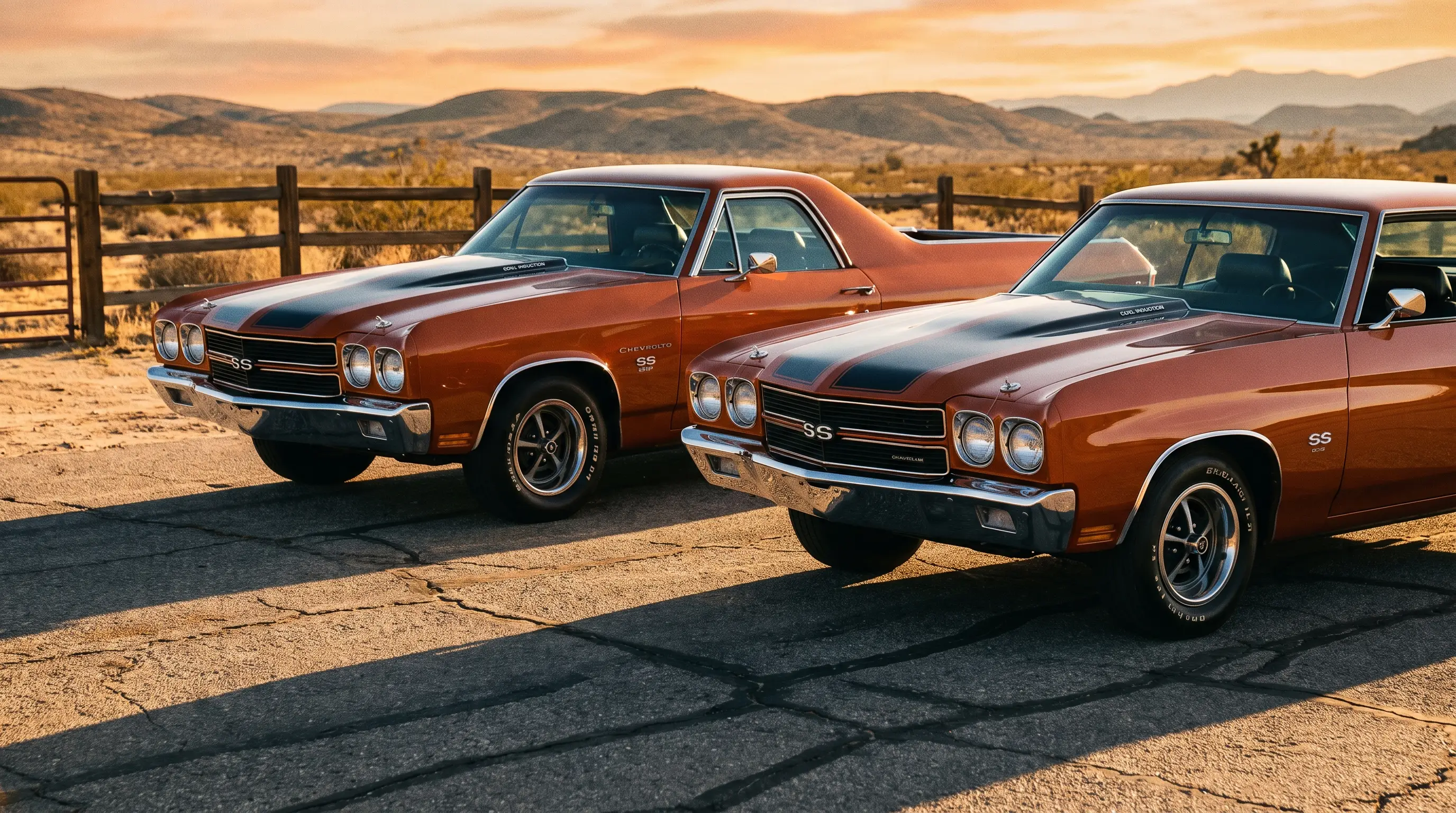
Stripes on a 1970 El Camino SS were never random decoration. Chevrolet's design studio treated them as a visual signal meant to communicate speed even when the car sat still in a driveway. The stripe kit worked with the body's lines rather than against them, running the length of the car in a way that made the El Camino's already long profile look faster, leaner, more purposeful. Combined with the SS badge and the black-out grille, the full color and stripe package told a story before a single engine sound reached anyone's ears.
This matters for anyone chasing an accurate restoration today. Stripe placement, width, and color combination were not interchangeable across trim levels, and a car wearing the wrong stripe kit for its actual build reads as inauthentic to anyone who knows what to look for. Exact stripe widths and application points varied enough between individual cars that restorers should treat any single measurement as a starting reference rather than gospel. Original factory photographs and dealer brochures remain the most reliable references for getting the details right, since decades of reproduction parts have introduced small variations that were never factory correct.
| Color | Character |
|---|---|
| Tuxedo Black | Serious, understated, shows wear fastest |
| Cranberry Red | Bold, high visibility, popular restoration target |
| Stripe treatment | Beltline and tail, SS-specific placement |
| Design intent | Visual speed cues even at rest |
The other colors nobody talks about
Tuxedo Black and Cranberry Red dominate the conversation now, but Chevrolet's 1970 palette included plenty of quieter options that rarely get mentioned in restoration circles. Shades of green, blue, and a handful of muted earth tones filled out the order sheet, and buyers who chose them at the time were not making a lesser choice, just a different one. History has a way of narrowing itself around the loudest examples, and the loudest colors tend to survive best in memory and in magazine photography, even when the quieter colors were just as common on the street.
This matters for anyone trying to buy or restore an El Camino accurately rather than chasing whatever color currently commands the highest auction attention. A green or blue 1970 SS in genuinely original paint, with a matching stripe kit correctly applied, tells just as honest a story as a Cranberry Red one, and in some cases the rarer color combination can be the more interesting find precisely because fewer restorers bothered chasing it.
Color as memory, not just specification
What strikes me most, talking to owners over the years, is how rarely the conversation starts with horsepower. It starts with a color a father drove, a stripe a teenager saw in a driveway down the street, a paint code somebody's uncle argued about at a family gathering decades ago. The technical facts around el camino 1970 color and stripe identity matter enormously to restoration accuracy, but the emotional facts matter just as much to why people chase these cars in the first place. Nobody falls in love with a torque figure at a glance. People fall in love with a color they remember.
"Every restoration I have followed started with somebody's memory of a color, not a number on a build sheet. The spec sheet comes later. The color is what pulled them in."
- Nora Beckett
Where color research leads next
Anyone researching a specific 1970 SS build should treat color and stripe details as one thread in a much larger story. For readers who want the 1970 el camino story in full, including the mechanical package behind the paint, that account fills in the pieces this article leaves out. And for the full arc of the model across its entire production run, the full story traces how the El Camino's identity shifted across generations long before and after 1970.
Reading both accounts side by side gives a fuller sense of why color choices in 1970 mattered so much to how the car was perceived, both at the dealership and decades later at car shows where original paint still draws a crowd faster than a recited spec sheet ever will.
For those closer to buying than reading, the market still rewards correct color and stripe combinations with a premium over cars that were repainted into whatever shade happened to be on hand during a decades-old restoration. Anyone shopping seriously can look at classic El Caminos on the market right now and compare how much color-correct examples are actually commanding compared to repainted cars of otherwise similar condition.