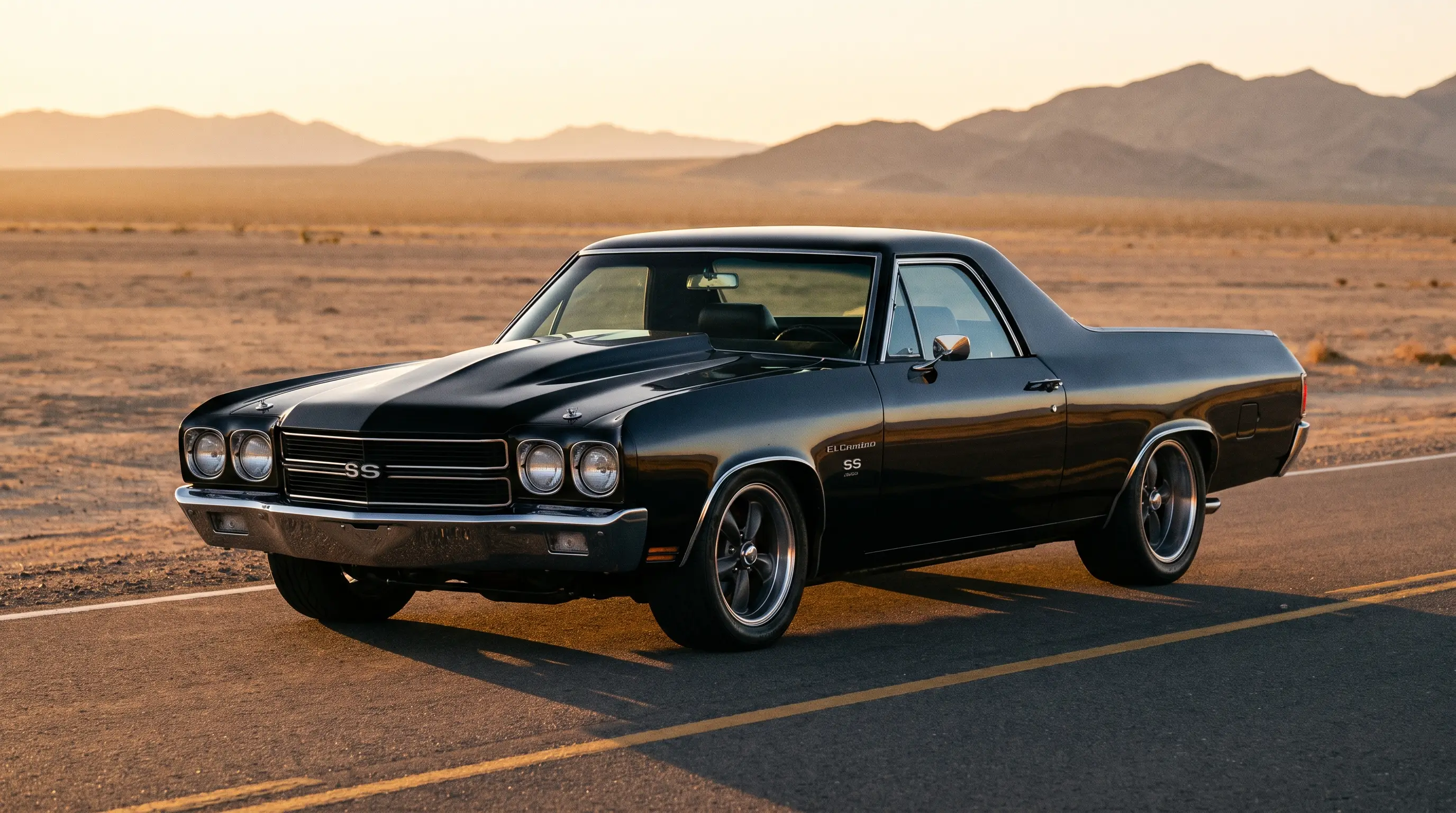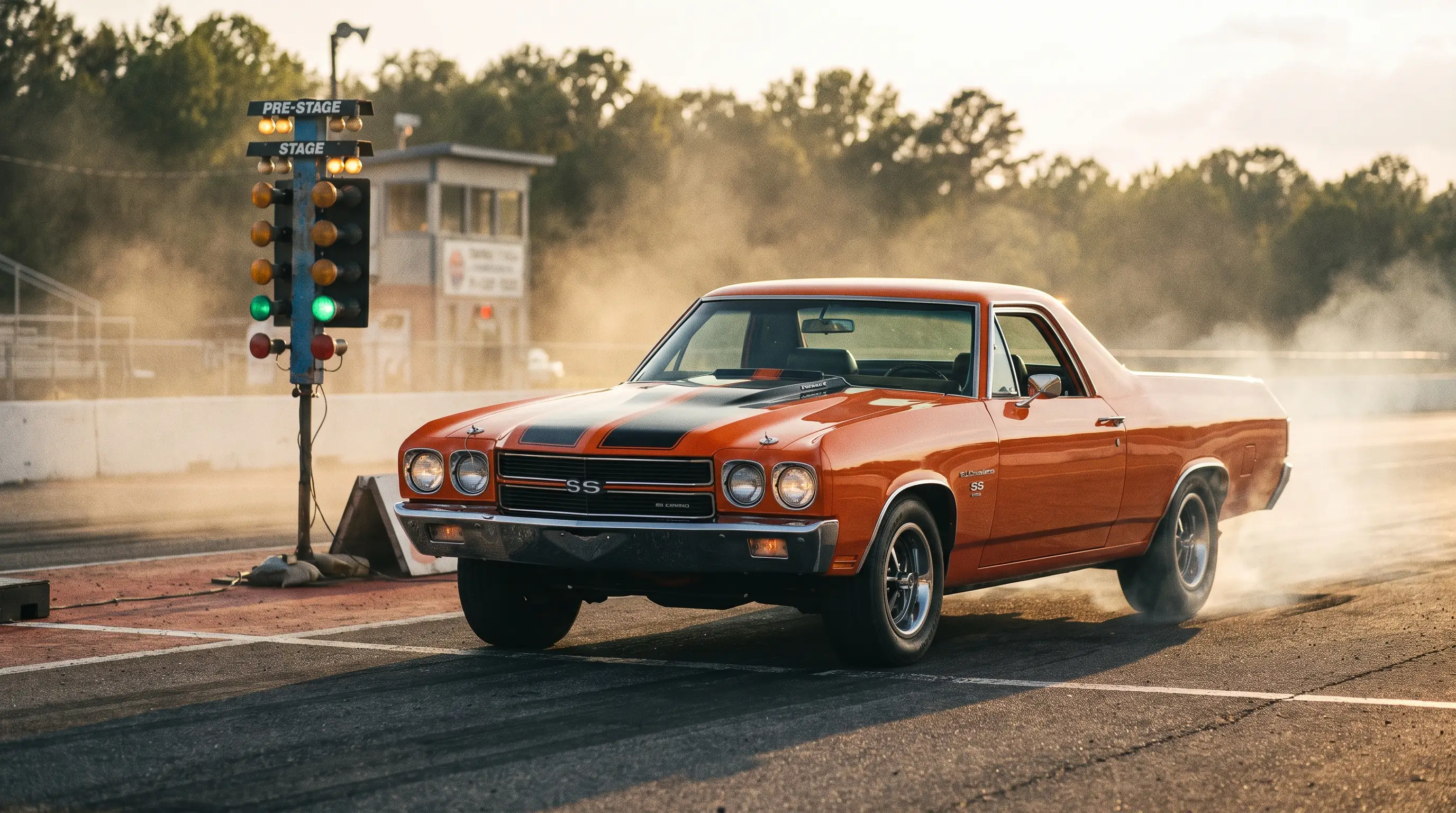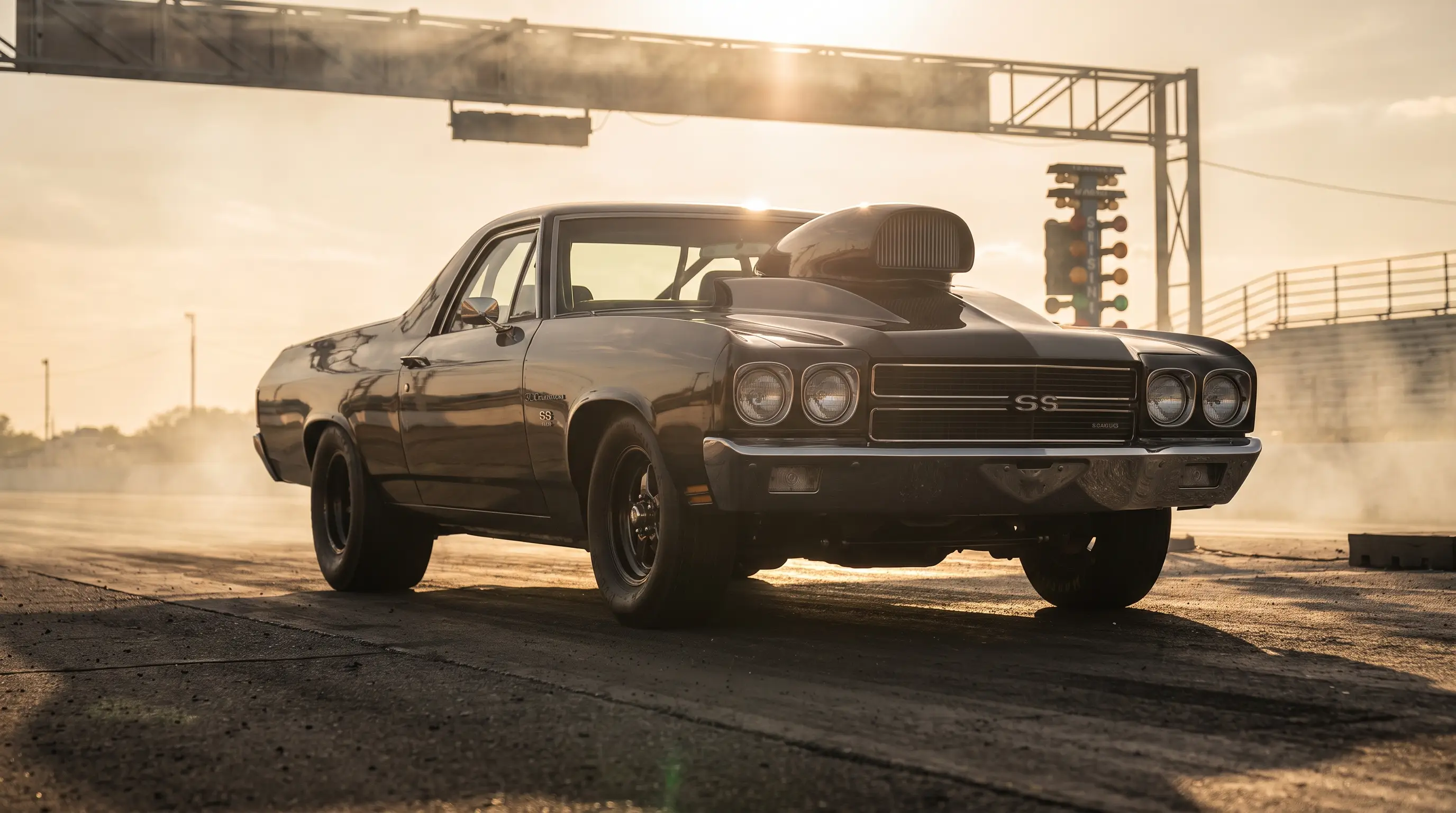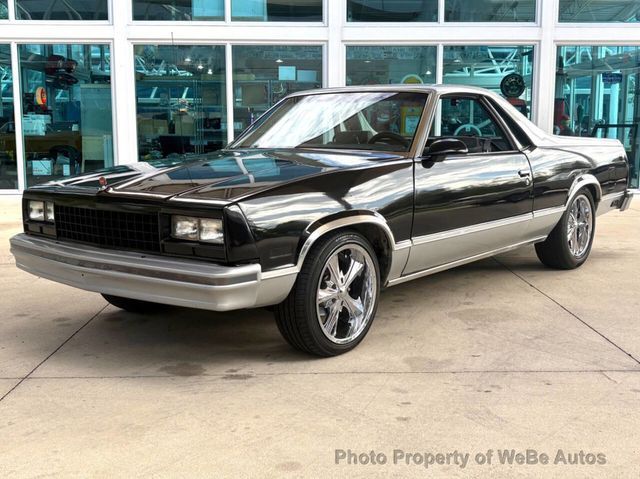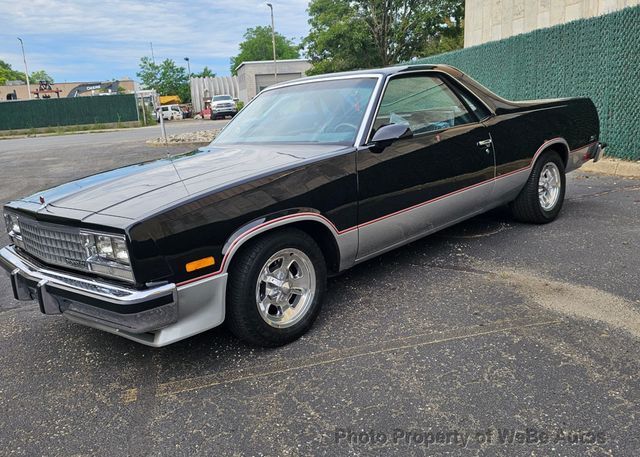
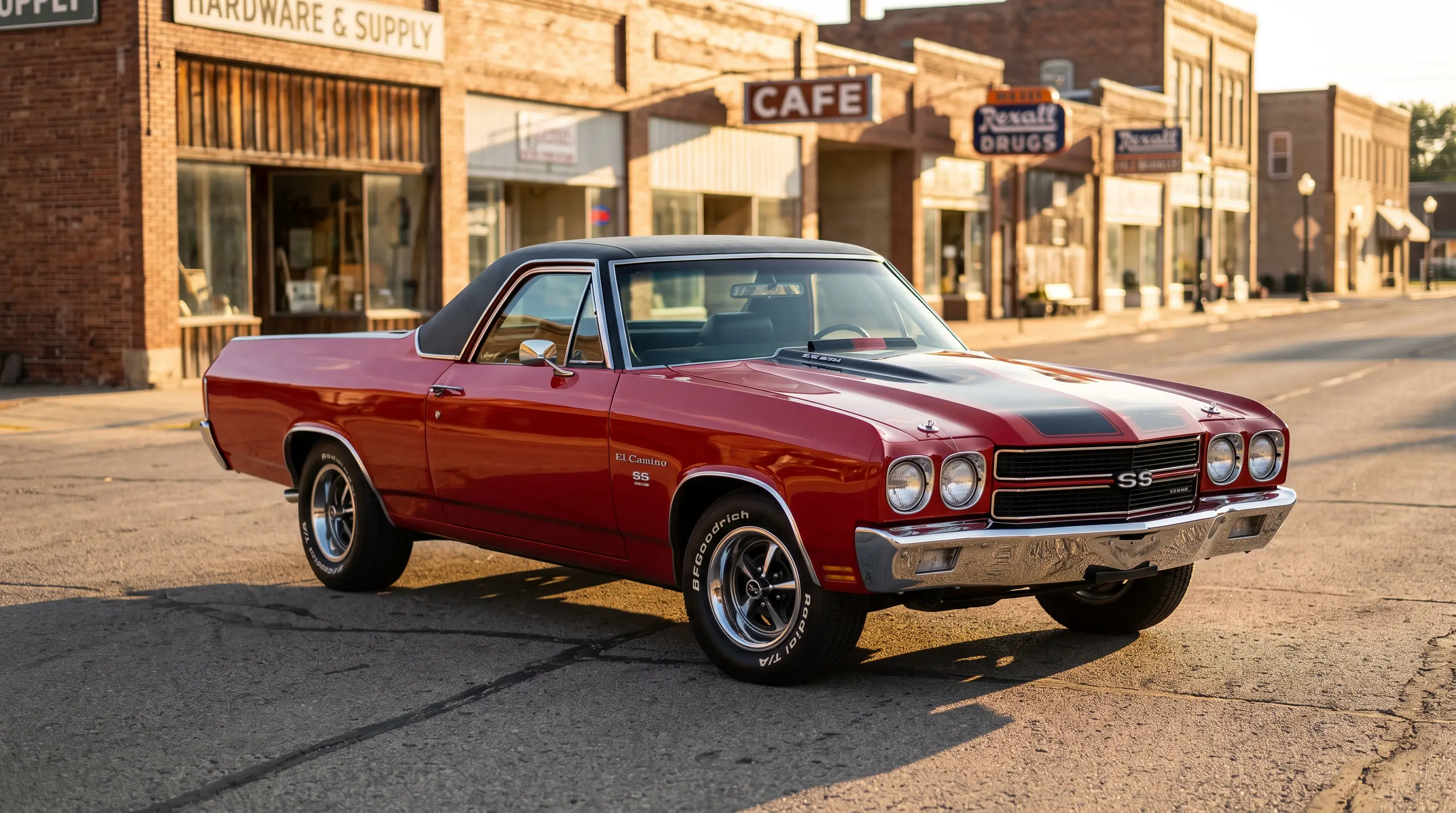
Every long-running model has a year the archives keep returning to, and for the El Camino that year is 1970. Not because it sold the most units, and not because it was the last of anything. It peaked in 1970 because Chevrolet let the SS package reach its fullest expression that single model year, stacking the biggest engine option, the sharpest styling of the second-generation body, and the last window before insurance and emissions pressure started narrowing what a factory muscle vehicle was allowed to be.
The engine lineup said everything
Start with the order sheet, because that is where a factory historian's argument has to start. For 1970, the El Camino SS could be built with the LS5 454, rated at 360 horsepower, or the LS6 454, rated at 450 horsepower with solid lifters and 11.25:1 compression. That LS6 rating was, by most published contemporary sources, the highest factory horsepower figure GM offered in this platform that model year. No earlier El Camino model year had offered a 454. No later model year would offer one with those numbers again, as compression ratios and horsepower ratings across the entire industry began sliding downward within two years under tightening emissions rules. 1970 sat at the top of that curve, right before the slope turned.
Misconception worth correcting here: it is common to hear the LS6 El Camino described as a rare factory special order that almost nobody could get. The truth is more mundane and more interesting. It was a catalog option, available to any El Camino SS buyer willing to pay for it and accept the driveability trade-offs of a solid-lifter, high-compression engine in a vehicle plenty of people still used as an actual truck.
Styling reached its high point the same year
1970 also sat at the design peak of the second-generation El Camino body, which had been introduced for 1968 and would run through 1972 with only modest yearly changes. The 1970 front clip carried a more aggressive grille treatment than the 1968 to 1969 cars, and the SS trim added stripes, badging, and available cowl induction hood detailing that gave the car a genuinely muscular presence without looking like a parts-bin afterthought bolted to a truck bed. worth a look too covers that cowl induction hood in more detail, since it is one of the more visually dramatic elements of the 1970 SS package.
The body would carry into 1971 and 1972 largely unchanged in silhouette, but with declining compression ratios and shrinking horsepower figures under the hood as the industry adjusted to new fuel and emissions realities. Visually similar cars, mechanically diminished ones. That gap between 1970 and its immediate successors is exactly why the 1970 model year gets treated as a discrete peak rather than just one entry in a smooth production run.
Production numbers tell the real story
Total El Camino production for 1970 landed at 47,707 units across standard and Custom trim, reflecting strong demand for the car-truck hybrid concept. What is better documented is the mix: the majority of 1970 El Caminos left the factory with small-block V8s in the 307 or 350 cubic inch range, with the SS 396 and SS 454 combined representing a smaller slice of total output. The peak was not a peak of volume. It was a peak of what the top of the lineup was capable of, sitting above a much larger, more practical mainstream El Camino market that most buyers actually chose.
read the background on how the SS package itself came together for 1970, including the trim details and options that separated it from a standard El Camino on the same lot.
Why the peak did not last
Understanding why 1970 was the high point requires understanding what came immediately after. Insurance surcharges on high-horsepower vehicles were already climbing by 1970 and accelerated through the early 1970s. The industry-wide shift toward lower compression ratios to accommodate unleaded and lower-octane fuel began appearing in engine specifications within a couple of model years. Emissions equipment started adding complexity and reducing output on paper even when actual engine hardware changed less than the horsepower numbers suggested. The El Camino SS continued after 1970, and continued to sell, but it never again offered the specific combination of engine output, compression ratio, and styling aggression that defined the 1970 model year specifically.
That is the historian's case for 1970 as the peak. Not nostalgia, not a marketing claim, but a convergence of documented factory specifications that did not repeat before or after.
"The paperwork says 1970 was the peak, not the folklore. A 450 horsepower factory rating that never got matched before or after on this platform is not an opinion, it is a line item on an old order guide."
- Tom Ramirez
Reading the peak against the whole decade
Widen the lens beyond the El Camino specifically and 1970 still holds up as an industry-wide high point, not just a nameplate-specific one. Compression ratios across nearly every domestic performance engine, not just Chevrolet's big-blocks, sat near their historical ceiling in 1970, the last full model year before the first round of emissions equipment and lower-octane fuel requirements began reshaping engine design broadly. Chevrolet was not making an isolated decision to push the El Camino SS to a new high point. It was riding a brief, industry-wide window that closed for every manufacturer at roughly the same time, and the El Camino simply happened to catch that window at the exact moment the 454 option arrived on its platform.
That context matters because it removes any suspicion that the 1970 peak claim is a piece of nameplate-specific marketing dressed up as history. It is instead one visible example of a broader, well-documented industry pattern, and the El Camino's specific version of that pattern, the LS6's arrival paired with the era's highest compression ratios, is simply an unusually clean and well-recorded instance of it.
What this means for collectors today
Recognizing 1970 as the peak model year has practical value beyond trivia. It explains why documented, numbers-matching 1970 El Camino SS cars, particularly LS6 examples, command a premium over otherwise similar 1971 or 1972 cars that look nearly identical from the outside. The gap is not styling. It is the drivetrain underneath, and buyers who understand that history are the ones making informed decisions rather than paying peak-year prices for a car that only wears the peak-year look.
Anyone weighing that decision should shop classic El Camino listings with the actual documentation in hand rather than relying on styling alone to confirm what year, and what engine, is really sitting under the hood.