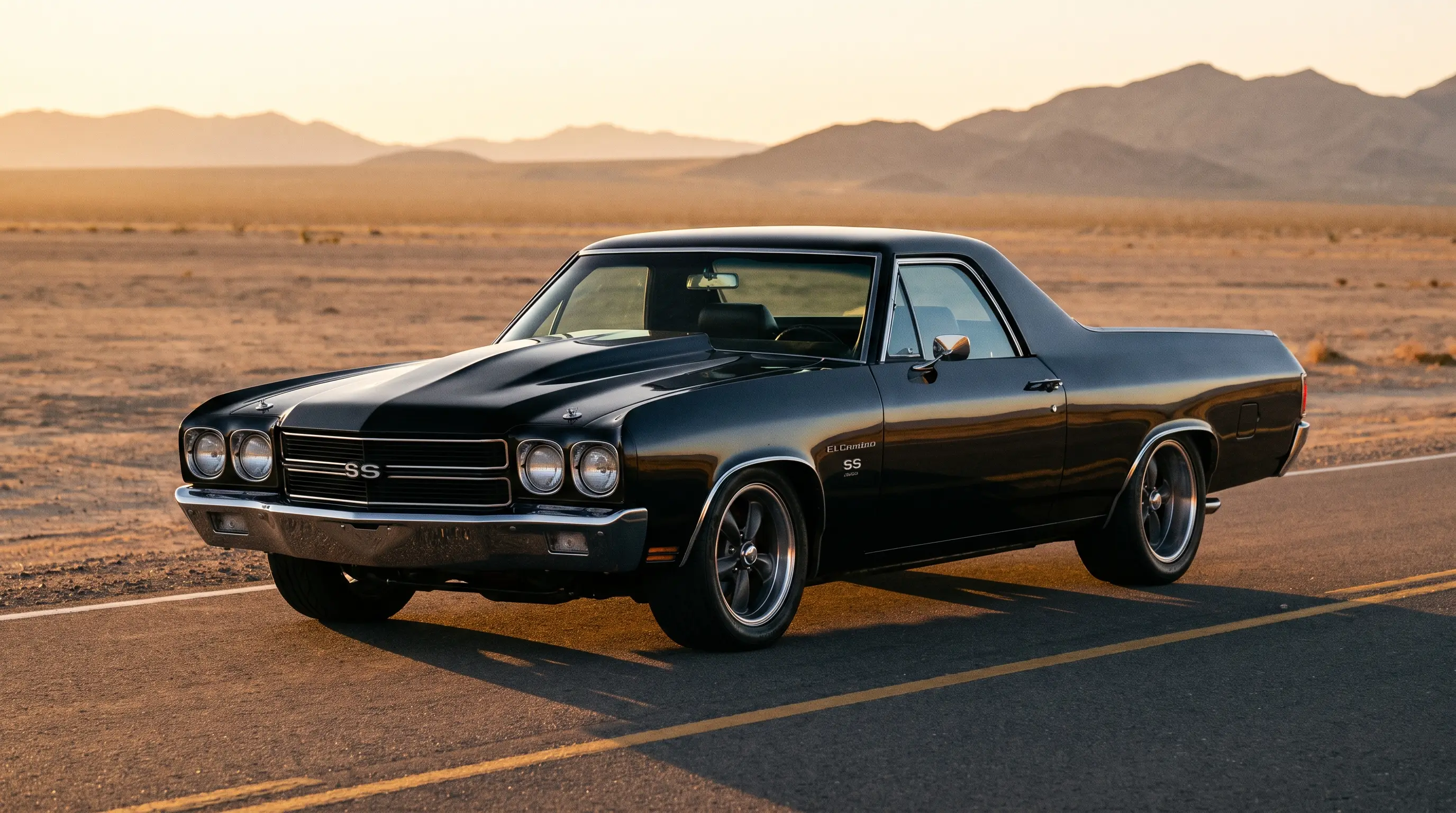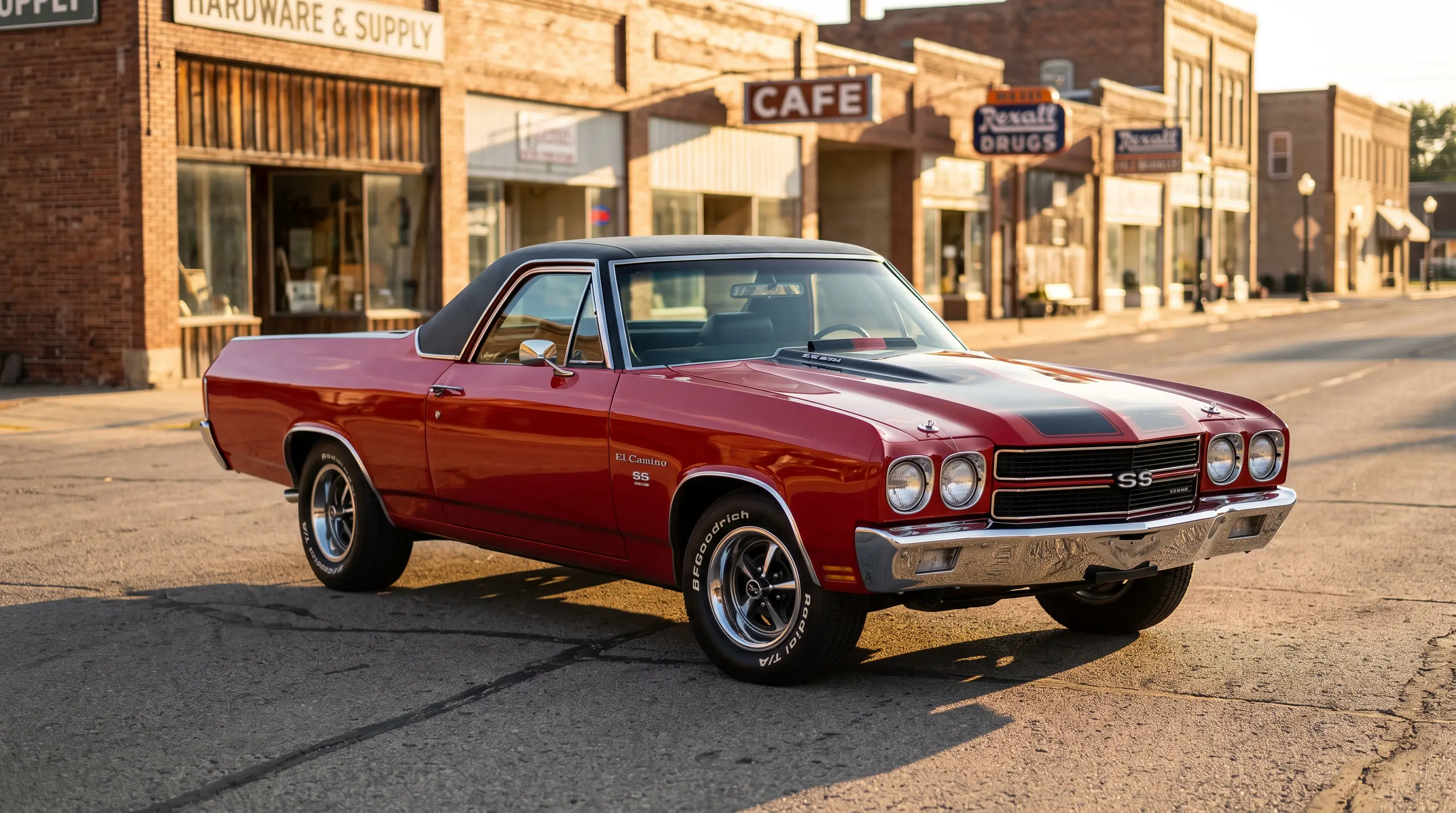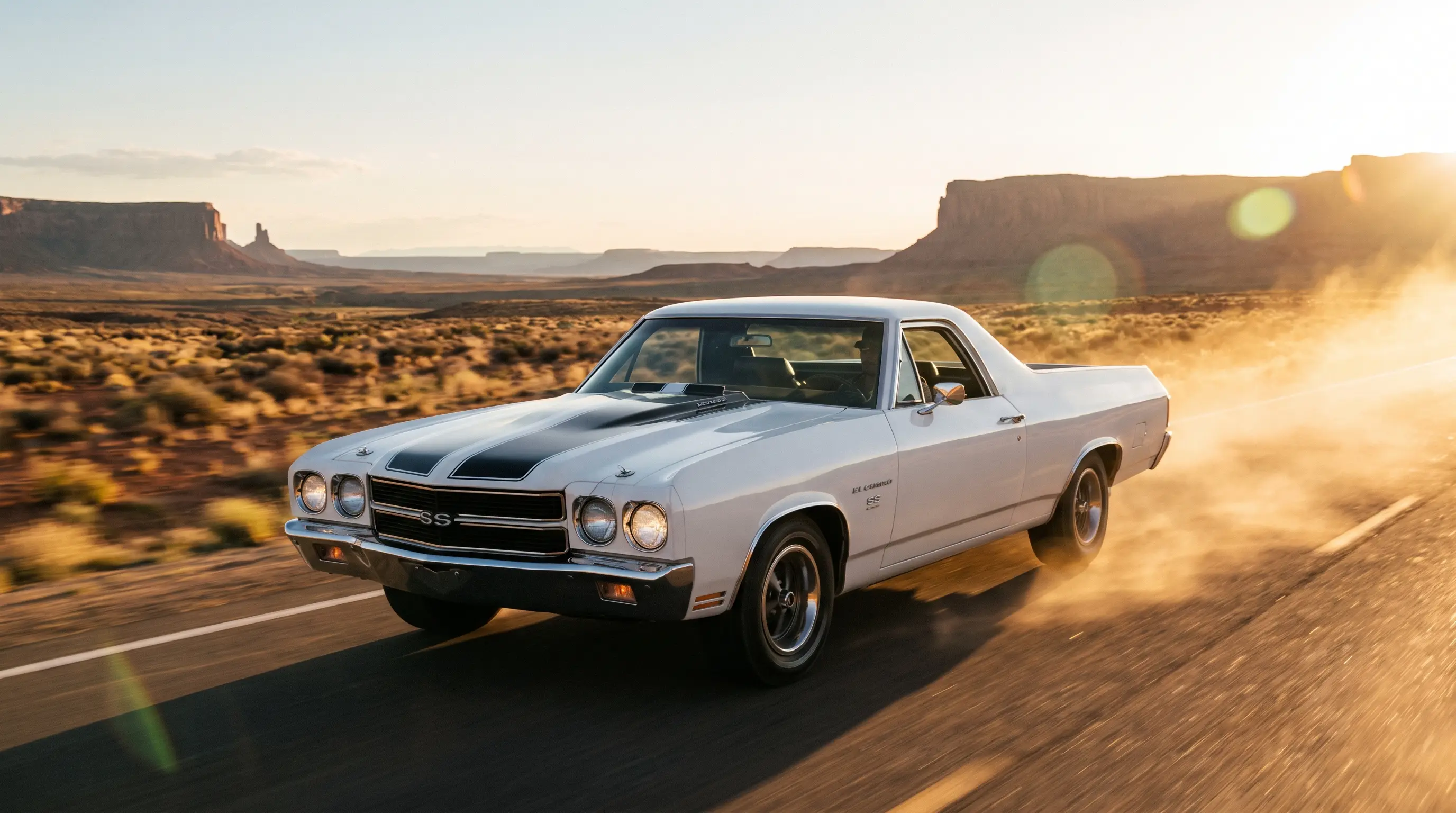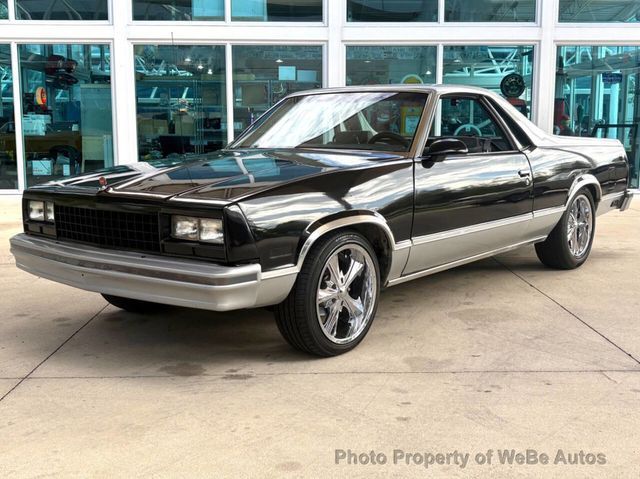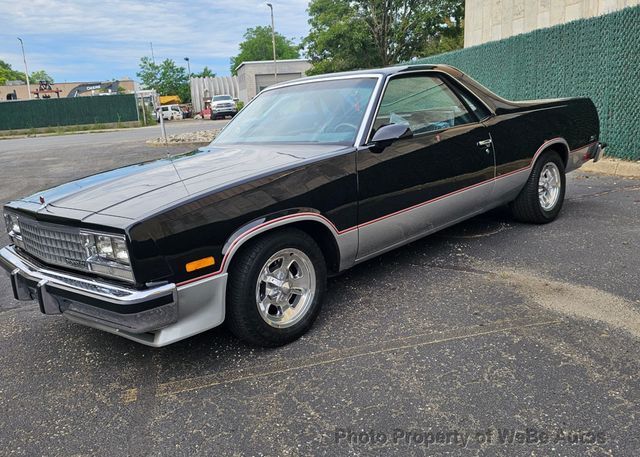
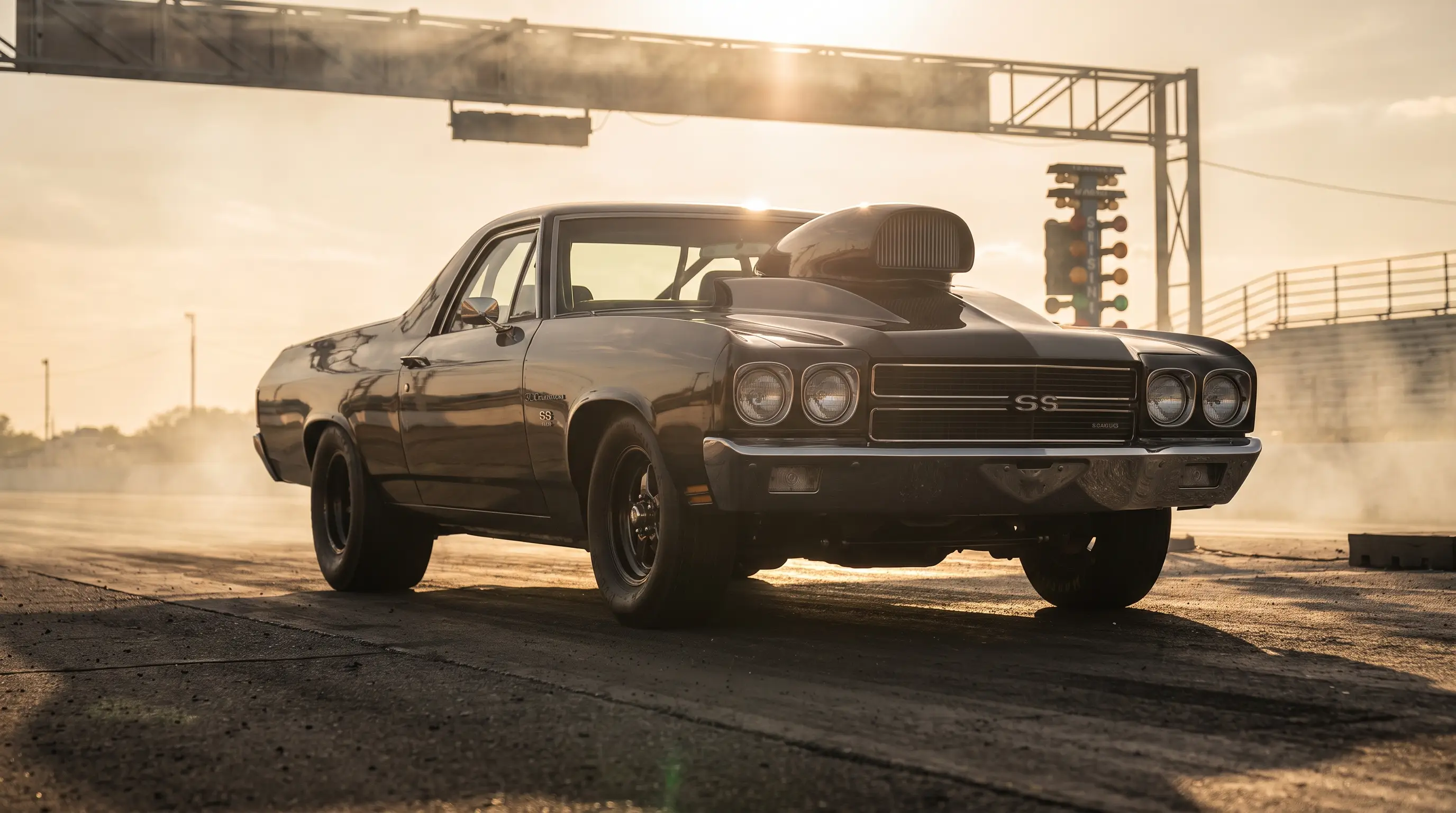
Cowl induction on the 1970 El Camino SS was theater before it was function, and that is precisely why it belongs in the historical record rather than a footnote. The hood scoop sat flush until the engine demanded air, then a vacuum-operated flap lifted at the base of the windshield and let cool, dense air feed the carburetor from the high-pressure zone at the base of the windshield. It looked dramatic at a stoplight. It also did something a normal hood scoop could not, and documenting that distinction is the whole point of taking the feature seriously as an artifact rather than a styling flourish.
A quick primer on air and combustion
Understanding why this mattered requires a short detour into basic combustion physics, stated plainly rather than technically. An engine makes power by burning a mixture of air and fuel, and colder air is simply denser air, meaning a given volume contains more oxygen molecules available for combustion. More oxygen supports a more complete burn of a correspondingly larger amount of fuel, which translates directly into more usable power at a given engine speed. A hood scoop's entire job, whatever its shape or placement, is to deliver the coldest, least disturbed air available to the carburetor. Where that scoop draws its air from is the entire engineering question, and it is a question most conventional hood scoops answered poorly.
What cowl induction actually did
The principle is straightforward once explained properly. A conventional forward-facing hood scoop pulls in air that has already been heated by the engine bay and disturbed by turbulence off the windshield, which is exactly the wrong air for making power. Cowl induction instead drew from the cowl area at the base of the windshield, a zone of relatively high, cool, undisturbed air pressure created by the car moving forward. A flapper door under the rear-facing scoop, opened by a vacuum actuator working together with an electric, throttle-triggered solenoid, lifted under hard acceleration and fed that cooler, denser air directly to the carburetor. Cooler intake air is denser air, and denser air supports more complete combustion, which is a genuine, measurable performance benefit rather than a purely cosmetic one.
Available on the SS 396 and SS 454 El Camino for 1970, cowl induction was a factory option, not an aftermarket addition, and documentation on cars claiming the feature should show the corresponding regular production option code on the original build sheet or window sticker where available.
The theater was real too
Calling it drama is not dismissive. The visual effect, the scoop appearing to pop open under hard acceleration while the engine note changed, was part of the sales pitch, and period advertising leaned into that spectacle as much as the performance underneath it. Chevrolet understood that a buyer standing at a stoplight next to an El Camino SS with the hood flap lifting under throttle was watching a piece of engineering theater, and that theater sold cars as effectively as a horsepower number on a spec sheet. Treating cowl induction purely as a functional footnote misses half of what it was doing for Chevrolet in 1970.
This dual purpose, genuine cooling benefit paired with visible showmanship, is a useful lens for understanding a lot of period muscle car engineering. Function and spectacle were not competing priorities. They were designed together.
Confirming the real thing on a period car
For anyone researching or authenticating a 1970 El Camino SS today, the cowl induction hood itself is a distinct stamped panel from the standard SS hood, with the scoop opening and internal ductwork built into the sheet metal rather than bolted on afterward. A reproduction hood without the correct internal structure will not function correctly even if it looks right from ten feet away, and that gap between appearance and originality matters enormously to collectors trying to document a car accurately rather than just make it look period-correct at a glance.
more on the 1970 el camino covers the full SS package that year, including how cowl induction fit alongside the other trim and mechanical options buyers could select.
Where this feature fits in the bigger picture
Cowl induction did not appear out of nowhere in 1970. It reflected an industry-wide pursuit of usable performance gains as compression ratios climbed toward their late-1960s and 1970 peak, before emissions regulations reversed that trend within a couple of model years. The El Camino's adoption of the feature places it squarely within that broader engineering moment rather than treating it as an isolated El Camino quirk, and understanding that context is part of what separates a serious period study from a simple trivia list.
For readers who want the fuller arc of how the El Camino got to this point as a nameplate, including its earlier generations before the SS era, where this started traces that history from the beginning.
"A reproduction hood that looks correct from across a parking lot and a factory cowl induction hood with the proper internal ductwork are two different objects for documentation purposes, even when they appear identical in a photograph."
- Sarah Whitfield
How cowl induction compared to other scoop designs of the era
Chevrolet was not the only manufacturer chasing this idea in 1970, and comparing approaches helps clarify why the cowl-based design mattered. Simple hood scoops, whether functional or purely decorative, remained common across the industry and typically drew from the same disturbed, heated air sitting directly above the engine. Some competitors experimented with their own cowl-fed or windshield-base induction systems around the same period, chasing the identical aerodynamic principle that cooler, denser air improves combustion. What set the El Camino's implementation apart within Chevrolet's own lineup was how cleanly it integrated with the SS 396 and SS 454 hood stampings, giving the feature a finished, factory-correct appearance rather than looking like a bolted-on afterthought competing systems sometimes suffered from.
That integration is part of why the feature reads as authentic engineering rather than a marketing gimmick when examined closely today. The ductwork, the vacuum actuation, and the hood stamping were designed as one system rather than assembled from separate parts after the fact, and that level of integration is exactly what a careful restoration or authentication effort should look for when confirming a genuine factory example.
What this means for buyers and researchers
Cowl induction adds a genuine documentation checkpoint to any 1970 El Camino SS under consideration. Confirm the option code, confirm the hood is the correctly stamped factory panel, and understand that the feature represents a real engineering benefit layered underneath a very effective piece of period showmanship. Both halves of that story are worth preserving accurately.
Buyers evaluating a car with this option today should look at classic El Caminos on the market with documentation specifically confirming the cowl induction option, rather than taking a visually correct hood scoop at face value.