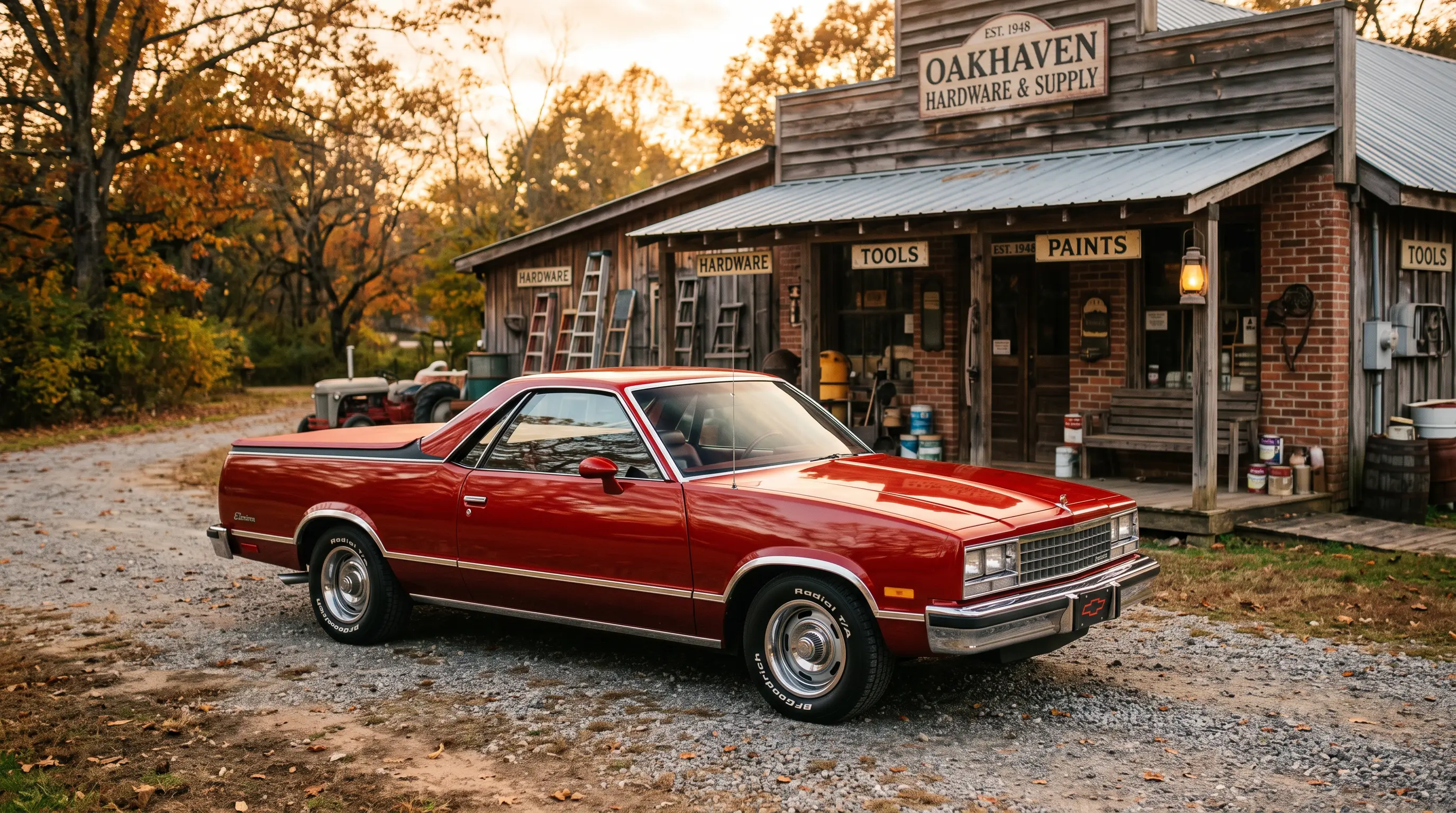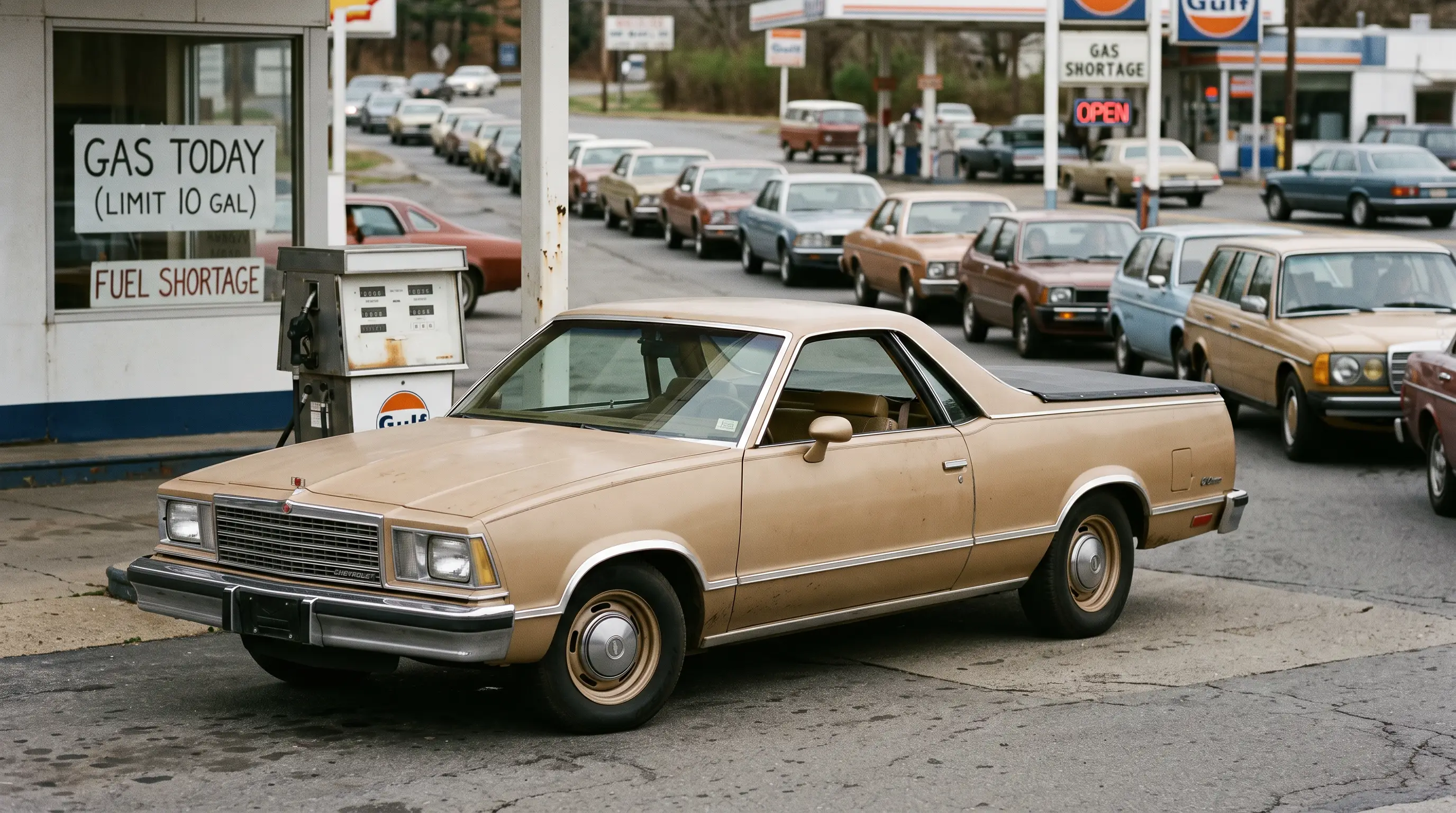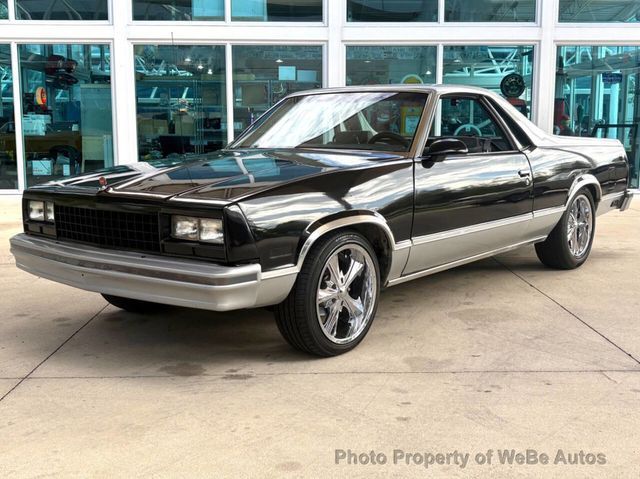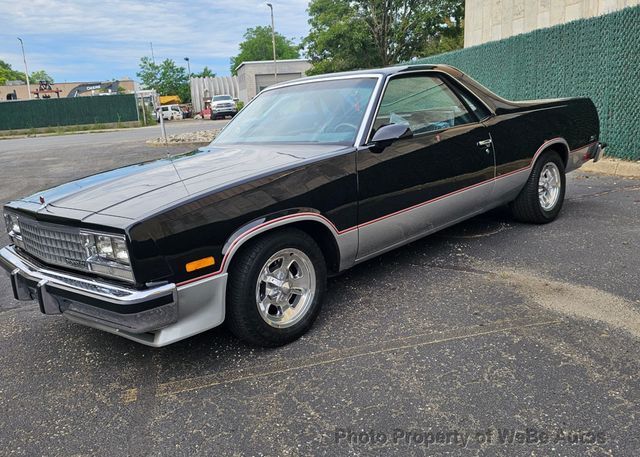
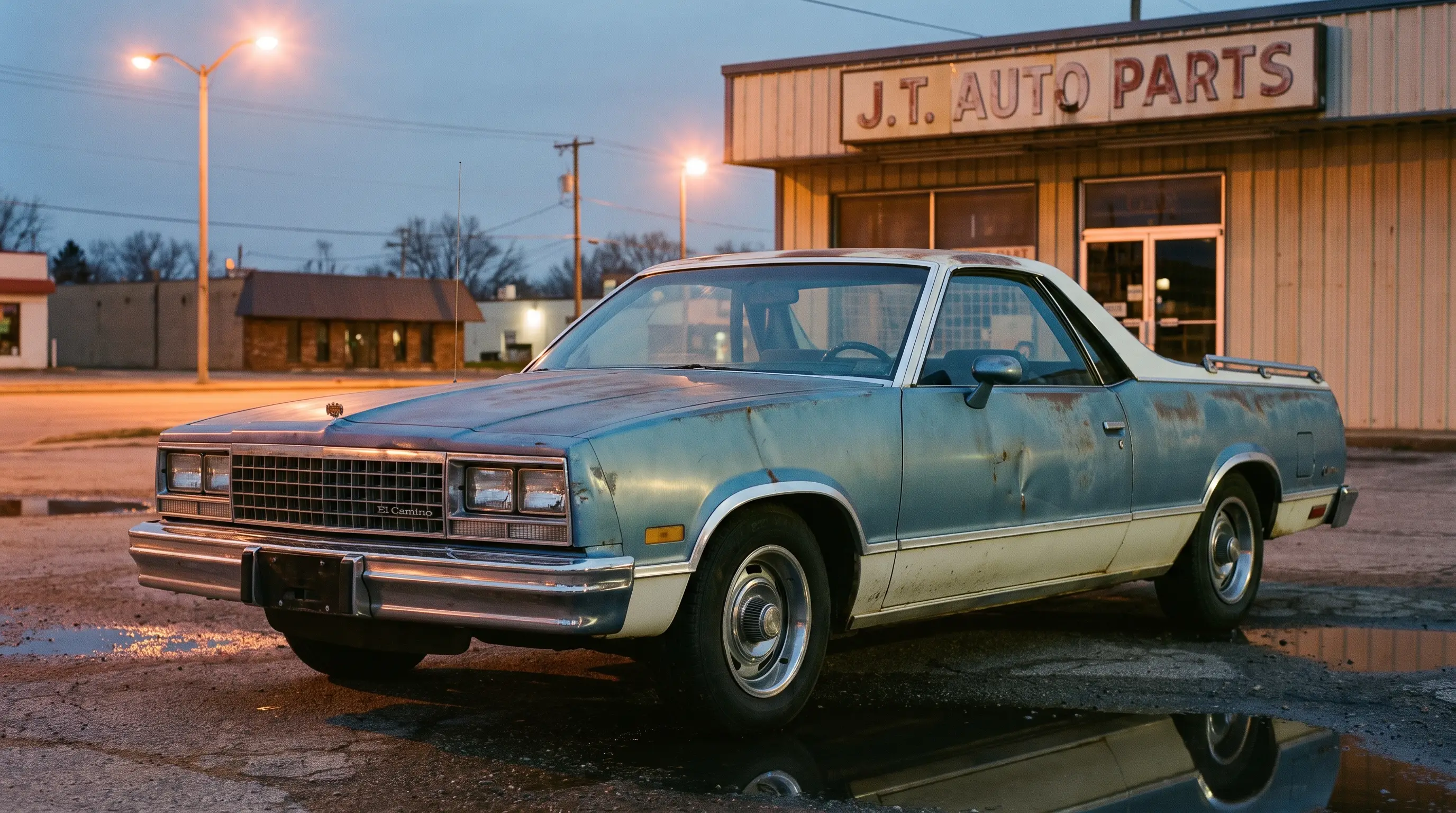
By 1985, the El Camino had already survived one downsizing, two energy crises, and the near-total collapse of the muscle car market it was born into. What remained was a leaner, G-body coupe utility that no longer chased quarter-mile bragging rights but still carried the name and the basic formula forward. The 1985 model year sits deep in what most historians call the long G-body twilight, the final stretch before Chevrolet discontinued the nameplate entirely, and the production record from that year tells a story of quiet persistence rather than dramatic reinvention.
A very different market than the muscle car years
The buyer walking into a Chevrolet dealership in 1985 looking at an El Camino faced a completely different set of priorities than a buyer in 1968 had. Fuel prices, insurance costs on anything perceived as sporty, and a broader cultural shift away from big-block performance all shaped what Chevrolet could reasonably offer and what customers actually wanted. The El Camino's continued survival into this environment required Chevrolet to reposition the car once again, this time toward practical, efficient, everyday transportation with just enough visual performance cues to satisfy buyers who remembered, or had heard about, the nameplate's earlier reputation.
What the G-body El Camino had become by 1985
The G-body platform, introduced for the El Camino starting in the late 1970s, had settled into a smaller, more efficient package than the 1968-72 SS-era cars. By 1985, engine offerings leaned toward smaller-displacement V8 and V6 options built for fuel economy compliance rather than outright horsepower, a stark contrast to the 396 and 454 big-blocks that defined the model a decade and a half earlier. Chevrolet still offered a Conquista and SS trim, keeping some visual performance cues alive even as the underlying powertrains reflected the regulatory realities of the mid-1980s rather than the muscle car era's priorities.
| Era | Platform | Performance Emphasis |
|---|---|---|
| 1968-72 SS era | Chevelle-based A-body | Big-block 396/454 muscle car performance |
| 1978-87 G-body era | Downsized G-body | Efficiency-focused, visual performance trims |
| 1985 specifically | Late G-body, deep into the twilight period | Conquista/SS trims carry image forward |
Why 1985 matters despite the smaller engines
It would be easy to dismiss the 1985 El Camino as an afterthought compared to its big-block ancestors, but that undersells what the car represented at the time. Chevrolet kept building a coupe utility for a shrinking niche market well after most domestic manufacturers had abandoned the format entirely, and the 1985 model reflects a company still willing to invest modest engineering resources into a body style with limited remaining sales volume. That persistence, more than any single spec figure, is what defines the G-body twilight period, and 1985 sits close enough to the end of production to carry real historical weight as one of the final chapters.
By the mid-1980s, GM had every incentive to consolidate its lineup and eliminate lower-volume nameplates entirely, yet the El Camino survived multiple internal reviews that could easily have ended production years earlier. That survival was not accidental. A dedicated base of fleet buyers, small business owners, and loyal repeat customers kept ordering the car in numbers that, while modest compared to the muscle car era, justified continuing production through Chevrolet's decision-making process. The 1985 model year sits right in the middle of that period of quiet institutional survival, making it a useful data point for understanding exactly how long a niche vehicle can persist when a manufacturer has genuine reasons, however modest, to keep building it.
What condition realistically looks like today
A 1985 El Camino surviving in genuinely good condition today has typically been maintained by an owner who valued the car specifically, rather than treating it as disposable transportation, and that owner history tends to matter more for this era than for the more heavily documented big-block generations. Buyers evaluating a 1985 example should weigh ownership continuity and maintenance records just as seriously as they would for an older SS 396 car, since the smaller surviving population makes each well-kept example proportionally more significant to the overall historical record of the G-body years.
Documentation challenges specific to this era
Researching G-body El Caminos from 1985 presents different challenges than researching the 1968-72 SS cars. Production numbers were lower by this point, dealer literature is scarcer in circulation, and the cars themselves generated far less contemporary magazine coverage since the muscle car press had largely moved on to other subjects. Factory build sheets and RPO codes remain the most reliable documentation source, the same as with earlier generations, but researchers working on this era rely more heavily on dealer invoice records and owner-retained paperwork than on period magazine road tests, which were rare for this specific model year.
Compounding the documentation gap, many 1985 examples were purchased as practical work vehicles by owners who never expected the car to hold collector interest decades later, which means original window stickers, owner's manuals, and dealer paperwork survived at a lower rate than for cars bought explicitly as enthusiast vehicles. Researchers piecing together production details for this era increasingly rely on assembly plant records and surviving dealer inventory logs rather than the glossy period road tests that document the 1968-72 SS cars so thoroughly. That reliance on drier institutional paperwork, rather than magazine coverage, is itself characteristic of how the entire G-body twilight period gets researched today.
"People assume the interesting research stops after 1972. It does not. The 1985 cars have their own story, and it is a story about a company quietly keeping a promise to a small but loyal customer base."
- Tom Ramirez
Collector interest is finally catching up
For decades, G-body El Caminos from years like 1985 drew little collector attention compared to the big-block cars, largely dismissed as unremarkable used vehicles rather than future classics. That has shifted meaningfully over the past several years, as a generation of buyers who grew up around these specific cars in the 1980s and 1990s reaches the point in life where they can afford to pursue a nostalgic purchase. Clean, well-documented 1985 examples, particularly Conquista and SS trims, have started appearing more frequently at regional shows and swap meets, a trend most longtime observers attribute directly to this generational shift in collector demographics rather than any sudden change in the car's objective merits.
Where 1985 fits in the broader G-body story
The 1985 El Camino is best understood as a mid-to-late chapter in the G-body's own arc, one that began with the platform's introduction in the late 1970s and closed out with the nameplate's discontinuation in 1987. Readers wanting the full context of how the G-body generation began can review a related story covering the platform's introduction, while the specific production details of the 1985 model year are covered in 1985 el camino history. Together, these accounts frame 1985 not as an afterthought but as a genuine data point in understanding how Chevrolet managed a shrinking niche market for nearly a decade before finally letting it go.
For anyone drawn to this quieter chapter of El Camino history, current listings of El Caminos for sale now occasionally include G-body examples from this exact era, offering a more affordable and honestly still-interesting alternative to the big-block cars that usually dominate the collector conversation.