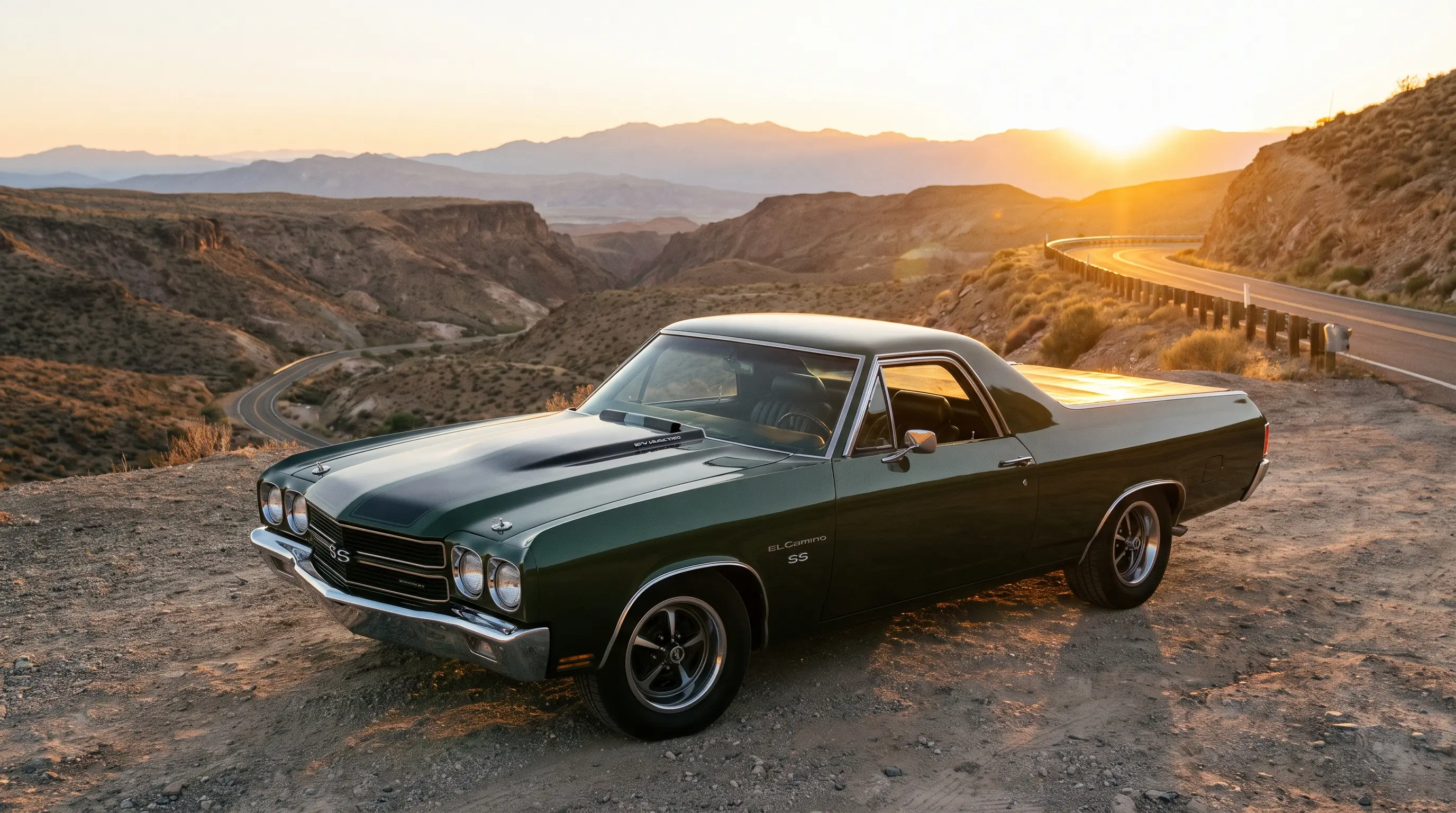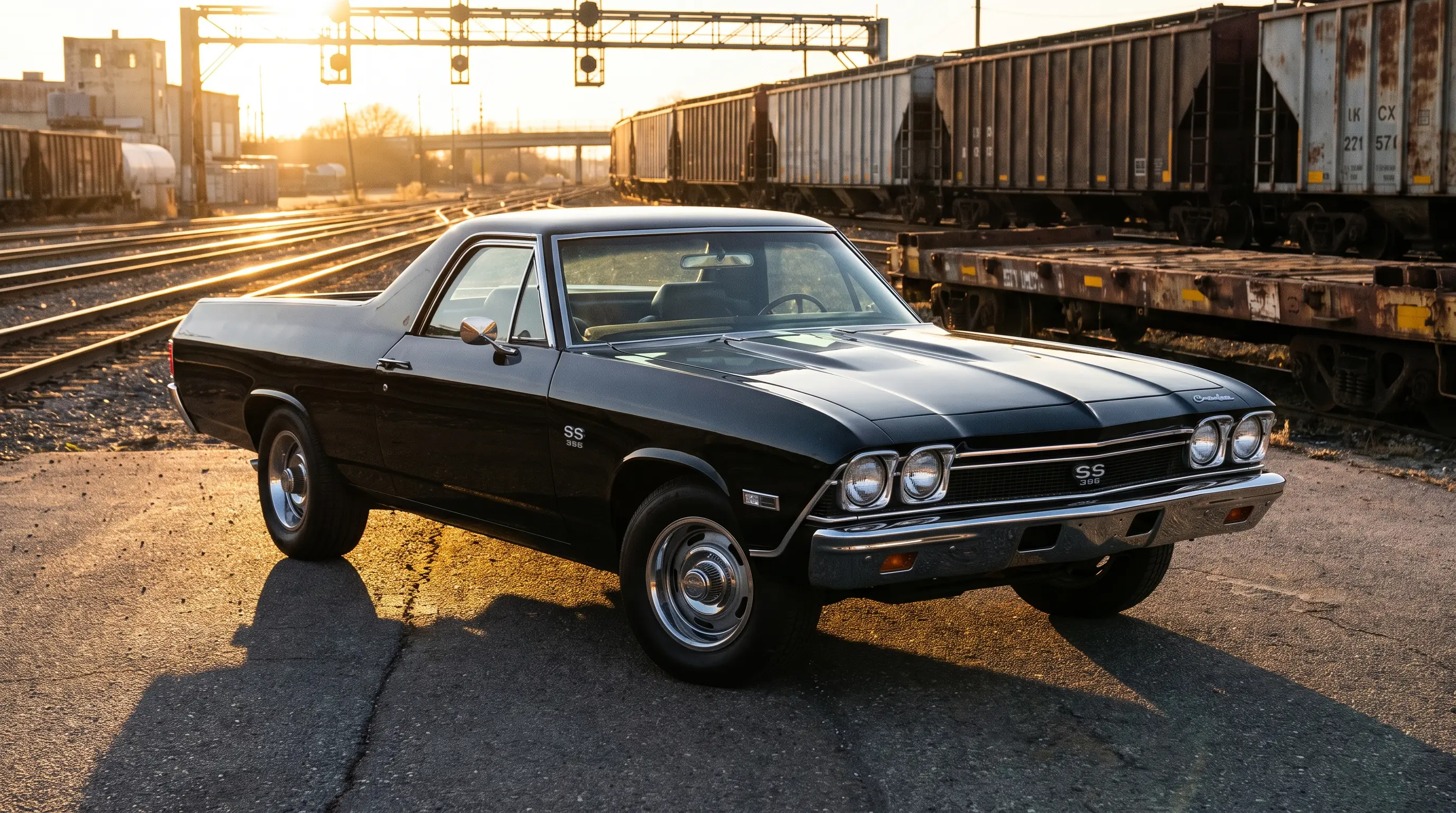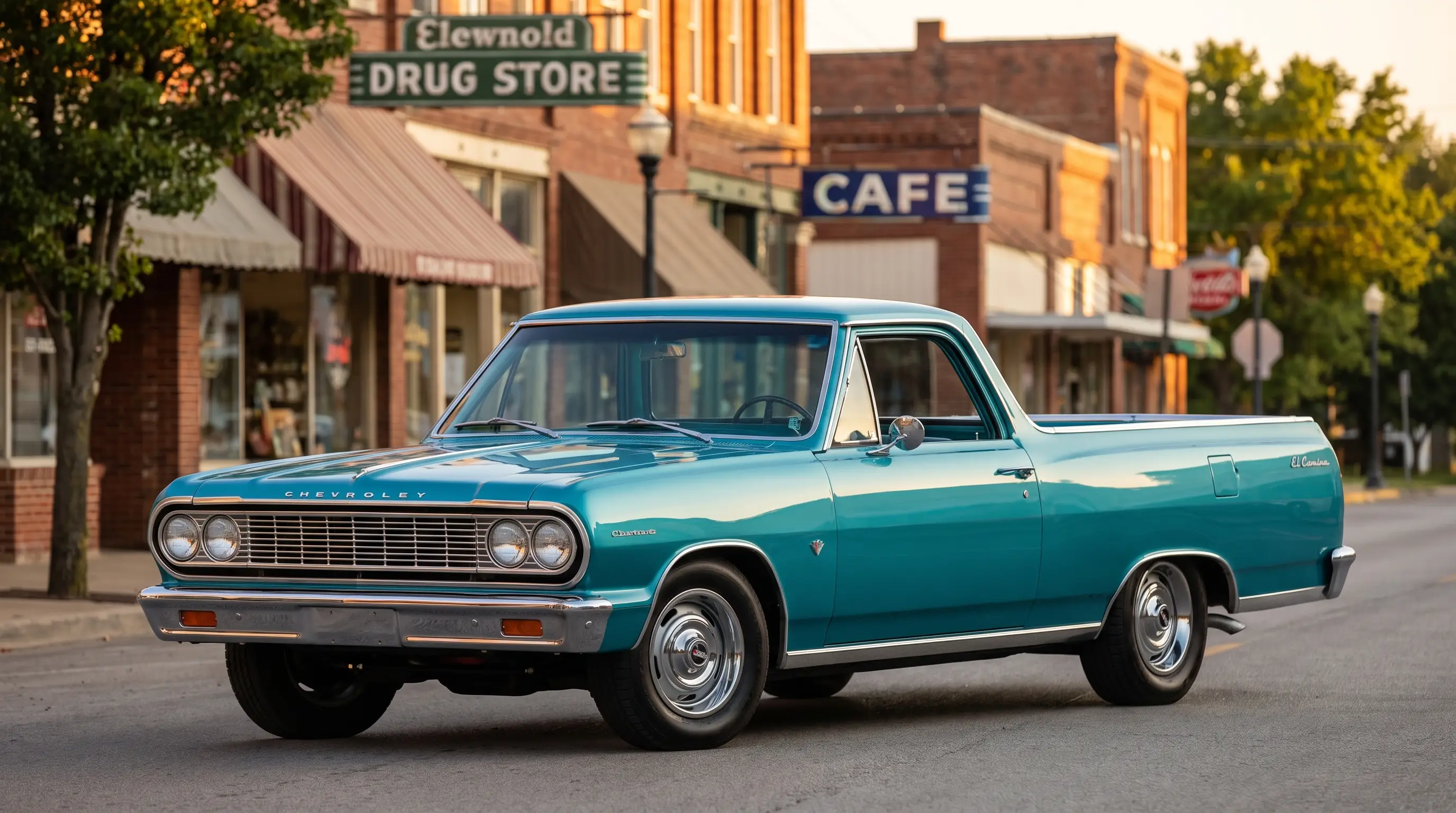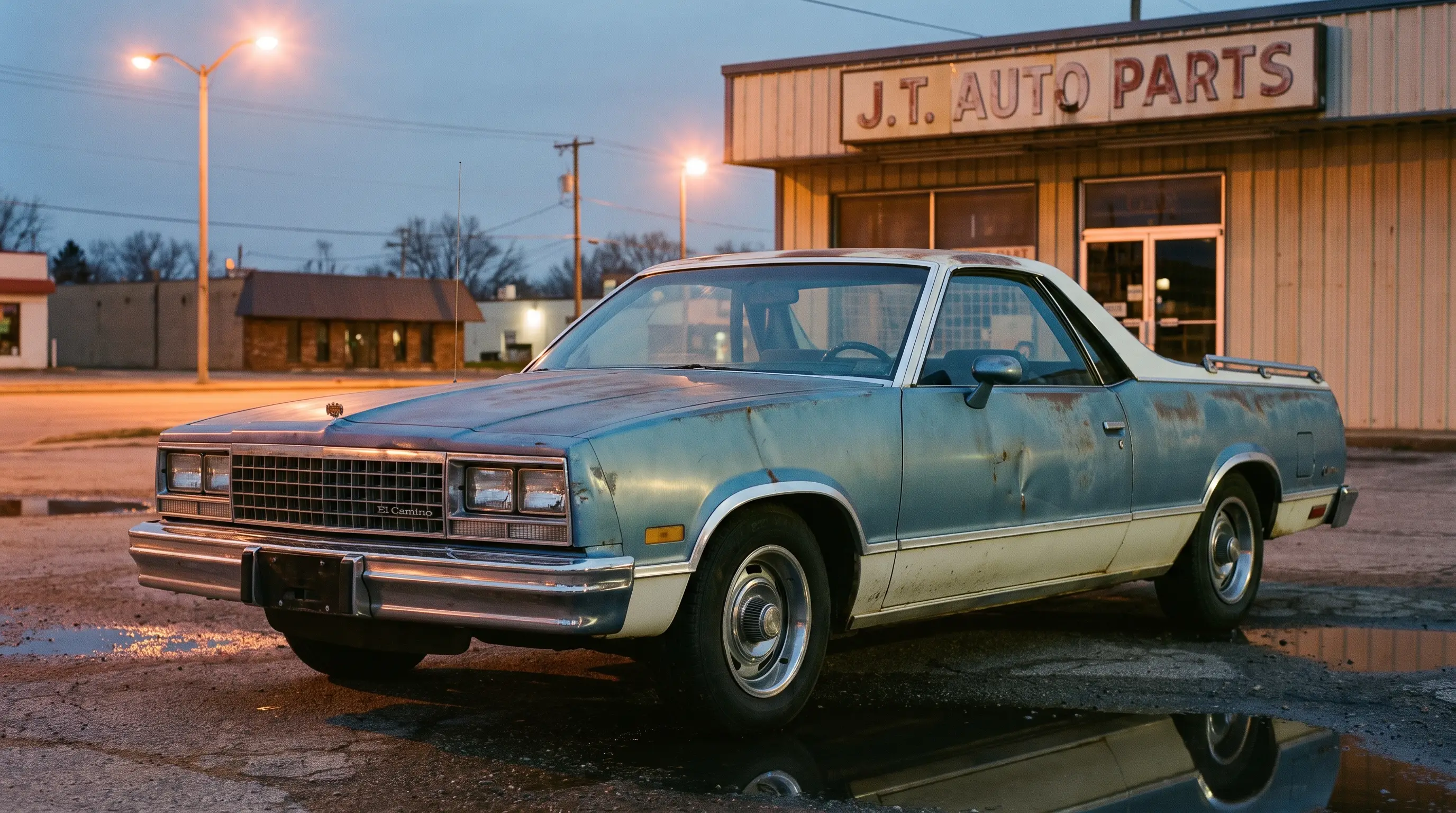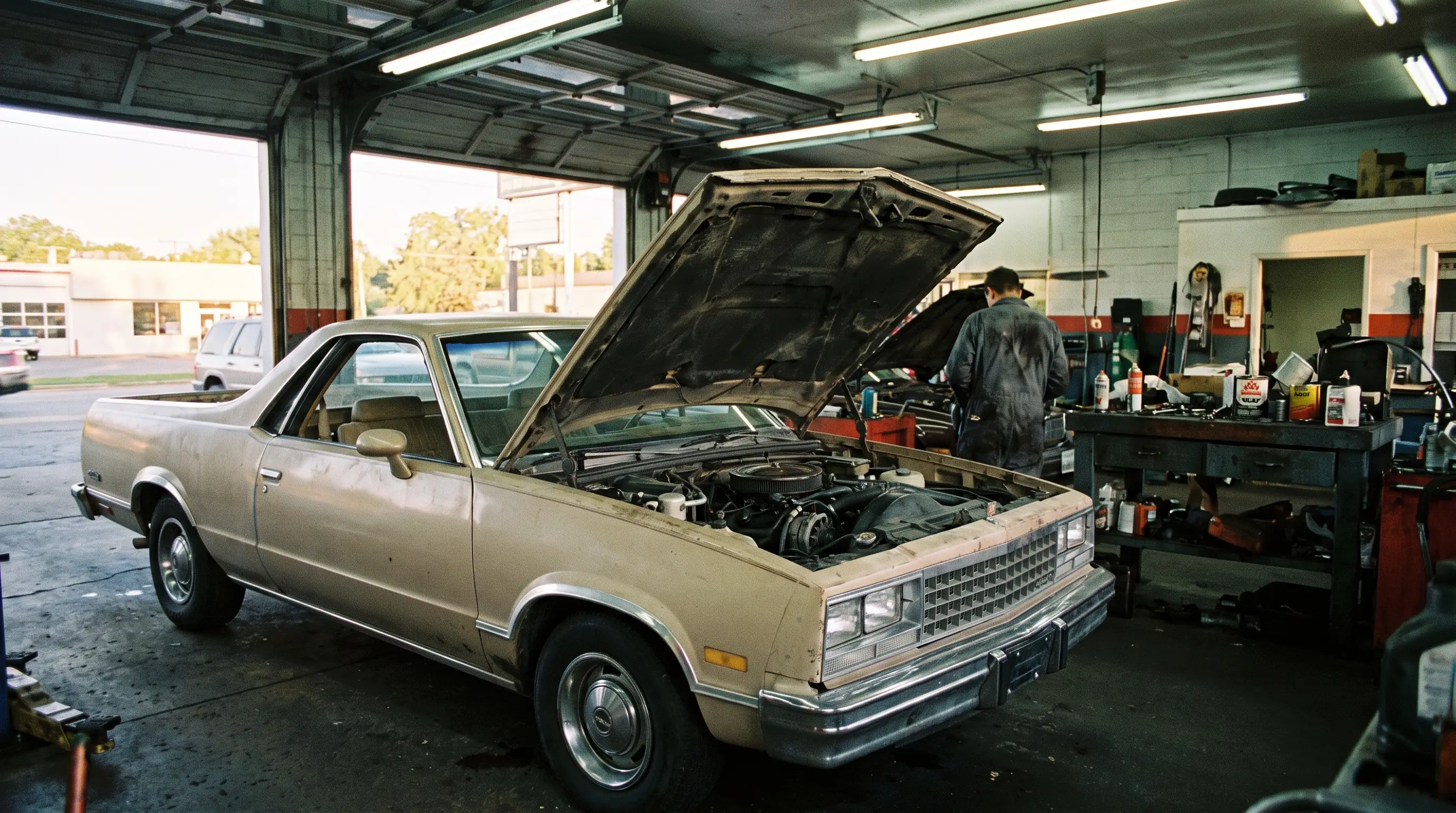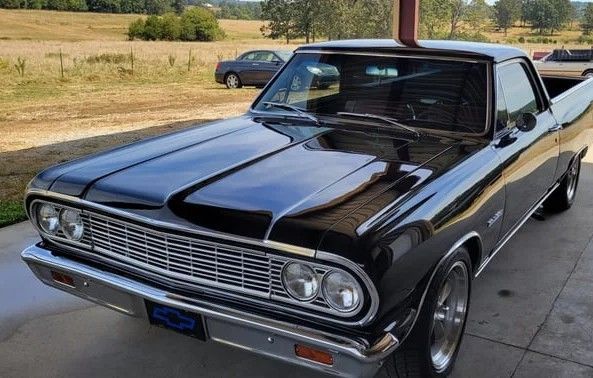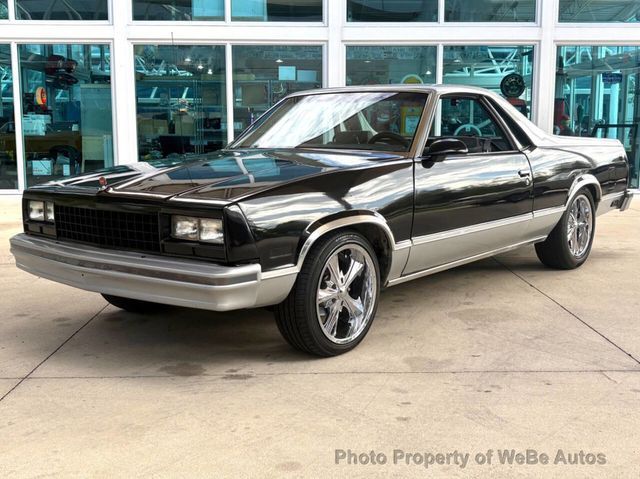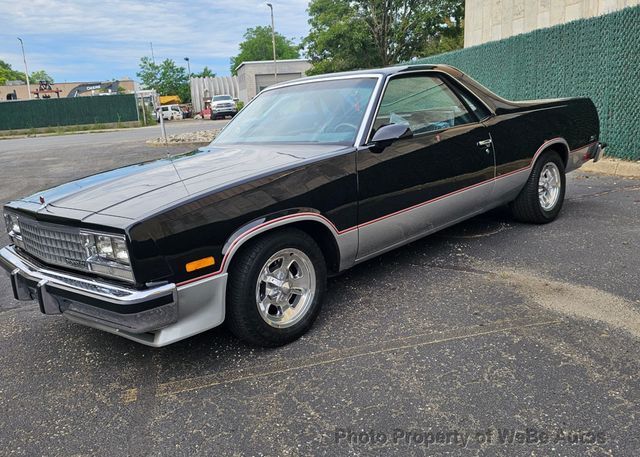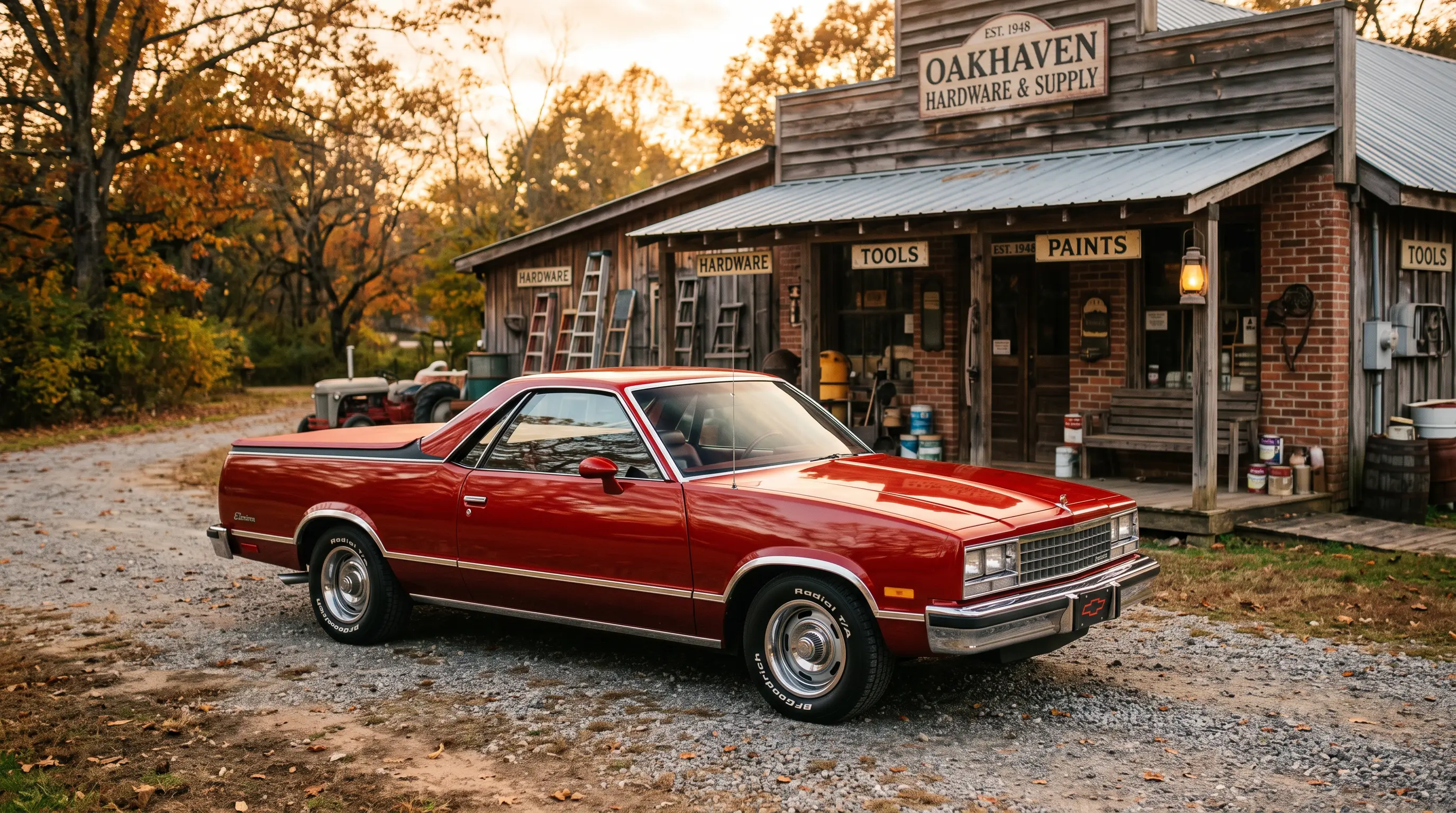
Nobody writes poetry about the 1985 el camino, and that suits me fine. This is the last real chapter of a nameplate that started as a big-finned oddity in 1959 and limped, honestly, to the finish line in 1987. The G-body cars get treated like the runt of the litter. Some of that is fair. A lot of it is snobbery from people who only love a car once it costs six figures. I have spent enough time under these things to tell you the truth about them, which is more interesting than either the hype or the dismissal.
The short version: from 1978 through 1987 the El Camino was a downsized, lighter, more sensible vehicle than the big-block bruisers that came before. It was not fast in stock form. It was not glamorous. But it was useful, it was cheap, and it hung around long enough to become the version most people my age actually remember seeing in a driveway.
The downsizing that everyone complained about
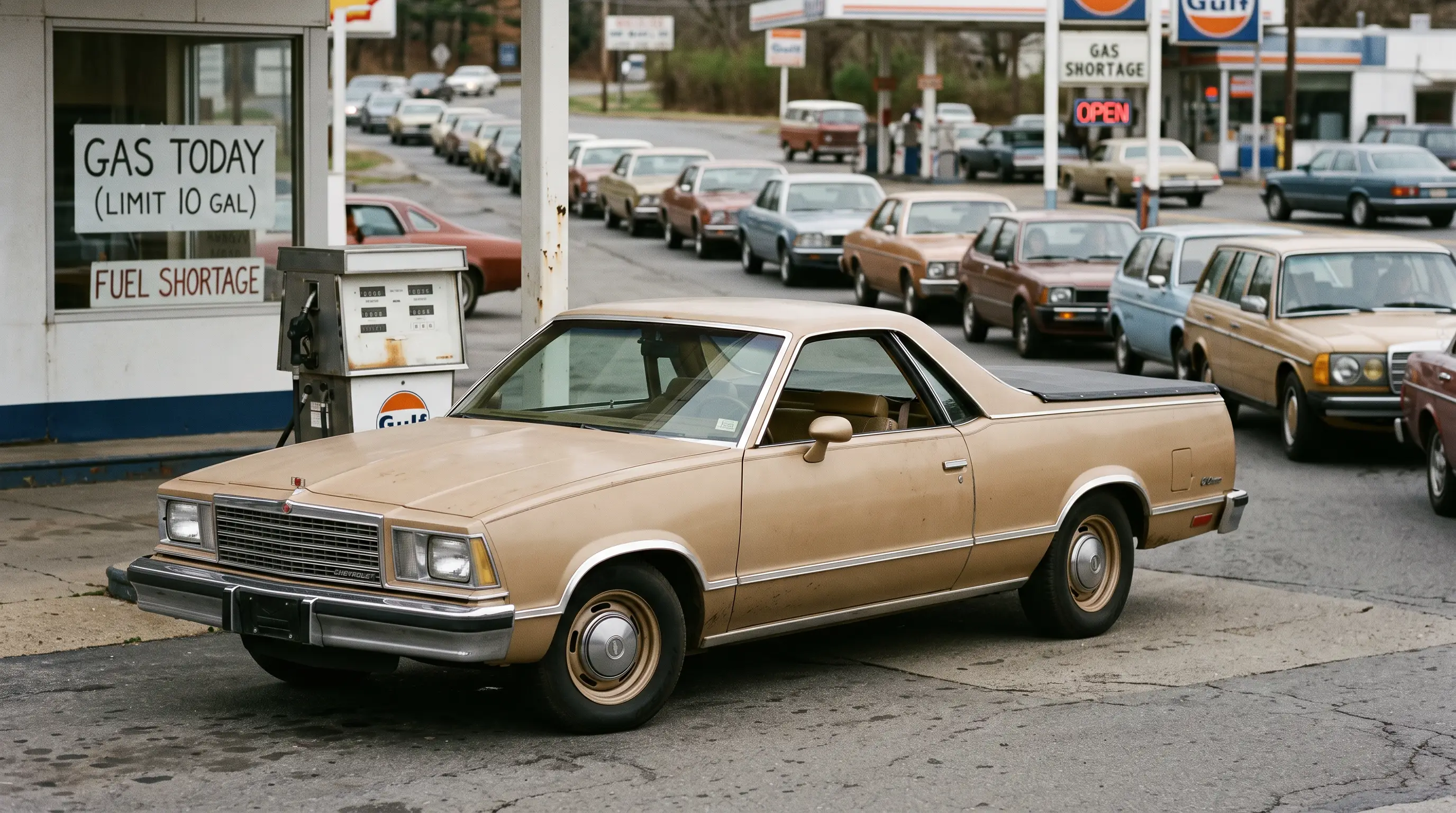
For 1978 General Motors put the El Camino on the new, smaller A-body platform, later renamed the G-body when the front-drive cars took over the A-body name. The whole industry was shrinking cars that year. Gas had gotten expensive, the rules had changed, and the land-yacht era was over whether buyers liked it or not.
The result was a car that weighed less, used less fuel, and gave up the brute presence of the 1970 SS396 monsters. Enthusiasts groaned. But here is the thing a wrench-turner notices that a purist misses: the G-body is genuinely easier to live with. The engine bay has room. The parts are everywhere. The chassis is simple and honest, and it takes a beating without drama. If you want a classic you can actually drive without a support truck following you, the downsized car has a real argument.
The whole history from fins to G-body is laid out in the chevrolet el camino story, and I would not blame anyone for finding the early cars prettier. But pretty does not start on a cold morning. The 1985 car usually does.
What was actually under the hood in 1985
By the mid-1980s the engine lineup had settled into something modest. The volume seller was a small-block V8, the 305 cubic inch unit, rated at roughly 150 horsepower in factory documentation, numbers that would embarrass a 1970 big-block. There was a V6 for the truly frugal, and General Motors had offered an Oldsmobile-built 350 diesel V8 option from 1982 through 1984, dropped before the 1985 model year, that is best remembered as a cautionary tale.
I am not going to walk you through a tune-up here, because that is not what this is about. What matters for the story is that the 1985 el camino was built to be a practical vehicle first. The horsepower wars were over, at least for now, and the El Camino was aimed at somebody who wanted a car that could carry a load of mulch on Saturday and get to work Monday without complaint. On those terms it did the job.
The diesel deserves a word, because it comes up every time these cars are discussed and the story is usually told wrong. General Motors put a diesel V8 into a lot of its cars in the early 1980s, chasing fuel economy after the second gas crisis, and it earned a reputation that followed the whole corporation around for years. Whether a particular 1985 car left with one is a question for the paperwork, but the point that survives is cultural. That engine taught a generation of buyers to be suspicious of a diesel badge, fairly or not, and it colored how people remembered these otherwise sensible cars. Reputation outlives fact, and the El Camino caught some of that spillover it did not entirely deserve.
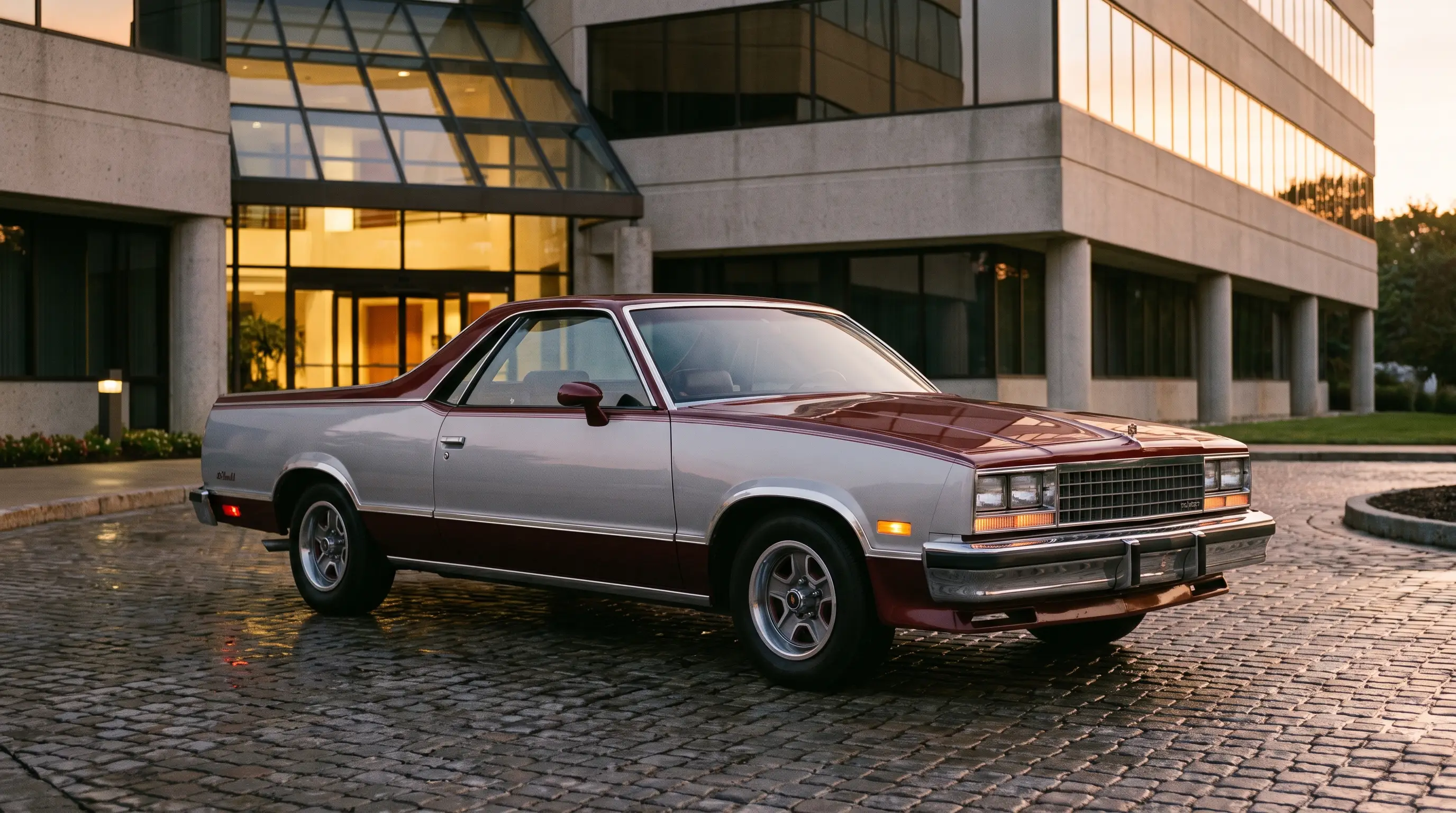
Live with a G-body for a while and you notice the small dignities of a car built without ambition. The doors are light. The visibility is good. The bed will take a motorcycle or a weekend's worth of lumber without drama. It does not ask you to prove anything, and there is a growing crowd of us who find that restful after decades of the hobby insisting every old car be a rare, numbers-matching investment. Sometimes a vehicle is just good company. This one is.
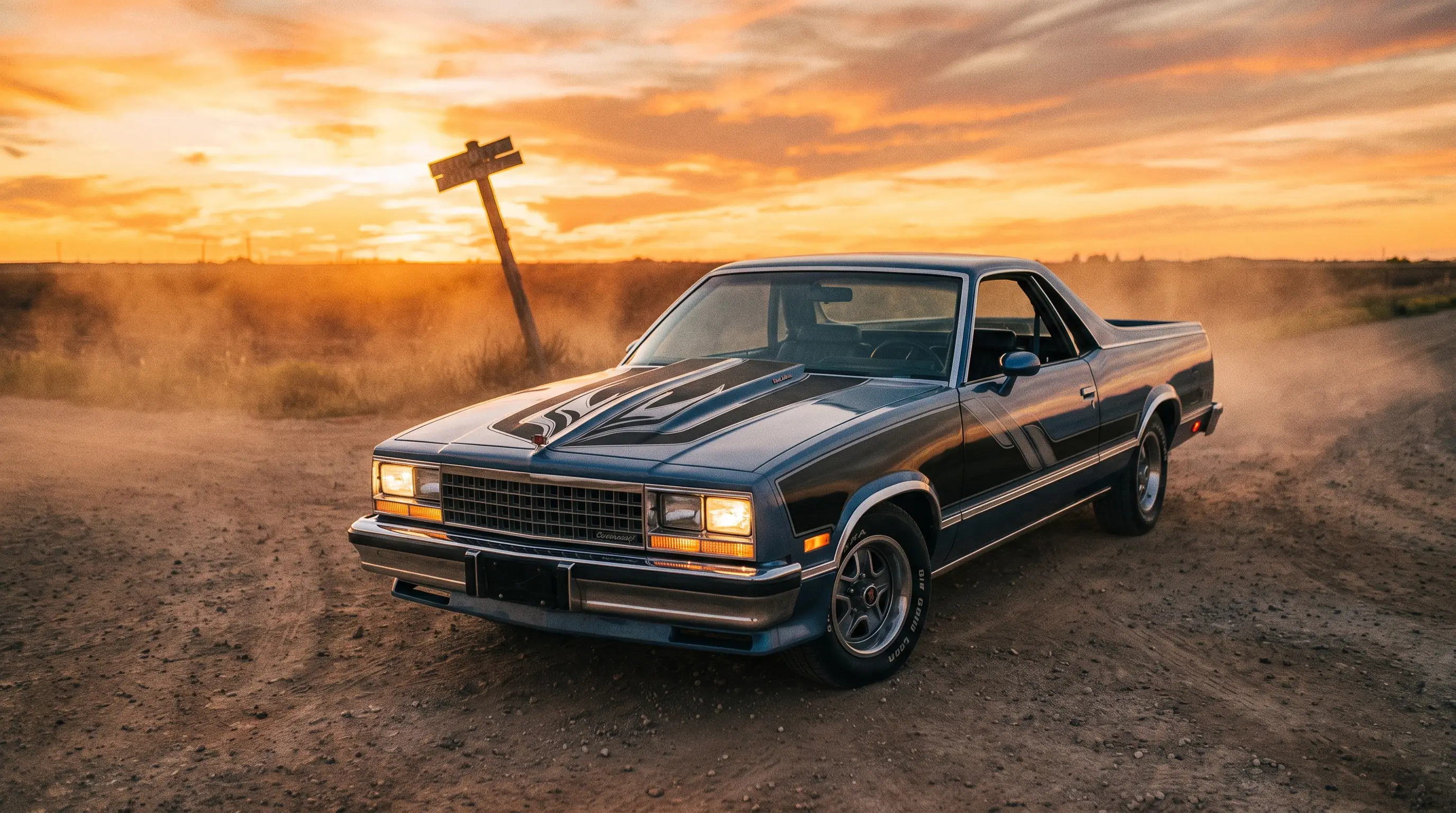
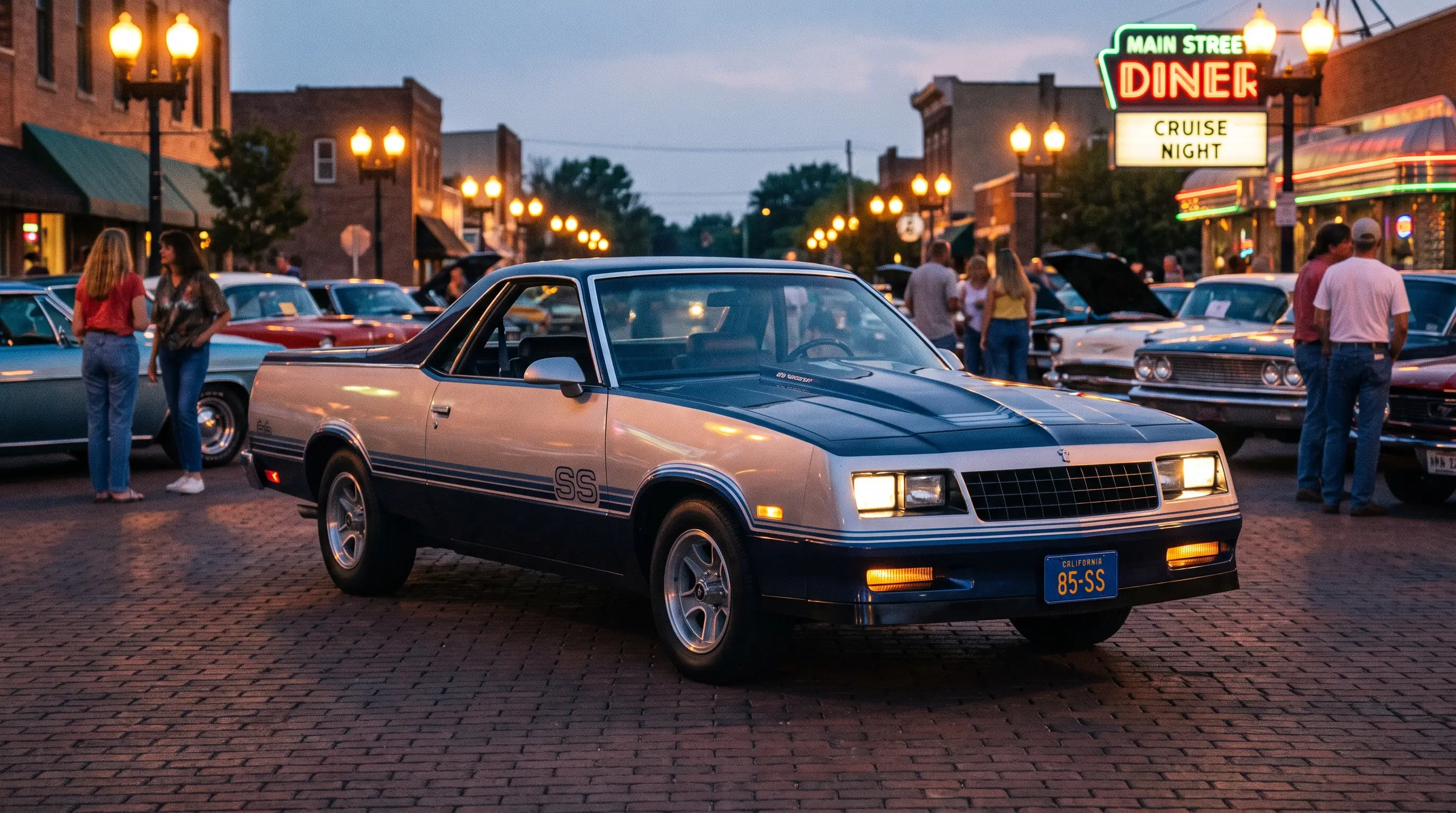
The SS treatment in this era is where it gets interesting, and a little confusing. The El Camino SS of the G-body years borrowed the front-end look of the Monte Carlo SS, and a lot of the sportier cars came through an outside conversion outfit, Choo Choo Customs of Chattanooga, Tennessee, which handled the SS package from 1983 through 1987 rather than straight off the main line. So an SS from this period is not always what a purist would call a factory muscle car. It was more of a dress-up and image play than a horsepower story. That does not make it worthless. It just makes it honest to know what you are looking at.
The Choo Choo and the SS question
People get worked up about which G-body El Caminos are real SS cars. My take is simpler than the forum arguments. In this era the SS was about appearance and trim more than a special drivetrain. The conversions done for Chevrolet gave the car the Monte Carlo nose, the graphics, and the sporty intent, but you were not getting a big-block. Anyone selling you a 1980s El Camino SS as if it were a 1970 SS396 is either confused or hoping you are.
None of that is a knock on the cars. It is just a request to be clear-eyed. A clean SS-trim G-body is a good-looking vehicle with a specific 1980s flavor, and that flavor is exactly what makes it appealing to a certain buyer now. Nostalgia has a way of turning yesterday's ordinary car into today's want. The trick is paying for what it actually is, not what the badge implies.
The long twilight and the 1987 finish
The G-body El Camino soldiered on with only minor changes through the mid-1980s. By then the platform was old, the rear-drive intermediate was a dying breed, and the writing was on the wall. Production of the El Camino wrapped up in July 1987, and by then the final cars had been assembled at GM's Ramos Arizpe plant in Mexico, where all El Camino production had been consolidated from 1985 onward. After nearly three decades, on and off, the nameplate was done.
I have a soft spot for the way it ended. No fanfare, no special edition sendoff worth remembering, just a useful vehicle that had outlived its era quietly building until somebody in an office decided it was time. That is how most working vehicles go out. The El Camino did not get a farewell tour. It just stopped showing up in the brochure.
| Attribute | 1985 El Camino detail |
|---|---|
| Generation | 1978-1987 G-body |
| Platform | GM rear-drive G-body (downsized) |
| Volume engine | 305 cubic inch small-block V8, about 150 hp |
| Other engines | V6; Oldsmobile 350 diesel V8 offered 1982-1984, dropped for 1985 |
| Badge twin | GMC Caballero |
| SS in this era | Appearance package by Choo Choo Customs, Monte Carlo-style nose, 1983-1987 |
| Final year | 1987, assembled at Ramos Arizpe, Mexico |
Why the G-body is finally getting respect
For years these cars were the ones you could buy for beer money. That is changing, slowly, and the reasons are the same ones that always drive this stuff. The people who were teenagers in the 1980s now have paychecks, and they want the car from the neighborhood, not the car from the museum. A downsized El Camino is attainable, easy to work on, and it does not demand a second mortgage. That combination is rare in the classic world, and the market is starting to notice.
There is also the practical angle I keep coming back to. Parts availability for the G-body is good. The mechanicals are shared across a whole family of GM cars, which means the hobby has decades of accumulated knowledge and a healthy supply chain. Compare that to chasing rare trim for a fifty-year-old halo car and the appeal of the ordinary version gets a lot clearer. You can enjoy a G-body without turning your life into a scavenger hunt.
I will say one more thing about respect, because it cuts against my own grumbling. The G-body El Camino is the version that put the largest number of people behind the wheel of the nameplate in its final decade. For a lot of families this was the El Camino, the one in the driveway, the one that hauled the Christmas tree and the one the kid learned to drive in. History is not only made by the rare and the fast. It is also made by the common car that showed up in ordinary life, day after day, until it became part of the furniture of a decade. The downsized car has that kind of history in spades, and I think the hobby is finally old enough to admit it counts.
What I would not do is oversell it. This is not a secret muscle car waiting to be discovered, and anybody telling you the G-body is the next big investment is probably trying to sell you one. Buy it because you like it, because it is easy to own, and because it carries a slice of everyday history that the trophy cars skip right over. That is reason enough. It always was.
"The G-body El Camino is the one you can actually use. It will not win a bench-racing argument, but it starts, it hauls, and the parts are on the shelf. For a lot of us that beats a trailer queen every day of the week."
- Mike Sullivan
Buying with your eyes open
If you go looking at these, the honest advice is to judge condition over badges. Rust is the enemy on any car this age, and the G-body is no exception. A straight, solid, unmolested driver is worth more to your sanity than a rough car wearing SS graphics somebody added in a garage. Documentation matters less here than it does on the big-block cars, because the drivetrain story is not the selling point. What you want is a good body, a running engine, and a seller who is honest about which parts are original.
The story did not begin with these cars, of course. To see where the modern El Camino identity was actually built, go back to the next chapter of the nameplate's revival and the muscle years that followed. And if the practical charm of a downsized hauler is what you are after, there are always plenty of classic El Caminos on the market to compare. Just buy the metal, not the myth, and you will do fine.