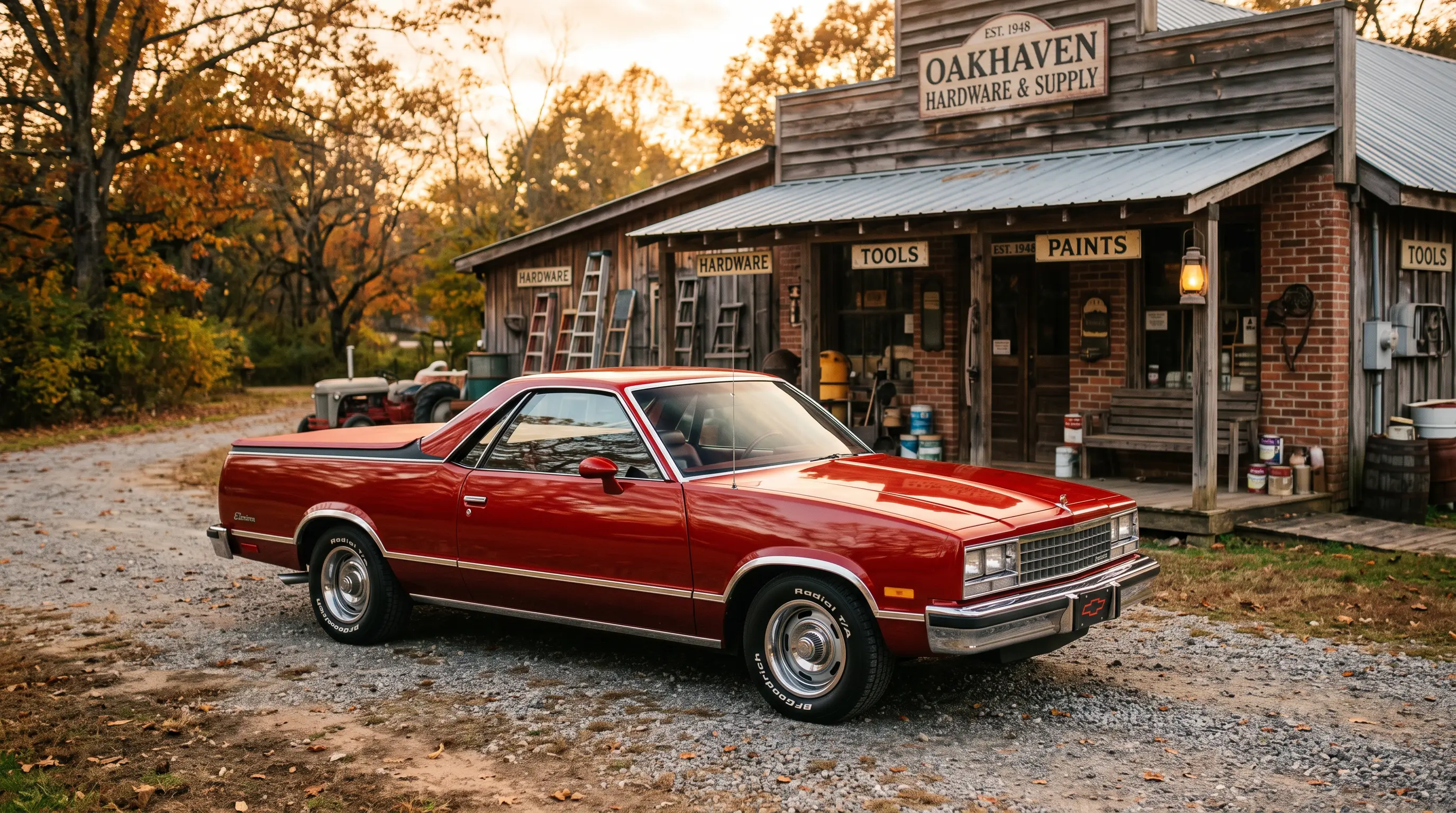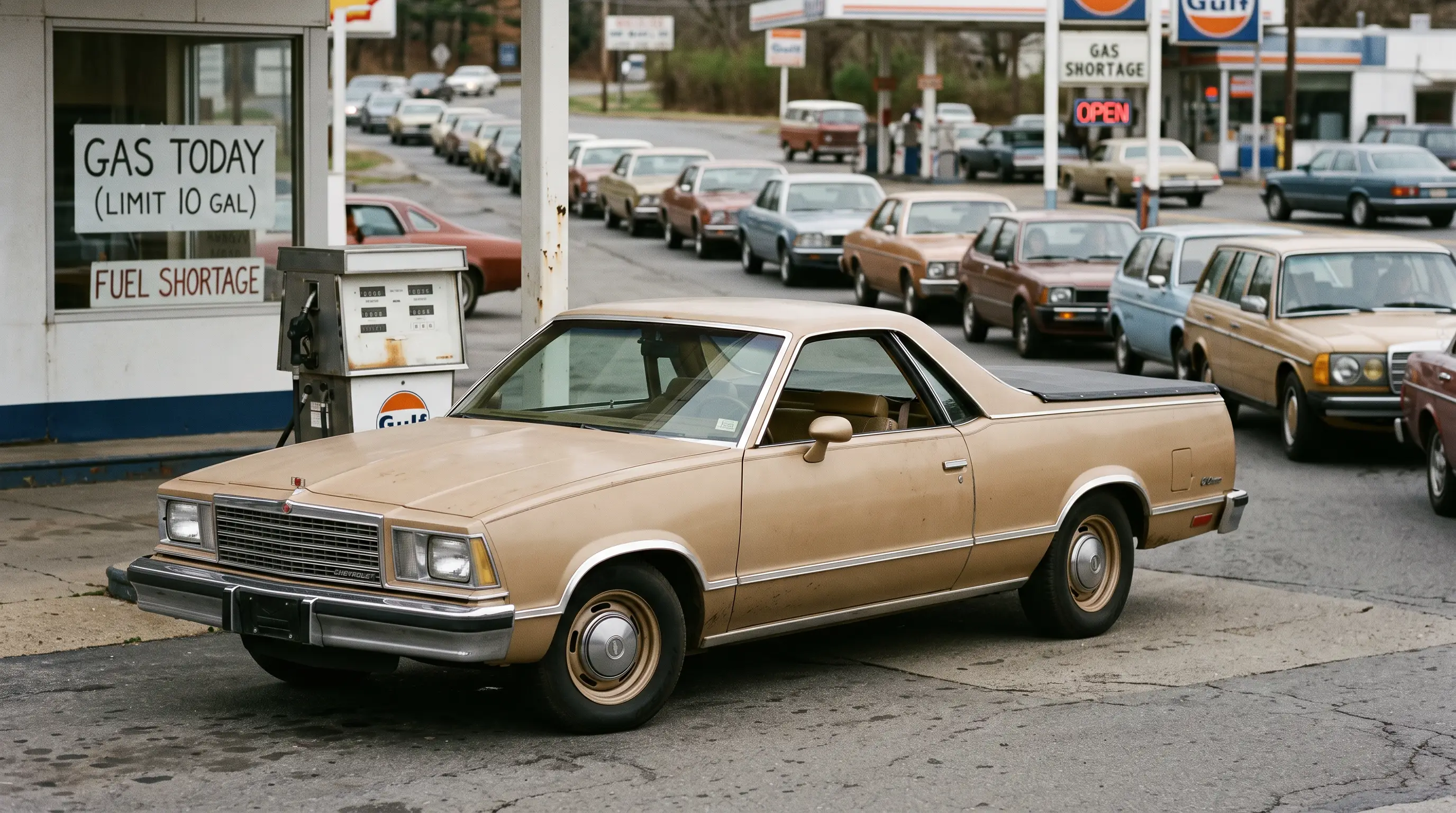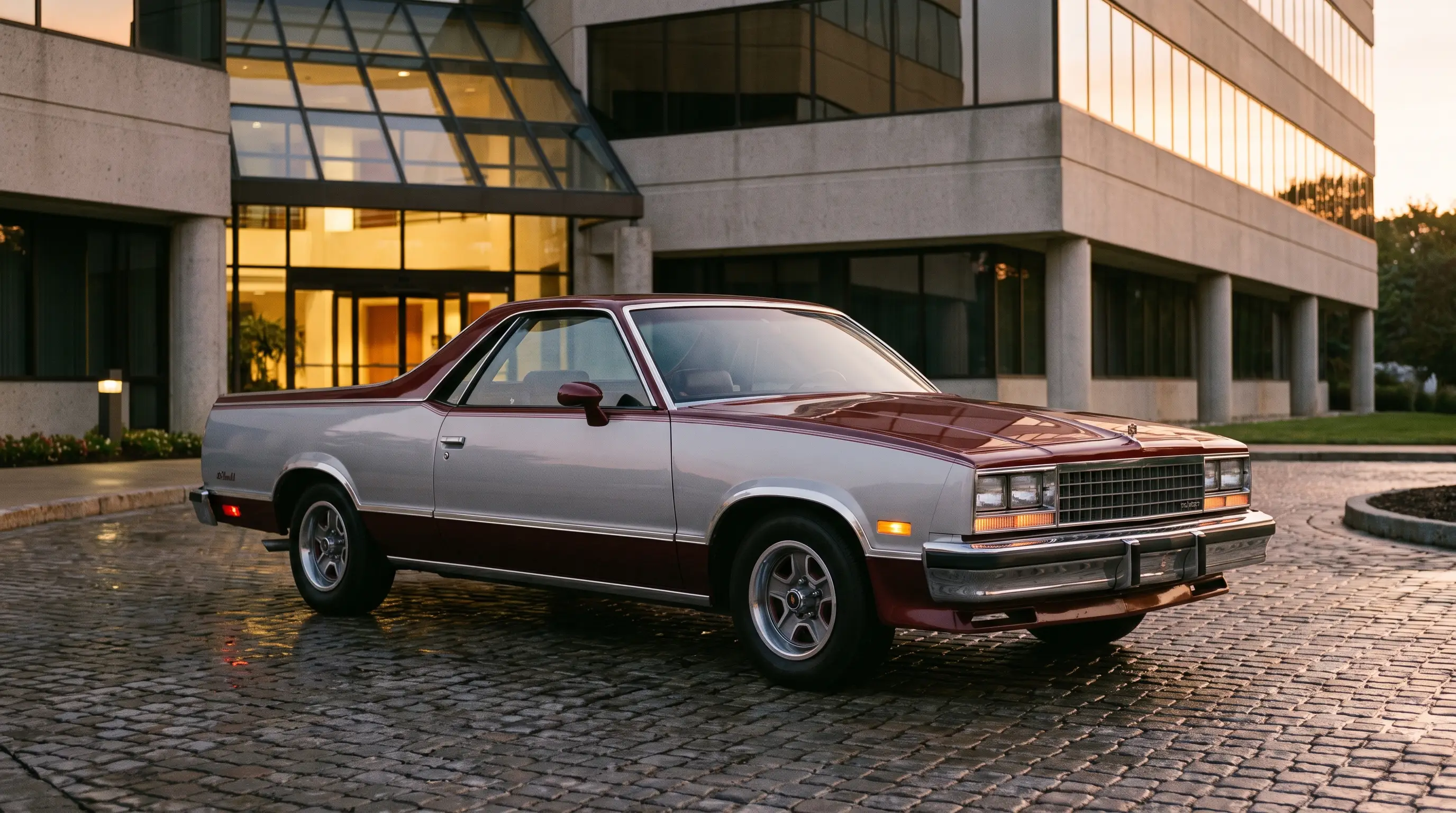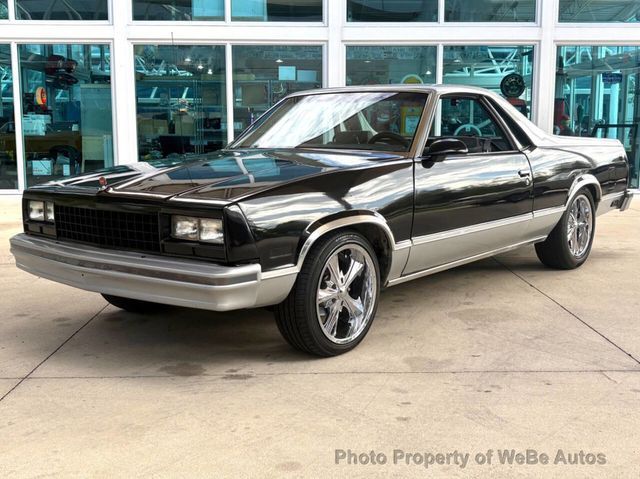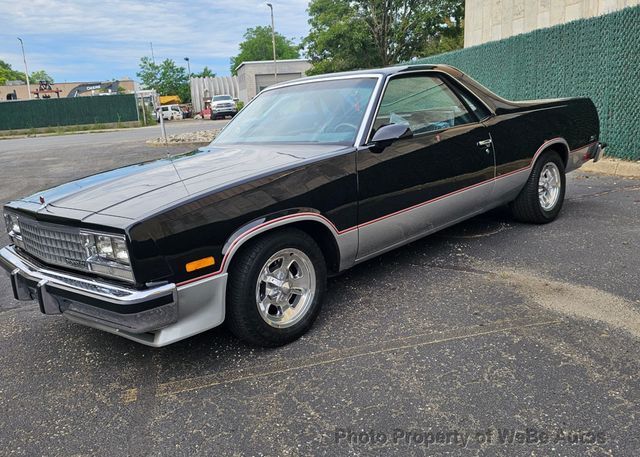
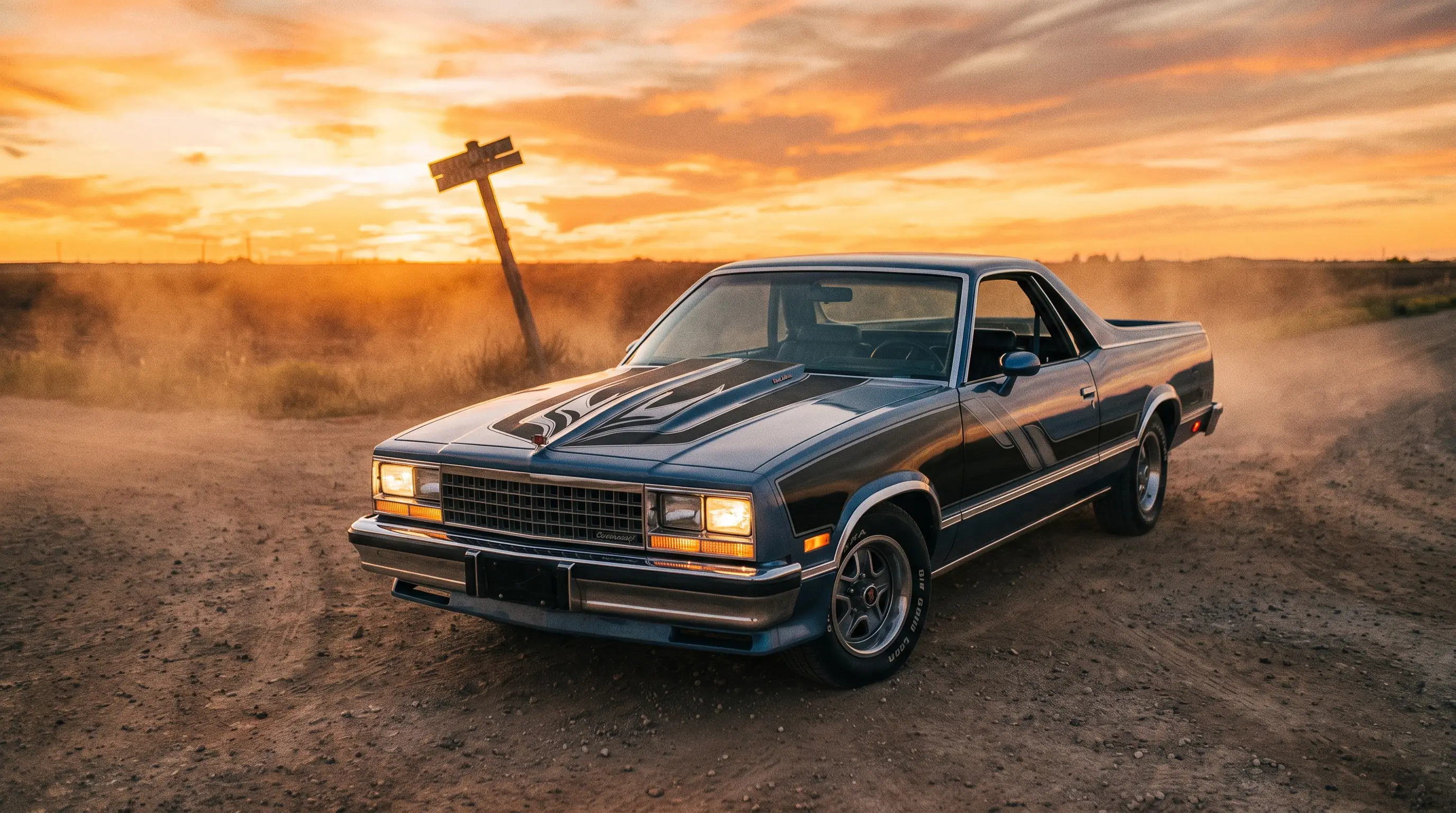
Hood graphics rarely get their own chapter in automotive history, but the Royal Knight package on the 1985 Chevrolet El Camino deserves one. It was a decal-and-trim appearance option built for a downsized G-body truck that no longer carried the horsepower to back up its swagger, and Chevrolet leaned entirely on graphics to sell the illusion of aggression. The result is one of the more distinctive visual identities the El Camino ever wore, and it says as much about the mid-1980s as any spec sheet could.
What the Royal Knight package actually included
The Royal Knight was an appearance option, not a performance package, and Chevrolet's own documentation treated it that way. Buyers got a bold hood graphic, typically a large knight-themed emblem or lettering treatment depending on the model year, along with body-side striping, special badging, and often a two-tone or accent paint scheme. Mechanically the car underneath was whatever engine and trim the buyer had already chosen, most commonly the 305 cubic inch V8 or the base V6, so the Royal Knight added nothing to the drivetrain. It existed purely to differentiate a car on the lot from an otherwise identical, less flashy example.
Production records for exact Royal Knight take rates by year are thin, and Chevrolet did not treat the package with the documentation rigor reserved for actual performance options like the SS. What is clear from period literature and dealer materials is that the package cycled through several graphic treatments across the early-to-mid 1980s, part of a broader pattern of GM using appearance packages to keep aging platforms feeling current without the expense of mechanical development.
The context that made graphics packages necessary
By 1985 the El Camino had been living on the G-body platform for seven years, and the muscle car horsepower wars of the late 1960s were a distant memory. Emissions regulations and fuel economy mandates had flattened output across the entire industry, and Chevrolet's own SS badge on the El Camino now represented a modest 305 V8 rather than the 396 or 454 big blocks that had defined the nameplate's peak. read the background on how the platform reached this point, because the Royal Knight only makes sense against that backdrop of a car that needed visual excitement to compensate for what the engine bay no longer offered.
Graphics packages became a cheap, effective lever for manufacturers across Detroit during this period. Pontiac did it with the Trans Am, Ford did it with various Mustang appearance packages, and Chevrolet applied the same logic to both the Camaro and the El Camino. A hood decal costs a fraction of what a genuine performance upgrade costs to engineer and certify, and it photographs just as well in a dealer brochure.
How collectors view Royal Knight cars today
Original, documented Royal Knight package cars occupy a specific niche in the El Camino collector world. They are not chased with the same intensity as a genuine SS 396 or SS 454 from 1970, but they hold real appeal to buyers interested in the full arc of the nameplate's history rather than just its muscle car peak. Finding a car with its original decals intact, or with factory documentation confirming the package was ordered from new, adds a meaningful premium over a generic 1985 El Camino with aftermarket graphics applied later to mimic the look.
Reproduction decal kits exist for the Royal Knight and similar packages, which has made it easier for owners to restore a car's appearance but harder for buyers to verify authenticity without paperwork. worth a look too is the two-tone Conquista trim from the same era, a quieter alternative to Royal Knight aimed at buyers who wanted style without the boldness of a hood graphic.
Why the package still matters to the nameplate's story
The Royal Knight represents a specific moment when Chevrolet had to sell excitement without the mechanical means to back it up, and that tension is exactly what makes it interesting to study now. It is a snapshot of an automaker adapting to a regulatory and economic environment the original muscle car engineers never had to consider, using graphics as a substitute for the displacement and compression that used to do the talking.
"A hood decal cannot replace cubic inches, but Chevrolet's designers understood something real about how buyers shop. Sometimes the look sells the car before the engine ever gets a chance to disappoint anyone."
- Tom Ramirez
How the Royal Knight fit against other appearance packages
Chevrolet did not stop at one graphics treatment for the 1980s El Camino, and the Royal Knight has to be understood alongside its siblings rather than in isolation. The SS decal package pushed a more aggressive, performance-adjacent look, while the Conquista two-tone trim went the opposite direction entirely, offering understated elegance through paint rather than bold lettering. The Royal Knight sat somewhere in between, a distinctive theme built around its knight imagery that gave buyers a third visual identity to choose from within a single showroom.
This proliferation of appearance packages reflected a broader truth about the El Camino by the mid-1980s: Chevrolet had accepted that the nameplate's future depended on style-driven differentiation rather than mechanical variety. A single engine lineup underpinned nearly every trim level, so the graphics, badging, and paint treatments did the heavy lifting that displacement and horsepower figures once handled during the muscle car years.
Tips for evaluating a Royal Knight today
The people who bought Royal Knight cars new
Dealer records and period advertising suggest the Royal Knight targeted a buyer who wanted to stand out at a car show or cruise night without necessarily chasing raw acceleration. This was a customer more interested in visual identity than lap times, someone who valued a distinctive package that photographed well and drew attention in a parking lot, a very different priority than the SS buyer chasing whatever performance remained available under the hood. Chevrolet's dealer network apparently found enough of these buyers to keep offering the package across multiple model years, evidence that style alone could still move metal even after the muscle car era had effectively ended.
That buyer profile also explains why so few Royal Knight cars were heavily modified after purchase compared to SS models from the same period. Owners who chose the package specifically for its factory graphics treatment had little incentive to alter what they had paid extra to get, which is part of why original examples, when they do surface, often present in remarkably unmolested condition decades later.
For anyone chasing a specific graphics package from this era, patience and documentation matter more than they do with the more famous muscle years. If a Royal Knight or similar 1980s El Camino interests you, take time to shop classic El Camino listings and compare graphic condition and originality before committing.