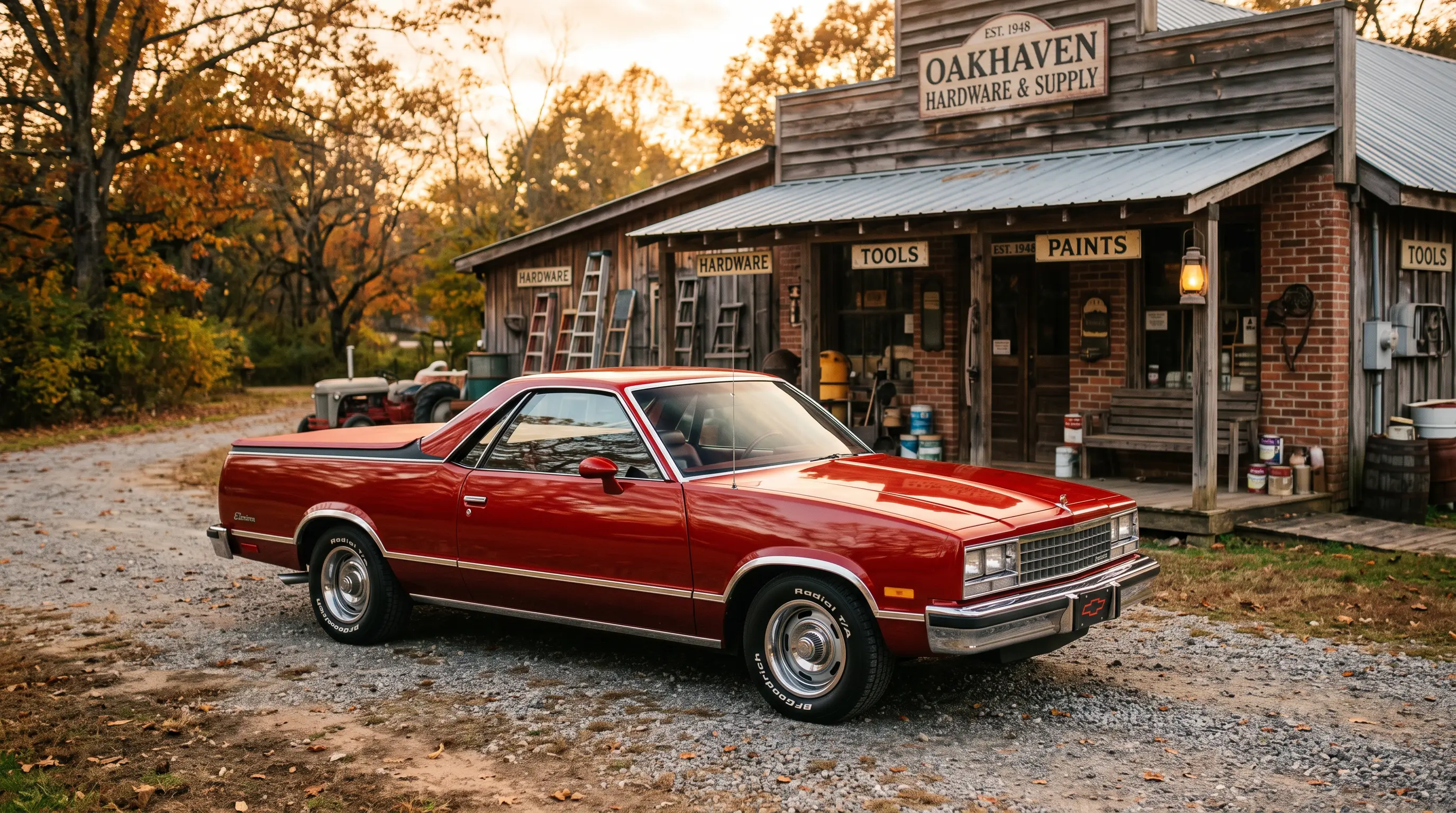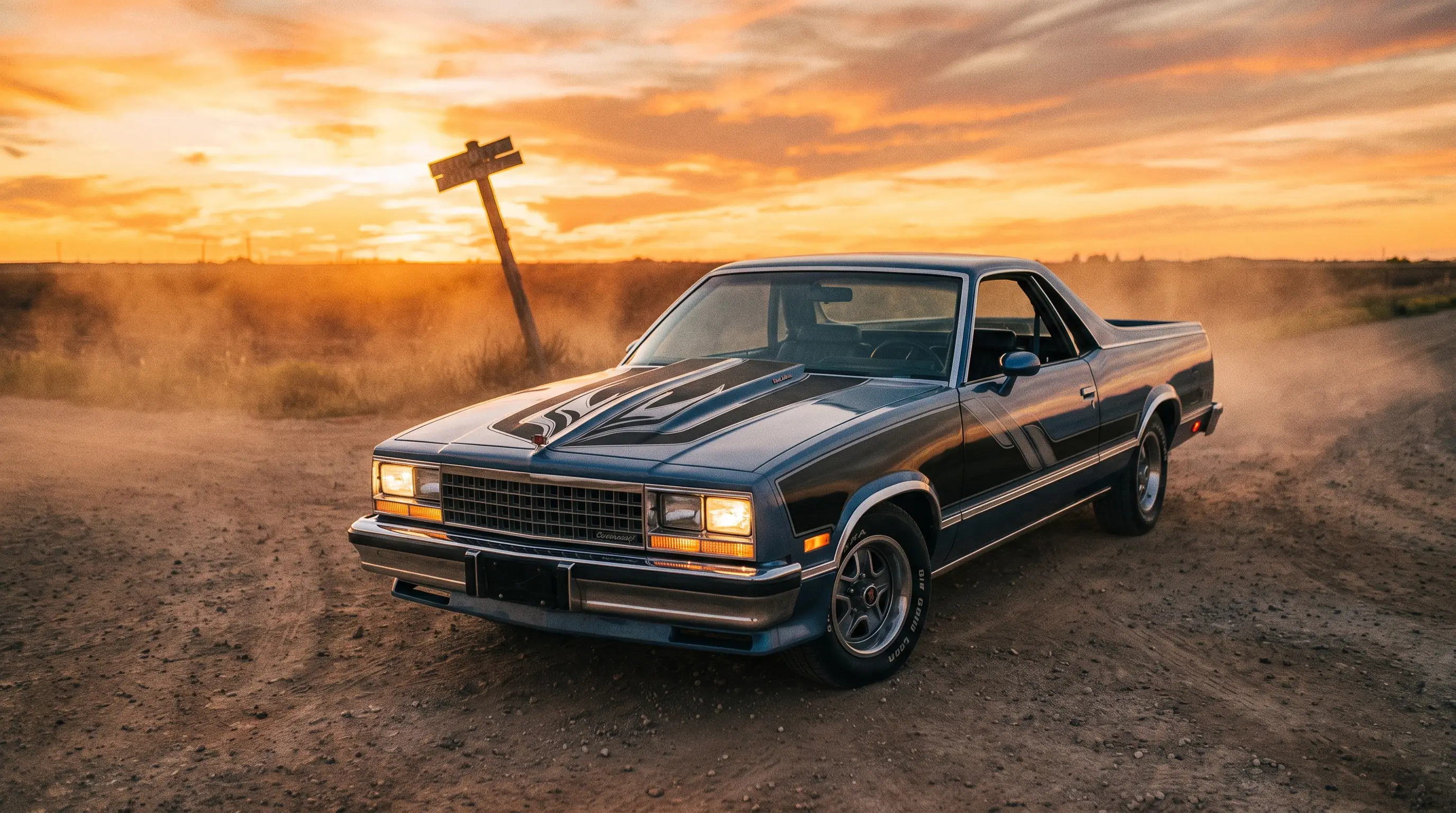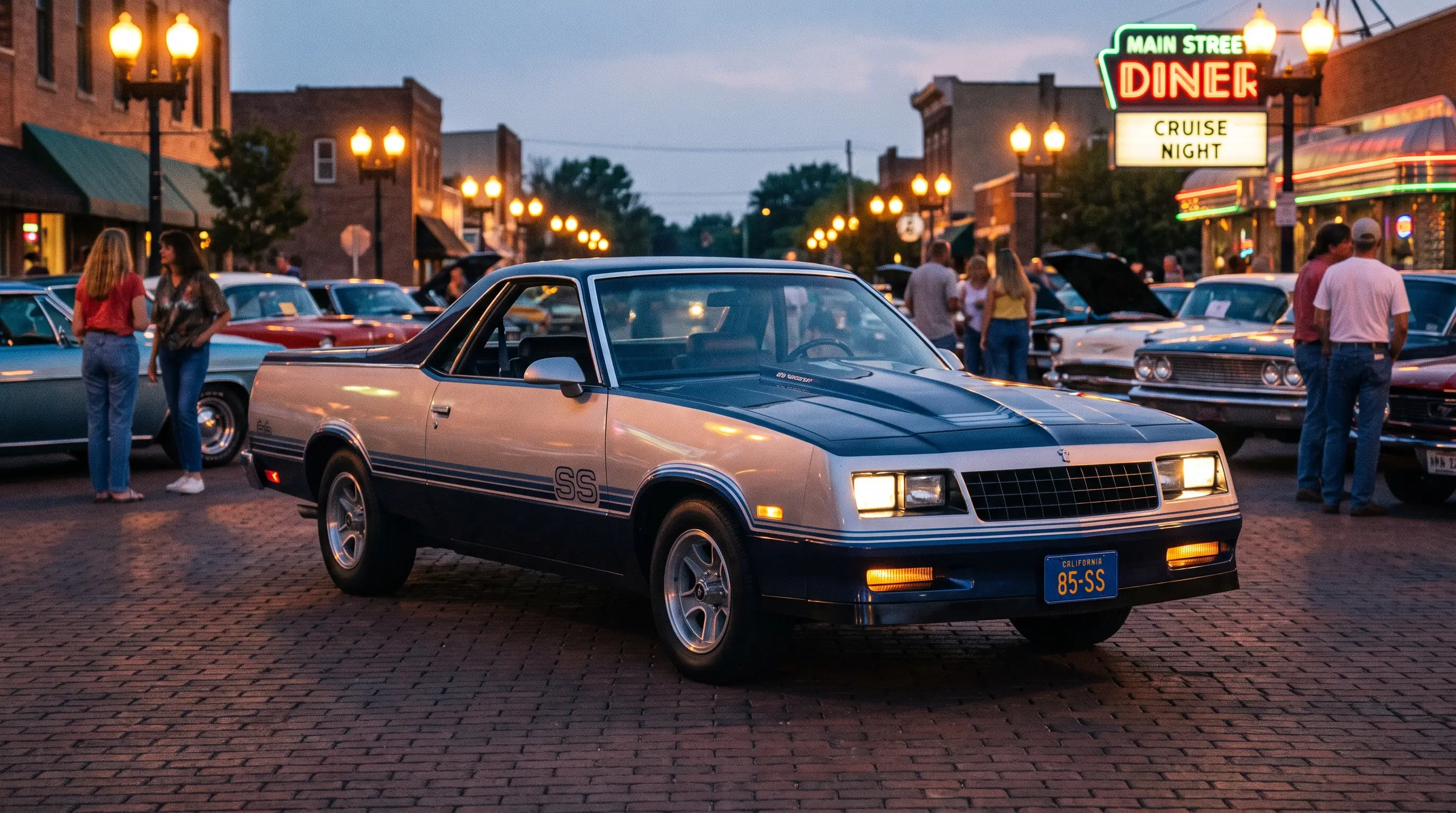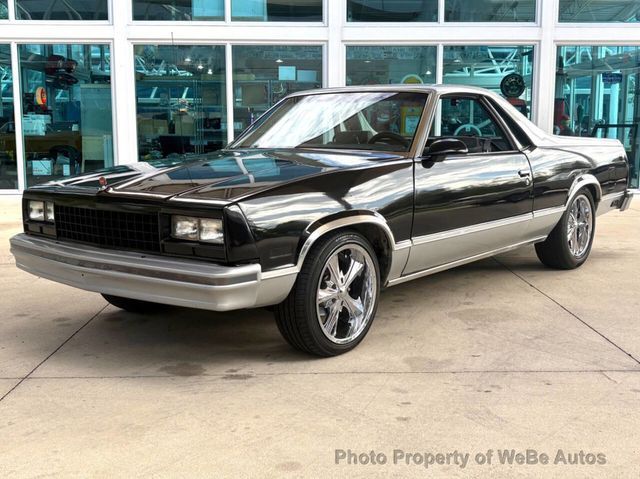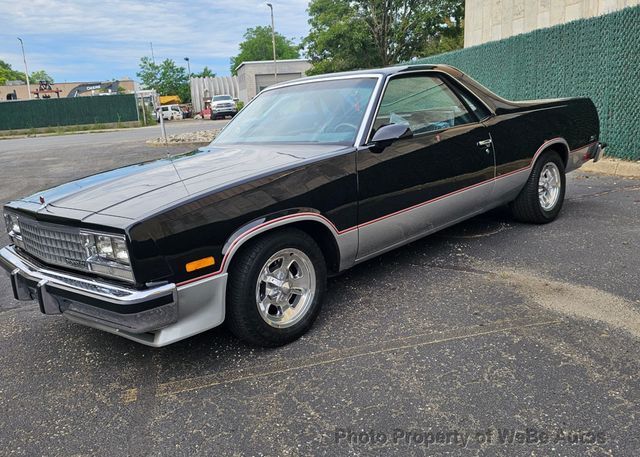
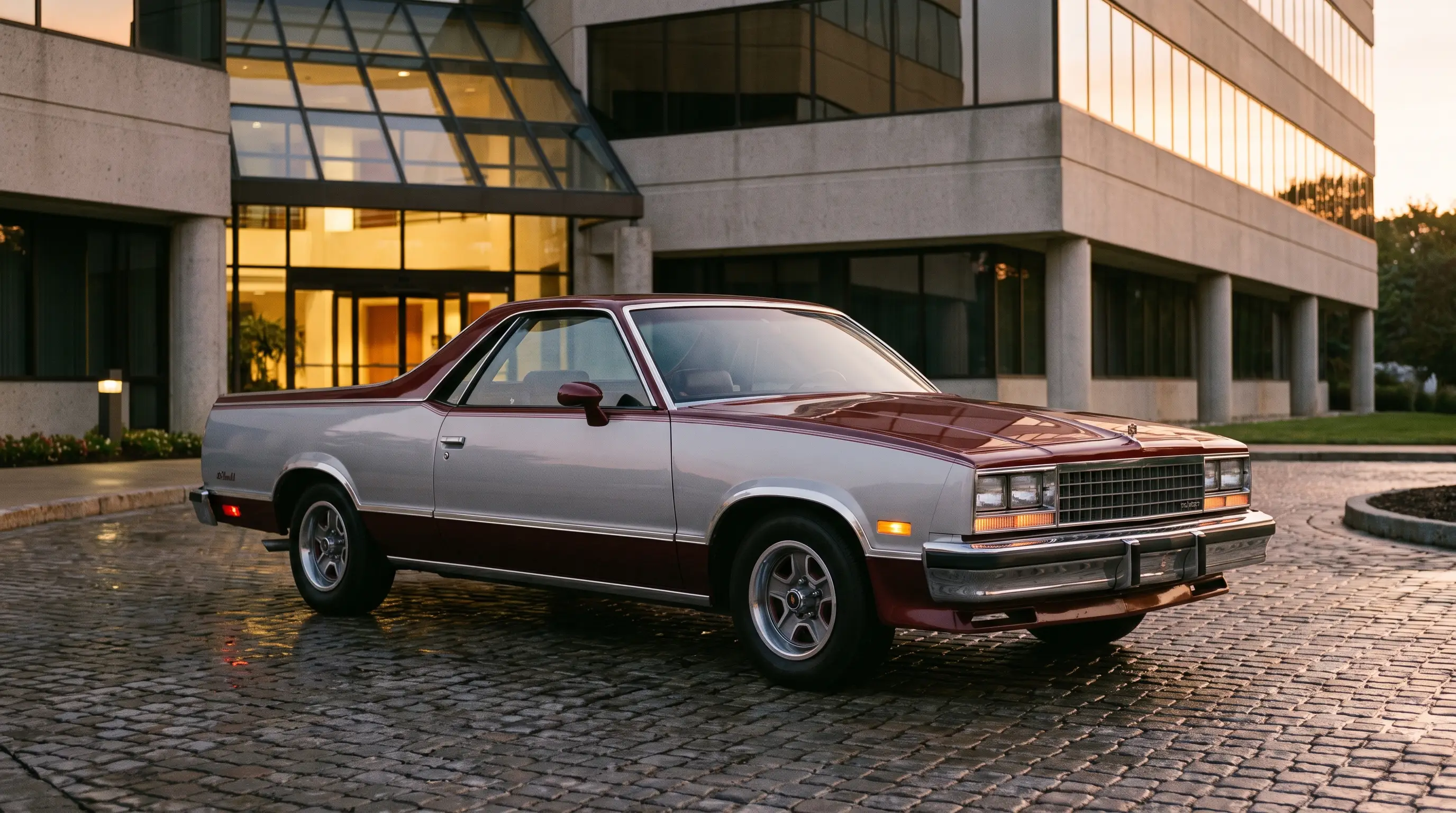
Somewhere in a driveway in the mid-1980s, a 1985 Chevrolet El Camino sat catching the afternoon light in two colors instead of one, its lower body a deep tone and its upper half a lighter shade that met in a crisp line just above the wheel arch. That car likely wore the Conquista package, a trim level that offered something the louder Super Sport buyers never wanted: restraint, dressed up as elegance.
What Conquista actually offered
The Conquista trim was an appearance and comfort package rather than a performance one, built around a distinctive two-tone paint treatment, additional brightwork, and interior upgrades that pushed the El Camino toward something closer to a personal luxury vehicle than a work truck. Buyers who chose Conquista were rarely cross-shopping the SS. They wanted a car that photographed well parked outside a restaurant, one that signaled taste rather than muscle, and Chevrolet built the package specifically to serve that customer inside a lineup otherwise dominated by louder options like the Royal Knight graphics package.
The two-tone application itself required careful masking and a second paint pass on the assembly line, a detail that added cost and explains why Conquista commanded a premium over base trim. Color combinations varied by year, but the formula stayed consistent: a darker lower body and a lighter upper section, divided by a chrome or vinyl accent strip that turned the transition into a design feature rather than an afterthought.
Why two-tone paint mattered so much in the 1980s
Two-tone treatments were having a genuine moment across the American car industry in the early-to-mid 1980s, appearing on everything from Cadillacs to pickup trucks, and the appeal ran deeper than fashion. A two-tone car looked expensive without necessarily being expensive, a useful trick for an era when buyers wanted the appearance of upscale ownership even as fuel prices and interest rates squeezed household budgets. Chevrolet applied the same thinking to the El Camino that Cadillac applied to the Fleetwood, using color to suggest a tier of ownership above what the base sticker price implied.
For the El Camino specifically, Conquista also served a branding purpose. The nameplate had spent the late 1960s and early 1970s defined by the SS badge and big block engines, and by 1985 that era was long gone. Conquista gave Chevrolet a way to market the same platform to a completely different buyer, someone who wanted a stylish, comfortable car with a bed rather than a performance statement. more on the 1985 el camino covers how these different personalities, muscle, luxury, and workhorse, all coexisted within a single model year lineup.
Living with a Conquista today
Finding a Conquista in its original two-tone combination is harder than it sounds. Decades of repaints, often to a single color for simplicity or cost reasons, have erased the factory treatment from many surviving cars. A well-preserved example with its original paint break intact and matching interior trim tells a story that a repainted, single-color car simply cannot, and collectors who understand the nameplate's full arc, not just the SS years, have started paying closer attention to these cars as a result.
The Conquista also represents something the El Camino's story rarely gets credit for: versatility of identity. This was a nameplate that could be a muscle car, a work truck, and a personal luxury vehicle depending on the trim level a buyer selected, sometimes within the very same model year. where this started traces that flexibility back to the car's earliest days, when Chevrolet first blended truck and car into a single vehicle.
"There is something quietly moving about a car built to be understated in a decade that rewarded excess. The Conquista never shouted. It just sat there looking finished, and that was the entire point."
- Nora Beckett
The people who chose Conquista over SS
Picture the actual buyer walking a Chevrolet lot in 1985. Some wanted the SS badge and its stripe package, chasing whatever remained of the muscle car feeling even with a modest V8 underneath. Others, often a little older, a little more established, wanted a vehicle that looked considered rather than aggressive, something they could park outside a nice restaurant without apology and still use to haul a load of mulch the following Saturday morning. Conquista was built for that second buyer, someone who saw the open bed as a practical bonus attached to a car that otherwise read as upscale.
That buyer profile matters because it explains why Conquista El Caminos often survive in better original condition than their SS counterparts. They tended to be driven more gently, garaged more consistently, and modified far less often, since the whole appeal of the package rested on its factory-correct two-tone presentation rather than any aftermarket enhancement a performance-minded SS owner might chase.
What to look for in a survivor
Original window sticker documentation, if it survives, will confirm the Conquista option code and the specific factory color combination, information that is otherwise nearly impossible to verify once a car has been repainted. Interior condition matters as much as exterior paint, since the package typically bundled upgraded seat trim and additional sound insulation that set these cars apart from a base El Camino inside the cabin as much as outside it.
Color combination itself carries weight with serious collectors. Some Conquista color pairings from this period turn up far more often in surviving cars than others, and a rarer factory combination, properly documented, tends to draw more interest than a common pairing even when both cars share identical mechanical condition. Buyers who take the time to research which combinations were actually offered in a given model year put themselves in a much stronger position to judge whether a specific car in front of them represents something genuinely uncommon.
Mechanical condition still matters just as much as cosmetic originality, of course. A beautifully preserved two-tone paint job attached to a neglected drivetrain tells an incomplete story, and buyers evaluating any Conquista should weigh the paint and trim alongside engine health, transmission behavior, and general structural condition before letting the visual appeal of the color scheme carry too much weight in a final decision.
If the two-tone years of the El Camino appeal to you, patience pays off, since well-documented Conquista examples surface less often than SS models. Browse classic El Caminos on the market and pay close attention to paint break lines and interior trim before assuming a car is an original Conquista rather than a later repaint chasing the same look.