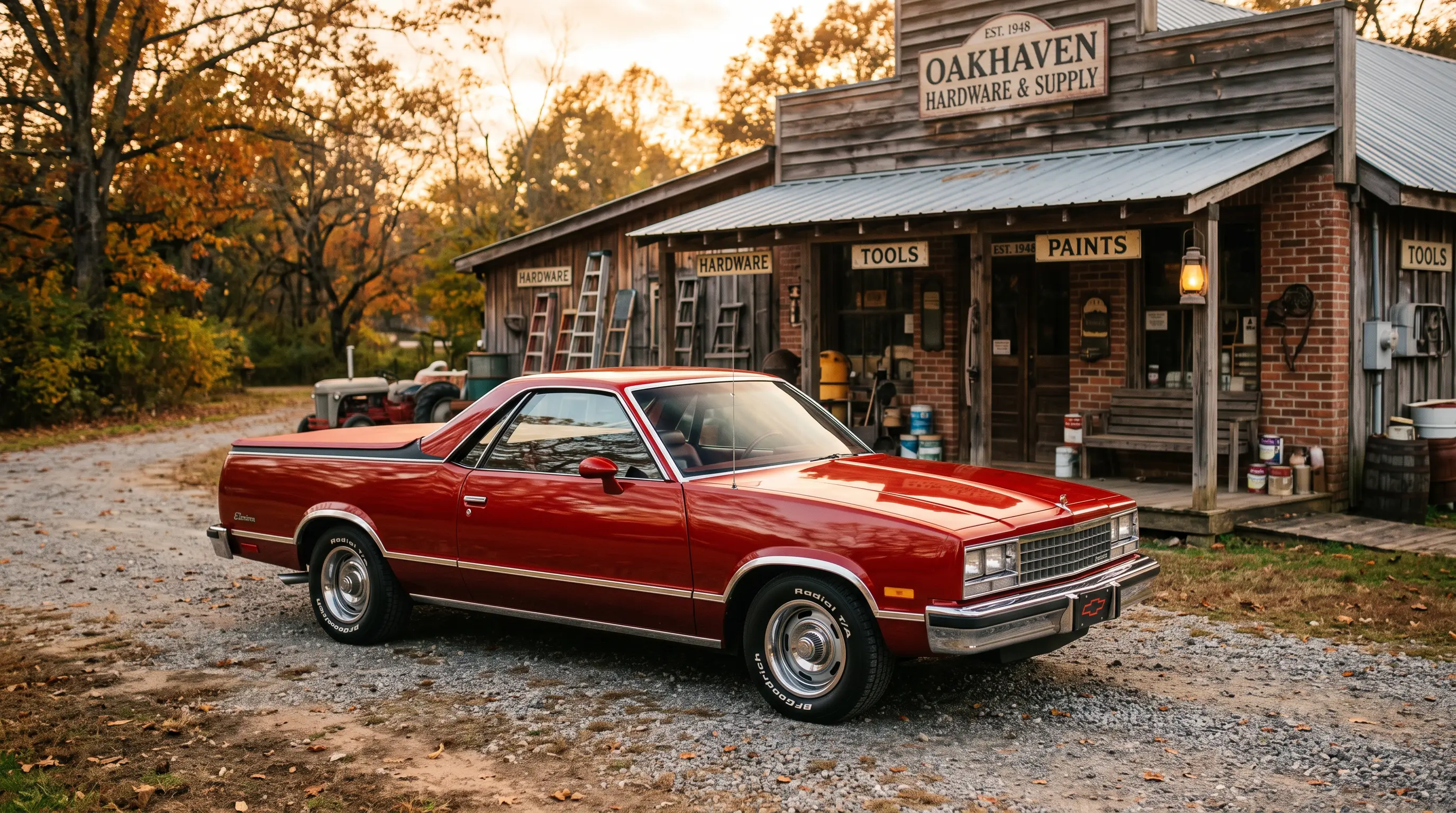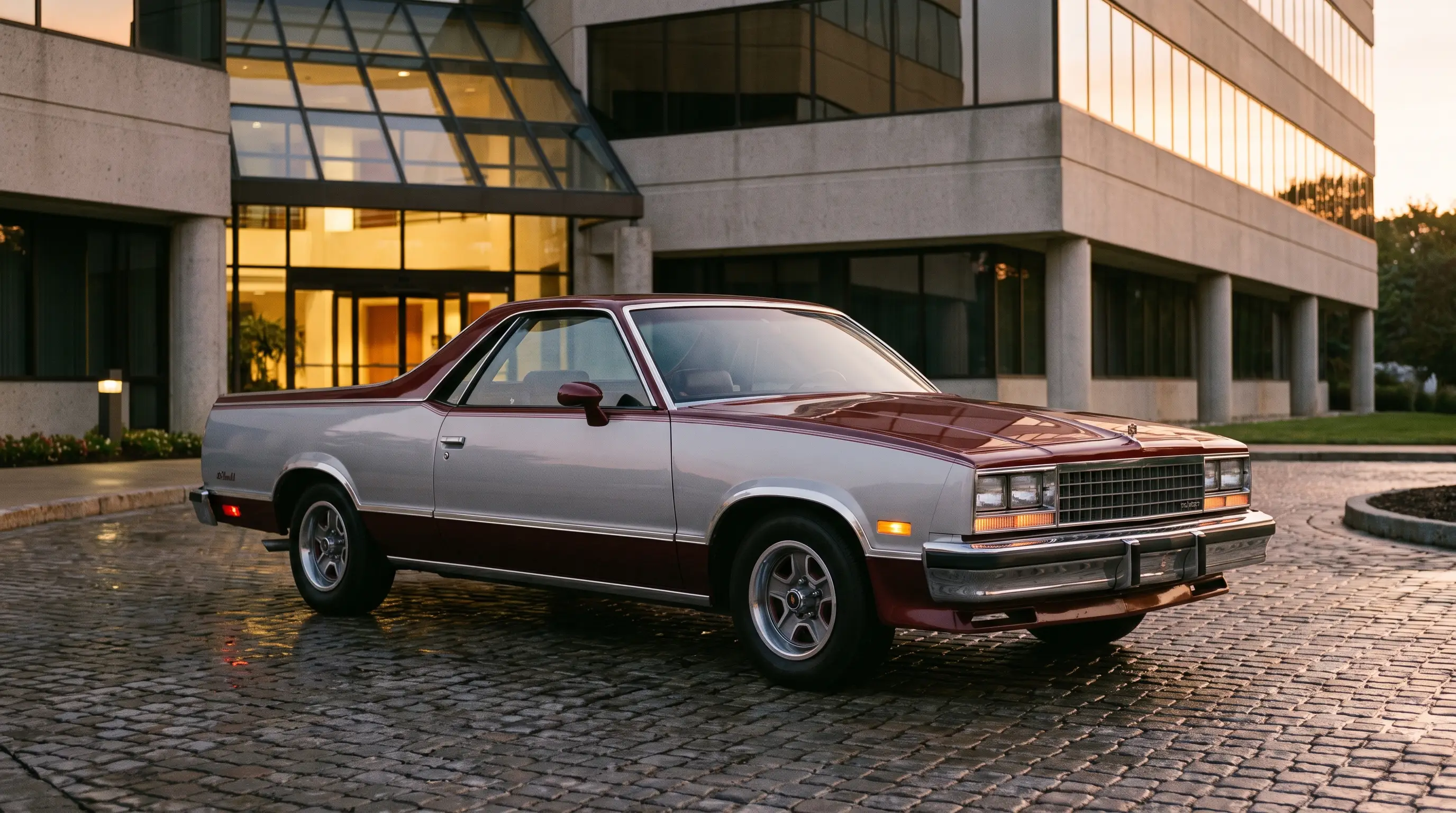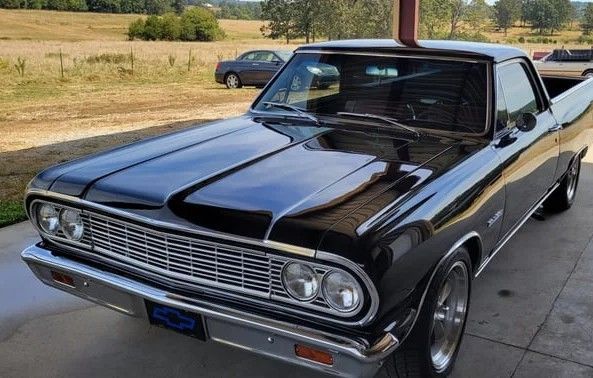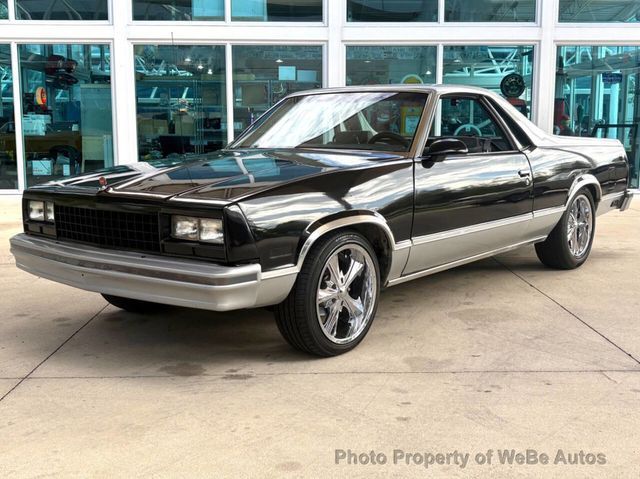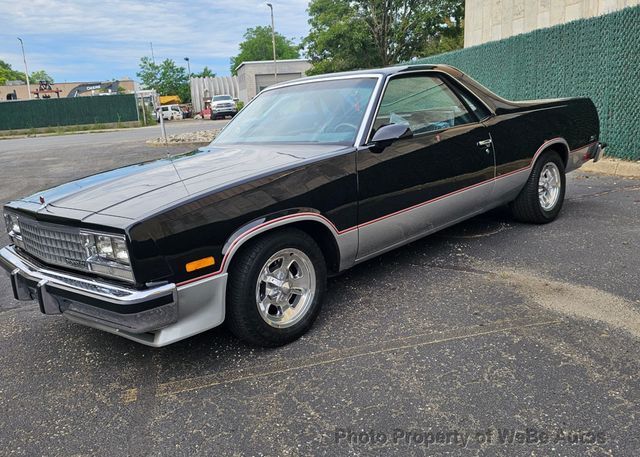
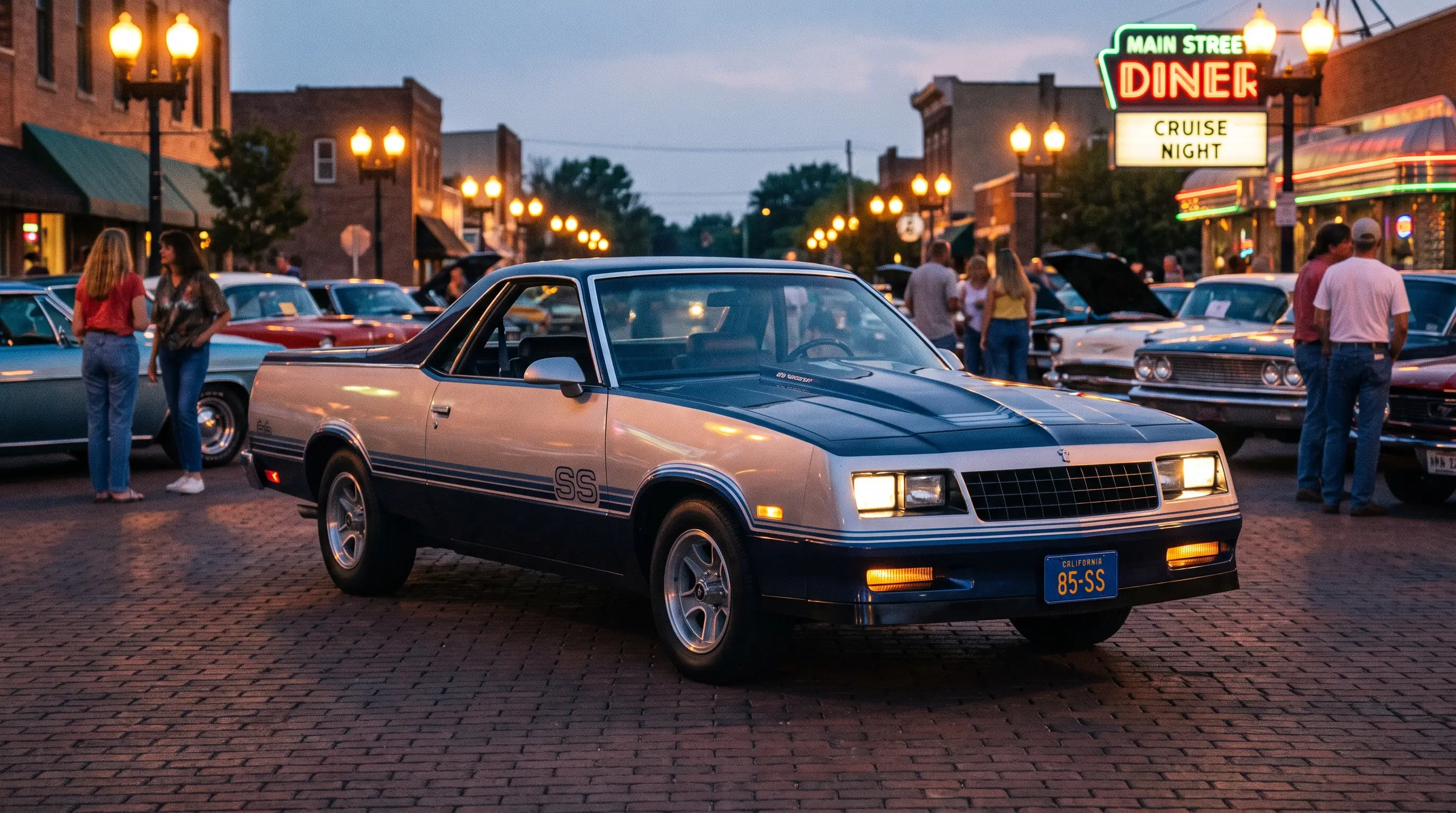
By 1985 the Chevrolet El Camino SS was not the car it used to be, and everyone involved with selling it knew it. The badge that once rode on top of a 454 cubic inch big block now sat on a 305 V8 turning out a fraction of the power the nameplate had produced a decade and a half earlier, and Chevrolet leaned on stripe kits, decals, and trim details to keep the SS name feeling like it meant something on the showroom floor.
What "SS" actually meant by 1985
The El Camino SS in the G-body years was an appearance package layered over the 305 cubic inch V8, rated at roughly 150 hp per Chevrolet's own truck data books (some period road tests list figures as high as 165-170 hp), the standard output for the era's emissions-compliant small block. Chevrolet paired the engine with a firmer suspension tune, distinct SS badging, and body-side graphics that visually separated it from a base El Camino, but the mechanical gap between an SS and a well-optioned standard model had narrowed considerably compared to the gulf that existed in 1970. Where the original SS 396 and later SS 454 packages represented genuine engineering commitments, the 1985 SS leaned far more heavily on cosmetic differentiation to justify its badge.
This was not unique to the El Camino. Nearly every American performance nameplate went through the same transition during the late 1970s and early 1980s, as emissions regulations and fuel economy mandates squeezed horsepower across the industry. Chevrolet's own Camaro and Monte Carlo SS badges told a similar story during the same period, trading big displacement for aggressive graphics and a firmer ride.
The decal package that carried the name
Stripe and decal treatments on the 1985 SS typically ran along the body sides and across the hood, with SS badging placed prominently enough that the car announced itself from a distance even when the drivetrain underneath could not back up the visual promise at a stoplight. Chevrolet's marketing materials from the period leaned into styling language, emphasizing the look and feel of performance rather than making bold horsepower claims the engine could not support. where this started lays out the broader context of how the G-body platform reached this point by the mid-1980s, a car built for economy wearing the visual language of a muscle car.
Interior touches often accompanied the exterior package too, including sportier seat trim and SS-specific badging on the dash or console, small details that reinforced the theme throughout the ownership experience rather than stopping at the paint.
Why enthusiasts still argue about these cars
Purists who came up idolizing the 1970 SS 454 tend to dismiss the 1985 decal-era SS as a hollow gesture, a car trading on a name it no longer earned mechanically. Others take a more forgiving view, arguing that the 1985 SS represents Chevrolet doing the best it could within a regulatory environment nobody in 1970 had to contend with, and that the package still delivered a firmer, more focused driving experience than a base El Camino even without big block power underneath.
Both views hold some truth. The 1985 SS cannot match the outright performance of its ancestors, and nobody serious argues otherwise. But it also represents a genuine chapter in the nameplate's history, one that kept the SS badge alive through a decade when many contemporaries dropped their performance sub-brands entirely rather than water them down.
What buyers should know today
Original decal condition matters enormously to value on these cars, since reproduction kits exist and originality is genuinely hard to verify without documentation. A well-preserved 1985 SS with its factory graphics intact tells a more complete story than a repainted or re-decaled example, and buyers who understand what the package actually was, appearance over raw output, tend to be happier owners than those expecting big block performance from a small block engine wearing sportier clothes.
"Call it a decal package if you want, but that badge still sold cars in 1985, and it still turns heads at a cruise night today. The name carried weight even after the engine got smaller."
- Tom Ramirez
The 1970 SS against the 1985 SS by the numbers
Nothing frames the transformation of the SS badge better than a direct comparison across the fifteen years separating the nameplate's peak from its decal-driven twilight. The table below sets the two most talked-about SS configurations side by side, and the gap explains why enthusiasts still argue about whether the 1985 car deserved to carry the badge at all.
| Spec | 1970 SS 454 (LS6) | 1985 SS |
|---|---|---|
| Engine | 454 cubic inch V8 | 305 cubic inch V8 |
| Horsepower | 450 hp (factory rated, rare option) | Roughly 150 hp |
| Primary selling point | Displacement and output | Graphics and appearance |
| Suspension | Heavy-duty performance tune | Firmer than base, not track-focused |
The contrast is stark enough that some enthusiasts refuse to call the 1985 car an SS at all, treating the badge as diluted beyond meaning. Others counter that judging a 1985 car against a 1970 benchmark ignores fifteen years of regulatory change that no manufacturer could simply engineer around, and that the badge still meant something within the context of what Chevrolet's 1985 lineup actually offered.
Where the SS badge went from here
The decal-era SS represents the last chapter of the badge on the El Camino platform before Chevrolet discontinued the nameplate entirely in 1987. Whatever its performance shortcomings relative to the muscle car glory years, the badge survived through the entire G-body run, a continuity that later collectors have come to appreciate even as they acknowledge the mechanical reality underneath the stripes.
What still makes these cars worth owning
Set aside the direct comparison to 1970, and the 1985 SS reads differently. It offered a genuinely firmer, more focused driving experience than a base El Camino of the same year, along with distinctive styling that has aged into its own kind of period charm rather than simply looking dated. Enthusiasts who grew up in the 1980s, rather than the muscle car heyday, often feel real nostalgic pull toward these decal-era cars specifically because they were the El Camino these buyers actually experienced firsthand, not a car they only read about in old magazines.
That generational shift in appreciation has started to show up in how these cars get discussed and valued. A 1985 SS in excellent original condition, decals intact and drivetrain unmolested, now draws interest from a collector base that treats the mid-1980s as its own legitimate era of automotive history rather than a lesser footnote to the muscle car years that came before it.
If a G-body SS interests you, go in with realistic expectations about performance and focus your attention on originality and documentation instead. There are always classic El Camino for sale listings worth comparing before settling on a specific example.