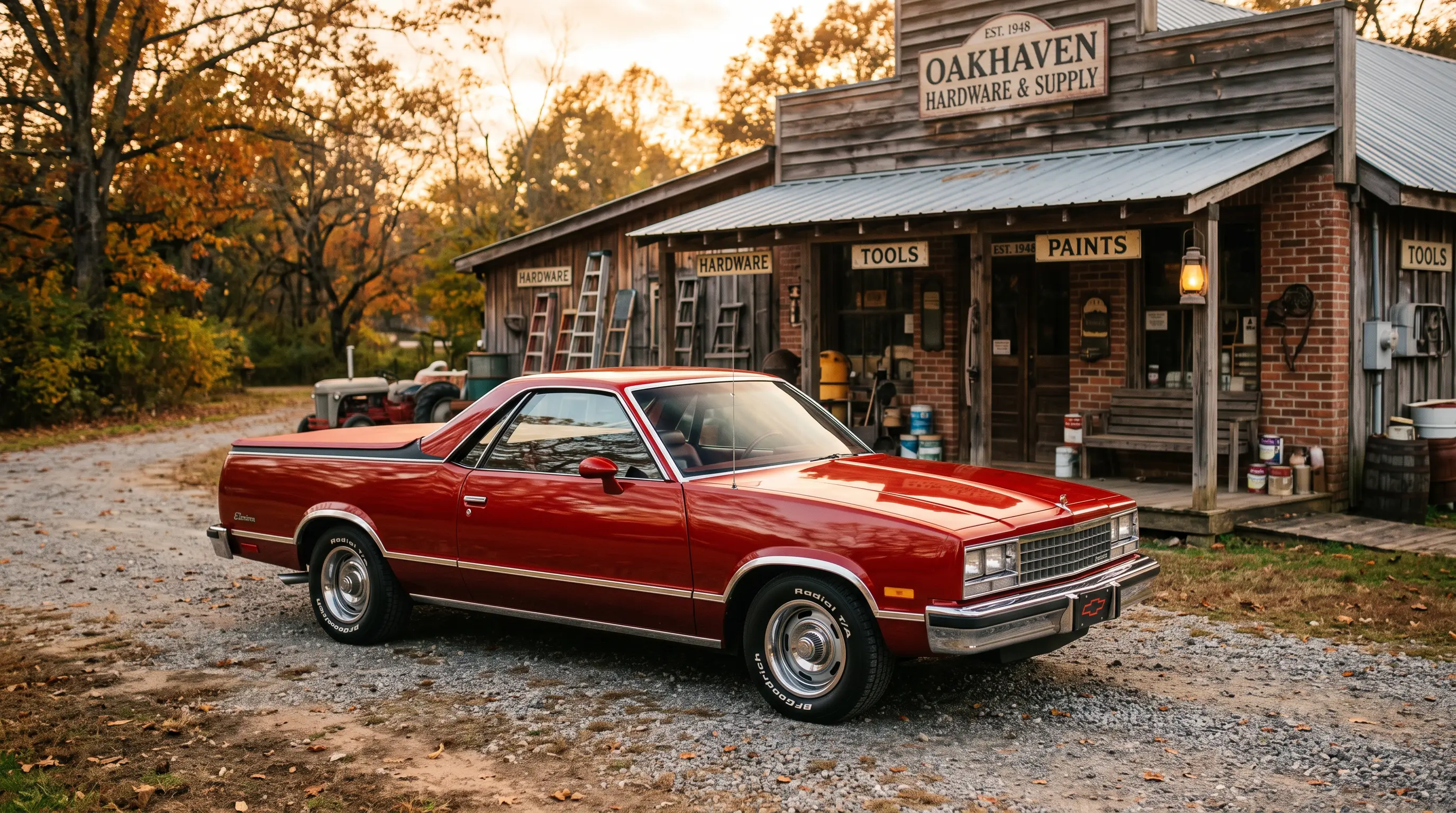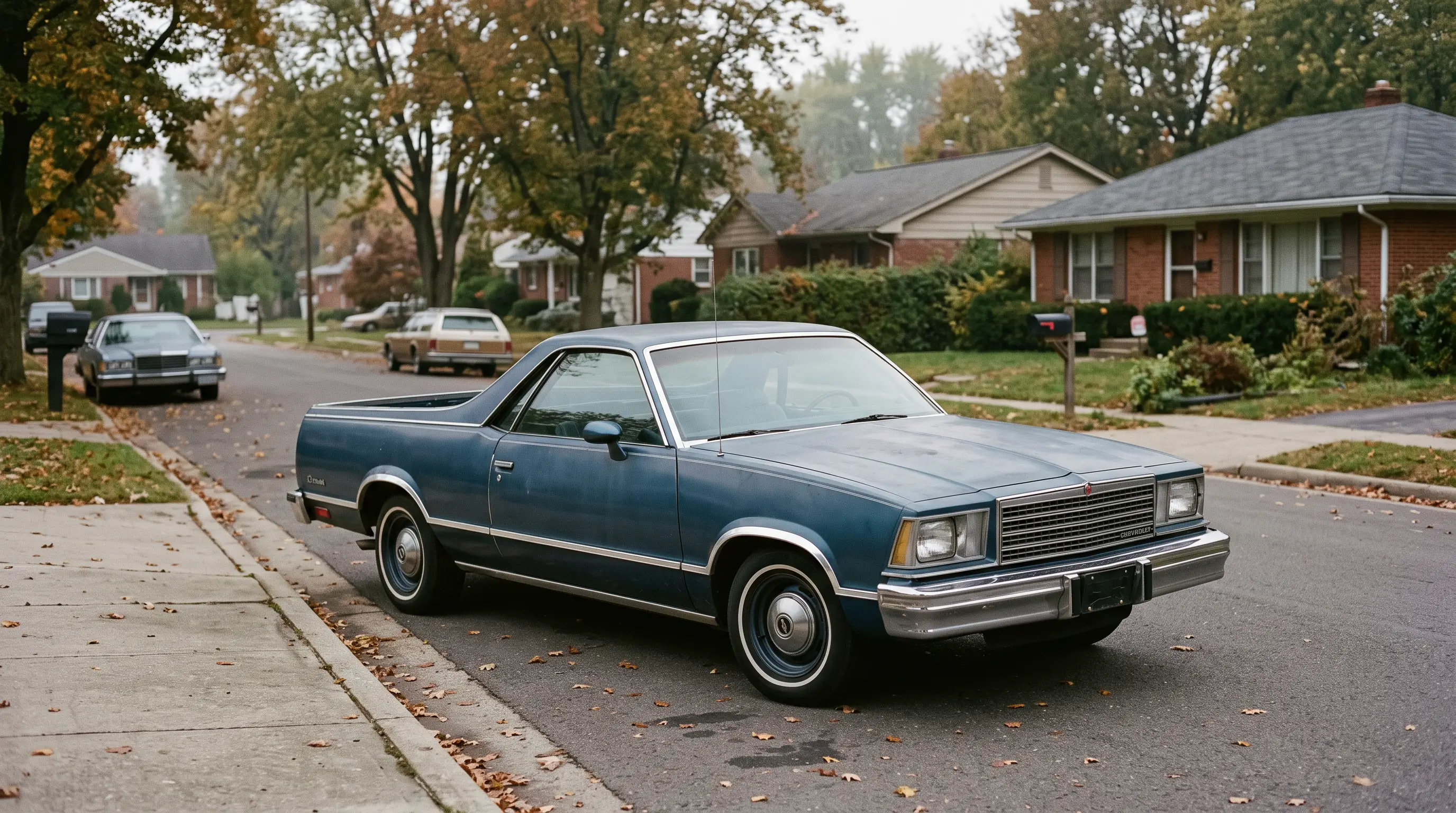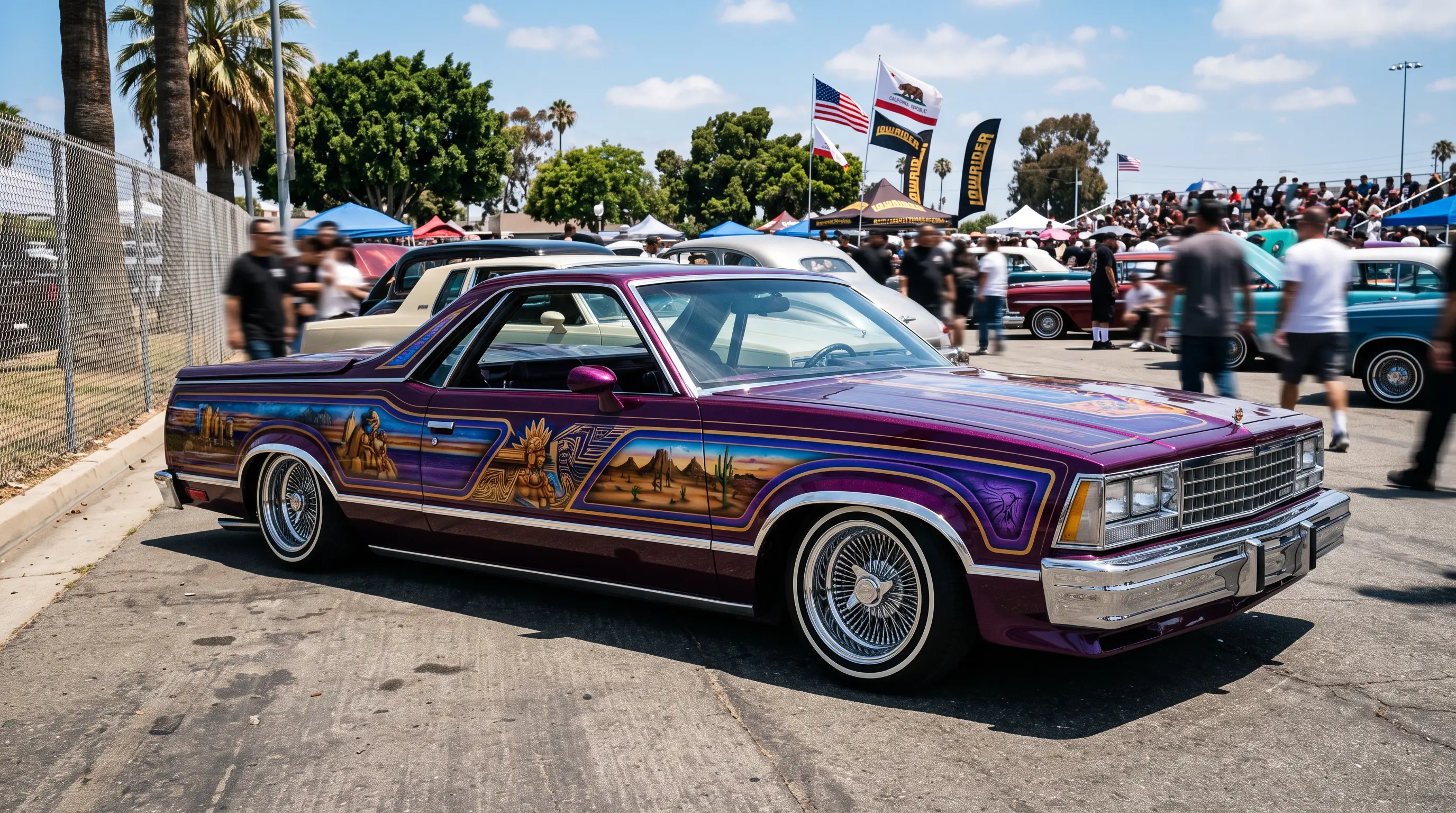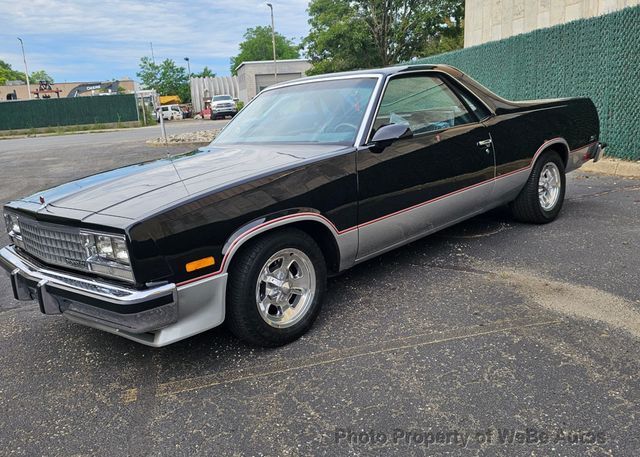
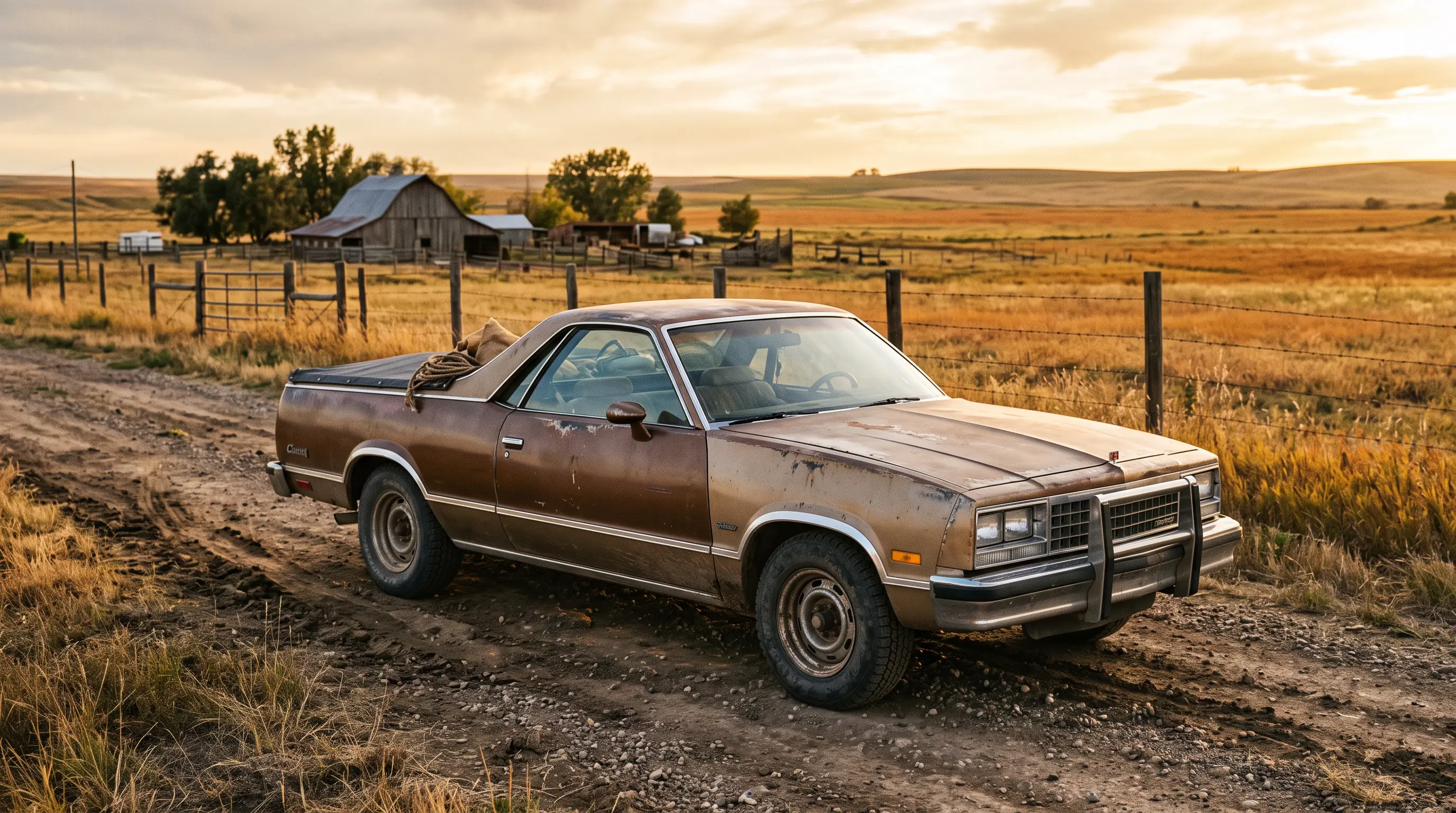
Factory records rarely tell you what a car felt like to own, only what it was built to be. For the 1985 El Camino, the factory record says something modest: a rear-drive G-body, a small-block V8 as the volume choice, a bed instead of a trunk. What that record does not capture is the specific kind of appeal that made this unglamorous vehicle a fixture in driveways across the country for a decade after it left the assembly line. Call it workhorse cool, the appeal of a machine that never oversold itself and never let you down either.
What Chevrolet actually built in 1985
By the mid-1980s the El Camino had settled into a stable, well-understood formula. The 1978 downsizing had put the car on the G-body platform, shared with the Monte Carlo, the Cutlass, and the Regal, and by 1985 that platform had years of production refinement behind it. The volume engine was the 305 cubic inch (5.0-liter) small-block V8, rated at 150 horsepower and 240 lb-ft of torque, backed by a standard 4.3-liter V6 rated at 130 horsepower for buyers who wanted better fuel economy over outright power.
This was not a car built to win arguments at a stoplight. It was built to a specification sheet focused on utility, cost, and durability, the same priorities that had guided GM's full-size and mid-size lineups since the fuel crises of the previous decade reordered what American buyers wanted from a car. Reading the factory paperwork from this period, you see a company that had made peace with smaller, lighter, and more efficient, and had stopped apologizing for it.
The daily reality behind the spec sheet
Owners who bought a 1985 El Camino new were rarely chasing a legend. They wanted a vehicle that could double as a truck on Saturday and a car on Monday, something with genuine bed capacity but a passenger cabin that did not feel like a commercial vehicle. That dual identity is what the factory engineers were solving for, and by most accounts they solved it well. The doors were light. The greenhouse gave good visibility. The unibody-adjacent G-body construction kept the ride more carlike than a comparable pickup of the era.
Factory documentation from this period also shows a company paying close attention to cost control. Shared components across the G-body family meant lower production costs and, later, an enormous parts network for owners. That decision, made for accounting reasons in Detroit boardrooms, turned out to be a gift to everyone who has kept one of these cars running for the past four decades. You are never far from a compatible part when your El Camino shares its underpinnings with three or four other model lines.
Where the "workhorse cool" label comes from
I did not invent that phrase. It comes up repeatedly in period service bulletins and dealer materials that frame the El Camino's appeal in exactly those terms: practical first, appealing second. Chevrolet's own marketing in the mid-1980s leaned into utility rather than performance, because performance was not really on offer at the volume-engine level, and honesty about that positioning is part of what makes the factory record for this car interesting to read now.
What that record does not anticipate is how the phrase would age. A car marketed as sensible transportation in 1985 has become, forty years later, a genuinely desirable object precisely because it never tried to be anything else. There is no gap between what the factory promised and what the car delivered, and that consistency is rare in the collector world, where plenty of nameplates carry a reputation their factory specifications never quite earned.
"Read the factory paperwork on the 1985 car and you find no exaggeration, no marketing spin about performance it did not have. That kind of honesty is unusual, and it is exactly why the car has aged so well."
- Tom Ramirez
What the records get wrong when people misread them
A common misconception, one I correct often, is treating the 1985 El Camino as a stripped-down economy special with nothing worth documenting. That undersells what the factory actually delivered. The build quality on these cars, drawing on nearly a decade of G-body production experience by 1985, was generally solid. Panel fit and paint durability from this period compare favorably to the earlier, more celebrated years of the nameplate, which were sometimes rushed into production during periods of higher demand.
Another misreading treats every 1980s SS-badged El Camino as a factory performance package equivalent to the 1970 SS396. The factory record does not support that comparison. The SS treatment in this era was primarily a cosmetic and trim package, and understanding that distinction matters if you are trying to accurately value or describe a car from this period. The full mechanical and production picture, including how the SS badge functioned across these years, is covered at length in the full story, which is worth reading alongside any factory documentation you track down.
Living with one today
Owners today report much the same experience the factory intended: a car that starts reliably, hauls a genuine load, and does not punish you with exotic maintenance requirements. Because so much of the drivetrain and chassis was shared across the G-body family, parts sourcing remains straightforward compared to more specialized classics. That accessibility is arguably the strongest argument for buying one now rather than a rarer, more celebrated model from an earlier decade.
The factory built the 1985 El Camino to be used, not preserved behind velvet rope, and the surviving examples that get driven regularly tend to hold up to that original intent remarkably well. If you are shopping for one, there are usually a handful of classic El Camino for sale listings worth comparing, and the documentation trail on these cars, while less romantic than the muscle-era paperwork, tends to be more complete simply because fewer people bothered to embellish it.
Forty years on, the factory record for the 1985 El Camino reads less like a spec sheet for an unglamorous transitional vehicle and more like a blueprint for exactly the kind of classic that makes sense to own today: honest, well-documented, and built by people who were not trying to sell you a fantasy.
One habit worth developing if you research these cars seriously is reading period dealer literature the way a historian reads any primary source, for what it reveals unintentionally rather than what it states outright. The 1985 brochure copy leans hard on words like dependable and versatile, and rarely mentions performance figures at all, a telling absence compared to brochures from the muscle era that put horsepower numbers front and center. That silence tells you exactly how Chevrolet wanted this car understood by the people buying it.
Service records from the period tell a similar story. Warranty claim patterns for the 305 small-block during these years were unremarkable by the standards of the day, which is itself notable given how troubled some of GM's engine programs had been earlier in the decade. The paper trail suggests a company that had, by 1985, worked out most of the bugs in this generation of hardware, and that stability is part of why so many of these cars are still running today on largely original mechanicals. A car that was engineered to be boring in the best sense of the word tends to reward the people who kept the paperwork.