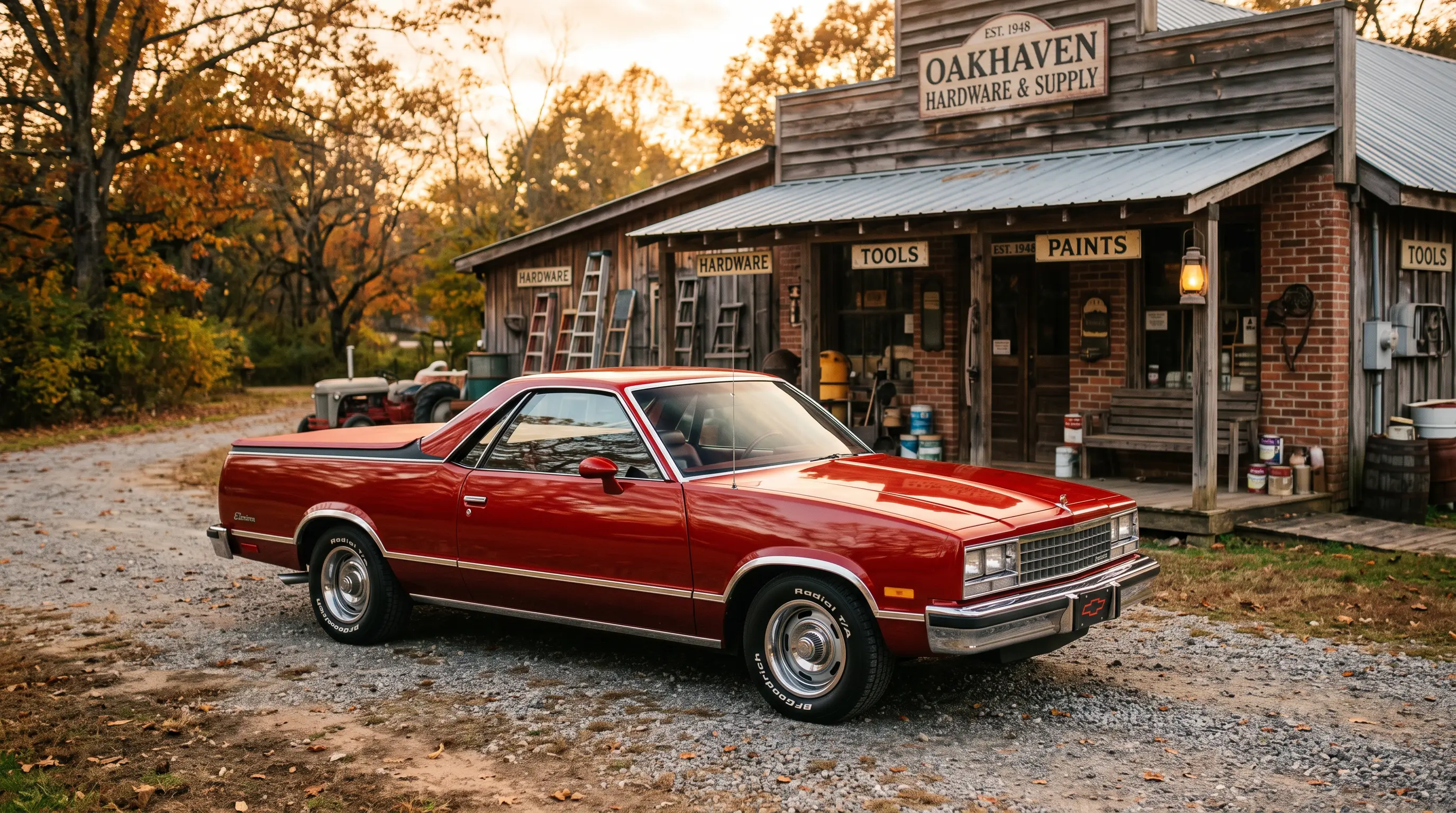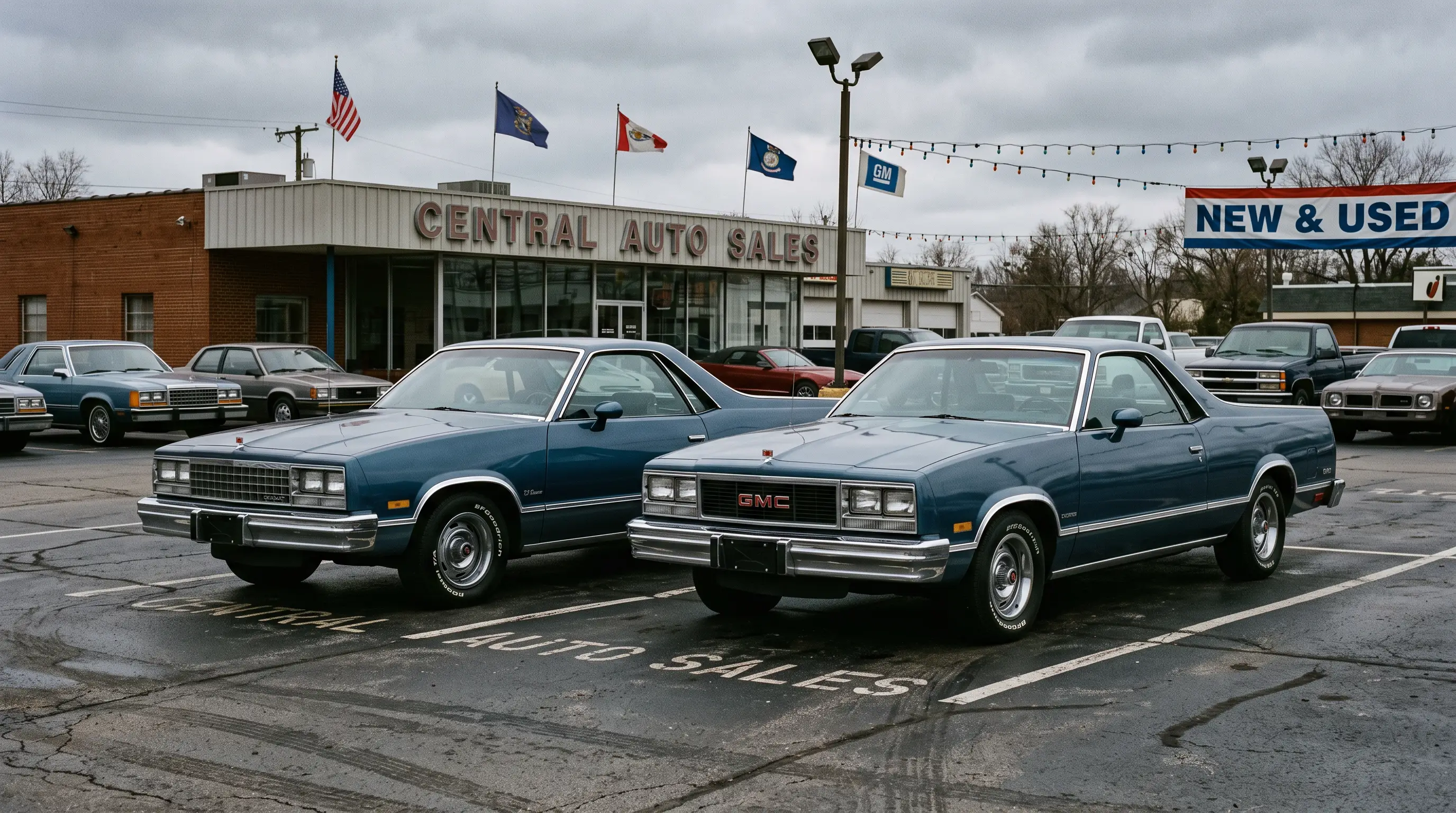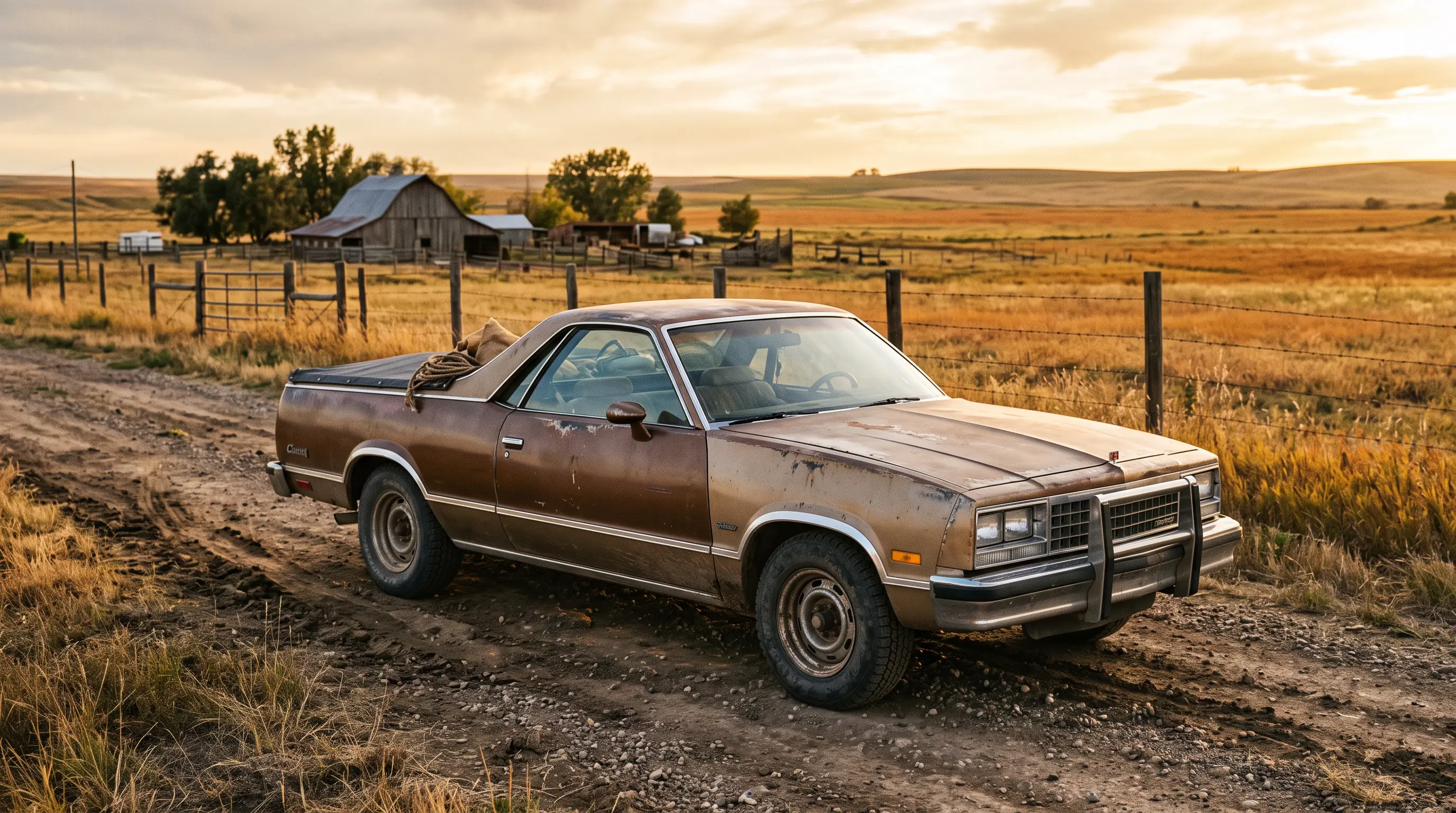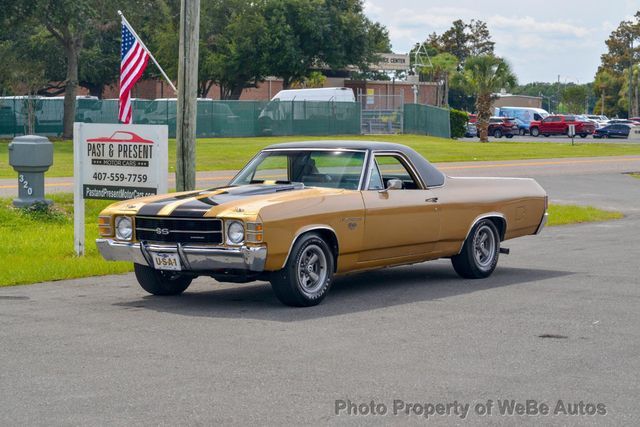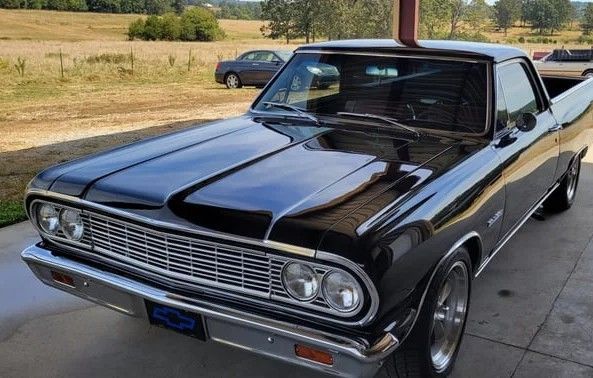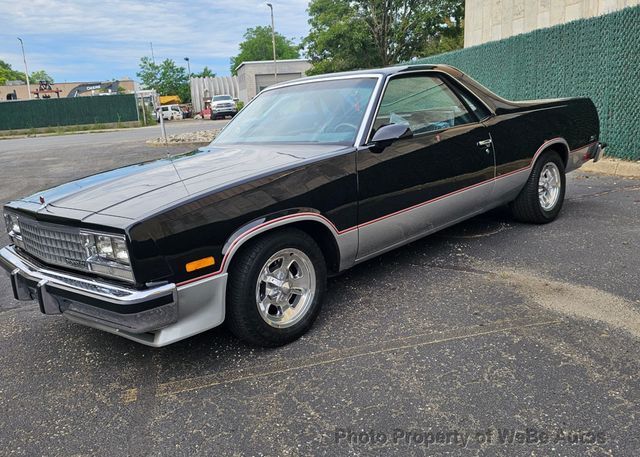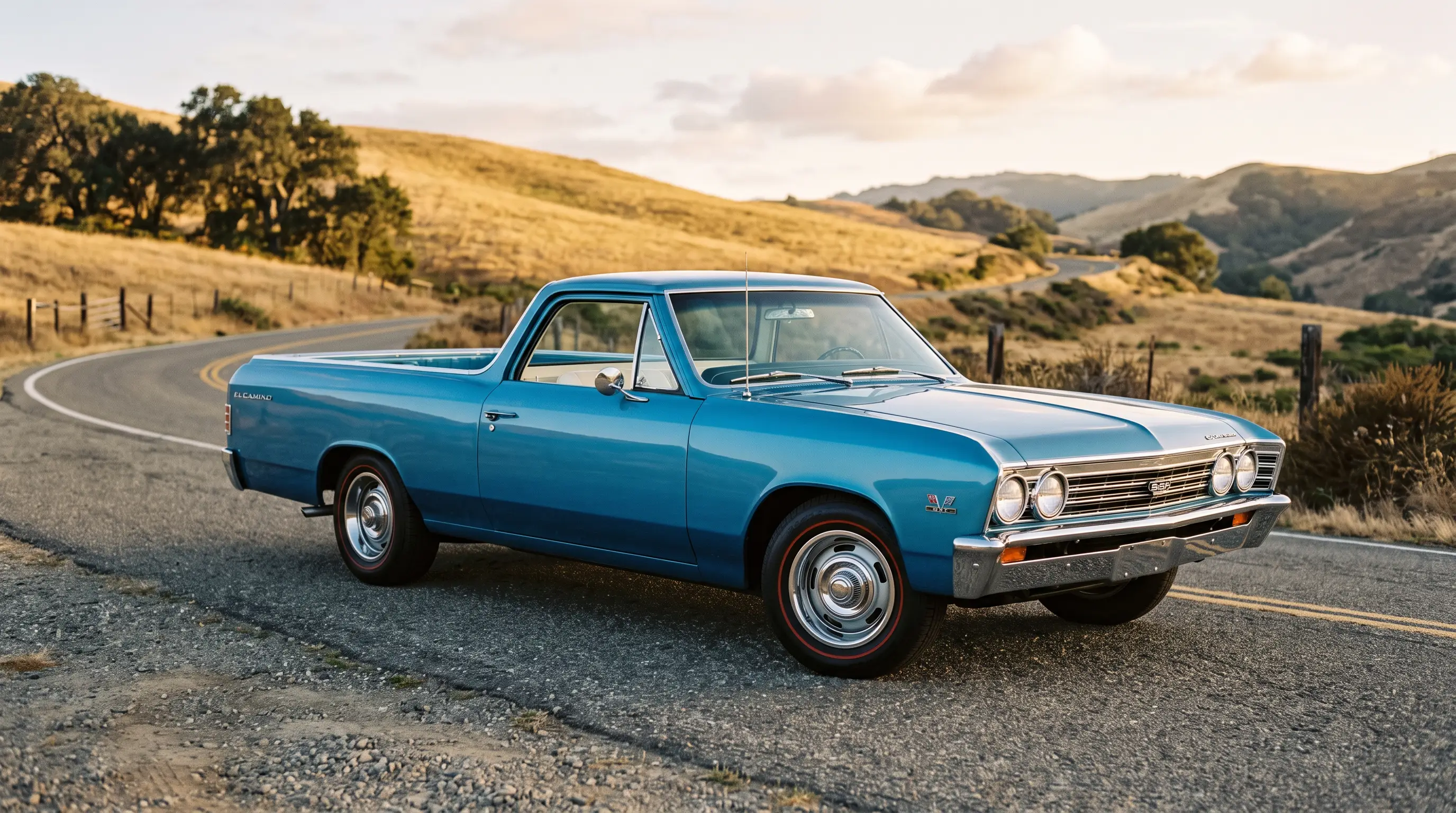
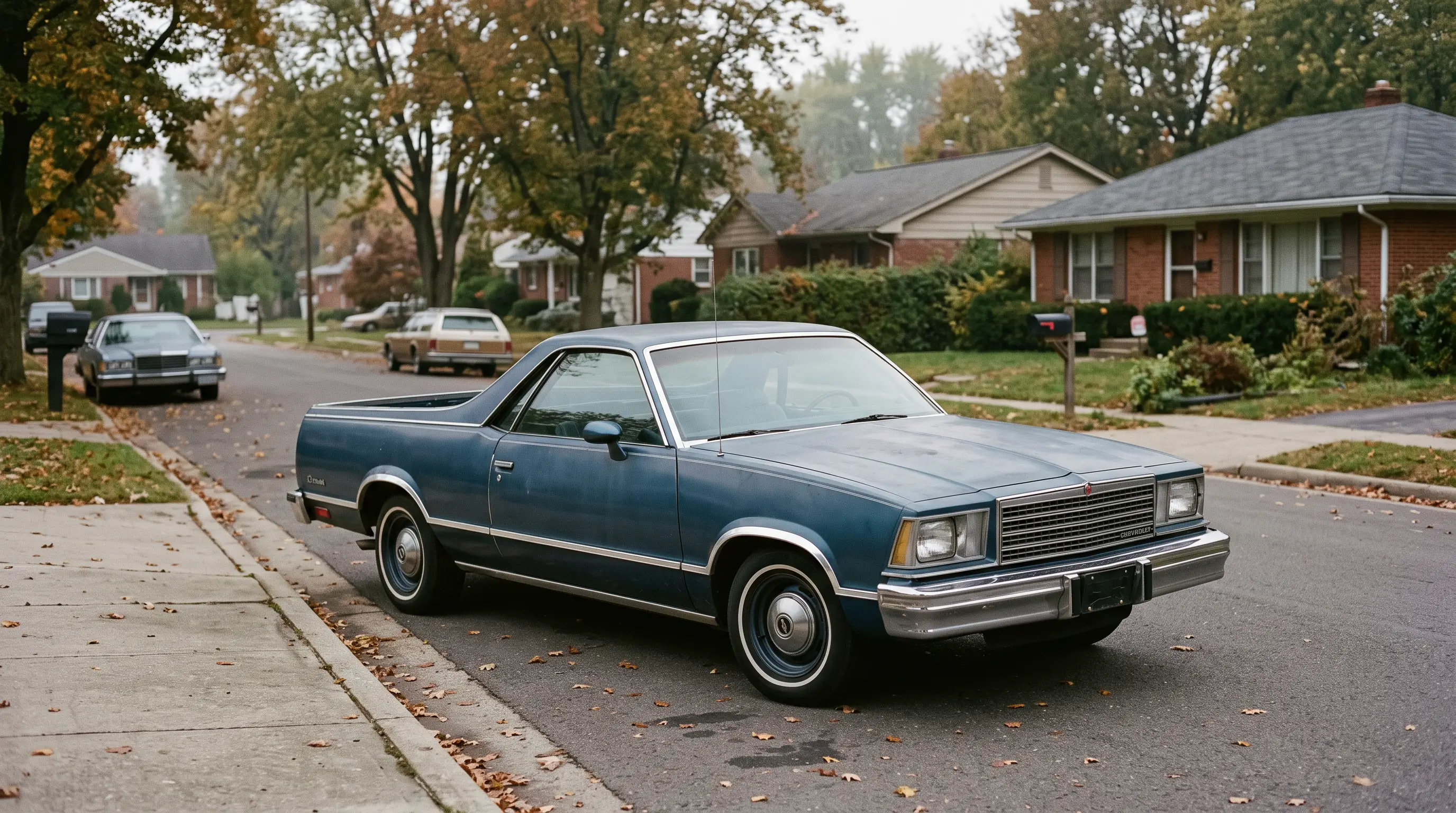
My neighbor Ray bought his El Camino in 1981 because it was cheap, not because it was cool. Nobody called these cars cool back then. The malaise era had swallowed Detroit whole, emissions equipment was choking every carburetor in the country, and a car like the El Camino was supposed to be an also-ran, a shrunken half-truck limping through a decade that had no room for enthusiasm. Instead it quietly outlasted almost everything built around it, and that is the part of the story nobody tells at car shows.
The malaise era gets treated like a punchline now. Low compression, strangled horsepower, a decade where a V8 might make less power than a modern four-cylinder. The G-body El Camino was born right into the middle of that, in 1978, and it never had the chance to be a muscle car in the way its 1970 ancestor was. What it had instead was a formula that turned out to matter more in the long run: it was simple, it was light for the era, and it did not ask anyone to apologize for it.
What malaise actually did to this car
Strip away the nostalgia and the malaise era was a genuine crisis for performance cars. Fuel prices had spiked twice in less than a decade, federal fuel economy rules were tightening every model year, and emissions standards forced engineers to detune engines that had once been genuinely quick. The 305 cubic inch small-block that became the El Camino's volume engine in this period made modest numbers by any earlier measuring stick, generally somewhere in the 130 to 170 horsepower range across these model years depending on carburetion and emissions calibration, a fraction of what a big-block El Camino made a decade earlier.
What is easy to miss, looking back, is that the platform underneath all of that detuning was actually good. The G-body chassis was simpler and lighter than the intermediate it replaced, and it did not carry the compromises that came from trying to squeeze big-block muscle into a shrinking envelope. Chevrolet was not building a sports car in 1981. It was building a vehicle that could survive a decade nobody wanted to be part of, and on that measure it did its job.
Why it survived when flashier cars did not
Plenty of cars from this period simply disappeared. Owners drove them into the ground and nobody bothered to keep them running once the badge stopped meaning anything at trade-in time. The El Camino had an advantage those cars lacked: a bed. It was still a working vehicle even after it stopped being anybody's dream car, and working vehicles get maintained for reasons that have nothing to do with sentiment. A contractor does not let his hauler rot in the driveway. He fixes what breaks because Monday is coming.
That utility bought the El Camino two things most orphaned malaise-era cars never got: continued parts support, because it shared drivetrain and chassis components across a huge family of GM cars, and a second life as a low-cost daily driver long after collectors had written off anything built after 1972. By the time people started looking for affordable classics in the 2000s, the G-body El Camino had already quietly survived in barns, farms, and back lots in numbers that pure performance cars from the same years could not match.
There is also a simpler reason the car endured. It never pretended to be something it was not. A 1970 SS396 that got neutered by emissions rules in the following decade would have felt like a betrayal of its own history. The G-body El Camino had no such history to betray. It arrived already knowing what it was, a practical rear-drive hauler with a car's manners, and that honesty made it easier to live with and easier to keep running through years when enthusiasm for anything American and V8-powered was in short supply.
The slow rehabilitation of a maligned decade
For a long time, malaise-era cars of every kind were the hobby's whipping post. If a car was built between roughly 1973 and 1985, the assumption was that it could not possibly be interesting, because it could not possibly be fast. That assumption is finally cracking, partly because the people who grew up around these cars are now old enough to buy back the ones they remember, and partly because the hobby has gotten more honest about what actually made a car good beyond its horsepower figure.
The full arc from the finned 1959 original through the muscle years to this quieter chapter is laid out in the full story, and it is worth reading if you only know the El Camino from the SS396 years. The G-body chapter, including the specific detail of the 1985 model year, gets its own treatment in the 1985 el camino story, and that piece makes a case I happen to agree with: this is the version of the car you can actually use without worrying about it.
"Everyone wants to talk about the 396. Nobody wants to admit that the car sitting in their uncle's driveway for twenty years running errands, that unglamorous G-body, is the one that proved the nameplate could survive anything."
- Patrick Walsh
What a malaise survivor is worth today
The market has started to catch up to the argument. A clean G-body El Camino from the malaise years is no longer free, though it remains far more attainable than anything from the muscle era. Buyers are drawn to the combination of low cost of entry, mechanical simplicity, and a driving experience that does not punish you for taking it out on a Tuesday. It is a classic that behaves like a modern used car, and for a growing number of people that is exactly the point.
None of this requires you to pretend the malaise era was some secret golden age. It was not. Horsepower figures from those years are genuinely low, and nobody should buy one of these cars expecting a muscle car experience. What you are buying instead is survivability, a chassis and drivetrain combination that proved durable enough to outlast a decade that killed off plenty of more famous nameplates. If that is the kind of classic you want, there are usually a few classic El Caminos on the market worth a look, and the malaise-era cars among them tend to be the best bargains in the whole lineup.
Ray's El Camino is long gone now, sold sometime in the 1990s to a guy two towns over who wanted a cheap truck for his landscaping business. I like to think it is still hauling something, somewhere, because that is the only ending that would make sense for a car that never once tried to be glamorous and never needed to be.
What strikes me now, writing about it decades later, is how little the car's reputation had to do with what it actually delivered day to day. Ray never once complained about the El Camino. It started every morning, it hauled mulch and lumber and, one memorable weekend, half a disassembled swing set, and it never left him stranded. Compare that quiet reliability to the horror stories that circulate about far more celebrated performance cars of the same era, cars that spent more time on jack stands than on the road, and the malaise-era El Camino starts to look less like a compromise and more like an engineering success story that nobody bothered to celebrate at the time.
That is usually how these reassessments go. The car that got mocked while it was merely useful ends up outlasting the car that got worshipped while it was merely fast. History is not always kind in the moment. It tends to correct itself eventually, once enough decades have passed that people can judge a vehicle on what it actually did rather than what a magazine said about it when it was new.