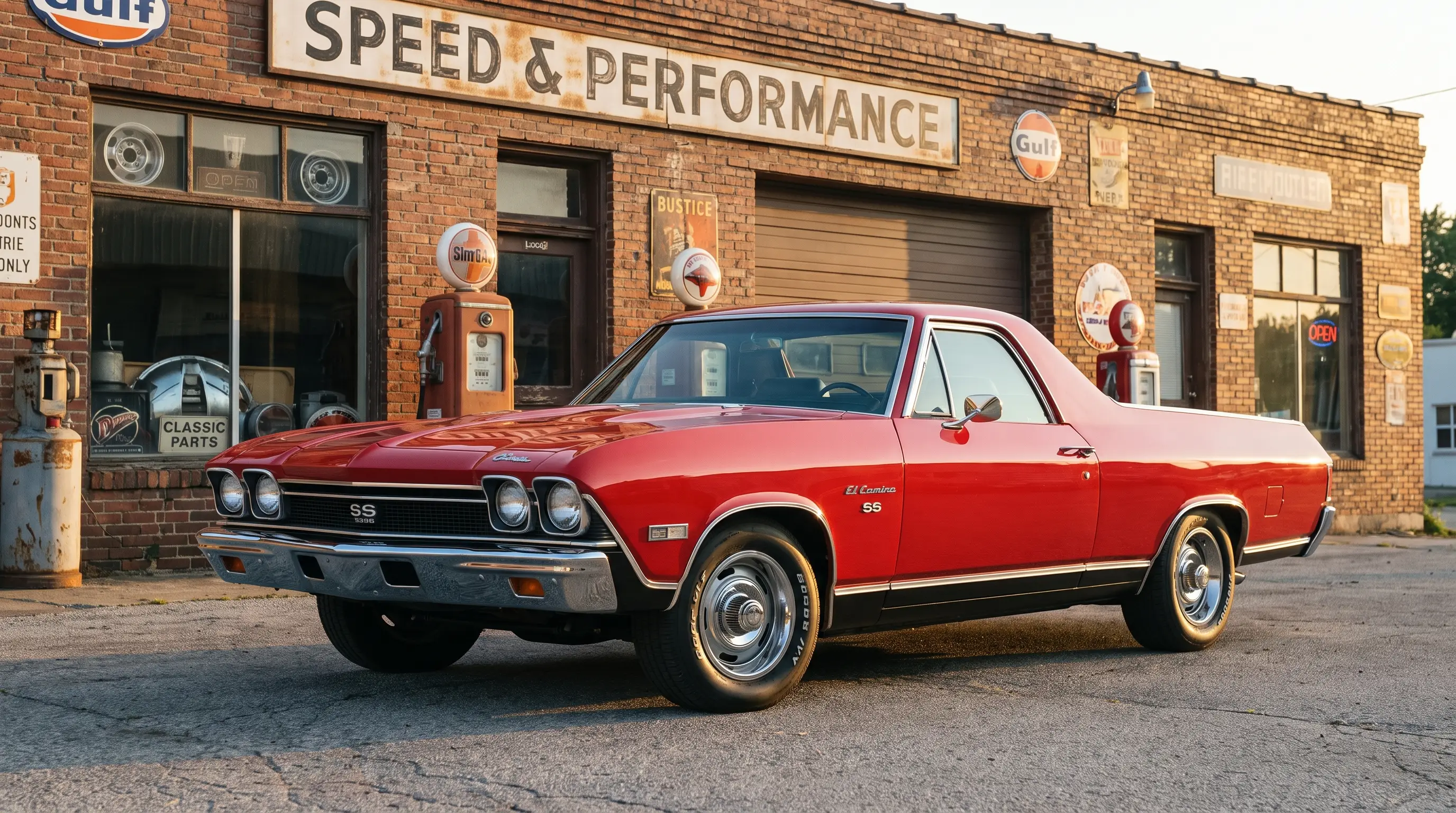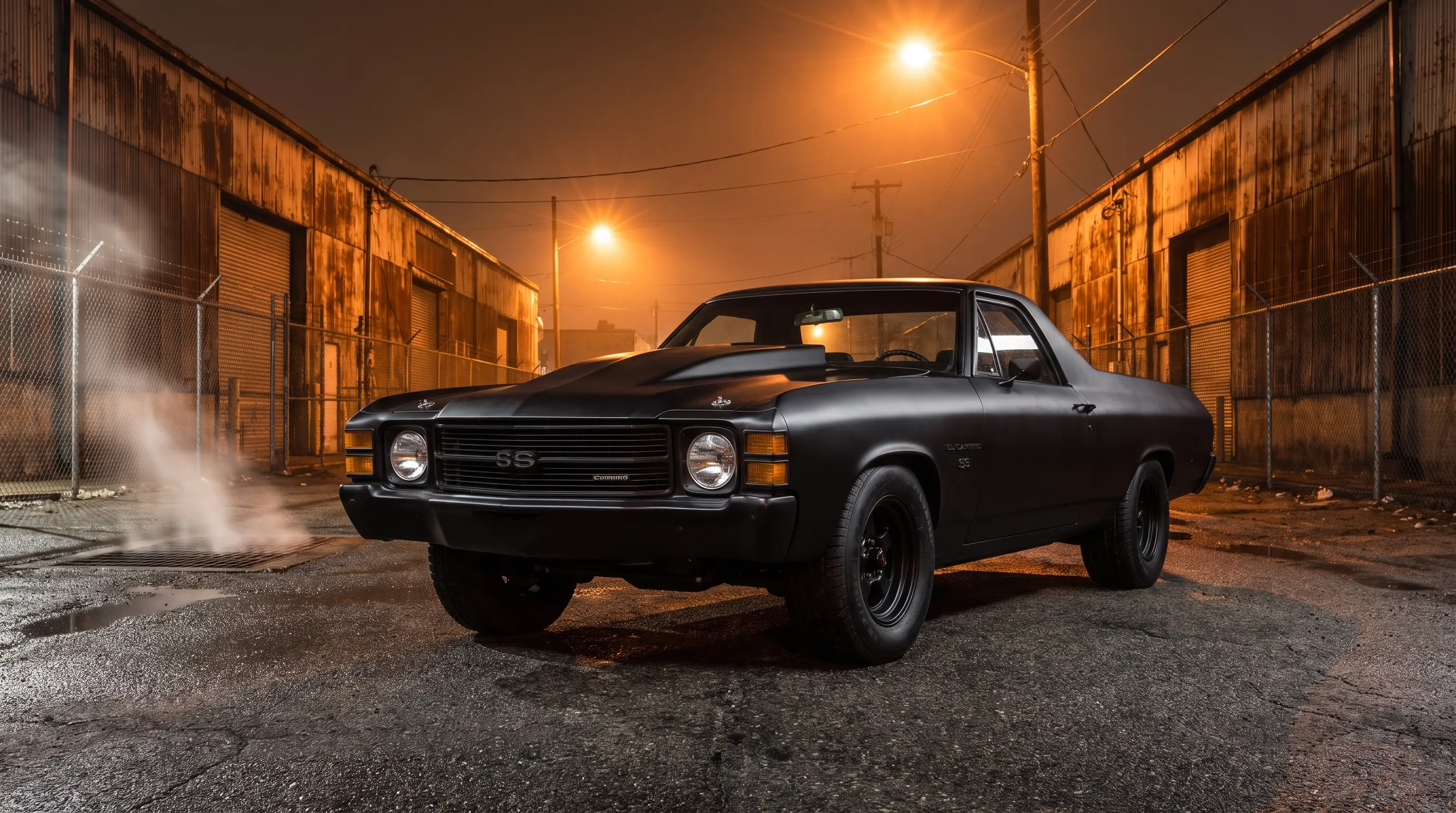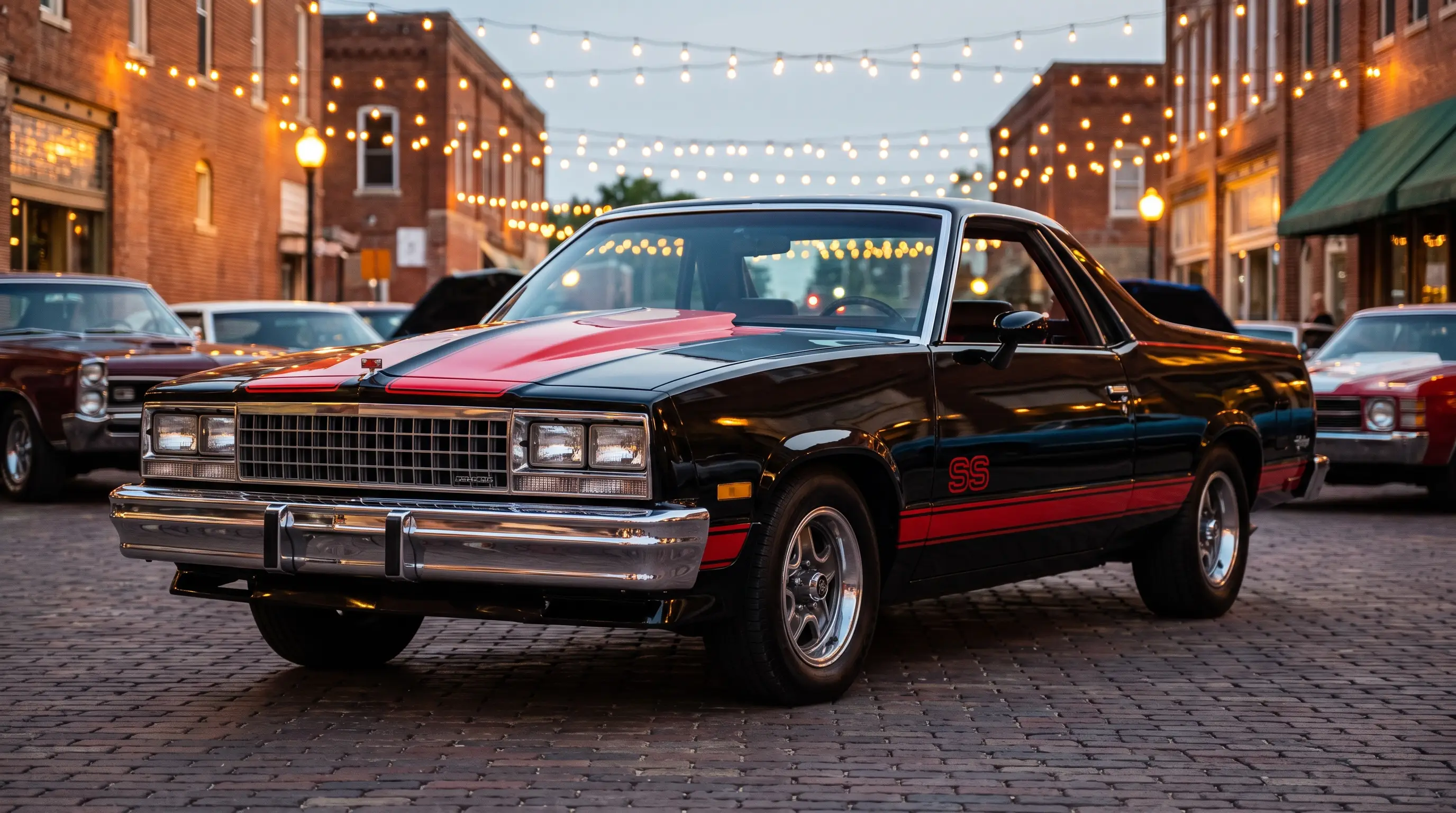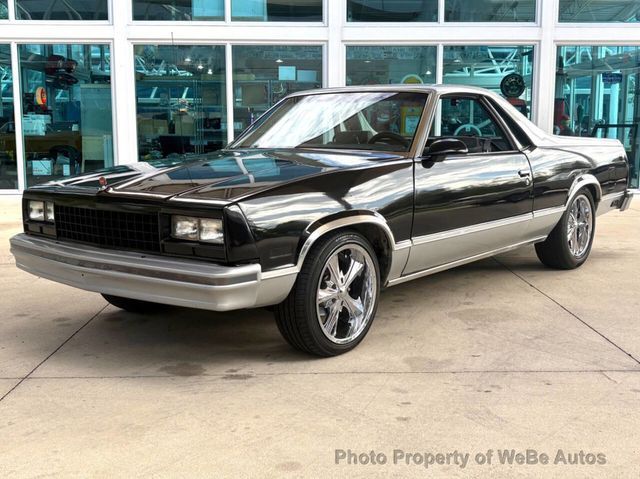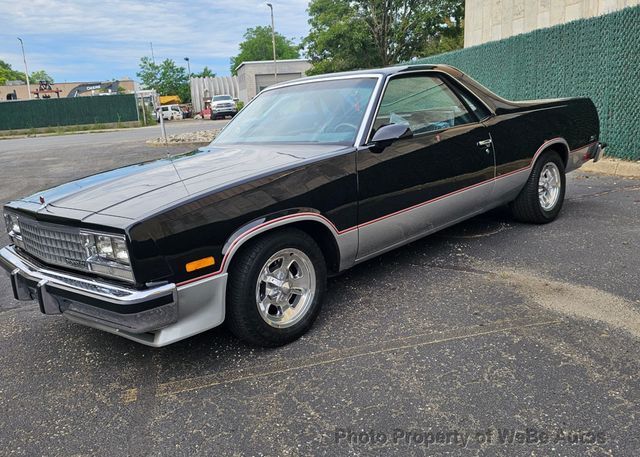
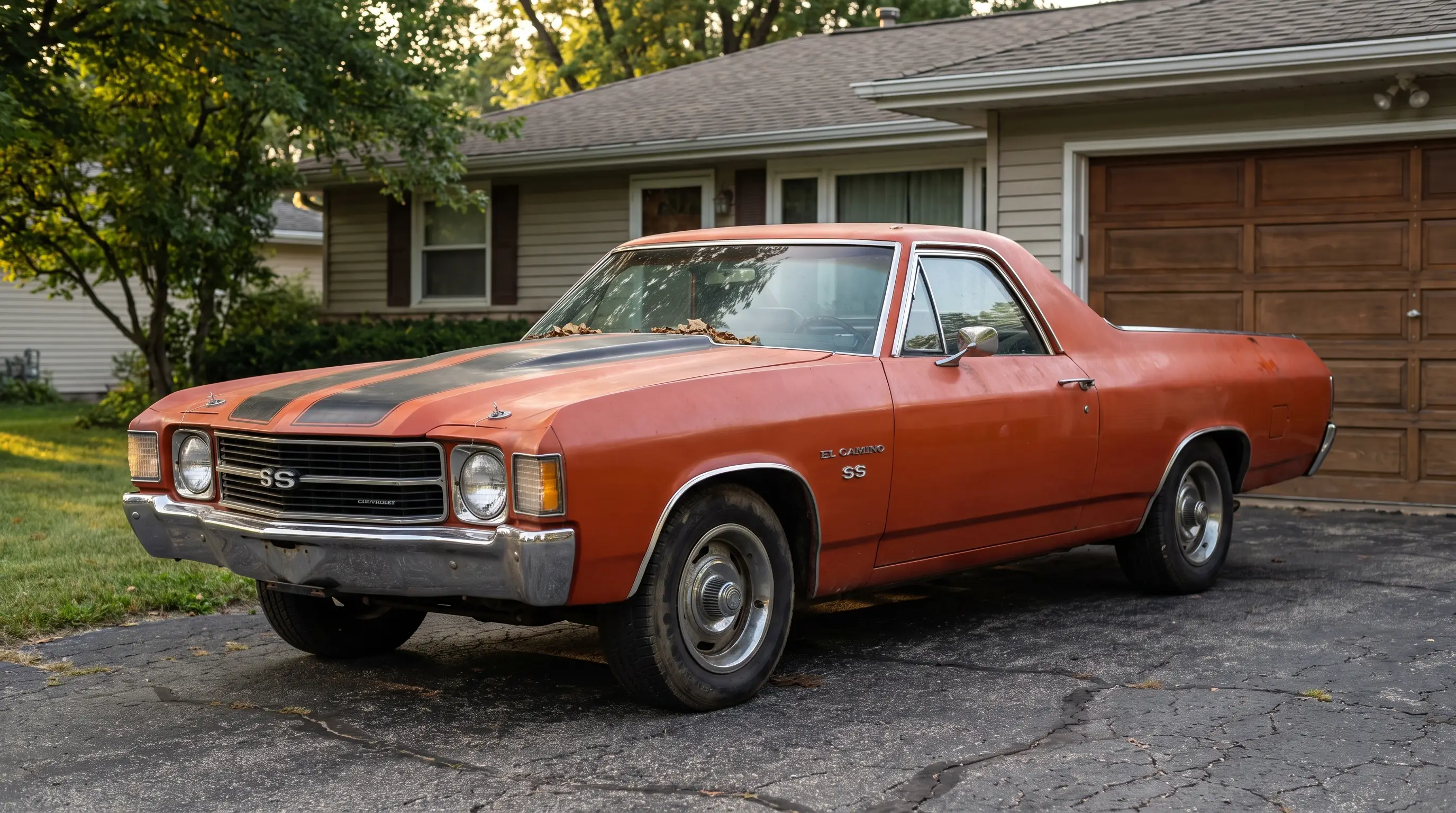
Here is the number that matters: 300. That is how many gross horsepower a 1970 El Camino SS 350 made with the base four-barrel L48 engine, versus 450 gross horsepower from the SS 454's rare LS6, a big block option so scarce that only around 500 were ever built for the El Camino that year. Everybody remembers the 454. Almost nobody remembers the el camino ss 350 quieter super sport, and that is the whole point of this story. The 350 was the SS that people actually bought, drove to work, and kept for twenty years, while the big blocks got raced, wrecked, or parted out.
The math nobody advertises
Chevrolet built the El Camino SS package around a simple idea: sell the image, let the buyer pick the engine. The SS package could be ordered with the L48 350 V8 starting around 1970 (the SS badge itself launched in 1968 as a 396-only big block package), rated at 300 gross horsepower. That figure dropped through the years as emissions rules tightened. By 1971 the same basic engine was rated closer to 270 gross horsepower, and by 1972, under the new net rating system, it read out at around 175 net horsepower. Compare that to the SS 454's LS5, rated at 360 gross horsepower in 1970, and the gap looks enormous on paper.
But paper numbers hide the real story. A four-barrel 350 in a mid-size body weighed less at the nose than a big block, ran cooler, needed less maintenance, and cost less to insure. For a working truck-car that hauled lumber on Saturday and went to church on Sunday, that math wins every time. The 350 was never trying to be the fastest SS. It was trying to be the one you could actually afford to own.
Why the quiet engine sold more units
Production numbers back this up in broad strokes, though Chevrolet's surviving factory records do not cleanly separate exact per-engine production splits for any single SS model year. What is not in dispute is that the small block was the volume engine across most of the SS run, from the 1968 introduction through the final G-body cars of 1987. Big blocks were always the minority build, ordered by buyers chasing a specific number on a window sticker. The 350 buyer wanted a Super Sport that looked the part, hauled groceries, and did not need a specialist mechanic every time something rattled.
That practicality is exactly why so many SS 350s survived. A car nobody thrashed at the strip is a car that is still sitting in a garage forty years later with its original block. Walk any regional swap meet today and count how many honest, numbers-matching 454s you see versus honest, numbers-matching 350s. The quiet engine wins that count too.
What the 350 gave up, and what it kept
Nobody is arguing the 350 SS was quick in the way a real big block car was quick. Quarter mile times for a base SS 350 typically ran in the high 15s to mid 16s, where a healthy SS 396 or SS 454 could dip into the 13s with the right gearing and a competent driver. That gap is real and it matters if straight-line speed is the entire scorecard.
It kept everything else. Brakes that could actually stop the car's lighter front end. A resale value that held up because parts were common and cheap. An insurance bill a young owner could survive. And, frankly, a driving experience that suited the El Camino's actual job description better than a torque monster ever did. This was, after all, a vehicle built to be half car and half truck, not a drag strip specialist wearing a bed liner as a costume.
"People ask me what SS to buy and I ask them what they actually do with a car. If the answer is drive it, not just show it, the 350 is the one that will still be running when the big block guys are calling around for a rebuild kit."
- Dan Reeves
Where the 350 SS sits in today's market
Values for the 350-powered SS trail the big block cars, often by a wide margin at auction, and that gap has held steady for years. A clean SS 350 from the 1968 to 1972 window typically sells for a fraction of what a documented SS 454 brings, sometimes less than half. That price gap is the opportunity. Buyers who want the SS look, the SS history, and the SS badge without chasing a six-figure big block car have a real option in the 350.
The story of the el camino ss 350 quieter super sport is not a story about being second best. It is a story about being the version that actually did the job the SS package promised: sporty looks, V8 power, a truck bed, and a price a normal buyer could justify. If you want to trace where this started, the badge, the platform, and the reason Chevrolet built a Super Sport pickup in the first place, where this started lays out the full arc from 1968 forward.
Buying one today
A base SS 350 is not a project for someone chasing bragging rights. It is a project for someone who wants a real driver, with real parts availability, at a real price. Small block Chevy parts are everywhere, the drivetrain is forgiving, and the ownership costs stay reasonable long after the purchase is done. A 350 SS is also a mechanically simple car, which means the checklist before buying one is short and honest. Confirm the cowl tag and trim tag match the VIN, since SS badges and stripe kits were bolted on and off decades ago by owners chasing a look rather than documentation. Ask for the original build sheet if the seller claims one exists, and treat a car without any paper trail as a driver-grade purchase, not a numbers-matching one. Rust at the rear wheel arches, the tailgate, and the cab corners is the usual failure point on any El Camino from this era, big block or small block, so a thorough look underneath matters more than an engine bay that has been detailed for photos.
Price a 350 SS against a comparable straight six or base V8 non-SS El Camino from the same year, and the gap tells you what the badge itself is worth in today's market. That gap has been narrowing slightly as buyers who cannot afford big block cars discover the small block SS as a legitimate alternative rather than a consolation prize. Every hobby eventually runs out of the rarest, most expensive version of its icon car, and buyers start looking one step down the ladder. That is happening now with the SS 454 and SS 396 El Caminos, both of which have climbed out of reach for a lot of first-time collectors. The SS 350 has not made that climb yet, and that is the opening. A car that drives well, needs common parts, costs less to insure, and still carries the Super Sport name on the fender is not a lesser hobby car. It is a smarter one for most buyers. The el camino ss 350 quieter super sport was never built to win a stoplight argument. It was built to be owned, driven, and kept running for the long haul, and that is exactly why so many of them are still around to buy. If that sounds like your kind of Super Sport, there is a classic El Camino for sale worth a look before the quiet cars catch up in price to the loud ones.