
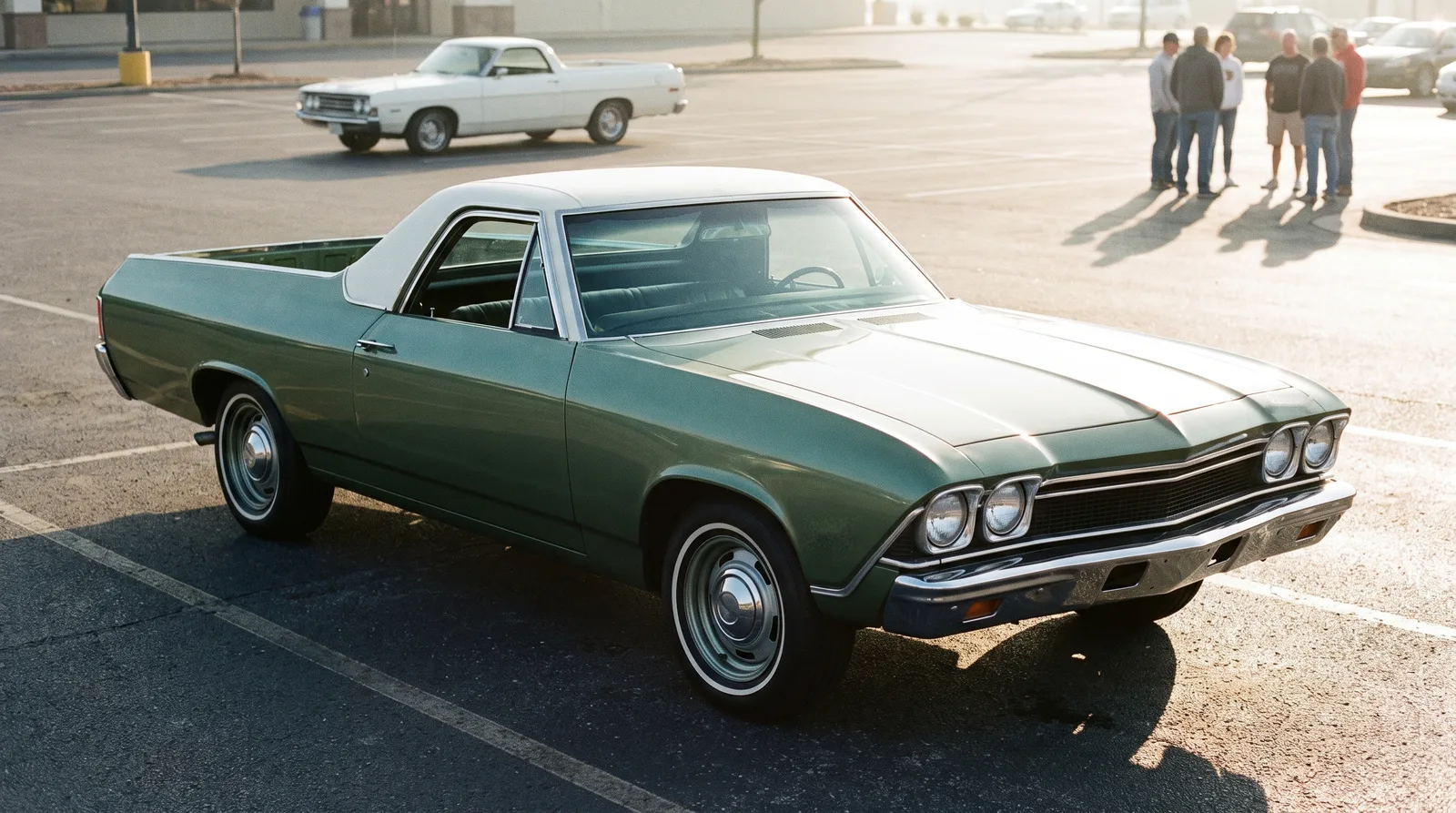
A guy in a faded Local 25 Ironworkers cap pulled up to a cars-and-coffee meet in Tulsa a few summers back with a two-tone 1968 El Camino, box loaded with nothing but a cooler and a lawn chair. Fifteen feet away, a lone Ranchero owner leaned against his 1970 GT, waiting for someone, anyone, to come ask about it. Nobody did that morning. The crowd went straight for the Chevy. That small, unscientific moment says something true about why one half-car-half-truck lasted three decades and the other one quietly folded up shop.
Car Features
7 min read
Why the El Camino Outlived the Ranchero
Ford built the first coupe utility, but Chevrolet stuck with the El Camino through platform changes and fuel crises while the Ranchero quietly ran out of road.
A truck that dressed like a coupe
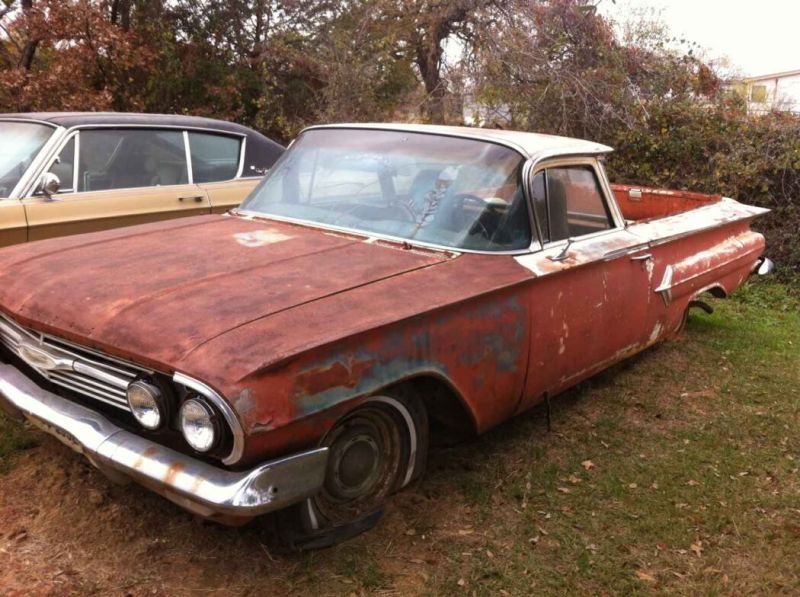
Both vehicles start from the same idea. Take a passenger car, cut the roof off behind the front seat, and graft on a cargo bed. Ford got there first in 1957 with the Ranchero, built off the full-size Ford platform, and it sold well enough that General Motors could not ignore it. Chevrolet answered in 1959 with the El Camino, riding on the same full-size Impala-based chassis. For two years they traded blows almost feature for feature. Then Ford blinked first, downsizing the Ranchero onto the compact Falcon platform for 1960, four years before Chevrolet moved the El Camino at all. Chevrolet's El Camino stayed full-size through 1960, then paused entirely until it returned on the mid-size Chevelle platform for 1964, and stayed there. That patience, more than horsepower or styling, set the two trucks on separate paths.
The Ranchero, meanwhile, kept changing chassis under its own buyers. It rode on the compact Falcon platform from 1960 through 1965, then moved again onto the intermediate Fairlane/Torino platform for 1966. By the time Ford settled into that intermediate body, the El Camino had already spent two model years building a following as a Chevelle with a bed, and Chevrolet kept refining that formula while Ford treated the Ranchero more like a side project bolted onto whatever body happened to be current that year.
Two companies, two different bets
Dealer support tells a lot of the story here. Chevrolet dealers ordered the El Camino in real volume through the 1960s and into the SS era, and factory literature treated it as a legitimate member of the Chevelle family rather than an oddball afterthought. Ford, meanwhile, kept nudging Ranchero further from its own Torino identity as the 1970s wore on, eventually parking it on the LTD II platform for 1977 through 1979, a big mid-size body styled to look full-size that nobody particularly wanted in coupe utility form. Buyers noticed the difference. The El Camino kept its muscle-era image alive through big-block options and SS badging clear into the late 1970s, while the Ranchero increasingly read as a Ford sedan with the trunk lopped off.
Chevrolet also had an answer ready when GM moved to the smaller G-body platform in 1978. The El Camino simply migrated along with the Malibu, keeping its proportions sensible and its dealer network intact. Ford had no such successor lined up. Ranchero production ended in 1979, and Ford chose not to chase the segment onto the Fox platform the way Chevrolet followed the Malibu onto G-body.
El camino vs ranchero: why Chevy endured
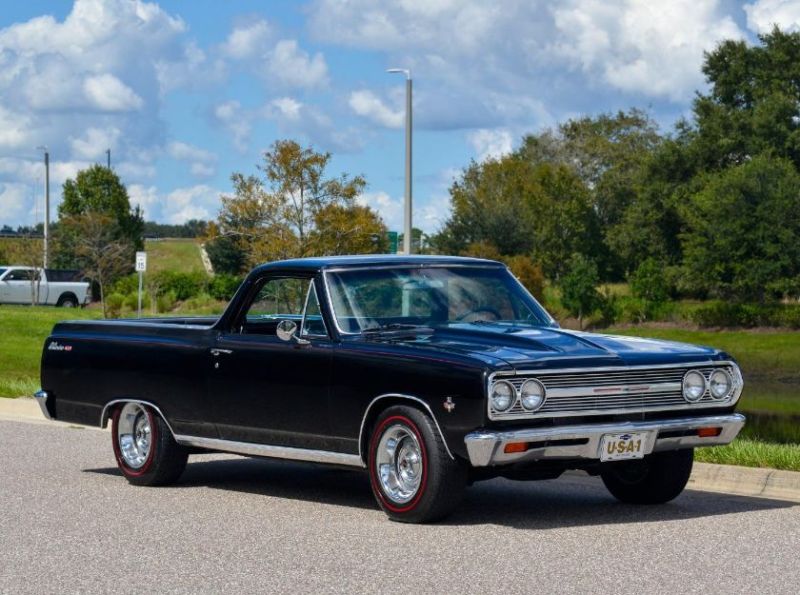
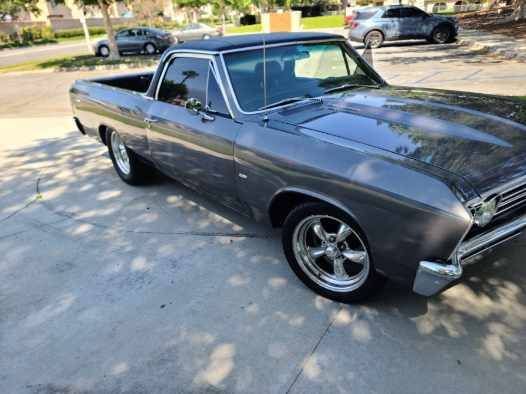
Boil the el camino vs ranchero why Chevy endured question down and it is mostly a story of commitment. Chevrolet treated the El Camino as a permanent fixture in its lineup, worth a platform change in 1964 and another in 1978 to keep it current. Ford treated the Ranchero as a niche product that got whatever leftover platform was convenient, and when that math stopped working in 1979, Ford simply stopped building it. The production numbers back that commitment up: Chevrolet built roughly 22,246 El Caminos for 1959 and another 14,163 for 1960, and even in the model's final stretch from 1980 through 1987 it still moved something like 204,000 units total, real numbers year after year, not a token trickle to satisfy a handful of loyal buyers.
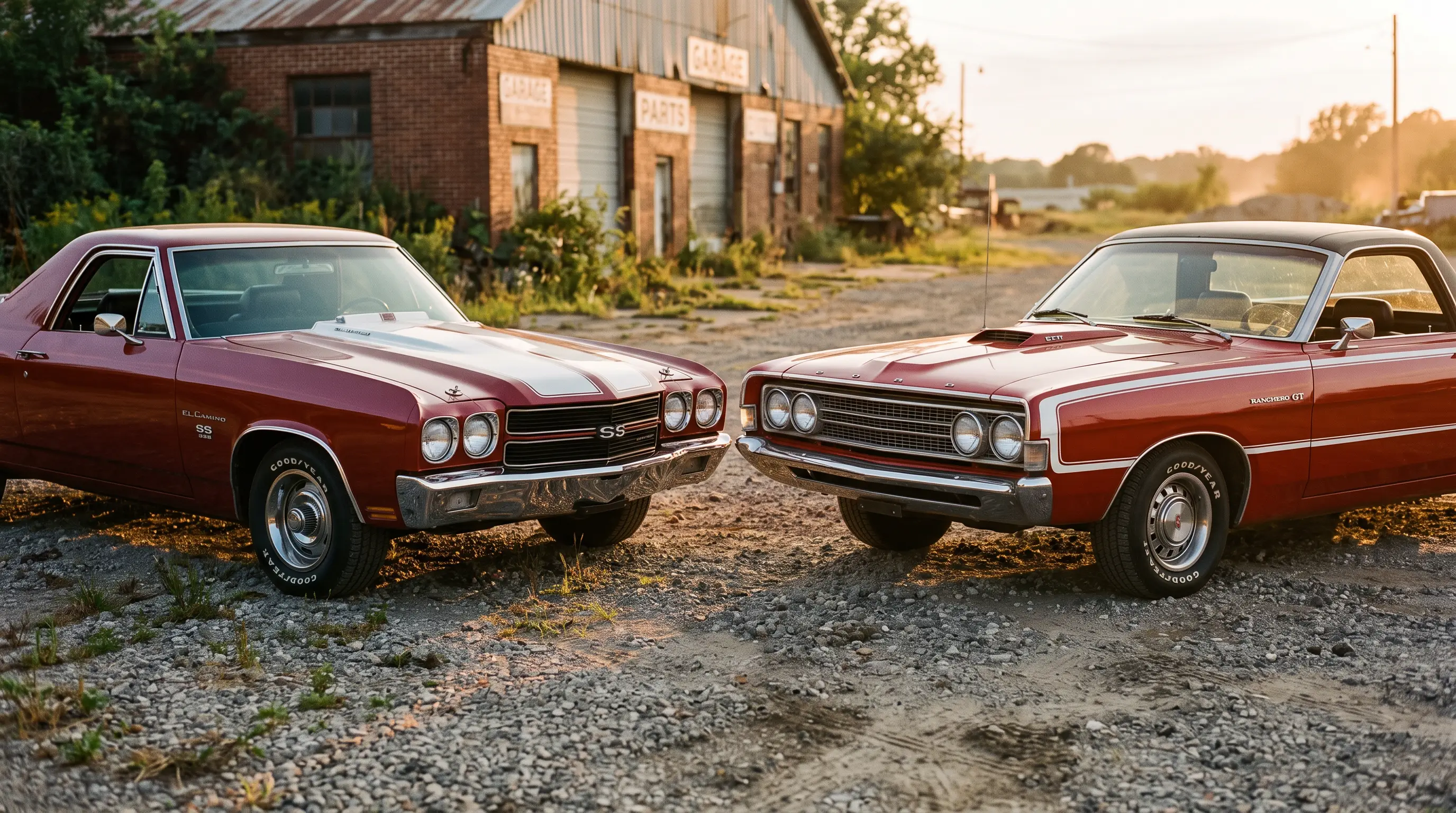
There is also the SS factor. Ford never gave the Ranchero a genuine muscle-car sibling the way Chevrolet paired the El Camino with SS 396 and later SS 454 packages straight out of the Chevelle brochure. That borrowed muscle credibility mattered to buyers who wanted a truck that could also embarrass a Camaro at a stoplight. The Ranchero GT existed, but it never carried the same weight in enthusiast circles that an SS El Camino did.
"Ask ten guys at a swap meet which one they would rather find in a barn, and nine of them say El Camino before you finish the sentence. It is not even close, and it has not been close for fifty years."
- Patrick Walsh
The years Ford gave up and Chevy didn't
Look at the calendar and the pattern gets obvious. Chevrolet built El Caminos in 1959 and 1960, paused, then came back stronger in 1964 and never stopped until 1987. Ford built Rancheros continuously from 1957 to 1979, then walked away for good. Chevrolet's willingness to pause, retool, and relaunch the El Camino on a better platform in 1964 is exactly the kind of long-term product commitment Ford never matched. When GM shifted to the G-body in 1978, the El Camino got nine more years of life, including the Malibu-based Caballero variant Chevrolet also sold under GMC badging. Ford had nothing waiting in the wings for 1980.
| Generation window | Chevrolet El Camino | Ford Ranchero |
|---|---|---|
| Full-size era | 1959-1960 | 1957-1959 |
| Compact era | - | 1960-1965 (Falcon-based) |
| Intermediate era | 1964-1977 | 1966-1976 (Fairlane/Torino) |
| Final platform | 1978-1987 (G-body) | 1977-1979 (LTD II based) |
| Total run | 26 model years | 23 model years |
What survives on the market today
Walk any large collector car auction today and the imbalance is obvious before you even check a price sheet. SS-badged El Caminos from 1968 through 1972 draw serious money and serious bidding wars, while good Rancheros, even GTs, tend to sell for less and sit longer. Part of that is simple survivorship. Chevrolet built more of them, for more years, with a stronger performance halo, so there are more clean examples left and more buyers who grew up wanting one. Part of it is nostalgia inertia. Kids who lusted after an SS El Camino in high school in 1970 are the ones with disposable income and garage space now, and Ford never built the equivalent object of desire for that generation to chase.
If you are shopping rather than just admiring, the practical read is straightforward: parts support, club infrastructure, and price transparency all favor the Chevrolet side of this rivalry, which is worth knowing before you fall for the first clean example you find. For anyone who wants the fuller history of how these two trucks squared off decade by decade, the el camino vs ranchero story covers the generation-by-generation fight in more depth than a single article can. And if this comparison has you leaning Chevy's direction, there are usually a handful of classic El Caminos on the market worth a look before you commit to a project.
None of this means the Ranchero was a bad truck. It was often a well-built, comfortable one. But comfort and competence do not automatically buy you thirty years of dealer commitment, and that is ultimately the difference. Chevrolet kept betting on the El Camino through platform changes, fuel crises, and shifting buyer tastes. Ford placed one good bet in 1957, coasted on it, and folded when the hand got harder to play.
Sources and notes
Related Reading

About the author
Patrick Walsh
Automotive journalist covering classic car shows, events, and the enthusiast community across North America.
Related Listings - Chevrolet El Camino
Comments
Be the first to comment on this article.