
Every few months somebody stands in my shop with a checkbook and the same undecided look, torn between an El Camino and a Ranchero and unable to talk themselves into either one. I have walked enough people through this decision that I can usually get them off the fence in about twenty minutes, and it is not because one car is objectively better than the other. It is because most buyers have not actually figured out which questions matter to their own situation before they start comparing spec sheets. They walk in armed with a magazine article ranking horsepower figures from fifty years ago and expect that to settle a decision that really has nothing to do with horsepower at all.
Car Features
6 min read
At the Crossroads: Choosing Between El Camino and Ranchero
A mechanic walks undecided buyers through the real questions that settle the El Camino versus Ranchero choice, from budget to parts to model year.
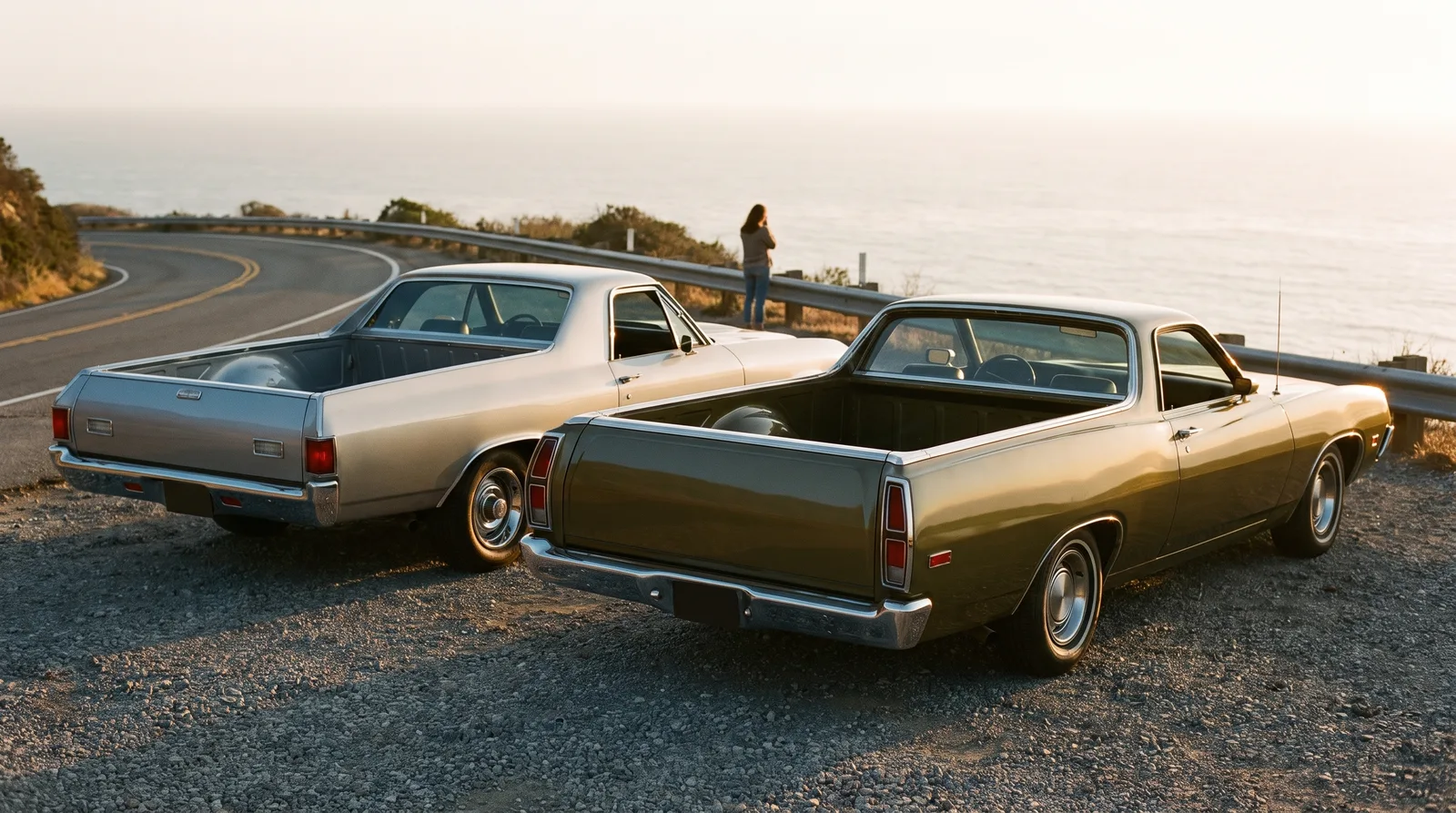
Start with what you actually plan to do with it
The first question I ask is simple. Are you building a show car, a weekend cruiser, or an honest daily driver. That answer alone eliminates half the confusion. If you want maximum resale value and the deepest buyer pool when you eventually sell, the data leans El Camino, particularly a documented SS. If you want a slightly rarer car that turns heads specifically because people do not expect to see one, the Ranchero has real appeal, and its lower purchase price for comparable condition can free up budget for the mechanical work that actually matters.
If daily use is the plan, parts availability becomes the deciding factor more than anything else, and that favors the El Camino almost every time, since Chevrolet's longer production run and shared Chevelle parts bin make sourcing everything from trim to drivetrain components noticeably easier. The full story behind why that parts gap exists traces back to production decisions both companies made decades ago, and it is worth understanding before you commit real money to a project.
Budget honestly, including the money you have not thought about yet
Buyers walk in with a number in their head for the car itself and forget to budget for the parts gap I just mentioned, especially on the Ranchero side. A trim piece that costs forty dollars reproduction for an El Camino can cost three or four times that for a Ranchero-specific part, if you can find it running at all. Build that difference into your total project cost before you fall in love with a cheaper purchase price on paper.
Insurance, storage, and routine maintenance run about the same on either platform, so do not let anyone tell you one is meaningfully cheaper to own once it is running. The real cost difference shows up during restoration and repair, not during ownership of a car that is already sorted. I have watched buyers save fifteen hundred dollars on the purchase price of a Ranchero project and then spend three times that chasing down a correct tailgate emblem and a set of GT-specific stripe decals a year later, money they never budgeted for because the sticker price on day one looked like the whole story.
| Your priority | Better choice |
|---|---|
| Maximum resale value and buyer pool | El Camino, documented SS |
| Lower purchase price, comparable condition | Ranchero |
| Easiest parts sourcing for a project | El Camino |
| Standing out at a show with something rarer | Ranchero |
| Big-block muscle credentials, most options | El Camino SS 454 |
Match the era to what you actually like driving
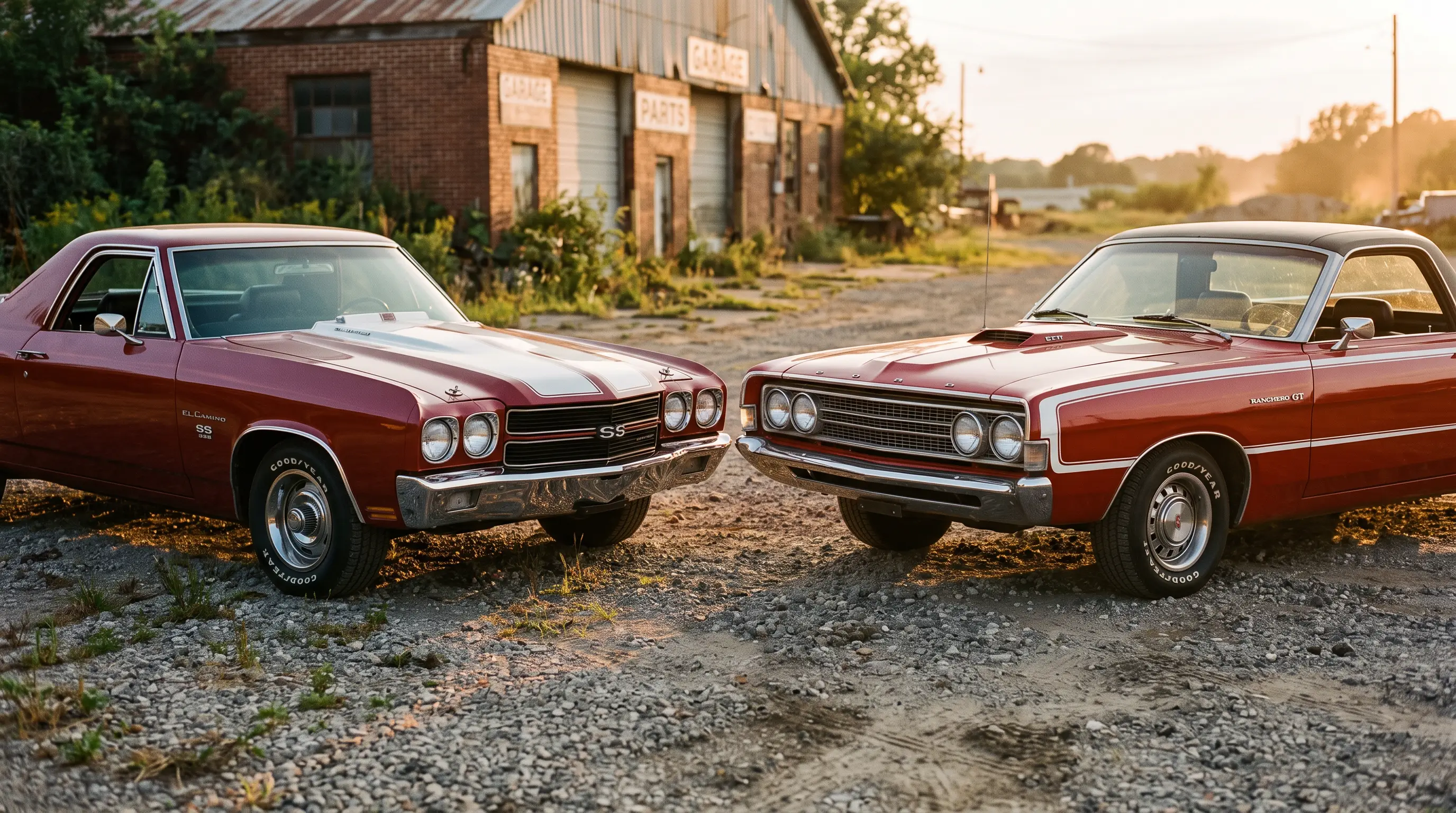
People forget both nameplates spanned very different vehicles across their production runs, and comparing a 1959 El Camino to a 1970 Ranchero GT makes about as much sense as comparing a station wagon to a muscle car, because that is basically what you are doing. Decide which era actually appeals to you before you start cross-shopping. If you want the batwing-finned original, you are looking at 1959 or 1960 El Caminos only, since Chevrolet dropped the car entirely afterward. If muscle era performance is the draw, you want a Chevelle-based El Camino from 1968 through 1972 or a Fairlane or Torino-based Ranchero GT from roughly the same window. If a boxier, later feel with a genuine SS option still available appeals to you, only the El Camino offers that, since Ranchero production ended in 1979 before that later G-body generation ever existed.
This matters more than people expect, because a buyer who falls for photos of a 1970 SS 454 and then ends up with a detuned mid-1970s example is going to feel shorted the first time they take it on the highway. Get specific about the model year range you actually want before you start looking at listings, on either side of this rivalry, and write that range down before you ever click on a single classified ad.
Inspect the same things regardless of which one you pick
Whichever direction you go, do not skip the fundamentals. Check the bed floor, the rocker panels, and the rear quarters for rust before you even ask about the engine, because both platforms rot in the same predictable places and a pretty paint job hides a multitude of sins underneath. Confirm the VIN, the trim tag, and any big-block or SS documentation against the actual car in front of you, since both nameplates have decades of history with cars re-tagged to look more valuable than they are. Get a compression test done. Drive it before you buy it, not just around the block, long enough to feel how it tracks on the highway and whether anything unusual shows up once the engine is fully warm.
"Most people come in undecided because they are comparing the wrong things. Once you figure out whether you are buying to drive, to show, or to flip, the choice usually makes itself."
- Mike Sullivan
My honest closing advice
If you cannot decide and both cars are priced fairly for their condition, buy the one with the better paperwork and the more honest body, not the one with the more famous badge. A documented, rust-free Ranchero beats a shaky, re-tagged El Camino every time, and the reverse is just as true. Badge loyalty has cost more than one buyer a good car because they walked past a clean example waiting for a slightly more prestigious nameplate to show up at the same price, and I have seen that same buyer come back a year later still looking, having spent that whole year renting garage space for nothing. If Chevrolet's longer history and deeper community ends up being the deciding factor for you, worth a look too is a piece on exactly why that nameplate stuck around as long as it did. Whatever you land on, go shop classic El Camino listings and put this checklist to work on an actual car before you sign anything.
Sources and notes
Related Reading

About the author
Mike Sullivan
Detroit-area muscle car enthusiast and restoration specialist with three decades of hands-on experience working on American iron.
Related Listings - Chevrolet El Camino




Comments (1)
H
Hank Weaver
6 days ago
ranchero parts aint near that scarce if you know Ford folks. most of the drivetrain and the carburator came off a Fairlane, same as hay off any other field.
Hank, on the mechanical side that's the good news for Ranchero owners. A Fairlane or Torino engine, carb, brakes and suspension bolt into a Ranchero, and a Ford parts counter treats it like any other car. The scarcity I'm talking about is the stuff behind the doors: tailgate, bed trim, GT stripes, emblems. That's where the El Camino guys have it easier.