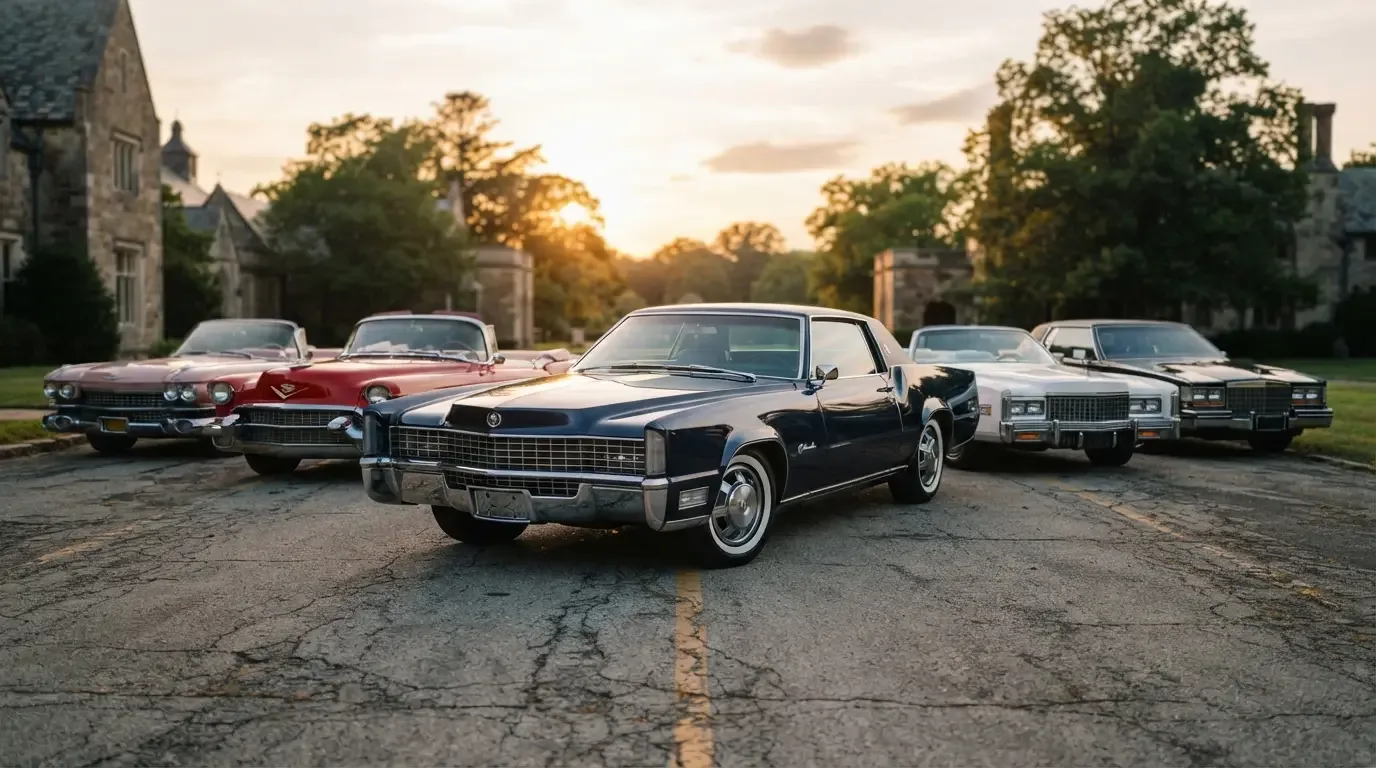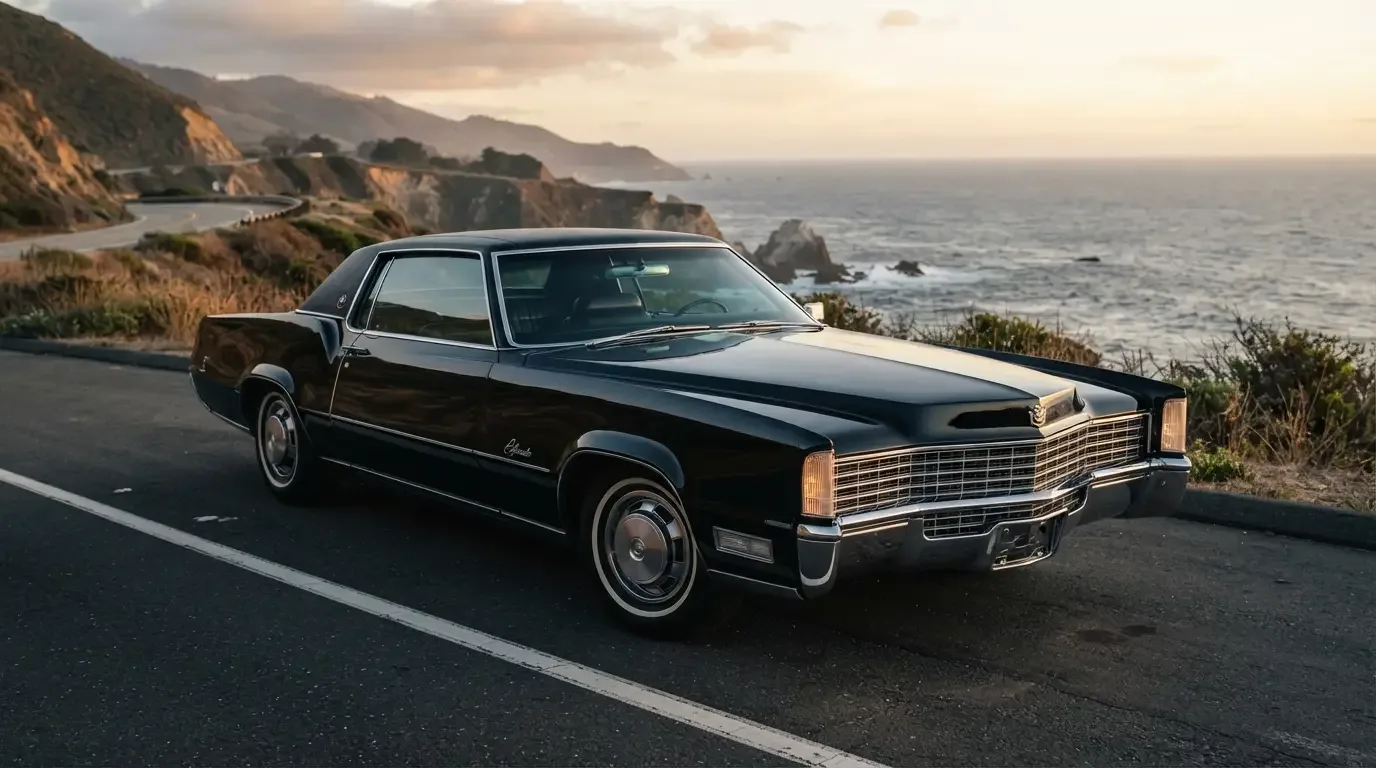
Every car club has that one member who parks the 1950s cadillac eldorado at the back of the lot on purpose, close enough to see but far enough that nobody bumps a door getting out. I've watched it happen at three different shows now, always the same reaction, people drifting over mid-conversation without quite meaning to, drawn in by fins taller than anything else on the field. That's the pull of the Eldorado's first golden decade, a run of cars built when Cadillac genuinely believed bigger fins and bolder chrome were the whole point of being American.
1953 to 1955: the quiet start before the fins took over
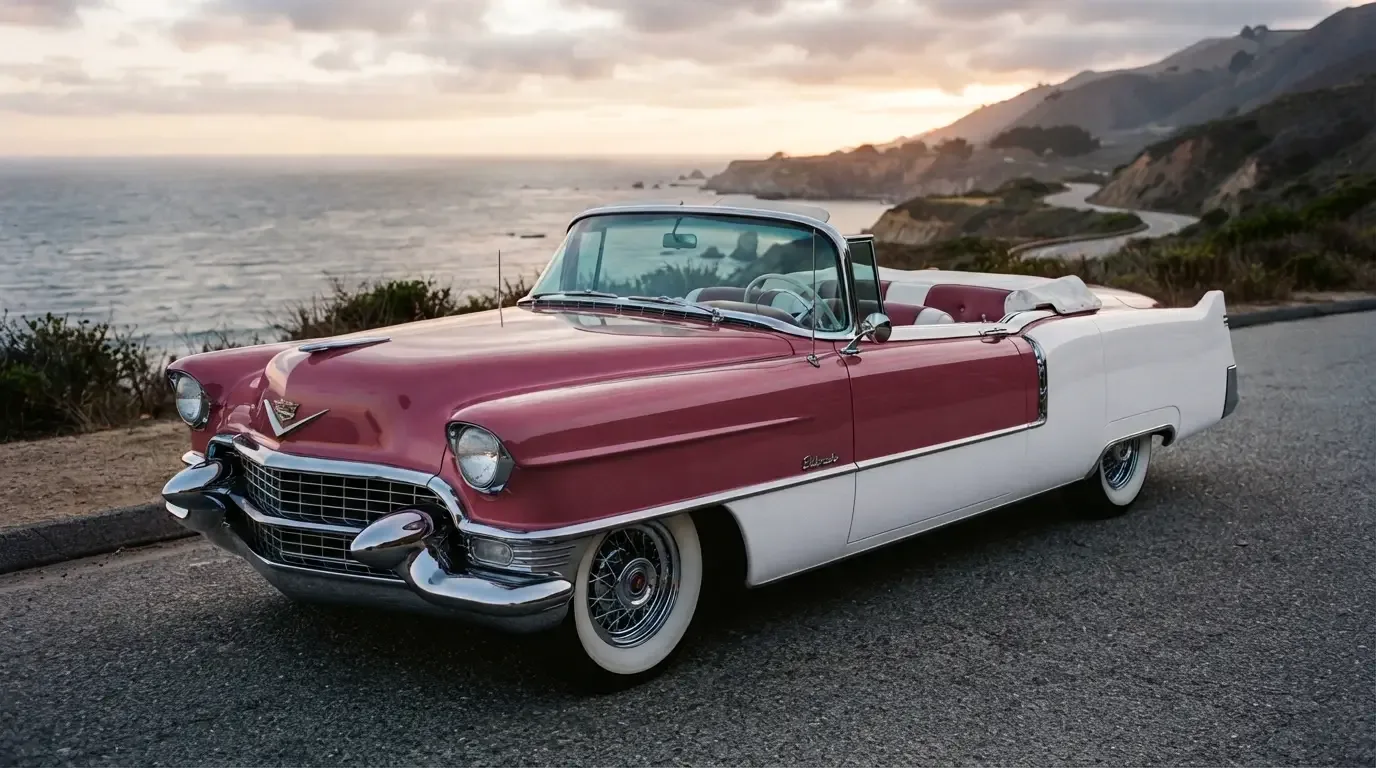
The Eldorado name arrived in 1953 on a limited convertible with a wraparound windshield borrowed from GM's Motorama show cars, priced to be nearly unreachable and built in a run small enough that most Cadillac buyers that year never saw one up close. Through 1954 and 1955 the styling stayed relatively restrained by the standard of what was coming, tailfins present but modest, chrome generous but not yet excessive. Old-timers at club meets like to point out that these early cars are the ones serious historians chase, precisely because they're the least flashy of the whole decade and the hardest to find in original condition.
I remember a fellow at a regional meet a few years back who'd spent nearly a decade tracking down a 1954 Eldorado with matching numbers and a documented ownership chain. He wasn't chasing the car for how it looked, since by his own admission the 1954 model is one of the plainer years in the whole run. He wanted it because it represented the Eldorado before Cadillac fully committed to spectacle, a snapshot of the nameplate finding its footing. That's the kind of buyer the early fifties cars attract, people who care more about the story than the show-field applause.
1956 to 1957: the lineup grows, the fins grow with it
Cadillac split the Eldorado into two distinct bodies for 1956, the Seville hardtop coupe alongside the existing Biarritz convertible, giving buyers a closed-roof option for the first time under the Eldorado name. Then came 1957, and with it the Eldorado Brougham, a hand-built flagship that cost north of $13,000, more than double what most fully loaded Cadillacs of the era commanded. Air suspension, a brushed stainless steel roof, quad headlights before they were legal in most states, memory seats. I've had club members tell me stories passed down from their fathers about seeing a Brougham parked outside a country club and not believing Cadillac actually sold it to the public rather than just showing it at Motorama.
The Brougham's price alone still stops people cold at meets today. North of $13,000 in 1957 wasn't just expensive, it was more than many houses cost at the time, and Cadillac reportedly lost roughly $10,000 on every single one it built, with production costs running well above $23,000 per car against a $13,074 sticker, a gap driven by hand assembly and, on the 1959 to 1960 successor, body panels shipped in from Pininfarina in Italy. That's the kind of detail that turns a casual walk past a show car into a twenty-minute conversation with whoever owns it, because the number is so far outside normal that people need to hear the explanation twice.
1958 to 1959: the peak, and then the peak of the peak
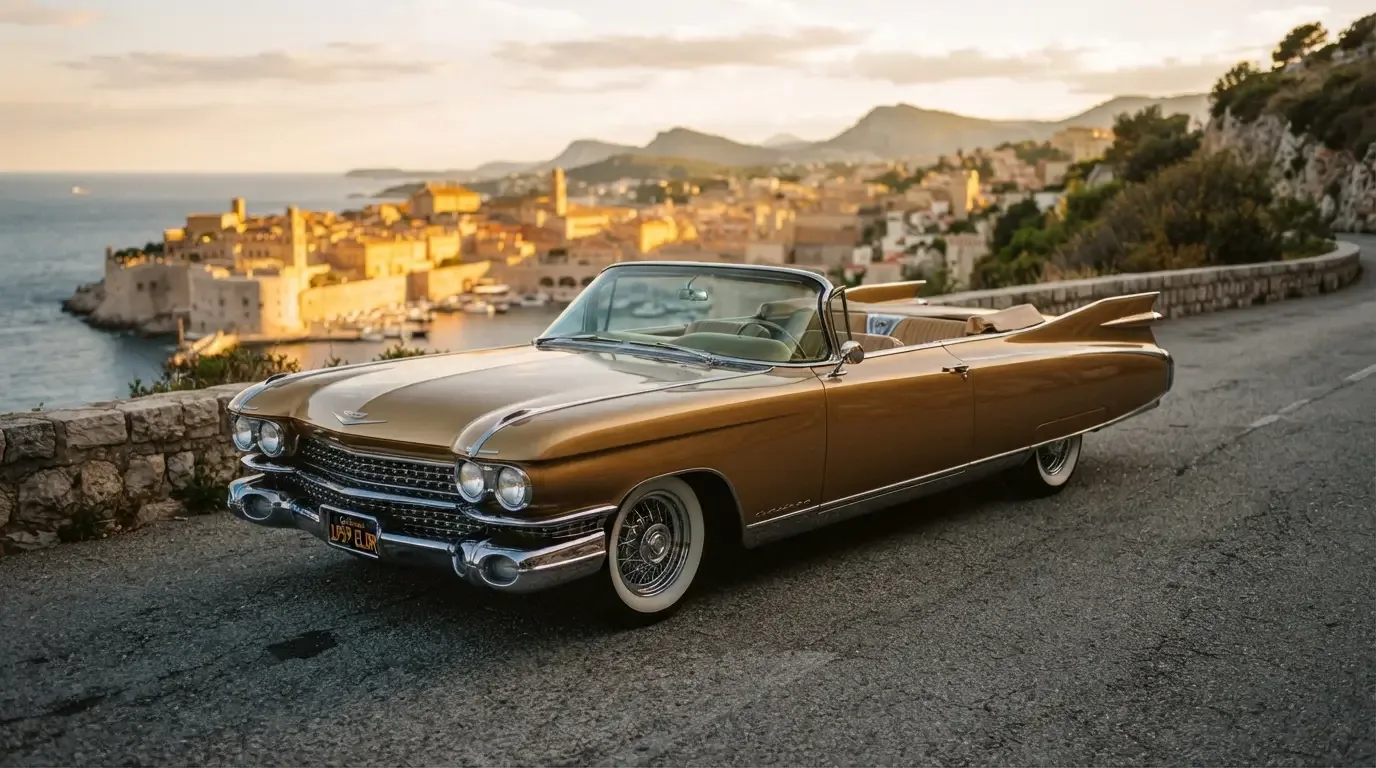
1958 closed out the Brougham's original run and pushed tailfins taller still, but nothing in Cadillac's history, or arguably in American car design history, matched what came in 1959. The fins reached their absolute maximum height that year, twin bullet taillights mounted at the tips, and the whole car stretched longer and lower than anything Cadillac had built before. Club raconteurs love telling this part because it's the story everyone already half knows, the year American excess reached its logical extreme and then, almost immediately, Cadillac itself decided enough was enough and started reeling the design back in for the following decade.
What people at shows tend to forget, until somebody like me brings it up, is how fast Cadillac walked the fins back after 1959. Design chief Bill Mitchell took over from Harley Earl right around this period and made it clear almost immediately that he thought the fins had gone too far. By the early 1960s the Eldorado's lines had already grown noticeably cleaner, which means the absolute peak of tailfin excess lasted, in practical terms, about one single model year. That narrow window is a big part of why a genuine 1959 Eldorado still commands so much attention today. It's not just tall fins, it's the tallest fins Cadillac ever allowed itself to build, full stop, before or after.
| Year | Notable model | Highlight |
|---|---|---|
| 1953 | Eldorado convertible | Wraparound windshield debut |
| 1956 | Seville / Biarritz | Coupe body joins convertible |
| 1957-1958 | Eldorado Brougham | Air suspension, stainless roof |
| 1959 | Eldorado Biarritz/Seville | Tallest tailfins Cadillac ever built |
Why this decade still owns the show field
Ask any longtime club member which era of Eldorado draws the biggest crowd at a Saturday show and the answer is almost always the 1950s cars, and it's not close. Part of it is nostalgia, sure, but a bigger part is that nothing built since has matched the sheer visual confidence of a 1957 Brougham or a 1959 Biarritz parked under afternoon light. These cars weren't trying to be tasteful. They were trying to be unforgettable, and five, six decades on, they still manage it every single time.
I've stood next to a 1959 Biarritz at three different shows now and watched the exact same thing happen each time. Someone walks by, catches the taillight out of the corner of an eye, stops mid-step, and turns around like they've heard their name called. Nobody does that for a modern car, no matter how expensive. That reaction alone tells you the 1950s Eldorados accomplished exactly what Cadillac set out to build them for, cars nobody could walk past without looking twice.
"You don't restore a fifties Eldorado to be practical. You restore it because somebody at a show forty years ago walked past one and never forgot the way the chrome caught the light, and now it's your turn to be that somebody for the next kid at the fence."
- Wayne Coburn
Where the decade fits in the bigger story
The fin era is really just the opening act of a much longer Eldorado story, one that eventually swung all the way to front-wheel drive, then to land yacht proportions, then to a downsized coupe, then to a Northstar V8 finale. If you want the full arc from that first limited convertible through 2002, the whole tale is where this started, and it's worth the read if the 1950s cars have you hooked the way they hook most people who see one in person for the first time. And if seeing isn't enough anymore, there's usually a fin-era survivor or two among the classic Eldorado for sale listings worth a look, though good ones don't sit on a lot for long.