The eldorado name meaning traces back centuries before Cadillac ever built a car, to a Spanish legend about a golden kingdom said to exist somewhere deep in South America. "El Dorado" translates roughly as "the golden one" or "the gilded man," and Cadillac chose it in 1953 for exactly the reason you would expect from a division building its most expensive, most exclusive car: the phrase had come to mean an unattainable treasure, a place of impossible wealth that explorers spent generations searching for and never found.
The legend behind the word
The original El Dorado legend grew out of Spanish colonial accounts of a Muisca ritual in the highlands of what is now Colombia, in which a chieftain covered himself in gold dust and made offerings into a sacred lake. European explorers who heard secondhand accounts of the ritual transformed it over decades into rumors of an entire city built from gold, and later into a lost kingdom somewhere in the Amazon basin. Expedition after expedition searched for that city through the sixteenth and seventeenth centuries and found nothing, and the word El Dorado gradually shifted meaning in common usage, from a specific place to a general symbol for any fabulously wealthy destination that might not actually exist.
Spanish conquistadors, including Gonzalo Jimenez de Quesada and later Sir Walter Raleigh on the English side, mounted expeditions specifically chasing rumors of El Dorado, sinking enormous resources into journeys through dense jungle and mountainous terrain in South America. None of them found a golden city, because none appears to have existed in the form the legend described. What they found instead, in a roundabout way, was the raw material for a legend durable enough to survive centuries and eventually end up stamped on the trunk lid of an American luxury car built more than four hundred years later.
By the twentieth century, "eldorado" had become common shorthand in English for exactly that idea: a place or prize of extraordinary, almost mythical wealth. That symbolic weight is precisely what made the word attractive to Cadillac's naming committee in the early 1950s, at a moment when the division wanted a name that communicated luxury and desirability without needing any further explanation.
Writers and poets had already been using the word figuratively for generations by the time Cadillac picked it up. Edgar Allan Poe published a poem titled simply "Eldorado" in 1849, using the golden city as a metaphor for an unreachable goal a knight spends his whole life chasing without ever finding. That poem, along with countless other literary references throughout the nineteenth century, had already cemented the word in the American imagination as shorthand for a prize that stays just out of reach, which made it an unusually loaded choice for Cadillac's naming committee to attach to an actual, purchasable automobile.
Why a myth fit a car built to be scarce
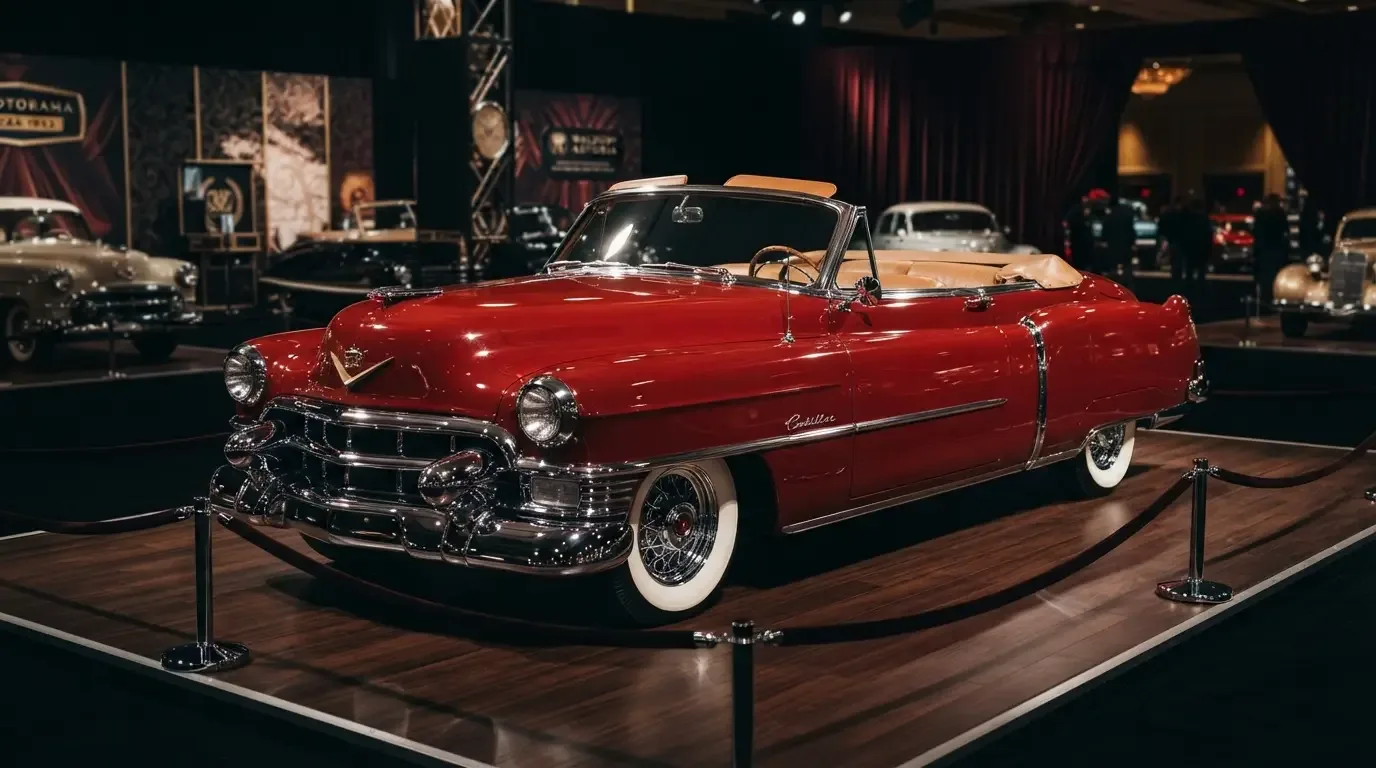
Cadillac's 1953 Eldorado was never meant to be an ordinary purchase. It was priced at roughly twice the cost of a standard Series 62 convertible, built in a production run of only a few hundred units, and marketed explicitly as the best the division could offer. A name tied to an unattainable treasure suited that positioning perfectly. Buyers who could afford one were essentially being told they had found something most people never would, a car as rare and desirable as the legendary golden city itself.
That kind of naming logic wasn't unique to Cadillac. American consumer culture in the postwar decades leaned heavily on evocative, aspirational names for premium products, and automakers in particular liked borrowing language tied to exploration, wealth, and faraway places. Cadillac's choice stood out because the reference was old enough, and famous enough, that almost every buyer in 1953 would recognize it immediately without needing a marketing brochure to explain the connection.
Cadillac also benefited from a naming pattern already established elsewhere in its own lineup. The division had a long history of drawing on European exploration and aristocracy for model names, tracing back to its own founding namesake, the French explorer Antoine de la Mothe Cadillac. Eldorado fit comfortably within that pattern, a name rooted in exploration and legend rather than a made-up marketing word, which gave the car an air of pedigree that a purely invented name could never have carried on its own.
How the name shaped the car's identity over time
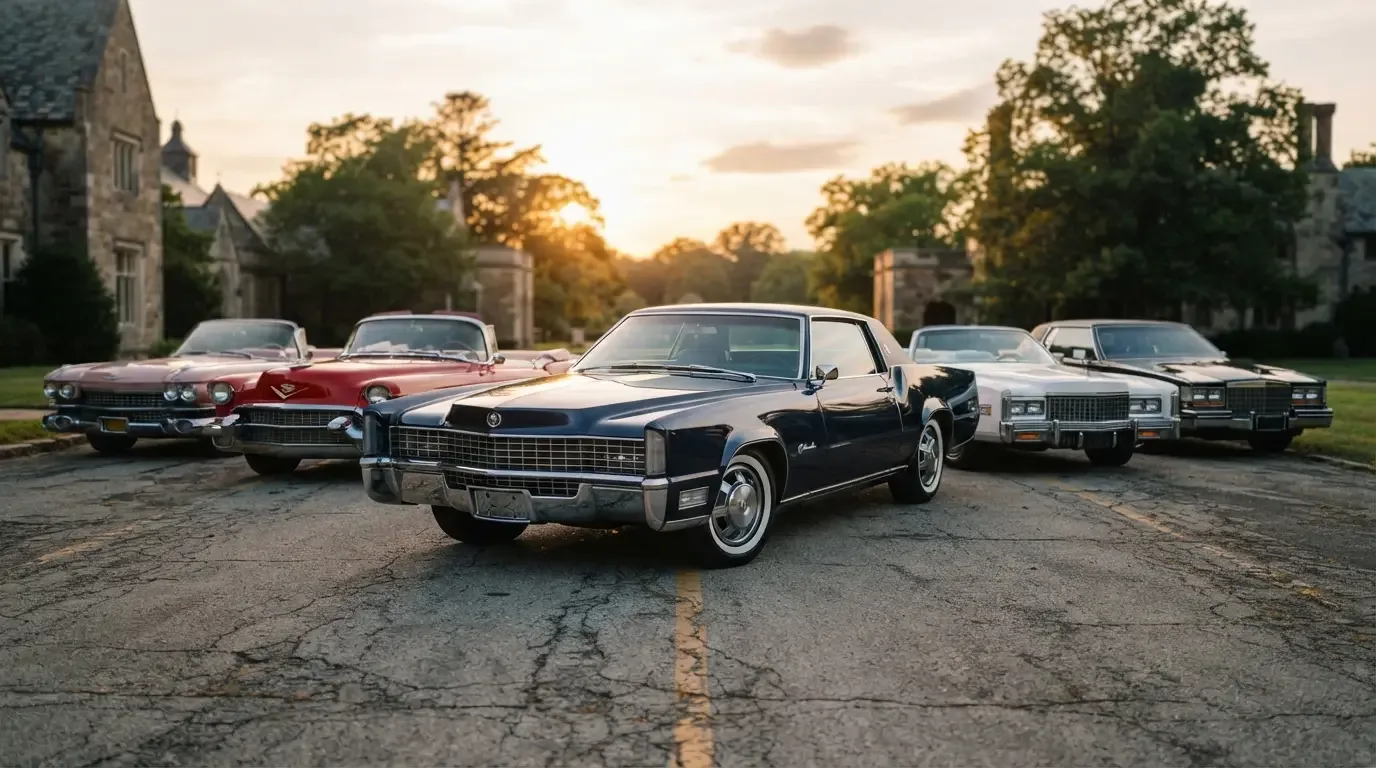
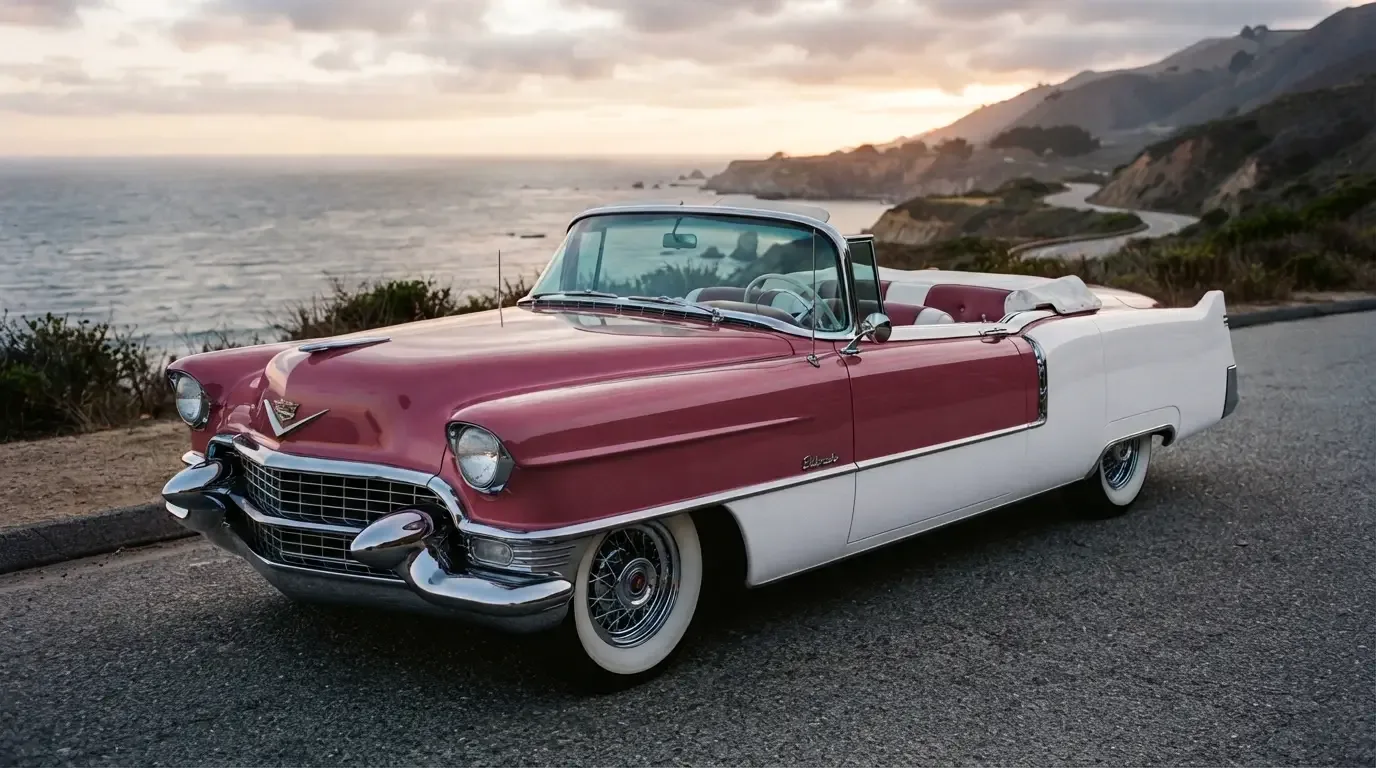
Once attached to the car, the Eldorado name outlasted every design change Cadillac put the model through. The tailfins of the 1950s gave way to the front-wheel-drive coupe of 1967, which gave way to the land yacht convertibles of the 1970s, which gave way to a much smaller downsized car in 1986, and the Northstar-powered coupe of the 1990s closed out the run in 2002. Through every one of those transformations, the name carried the same implicit promise: this is Cadillac's version of the impossible find, the golden prize, whatever shape that happened to take in a given decade. Readers interested in how each of those design eras played out can find more on the cadillac eldorado generations covering the full 49-year span.
"A name that references a myth about a treasure nobody could ever quite find works remarkably well for a car built to be scarce on purpose. Cadillac understood that connection from the very first year, and it never had to change the name once in five decades."
- Sarah Whitfield
The name's legacy beyond Cadillac
El Dorado as a phrase went on to appear across American place names, businesses, and pop culture well before and after Cadillac adopted it, from Eldorado, Arkansas, to countless motels and casinos chasing the same association with wealth and adventure. Cadillac's use is arguably the most famous commercial application of the legend in the twentieth century, cementing "Eldorado" in many people's minds as a car name first and a centuries-old myth second, even though the myth came first by nearly four hundred years.
Later automakers took notice too. Ford briefly considered similarly evocative naming strategies for its own personal-luxury models, though none matched the direct mythological weight Cadillac had already claimed. Once "Eldorado" belonged to Cadillac in the public imagination, no rival brand could realistically borrow the same territory without looking like it was copying the leader, which only reinforced how effective the original naming decision turned out to be.
Understanding where the name came from adds real context to where the whole story of the model began. For the fuller account of that first limited-run convertible and the reasoning behind its debut, where this started covers the 1953 launch in depth. And for anyone drawn to the mythology enough to want the real thing, classic Eldorados on the market span every generation the name ever carried, tailfins, front drive, land yacht, and Northstar alike.