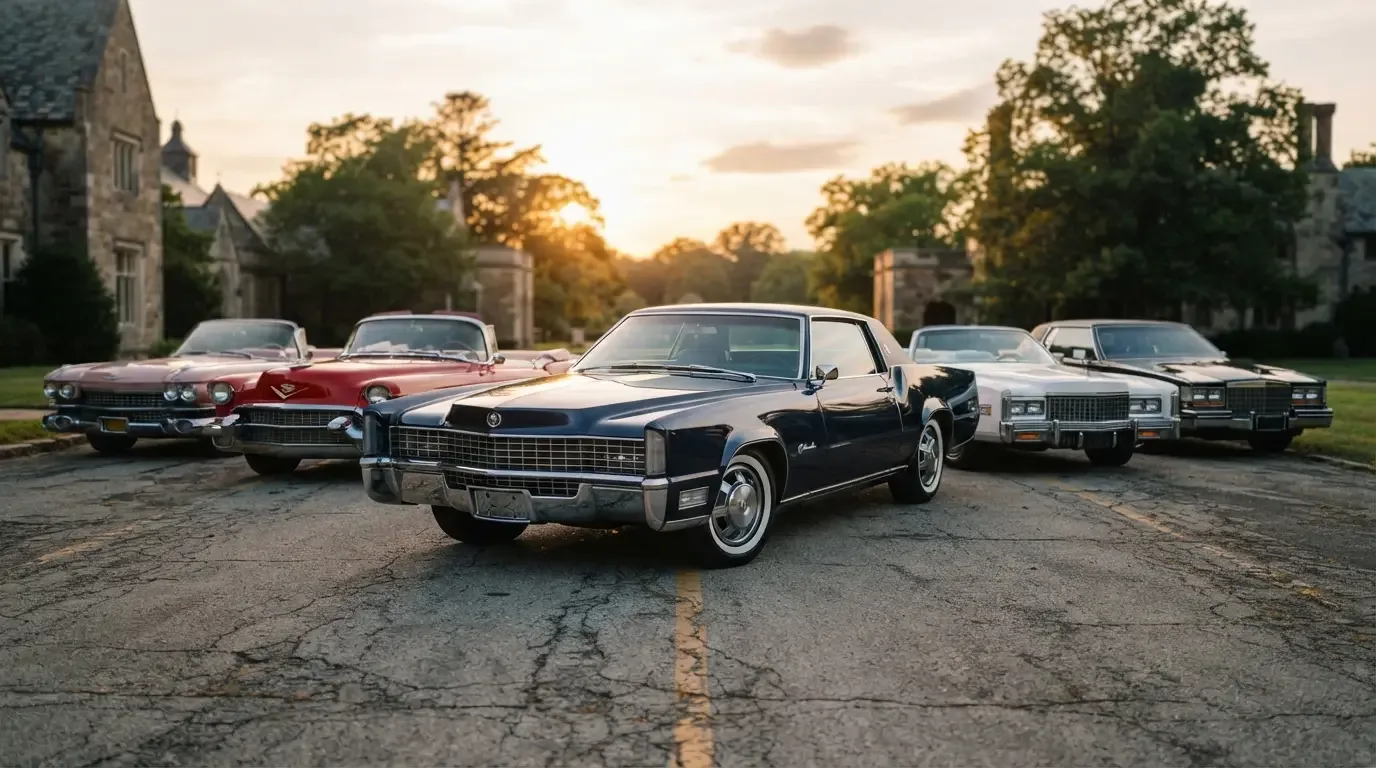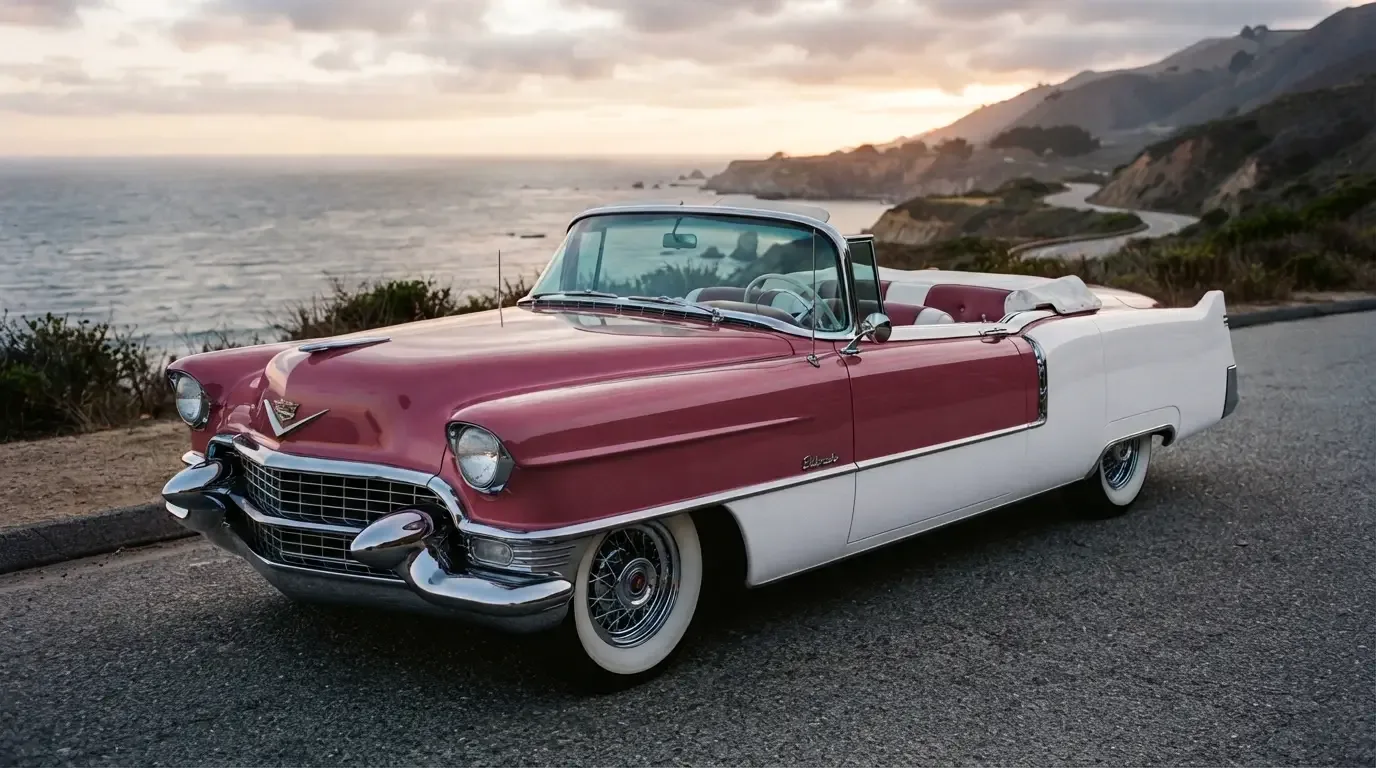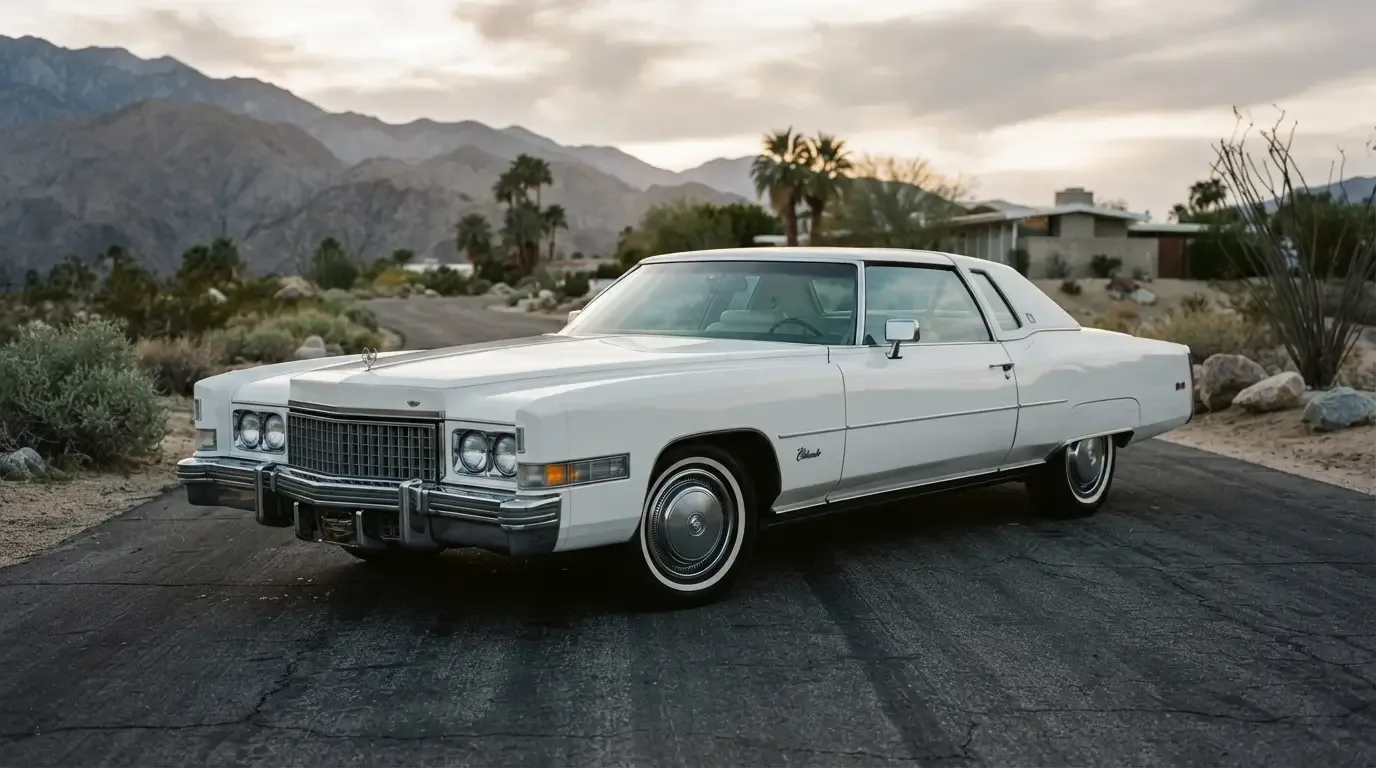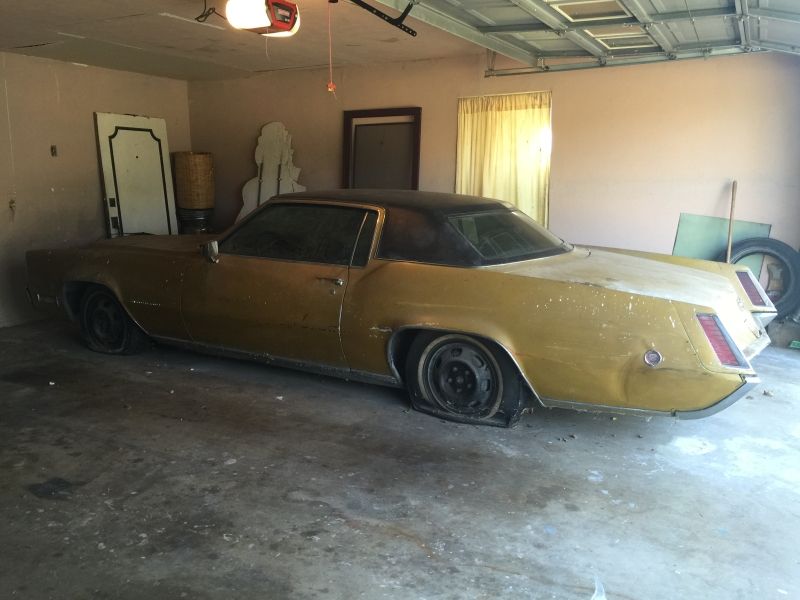
The 1960s cadillac eldorado opens with the last of the tailfin excess and closes with one of the most consequential engineering decisions Cadillac ever made. Across the decade the car moved from the restrained but still finned Biarritz convertibles of the early 1960s to the front-wheel-drive coupe introduced in 1967, a transformation that took the Eldorado out of the tailfin era entirely and placed it at the center of America's growing personal-luxury car segment.
1960 to 1963: fins in retreat
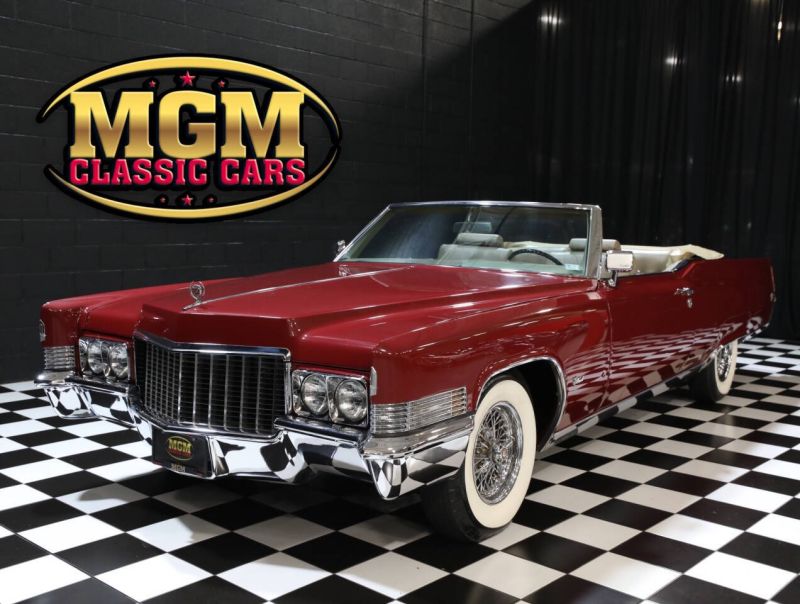
Bill Mitchell had taken over design leadership from Harley Earl at the close of the 1950s, and his influence showed immediately in the Eldorado's early 1960s styling. The wild, bullet-tipped fins of 1959 shrank year over year, replaced by cleaner lines and a lower, more architectural stance. The Biarritz convertible remained the sole Eldorado body style through this stretch, since the Seville hardtop coupe name had been discontinued after 1960, leaving Cadillac's flagship as a convertible-only proposition for the first half of the decade.
Mechanically the early 1960s cars carried forward the same basic rear-drive, body-on-frame architecture the Eldorado had used since 1953, powered by Cadillac's 390-cubic-inch V8 through the early part of the decade before displacement grew later on. What changed was the visual language surrounding that hardware. Cadillac's stylists worked to make the Eldorado look forward-thinking even while the mechanical layout underneath stayed conventional, a strategy that bought the division time to develop the far more radical front-drive platform waiting in the wings for 1967.
1964 to 1966: refinement before the leap
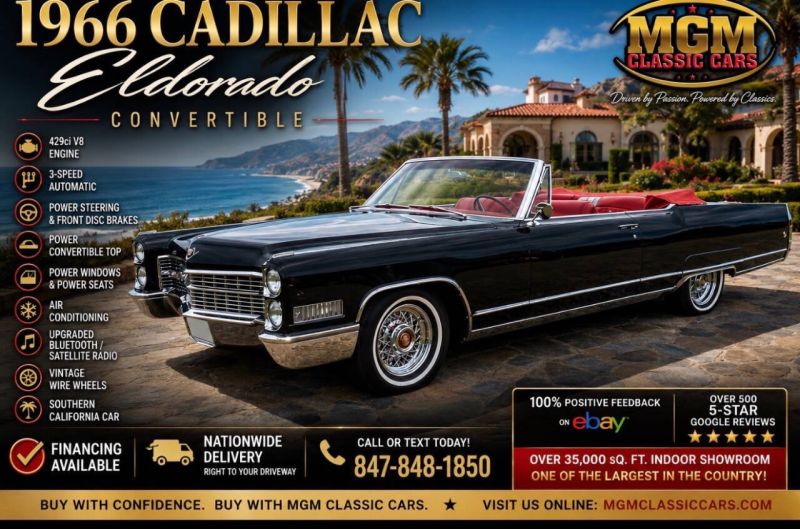
Cadillac used the middle years of the decade to steadily modernize the Eldorado's underpinnings and appointments, adding a Turbo Hydra-Matic transmission and improving ride comfort ahead of the platform overhaul waiting in the wings. Styling grew more restrained still, with fins reduced to a barely perceptible crease by 1965 and 1966. These years are often overlooked by collectors chasing either the fin-era spectacle or the 1967 breakthrough, but they represent Cadillac quietly perfecting the traditional rear-drive Eldorado formula right before abandoning it entirely.
Comfort and convenience features expanded steadily during this stretch too, with power everything becoming standard across most of the lineup and Cadillac's engineers focusing heavily on ride isolation and quietness inside the cabin. None of that generated headlines the way tailfins or a new platform would, but it mattered enormously to the buyers actually writing checks for these cars, who valued the Eldorado as much for how effortlessly it drove as for how it looked parked outside a country club.
1967: the front-drive breakthrough
Nothing in the Eldorado's 1960s run mattered more than the 1967 redesign. Cadillac moved the car onto a new unitized front-wheel-drive platform shared with the Oldsmobile Toronado, a genuine engineering gamble for a division that had built rear-drive cars exclusively for its entire history. The new Eldorado abandoned tailfins altogether, adopting a long, low, knife-edge silhouette with concealed headlights that looked like nothing else Cadillac had ever sold. It was also, by most measures, the first American luxury car built at real production scale to use front-wheel drive since the Cord of the 1930s, a fact that made the 1967 model an instant landmark rather than just another yearly redesign.
The engineering behind the shift was not a simple badge exercise borrowed from Oldsmobile. Cadillac's engineers worked through their own suspension tuning, weight distribution targets, and steering feel to make sure the Eldorado did not simply feel like a Toronado with a different grille. Reviewers at the time generally agreed the effort showed, describing the front-drive Eldorado as noticeably more composed through corners than the traditional rear-drive Cadillacs it shared showroom space with, despite carrying a comparable amount of weight over the front wheels.
| Years | Body style | Key development |
|---|---|---|
| 1960-1963 | Biarritz convertible | Fins recede under Bill Mitchell |
| 1964-1966 | Biarritz convertible | Turbo Hydra-Matic, refinement |
| 1967 | Front-drive coupe | New unitized platform debuts |
| 1968-1970 | Front-drive coupe | Vertical headlights, more power |
1968 to 1970: the formula gets refined
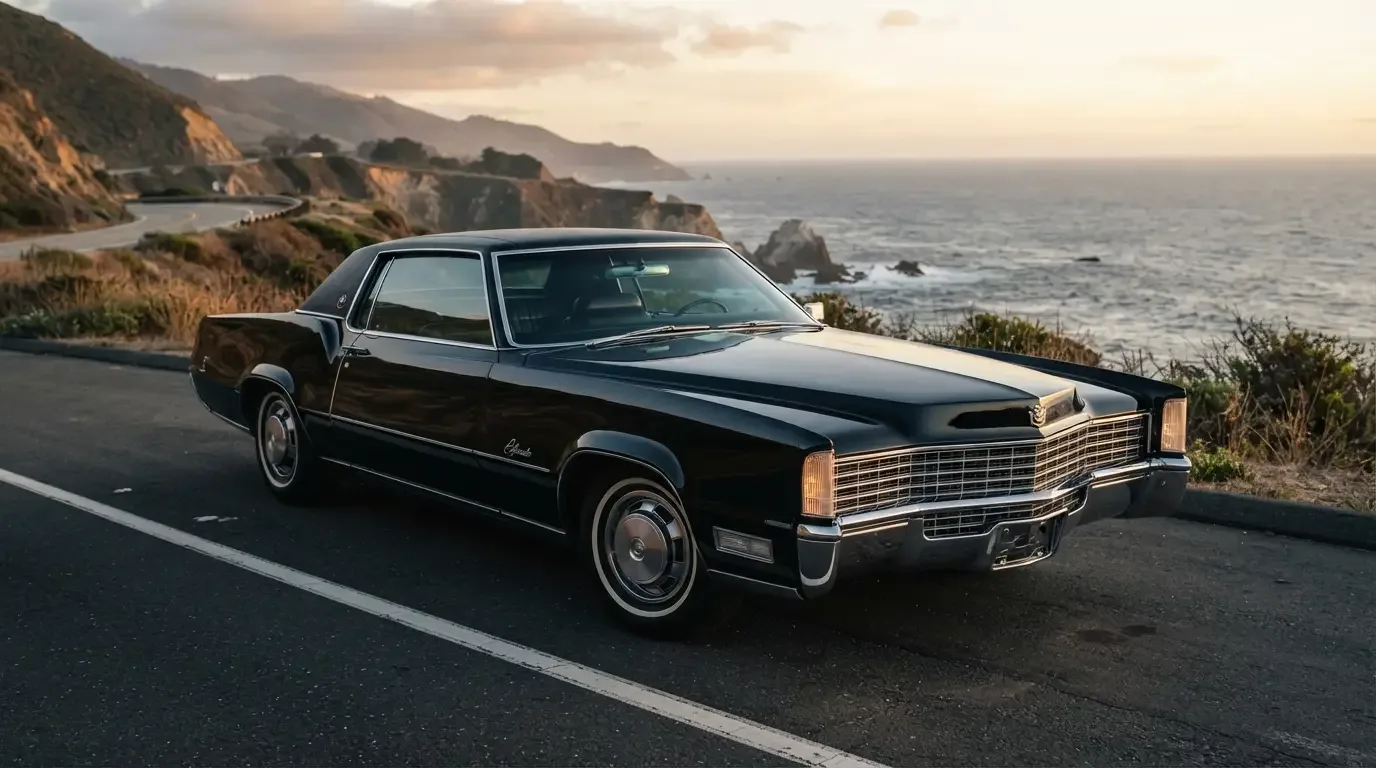
Cadillac spent the remaining years of the decade polishing the front-drive formula rather than reinventing it again. Vertical, more traditional headlight styling replaced the hidden units for 1968, and engine displacement grew through 1970 as Cadillac pushed to keep the big front-drive coupe feeling suitably powerful despite its considerable weight. By the end of the decade the Eldorado had firmly established itself as a genuine rival to Lincoln's Continental Mark series and to Ford's Thunderbird in the fast-growing personal-luxury segment, a category the Eldorado had helped define with its 1967 reinvention.
Cadillac also used these final years of the decade to push horsepower steadily upward, with the front-drive Eldorado's V8 growing to 472 cubic inches by 1968 and delivering enough torque to move the heavy platform without feeling strained. That combination of size, power, and genuinely novel front-drive handling gave road testers of the era plenty to write about, and period reviews frequently noted how differently the Eldorado behaved compared to any traditional rear-drive American luxury car on sale at the same time.
"The 1967 Eldorado is one of those rare moments where a manufacturer's engineering department and its design department both took a genuine risk at the same time, and both risks paid off. That almost never happens cleanly, and it's why the car still gets studied by historians decades later."
- Sarah Whitfield
Why the decade split defines Eldorado collecting today
Because the 1960s Eldorado essentially contains two different cars, a traditional rear-drive convertible through 1966 and a genuinely new front-drive coupe from 1967 onward, collector interest splits accordingly. Early-decade Biarritz convertibles appeal to buyers chasing the last echoes of the tailfin era in a cleaner package, while 1967 through 1970 coupes attract those who want the historically significant platform shift, often at a comparatively accessible price relative to the fin-era cars that preceded them. For the complete generation-by-generation picture connecting this decade to everything before and after it, the full story traces the Eldorado's entire 49-year arc.
Both eras of the 1960s Eldorado turn up in the current market with some regularity, and comparing an early Biarritz convertible against a 1967 coupe side by side makes the platform shift obvious in a way that photos alone rarely capture. Anyone curious can browse classic Eldorado listings spanning both halves of this decade of change.
Whichever half of the decade a given car represents, buyers researching the 1960s Eldorado should pay close attention to documentation, since the platform shift makes provenance and originality especially important for verifying whether a car left the factory as an early Biarritz convertible or a genuine first-year 1967 front-drive coupe. Cars that can prove their originality across that dividing line tend to command a real premium over unverified examples, regardless of which side of 1967 they land on.