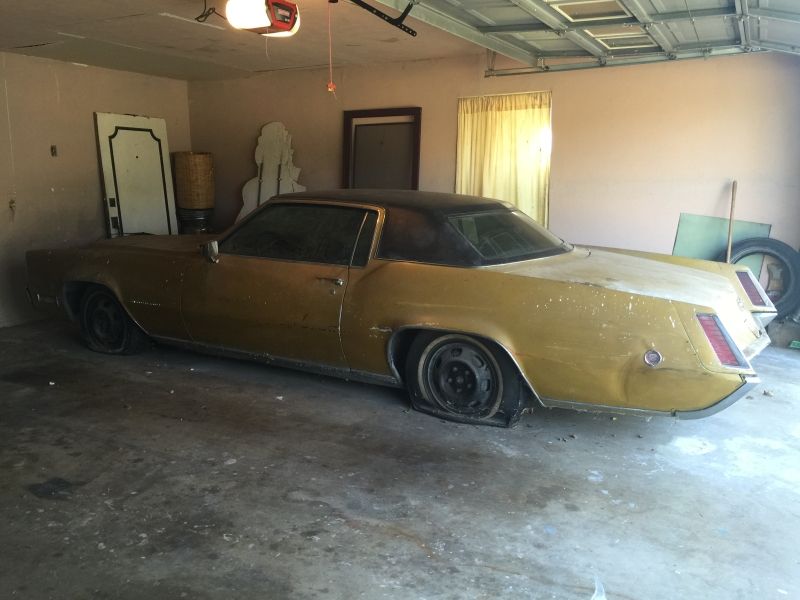
There is a fellow in our regional club who has owned his 1956 Cadillac Eldorado Biarritz for over thirty years and still tells the same story every single meet about the day he bought it off a widow in a small Ohio town for less than the price of a used pickup truck. He knew what he had. She had no idea, and that gap in knowledge is a big part of why this particular Eldorado has such a good story to tell.
The year the Eldorado split in two
Through 1955, Eldorado had been a single model, a limited-run convertible built to sit above the rest of the Cadillac lineup as a halo car. For 1956, Cadillac decided to double down on the idea by adding a hardtop coupe to the Eldorado family, and they needed a name for each body style to keep them distinct in the showroom. The convertible kept the Eldorado name and picked up the Biarritz badge, borrowed from the fashionable French resort town, while the new hardtop became the Eldorado Seville. If you want the fuller version of how this split happened and what followed, read the background our club has compiled on the whole Biarritz lineage.
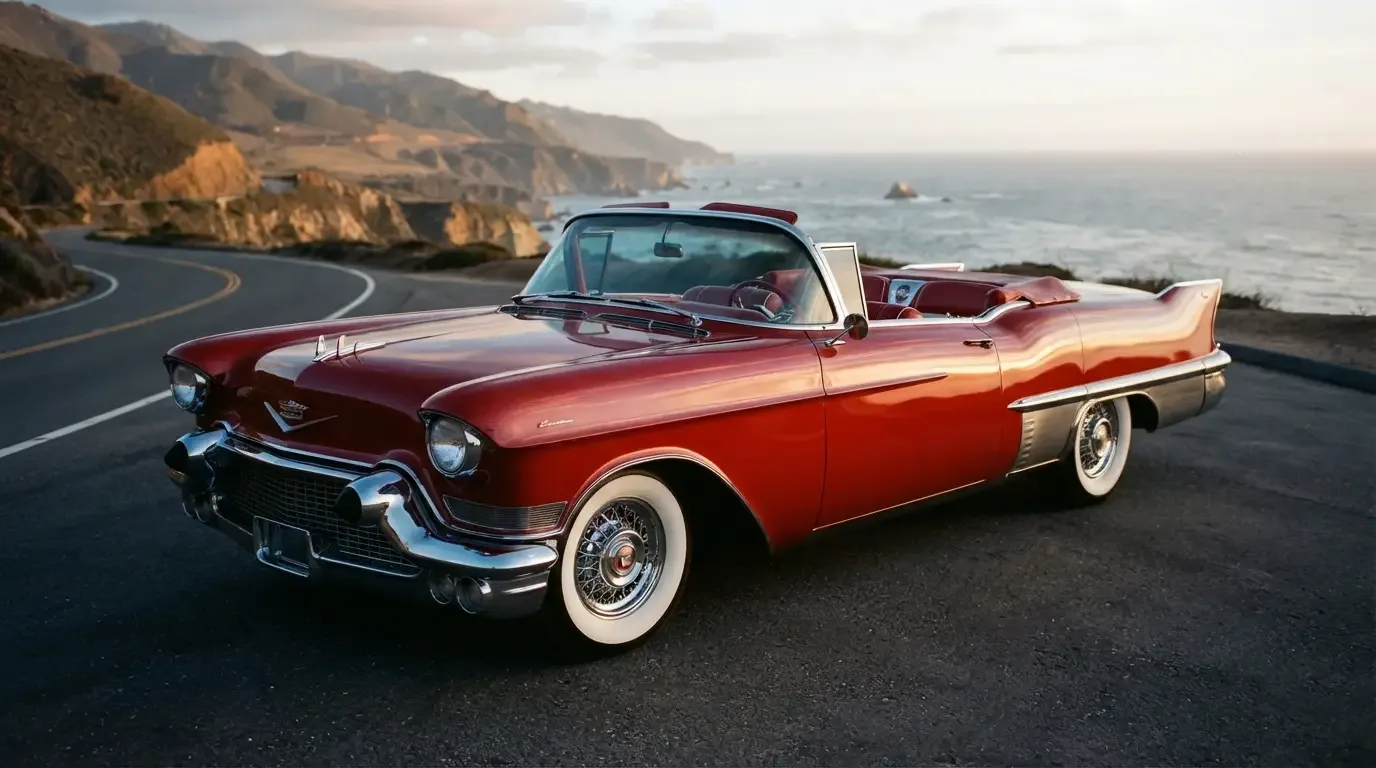
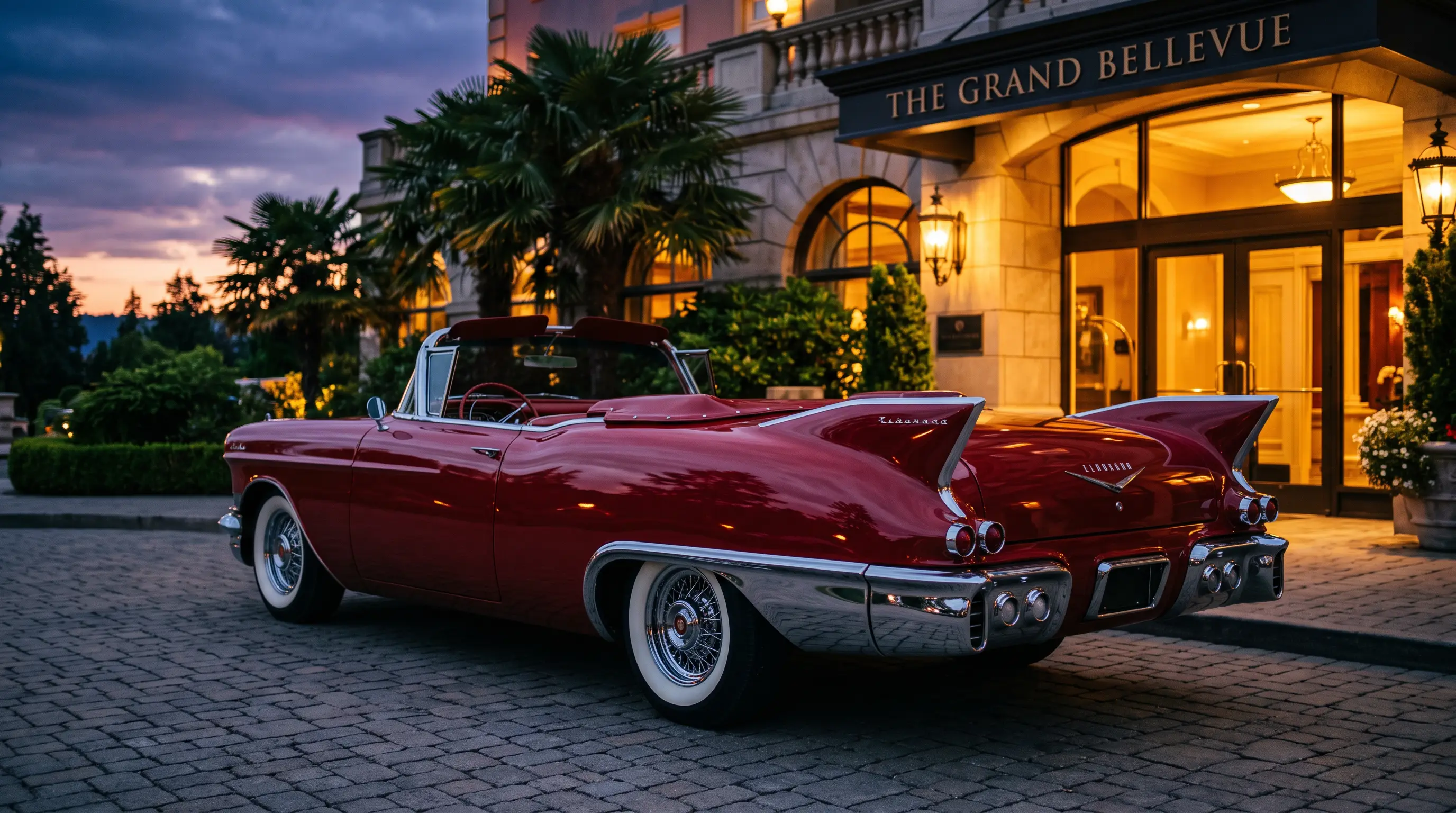
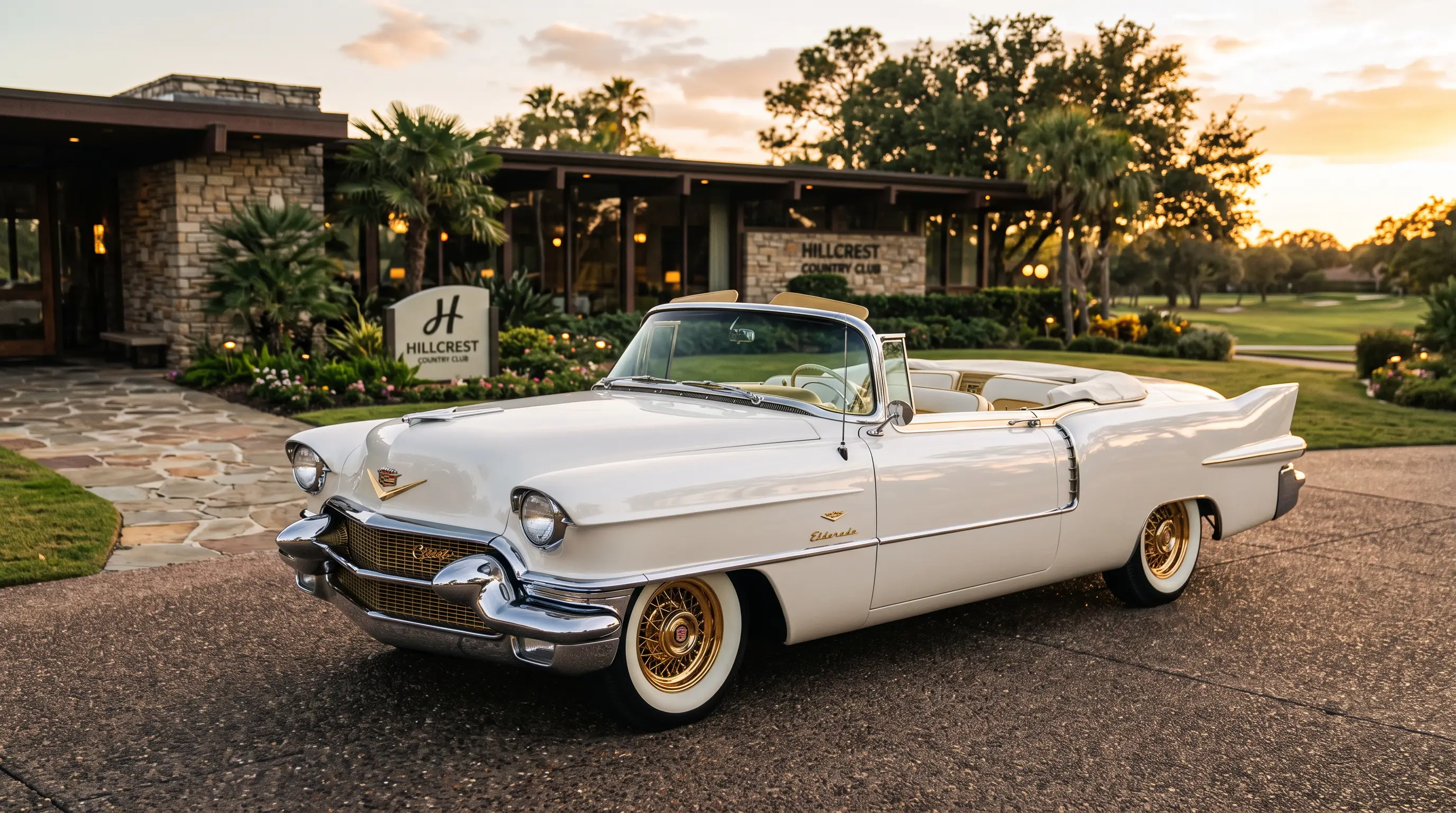
The 1956 Biarritz was not a subtle car. It wore Cadillac's boldest tailfin styling to that point, dual exhaust tips poking through chromed bumper guards, and a wraparound windshield that was still relatively new technology for American cars at the time. Underneath, it carried a 365 cubic inch V8 producing around 305 horsepower, a genuinely strong number for 1956 and enough to make the Eldorado one of the quickest full-size American cars sold that year.
| Spec | 1956 Eldorado Biarritz |
|---|---|
| Engine | 365 cid V8 |
| Output | 305 hp |
| Body style | Two-door convertible |
| Distinguishing trim | Chrome-tipped tailfins, wraparound windshield, brushed metal beltline trim |
Why it stood apart from a regular Cadillac convertible
The Biarritz badge was not cheap talk. These cars carried the best interior trim Cadillac made in 1956, with metallic threads woven into some of the upholstery choices, power everything including the seats, and a distinctive brushed stainless trim strip running along the beltline that regular Series 62 convertibles did not get. It was priced well above a standard convertible, and Cadillac built it in far smaller numbers, which is exactly why examples like my friend's Ohio find are treated like small treasures at shows today.
What always strikes newcomers when they see one up close is how much presence the car has parked next to a modern vehicle. The proportions are enormous by today's standards, but they were considered elegant rather than excessive in period, a rolling statement that said the owner had arrived.
"That widow sold him a piece of Cadillac's best year for the price of a farm truck, and every time he tells the story at a meet, somebody in the crowd winces a little harder than the last time."
- Wayne Coburn
What owners deal with today
These cars are nearly seventy years old, and the electrical systems, in particular the power windows and seats that made the Biarritz feel so modern in 1956, are the components most likely to give a new owner grief. Original wiring insulation gets brittle, and a car that sat unused for a decade or two often needs a full electrical inspection before anything gets switched on for the first time. Parts support is decent for mechanical items thanks to a dedicated hobbyist community, but trim pieces specific to the Biarritz package can take real searching.
Owners in our club tend to agree that the driving experience rewards patience. The steering is slow by modern standards, the brakes require anticipation rather than confidence, and the ride is soft in a way that makes the car feel like it is floating rather than cornering. None of that is a flaw. It is simply what a 1956 luxury convertible feels like, and once you adjust your expectations, it is a genuinely relaxing car to drive on a slow Sunday route.
Where the 1956 fits in the bigger Eldorado story
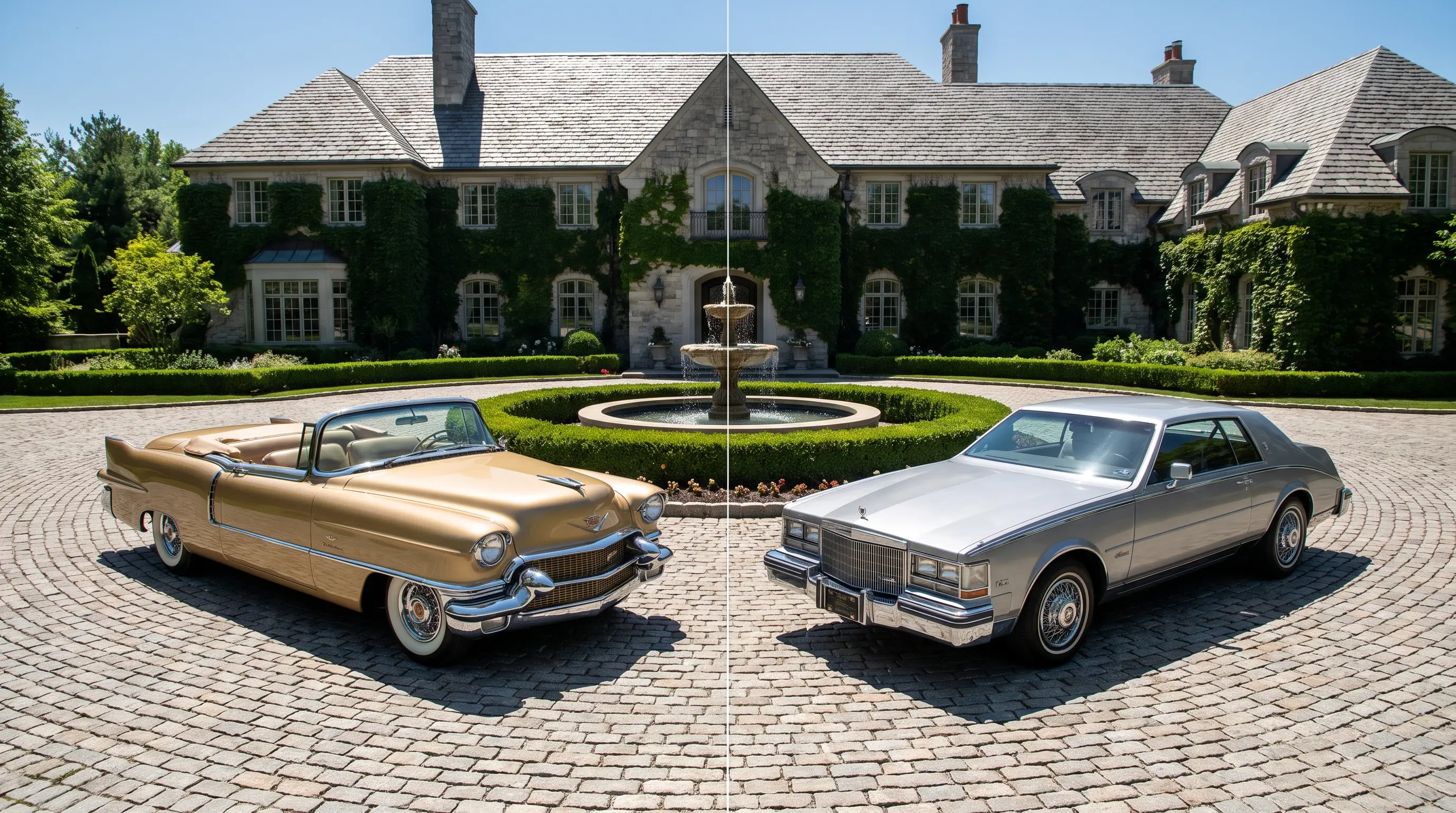
If a first-generation Biarritz appeals to you but you are curious how the following year's car changed things, worth a look too covers the 1957 model, which brought its own styling updates and a slightly different personality behind the wheel. Comparing the two years side by side is a favorite pastime at our club meets, since the changes between 1956 and 1957 were more significant than a casual glance suggests.
For anyone thinking about bringing one of these home, our members generally point newcomers toward examples with documented ownership history over anything with an unclear past, simply because these cars have been around long enough to have collected some questionable repair work along the way. If you want to see what is currently on the market, shop classic Eldorado listings and compare a few before committing. It is a big purchase, and it deserves the same patience the car itself rewards once you are behind the wheel.
A drive that still turns heads at every stop
I took my own Eldorado through a small town parade route a few summers back, nowhere near as glamorous as Biarritz itself, just a county fair loop with a police escort and a lot of folding chairs on the curb, and I still had people waving like the car was brand new off the truck. There is something about the scale and confidence of a 1956 Eldorado that modern cars simply do not replicate, no matter how much horsepower they carry. Part of that is the fins, part of it is the chrome, and a big part of it is that everybody's grandfather or great-uncle had a story about wanting one of these back when it was new.
Club gatherings are full of that kind of secondhand nostalgia, people who never owned the car themselves but grew up hearing about a neighbor's Eldorado or a boss who drove one to the country club. That inherited affection keeps interest in these cars alive even as the generation that bought them new has largely passed on, and it is part of why values have stayed healthy rather than fading the way some less iconic 1950s models have.
My advice to anyone joining the hobby through a 1956 Biarritz is to find a local or regional chapter of a Cadillac club before you even finish the purchase. The community around this car is generous with knowledge, quick to warn a new owner away from a bad deal, and full of people who genuinely enjoy seeing another Biarritz survive rather than get parted out. That kind of support is worth more than any parts catalog when you are new to a car this old.