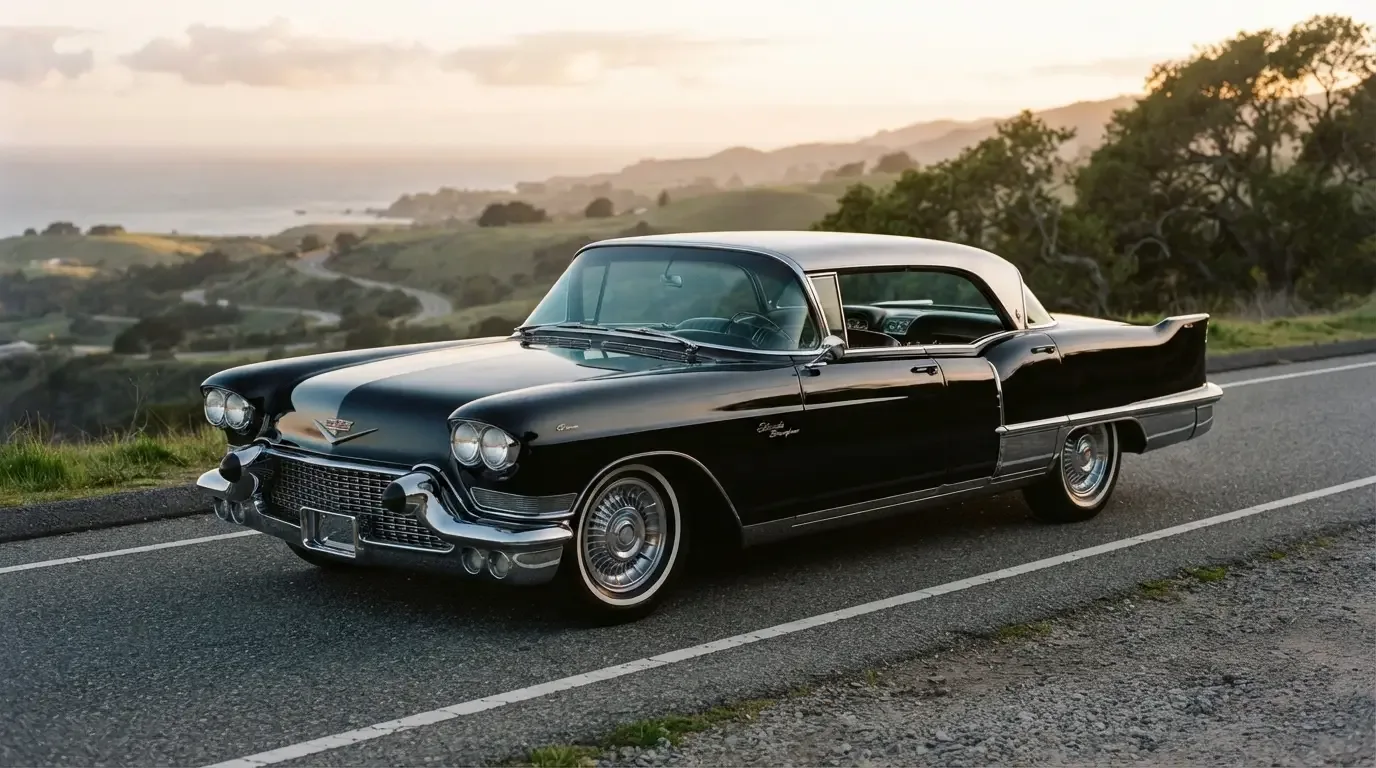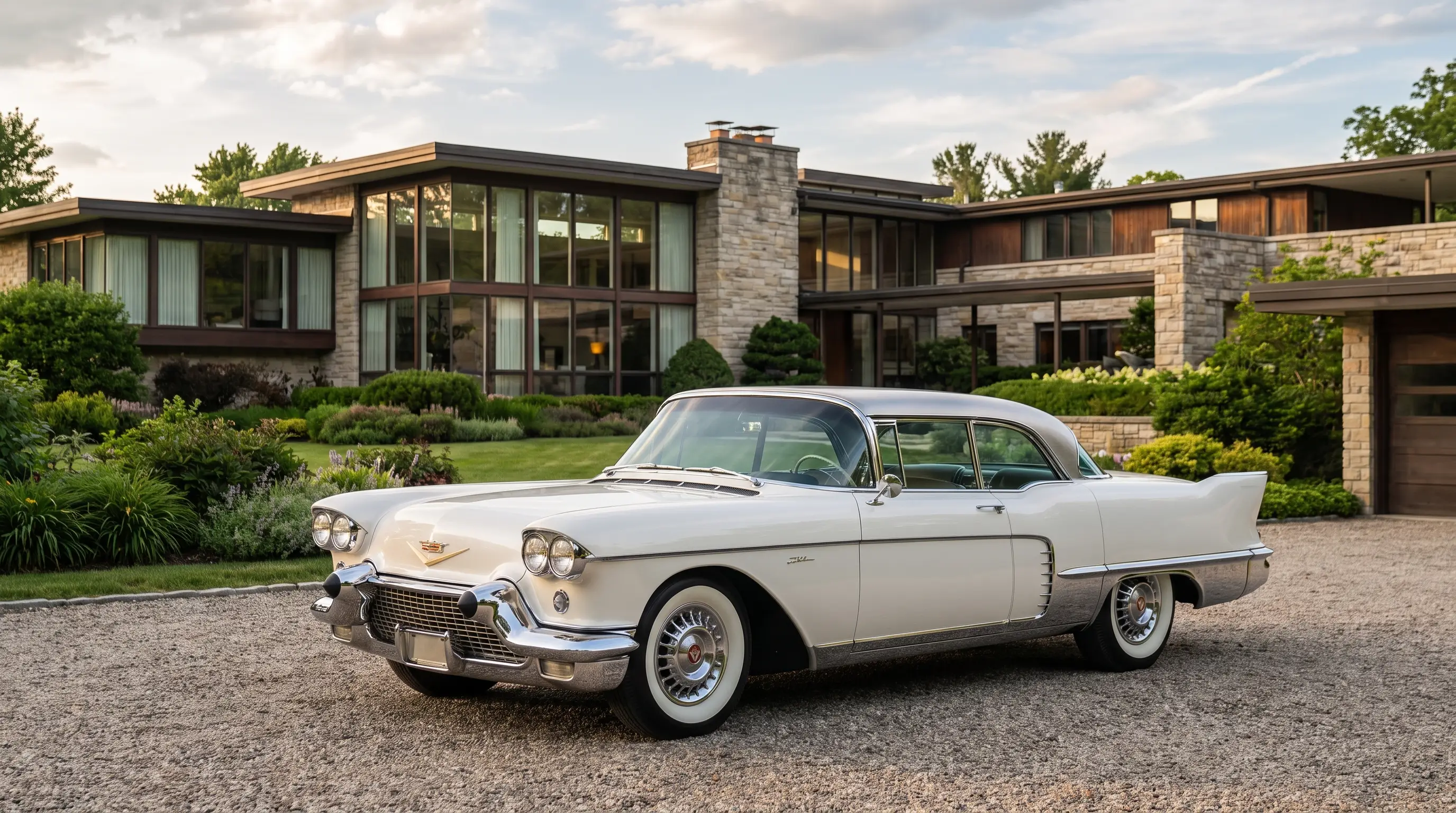
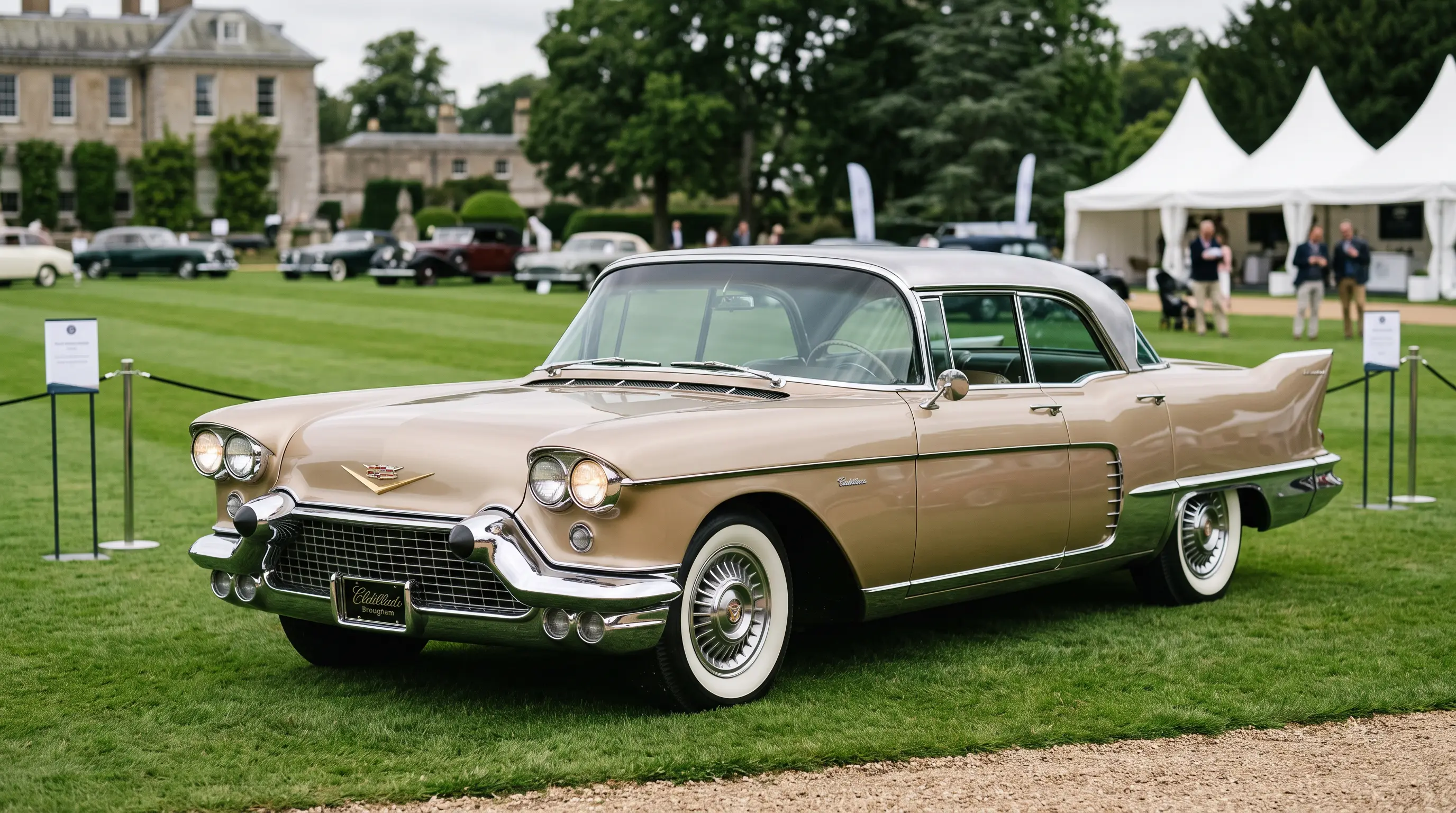
I still remember the first time a club member rolled his 1958 Cadillac Eldorado Brougham into a regional meet and half the parking lot stopped what they were doing to walk over. Somebody asked him if it was a 1957. He just smiled and said "second year, and better for it," which is about the most concise summary of this car's reputation that I have ever heard among Cadillac people.
The quiet second act
The 1958 Eldorado Brougham gets treated as an afterthought by people who only know the general shape of the story. The 1957 was the launch, the headline, the car every magazine wrote about that year. The 1958 was the model that actually got refined once Cadillac had a full year of real-world experience building and servicing these hand-assembled cars. Fewer of them were built, 304 units by most tallies, compared to 400 the year before, and that lower number alone makes the 1958 the rarer car today even though it rarely gets the same attention.
Cosmetically the differences are subtle enough that most people at a car show would never notice them from across the lot. The tailfins picked up a slightly revised shape shared with the rest of the 1958 Cadillac lineup, and trim details were tweaked in small ways throughout the car. Underneath, though, engineers had a year of field reports to work from, and they used it.
The whole story really begins a year earlier, and if you have not read it, you should where this started before diving into what changed for the second model year, because so much of what makes 1958 interesting only makes sense in contrast to the car that came before it.
What Cadillac actually fixed
The air suspension system that made headlines in 1957 was also the source of most warranty complaints that year. By 1958, Cadillac had refined seals, revised some of the pneumatic hardware, and generally tried to bake reliability improvements into a system that had launched more as a proof of concept than a fully sorted production component. It still was not bulletproof, not by modern standards, but the 1958 cars left the factory with a system that had at least been through a year of real customer feedback rather than pure engineering theory.
Interior details got attention too. Small hardware issues that owners had complained about in year one, things like latch mechanisms and the operation of some of the novelty features Cadillac had crammed into the cabin, were addressed quietly rather than announced with fanfare. This is a pattern automakers have followed forever: the second year of a low volume, high complexity car is almost always the more sorted one, even when nobody outside the factory notices at the time.
"Every club has that one guy with the 1958 who gets tired of explaining it's not a 1957. Then everyone at the show learns something and the conversation is the best part of the whole afternoon."
- Wayne Coburn
Why the rarity matters to owners now
Lower production numbers cut both ways for a car like this. On one hand, fewer 1958 Broughams means fewer parts donors, fewer reference cars for restoration research, and a smaller community of people who have actually worked on one. On the other hand, it means a well documented 1958 stands out even at a show full of Cadillacs, because most attendees, even serious Cadillac people, have simply seen fewer of them in person than they have 1957s.
I have talked to more than one owner over the years who specifically sought out a 1958 instead of a 1957 for exactly that reason. It is the same car in spirit, built to the same uncompromising standard, wearing the same stainless roof and riding on the same ambitious air suspension concept, but it carries a story that most people at a show have not heard a dozen times already. That is worth something at a club level even when it does not always translate directly into auction premiums.
Telling the two years apart
Club members get asked constantly how to spot a 1958 from across a parking lot, and the honest answer is that it takes a trained eye. The tailfin profile changed slightly, the grille and front trim picked up detail revisions shared with the rest of that year's Cadillac lineup, and a handful of interior trim pieces were updated. None of it is dramatic. Cadillac was not trying to make the 1958 look like a new car, because the whole point of the Brougham's design was already settled the year before. The changes are the kind you only notice once somebody points them out, parked a 1957 and a 1958 side by side, and lets you walk the length of both cars slowly.
I still think the best way to learn the differences is the way I did, standing next to somebody who already knew them, at a show, with both cars close enough to touch. Books and photographs get you most of the way there, but there is a level of detail, panel gaps, trim thickness, the exact profile of a piece of brightwork, that only comes across in person. Every regional club I have been part of has at least one member willing to walk a newcomer through exactly this comparison, and it is one of the better reasons to actually show up to a meet instead of just reading about these cars online.
What to know before you chase one
Parts scarcity is the honest challenge with any 1958 Brougham project. Anything specific to that model year, trim pieces, certain hardware, some of the interior fittings, is harder to source than the equivalent 1957 part simply because fewer cars were built and fewer parts cars have ever existed to cannibalize. Anyone taking one of these projects on needs a realistic view of that reality going in, and a network of other owners willing to share information, because factory documentation on a low volume hand built car from this era is thin at best.
That said, the fundamentals of ownership are the same as any 1957 Brougham. The air suspension, the stainless roof, the general mechanical layout, all carry over with only detail changes. If you already understand what you are getting into with the first year car, the 1958 asks nothing fundamentally different of you, just a bit more patience finding the pieces that are unique to it.
If a real example of either year has your attention, you can look through classic Eldorado for sale listings and see what is actually out there right now, since cars this rare do not sit on the market long once word gets around a club or two.
The last word from the meet field
Every Eldorado Brougham owner I know has a version of that parking lot moment, somebody walking over, asking questions, assuming it is a 1957 because that is the year everybody remembers. The 1958 owners have learned to enjoy correcting them. It is a smaller footnote in Cadillac history than the launch year, but it is a footnote built by people who had already proven the concept and were finally free to make the car a little better instead of just making headlines.