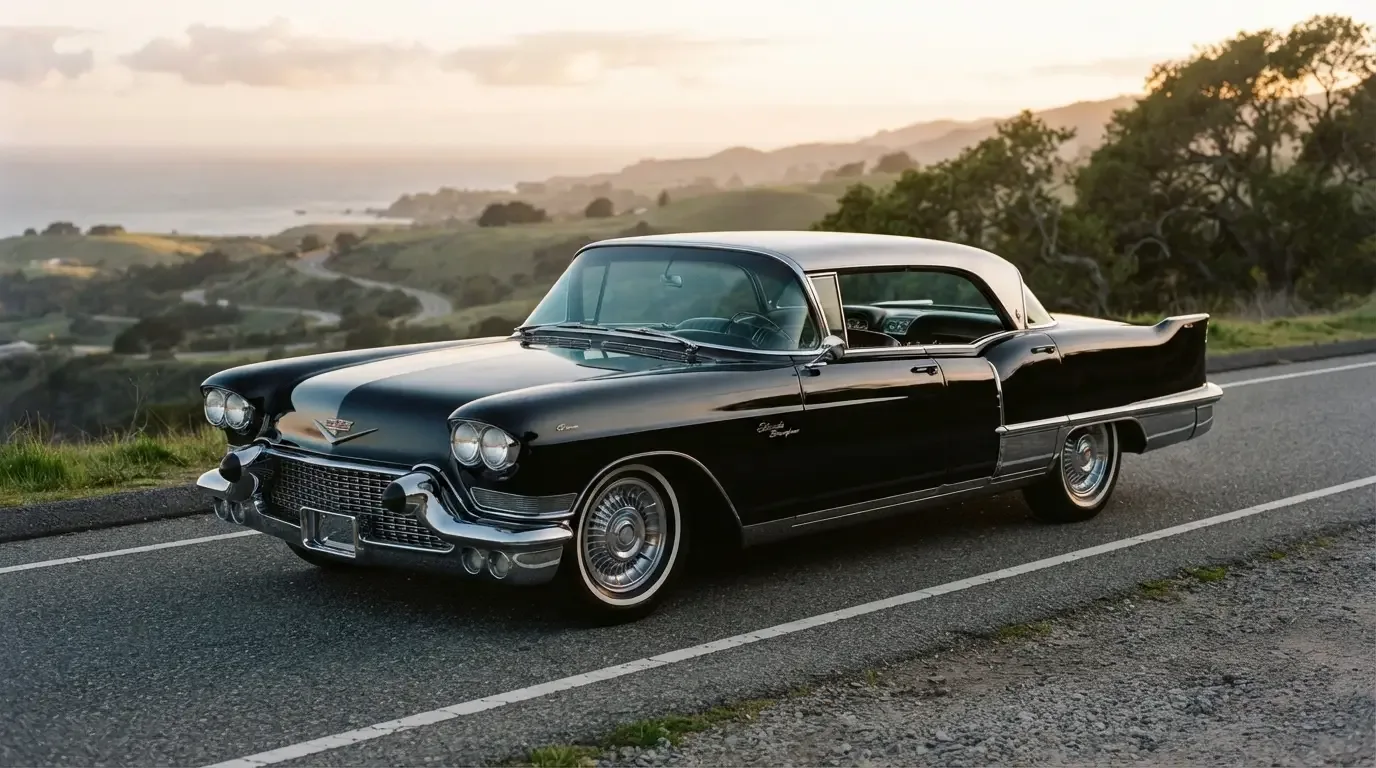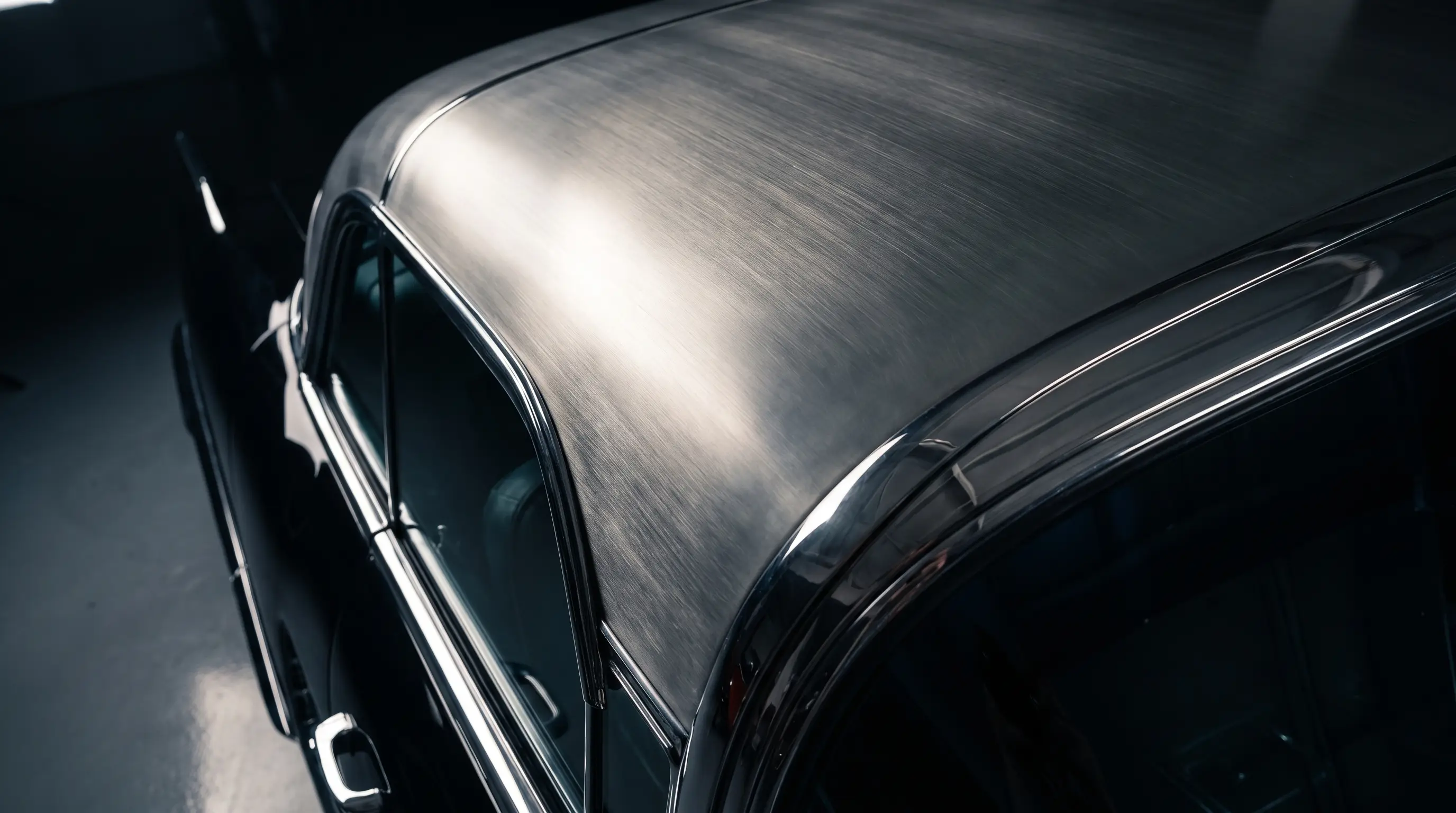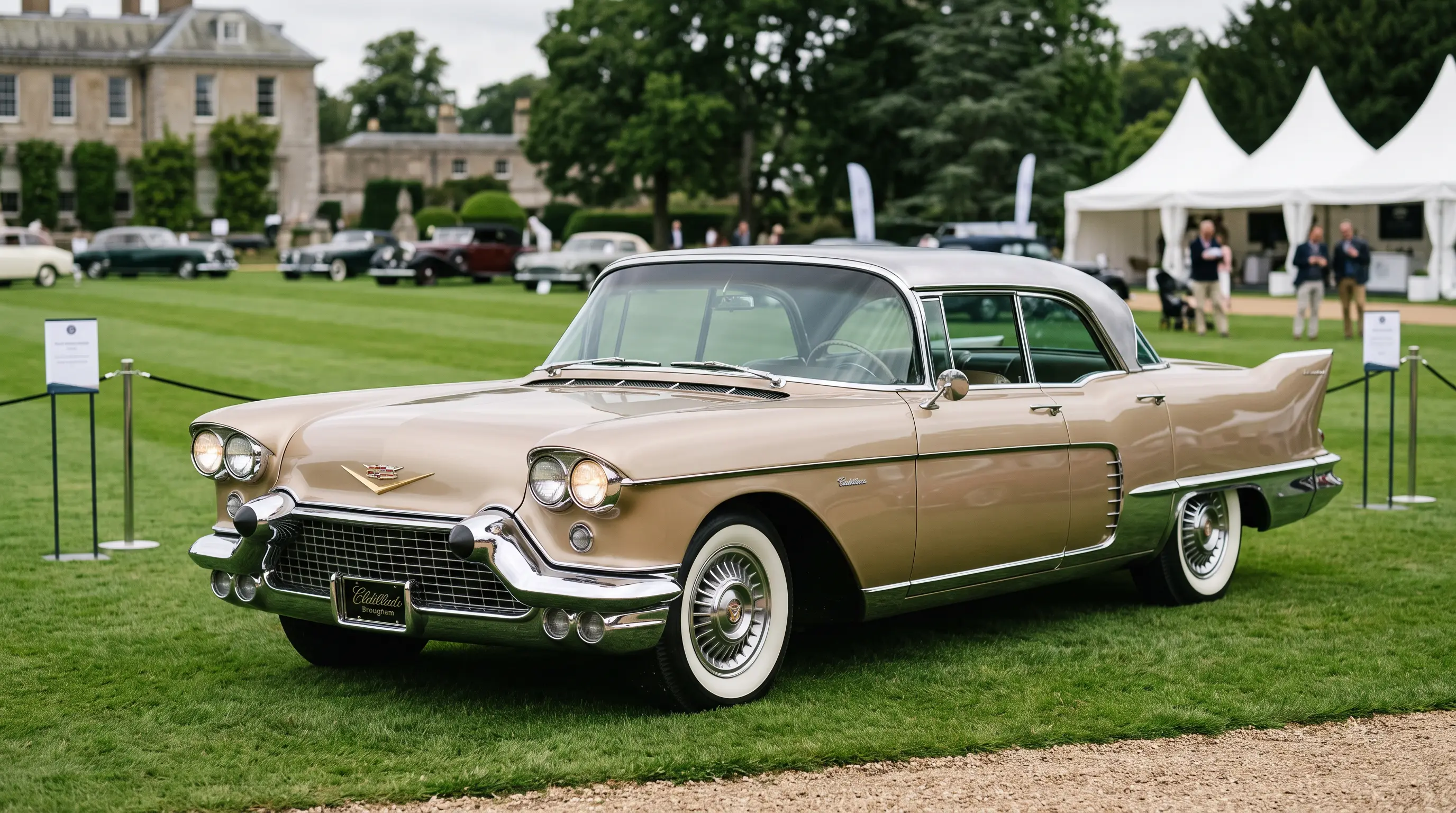
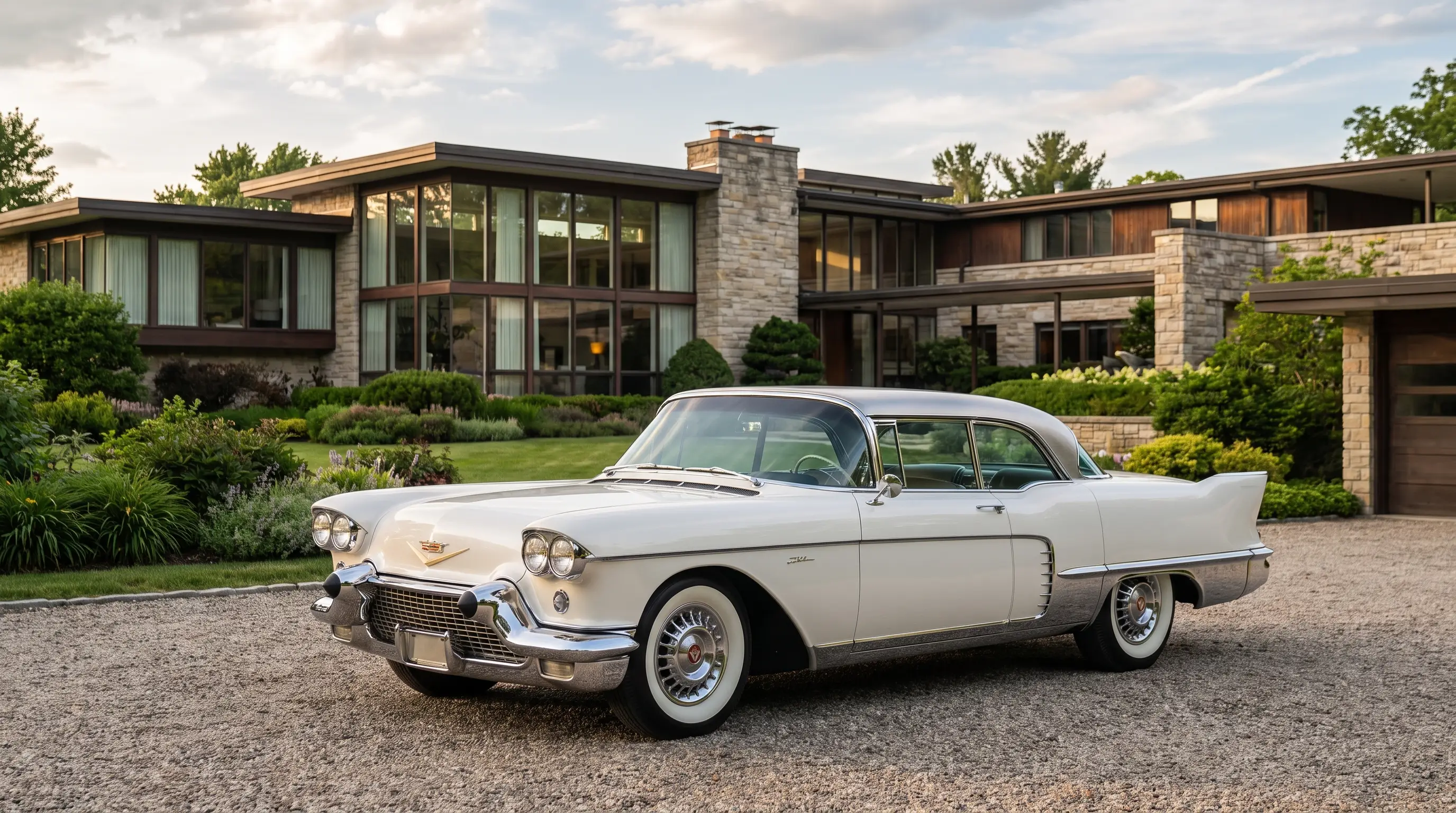
The 1957 Cadillac Eldorado Brougham carried a piece of aviation engineering under its skirts that no American production car had offered before: a fully pneumatic suspension system replacing the coil springs at all four corners. Cadillac called it Level Air, and the 1957 cadillac air suspension system was one of the defining technical claims of the Brougham's launch, alongside the stainless roof and the quad headlights. Documenting this system properly matters, because more myth than fact circulates about how well it worked and how many cars still run it today.
The engineering behind Level Air
Air suspension replaces conventional steel coil springs with rubber bellows, called air springs, mounted at each wheel and fed by an engine driven compressor. A leveling valve at each corner senses ride height and adjusts air pressure automatically, so the car maintains a constant stance regardless of passenger load or road surface. The pitch was straightforward: a smoother ride than any coil spring could deliver, and a level body under braking, cornering, or four passengers loaded in the back seat. Cadillac engineers had studied aircraft landing gear and truck air-ride systems for years before committing the technology to a production luxury car, and the Brougham was chosen as the proving ground precisely because its buyers would tolerate, and even expect, unproven technology at unproven cost.
The system was not unique to the Brougham for 1957. Cadillac, Buick, Oldsmobile, and Pontiac all offered air suspension as an option that year across parts of their lineups, a coordinated General Motors push. What made the Brougham different is that air suspension came standard, not optional, and it was tuned specifically for a car whose whole reason for existing was to ride better than anything else on the road.
What it felt like from behind the wheel
Period road tests praised the ride quality without reservation. The Brougham floated over expansion joints and rough pavement in a way that coil sprung Cadillacs, themselves no strangers to a soft ride, could not match. The leveling function meant a fully loaded car with passengers and luggage in the trunk still sat level, rather than sagging at the rear the way a conventional suspension would under the same load. For a car built explicitly to compete with the finest coachbuilt automobiles in the world, that ride quality was not a footnote. It was close to the entire point of the exercise.
Anyone wanting the full context on why Cadillac committed this much engineering effort and expense to one model should more on the cadillac eldorado brougham, since the air suspension only makes sense alongside the rest of the car's uncompromising specification.
Where the system struggled
Reliability is the honest half of this story. The rubber compounds and seals used in 1957 were not developed for the decades of service that collectors now expect from these cars, and the air springs themselves were prone to leaks that left the car resting on its bump stops within a few years of hard use. Compressor failures, electrical gremlins in the leveling valve circuits, and general parts scarcity meant that by the early 1960s a meaningful number of Broughams on the road had already been converted to conventional coil springs by owners tired of dealing with a system nobody nearby knew how to service.
This is not unique to Cadillac's implementation. Every 1957 General Motors division that offered air suspension saw the same pattern of early failures and later conversions, and the technology largely disappeared from GM lineups within a few years before returning, in far more durable form, decades later on other platforms. The Brougham's version gets remembered because the car itself is so rare and so significant that every technical detail about it has been picked apart by researchers and owners for seventy years.
"The documentation trail on these systems is thin because so few cars kept them. A Brougham running its original air suspension today is rarer, in real terms, than the car itself."
- Sarah Whitfield
The compressor, the valves, and where the trouble started
The heart of the system was an engine driven compressor, plumbed to a reservoir tank and routed through rubber lines to each of the four air springs. Leveling valves, one per axle rather than one per wheel on most applications, monitored ride height through a mechanical linkage connected to the suspension and bled air in or out as needed to hold the correct stance. It was a genuinely clever piece of engineering for the mid 1950s, borrowing directly from principles used in heavy truck air brake systems and early aircraft landing gear, but it asked a great deal of rubber components, hose fittings, and seals that had never been asked to hold air pressure reliably for years on end in a passenger car application.
Small leaks were the most common failure, and they were often gradual enough that an owner would not notice anything wrong until the car settled noticeably lower on one corner after sitting overnight. A slow leak in a single air spring or a fitting at the compressor could take weeks to become obvious, which made diagnosis frustrating for period dealers who had no deep well of institutional experience with the system to draw on. Cadillac technicians were essentially learning the system's failure modes in real time, alongside the owners driving these cars every day.
What survives today
Very few Eldorado Broughams still run factory original air suspension components. Most surviving cars were converted decades ago, either by dealers under warranty or by later owners after the parts supply dried up completely. A small population of enthusiasts and specialist restorers have since reverse engineered replacement air springs and rebuilt the compressor and valve assemblies well enough to return a handful of cars to correct operation, but this remains a niche, expensive undertaking reserved for the most dedicated restorations rather than routine maintenance work.
For provenance and judging purposes, a documented, functioning original air suspension system is treated as a significant point of originality on these cars, on par with an intact stainless roof or unmolested interior trim. Cars that have been correctly converted back to air suspension using modern reproduction parts are valued differently than cars still running a coil spring conversion from decades past, and buyers researching a specific car should ask directly which category it falls into before assuming anything from a casual inspection.
The bigger picture
Air suspension on the 1957 Eldorado Brougham was not an isolated gadget. It was one piece of a coordinated effort to build the most advanced American car of its era, an effort that traces back to the very first Eldorado a few years earlier. For readers curious about where this started, the Brougham's air suspension experiment only makes full sense in the context of the model line's broader ambitions. Cadillac was willing to lose money and accept technical risk in pursuit of prestige, and the air suspension system is one of the clearest, most literal examples of that philosophy translated into hardware.
Shoppers who want to see what survives in the current market, with air suspension intact, converted, or otherwise, can look at classic Eldorados on the market and compare documented histories directly, since paperwork on this particular system tends to matter more than it does on almost any other component of the car.
Sources and notes
- CarBuzz: Cadillac Eldorado Brougham, First Production Car with Air Ride Suspension
- SAE Mobilus: Cadillac's Air Suspension for the Eldorado Brougham
- The Truth About Cars: Rare Rides Icons - The Cadillac Eldorado, Part XVIII
- Supercars.net: 1957 Cadillac Eldorado Brougham
- Autoevolution: 5 Reasons Why the 1957-58 Eldorado Brougham Was America's Most Daring Luxury Car
- Wikipedia: Cadillac Eldorado