
I get asked about original paint colors on the 1959 Cadillac Eldorado more than almost any other detail, usually from someone trying to decide whether a repaint they are looking at is even close to correct. It is a fair question, because factory color choice on this car was not an afterthought. Cadillac offered a real palette on the Eldorado that year, and knowing what belongs on the car versus what got added later matters if you care about presenting one honestly. For the rest of the model year's story, the whole picture covers more than just paint.
Car Features
6 min read
The Factory Colors of the 1959 Eldorado
A builder's guide to the factory color palette on the 1959 Cadillac Eldorado, and how to tell genuine original paint from a well-intentioned repaint.
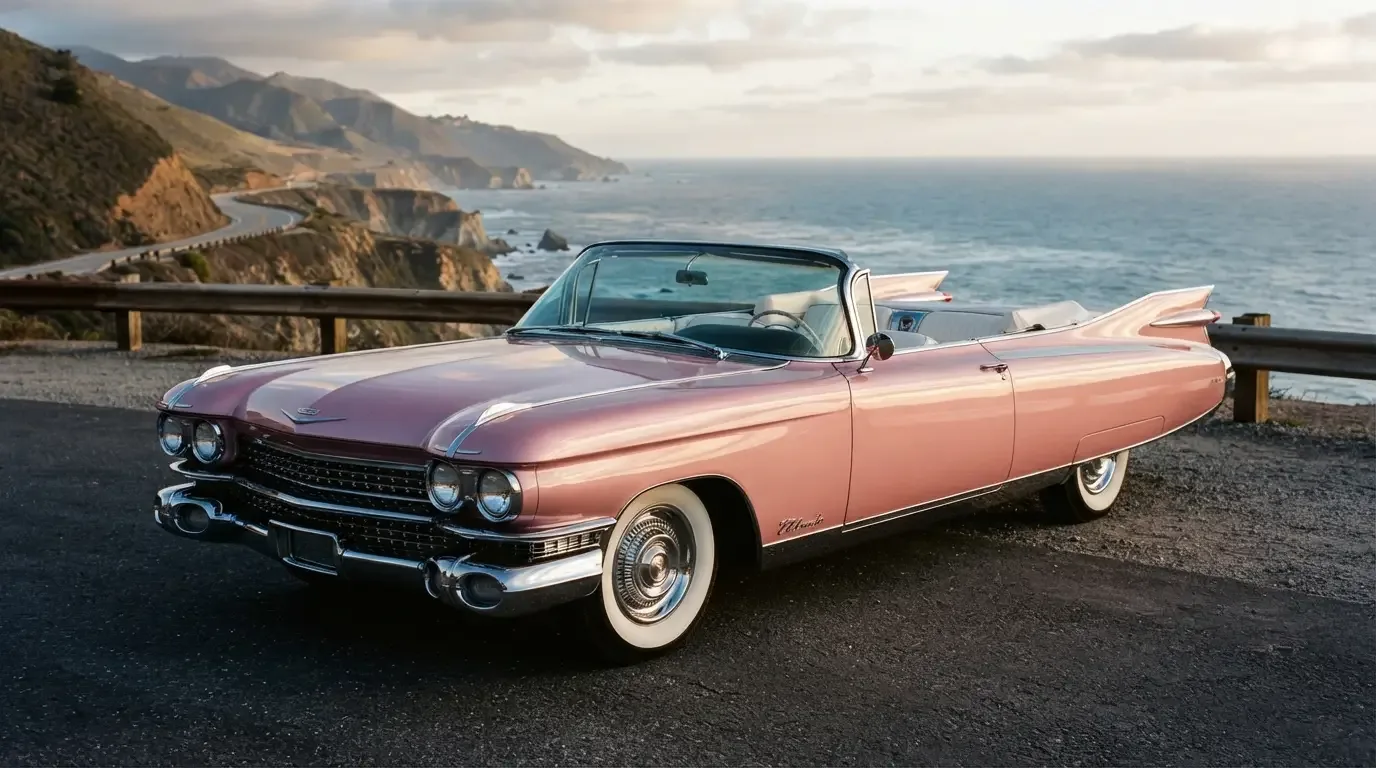
What the factory palette actually looked like
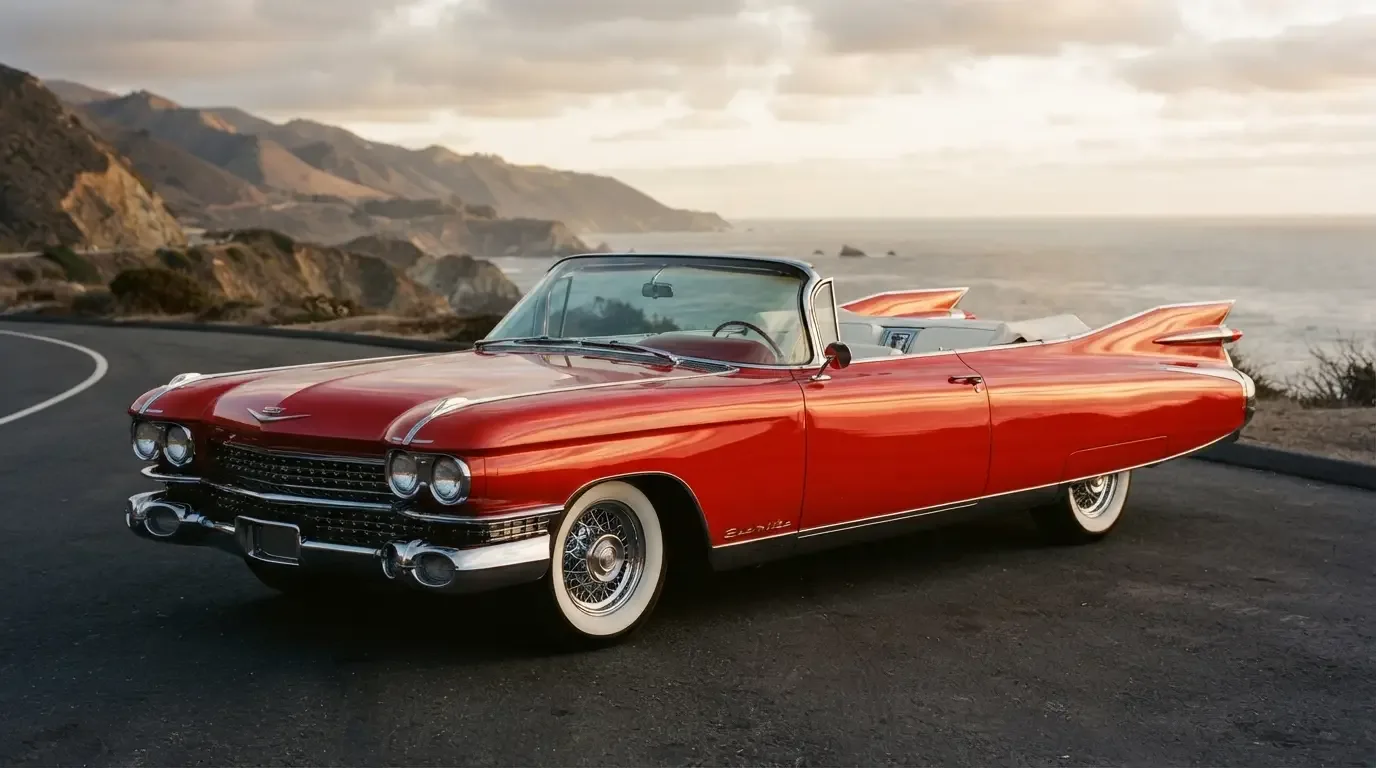
The 1959 Eldorado, across both the Seville hardtop and Biarritz convertible, was offered in a range of solid colors along with a smaller selection of two-tone combinations, consistent with Cadillac's broader lineup that year but drawn from a list specific to the specialty-car bodies. Deep, saturated colors were common choices among Eldorado buyers, since the car's price point put it in front of customers who were not shy about ordering something distinctive rather than defaulting to black or white. Warm metallic tones such as Persian Sand and Gotham Gold are among the colors most associated with the 1959 Eldorado in period photography and remain some of the most recognizable when a genuinely correct example turns up today, alongside cooler options like Dunstan Blue and Pinehurst Green.
White was also a strong seller on the Biarritz convertible specifically, partly because a white body threw the chrome trim, the fin, and the bullet taillights into sharper visual contrast, which is exactly the kind of showroom logic Cadillac's dealers understood well. Black, while available, was a less common choice on a car this expensive and this visually loud, since buyers ordering an Eldorado were generally looking to be seen rather than to blend in.
| Color family | Notes |
|---|---|
| Persian Sand, Gotham Gold | Warm metallics associated with 1959 Eldorado |
| White | Popular on Biarritz convertibles |
| Deep solid colors | Common across both body styles |
| Two-tone combinations | Available, less common than solids |
| Black | Available but comparatively rare |
Interior color and material pairing
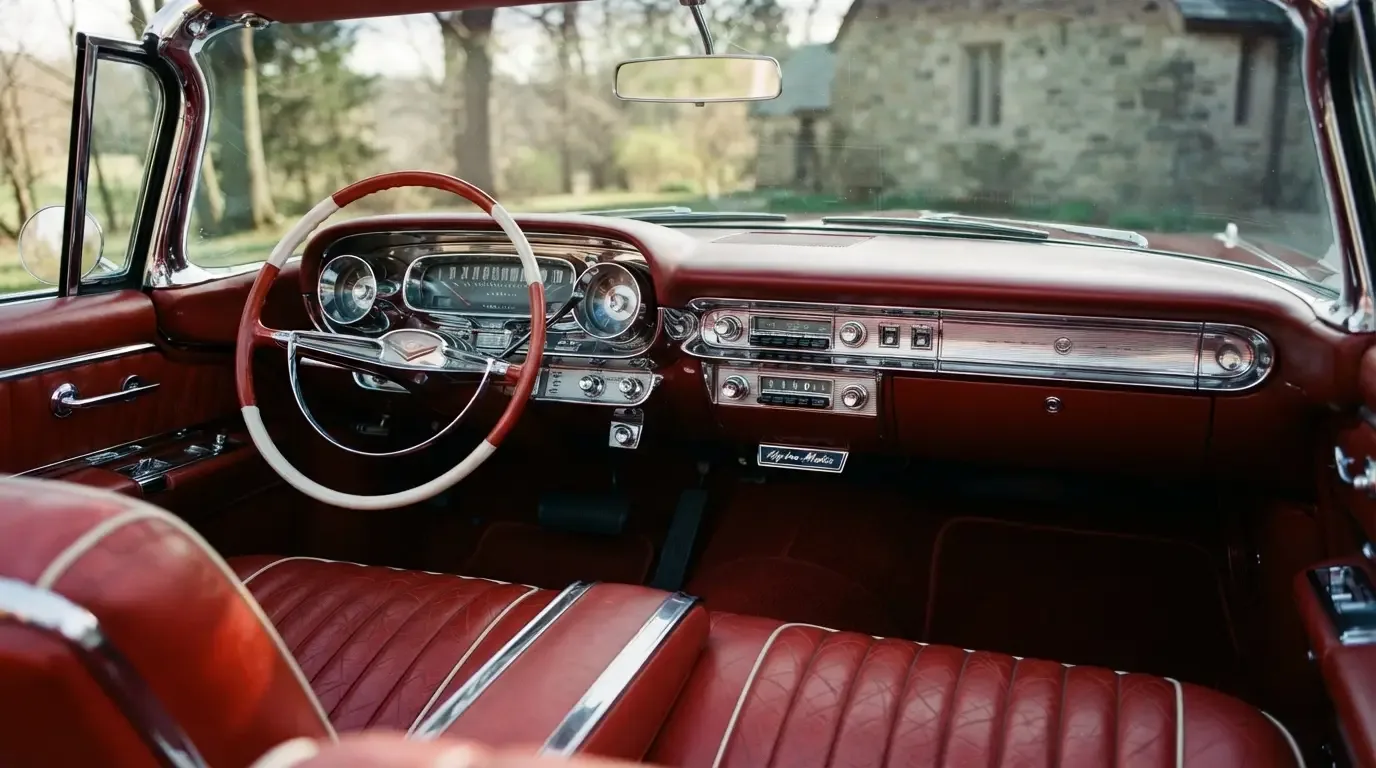
Interior color on a 1959 Eldorado was not simply matched to exterior paint by rote. Cadillac's specialty-car ordering process allowed real customization, and leather and cloth combinations varied enough that two cars in the same exterior color can present very differently inside. Lighter interior tones were common, playing off the jet-age, glassed-in cabin feel the Seville hardtop in particular was built around, while some buyers ordered darker, richer interior leather to contrast against a lighter exterior. There was no single dominant formula, which is part of why interior originality is its own separate research question from exterior paint when evaluating a car.
How to tell original paint from a repaint
From a builder's perspective, color research on a car this old always comes back to documentation first and visual inspection second. A factory build sheet or trim tag that specifies the original color code is worth more than any amount of expert eyeballing, since decades of repaints have put plenty of 1959 Eldorados into colors they never wore from the factory. That said, there are tells. Original paint depth and application, where it survives in hidden areas like door jambs or under trim pieces, often reads differently than a modern repaint even in the same nominal color, since paint chemistry and application methods have changed substantially since 1959.
I always tell people evaluating a car to check those hidden areas specifically, door jambs, trunk edges, behind trim panels, rather than trusting the visible body panels alone, since those get repainted first and most often. If the hidden areas show a different color than the visible body, that is your answer about whether you are looking at original paint or a later respray.
"Color on this car is not decoration you can just guess at. It is documented, it is traceable, and getting it right or wrong is one of the fastest ways to tell whether a restoration was done with real research behind it or just picked from whatever paint the shop had on hand."
- Jim Vasquez
Why the fin makes color selection unforgiving
Working on these cars in the shop taught me that color choice interacts with the fin design in a way that flatter, plainer cars never have to deal with. That long compound curve running up the fin catches light constantly as the car moves or as you walk around it, and a poorly matched color, or worse, a color applied with modern basecoat clearcoat over a body meant for a period-correct lacquer finish, shows up immediately under that curve. A subtle metallic like Persian Sand in particular depends on correct application to read the way it was designed to, and a rushed or mismatched repaint on that fin surface will look wrong in direct sunlight even if it looked fine under shop lighting.
That is one more reason I push people toward hidden-area color verification before trusting a visible repaint. The fin is not just a styling element, it is also the least forgiving surface on the entire car for judging whether a paint job, original or redone, was actually done with care.
Why color choice still matters to buyers today
Color remains one of the biggest factors driving demand and price on a 1959 Eldorado in the current market, sometimes more than mechanical condition alone. A well-documented car in a period-correct, desirable color like Persian Sand or a clean white Biarritz convertible tends to draw stronger interest than an equally sound car in a color that never suited the design as well, or worse, a color that cannot be tied back to any factory documentation at all. That is not just nostalgia. It reflects how tightly the 1959 Eldorado's visual identity is tied to specific color choices that period buyers actually made.
Getting the color story right on one of these cars is part of what separates a serious restoration from a good-looking guess. For buyers wanting to see how much color and documentation shape current asking prices, it is worth taking that research with you when you shop classic Eldorado listings and compare how differently priced two visually similar cars can be once documentation gets factored in, especially when the paint in question sits on a panel as demanding as this car's fin.
Sources and notes
Related Reading
Have a
Cadillac Eldorado
for Sale?
Reach thousands of serious classic car collectors across the US.
Sell It Here →
Are You a Classic Car Dealer?
List your full inventory and connect with targeted classic car buyers.
Join as a Dealer →
#restoration research
#eldorado biarritz
#eldorado seville
#1959 Cadillac Eldorado colors
#Eldorado paint codes
#Coppertone Cadillac

About the author
Jim Vasquez
Southern California hot rod and custom car builder with roots in the traditional kustom kulture scene.
Related Listings - Cadillac Eldorado
Comments
Be the first to comment on this article.