
Slide into the front seat of a 1959 Cadillac Eldorado and the fins disappear entirely. What is left is a different kind of drama, quieter, closer, built for the person who actually gets to sit there rather than the crowd watching it roll by. The dashboard sweeps in a wide arc, the glass wraps overhead on the Seville hardtop like the canopy of something meant to fly rather than drive, and for a moment the whole rocket-age fantasy stops being metaphor and starts feeling literal. For the wider record of the model year this cabin belongs to, the 1959 cadillac eldorado story covers what happens outside the glass.
Car Features
6 min read
Inside the 1959 Eldorado: Jet-Age Luxury
Inside the 1959 Cadillac Eldorado, the fins disappear and a different kind of jet-age luxury takes over, from the Seville's wraparound glass to a cabin built for arrival.
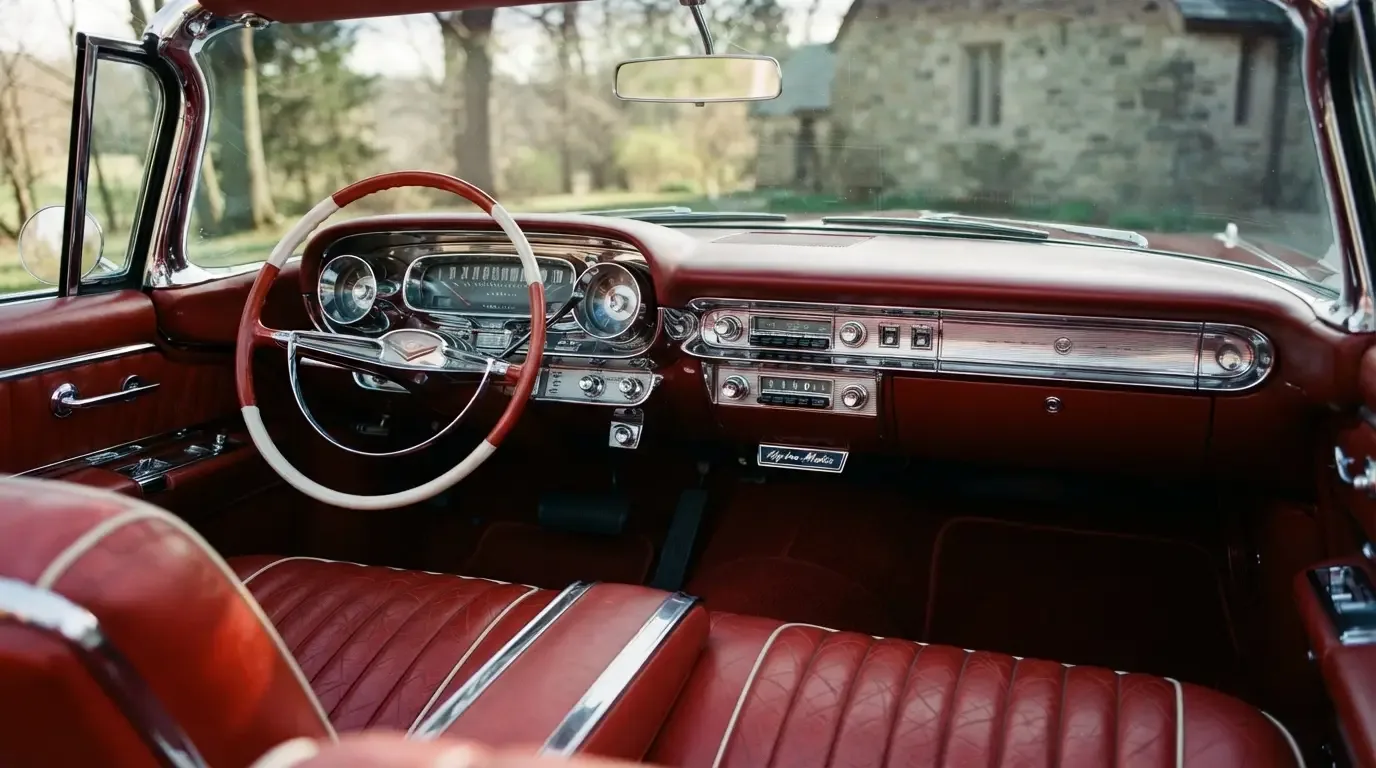
A cabin built for arrival
Every detail inside a 1959 Eldorado seems to have been considered with the same seriousness Cadillac's designers gave the exterior, which was not always true of luxury cars from the period. The instrument panel curved toward the driver in a way that felt genuinely futuristic against the boxier dashboards still common elsewhere in the industry, and the chrome detailing inside picked up the same jet-age language as the fins and the bullet taillights outside. Sitting behind the wheel of one, you get the sense the car was not just meant to be admired from the curb. It was meant to make the person driving it feel like they had stepped into tomorrow.
The seating itself carried that same intention. Leather and cloth combinations were selected to order, wide bench seats front and rear gave the cabin a spacious, almost lounge-like feel, and the whole interior leaned into an idea of luxury that was less about restraint and more about generosity, room, comfort, and just enough visual flourish to remind you what car you were sitting in.
Glass, light, and the Seville's particular magic
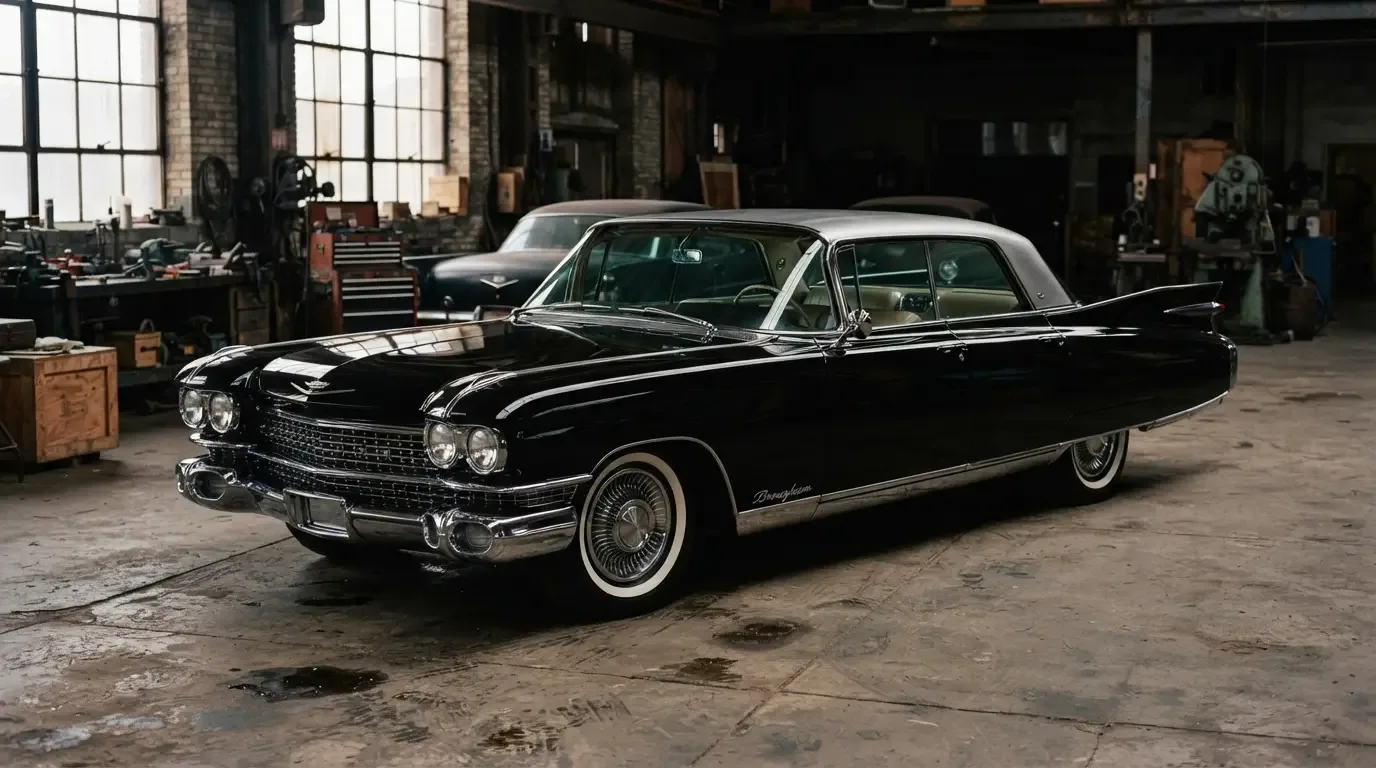
The Seville hardtop's wraparound rear glass deserves its own moment of attention, because it changes how the whole cabin feels in a way photographs rarely capture. Without a center pillar interrupting the side glass, and with that curved rear window pulling light in from angles a conventional sedan simply cannot access, the cabin reads as brighter and more open than its considerable size alone would suggest. On a clear day, sitting in the back seat of a Seville feels less like riding in a car and more like sitting inside a glass-walled room that happens to be moving.
That effect was not an accident of engineering convenience. It was a deliberate design choice, one that ties the interior experience directly back to the same rocket-age optimism that shaped the fin and the taillights. The people who built this car wanted every part of it, inside and out, to feel like it belonged to the future they believed was coming.
| Interior detail | Note |
|---|---|
| Dashboard design | Wide, driver-curved instrument sweep |
| Seville roofline | Pillarless, wraparound rear glass |
| Seating | Wide bench, made-to-order leather and cloth |
| Convenience features | Available power everything, Autronic Eye |
| Color approach | Individually specified per order |
What the details say about who this car was for
The little touches inside a 1959 Eldorado tell you almost as much about the intended owner as the fins do. The optional Autronic Eye that automatically dimmed the headlights, the available air conditioning at a time when it remained a genuine luxury rather than an assumption, the power windows and power seats that came standard where lesser Cadillacs still offered them as options, all of it points toward a buyer who expected the car to do the thinking so they did not have to. That is a different kind of luxury than raw horsepower or styling drama, and it is one the interior delivers on quietly, without needing the fin's theatrics to make its case.
The Eldorado name itself carried decades of that same promise by 1959, tracing back to the original 1953 limited edition that started the whole lineage. Anyone curious how the interior philosophy of this car connects to where the nameplate began can find the full story of how Eldorado grew from a single special convertible into the car sitting in this cabin.
"I've sat in a lot of old cars, and most of them feel like machines you operate. The 1959 Eldorado's cabin feels like a room someone designed for you specifically, down to the way the light comes through that Seville glass. It is a small, quiet kind of wonder that the fins never let you notice from the outside."
- Nora Beckett
The quiet contrast between Seville and Biarritz
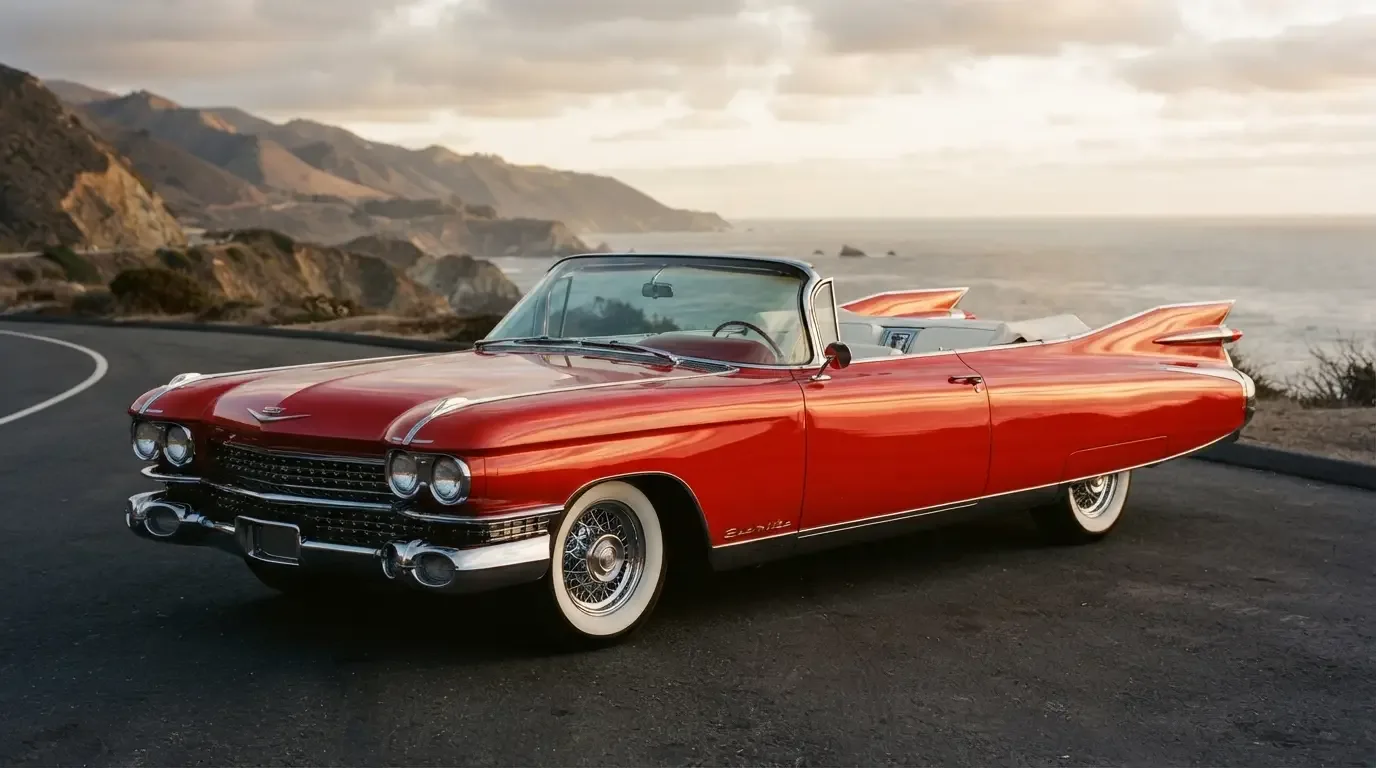
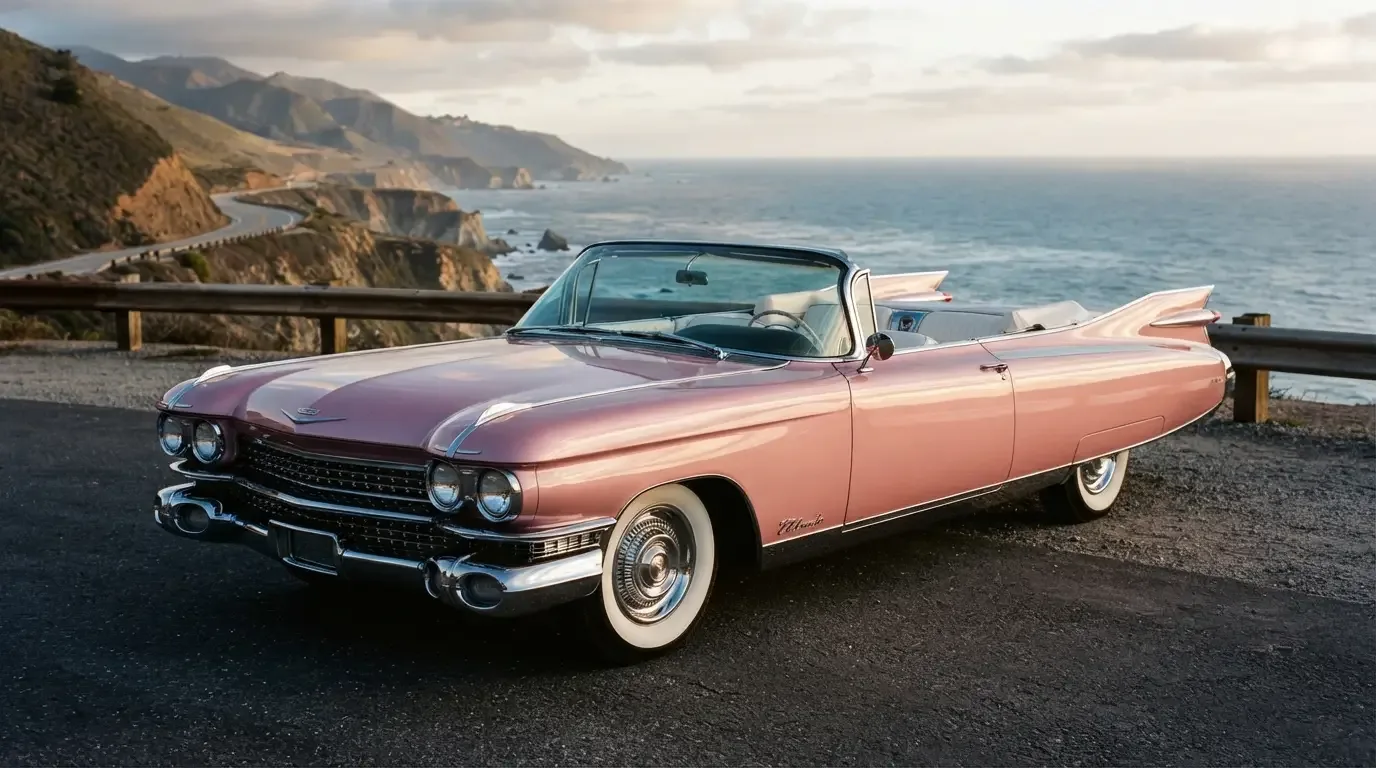
Sit in the Biarritz convertible with the top down and the interior experience shifts again, sky instead of glass overhead, wind instead of that particular hush the Seville's cabin holds. Both cars share the same instrument panel, the same seating architecture, the same commitment to made-to-order color and material, but the emotional register of each is distinct. The Biarritz asks to be driven with the top down on a warm evening, performance for anyone watching from the sidewalk. The Seville asks to be appreciated from the inside, a private, glassed-in world that only the people riding in it fully experience.
Neither reading is wrong, and neither cancels the other out. Cadillac built two versions of the same generous idea and let buyers choose which kind of luxury they wanted to live inside, open-air spectacle or enclosed serenity. That the company offered both, at the same price point, in the same model year, says something about how confident Cadillac felt about the whole Eldorado concept in 1959. There was no need to pick a single interior mood and commit to it. There was room, apparently, for two.
Why the interior still moves people today
Sixty-plus years on, what strikes most people who finally sit inside a well-preserved 1959 Eldorado is not the chrome or the color, though there is plenty of both. It is the scale of the ambition packed into every small decision, from the shape of the dashboard to the curve of the glass overhead. This was a cabin built by people who genuinely believed the future would look and feel this way, generous, bright, a little theatrical, and entirely confident in itself. That belief still comes through, undiminished, every time someone closes the door and settles in.
For anyone who wants to experience that feeling firsthand rather than take a magazine's word for it, the surest way is to sit in one. Browsing classic Eldorados on the market is a reasonable place to start looking for the chance, and for a good number of people who have taken that step, it is the cabin, not the fins, that ends up making the decision for them.
Sources and notes
Related Reading
Have a
Cadillac Eldorado
for Sale?
Reach thousands of serious classic car collectors across the US.
Sell It Here →
Are You a Classic Car Dealer?
List your full inventory and connect with targeted classic car buyers.
Join as a Dealer →
#jet-age design
#1959 Cadillac Eldorado interior
#Eldorado Seville glass
#Eldorado Biarritz interior
#Cadillac luxury features
#1950s Cadillac cabin

About the author
Nora Beckett
Automotive features writer and photographer who tells the human stories behind the cars, from show fields to cross-country road trips.
Related Listings - Cadillac Eldorado




Comments
Be the first to comment on this article.