
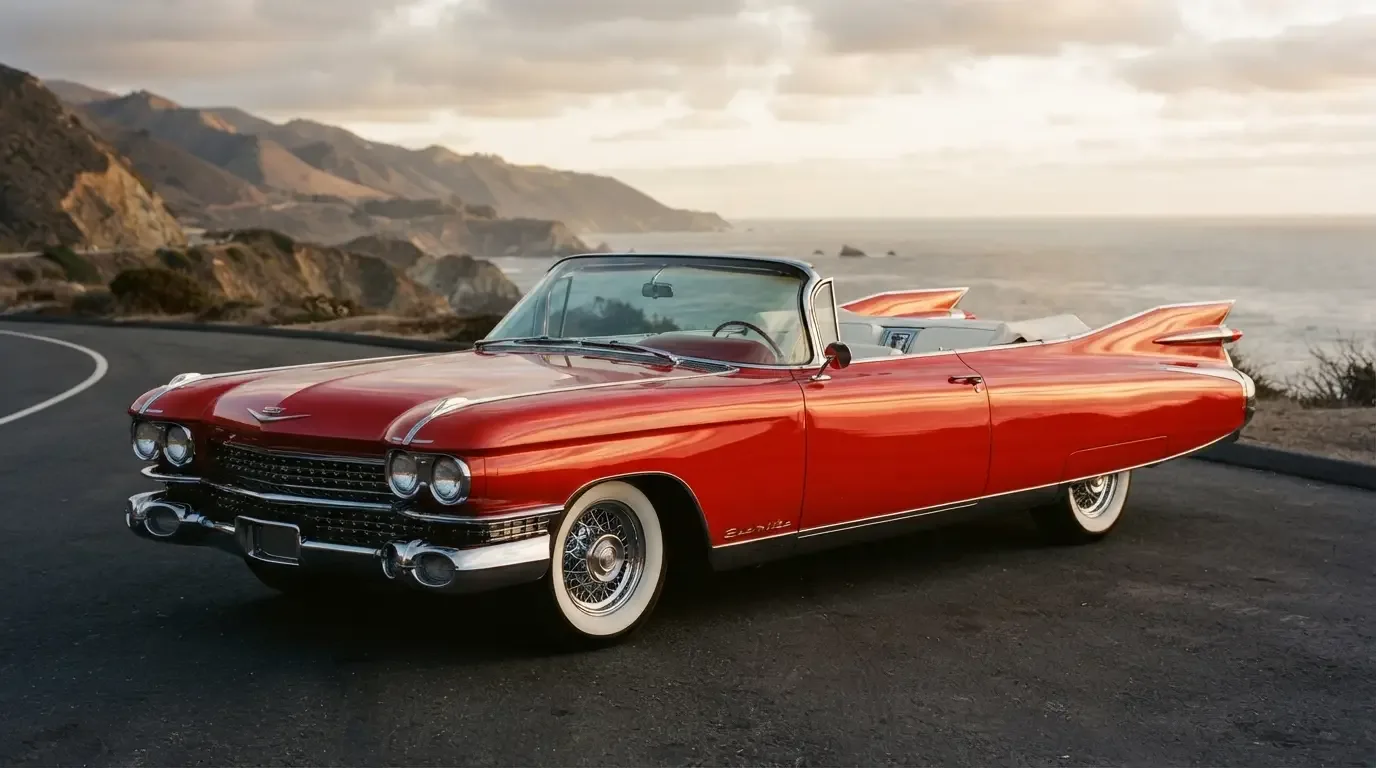
A photographer setting up a shot of a 1959 Cadillac Eldorado rarely has to explain the composition to anyone. Point the lens at those fins against an open highway, a diner sign, a stretch of desert, and the picture already says what it needs to say about postwar America without a caption. Few cars have done that kind of visual heavy lifting for as long as this one has.
Car Features
7 min read
The 1959 Eldorado in Movies and Pop Culture
From Cadillac Ranch to a Clint Eastwood film title, the 1959 Eldorado's fins have become shorthand for an entire American decade.
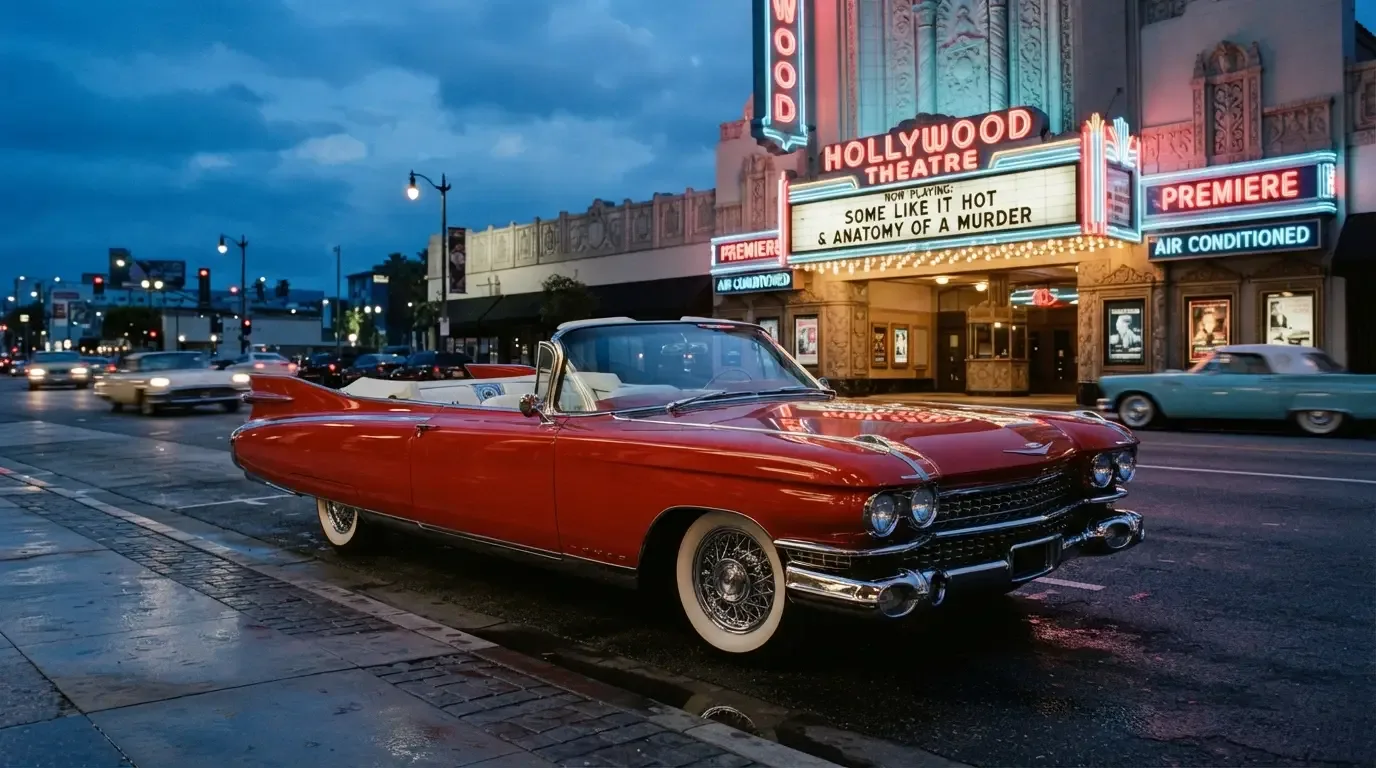
Born to be photographed
Harley Earl's fin obsession traced back to the twin tail booms of the Lockheed P-38 Lightning fighter plane, a shape he reportedly toured in the early 1940s and never fully let go of. By 1959 that idea had grown, generation over generation, into the tallest, sharpest fins Cadillac ever built, capped by twin bullet taillights that made the rear of an Eldorado look less like the end of a car and more like the tail section of something meant to leave the ground. Photographers and filmmakers noticed immediately, and they have kept returning to that silhouette for well over sixty years since.
Cadillac Ranch and the art world's adopted icon
Nowhere is the 1959 Cadillac's cultural staying power more literal than at Cadillac Ranch outside Amarillo, Texas, where ten Cadillacs spanning the 1949 through 1963 model years were buried nose down in a wheat field in 1974 by the art collective Ant Farm. Several of the cars in that lineup carry 1959-style fins, and the installation has become one of the most photographed roadside attractions in the country, visited by people who could not identify a single other Cadillac model year but recognize those fins on sight. The piece works precisely because the shape does not need context. It reads as pure, exaggerated American car culture from a hundred yards away.
On screen
The clearest starring role for this generation of car came three decades later, when the 1989 film Pink Cadillac put a 1959 Eldorado Biarritz at the center of its plot and its title, casting the car as a rolling symbol of everything gaudy and glamorous about the era it came from. The choice was not incidental. Filmmakers reaching for a single object to represent 1950s American excess have returned to this body style again and again, because no other car of the period carries the same instant, unspoken meaning. A 1959 Eldorado parked in a scene does narrative work a script page would otherwise have to spend paragraphs establishing.
That shorthand extends past any one film. Set designers building a period diner scene, a used car lot, or a suburban driveway from the late 1950s frequently reach for this car, or something styled after it, because audiences read the fins faster than they read anything else in frame. It has become less a specific automobile in the popular imagination and more a piece of visual vocabulary, the way a certain style of jukebox or neon sign signals an era without a line of dialogue.
An aesthetic that outlived its decade
The 1959 Eldorado's influence did not stay locked inside its own era. Retrofuturist design across games, illustration, and advertising has borrowed its fin language for decades, using it as a visual stand-in for an optimistic, chrome-heavy vision of the future as imagined from the past. Video game worlds built around a stylized atomic age America lean on exactly this silhouette when they need a background vehicle to feel authentic, and album covers chasing a mid-century American mood do the same. None of it requires the audience to know the car's name. The shape alone carries the reference.
"I have stood next to a 1959 Eldorado while strangers stopped to take pictures without asking permission, without knowing the model name, sometimes without knowing it was a Cadillac at all. They just knew they were looking at something worth remembering."
- Nora Beckett
Music borrowed the shape too
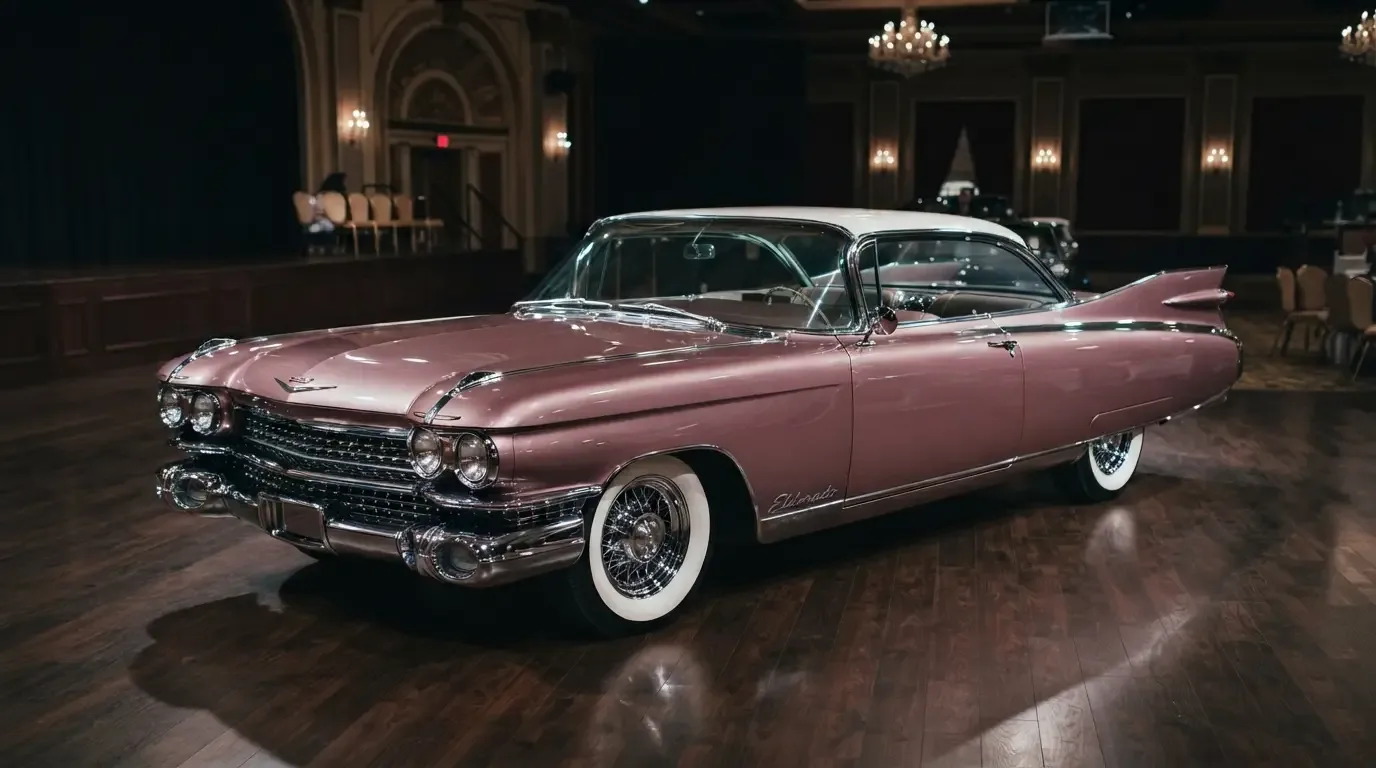
Rock and roll songwriters reached for the pink Cadillac image long before the film did, using the car as a stand-in for freedom, excess, and a certain kind of American swagger that no other vehicle quite communicated the same way. The color mattered as much as the model. A pink car sitting in a driveway or parked outside a roadhouse became its own small piece of storytelling, understood instantly by an audience that had never seen the actual fins up close. By the time filmmakers put a real 1959 Biarritz on screen under that title, the phrase had already done decades of work in song lyrics and album art, priming audiences to read the car as glamour before the opening credits finished rolling.
That layering, music first, then film, then art installations, then video games, is unusual for a single model year of a single car. Most collector vehicles earn their reputation from one lane, whether that is racing history, a famous owner, or a design award. The 1959 Eldorado picked up its cultural weight from several directions at once, and none of those threads required the others to make the car recognizable. A listener who never saw Pink Cadillac still knows the phrase. A visitor to Cadillac Ranch who never heard the song still recognizes the fins.
Why the car still gets cast
Part of what keeps the 1959 Cadillac Eldorado in circulation across movies, photography, and art decades after its showroom run is the sheer specificity of the shape. There is no mistaking it for a later model or an earlier one. The 1959 cadillac eldorado history behind that specificity, a single design year that pushed further than any before or since, is exactly what gives the car its lasting usefulness as a cultural signal. Designers reach for it because it says "1959" and nothing else, with no ambiguity and no need for a caption.
That same specificity is part of what drives its value today, a subject covered in a related story on what these cars are actually worth on the current market. A shape this recognizable, this rare, and this thoroughly absorbed into the culture rarely gets cheaper with time. For anyone who has spent an afternoon standing in front of one at a car show, or in front of a rusting example planted nose down in a Texas field, that is not a surprising conclusion. It is simply what happens when a piece of steel becomes a piece of shorthand for an entire decade. Buyers curious what that means for their own driveway can look at Eldorados for sale now and judge the shape for themselves.
It is worth remembering, too, that none of this cultural weight was planned by anyone at Cadillac in 1959. The fins were a styling decision made in a design studio, argued over by engineers who worried about pedestrian safety and cost, and approved for a single production run that nobody expected to still be discussed decades later. The car became a cultural touchstone the slow way, through repeated use, repeated photographs, and repeated appearances in places its original designers never imagined. That is a harder kind of fame to manufacture on purpose, and it tends to last longer than the kind that is.
Sources and notes
Related Reading
Have a
Cadillac Eldorado
for Sale?
Reach thousands of serious classic car collectors across the US.
Sell It Here →
Are You a Classic Car Dealer?
List your full inventory and connect with targeted classic car buyers.
Join as a Dealer →
#pop culture
#1959 Cadillac
#Cadillac Eldorado
#car design history
#Cadillac Ranch
#Pink Cadillac movie

About the author
Nora Beckett
Automotive features writer and photographer who tells the human stories behind the cars, from show fields to cross-country road trips.
Related Listings - Cadillac Eldorado




Comments
Be the first to comment on this article.