
A client called me last spring asking what a 1959 Cadillac Eldorado was worth, and my honest first answer was another question: which one. That is not evasion, it is the reality of pricing this car. Three distinct body styles, wildly different production numbers, and a wide spread of condition and documentation mean the range between a fair 1959 Eldorado and an exceptional one can run into six figures.
Car Features
7 min read
What a 1959 Eldorado Is Worth Today
Body style, documentation, and regional history create a wide value spread across 1959 Eldorados, from a driver quality Seville to a documented Brougham.
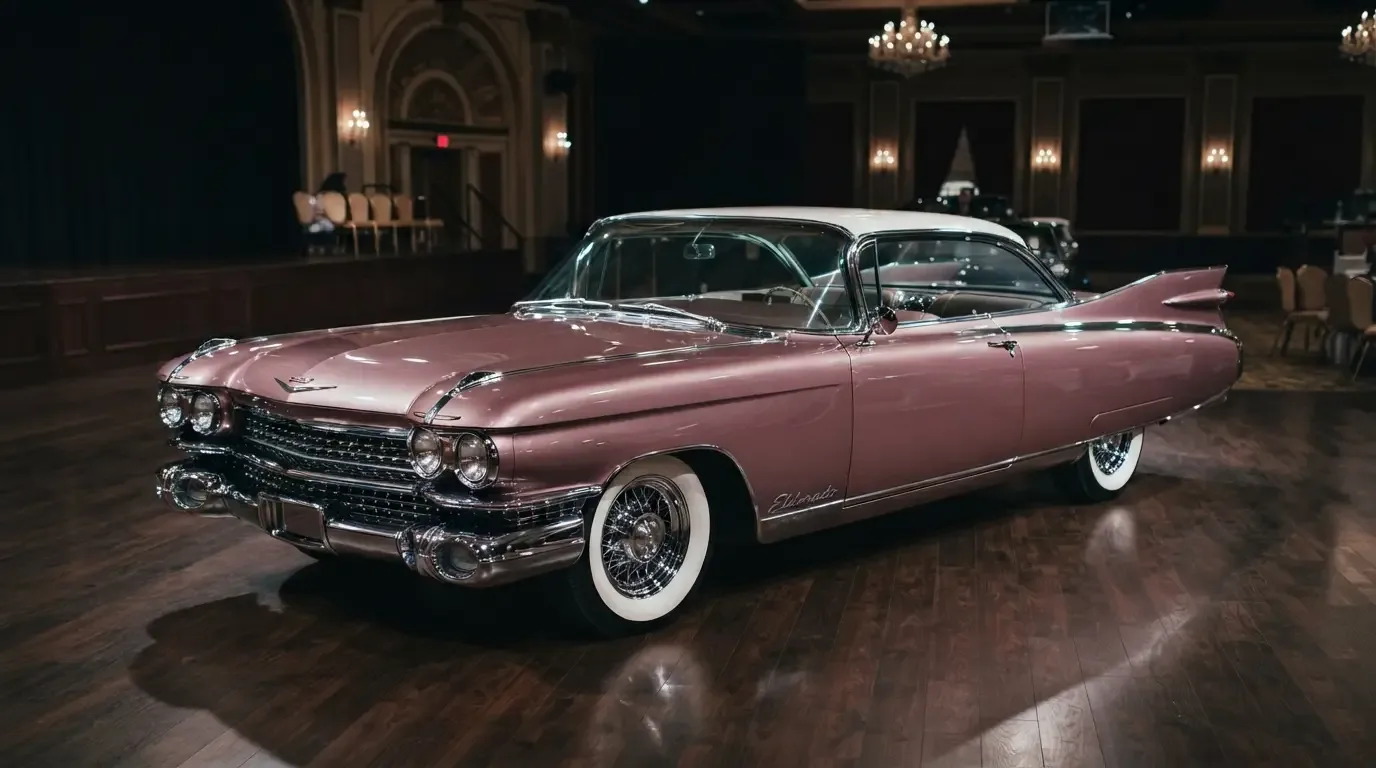
Start with the body style
The Eldorado Seville hardtop is the entry point into 1959 Eldorado ownership, and entry point is relative here, since even a driver quality Seville sits well above a standard Cadillac hardtop from the same year. The Biarritz convertible, built in smaller numbers and carrying the visual drama of an open top under those fins, sells for a clear premium over the Seville in comparable condition. The Eldorado Brougham, hand assembled in Italy and built in barely triple digits, occupies its own tier entirely and rarely trades hands outside major auctions or specialist dealer networks.
| Condition | Seville hardtop | Biarritz convertible | Brougham |
|---|---|---|---|
| Driver to good (#3-#4) | roughly $35,000-$60,000 | roughly $80,000-$150,000 | roughly $80,000-$120,000 |
| Excellent (#2, Hagerty guide) | around $97,800 | around $278,000 | around $165,000 |
| Top documented sale | low six figures | $415,000 (Bring a Trailer record) | $200,000+ |
Those numbers surprise buyers who assume the hand built Brougham automatically outprices the Detroit built Biarritz. In practice the Biarritz convertible, with far more open-air presence and a slightly larger surviving pool of documented cars for collectors to compare against, currently commands the higher price in top condition. The Brougham remains the rarer car by production count, but rarity alone has not translated into the highest price tag in this particular trio.
What moves the number inside each tier
Within any one body style, the biggest swing factor is not paint quality, it is documentation. A Biarritz with a verified build sheet and matching numbers can sell for meaningfully more than a visually identical car missing that paperwork, because buyers at this level are purchasing certainty along with the car. Original color combination matters too. Cadillac offered striking two tone paint schemes for 1959, and certain combinations have become more sought after than others among collectors chasing period correct presentation rather than a repaint in a color that happens to look good today.
Options play a smaller but still real role. Air conditioning, power windows, and the automatic headlight dimmer were available on 1959 Cadillacs and add to both period authenticity and modern usability, which buyers factor into an offer even if the premium is smaller than the swing between body styles or documentation quality. On a Brougham specifically, functioning original air suspension carries real weight, since so many cars have been converted to conventional springs over the decades that a working original setup has become a selling point in its own right.
What has not moved the way people expect
Given how often the 1959 Eldorado shows up in general car culture writing, some buyers assume the market has been on a steady upward run for years. The reality is flatter than that. Values for well documented examples rose steadily through the past decade and have since settled into a more mature pattern, climbing in line with inflation and quality collector cars generally rather than posting the sharp jumps seen in some other segments during the same period. That is not a bad sign. A market that has stopped spiking and started holding is usually a sign of a mature, well informed buyer base rather than a cooling one.
Where real movement still happens is at the extremes. Genuinely exceptional, fully documented Broughams and Biarritz convertibles continue to set new highs at major auctions, while mediocre or undocumented examples of any body style have seen their values stagnate or soften. The gap between the best and the average has widened, which tells buyers something useful: paying for quality and paperwork in this segment is not optional if long term value retention matters to the purchase.
"The spread inside the 1959 Eldorado market is the widest I track on any single model year. Two cars can look nearly identical in photos and be forty thousand dollars apart once you factor in documentation and originality. That gap is exactly where a buyer either wins or overpays."
- David Mercer
The regional factor
Where a 1959 Eldorado has spent its life matters more than buyers sometimes expect. Cars that spent decades in dry climates, the Southwest in particular, tend to show up with less rust and less prior bodywork, which translates directly into a stronger asking price and fewer surprises during a pre-purchase inspection. A Biarritz that spent thirty years in a coastal or salt belt region, by contrast, often carries hidden repair work under a fresh repaint, and that history rarely shows up in a casual photo listing. Buyers serious about value retention should weigh a car's regional history as carefully as its documented options list, since rust repair on a car this complex is expensive and difficult to hide completely from an experienced inspector.
Insurance appraisers I work with report the same pattern year after year. A car with a clean, dry climate provenance and full paperwork appraises meaningfully higher than an otherwise similar car with a murky or northern history, even when both present well in photographs. That gap tends to surprise first time buyers in this segment more than any other single factor, including the difference between body styles.
How to shop it
Anyone pricing a 1959 Eldorado should start with body style, move to documentation, and only then start weighing paint and options, because reversing that order leads to overpaying for a pretty car with a thin history. Comparing a handful of recent sales in the same body style and condition tier is more useful than any single published price guide figure, since guides tend to lag behind a market this specialized. Readers who want the whole picture on how these cars came to be built in the first place will find the production and design context that explains why the value spread is so wide in the first place.
For a buyer ready to act rather than just research, the next step is straightforward. Compare a few live listings against the ranges above, ask for documentation before discussing price, and treat any seller who cannot produce a build sheet or clear ownership history as a negotiation starting point rather than a finished deal. Those who want to see what is currently on the market can find a classic Eldorado and start comparing for themselves.
None of this means the 1959 Eldorado is a difficult car to shop for, only that it rewards patience over impulse. Buyers who take the time to line up documentation, compare a body style against its own tier rather than the market as a whole, and account for regional history tend to end up with cars that hold their value well beyond the initial purchase. Those who skip that homework tend to be the ones calling an appraiser a few years later, asking why their car is not worth what they assumed it should be.
Sources and notes
- 1959 Cadillac Eldorado Biarritz - Hagerty Valuation Tools
- 1959 Cadillac Eldorado Brougham - Hagerty Valuation Tools
- Auction Results and Sales Data for 1959 Cadillac Eldorado Biarritz - Conceptcarz
- This big, beautiful 1959 Cadillac Eldorado Biarritz broke a sales record - Hagerty Insider
- Cadillac Eldorado - Wikipedia
Related Reading
Have a
Cadillac Eldorado
for Sale?
Reach thousands of serious classic car collectors across the US.
Sell It Here →
Are You a Classic Car Dealer?
List your full inventory and connect with targeted classic car buyers.
Join as a Dealer →
#collector car appraisal
#1959 Cadillac
#Cadillac Eldorado
#Eldorado Brougham
#classic car values
#Biarritz convertible

About the author
David Mercer
Classic car market analyst with two decades of experience tracking collector car valuations, auction results, and investment trends.
Related Listings - Cadillac Eldorado




Comments
Be the first to comment on this article.