
Ask a room full of Cadillac collectors to name the single most collectible Eldorado ever built and you will get one answer more often than any other: 1959. Not 1953, not the front drive cars from 1967, not the Northstar coupes of the 1990s. The 1959 model, fins and all, sits at the top of the value pyramid for the entire Eldorado line, and the reasons for that are measurable rather than sentimental.
Car Features
7 min read
Why the 1959 Is the Most Collectible Eldorado
Peak fin styling and genuinely low production make the 1959 Eldorado the top of the value pyramid for the entire nameplate, and the auction data backs it up.
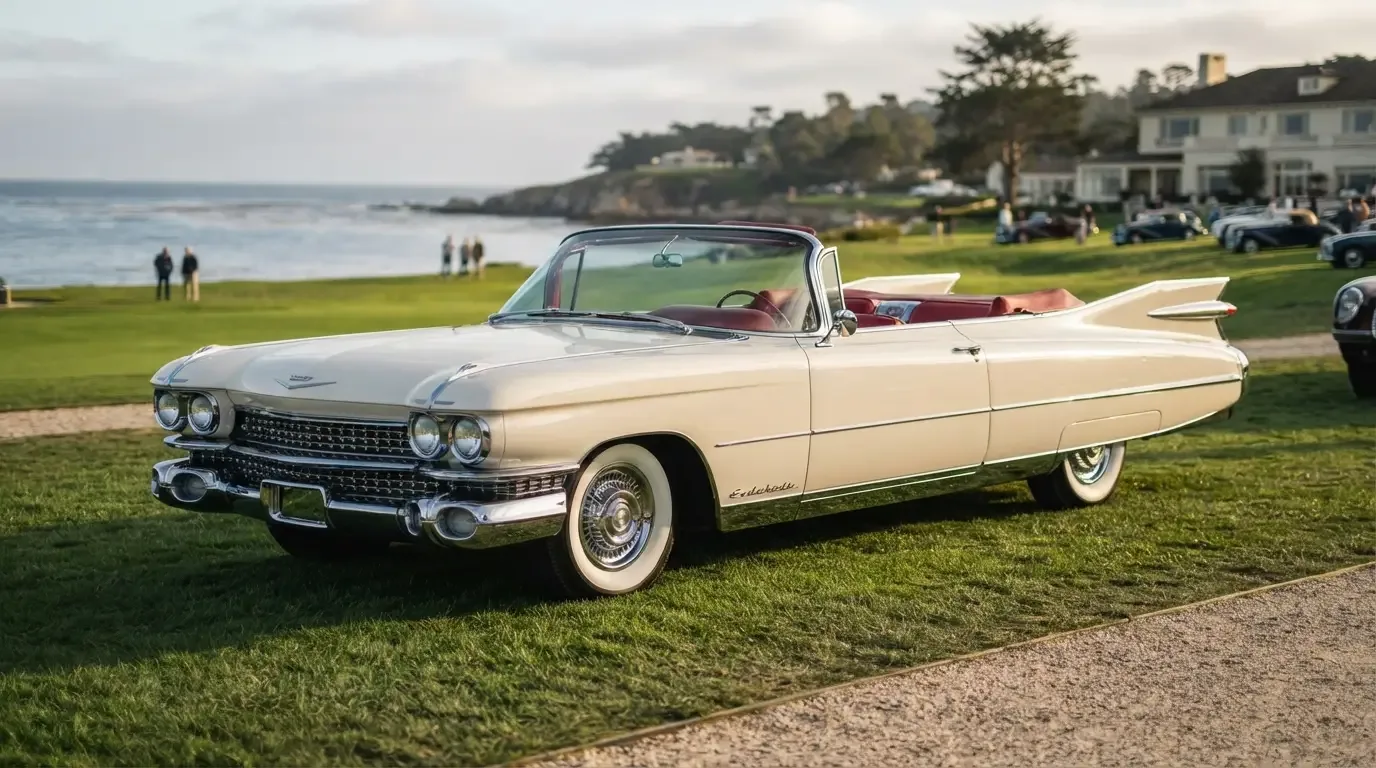
The fins are not the whole reason, but they help
Every general history of American car design points to the 1959 Cadillac as the peak of tailfin styling, and that reputation does real work in the market. Buyers who want one object that captures 1950s Detroit excess gravitate toward this car before any other, and the Eldorado trim sits above the standard Series 62 and De Ville in both price and desirability within that same body. Styling reputation alone would make the 1959 Eldorado a strong seller. It is the combination of that reputation with genuinely low production that pushes it into a different price tier entirely.
What the numbers actually show
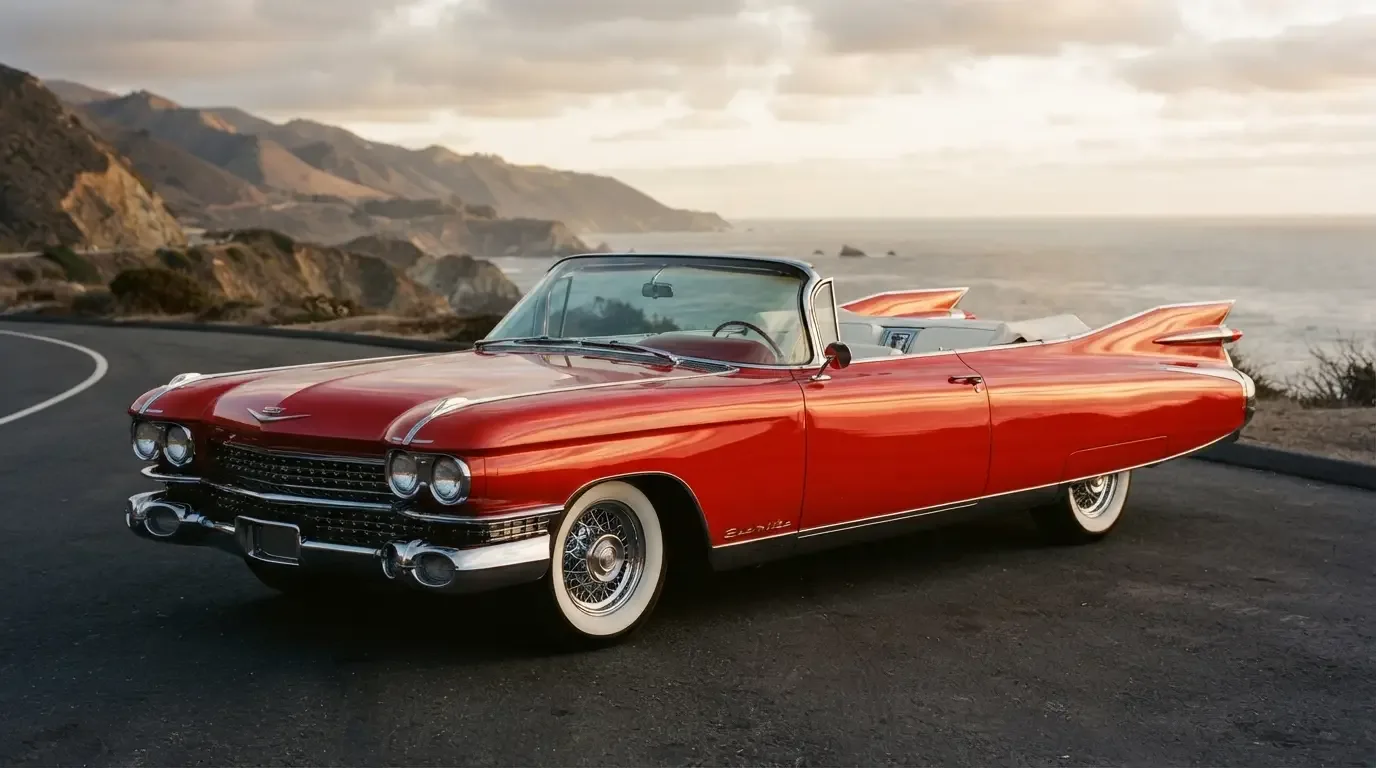
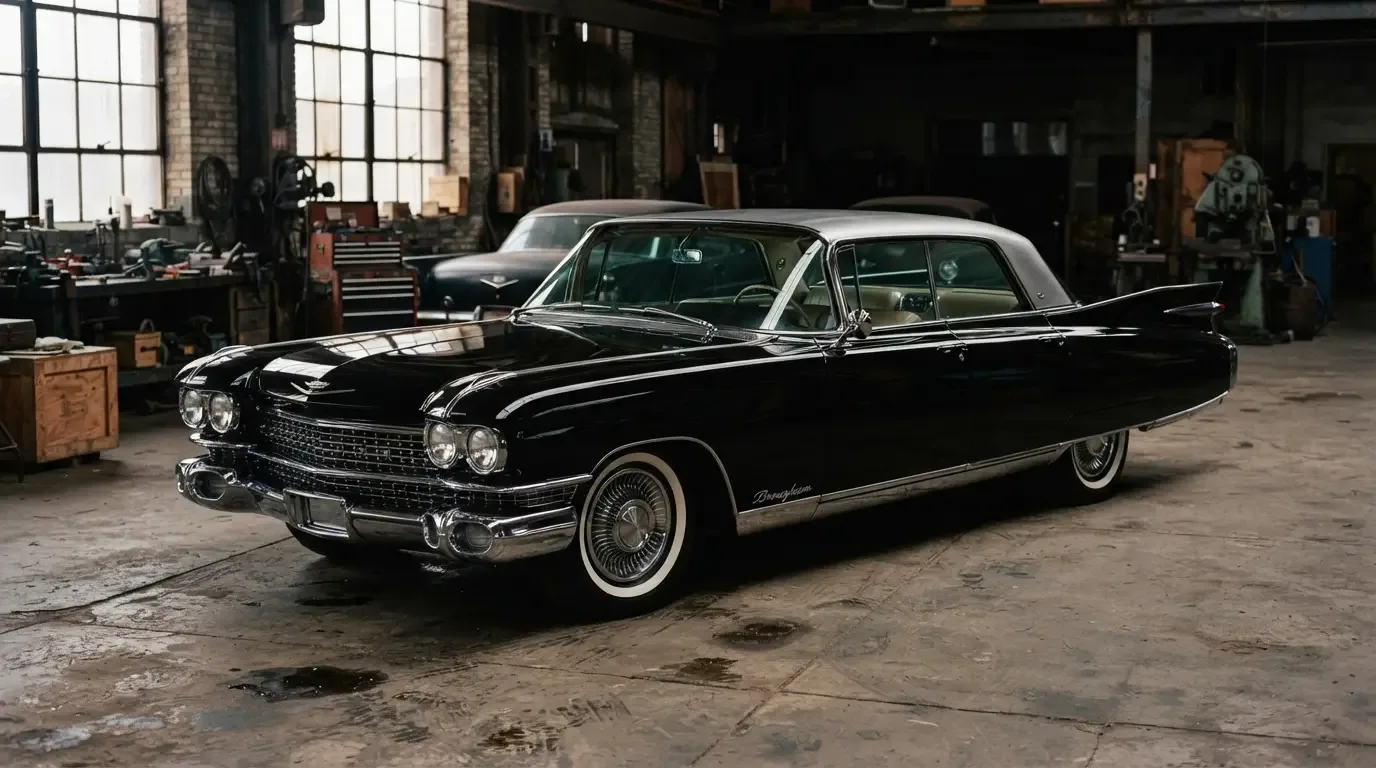
Auction results for 1959 Eldorado Biarritz convertibles in good documented condition have cleared six figures consistently for years, with well restored, numbers matching cars pushing past that range at major sales. Eldorado Brougham examples, built in far smaller numbers by Pininfarina in Italy, trade in a category of their own and have crossed $200,000 at auction when condition and provenance line up, though current Hagerty guide values for a #2 condition Brougham sit closer to $165,000, below what a top Biarritz now commands. Seville hardtops, the least expensive of the three 1959 Eldorado body styles, still command a clear premium over a comparable standard Cadillac hardtop from the same year, though they trail both the Biarritz and the Brougham by a wide margin.
What stands out across all three is consistency. Prices for well documented 1959 Eldorados have not shown the sharp swings that hit some other collector segments over the past decade. That stability is itself a data point worth weighing, because a market that holds steady through broader collector car cycles is telling you something about the depth and seriousness of the buyer pool behind it.
| Body style | Typical condition #2 range | Top documented sales |
|---|---|---|
| Eldorado Seville hardtop | around $97,800 | low six figures |
| Eldorado Biarritz convertible | around $278,000 | $415,000 (Bring a Trailer record sale) |
| Eldorado Brougham | around $165,000 | $200,000+ |
Documentation moves the number more than paint does
In a segment this small, paperwork carries more weight than it does in almost any other American collector car category. A 1959 Eldorado with a verified build sheet, matching engine and body numbers, and a clean ownership chain will outsell an equally attractive but undocumented car by a wide margin. Buyers here are not just purchasing a design icon, they are purchasing a piece of a production run small enough that every individual car's history can plausibly be traced, and they pay for that traceability. A seller who cannot produce documentation is not just missing an upsell opportunity, they are working against a market that has learned to be skeptical of unverified claims in this specific niche.
"I tell clients the same thing every time a 1959 Eldorado comes up. The fins get you interested, the production number gets you serious, and the paperwork gets you to write the check. Skip any one of those three and you are overpaying or underbuying."
- David Mercer
Where this sits against the rest of the Eldorado story
Understanding why 1959 outperforms the rest of the Eldorado lineup requires some context on what came before and after it. The car's place in our complete history of the model shows how a single design year, backed by low production and a design language nothing else has matched since, created a permanent ceiling that later Eldorados have not challenged, even generations with stronger engineering or better driving dynamics.
That is an uncomfortable truth for owners of, say, a 1967 or a well kept 1990s Eldorado. Those cars can be objectively better to drive, more reliable, and in some cases just as rare in their own right. None of that translates into the same market ceiling, because none of it comes with the specific combination the 1959 Eldorado 1959 cadillac eldorado collectible carries: peak styling, low volume, and a production year that the entire industry still uses as shorthand for an era.
What keeps the segment stable
Part of why 1959 Eldorado values have not whipsawed the way some muscle car and even some earlier Cadillac segments have is the buyer pool itself. Collectors chasing a 1959 Eldorado tend to be experienced, well capitalized, and focused on the car specifically rather than shopping across several unrelated makes looking for whatever is trending. That kind of buyer moves slower, does more homework, and is less prone to panic selling when broader collector markets soften. The result is a segment where prices climb gradually rather than spiking, and where a downturn elsewhere in the hobby tends not to drag Eldorado values down with it.
This stability also shows up in how these cars are marketed. Serious sellers of 1959 Eldorados, especially Broughams, rarely list through general classifieds. They tend to work through specialist dealers or major auction houses that can vouch for documentation, which keeps transaction quality high but also keeps the pool of available cars small at any given moment. A buyer who finds a well documented example for sale is often looking at a genuine opportunity rather than one of dozens of similar listings, which is unusual for a Cadillac from this era.
The buy call
For a buyer with the budget and the patience to search for a documented example, a 1959 Eldorado remains one of the few genuinely defensible purchases in the postwar American collector market. It is not a car I would tell someone to buy as a speculative flip, because the appreciation curve has already flattened into something closer to a stable, mature market than a growth story. It is a car I would tell someone to buy if they want a blue chip asset that has already proven it holds value across multiple market cycles, and that is a different, more conservative case than most sellers make for it.
Buyers who want to see what is actually available right now, rather than working from auction archives alone, are better served checking current inventory directly. Anyone ready to take that step can browse classic Eldorado listings and compare asking prices against the ranges outlined here before making an offer.
Sources and notes
- 1959 Cadillac Eldorado Biarritz - Hagerty Valuation Tools
- 1959 Cadillac Eldorado Brougham - Hagerty Valuation Tools
- This big, beautiful 1959 Cadillac Eldorado Biarritz broke a sales record - Hagerty Insider
- Cadillac Eldorado - Wikipedia
- Auction Results and Sales Data for 1959 Cadillac Eldorado Biarritz - Conceptcarz
Related Reading
Have a
Cadillac Eldorado
for Sale?
Reach thousands of serious classic car collectors across the US.
Sell It Here →
Are You a Classic Car Dealer?
List your full inventory and connect with targeted classic car buyers.
Join as a Dealer →
#Auction Results
#collector car values
#1959 Cadillac
#Cadillac Eldorado
#Eldorado Brougham
#classic car investing

About the author
David Mercer
Classic car market analyst with two decades of experience tracking collector car valuations, auction results, and investment trends.
Related Listings - Cadillac Eldorado




Comments
Be the first to comment on this article.